Overnight storms dump more than 80 mm of rain across Atlantic Canada

Southwestern Nova Scotia recorded the highest rainfall totals, while powerful winds are expected to target parts of Newfoundland on Sunday
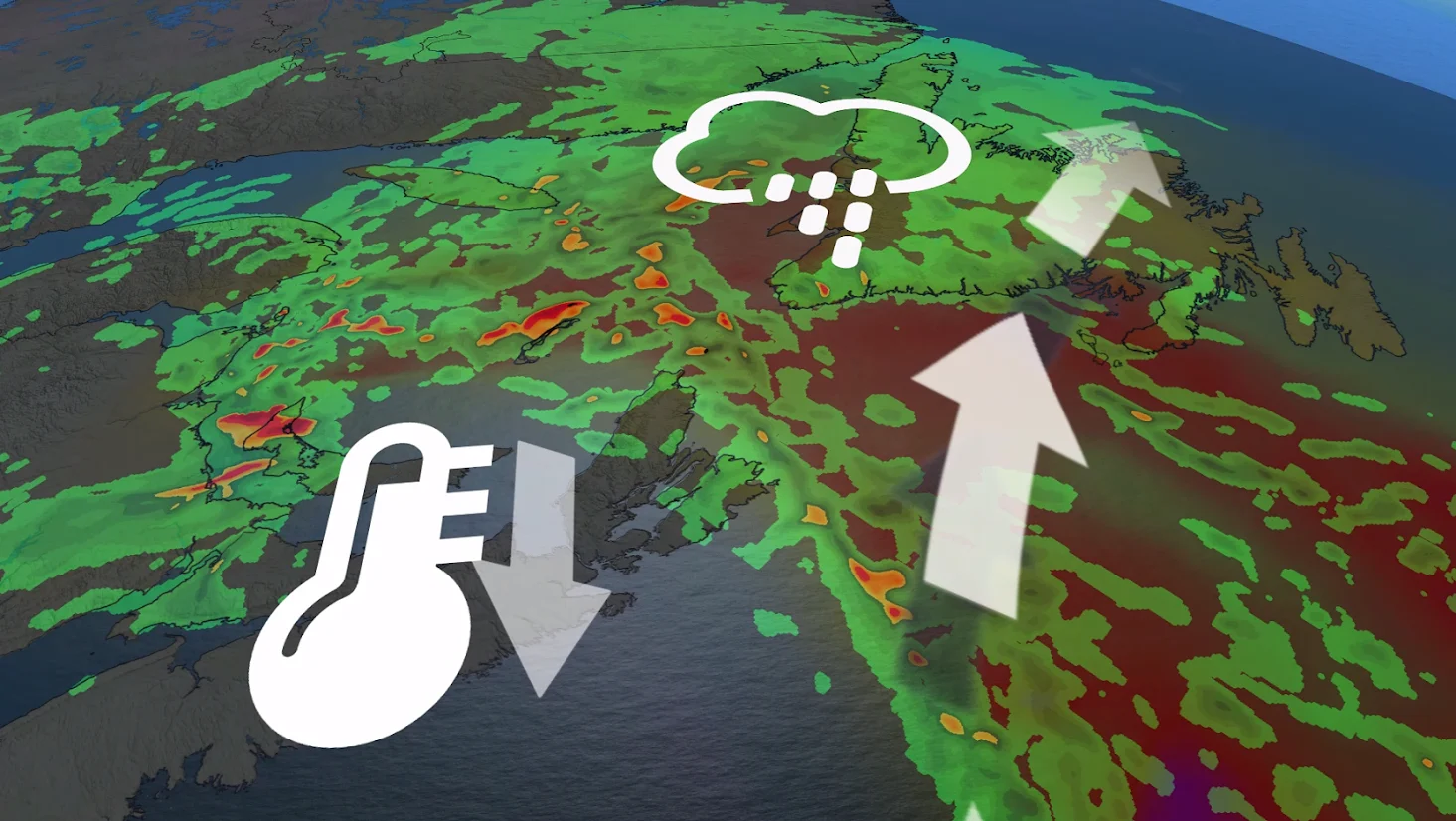
Heavy rain and thunderstorms swept across Atlantic Canada overnight, soaking parts of Nova Scotia and New Brunswick as a slow-moving storm continues northeast.
Cedar Lake, N.S., recorded 87 mm of rain by 8 a.m. local time Sunday, the highest reported total so far. The system also brought an unusual surge of warmth, with temperatures climbing above 15°C across parts of Nova Scotia before dawn.
More unsettled weather is expected Sunday as the system moves toward Newfoundland, where powerful winds could create additional impacts.
DON'T MISS: Canada's Winter Sneak Peek: El Niño puts record warmth in play
Nova Scotia records storm maximum
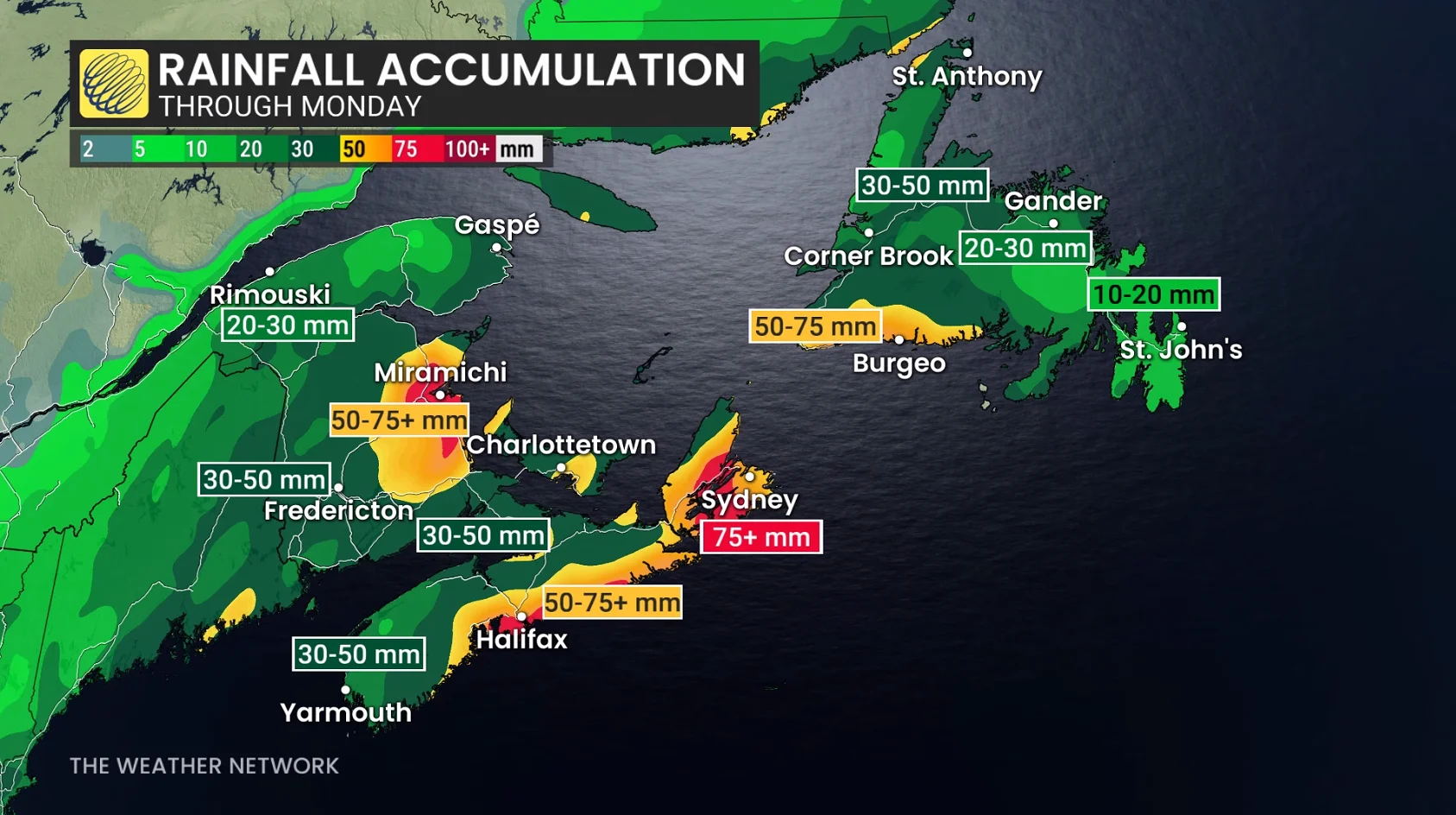
The heaviest rainfall targeted southwestern Nova Scotia and eastern New Brunswick overnight. By 8 a.m. Sunday, Yarmouth had recorded 67 mm, while Hammond Plains and Bedford reported 52 mm and 50 mm, respectively. Halifax-Dartmouth saw between 30 and 44 mm.
In New Brunswick, 62 mm fell north of Shediac, while Sussex recorded 40 mm and Fredericton received 36 mm. Prince Edward Island also saw significant rainfall, with 45 mm reported at East Point and 38-44 mm in Summerside.
Warm temperatures give way to cooler air
Along with the heavy rain, subtropical air pushed temperatures well above seasonal levels across Nova Scotia. Greenward reached 15.9 C before dawn Sunday, while Halifax also recorded temperatures above 15°C.
That warmth will not last, however, as temperatures are expected to fall throughout Sunday across much of the Maritimes.
DON'T MISS: Winter has a few tricks up its sleeve for Eastern Canada this year
Powerful winds target Newfoundland
Periods of rain and gusty winds will move across Newfoundland on Sunday after some brief mixing. The strongest winds are expected in southwestern Newfoundland, where down sloping near the Wreckhouse area could produce gusts exceeding 100 km/h.
The storm's focus will gradually shift away from the Maritimes as Newfoundland faces its turn with unsettled weather.
Stay with The Weather Network for the latest updates across Atlantic Canada.