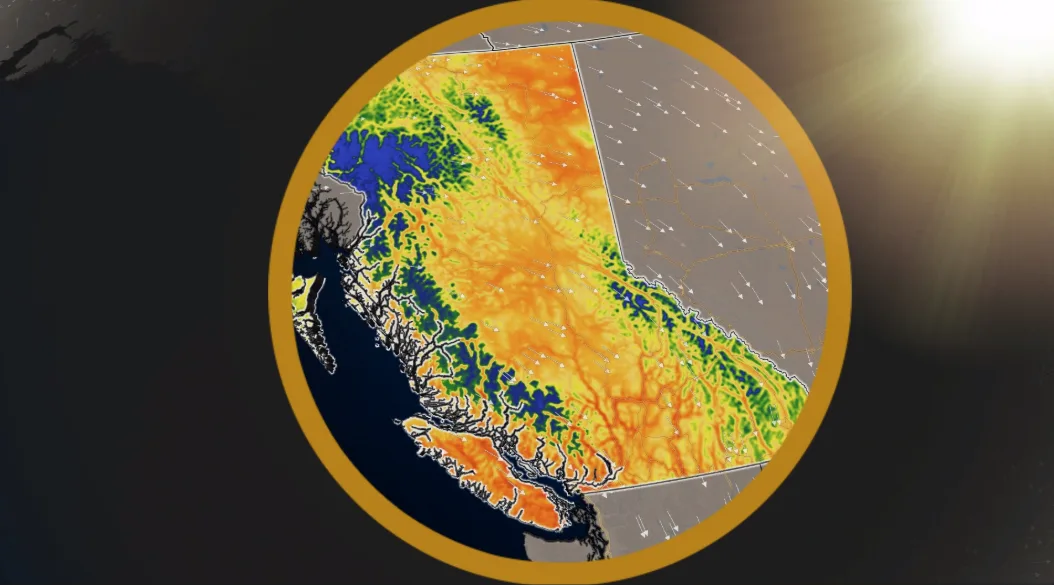
Heat builds across British Columbia as high pressure ridge intensifies

Significant weather shift expected as high pressure ridge builds over British Columbia
A significant shift in British Columbia's weather is underway as a strong ridge of high pressure strengthens.
By Friday, the ridge will start building along the coast, bringing an end to unsettled weather and bumping temperatures slightly above seasonal normals.
SEE ALSO: 'It feels like summer is different': Study says cities seeing more summer days
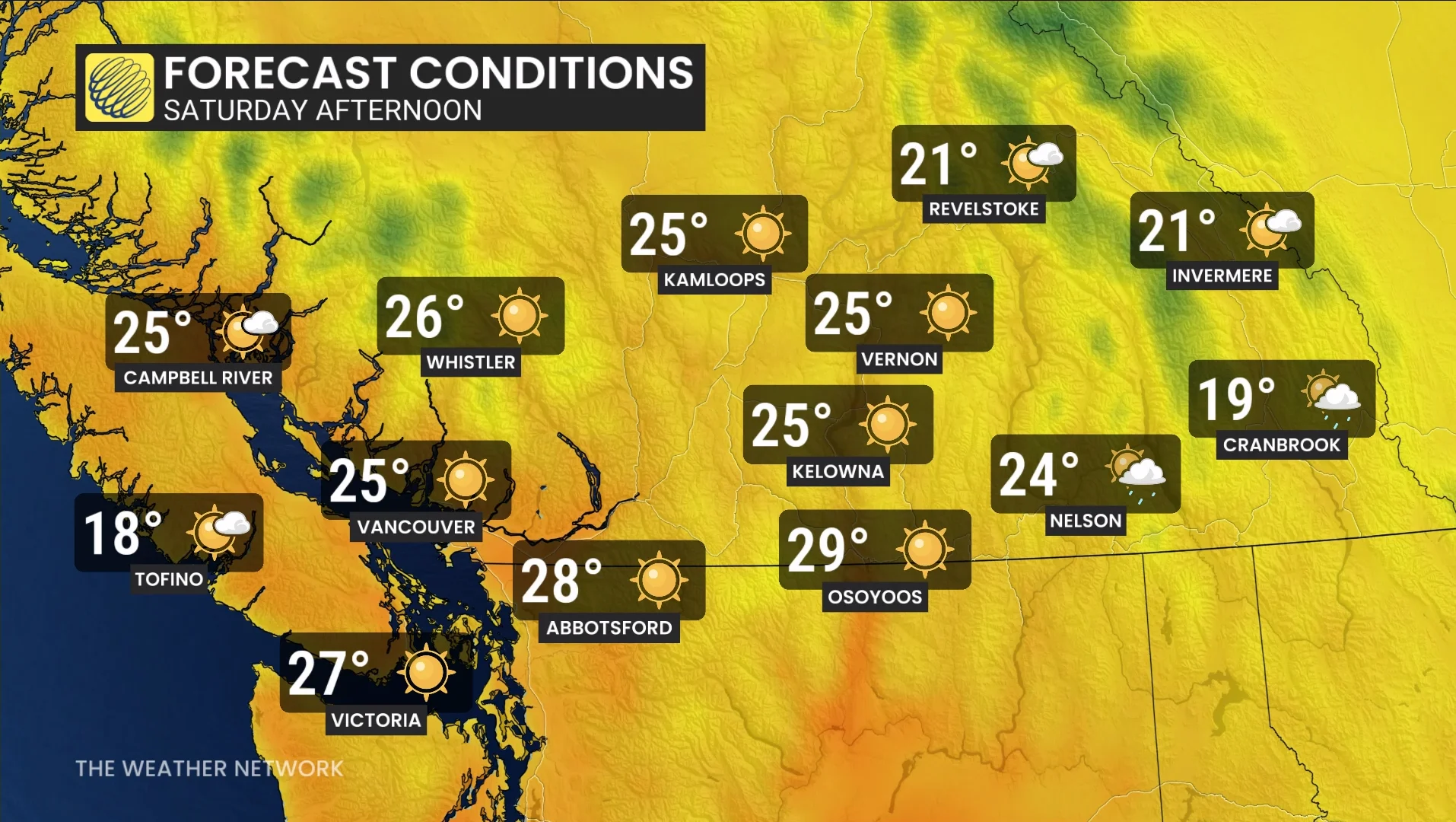
On Saturday, the ridge will extend further, ushering in temperatures well above seasonal levels, particularly along much of the coast.
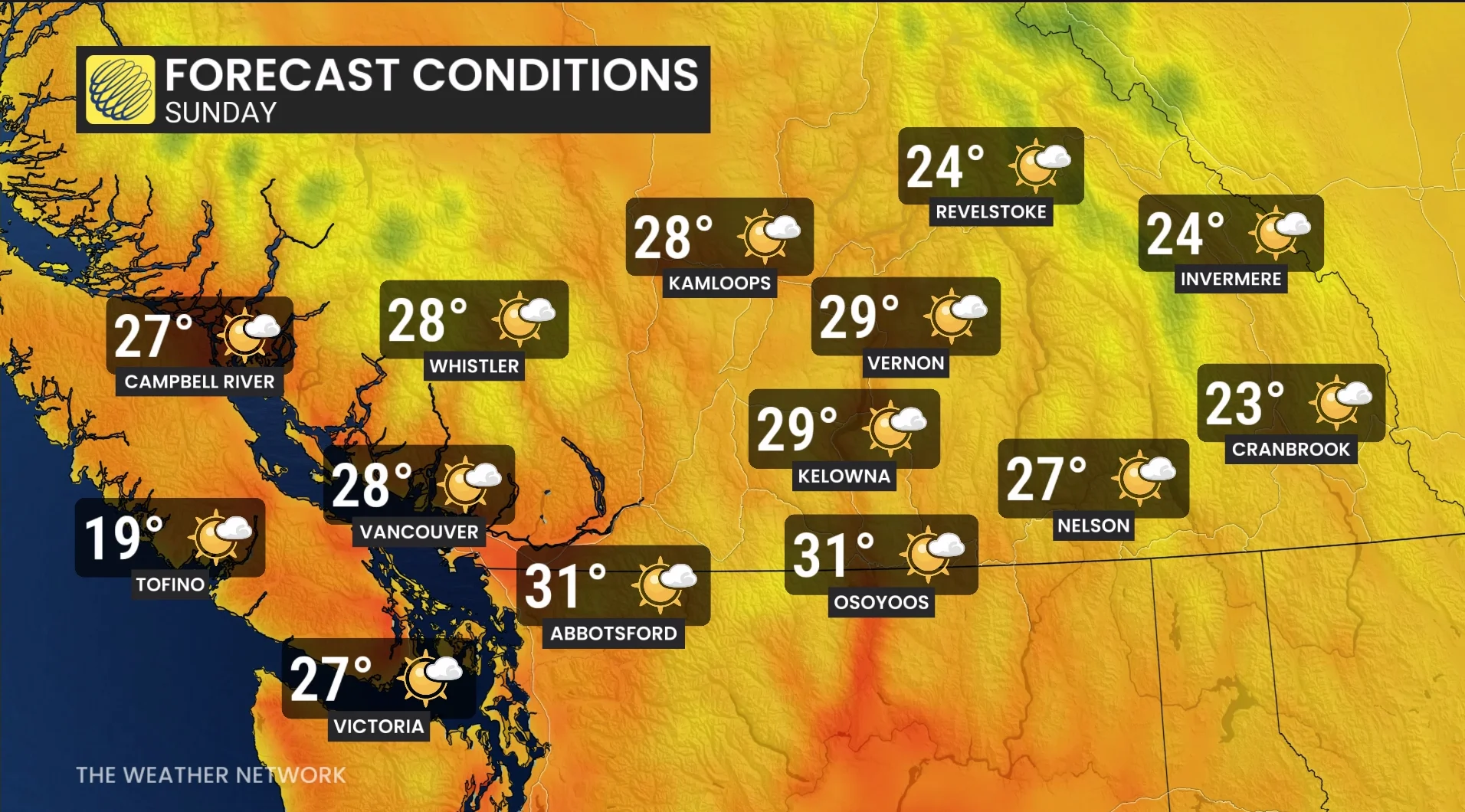
By Sunday, it is expected to reach its peak intensity, amplifying into the Yukon and Northwest Territories.
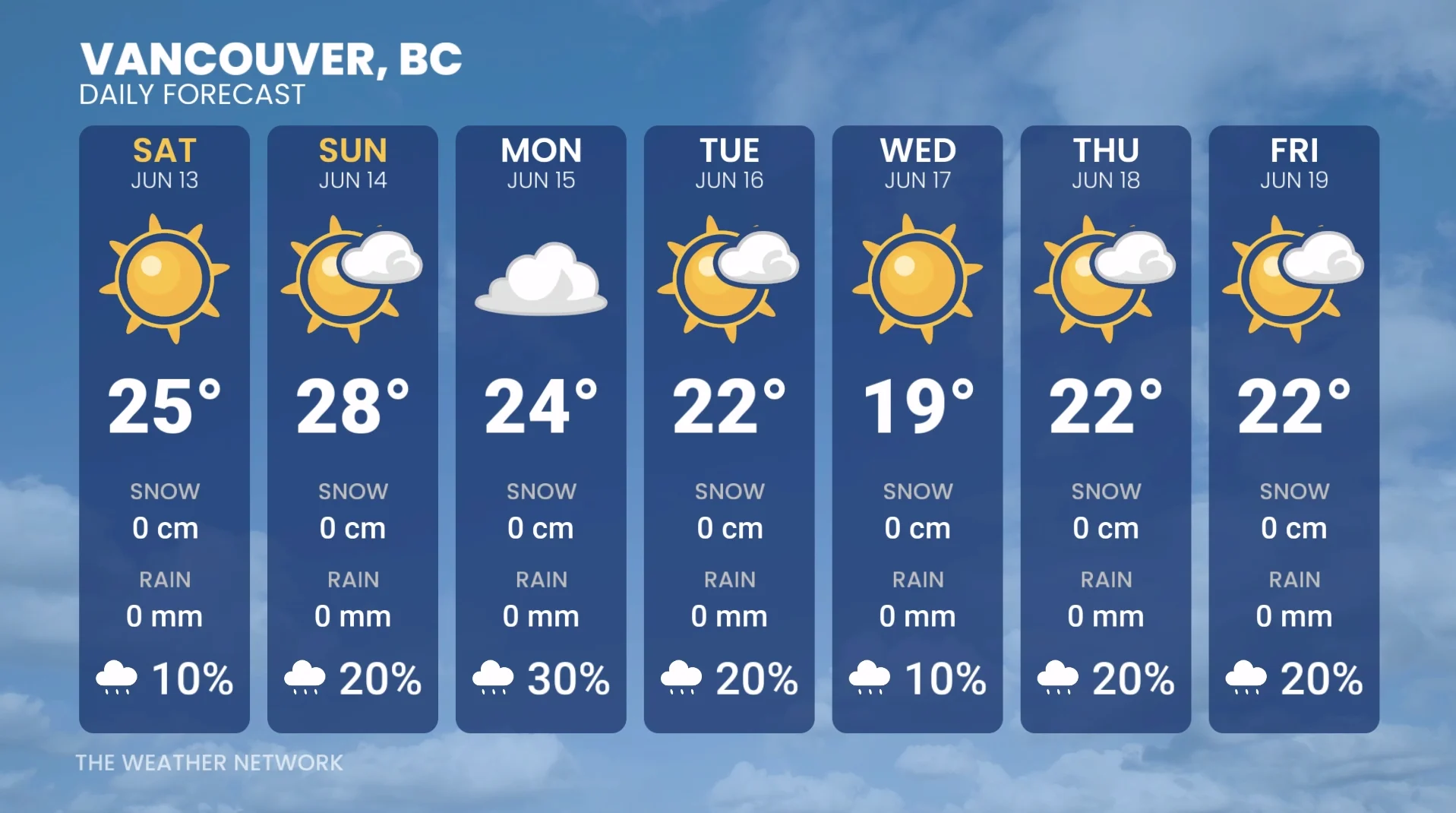
Monday marks the last particularly hot day for much of the South Coast as an onshore flow develops, reducing the ridge's strength and bringing relief from the heat.
Maximum temperatures in 2026
Campbell River: 29.3 C (Forecast max: 27)
Nanaimo: 29.1 C (Forecast max: 27)
Victoria: 26.4 C (Forecast max: 27)
Vancouver (YVR): 26.0 C (Forecast max: 24-26, higher inland)
Abbotsford: 28.6 C (Forecast max: 31)
Squamish: 30.9 C (Forecast max: 31)
Temperatures in the Interior are forecast to just be a few degrees above seasonal as the core of the warm anomaly remains anchored closer to the coast.
The U.S. National Oceanic and Atmospheric Administration (NOAA) recently confirmed the presence of El Niño conditions. Patterns over the weekend are expected to reflect these conditions, with El Niño amplifying the jet stream across the Pacific, leading to higher-than-normal summer temperatures and below-average precipitation across southern B.C.
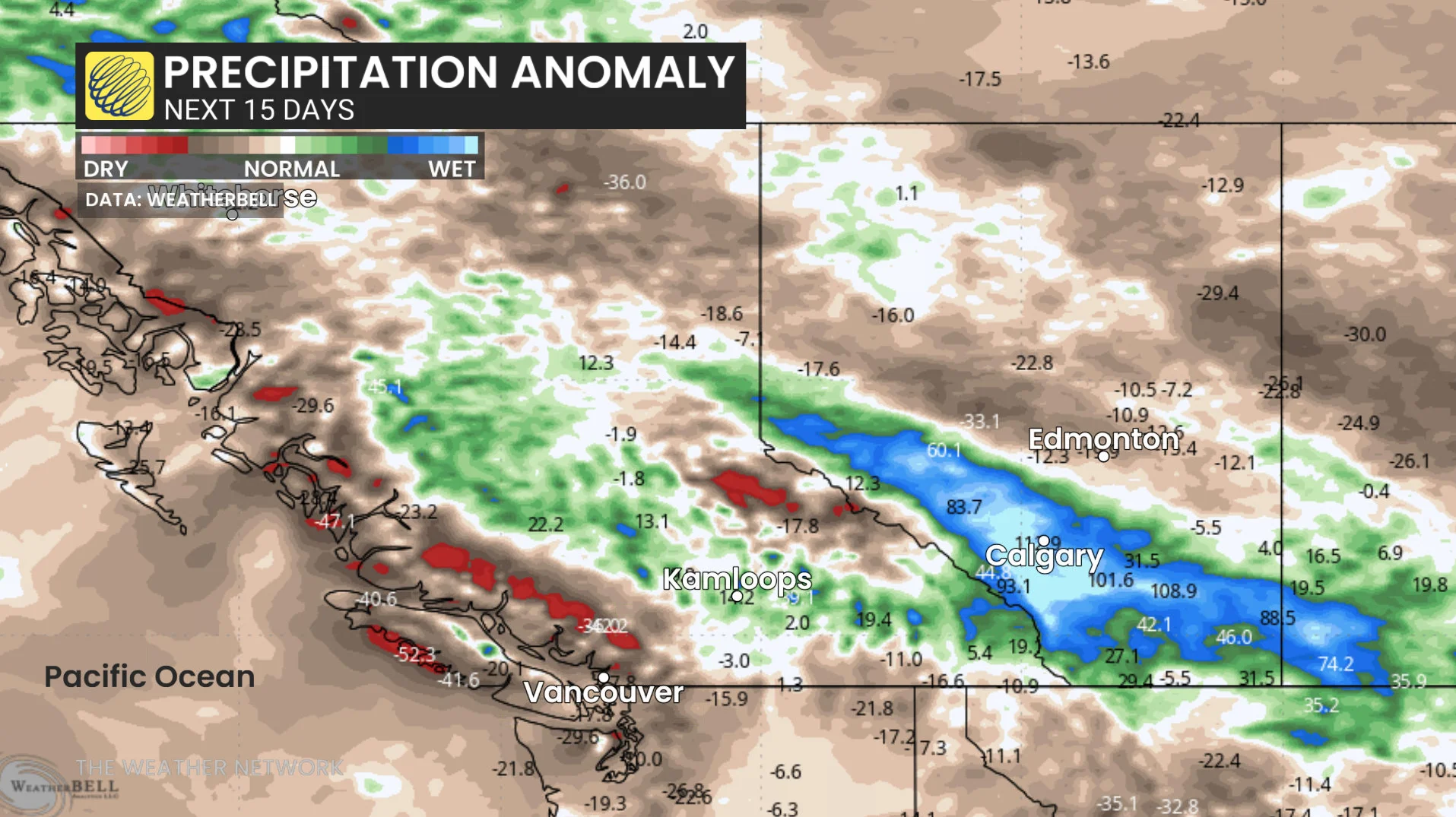
While long-range models suggest potential precipitation near the end of June, the overall trend points to a drier-than-usual pattern for southern British Columbia. However, local forecasts may shift, so stay updated as the week progresses.
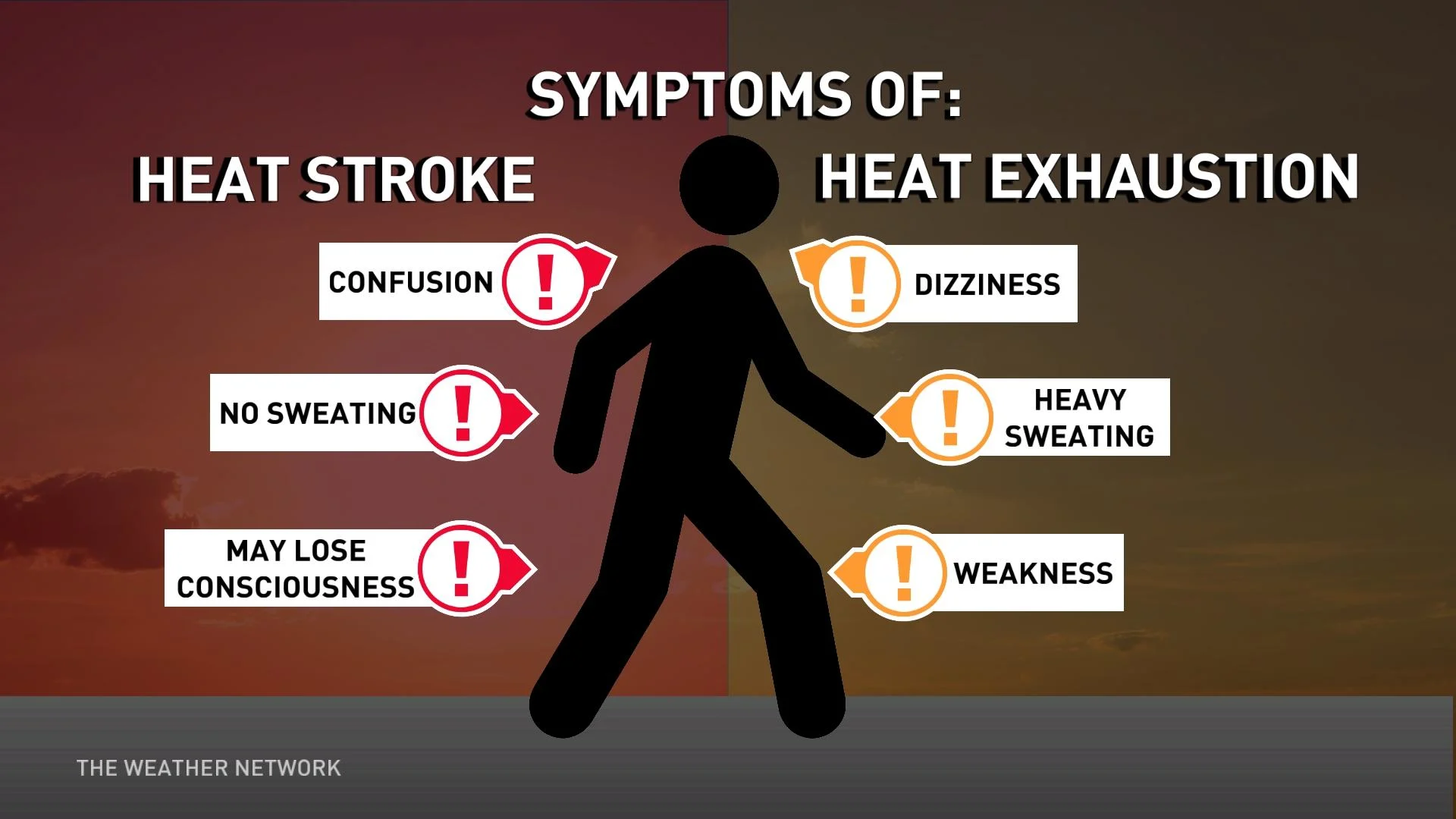
Hot weather safety tips
Drink plenty of water. Avoid caffeine and alcohol, which can be dehydrating.
Avoid direct sunlight, especially during peak hours and when the UV rating is high.
Wear lightweight, loose-fitting clothing.
Use air conditioning when possible. If you do not have access to air conditioning, consider visiting a cooling centre, a shopping centre, or a public library.
Check on elderly relatives and other vulnerable neighbours.
Stay with the Weather Network for updates on the heat in British Columbia