Great Lakes: Rare winter combination with consequences to come

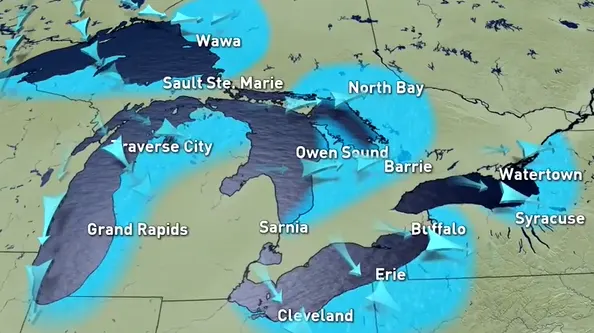
An ice-free framework over the Great Lakes means more lake-effect snow than what is typical for the heart of winter.
Two peculiar events are developing before our eyes across the Great Lakes. A rare combination of unusually high water levels, paired with a pronounced lack of ice cover has created interesting dynamics, that'll have consequences months down the road.
First the water levels.
After a significant and prolonged flooding season across numerous Great Lakes in 2019, the trends starting to emerge in 2020 are quite disconcerting.
According to NOAA, Lake Superior and Lake Michigan both set all-time water level records for the month of January, with Lake Superior over 40 cm higher than this time last year.
SKY HIGH WATER LEVELS
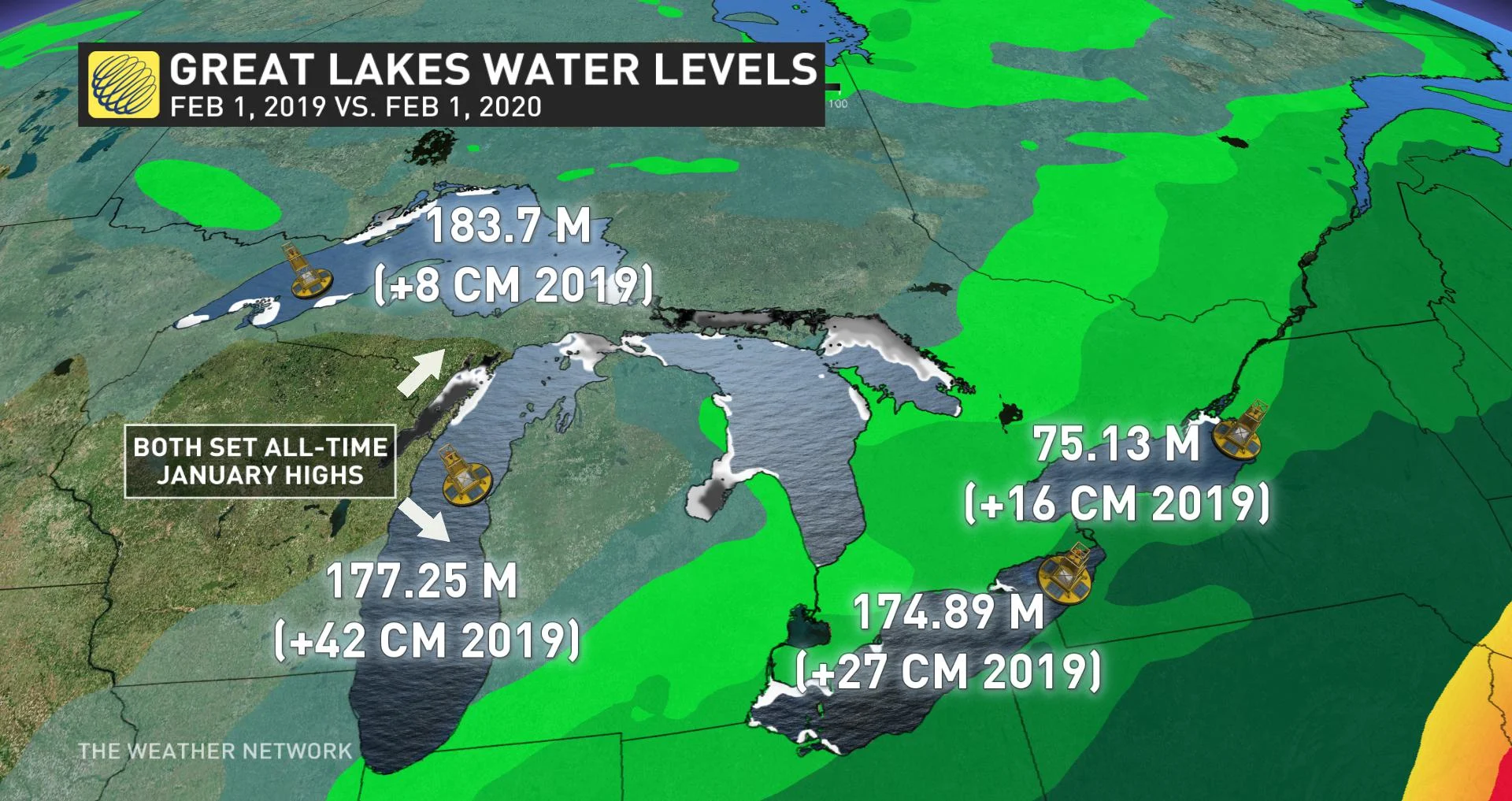
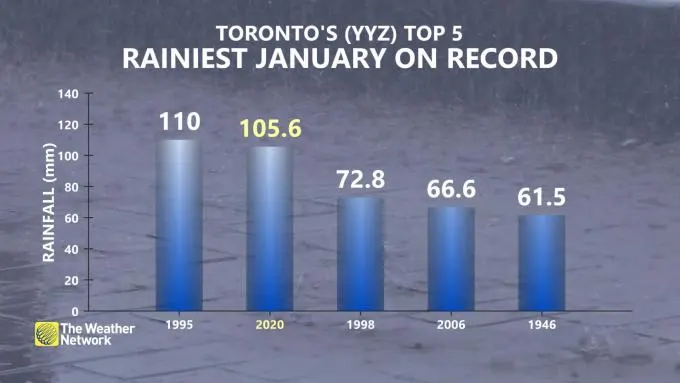
After 150-200 per cent of the normal precipitation fell across the Great Lakes Basin, water levels surged upwards and brought Toronto within millimeters of it's all-time January rainfall record.
There's lots of factors at play for potential spring flooding, but a wet spring would be a worst-case scenario – as the lakes don't have to see the same magnitude increase than what was observed in 2019. The Ottawa River and flooding in Montreal will be watched closely; that can limit the amount of water drained through the Moses-Saunder dam down the St. Lawrence.
WHERE'S THE ICE?
If you thought the water level anomalies were quite extreme, the ice-free activity being observed in Lake Erie is also quite unique for early February.
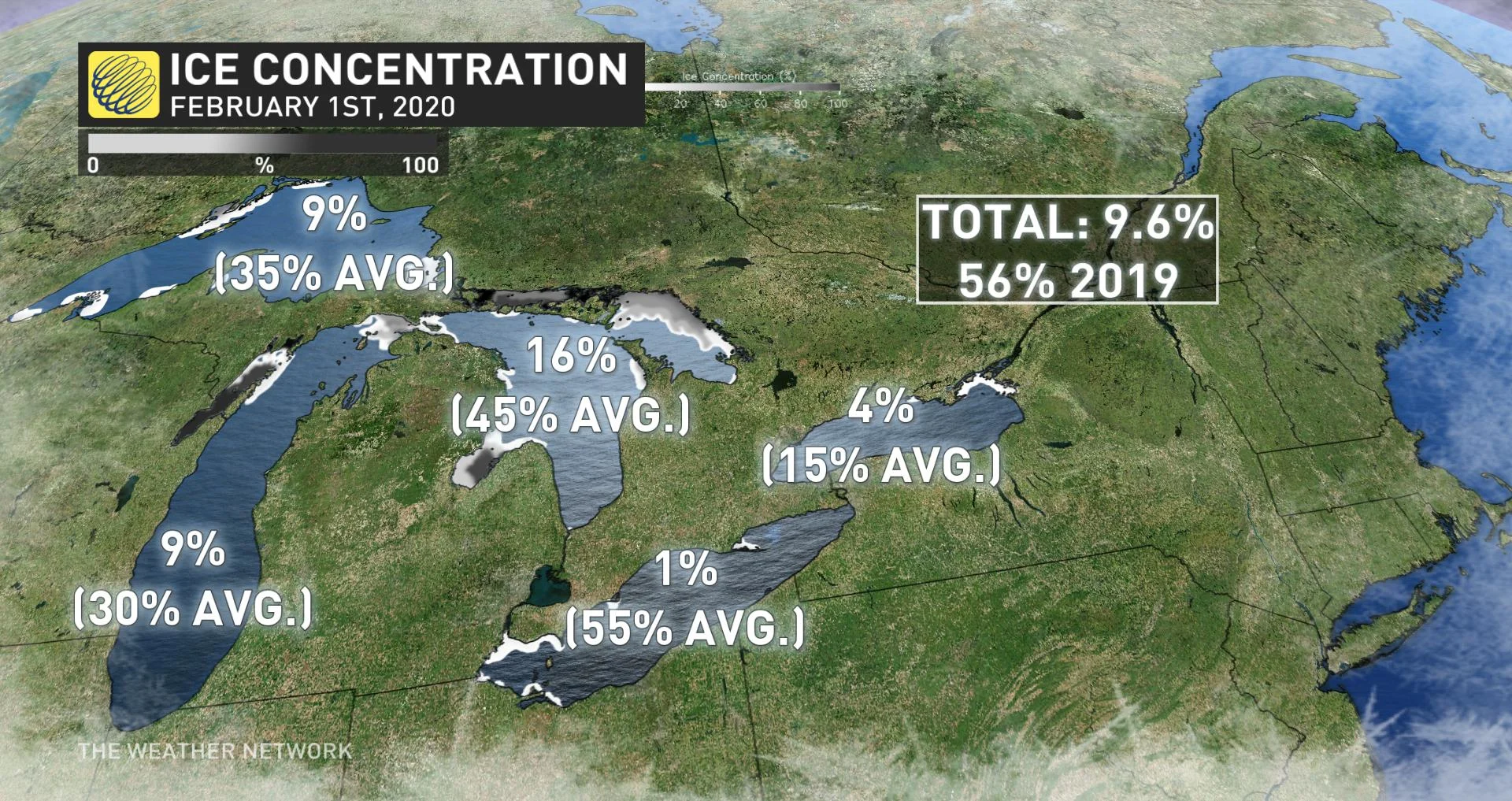
At this time last year, 56 per cent of the Great Lakes surface area had ice cover. 2020 is currently under 10 per cent as of February 1st. While Lake Ontario maintains limited ice cover because of its depth, Lake Erie doesn't have that same excuse.
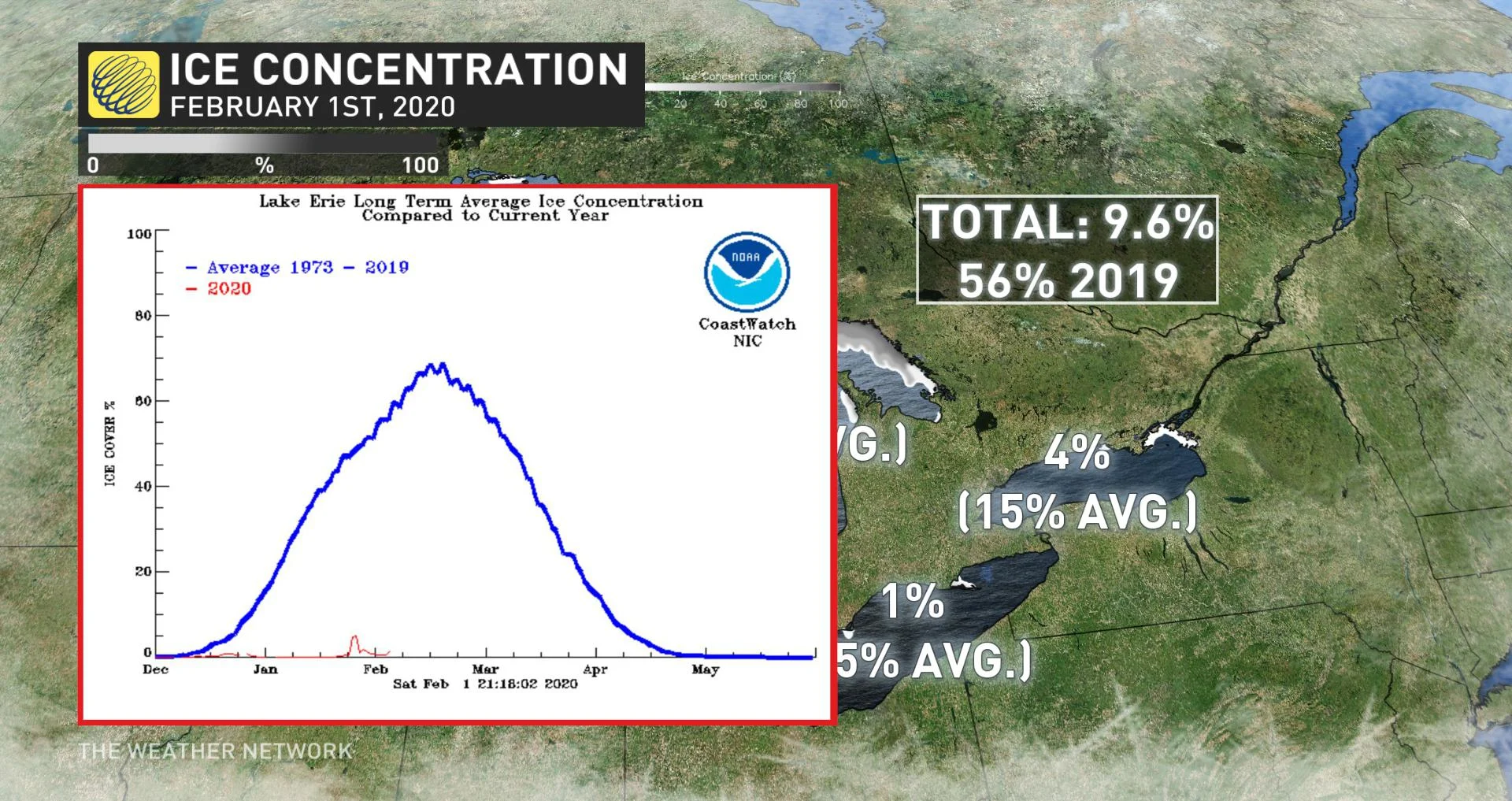
As displayed on the graph above, an average (1973-2019) long term ice concentration value for early February is close to 60 per cent for Lake Erie – the first couple days of February and Lake Erie is hovering at approximately 1 per cent.
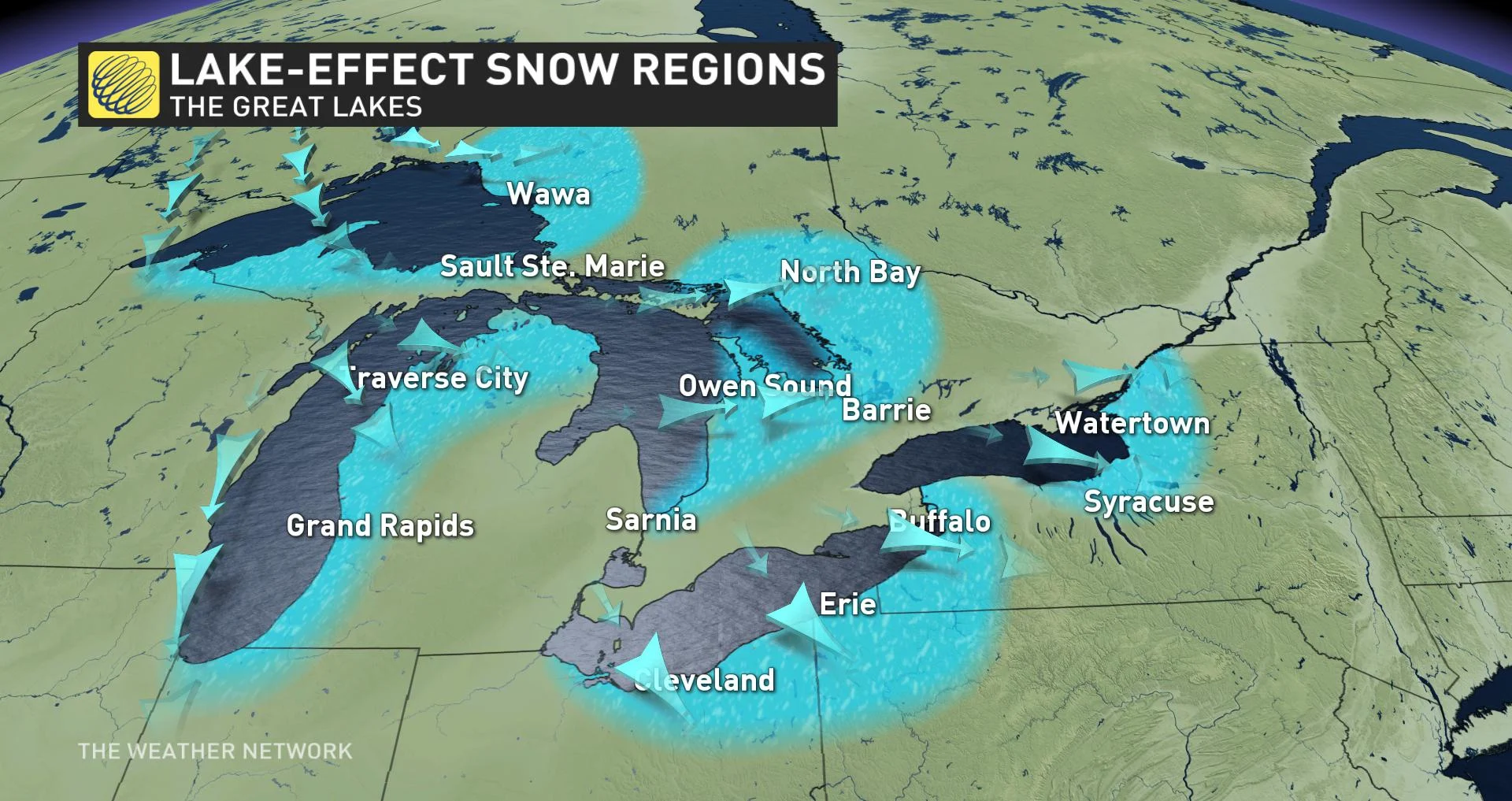
A consequence of the ice-free framework in place for February means more lake-effect snow than what is typical for the heart of winter –- that is if cold air decides to make an appearance across the region.