
Blustery temperature changeover slips over Atlantic Canada Friday

A powerful storm rolling through Atlantic Canada isn’t done with the region yet. Watch for icy conditions as temperatures take a plunge heading into the weekend
The powerful early-spring storm sweeping North America is focusing its attention on Atlantic Canada to end the week.
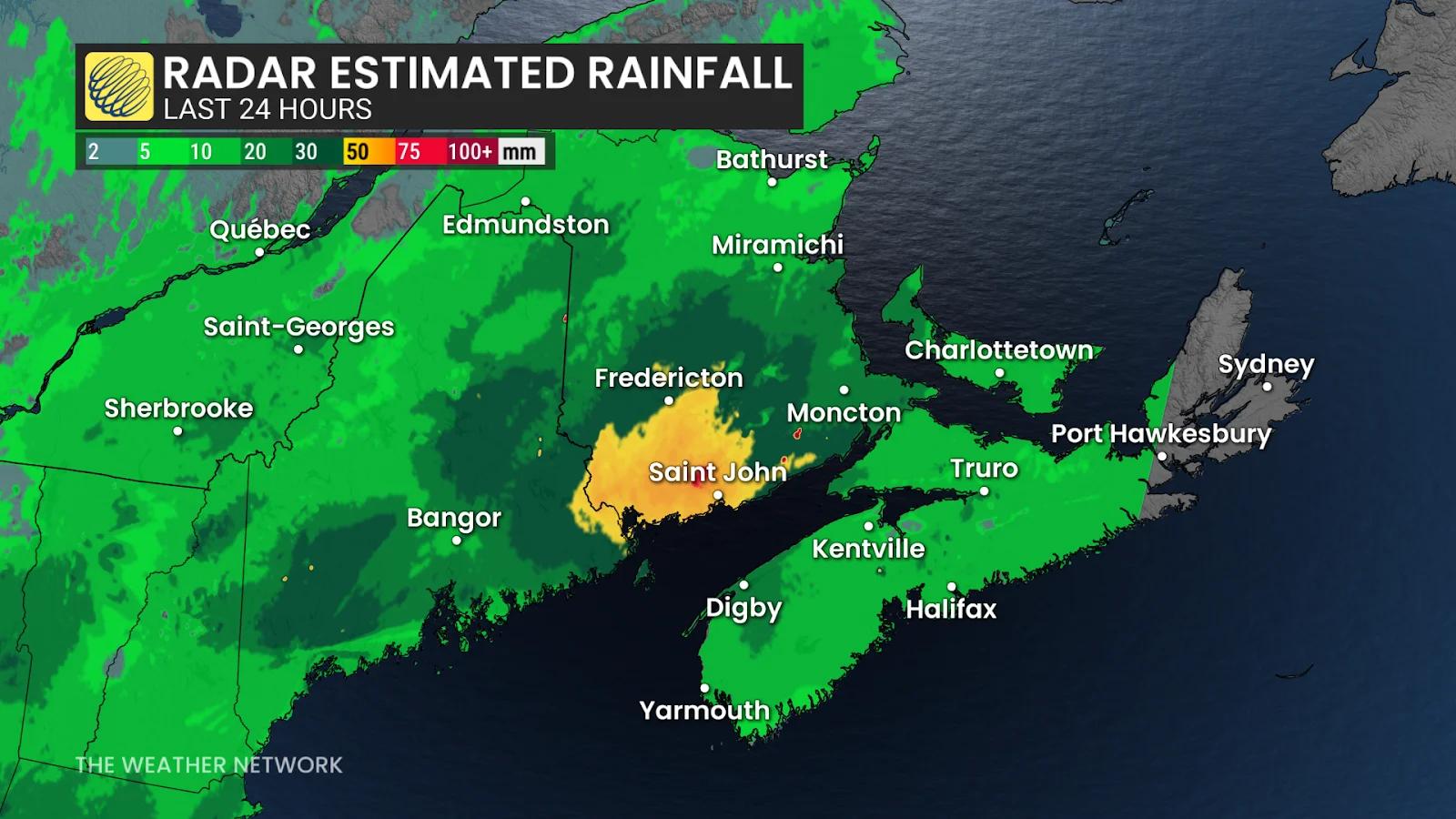
Thursday featured widespread heavy rains across the region, thoroughly soaking the ground and surfaces ahead of a sharp temperature drop on Friday. As the rain continues into Friday morning, we could see a risk for localized flooding due to pooling water and rising river levels.
The Saint John River, which flows through New Brunswick and into the Bay of Fundy, rose 55 centimetres by 2 a.m. local time on Friday. However, the heaviest rain on Thursday was over Fundy National Park, where up to 50 mm of rain was recorded.
DON’T MISS: How dynamic and disruptive spring storms roar to life
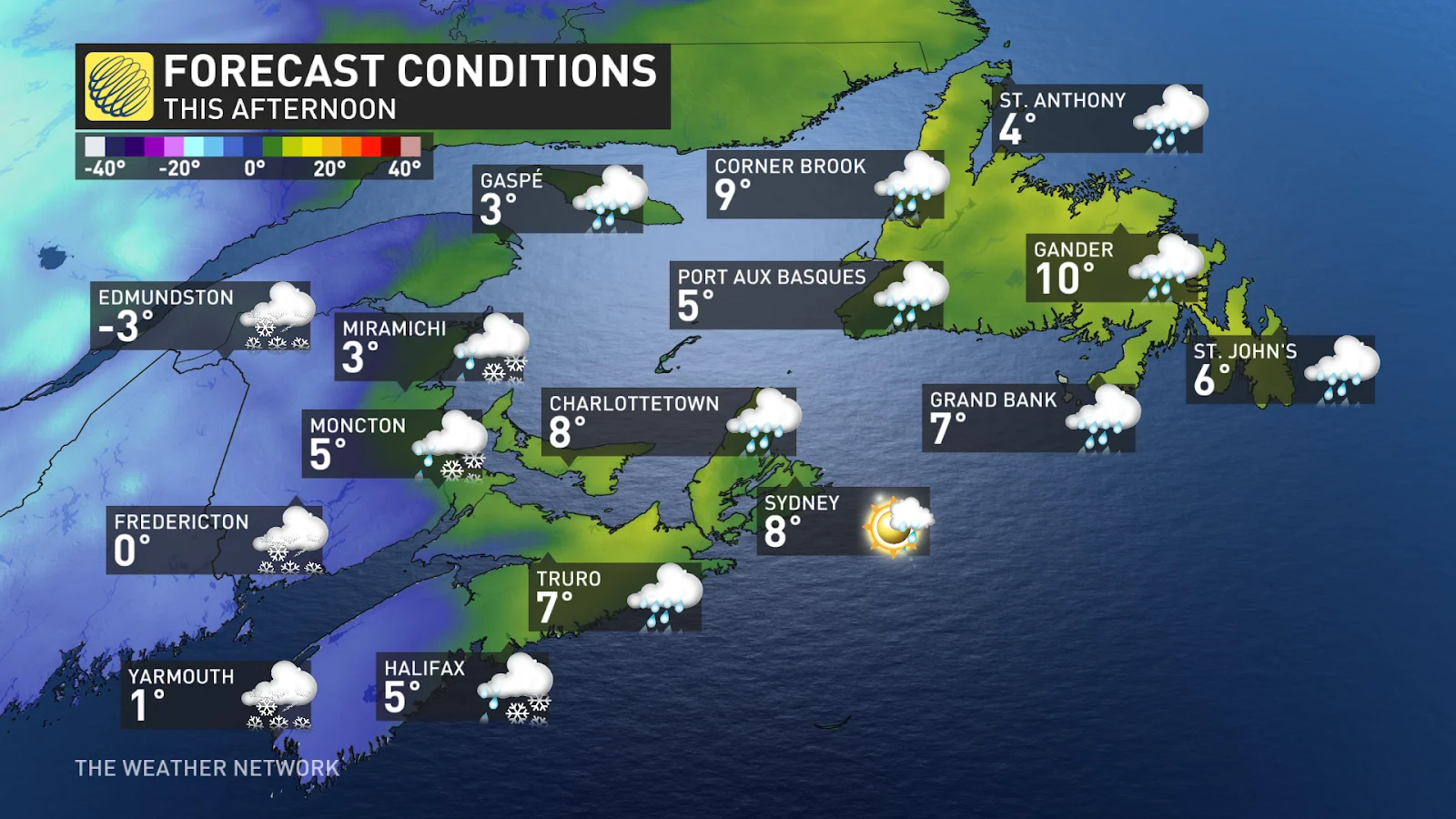
Temperatures begin to fall Friday morning after a night of heavy rains
Expect readings to fall rapidly across New Brunswick and extreme western Nova Scotia through Friday morning.
Slick roadways, side streets, and sidewalks are anticipated as wet surfaces freeze. Any standing water will likely freeze, as well.
Meanwhile, farther north, rounds of freezing rain are forecast to push across Labrador as a highly unusual surge of mild air pushes into the region.
Goose Bay Airport may be within striking distance of its rainiest March day on record. The standing record is 24.4 mm of rain on Mar. 21, 1953—and the airport has 10-20 mm of rain in the forecast on Friday.
Temperatures continue to fall into Friday night, snow for some
We’ll see readings fall below the freezing mark in Halifax by Friday evening, potentially creating slick travel conditions as any lingering wet spots on roads and sidewalks will likely begin to freeze.
A burst of snow is possible for portions of New Brunswick and Nova Scotia as moisture wraps around the back end of the low-pressure system.

Coastal communities can expect persistent gusty winds of 90+ km/h. These winds will peak Friday night and continue into Saturday morning.
The low is forecast to then backtrack over the weekend toward Northern Canada, driving warm air up to Baffin Island, potentially pushing Iqaluit's temperatures above the freezing mark for the first time since November.
WATCH: Nain's rains are plain unusual for this time of year
Be sure to check back for the latest weather updates across Atlantic Canada.