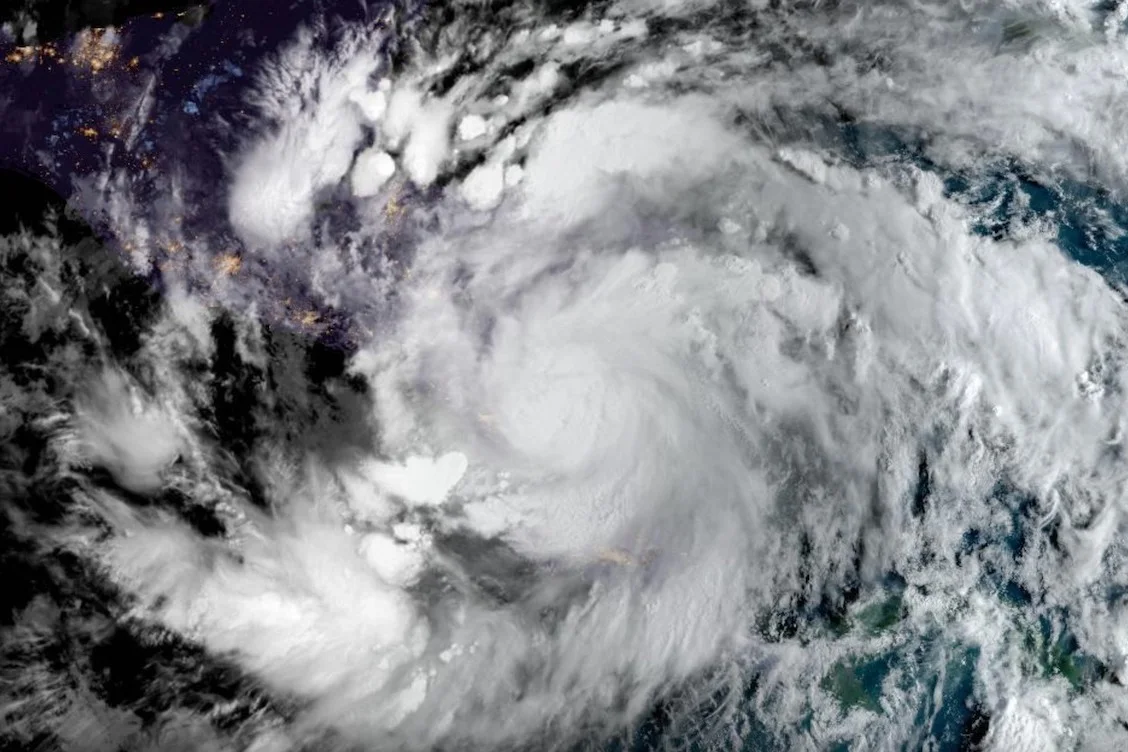
Central America lashed by Julia's flooding rains, risk for mudslides

Julia continues to move across Central America Sunday as an impactful hurricane, potentially bringing life-threatening flash floods and mudslides from heavy rains before it slides across into the Pacific Ocean
Hurricane Julia has weakened after making landfall in Nicaragua early Sunday, but the Category 1 storm remains a threat to life and property in the country and across Central America through early this week. It is still on course to bring dangerous flash floods and potential mudslides from heavy rains across Central America and southern Mexico through Tuesday.
SEE ALSO: What the science says about hurricanes and climate change
As of the 8 a.m. Sunday morning update from the U.S. National Hurricane Center (NHC), despite weakening, Julia still has maximum sustained winds near 120 km/h with higher gusts. Additional weakening is expected today as Julia moves over Nicaragua, but it is still forecast to be a tropical storm when it emerges off the Pacific coast of Nicaragua by Sunday night.
Julia is forecast to weaken to a tropical depression on Monday night and dissipate by Tuesday.
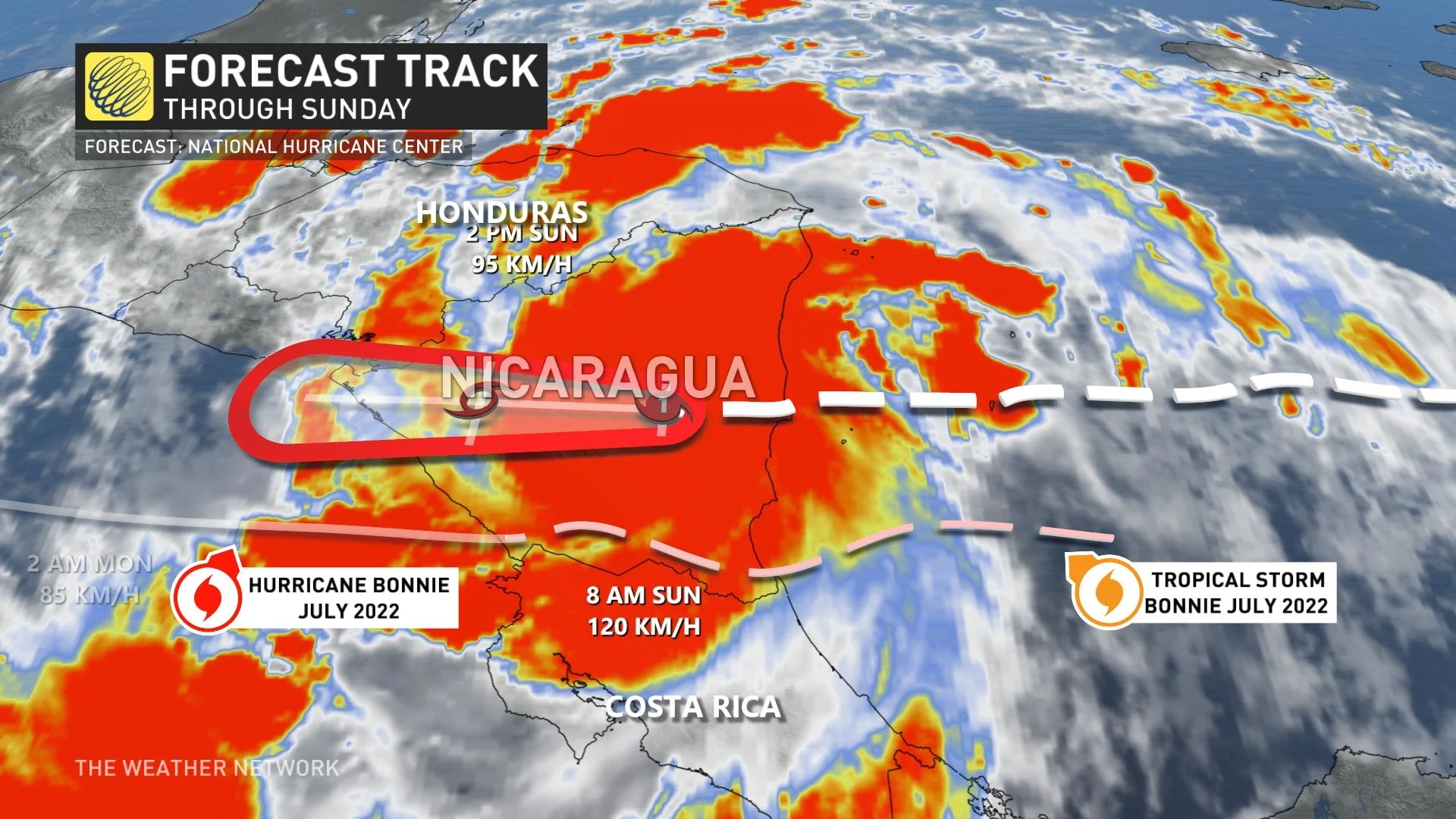
Hurricane and tropical storm warnings and watches are still in place.
The Bluefields International Airport in Nicaragua reported a sustained wind of 130 km/h shortly little after Julia had made landfall.
Julia’s strong winds will likely lead to structural damage, downed trees, and power outages throughout Central America as the storm pushes inland, but its greatest threat by far will be heavy rainfall.
Hilly terrain deep in the tropics is a recipe for relentless downpours whenever a tropical cyclone moves into the region. A storm like Julia is likely to lead to life-threatening flash flooding and mudslides throughout Central America, even far from where the centre of the storm comes ashore.
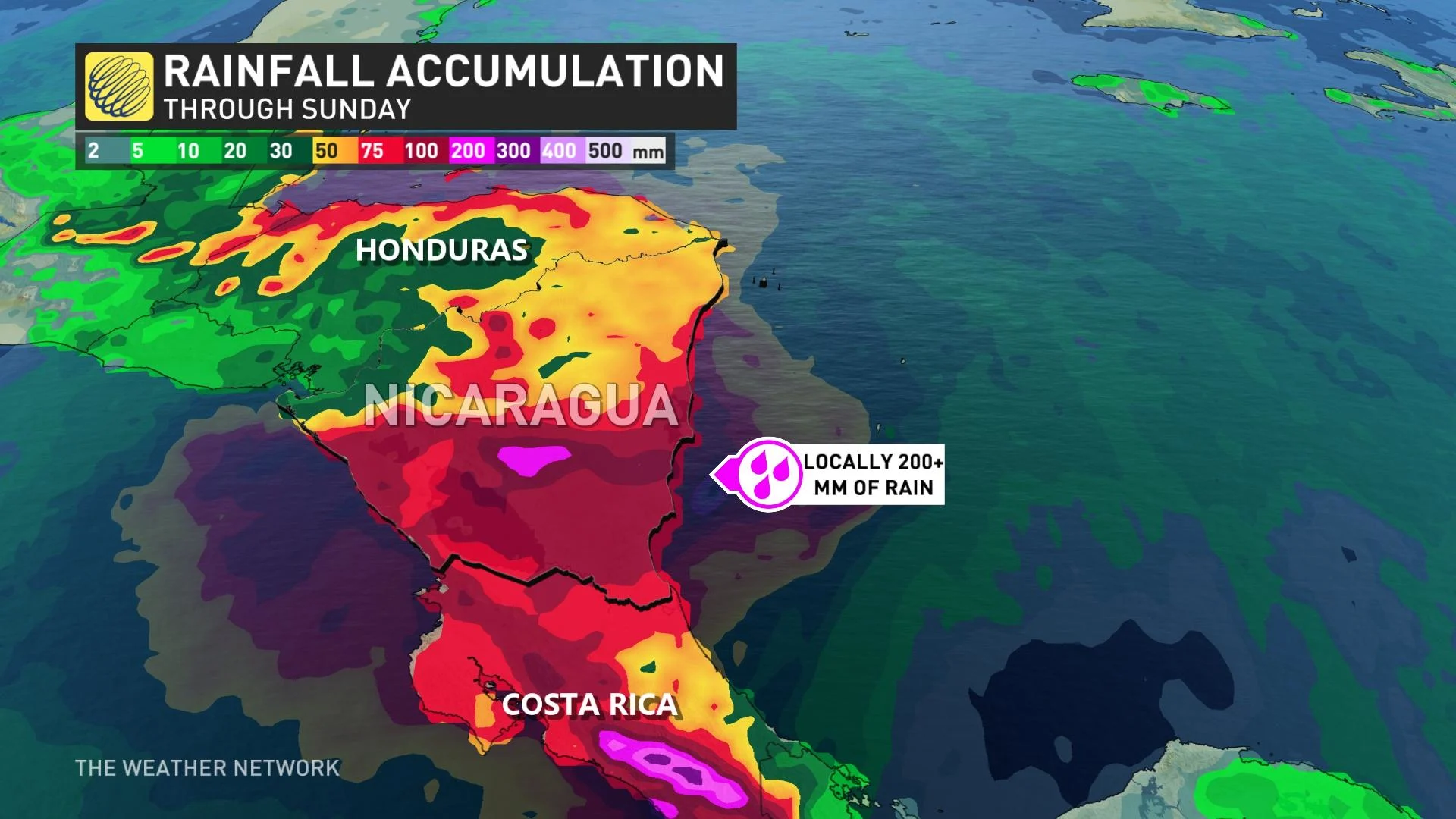
Widespread rainfall totals of 75-150 mm are expected across Central America through early next week, with totals of 300 mm or more possible across portions of Nicaragua and El Salvador.
A dangerous storm surge is likely still occurring along the coast of Nicaragua in areas of onshore winds, but water levels should subside today. Large and damaging waves will likely accompany the storm surge near the coast.
Beyond, the storm is expected to emerge in the Pacific Ocean as a tropical system by Sunday night. If Julia accomplishes this feat, just as Tropical Storm Bonnie did back in July, it would retain its original name for the duration of its lifespan over the Pacific basin.
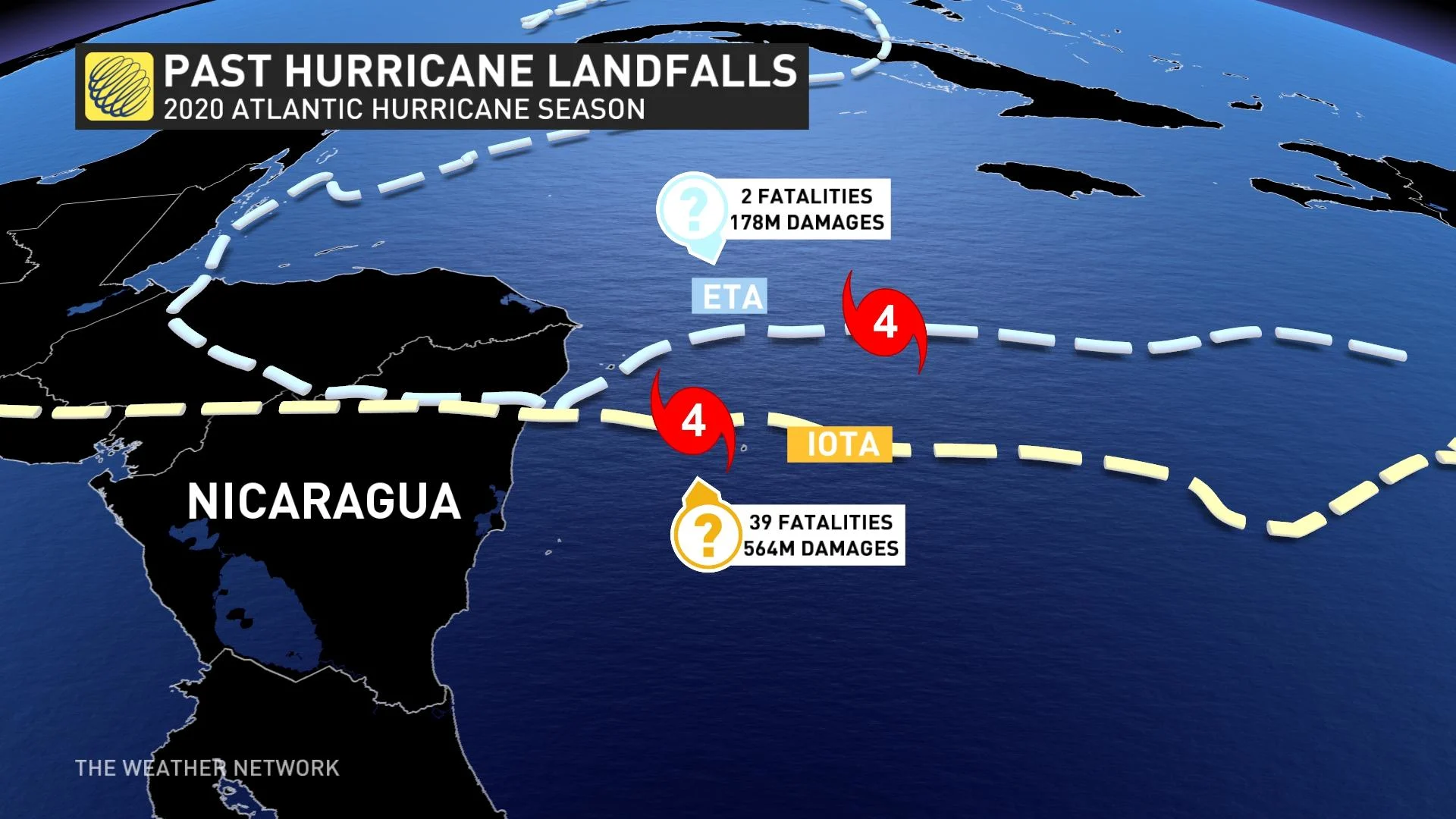
Nicaragua is no stranger to deadly storms in recent years.
Earlier this year, Tropical Storm Bonnie lashed the country with flooding rains, killing at least four people.
Hurricane Eta and Hurricane Iota both devastated Nicaragua in 2020 when the Category 4 storms made landfall just two weeks apart in roughly the same spot on the nation’s northern coast.
Stay tuned to The Weather Network for the latest updates on the tropics.
Thumbnail courtesy of NOAA.