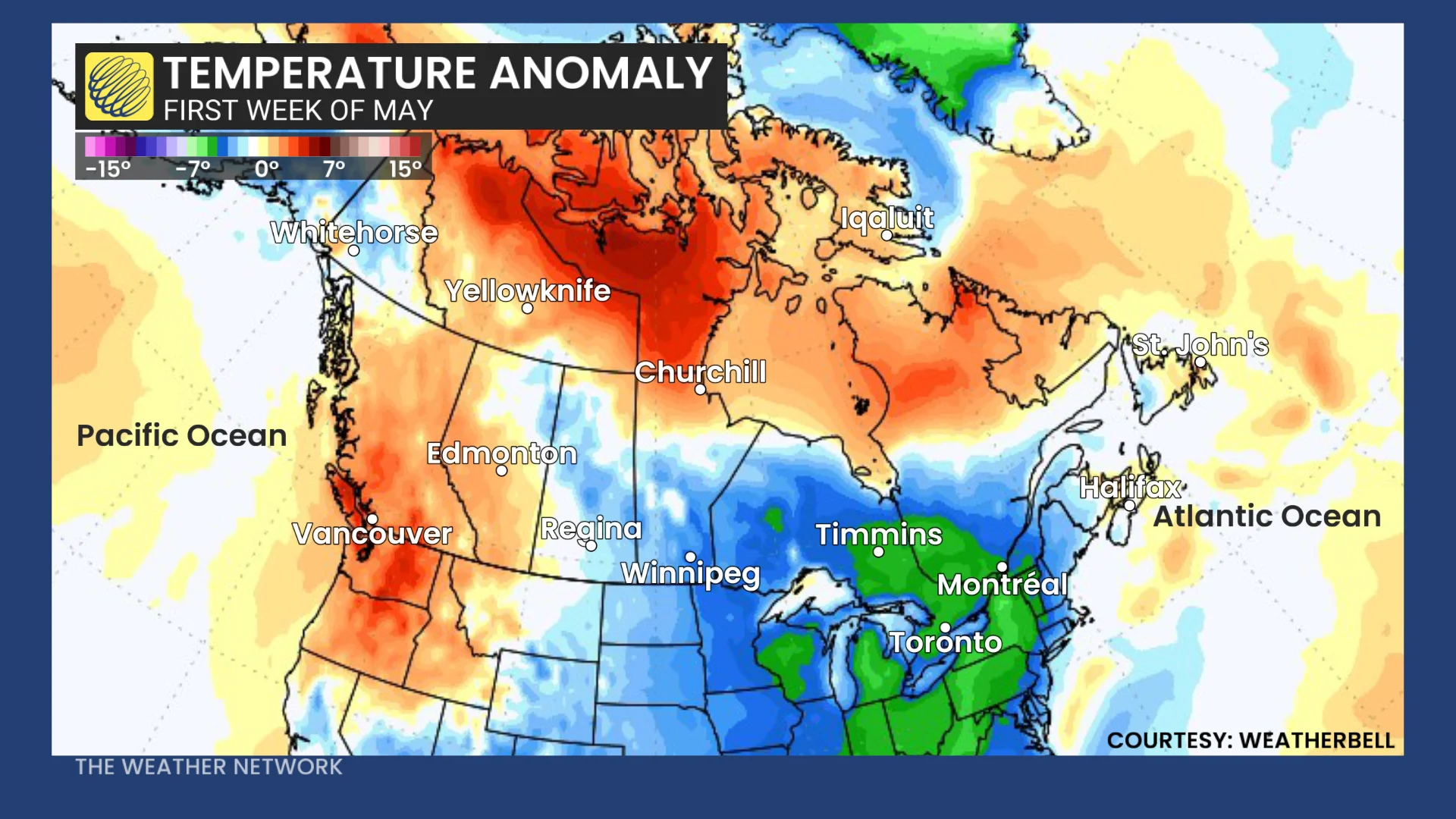
Canada’s late-week temperature shift: March chill vs. early-summer warmth

As April ends, Canada faces a countrywide temperature divide, with western regions warming into summer-like conditions while eastern areas contend with unseasonable cold, potential snow, and a delayed return to seasonal temperatures
A countrywide temperature shift is on the horizon as April ends, dividing Canada into contrasting weather zones. Some regions will feel a snap back to winter-like conditions, while others experience an early preview of summer warmth.
Last week’s Omega blocking pattern temporarily stalled weather across the country.
The Prairies endured winter-like conditions, with blizzard events and a snowstorm that stranded drivers in northern Alberta for over 24 hours.
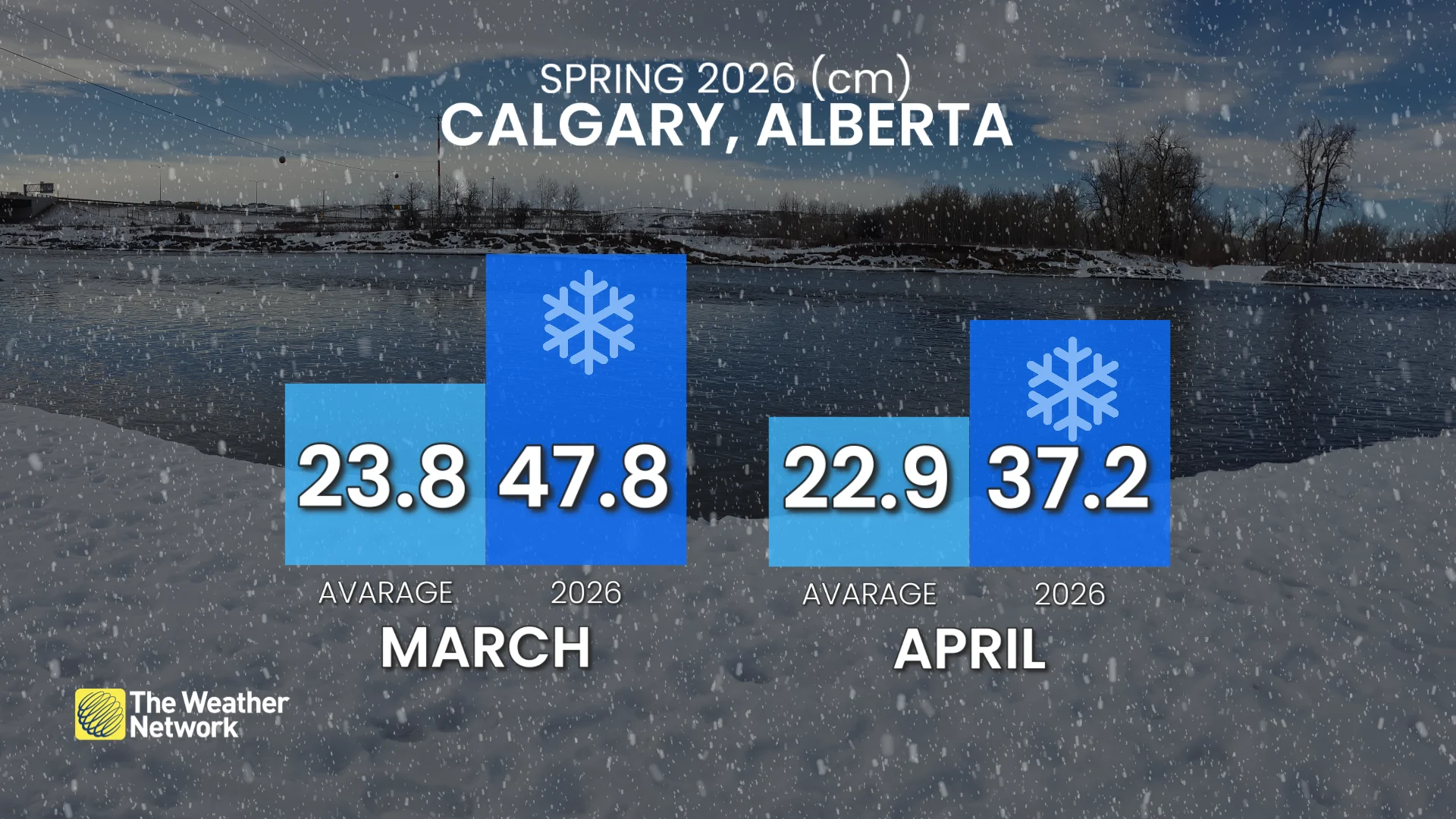
Temperatures dropped 5°C to 10°C below seasonal averages across the Prairies and 2°C to 3°C below seasonal in parts of B.C.
Meanwhile, Eastern Canada saw near to above-seasonal conditions with occasional days reaching the upper teens and low 20s.
RELATED: How Omega blocks and Rex blocks can affect Canada's weather
Late-April into May: A taste of summer warmth for Western Canada
A mid-to-late week ridge over Western Canada will bring seasonal to above-seasonal conditions for B.C. and Alberta.
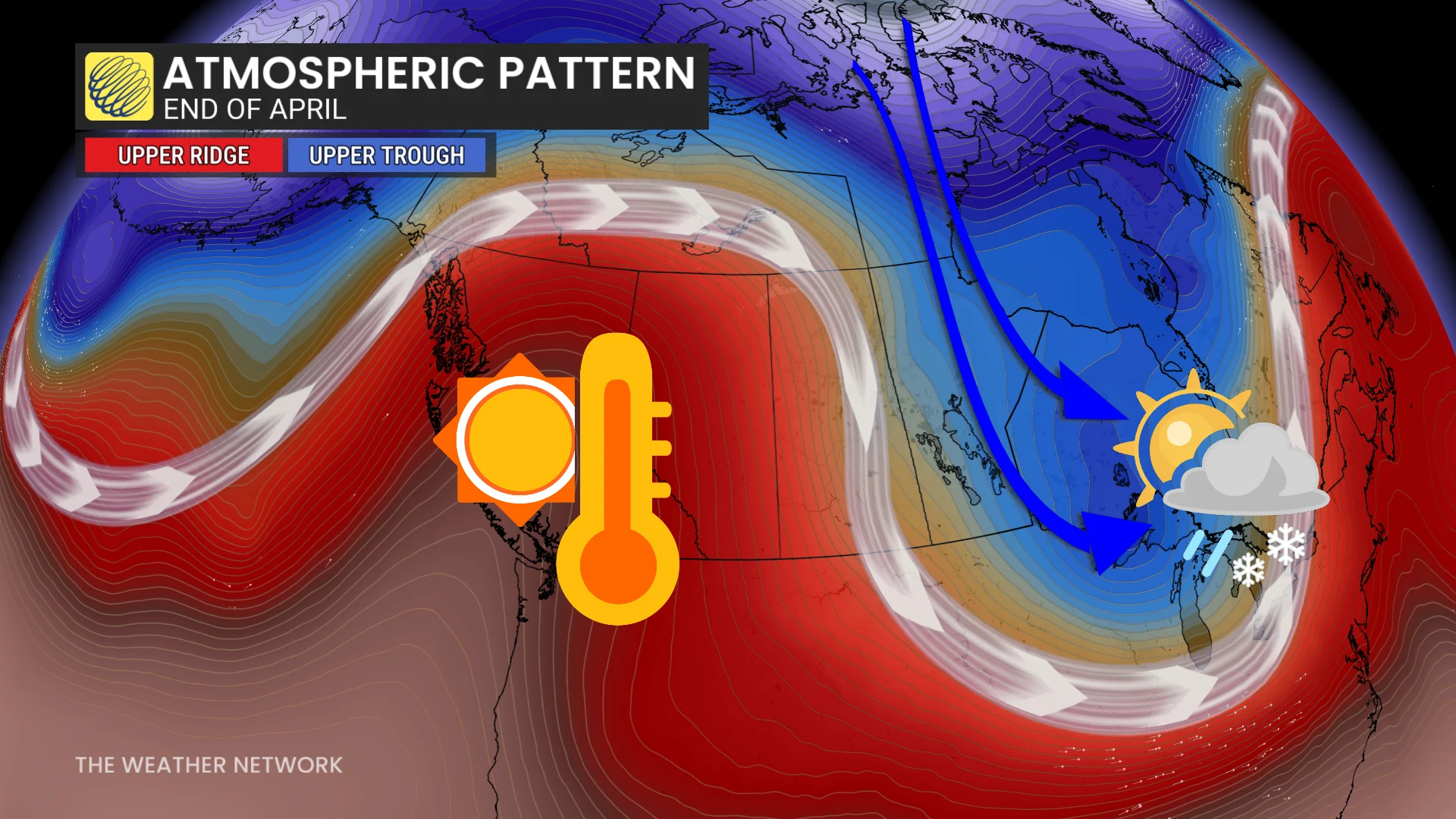
Another, more robust ridge expected this weekend into early May, associated with a Rex block, will push temperatures into the mid-20s, with the upper 20s and possibly 30°C achievable by next week.
DON'T MISS: After Alberta's April snowstorm, can we say goodbye to snow in May?
Flakes could fly for parts of Eastern Canada as April ends
In the east, unseasonably cold air will settle over Ontario and Quebec as an upper trough expands from the Great Lakes toward Hudson Bay.
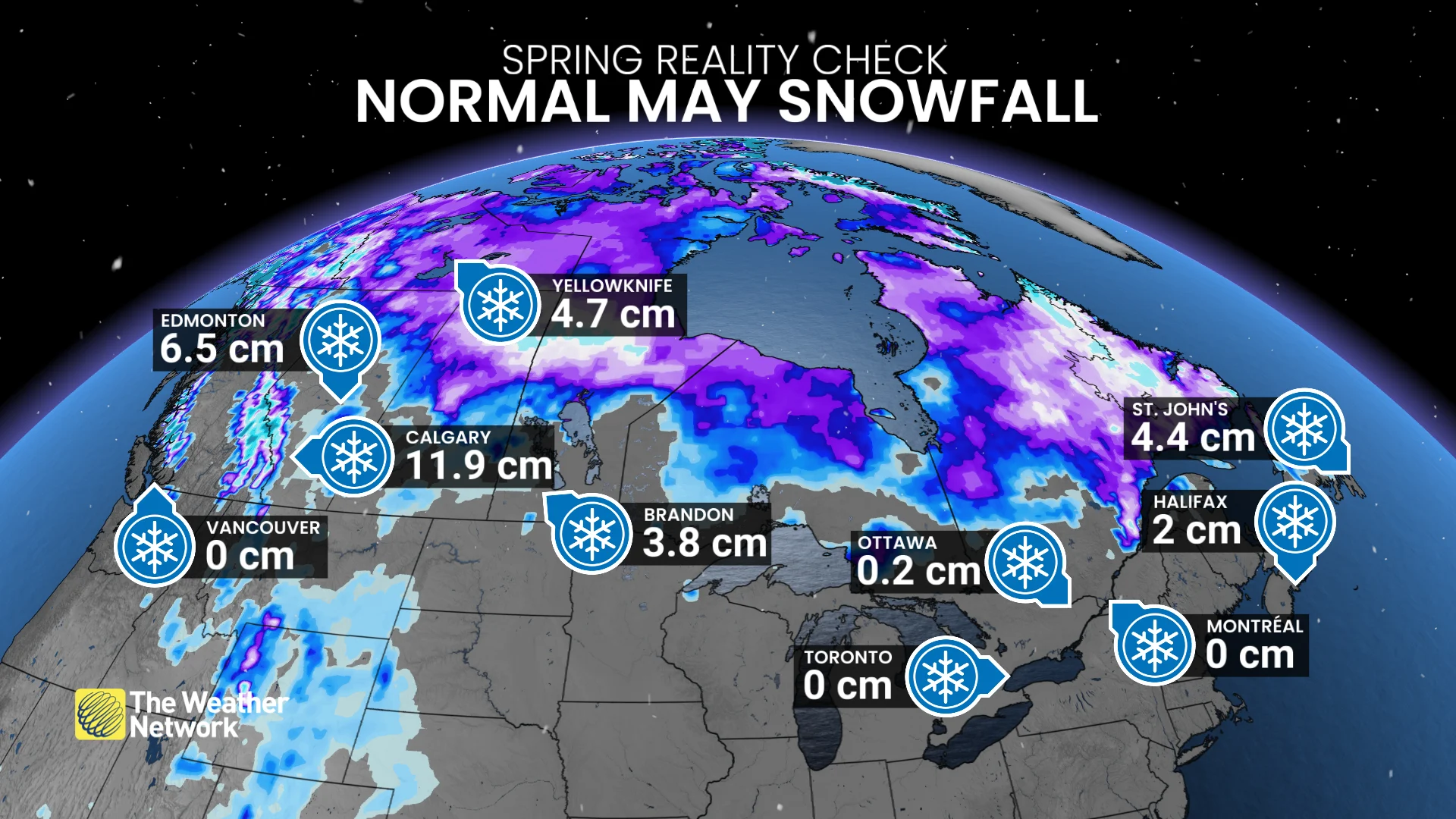
Atlantic moisture interacting with colder air could bring snow to western Quebec and northeastern Ontario, with light wet flakes possible over higher terrain in southern and central Ontario.
SEE ALSO: A tale of two extremes sends temperatures soaring into the 40s
The cooler-than-average pattern in the east may persist into mid-May, delaying the return of seasonal temperatures.