
Canada’s first tornado of the year is closer than you think

When does Canada usually see its first tornado of the year? The atmosphere always has exceptions, and we’ll explore some of the more extreme cases of the first twister in recent memory.
Canada’s severe weather season is quietly approaching, and after analyzing nearly a decade of confirmed tornado reports, we wanted to spot the trends.
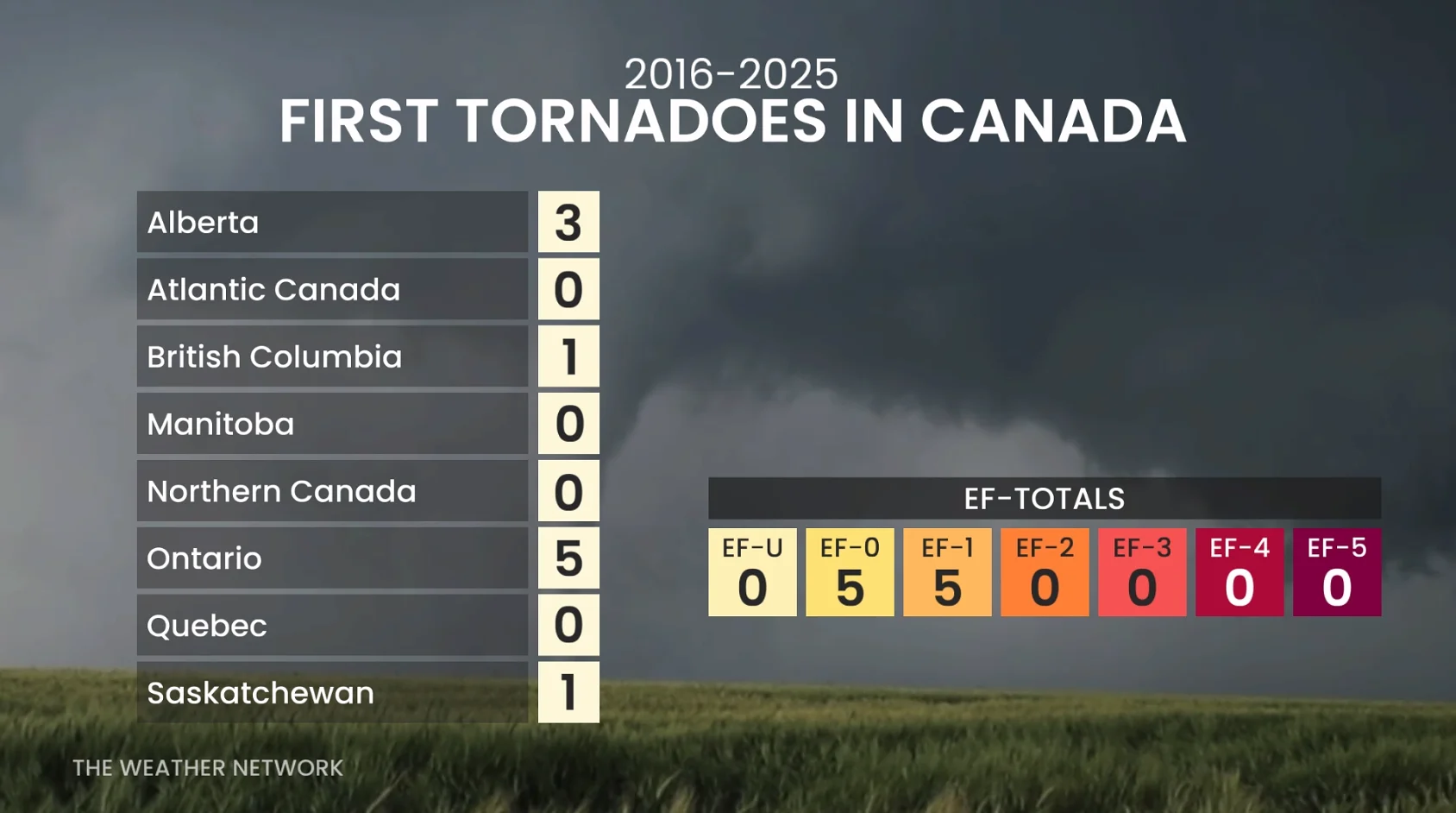
It turns out that a clear pattern emerges. Canada’s first tornado typically occurs in late April or early May. It’s nearly always a weaker variety (EF-0 or EF-1), but Ontario has produced exceptional outliers.
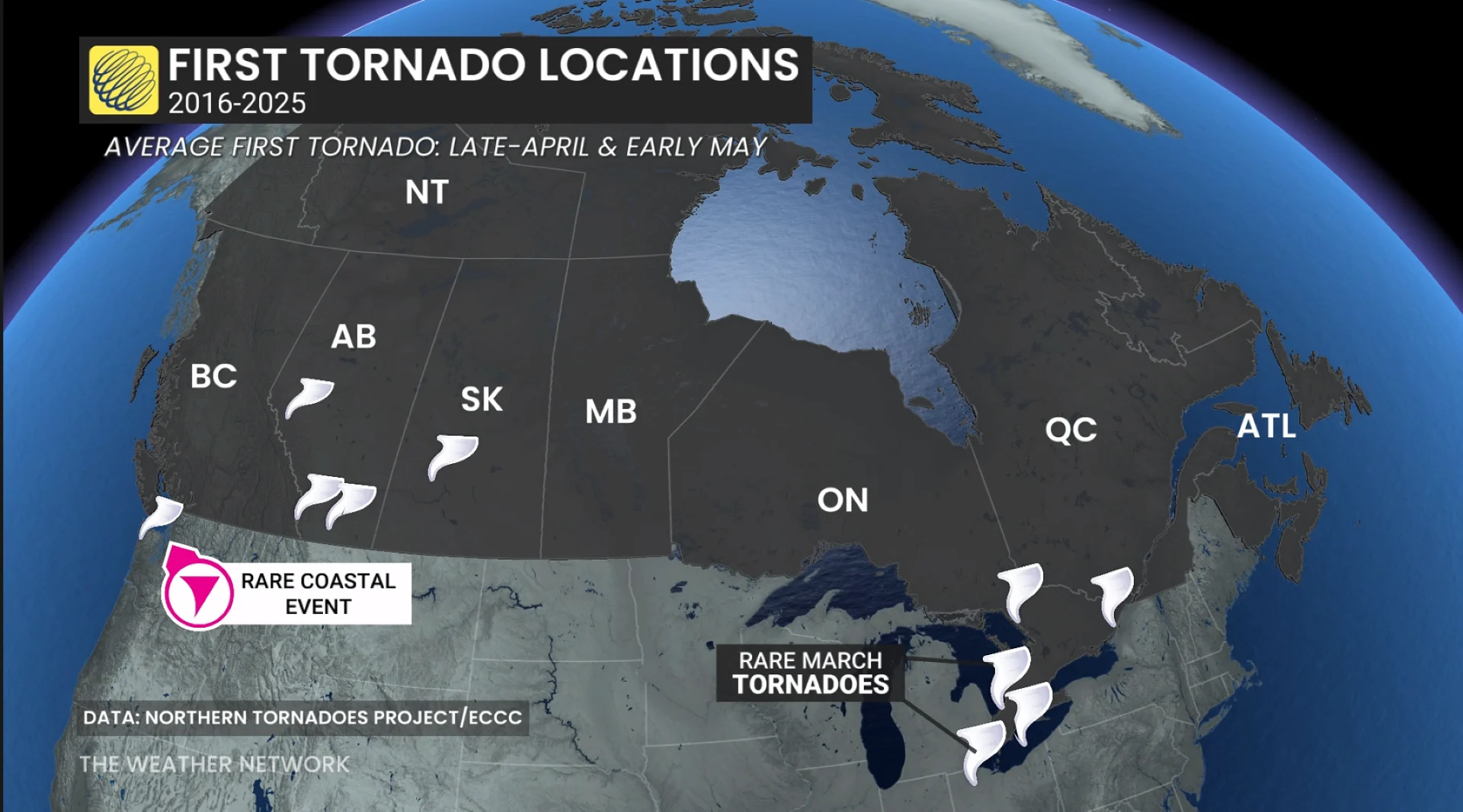
The atmosphere always has exceptions, and we’ll explore some of the more extreme, first tornadoes in recent memory.
Fast facts
Canada’s first tornado typically arrives in late April or early May, but extreme outliers exist over the past decade:
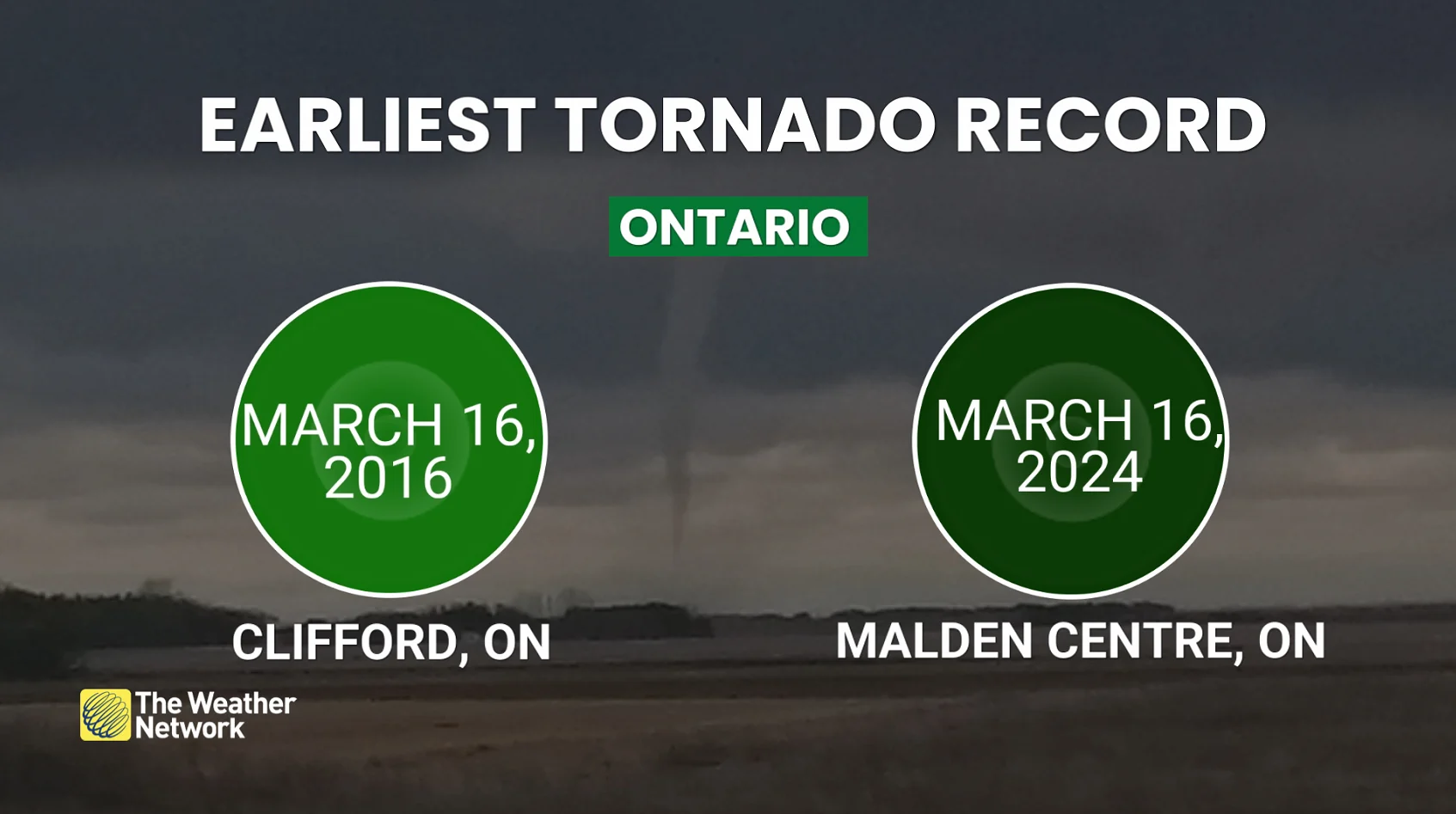
March 16, 2016 and 2024: Clifford and Malden Centre, Ont., respectively
The latest, first tornado over the past decade occurred on May 21, 2020 in Saanich, B.C.
The strongest first tornado occurred in Clifford, Ont., in 2016, reaching winds of up to 170 km/h.
Those tornadoes were driven by dynamic setups, not your weaker landspout variety. The most common location type for the first landspout tornado is on the Prairies.
Ontario has documented the first tornado in five of the past 10 years.
First-year tornado occurrences
April 12, 2025: Rolling Hills, Alta.
EF-0 (default, no damage)
Short track: 0.76 km
Satellite confirmed path through cropland
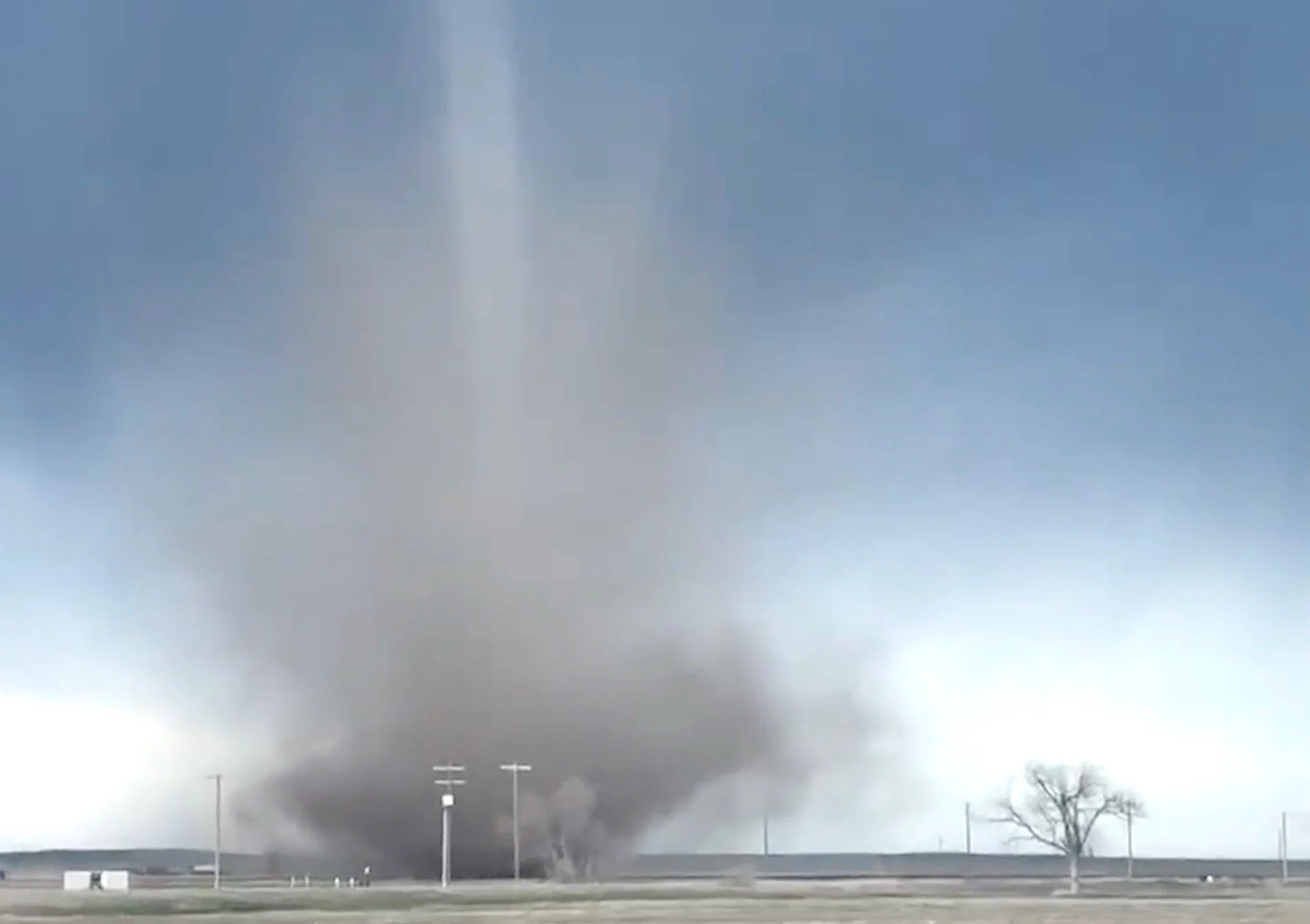
Alberta landspout tornado near Rolling Hills on April 12, 2025. (Bantry Seed Farms/Submitted to The Weather Network)
March 16, 2024: Malden Centre, Ont.
EF-1 (150 km/h winds)
Damage to manufactured homes and trees
May 11, 2023: Cayley, Alta.
EF-0 (default, no damage)
Video confirmed landspout
May 15, 2022: Casselman, Ont.
EF-0 (landspout)
No damage reported
Remained over open fields
May 17, 2022: Caron, Sask.
EF-0 (landspout)
Minor farm damage
Track: 3.44 km, width 100 metres
May 12, 2021: Saskatoon, Sask.
EF-0 (landspout)
No damage reported
May 21, 2020: Saanich, B.C.
EF-0 (approximately 90 km/h winds)
Brief debris lofted
Incredibly rare, coastal B.C. tornado, the first on Vancouver Island since Ucluelet in 1966
April 24, 2019: Peers, Alta.
EF-1
Fencing destroyed, sheds tossed
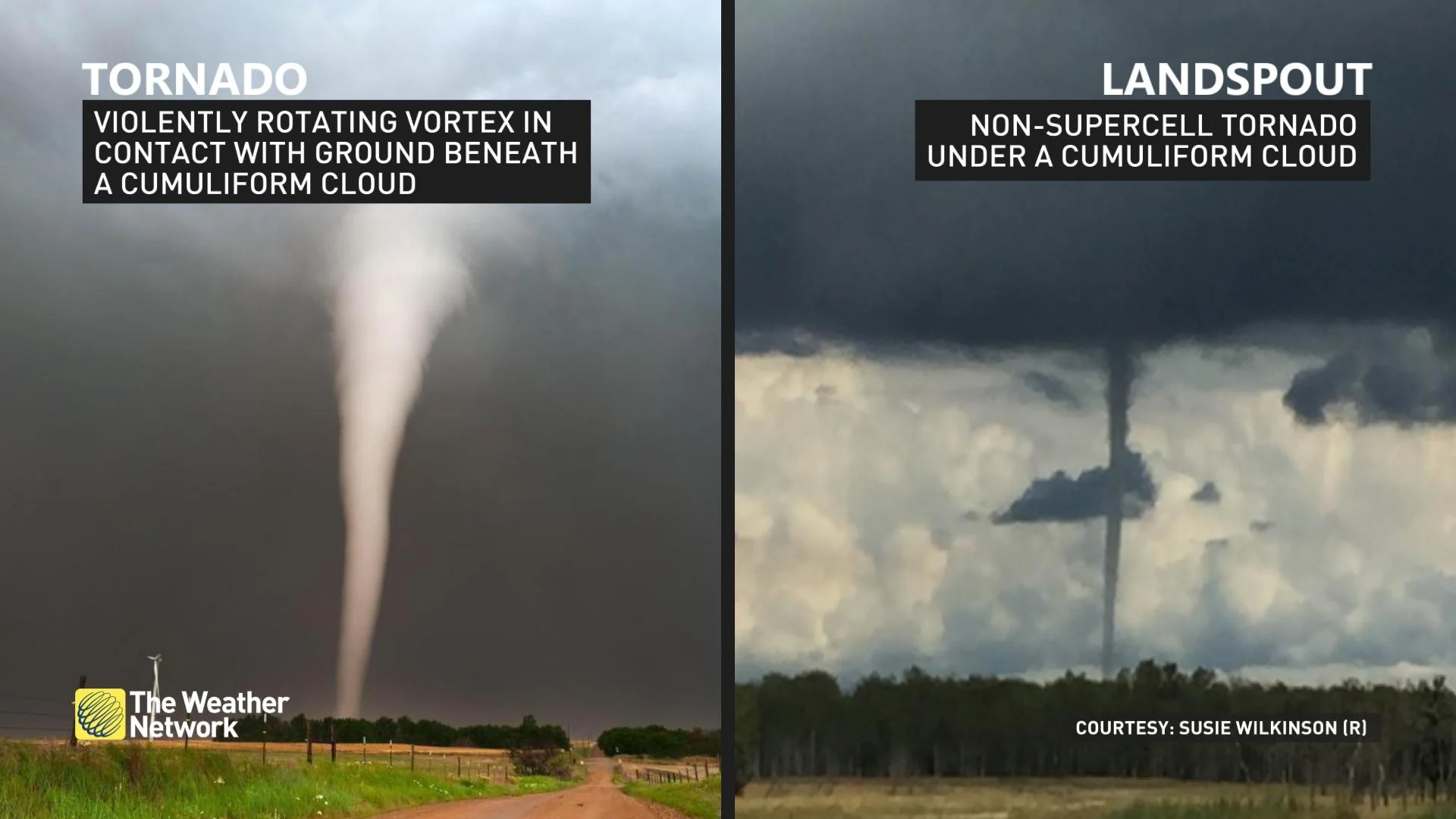
May 4, 2018: Stag Lake (South Nipissing), Ont.
EF-1
Northern Tornadoes Project re-analysis
May 22, 2018: Regina, Sask.
EF-0
Formed from colliding, outflow boundaries
April 11, 2017: Thamesford, Ont.
EF-1 (150 km/h winds)
Significant damage: Barn roof, trees, hydro poles
Long track: 11 km, width 200 metres
March 16, 2016: Clifford, Ont.
EF-1 (170 km/h)
Damage path: 3.5 km long, 200 metres wide
Grain bins blown up to 200 metres, severe barn damage
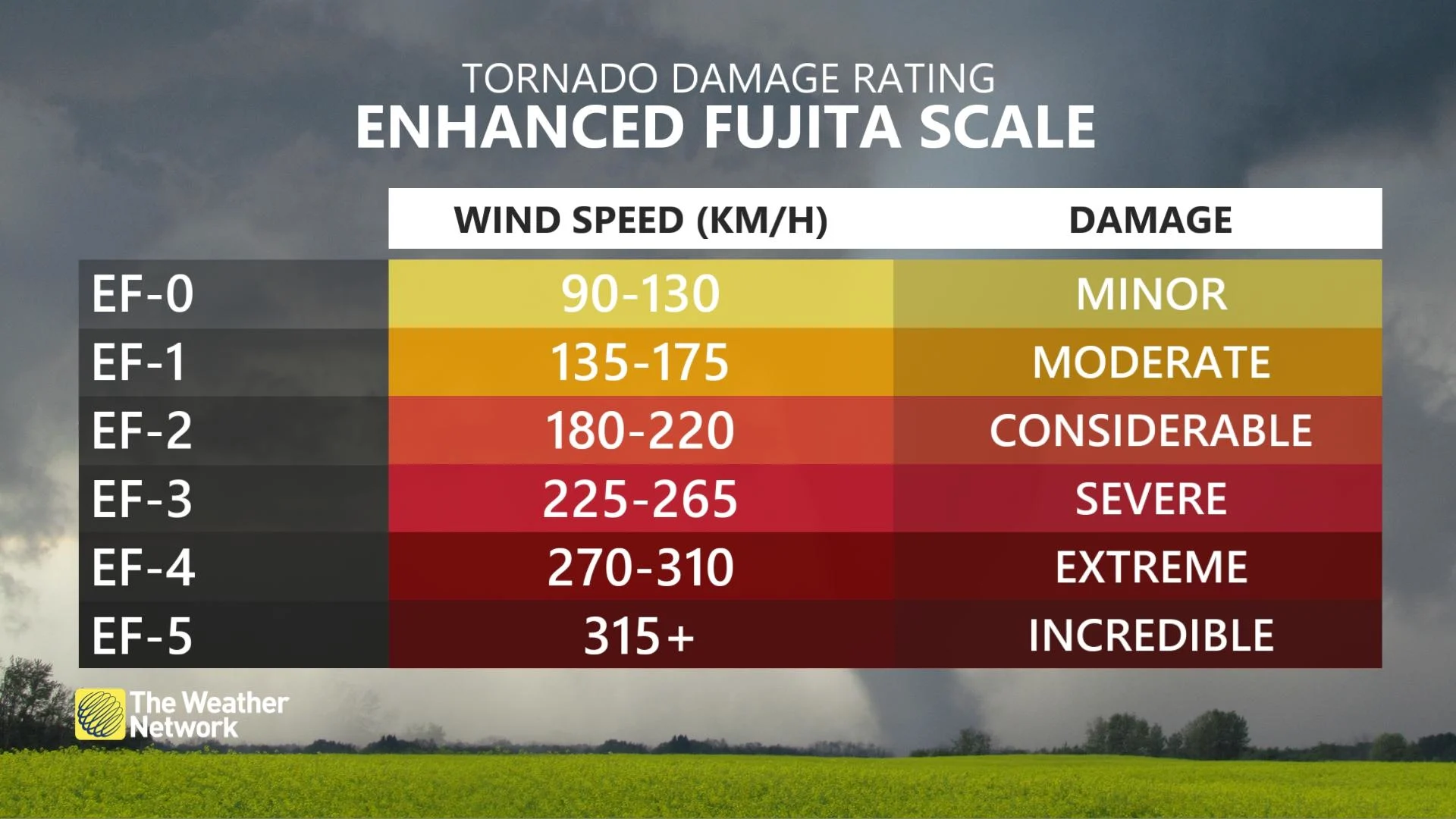
Most of the first tornadoes are weak landspouts, but several have kicked off the season with damaging, EF-1 events.
Over the next few weeks, it will be increasingly likely that Canada will record its first tornado of the year. The highest probability of the event falls on the Prairies or across southern Ontario.
Historically, most seasons start with a weaker landspout forming along developing boundaries. But as recent years show, a stronger tornado can occasionally arrive much earlier, giving us a reminder of how the severe weather season in Canada can ramp up quickly when the right conditions align.