
B.C’s ridge paradox: Why record warmth won’t feel warm

We explain the record-breaking ridge of high pressure setting up over British Columbia. The atmospheric pattern is creating a strong temperature inversion, leading to a forecast of several days of dense fog, particularly around the Strait of Georgia.
After heavy rainfall over the past several days eases, an exceptional and highly anomalous weather pattern will unfold across British Columbia through next weekend. A near record-breaking ridge of high pressure will build and latch onto the coast of B.C., dramatically changing how the atmosphere behaves.
DON’T MISS: 'They are going to disappear': Western Canada glaciers face bleak future
Forecasters will be watching two features this week, in particular: A stubborn marine layer and fog near the surface and Georgia Strait, and a remarkably warm layer of air above it.
Warmth set to rise amid pattern change
The culprit: A massive ridge.
We can quantify the strength of the ridge by looking at the forecast height of the 500 mb pressure, in metres. This measures how thick and warm the atmosphere is from the ground to the mid-levels.
Past weather balloon data gives us context for what’s truly rare.
All-time January record: 5880 m (2009)
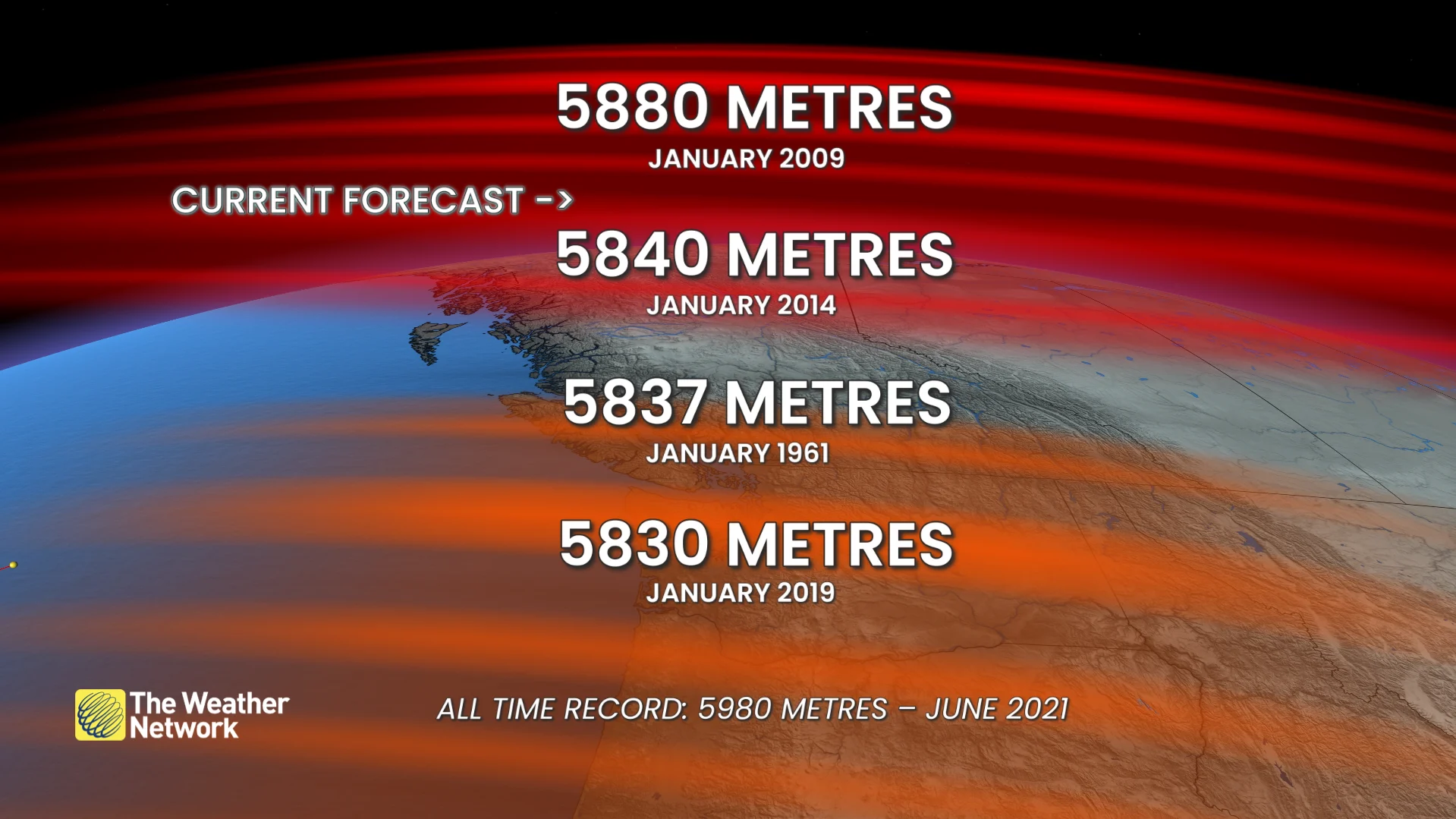
Q: Does this future ridge compare? A: Yes, remarkably close.
Current guidance suggests 500-mb heights near 5850 metres, putting this event within striking distance of the strongest January ridges every observed in the Pacific Northwest.
HISTORICAL CONTEXT - MOST ANOMALOUS JANUARY RIDGES (UIL - Quillayute, Wash.)
5880 metres: January 2009
5850 metres: January 2014
5837 metres: January 1961
Near-record freezing levels
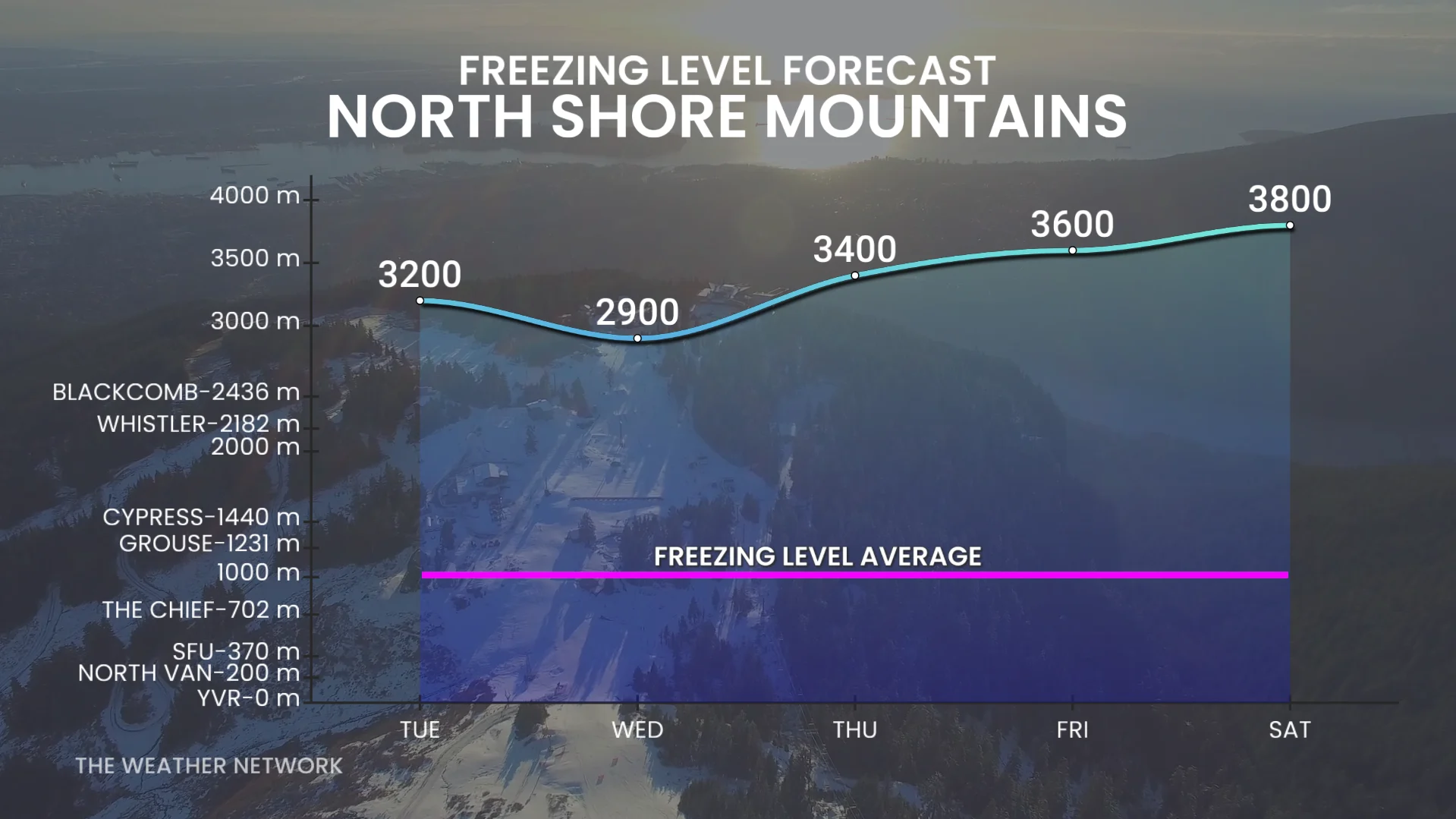
One of the most eye-catching signals of this pattern is the freezing level forecast. Forecast to surge toward 4,000 metres in some locations.
Exceptionally high for January and potentially near record-setting for the Pacific Northwest and southern B.C.
What’s noteworthy is this freezing level would be considered well above average for any calendar month, not just winter.
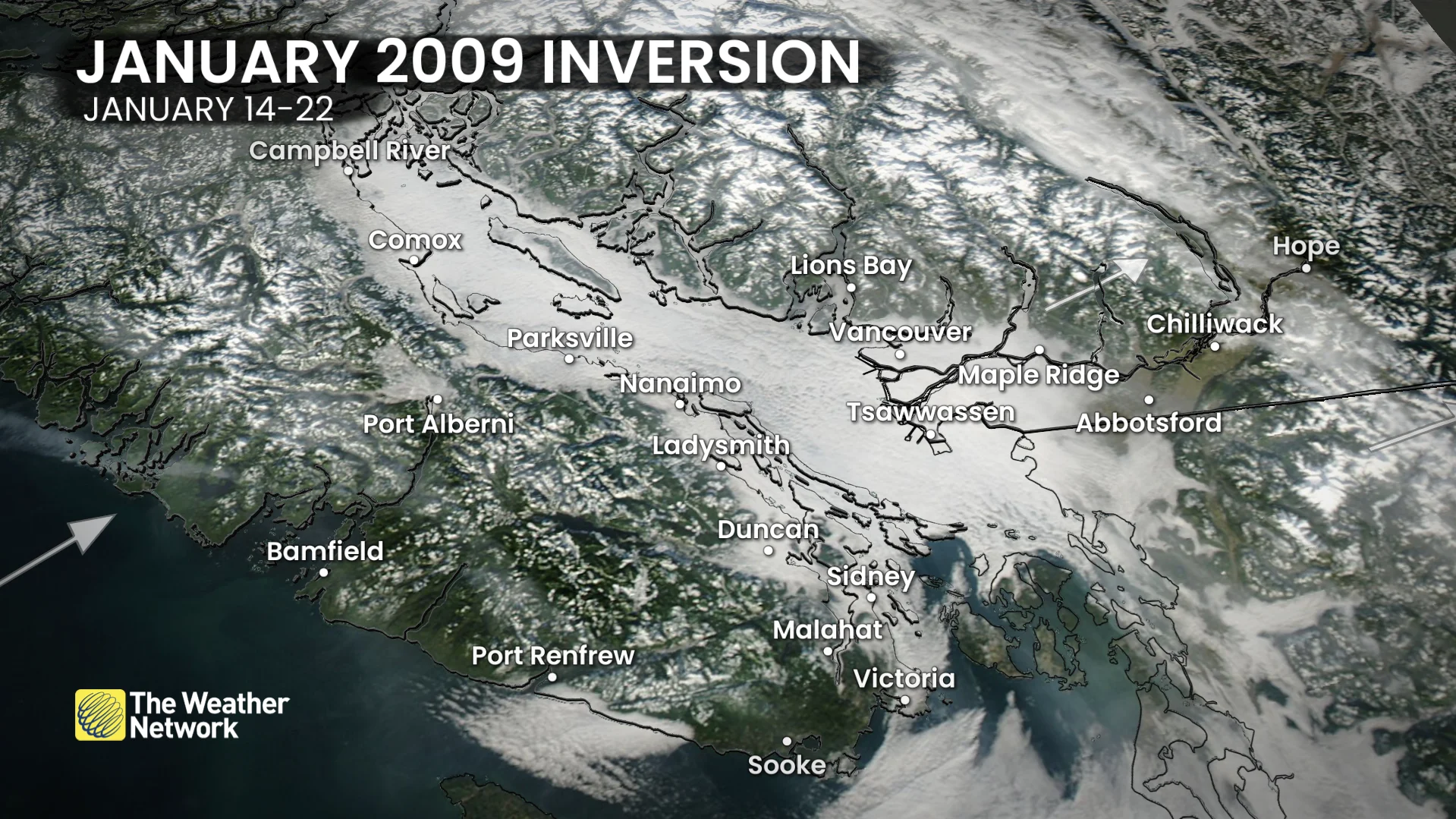
A FAMILIAR ANALOG: JANUARY 2009
The last time we saw air this warm aloft in January was 2009, when:
The City of Vancouver experienced the iconic "sea of fog" imagery, with photos above the inversion providing captivating photos.
The South Coast experienced low cloud and fog for eight days, while higher terrain basked in sunshine and warmth.
DON’T MISS: What’s a Pineapple Express? Diving into this robust atmospheric river
Just how warm is the air aloft?
January 2009:
850 mb: 16.6°C
700 mb: 6.6°C
January 2026:
850 mb: 15°C
700 mb: 6°C
The ridge paradox
Here’s where things get a little counterintuitive.
If this was summer, this atmosphere profile could support temperatures as warm as 30°C across inland sections of the South Coast and the Fraser Valley.
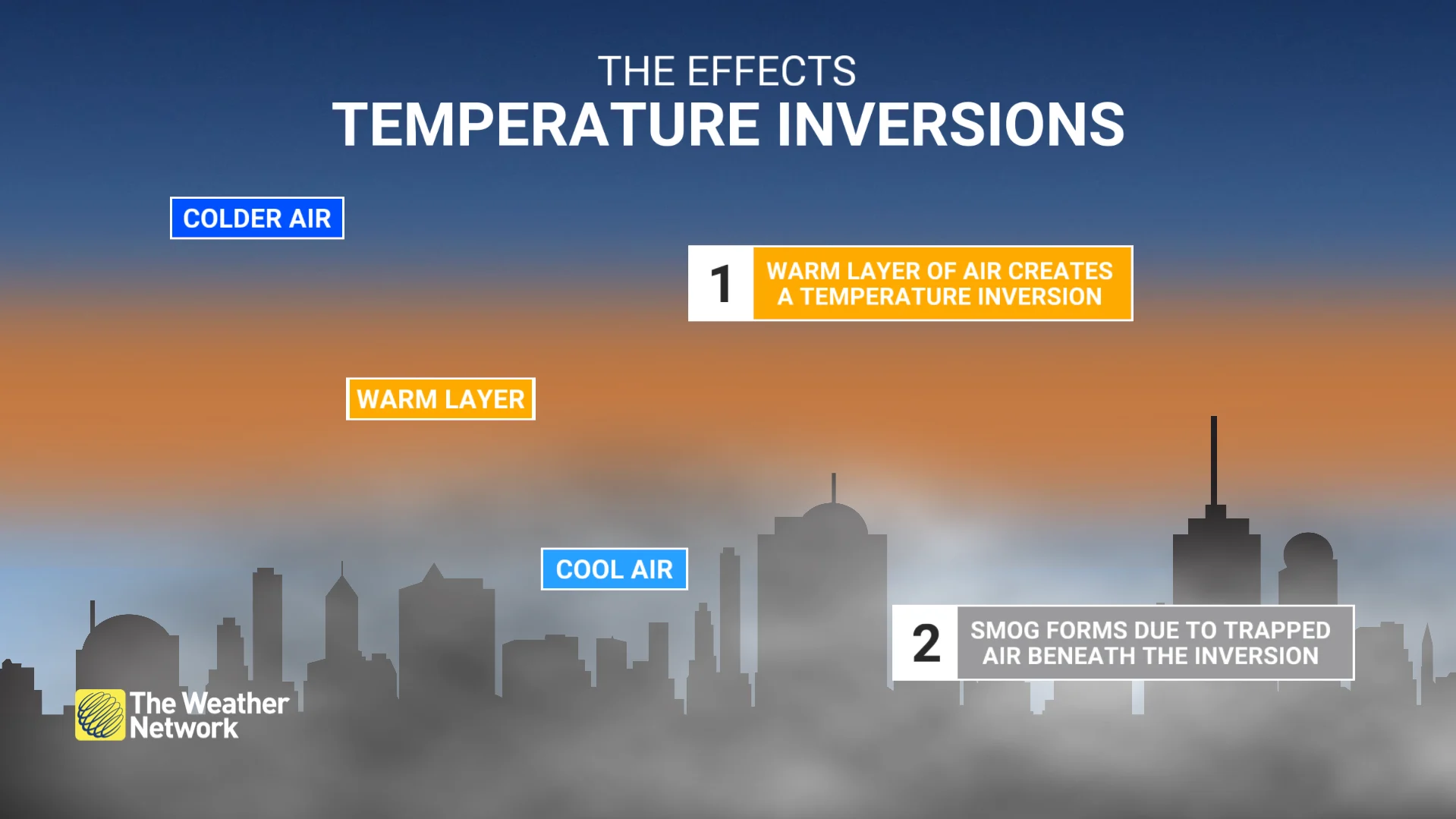
But, it’s January. The sun angle is low and the atmosphere doesn’t mix well, meaning the cold, dense air becomes trapped underneath the surface.
The result? Fog, low cloud, and stagnant air near the ground and across lower elevations of Metro Vancouver
Surface temperatures that may actually run below seasonal, despite record-warm air overhead
Welcome to our key concept.
What is a inversion?
Typically, temperatures decrease with height – warm air near the surface, cooler air above. An inversion literally flips this pattern upside down.
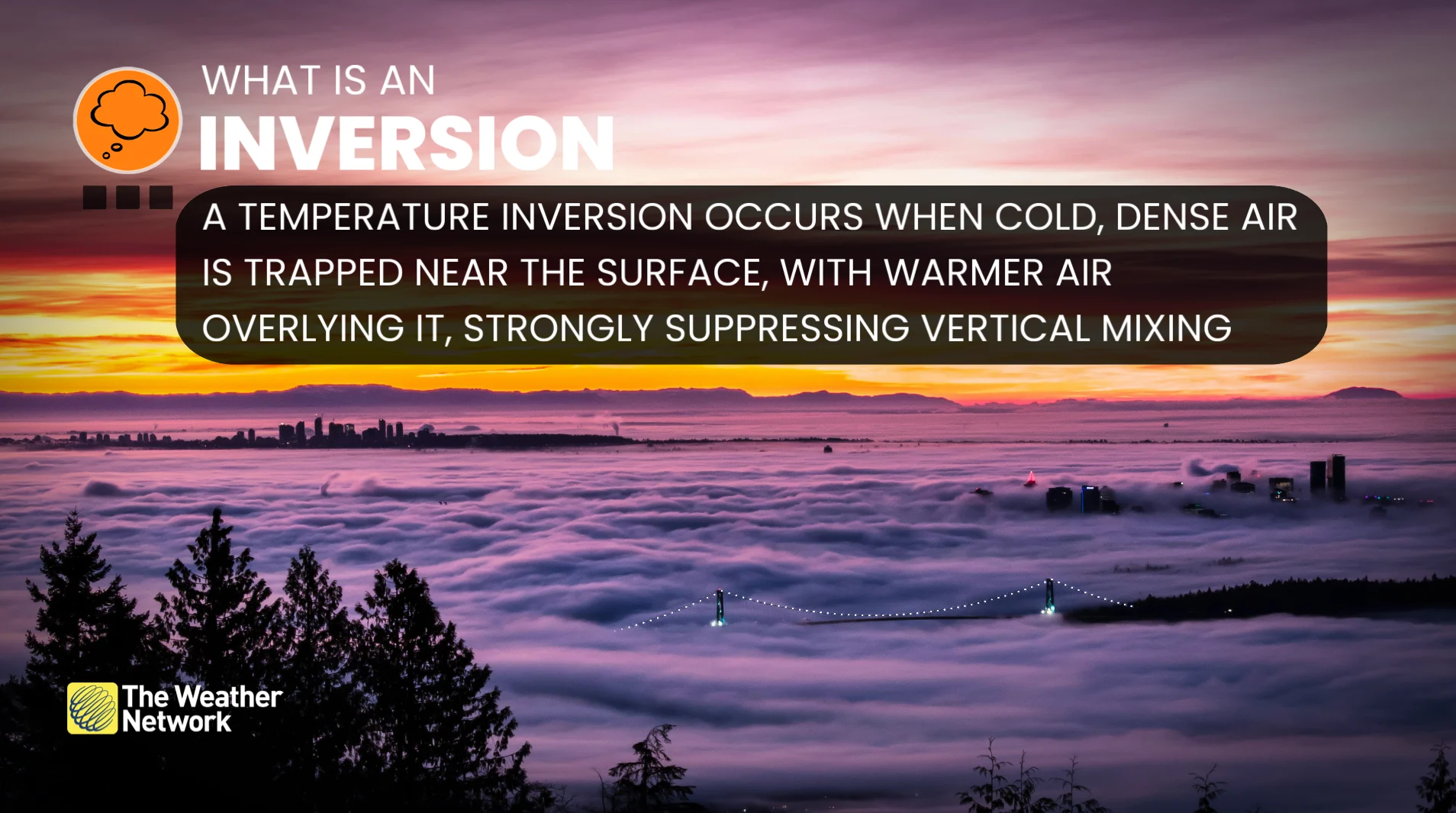
The atmosphere becomes extremely stable, with little vertical mixing in this configuration.
You can think of it like putting a lid on the atmosphere. Hills and higher elevations will likely feel like a completely different season.
A classic coastal fog event might be brewing, and it’s a perfect reminder that even record-warmth overhead does not always mean warm weather at the surface.
Stay with The Weather Network for all the latest on conditions across British Columbia.