
Moisture keeps B.C. soggy as March rolls in with rain, alpine snow

As precipitation has been rather light for the majority of February, the recent snow is welcomed for the ski resorts as it will help to add more base for the spring ski season.
Much of February was abnormally dry for B.C., but the last few days have almost made up for the absence of precipitation for the South Coast. The region is in the midst of another atmospheric river, but is beginning to slow down with rainfall set to ease overnight Monday. However, conditions will remain unsettled until mid-week, to be replaced by the familiar drier pattern once more. Meanwhile, significant mountain snow continues to bring difficult travel and with an elevated avalanche risk Tuesday. See more on what's left of the current atmospheric river, below.
TUESDAY: RAIN SUBSIDES, BUT REMAINING UNSETTLED THROUGH MID-WEEK
A moisture-laden system is spreading heavy rain across the South Coast, thanks to an atmospheric river. Some stations on the South Coast and Vancouver Island have reported receiving maybe 20-60 mm of rain locally since the weekend.
The good news is the rain will subside in the overnight hours Monday. But conditions will remain unsettled Tuesday, with off-and-on showers. Although there will be breaks in between, the rain, as well as the alpine snow, are expected to continue into Wednesday morning before winding down in the afternoon.
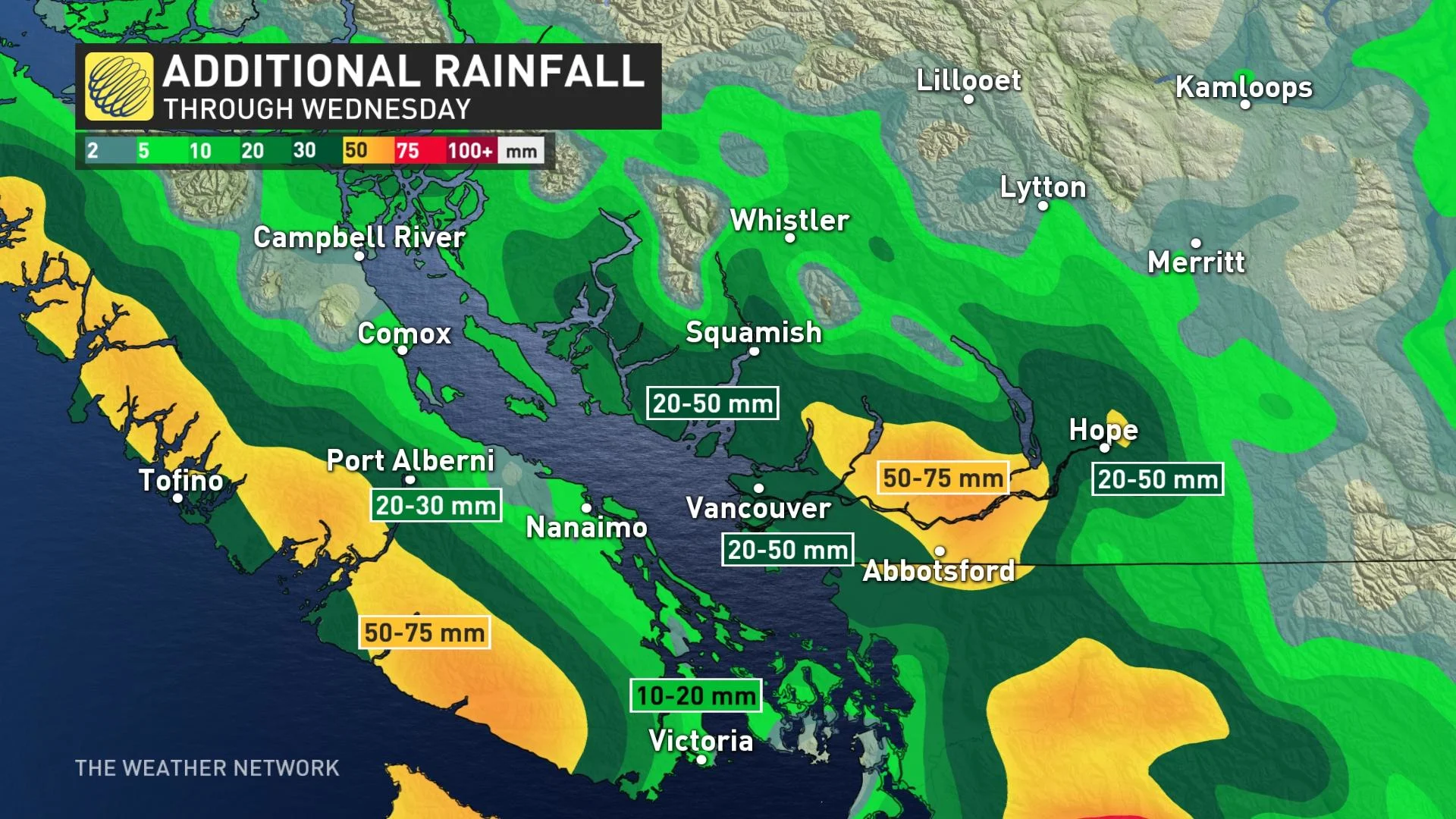
The highest additional rainfall totals will fall over the Lower Mainland and western Vancouver Island, with both regions still in line for 50-75 mm through Wednesday. Metro Vancouver will be on the hook for a further 20-50 mm during the same timeframe.
"Heavy downpours can cause flash floods and water pooling on roads.," states Environment Canada and Climate Change’s (ECCC) rainfall warning for Metro Vancouver.
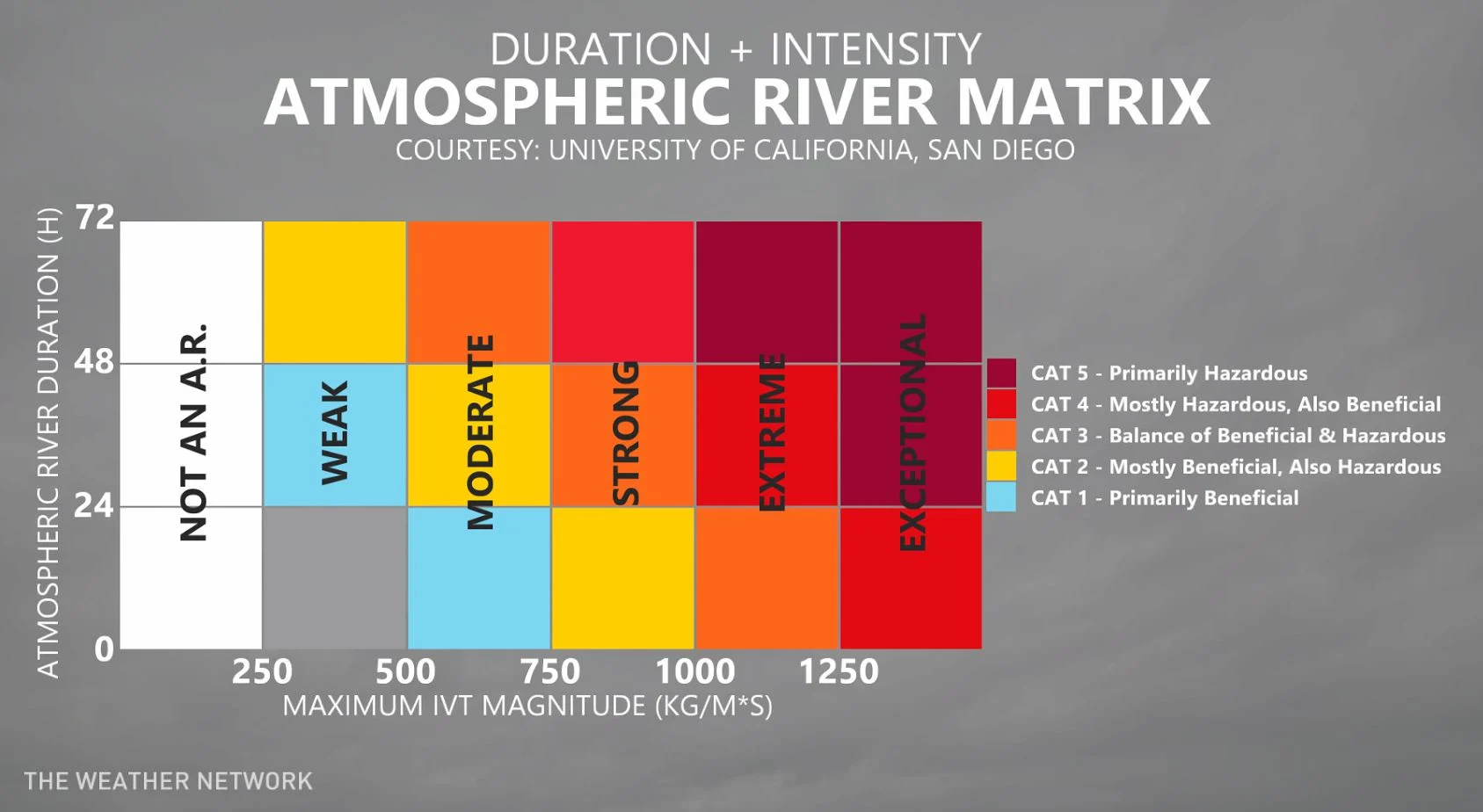
The atmospheric river scale ranges from 1 to 5 indicating the intensity of the event based on the quantity of rain and the duration of the event. A 1 on the scale indicates the precipitation is primarily beneficial, whereas a 5 rating is primarily hazardous. For the B.C. coast, this atmospheric river is considered to be an AR1.
"As precipitation has been rather light for the majority of February, this precipitation is welcomed for the ski resorts as it will help to add more base for the spring ski season," says Matt Grinter, a meteorologist at The Weather Network.
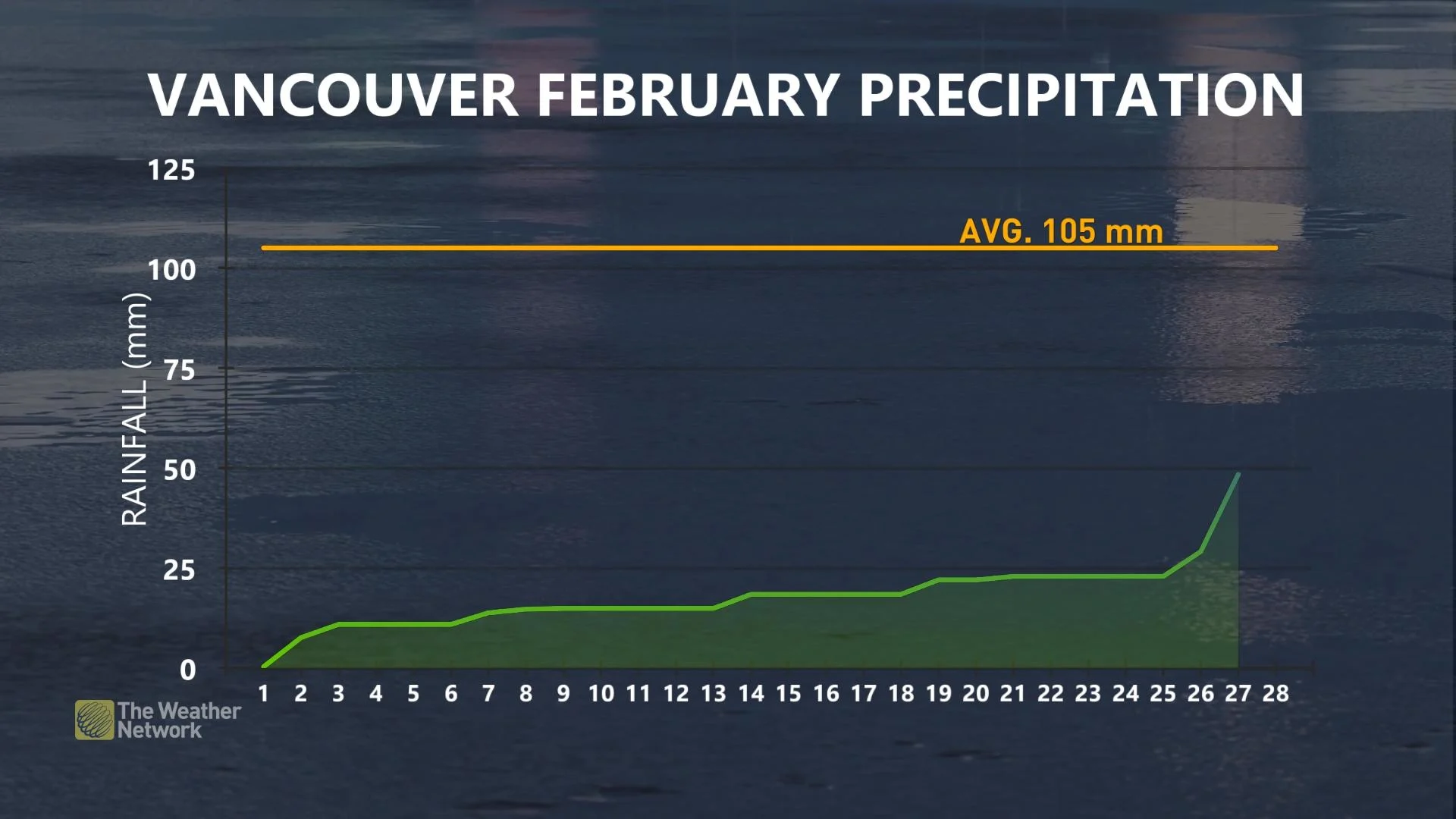
Vancouver was on track to see its fourth driest February on record until the pattern changed and rain started over the weekend. With the rain over the weekend and on Monday, this will now move Vancouver closer to a normal rainfall for the month of February.
SIGNIFICANT MOUNTAIN SNOW PROMPTS WINTER STORM WARNINGS
Low freezing levels have made this a much more interesting pattern for ski resorts and mountain passes. Freezing levels are still generally hovering around the 1,000-1,500 metre range. As a result, the daytime brings rain showers to the mountain passes, followed by ice or snowfall in the evening and overnight periods.
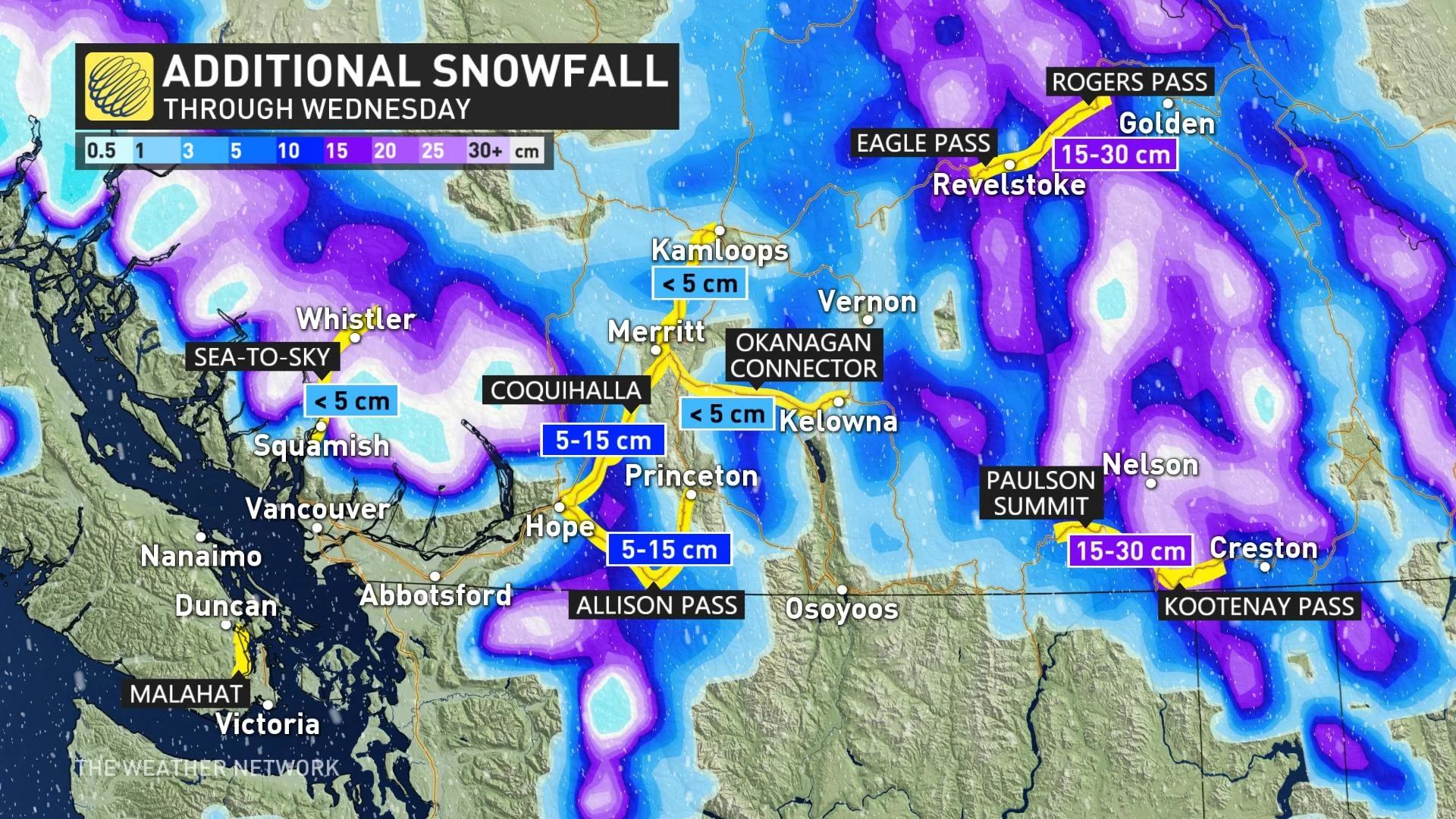
A series of Pacific weather systems is bringing a prolonged period of snow to the highway route. Light snow has intensified again and will continue through Tuesday.
"Rapidly accumulating snow could make travel difficult over some locations. Prepare for quickly changing and deteriorating travel conditions. Visibility may be suddenly reduced at times in heavy snow," ECCC says in the warning. "Weather in the mountains can change suddenly resulting in hazardous driving conditions."
As freezing levels rise, the snow will change to rain on Tuesday. However, At the summit levels, snow will continue through Tuesday afternoon. Total snow accumulations near 30 cm can be expected.
As a result of the recent snowfall, the avalanche danger has been elevated for several days. Tuesday will see a high and considerable threat from alpine to the tree line for several mountain passes.
The wetter pattern for the South Coast of B.C. will come to an end by mid- or late week. A much drier pattern will dominate starting late week and continue through mid-March.
Stay tuned to The Weather Network for the latest on conditions across British Columbia.