
After heavy rains, floodwaters begin to recede in parts of Quebec

Residents who left their homes amid the threat of flooding in southern Quebec are returning home on Wednesday, but the extent of the damage caused by diluvial rains is yet unclear and public officials are warning about the risk of landslides.
Joshua Menard-Suarez, a spokesperson for Quebec's Public Security Ministry, said municipalities were only now beginning to take stock of roadways that had been submerged and take stock of the situation.
"Right now, [the water] is going down," he said. "A lot of roads have been damaged. We had a few cases of homes that flooded."
DON'T MISS: Get ahead of disaster: Six tips to manage flooding
Evacuees in Sherbrooke, Que., who left their homes as the Saint-François River swelled to near unprecedented levels, began to return home late on Tuesday, Menard-Suarez said.
In Ste-Brigitte-de-Laval, a town near Quebec City that was heavily affected by the flooding, officials said residents who had to leave their homes amid a risk of flash flooding could begin to return at 10 a.m. on Wednesday.
Menard-Suarez urged prudence, however. The risk of landslides was high, he said, and residents who live on slopes should watch for abnormalities, like cracks in the soil, that could indicate movement. They should contact their municipality if they notice anything unusual, he said.
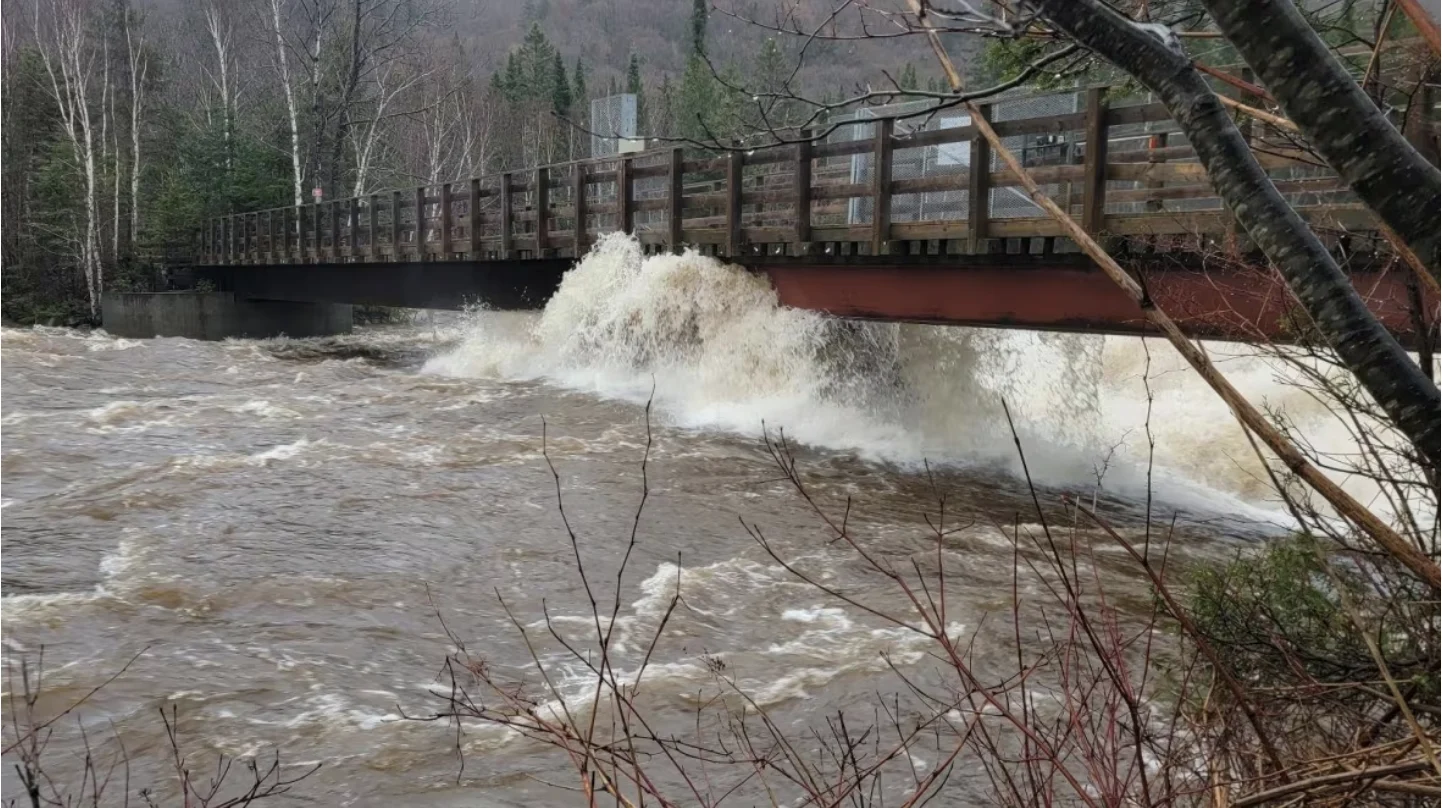
Residents of Sainte-Brigitte-de-Laval had to leave their homes Monday due to the risk of major flooding of the Montmorency River, which swells easily. (Sainte-Brigitte-de-Laval/Facebook via CBC News)
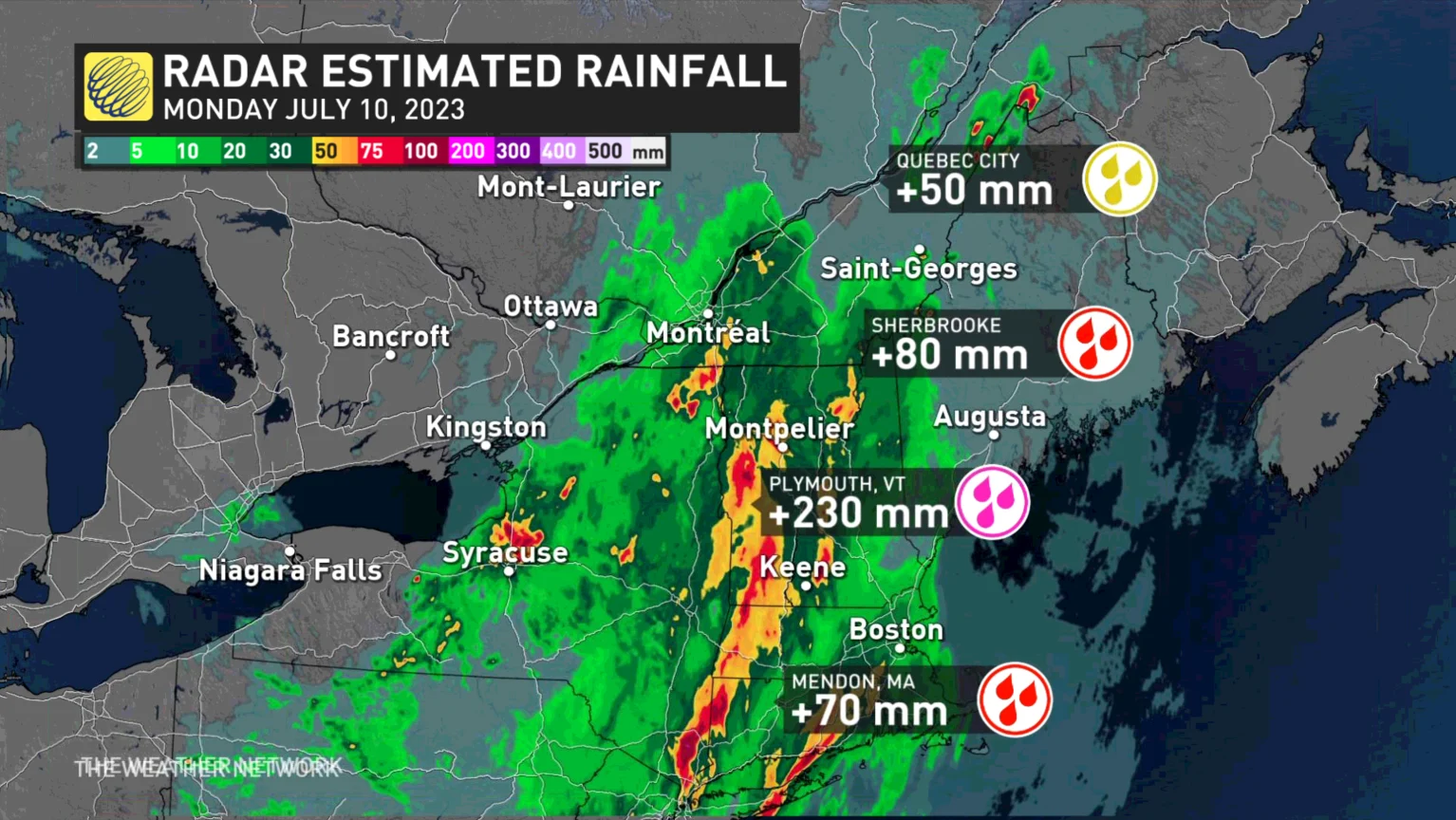
Between 80 and 120 millimetres of rain — nearly a month's worth — fell on some parts of southern Quebec this week, with the Quebec City and Eastern Townships regions receiving the bulk of the precipitation.
DON'T MISS: Essential items for your emergency "grab-and-go" kit
Bruce Chubby, a beef producer who lives in the Eastern Townships, on the banks of the Missisquoi River, near the U.S. border, said the floodwaters that saturated his pastures were beginning to recede.
"I can actually see my fence posts," he said in an interview Wednesday morning with Quebec AM.
Those fence posts, which are six feet tall, were fully submerged by the rising Missiquoi River, forcing Chubby to move his cattle away from the water and leading him to worry about the state of his fields once the water goes down.
"In the spring we have our normal flooding here but not to this extreme," he said. "This is the most I've ever seen it."
WATCH: Everything you need to know about staying safe during floods
This article, written by Matthew Lapierre, was originally published for CBC News. It contains files from Quebec AM.