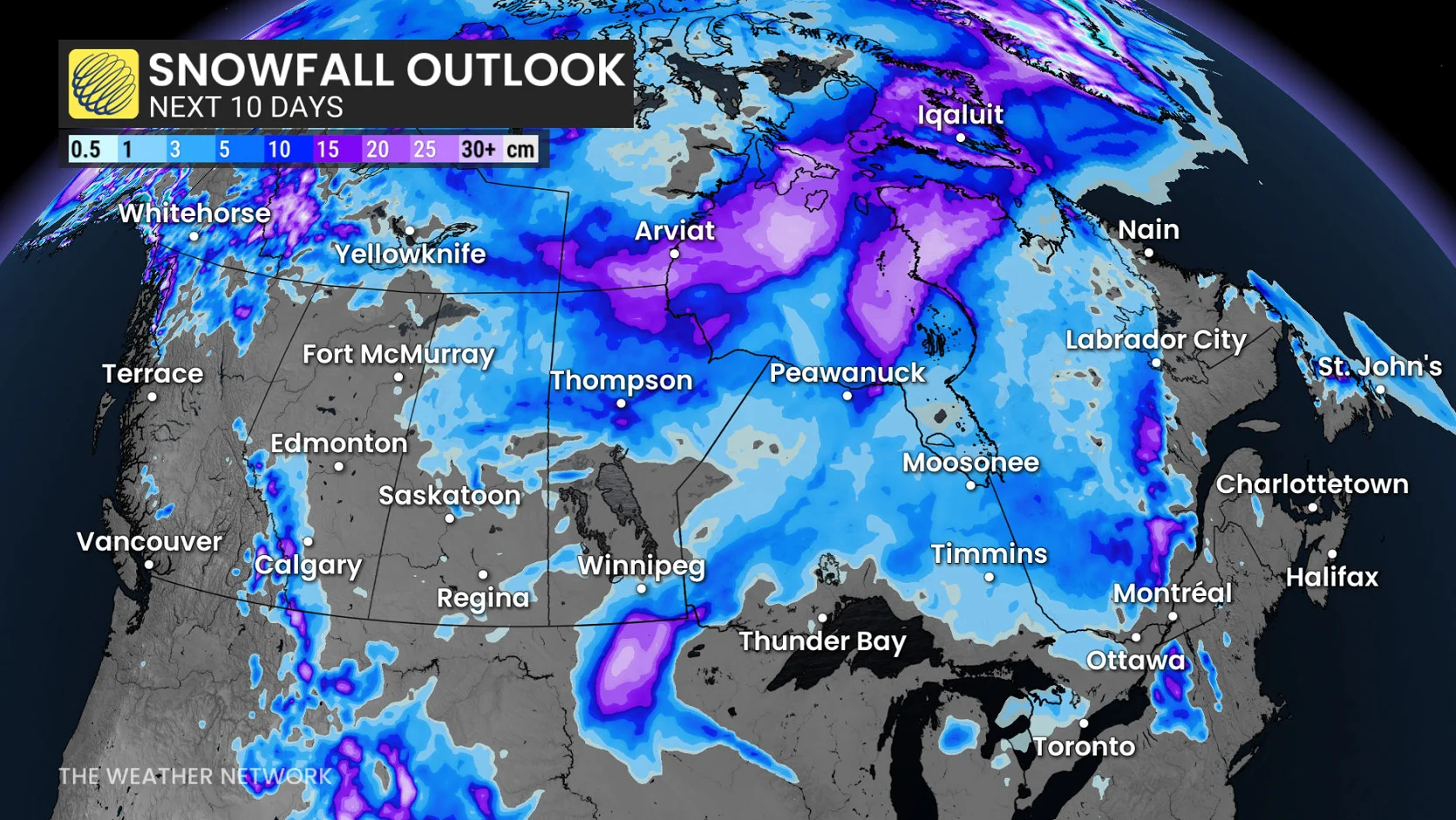
After Alberta's April snowstorm, can we say goodbye to snow in May?

As we inch closer to the official start of summer, can we finally bid adieu to snow? Find out if May has a higher probability of snowfall compared to past years.
Are we in the clear from snowfall as we turn the page on another month?
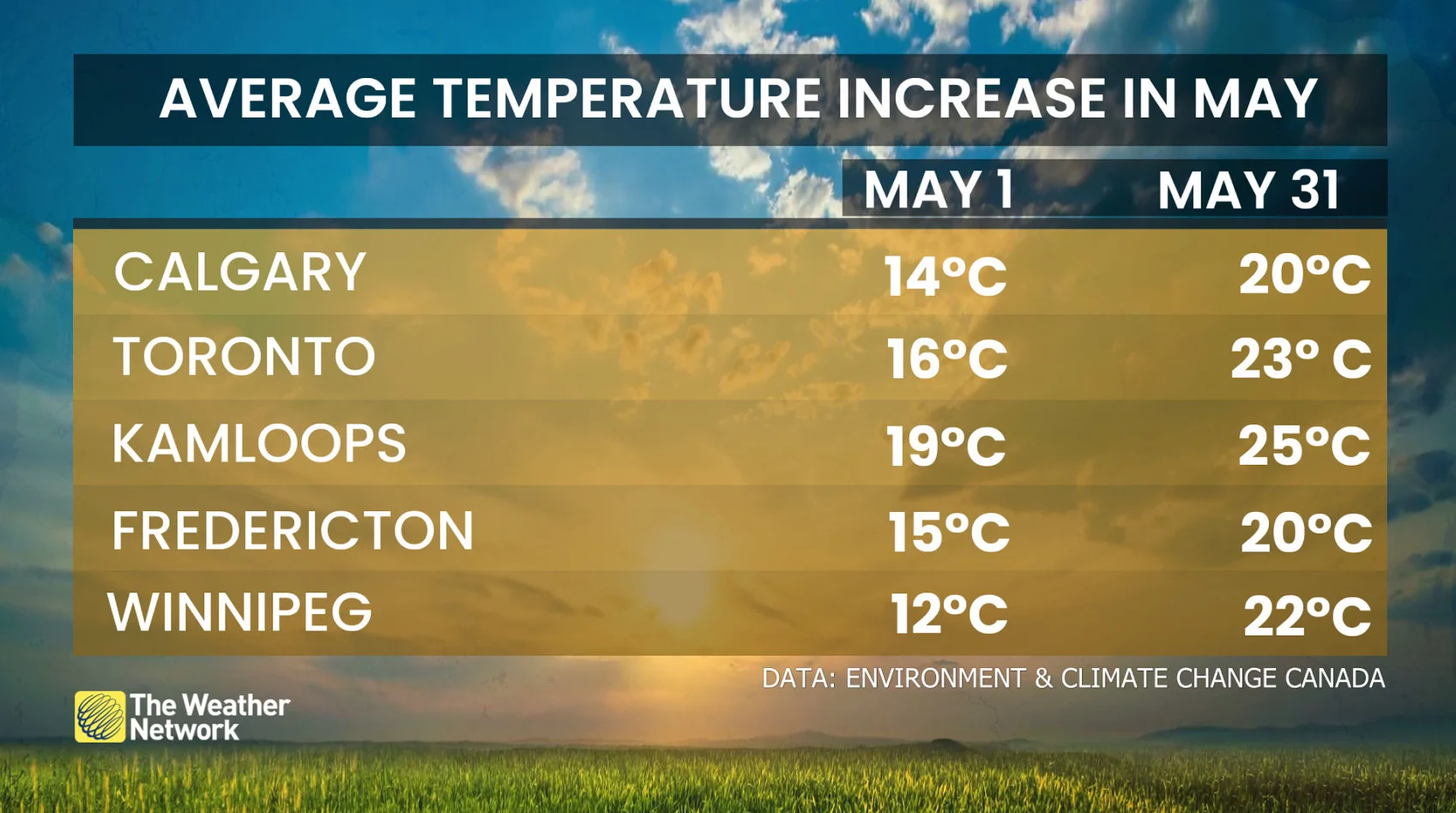
Even though average temperatures are rising rapidly, history suggests we should be a little cautious. Find out if May 2026 has a higher probability of snowfall compared to past years.
Notable May snowstorms
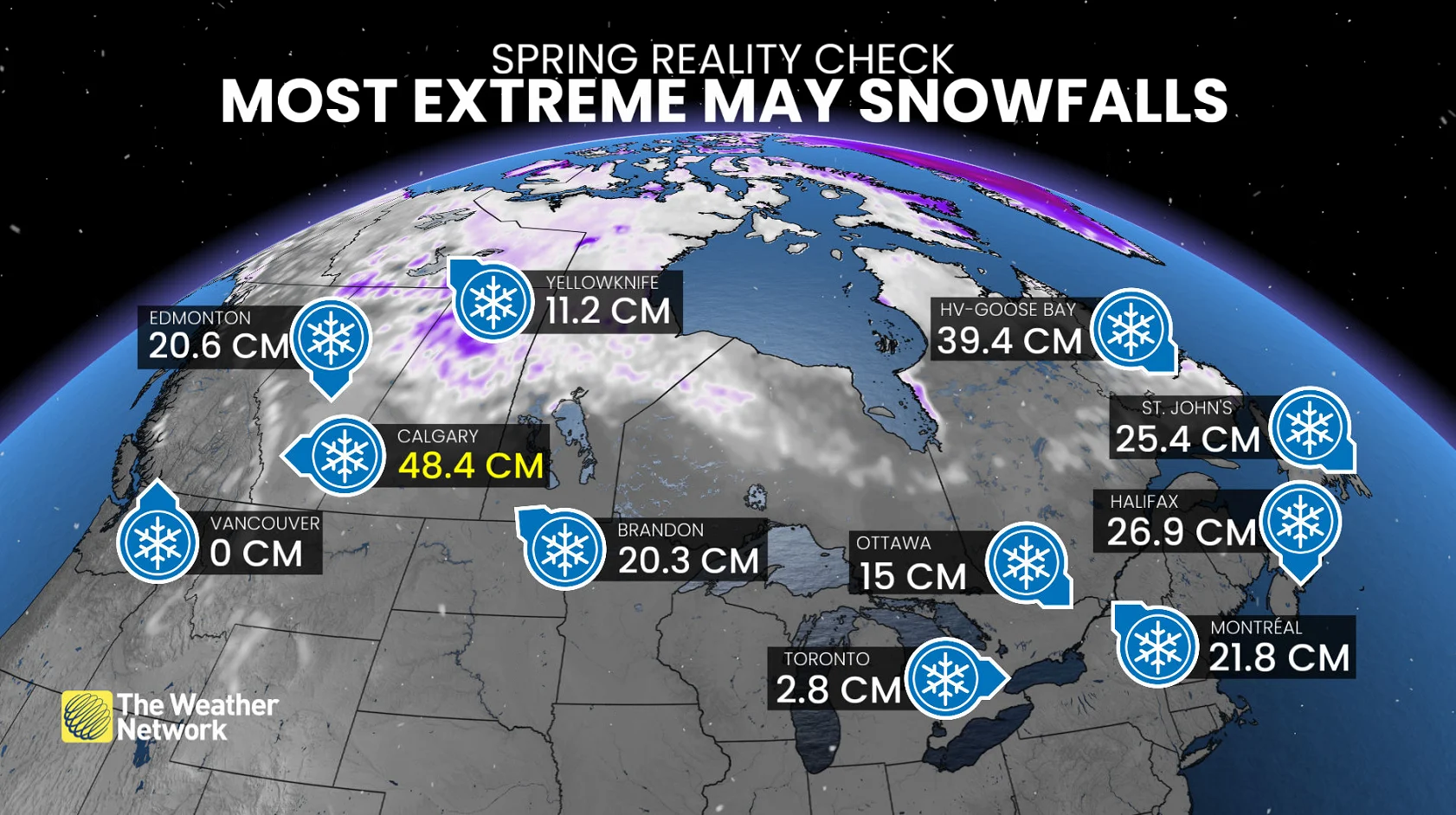
Even Southern Ontario was grazed with a few centimetres of snowfall in May of 2020, so besides the South Coast of B.C., not a single region in the country is immune to a late-season snow. But occasionally, a truly massive, daily snowfall occurs in Canada, with the majority of them occurring in Alberta:
Kenora, Ont.: May 11, 2004 (35.6 cm)
Edmonton, Alta.: May 2, 1886 (38.1 cm)
Goose Bay, Labrador: May 11, 2025 (39.4 cm)
Pincher Creek, Alta.: May 12, 1909 (39.4 cm)
Fort Simpson, N.W.T.: May 7, 1911 (40.6 cm)
Banff, Alta.: May 2, 1902 (48.3 cm)
Calgary, Alta.: May 6, 1981 (48.4 cm)
May heat waves
Now that we’ve got the snowfall out of the way, May can also produce extreme heat across Canada, occasionally pushing temperatures to above 35°C.
May 1936 featured a severe, early-season heat wave, pushing temperatures as warm as 38.9°C in Kindersley, Sask.
And, sometimes the extreme May heat can be found in unusual places, like on May 25, 2010, when Timmins, Ont., recorded a staggeringly warm 35.3°C.
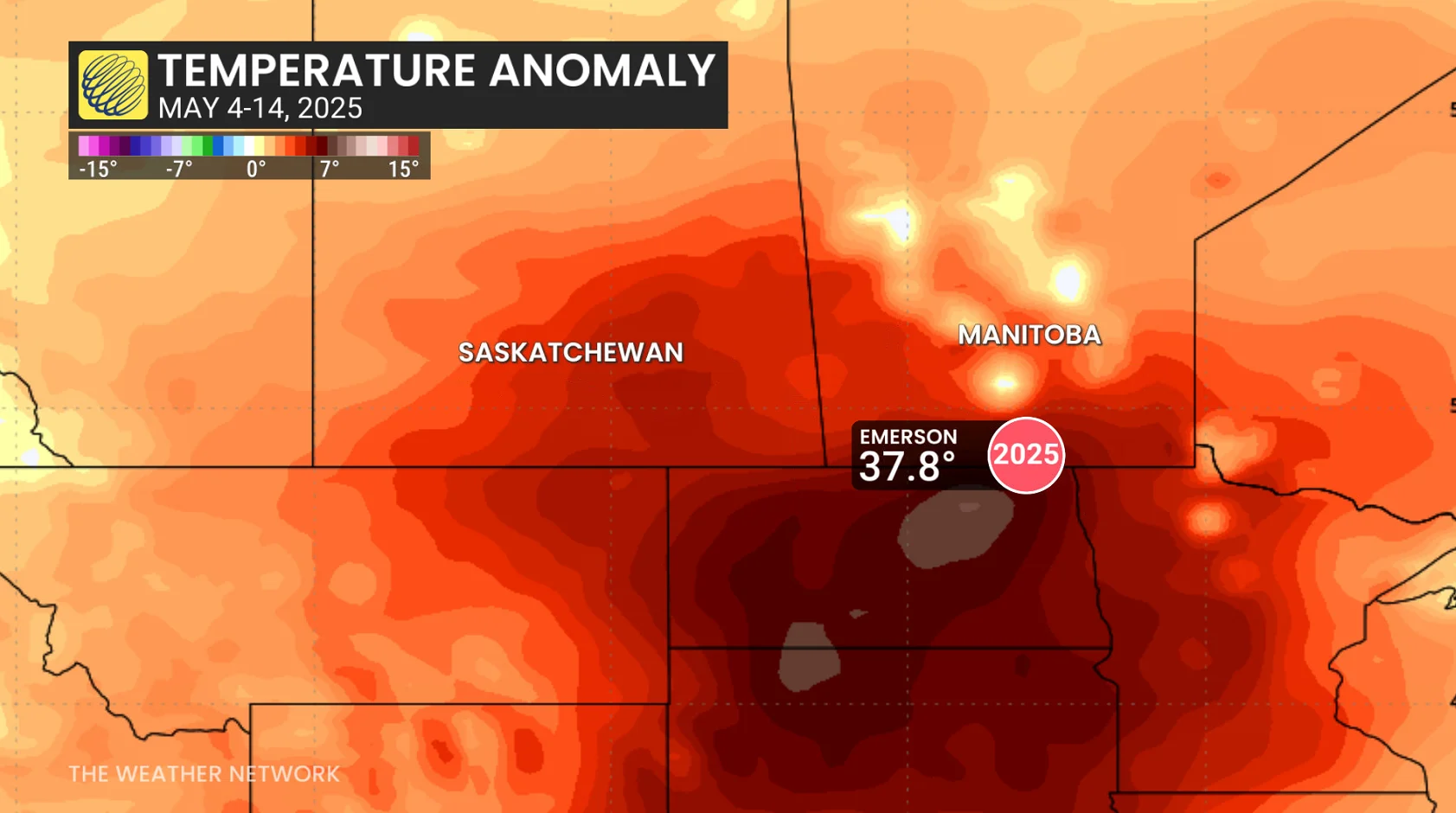
In May 2025, a severe, early-season heat wave swept across the Prairies and northwestern Ontario, delivering a staggeringly high 37.8°C in Emerson, Man., on May 11–the earliest it’s been that warm in Canadian history. Several stations reported three days above 35°C, an unprecedented tally before mid-May.
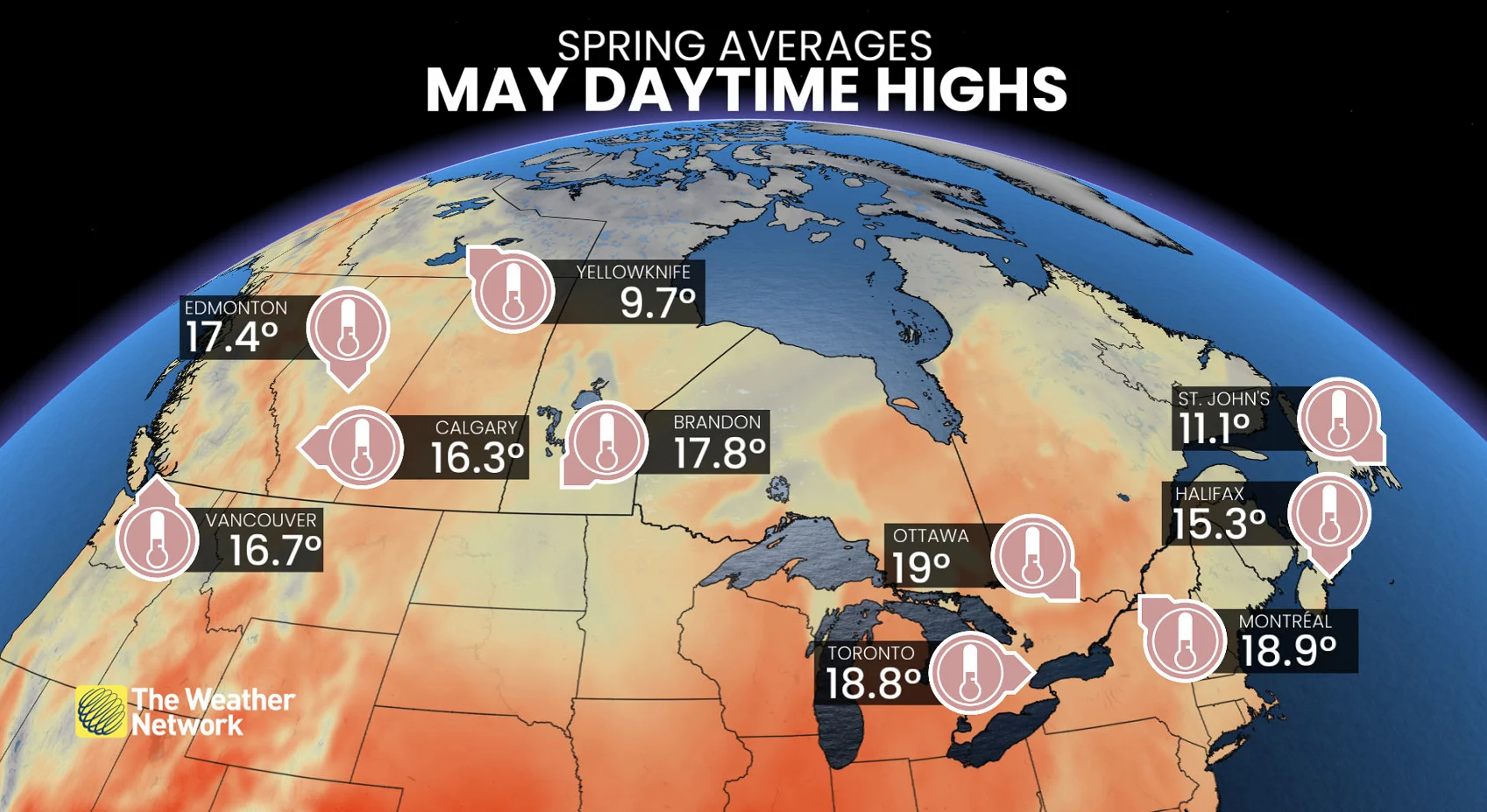
Winnipeg also cracked the 37°C mark on May 13, 2025. Then, in true Canadian fashion, snow was recorded in Winnipeg just four days later.
The forecast: Early-May chill?
Have you noticed this spring features more pronounced temperature swings and fluctuations? The temperature anomaly over the past 60 days confirms what you’ve been feeling: Canada has been squeezed between two sharp, competing air masses.
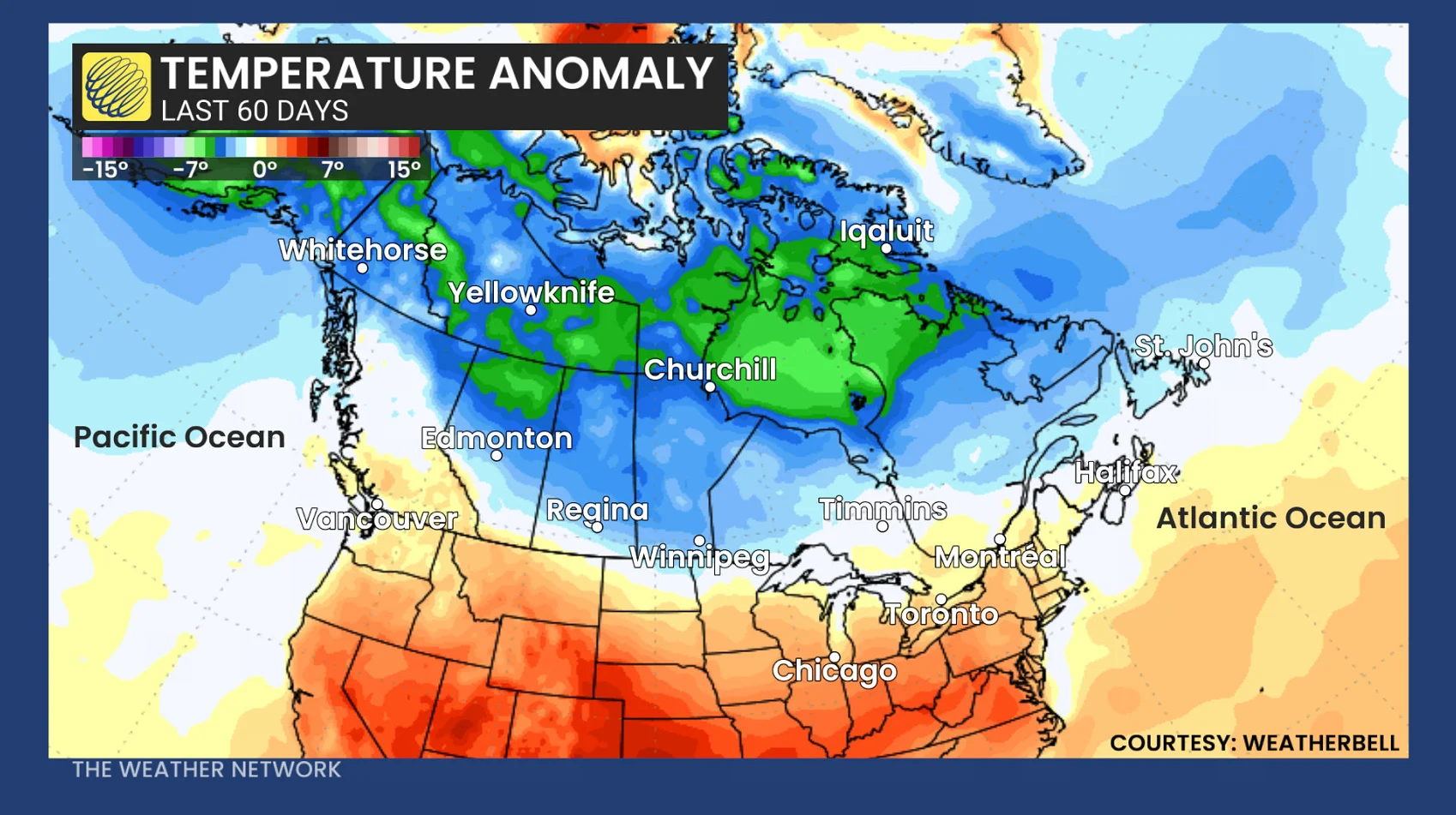
A lingering cold signal across Northern Canada has pressed south at times, while extreme spring heat has surged towards the international border over the past several weeks. These temperature fluctuations have averaged out to within normal near the international border.
Long-range, east of the Rockies, extending towards Ontario and southern Quebec, a trough, or region of cooler air, will kick off May and be incredibly stubborn to shake.
It’s possible to see wet flurries as far south as Georgian Bay in early May, along with more snow across northern and central Quebec.