Intense heat parked over B.C. brings health and wildfire threats

The wildfire risk will increase in B.C. this week as the province continues to experience extreme heat and dry conditions.
A strong ridge of high pressure will bring extreme heat to British Columbia this week. The peak daytime high temperatures are expected Tuesday to Thursday, with no relief coming until the weekend when temperatures moderate with a possible slow cooling trend into early August. Because of the hot and dry conditions, which may continue for the next 7-10 days, the risk of wildfires has also risen. The Nohomin Creek wildfire is also likely to spread as a result. More on what to expect this week below.
MUST READ: From application to aftercare, here’s what you need to stay safe in the sun
This week: A building ridge brings the heat
We’re looking at a potential impactful heat event across British Columbia this week.
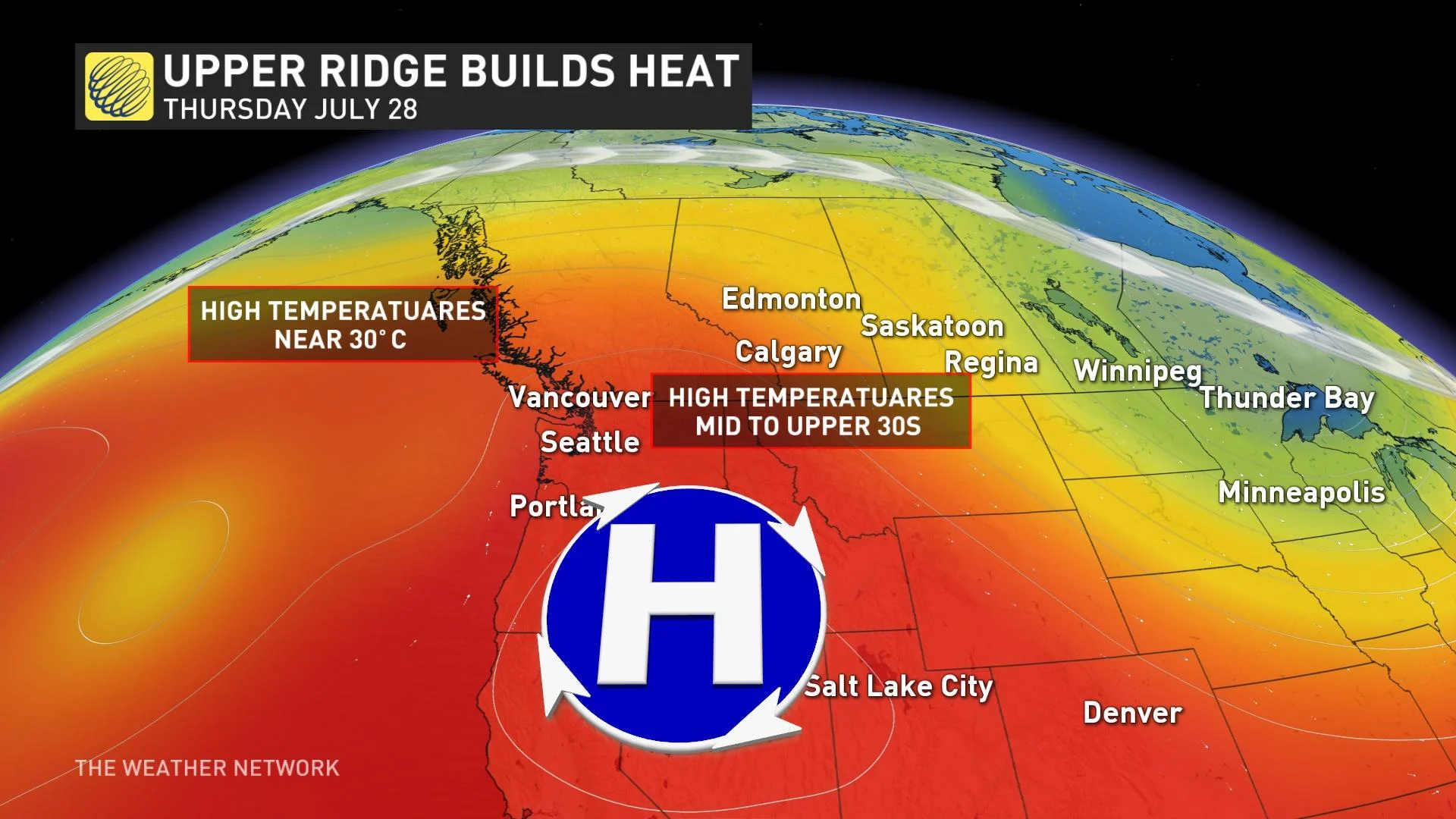
A strong upper-level ridge developed over the Gulf of Alaska early on, stretching all the way north into the Arctic Circle. Ridges foster sinking air, which heats up and dries out as it descends to the surface. This kind of setup will allow for a stretch of hot and dry weather for much of B.C. through the final week of July.
Currently, forecast models show the ridge building just offshore, which will allow coastal communities to get in on the excessive heat.
According to Tyler Hamilton, a meteorologist at The Weather Network, Tuesday may bring one of the warmest days in July history in Abbotsford, B.C. The all-time monthly record is currently 38°C on July 19, 2009.
High temperatures could reach 30°C or warmer in Vancouver, which is a tough feat for the coastal city in many cases. For some perspective, Vancouver’s seasonal high for the last week of July is around 23°C. The heat could feel more like the mid-30s Tuesday through Thursday.
Interestingly, Canada's warmest temperature in 2022 so far belongs to Val Marie, Sask., with a sizzling 39.2°C reading. However, that is likely to be set ablaze by the heat in B.C. this week. Both Lytton and Ashcroft may see a staggering 42°C.
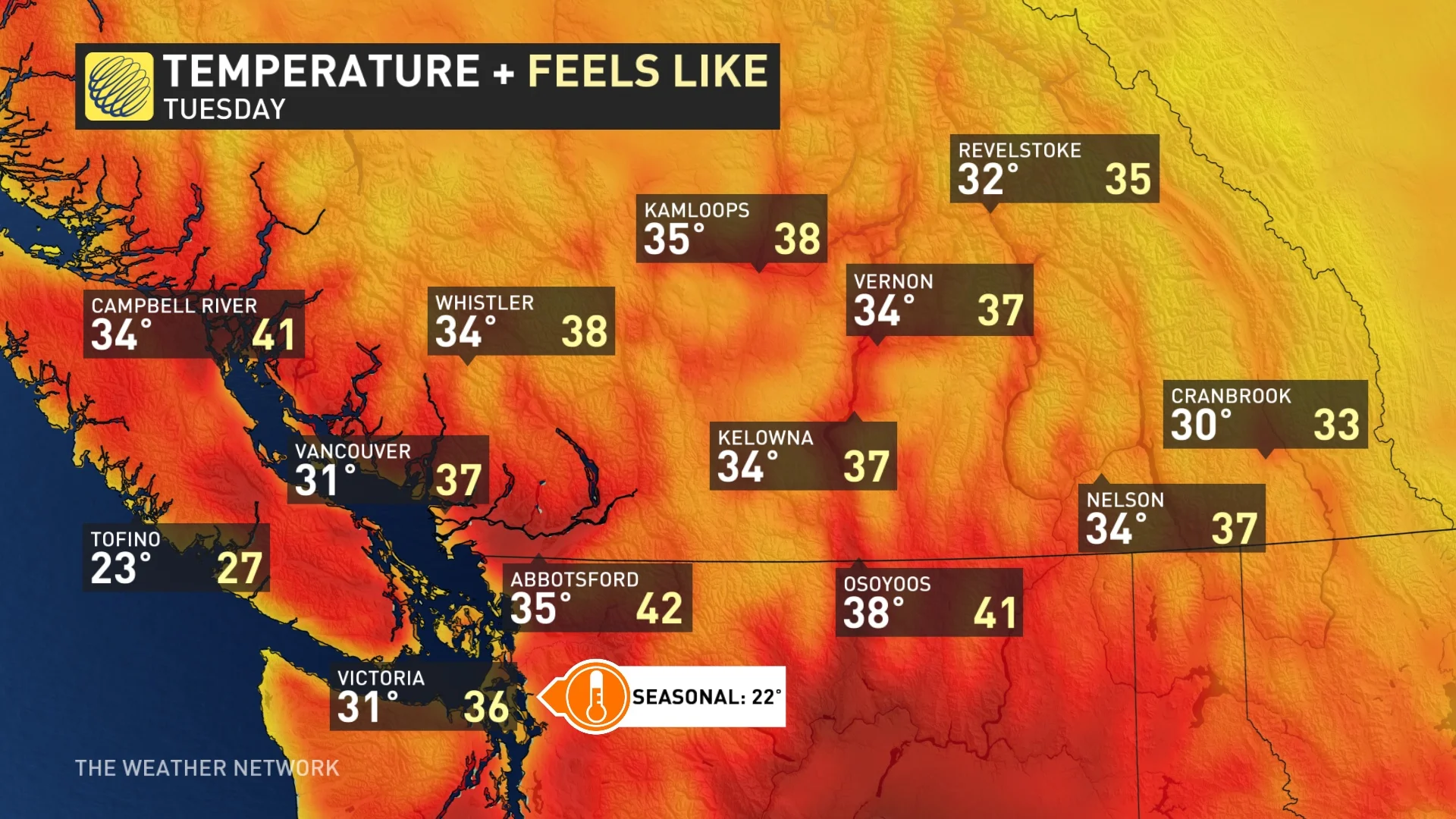
The heat is expected to peak along the South Coast Tuesday, and in the Interior on Wednesday or Thursday, but it will remain hot through the end of the week.
The heat will fade on the weekend, with seasonal temperatures returning and dominating next week. However, very dry weather will persist over the next 7-10 days, with the wildfire risk likely remaining high or extreme through then.
The heat is going to feel especially rough after a relatively temperate and wet couple of months across B.C. An active pattern brought one storm system after another to the province, keeping things on the cooler and wetter side.
Temperatures over the past 60 days have come in around or below seasonal for much of the province. Most areas around the province have seen near- to above-seasonal precipitation over the past couple of months, as well.
WATCH: Poor air quality due to wildfires persist in parts of Canada
MUST SEE: How to ensure your safety during wildfire season
Existing wildfire may expand, possibility of new blazes with conditions
Steady and consistent rain over the past couple of months increased the amount of growth and foliage across B.C. This growth can be a liability as conditions heat up and dry out, potentially serving as fuel for new wildfires that spark up during and after the heat wave.
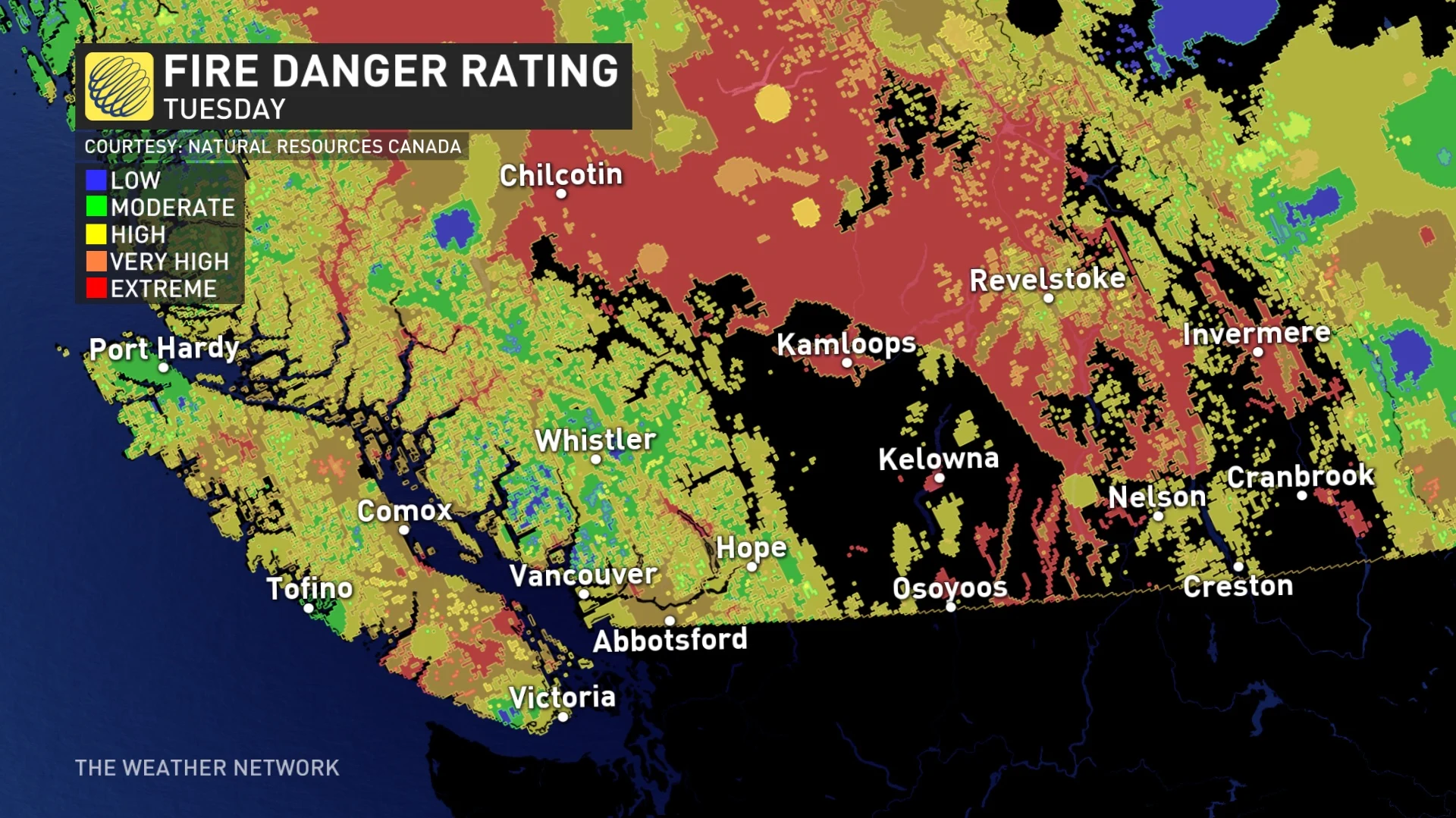
The parched conditions, combined with an extremely steep terrain of the Fraser Canyon, have caused the Nohomin Creek wildfire to grow in size and may continue to do so in the days ahead. As of Monday morning, the fire remains out of control at its current size of 2,193 hectares, according to the BC Wildfire Service.
However, the warming and drying trend will continue to bring hot and dry conditions this week, which could cause an increase in fire behavior. Smoke may be more visible Monday as temperatures increase.
Crews from the Lytton First Nation and the BC Wildfire Service continue to mop up any remaining hot spots identified by the infrared scan. Crews on both the north and south flanks continue to make good progress towards containment, despite steep terrain and increasingly high daytime temperatures.
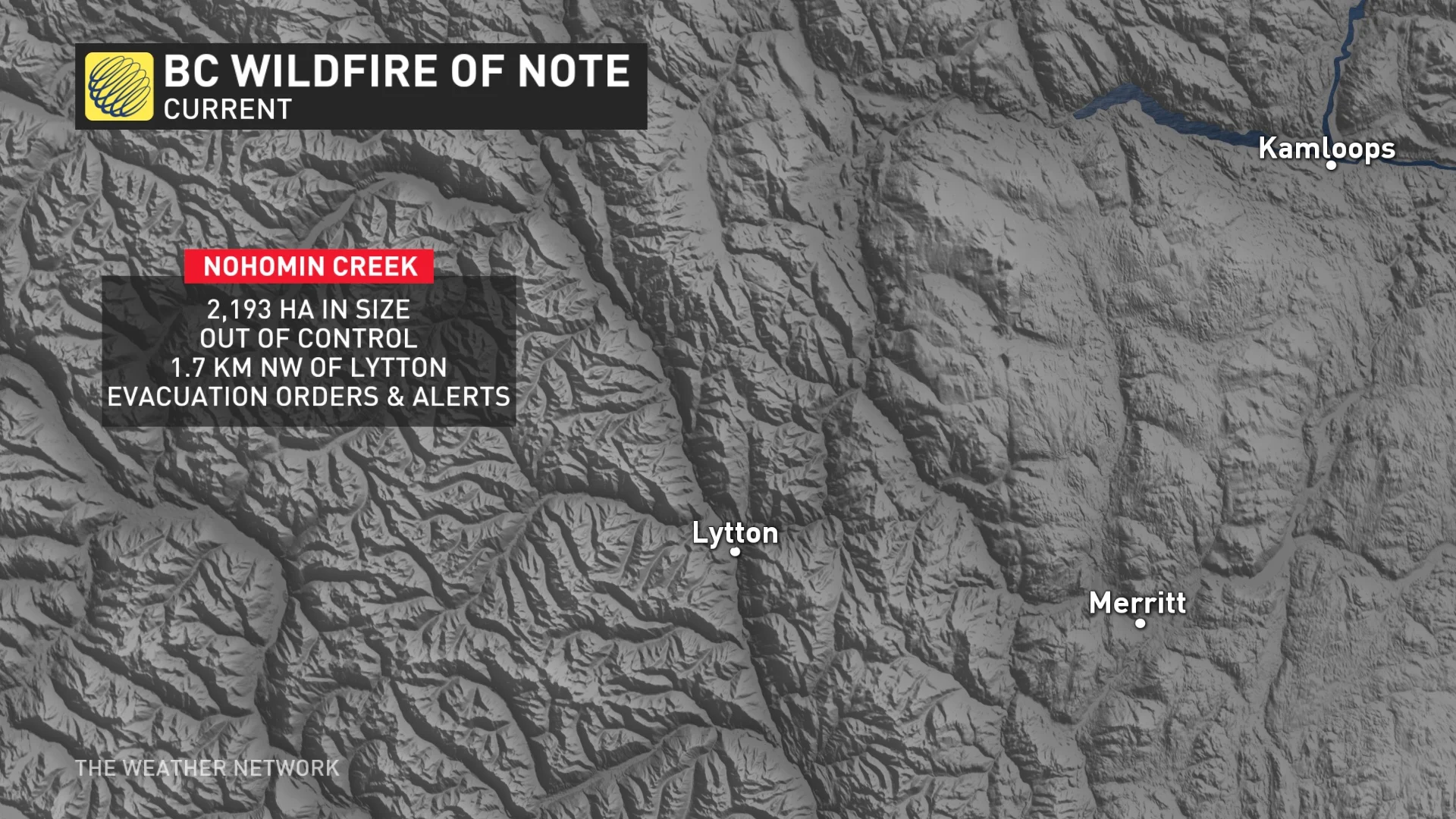
As a result of the wildfire, air quality is poor in nearby communities due to the smoke. Environment and Climate Change Canada (ECCC) has issued a special air quality statement for Fraser Canyon including Lillooet and Lytton.
CHECK IT OUT: This simple trick may save many kids' lives during heat wave
Lytton First Nation Reserves issued an evacuation order on July 14. Thompson Nicola Regional District issued an evacuation order and alert, and declared a local state of emergency for the Blue Sky Country region last week.
Residents will have to closely monitor wildfire news and prepare for potential evacuations if local officials issue any advisories or orders.
A few simple steps you can take now to prepare for the threat for wildfires include:
Create an evacuation plan long before any fires have a chance to spark
Have a plan for pets and livestock in the event a fire threatens your property
Assemble a grab-and-go emergency evacuation bag that includes personal necessities and important documents
Ensure your property is trimmed and clear from debris, and be mindful of combustible materials like outdoor furniture and propane tanks
Don’t forget masks and respirators for potentially hazardous wildfire smoke
Tips for dealing with the heat
The hottest time of the day this week will be late afternoon to early evening. The coolest time of the day will be near the sunrise.
The heat itself can also take a significant toll. Excessive heat is a leading cause of weather-related illnesses and fatalities. The toll of heat is especially tough on vulnerable populations such as low-income households, unhoused people, the elderly, and folks living with health issues.
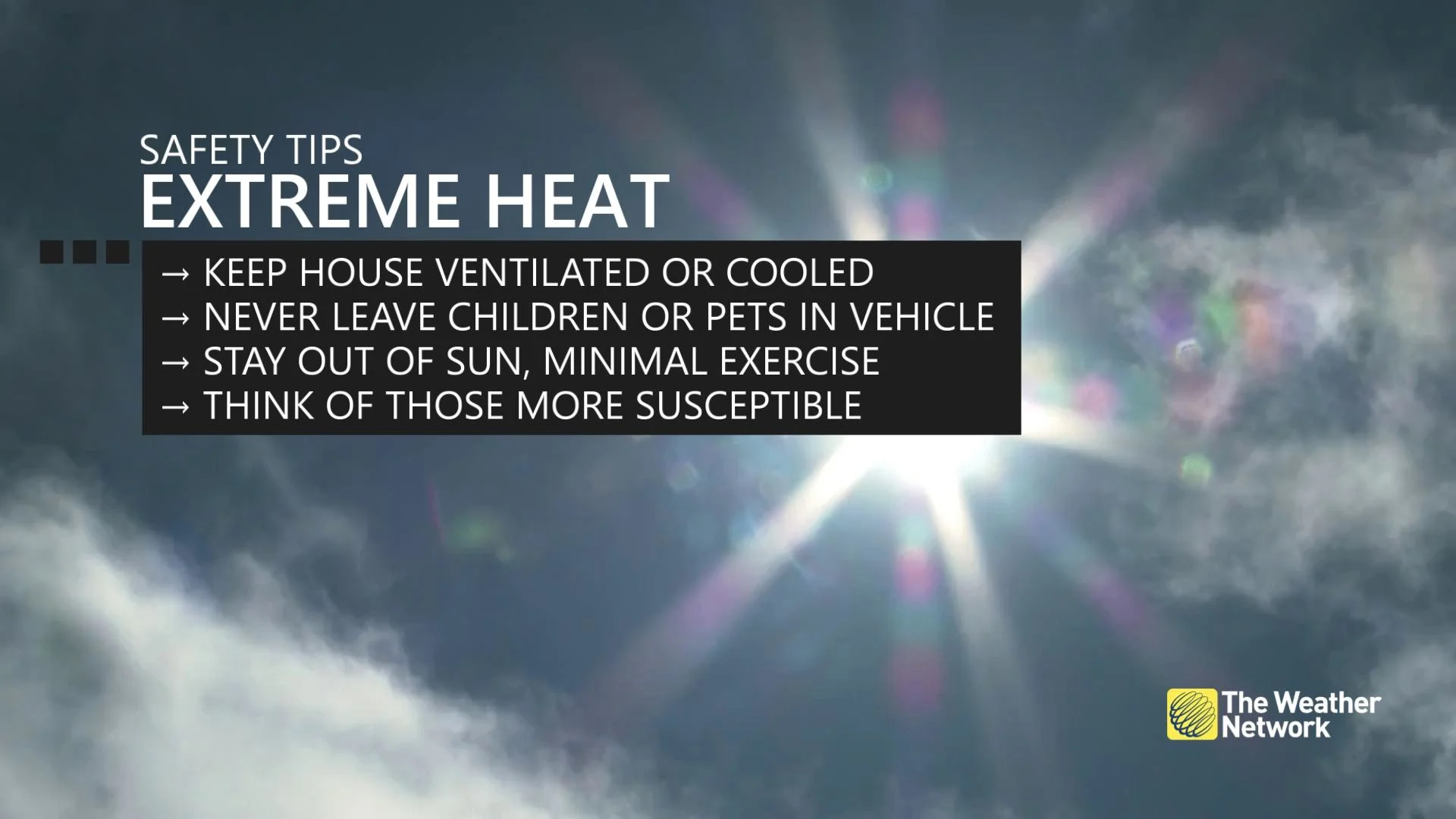
The effects of a high heat are even worse when the hot temperatures linger for multiple days. Hot days lingering into stifling nights have a compounding effect on homes without air conditioning, leading to an increasing risk for heat-related illnesses as a stretch of hot weather drags on.
WATCH BELOW: No A/C? These are the quick and easy things you should be doing
Thumbnail courtesy of B.C. Wildfire Service/Twitter.
Check back frequently for updates on this potentially impactful heat event across B.C.