
20-40+ cm of snow as high-impact storm hits Atlantic Canada

Expect widespread disruptions into Monday as a major storm hits Atlantic Canada with steep snowfall totals
A major winter storm underway south of the border will eventually spread heavy snowfall and gusty winds across Atlantic Canada.
Expect difficult travel, school and business closures, as well as possible power outages beginning late Sunday and continuing into Tuesday morning.
DON’T MISS: 200 million impacted by major ice, snow in generational storm
High-impact storm tracking toward Atlantic Canada
A generational winter storm unfolding south of the border will spread heavy snowfall across Atlantic Canada beginning late Sunday.
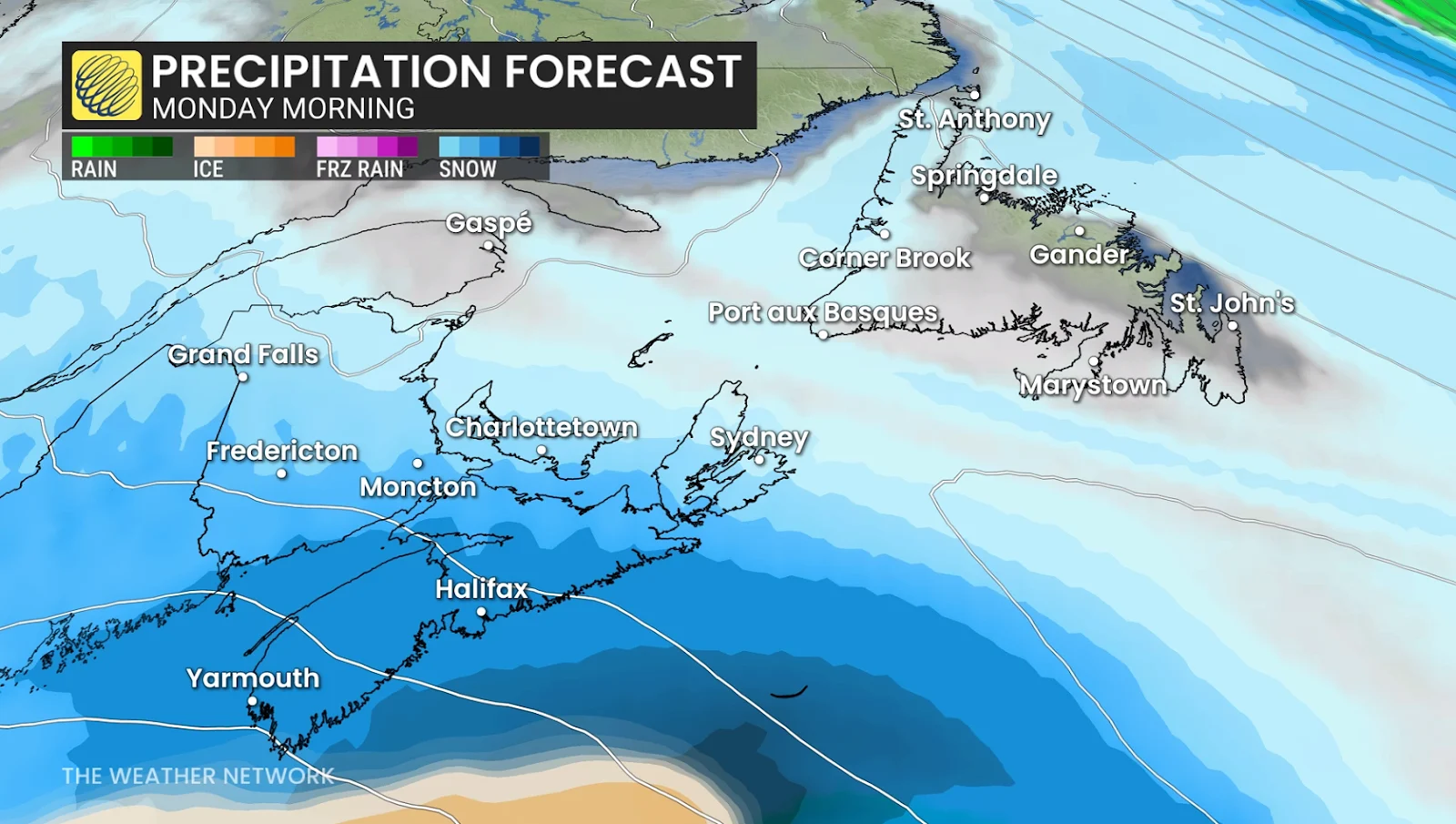
Snowfall rates and wind gusts will increase in the Maritimes overnight Sunday into Monday as the core of the system approaches the region.
The heaviest snowfall, with rates of 2-4 cm per hour, will arrive Monday morning across Halifax and southern sections of Nova Scotia.
This will be a dry, fluffy snow that accumulates quickly and blows around easily. Drivers should beware the risk for reduced visibility due to blowing snow during this event.

Accumulations of 20-30+ cm are likely through Tuesday, with the heaviest snow expected around the Bay of Fundy and across all of Nova Scotia, including Cape Breton.
Snow amounts are increasing for Prince Edward Island, where 20-30 cm is now in the forecast. The highest totals in New Brunswick will include southern sections, as well as those bordering the Northumberland Strait, where 20-30 cm of snow is expected.
WATCH: Residents asked to conserve power in Nova Scotia ahead of storm
Impacts to Newfoundland continue to evolve. At this time, around 10 cm of snow is forecast through Tuesday for St. John’s, with 15-25 cm across southwestern sections of the island.
Stiff wind gusts will accompany the snowfall. Communities across coastal Nova Scotia, as well as Prince Edward Island, will see 60-80 km/h gusts, with 40-60 km/h gusts forecast for New Brunswick.

The potential exists for wind gusts up to 100 km/h for southern sections of the Avalon Peninsula late Tuesday.
WATCH: Tracking a major winter storm heading to Canada's East
Stay with The Weather Network for all the latest on your forecast across Atlantic Canada.