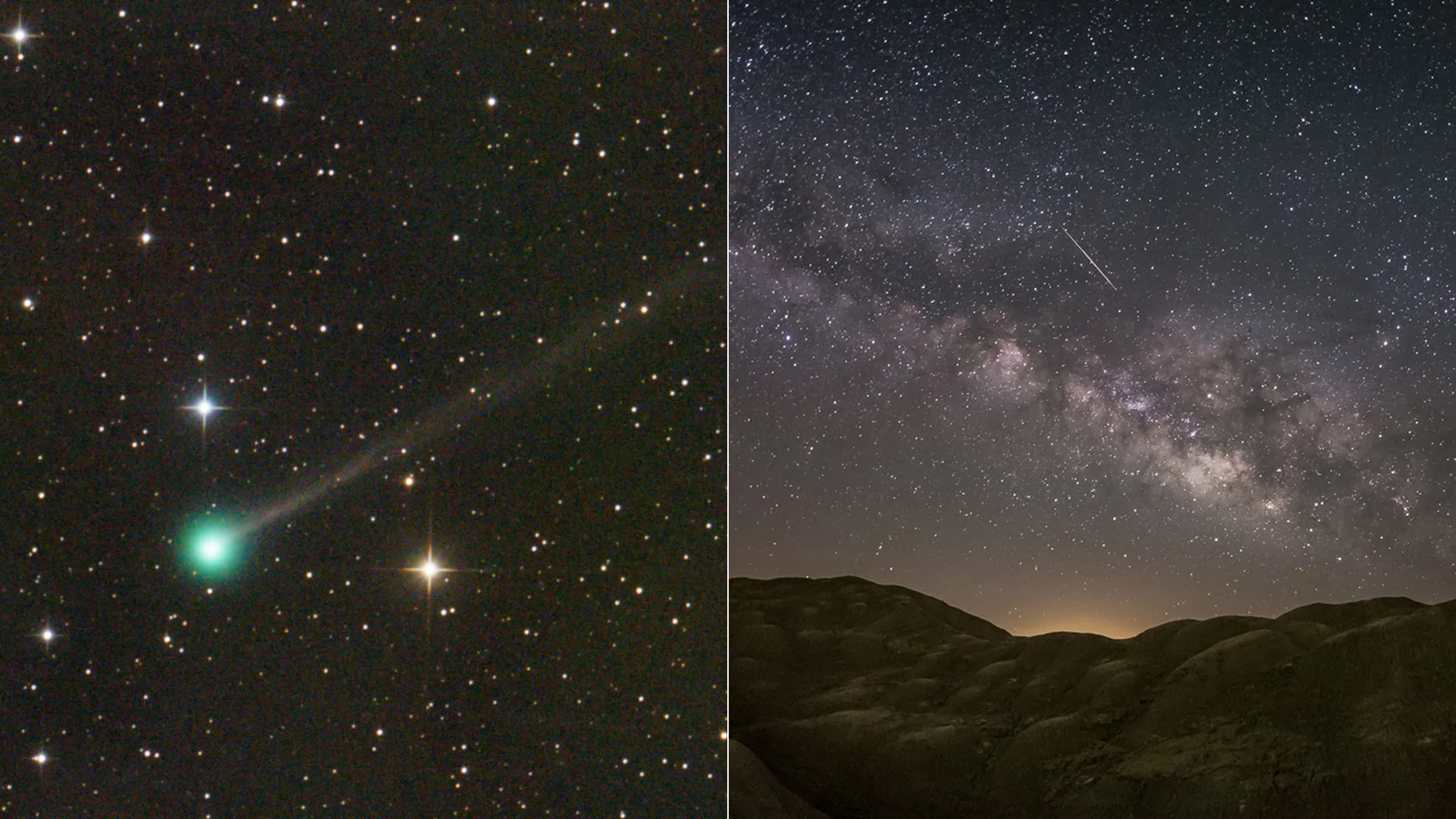
Look up in April! A bright comet may shine along with the Lyrid meteor shower

Ready for a new night sky challenge?
Eyes to the sky for the month of April, as a comet may become bright enough to spot in the sky, and fragments of an ancient comet will streak across the night as the Lyrid meteor shower reaches its peak.
Check your weather forecast for clear nights throughout the month, so you don't miss out on the amazing sights to see.
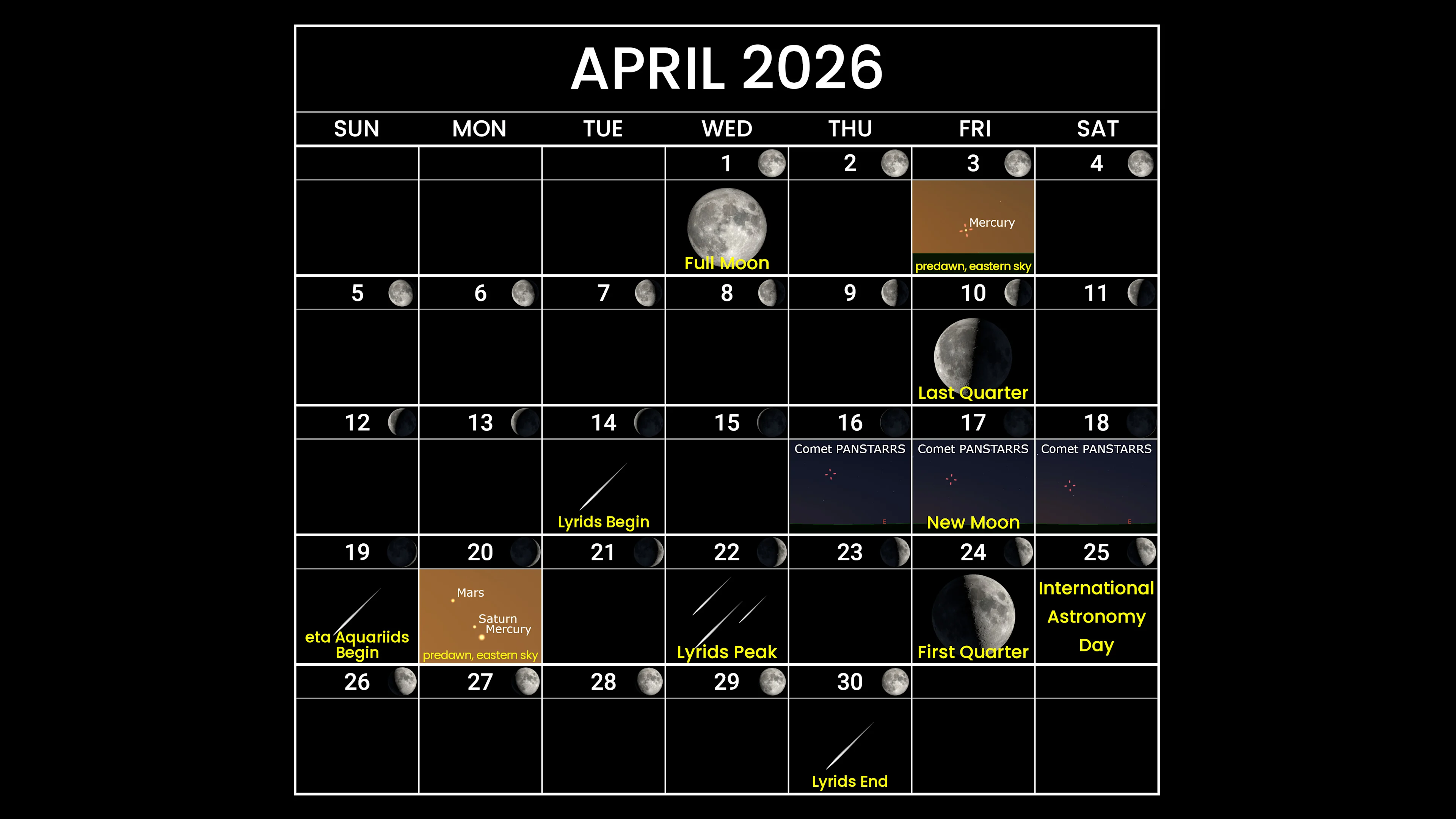
Visit our Complete Guide to Spring 2026 for an in-depth look at the Spring Forecast, tips for planning for it and much more!
The Moon
On the first night of April, the Pink Moon — the first Full Moon of Spring for 2026 — will rise.
Although the Moon reaches its maximum illumination late on the 1st, it will appear full, with the Earth-facing side over 98 per cent illuminated, Thursday night and even into early Friday morning.
Afterward, each night, we will see a shrinking Waning Gibbous Moon in the sky, up until the Last Quarter Moon (or Third Quarter Moon) rises at midnight on the 9th-10th.
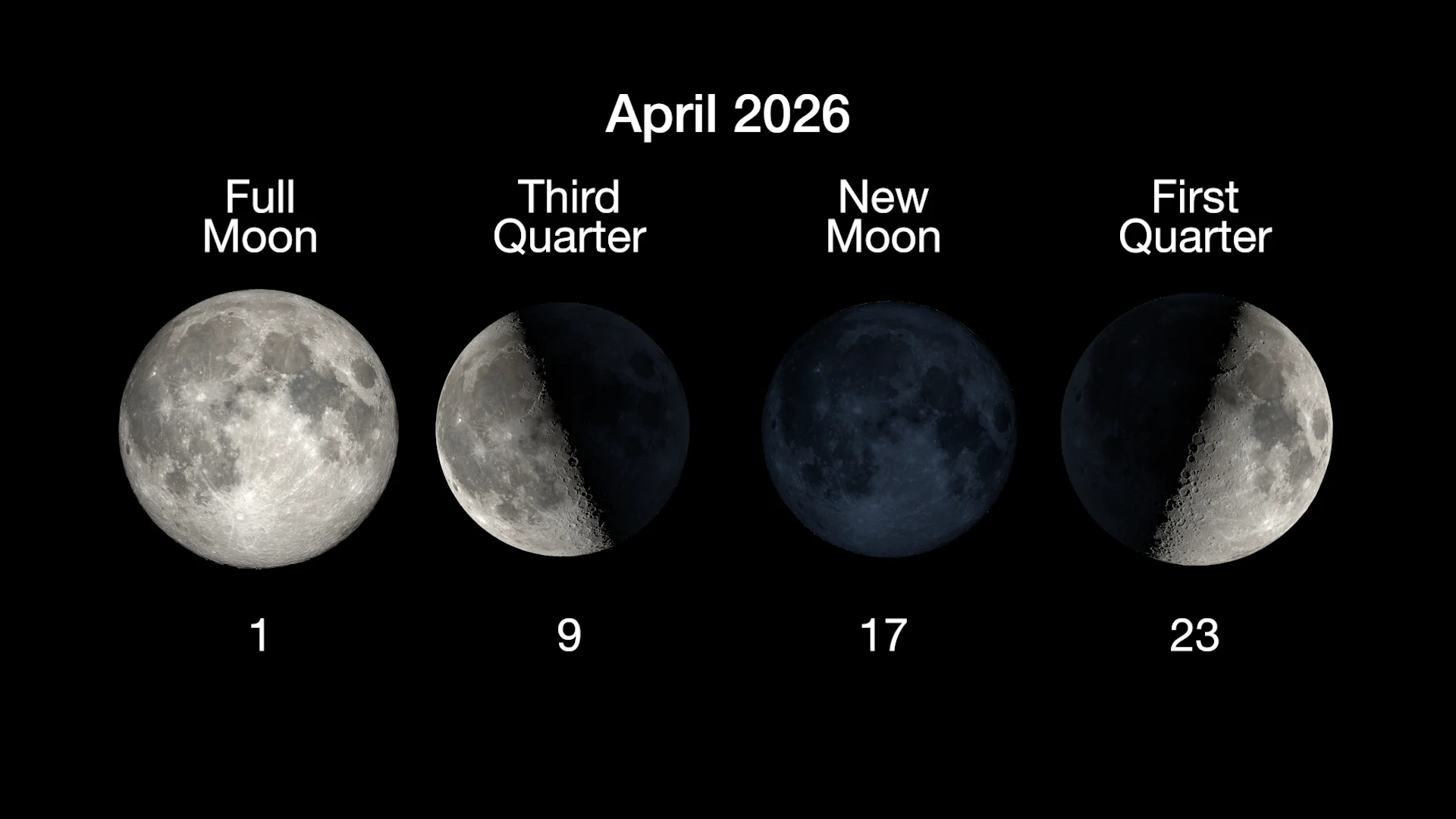
The phases of the Moon for April 2026. (NASA)
Then, the Waning Crescent Moon can be found to the east in the predawn hours, up until the 16th.
On the 17th, the New Moon will cross the daytime sky, rising and setting along with the Sun, and thus hidden from sight to us.
Following that, the Waxing Crescent Moon will appear in the western sky after sunset, up until the First Quarter Moon on the night of the 23rd to 24th.
The Waxing Gibbous Moon will light up the nights towards the end of the month, before we see the next Full Moon on the first night of May.
MOON MISSION: Will fair weather hold for Wednesday's historic Artemis 2 launch to the Moon?
The Planets
Each night in April, observers under reasonably clear skies can find two of the brightest planets in the sky.
Look for Jupiter high above in the southern sky, where it will be hanging out among the stars of the constellation Gemini. The planet will be shifted slightly farther west as it rises with Gemini every night.
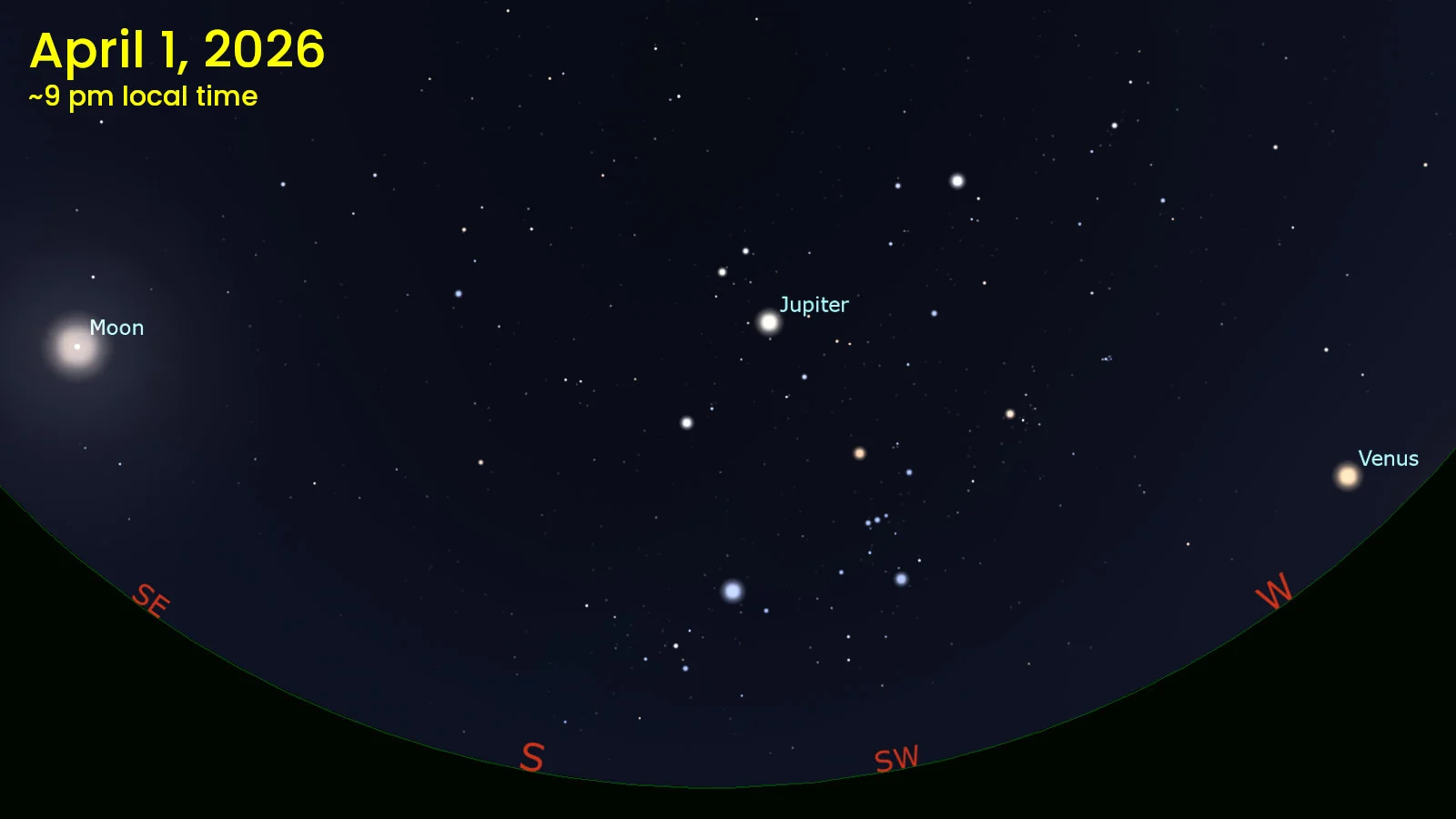
The Full Moon, Jupiter, and Venus, appear together in the sky on the night of April 1, 2026. (Stellarium)
Also, Venus can be found as the 'evening star', as it appears low in the western sky just after sunset. While Jupiter is farther west, night by night, Venus will climb higher, towards the east.
Early risers should keep an eye on the eastern horizon in the hour or so before sunrise.
On the morning of April 3, Mercury reaches its "greatest western elongation" — its farthest distance from the Sun from our perspective. This will put the planet at its highest position above the eastern horizon in the predawn sky.
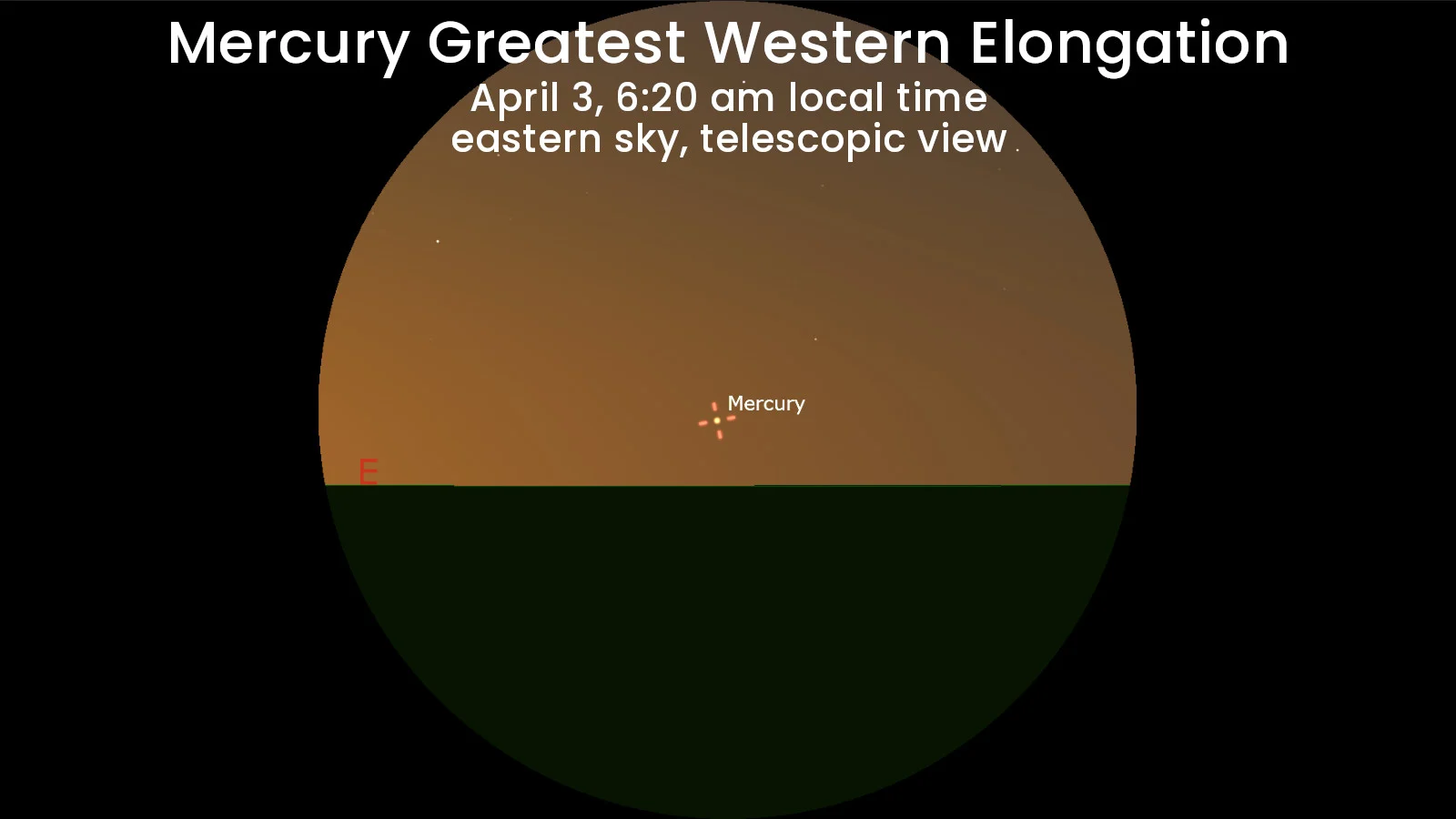
Mercury's greatest western elongation for spring 2026. (Stellarium)
As the month progresses, Mars will join Mercury after a week or so. Then, roughly a week after that, we'll have a trio of planets as Saturn also begins to rise early enough to spot through morning twilight.
The best time to see these three planets is around April 20, when they will form a lineup above the horizon.
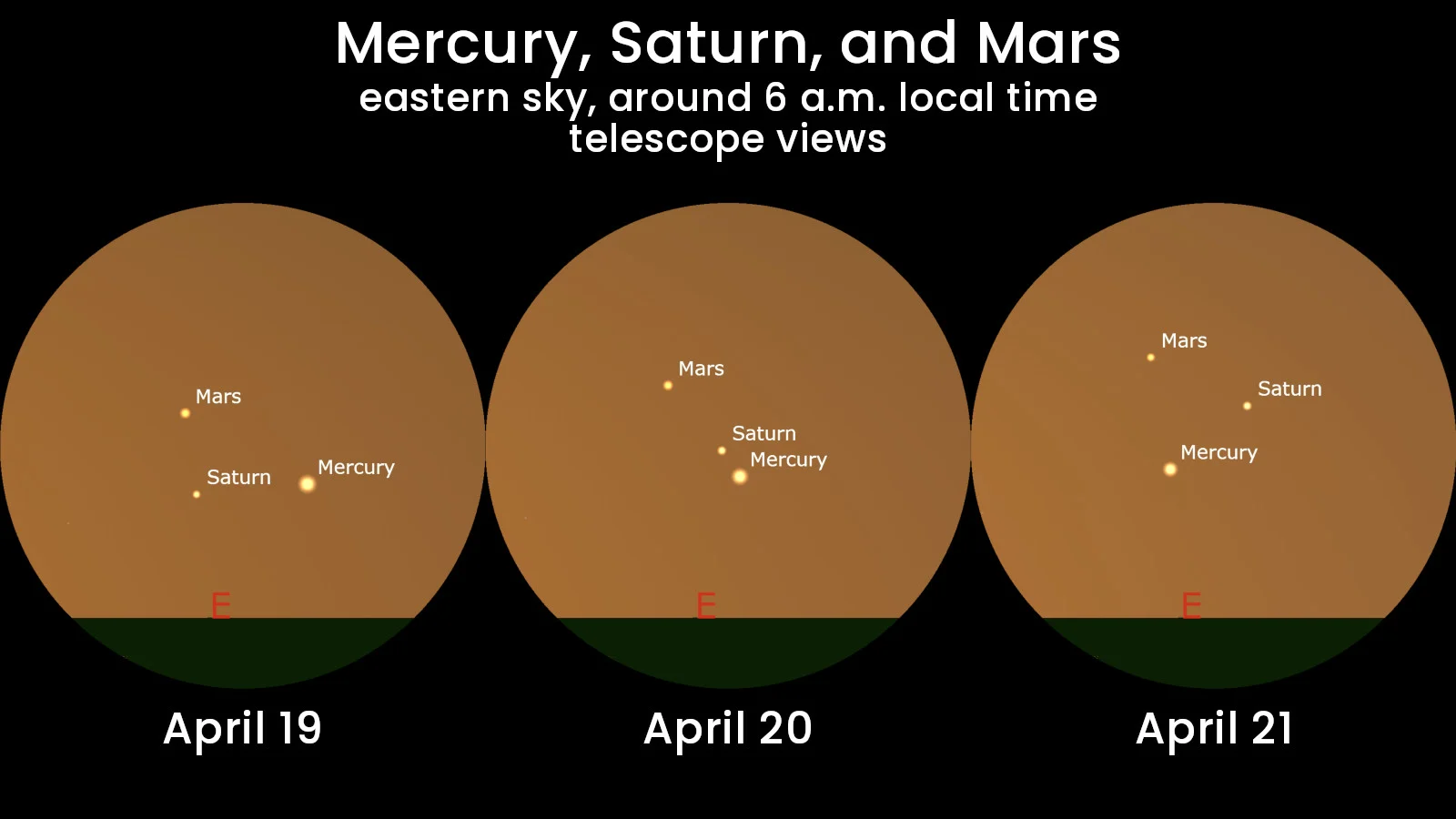
The positions of Mars, Saturn, and Mercury close to the eastern predawn horizon, on April 19, 20, and 21, 2026. (Stellarium/Scott Sutherland)
These three will be challenging to spot, as all of them are still fairly close to the Sun in our sky.
Come out too early, when the sky is still dark, and they will still be below the horizon. Scan for them too late and twilight will be too bright to see them. Strike a careful balance between the brightness of the sky and the brightness of the planets and you will be rewarded with a very cool sight.
Meteor Showers
There were plenty of bright fireballs in the sky throughout the month of March, but in April, we'll see the first two organized meteor showers of spring begin, with one of them reaching its peak.
The Lyrids
On April 14, Earth begins crossing a stream of debris in space left behind by a comet named C/1861 G1 (Thatcher). As the planet's atmosphere sweeps up tiny meteoroids from this stream, it will produce meteors in our night sky, all of which originate from the constellation Lyra.
This is the annual Lyrid meteor shower.
For the first few days, this shower only produces a few meteors per hour, as well as the occasional bright fireball, but then intensifies leading up to the Lyrid's peak on the night of the 22nd to 23rd.
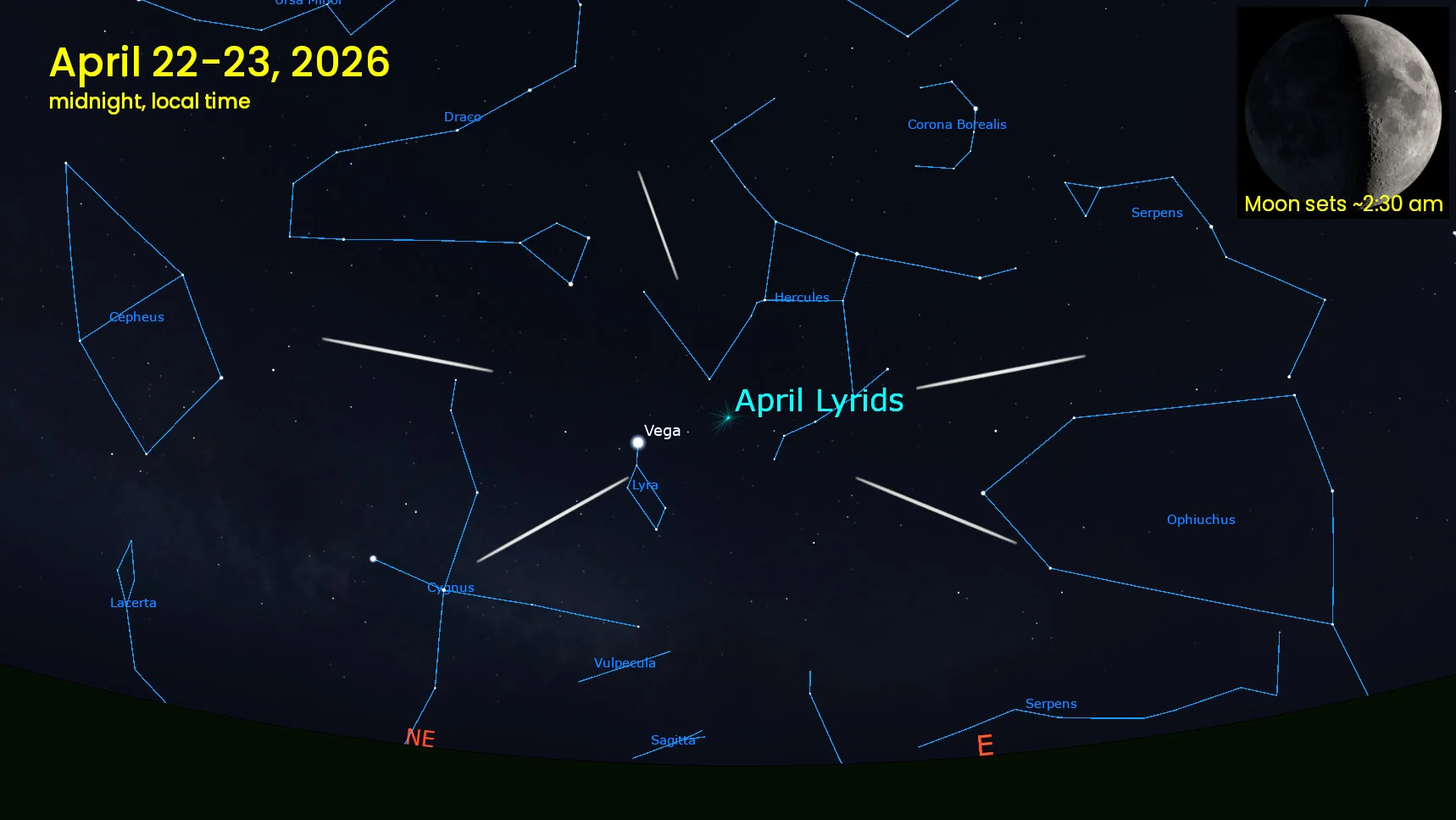
The radiant of the Lyrid meteor shower in the eastern sky at midnight on April 22-23. (Stellarium/Scott Sutherland)
The Lyrids start out sparse, with maybe one or two meteors per hour, for the first few days of the shower. This number will increase as we approach the most concentrated part of the stream, until the shower peaks at around 20 meteors per hour on the night of the 21st through the 22nd. After the peak, the number of meteors diminishes until Earth exits Comet Thatcher's debris stream on the 30th.
This year, the Lyrids peak is timed for when there is only a Waxing Crescent Moon in the sky, which will be up after sunset, and sets just before 2 a.m. local time.
That makes 2026 a fairly good year for this meteor shower. It typically produces around 20-25 meteors per hour, or possibly more. Also, as mentioned above, the Lyrids are well-known for producing fireballs!

This composite image shows numerous Lyrid fireballs all captured by the same all-sky camera on a single night. (NASA)
The eta Aquariids
On April 19, Earth slips into a second debris stream in space. This one was left behind by Halley's Comet, and is the source of the eta Aquariid meteor shower.
The eta Aquariids start off slow, just as the Lyrids do, and the radiant for this shower only rises in the hours just before morning twilight. Thus, we need to be early risers to check it out.
Activity from this meteor shower ramps up at the same time that the Moon is passing through its waxing phases, through the Full Moon at the beginning of May, until it peaks on the morning of May 6. As a result, the brighter moonlight will limit the number of eta Aquariids we will see, cutting it down to around 20-25 per hour from the usual 50 per hour.
If you do spot an eta Aquariid meteor, though, pay close attention after the meteor winks out. You may spot a fascinating phenomenon known as a persistent train.
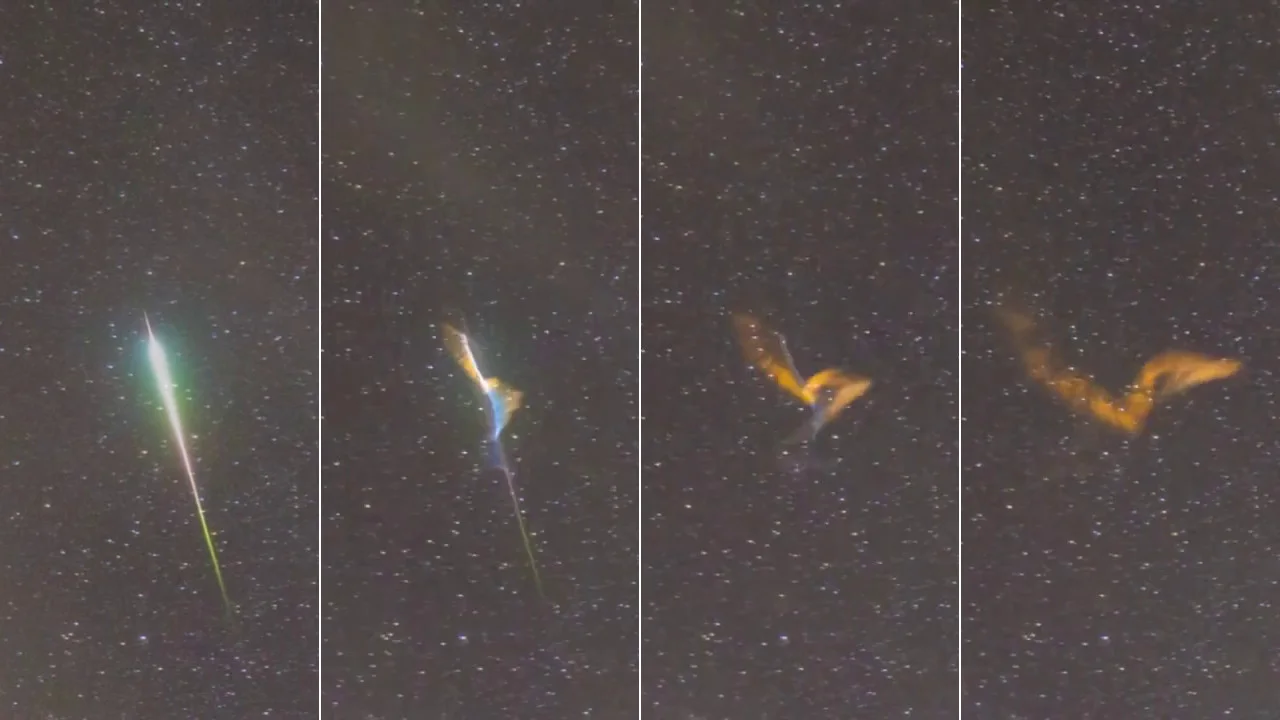
Four frames taken from a persistent train video, shot on October 21, 2022, show the initial Orionid meteor flash, and three views of the persistent train that developed in its wake. (Brenda Tate/Tim Doucette/UGC)
DON'T MISS: A Great Comet may shine along with meteor showers and bright planets this spring
Two comet, but one fizzled!
A new comet — 'sungrazer' C/2026 A1 (MAPS) — discovered in mid-January of this year, looked like it had a chance to become the next Great Comet.
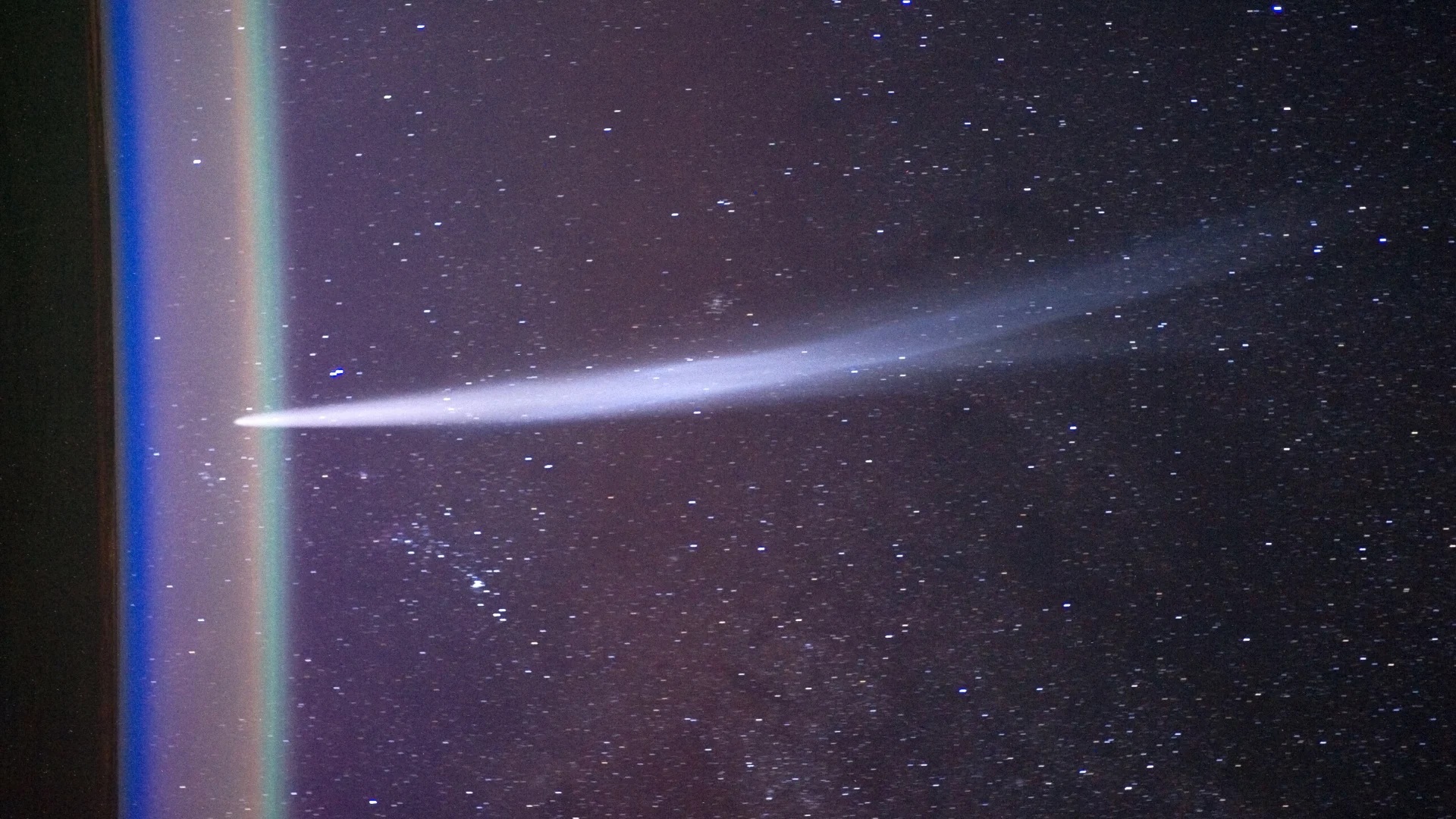
Comet Lovejoy, the last Great Comet, was captured in this photograph by NASA astronaut Dan Burbank, onboard the International Space Station on Dec. 22, 2011. (NASA)
Things looked very promising for comet MAPS, as it brightened on its approach to the Sun, where it would make an extremely close pass on April 4, at around 120,000 kilometres above the Sun's surface. (For context, that's less than one-third of the average distance between Earth and the Moon!)
However, just hours before it reached that perihelion, it grew not only brighter, but also wider. This typically signals that a comet has broken into more than one piece. Imaged hours after that, just before it slipped out of sight of our solar-observing satellites, it had been stretched into a long, bright cloud.
Upon emerging on the other side of the Sun, that long bright cloud had turned into a wider, more diffuse cloud, which then expanded and dissipated shortly after.
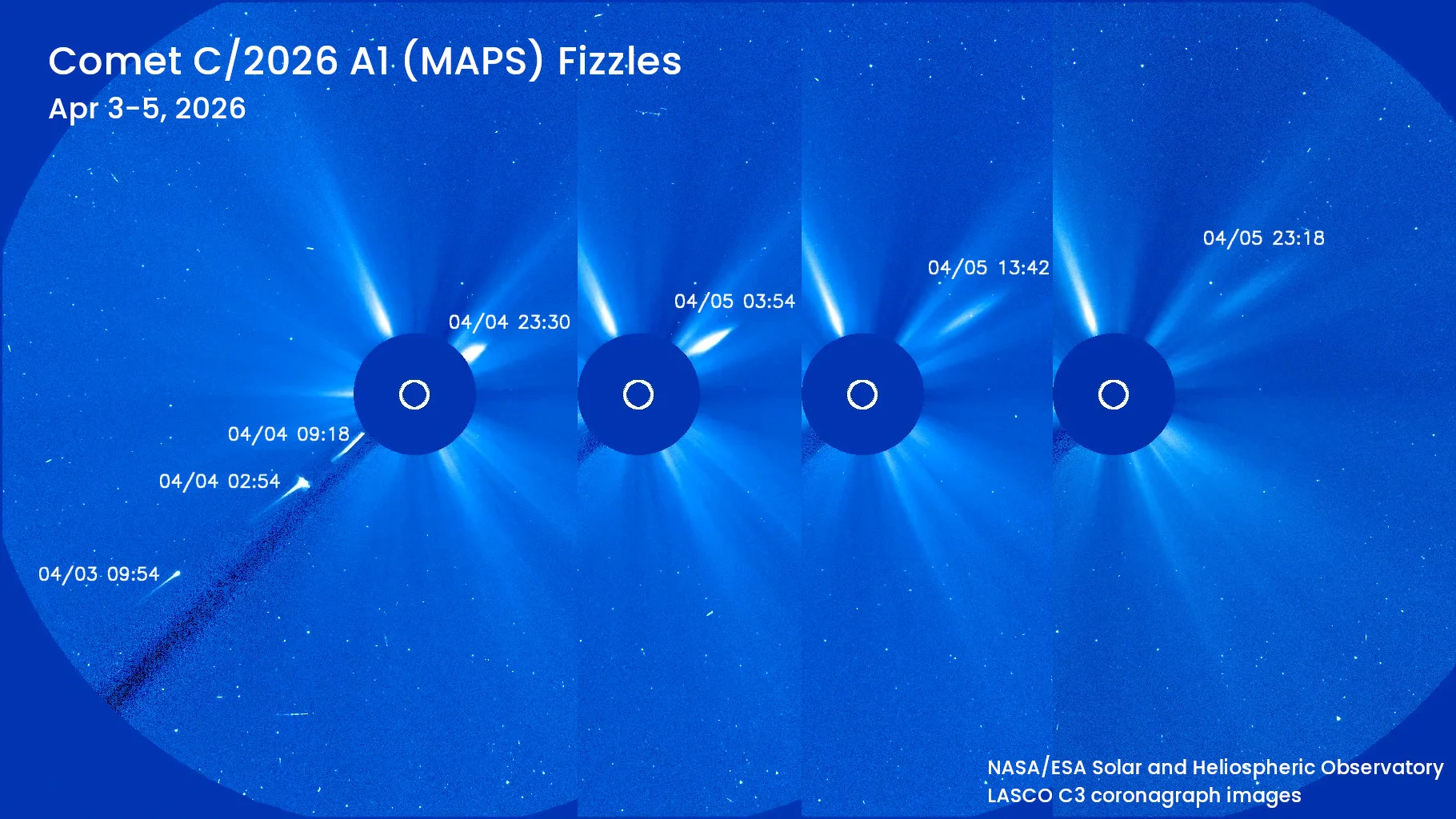
Several images from the Solar and Heliospheric Observatory have been overlaid here, to show comet C/2026 A1 (MAPS) as it approached perihelion, and the cloud of vapour that it became afterward. (NASA/ESA SOHO, Scott Sutherland)
Although Comet MAPS turned out to be a disappointment, there's another comet in the sky right now, which can be found in the predawn sky.
Comet C/2025 R3 (PANSTARRS) was discovered in the fall of 2025, and will be making its closest approach to Earth on April 17.
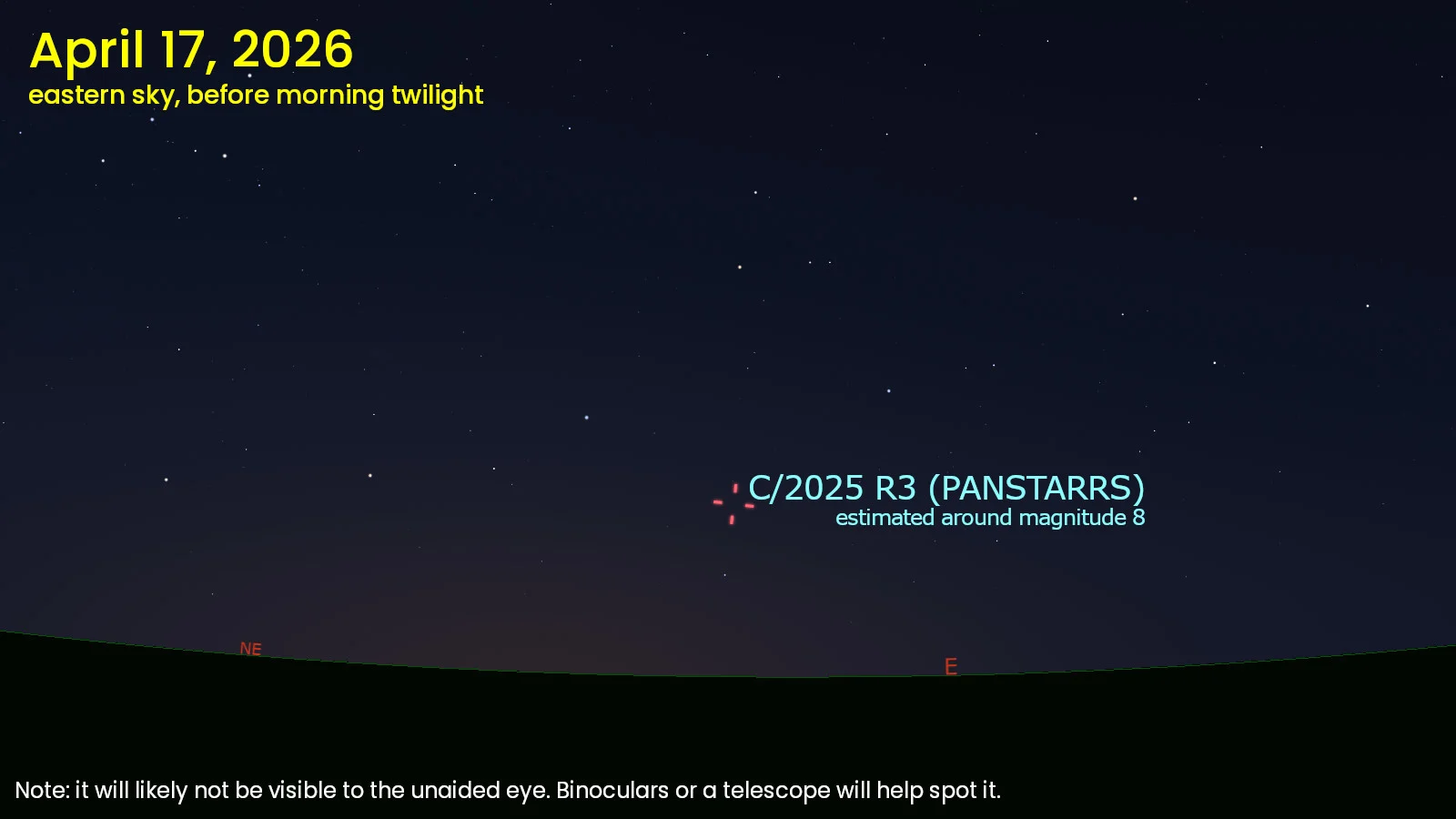
Comet PANSTARRS' position in the predawn sky, above the eastern horizon, before morning twilight. (Stellarium)
Conservative estimates put this comet at around magnitude 8 around the 17th. That means observers will definitely need a telescope, or at least binoculars, to see it. However, some optimistic projections have it reaching around magnitude 3, which would make it visible to the unaided eye!
Both of these comets could be challenging to observe, but hopes are high that Comet MAPS will exceed our expectations and put on a spectacular show!
The Constellations
Spring Constellations are taking over across the night sky during the month of April.
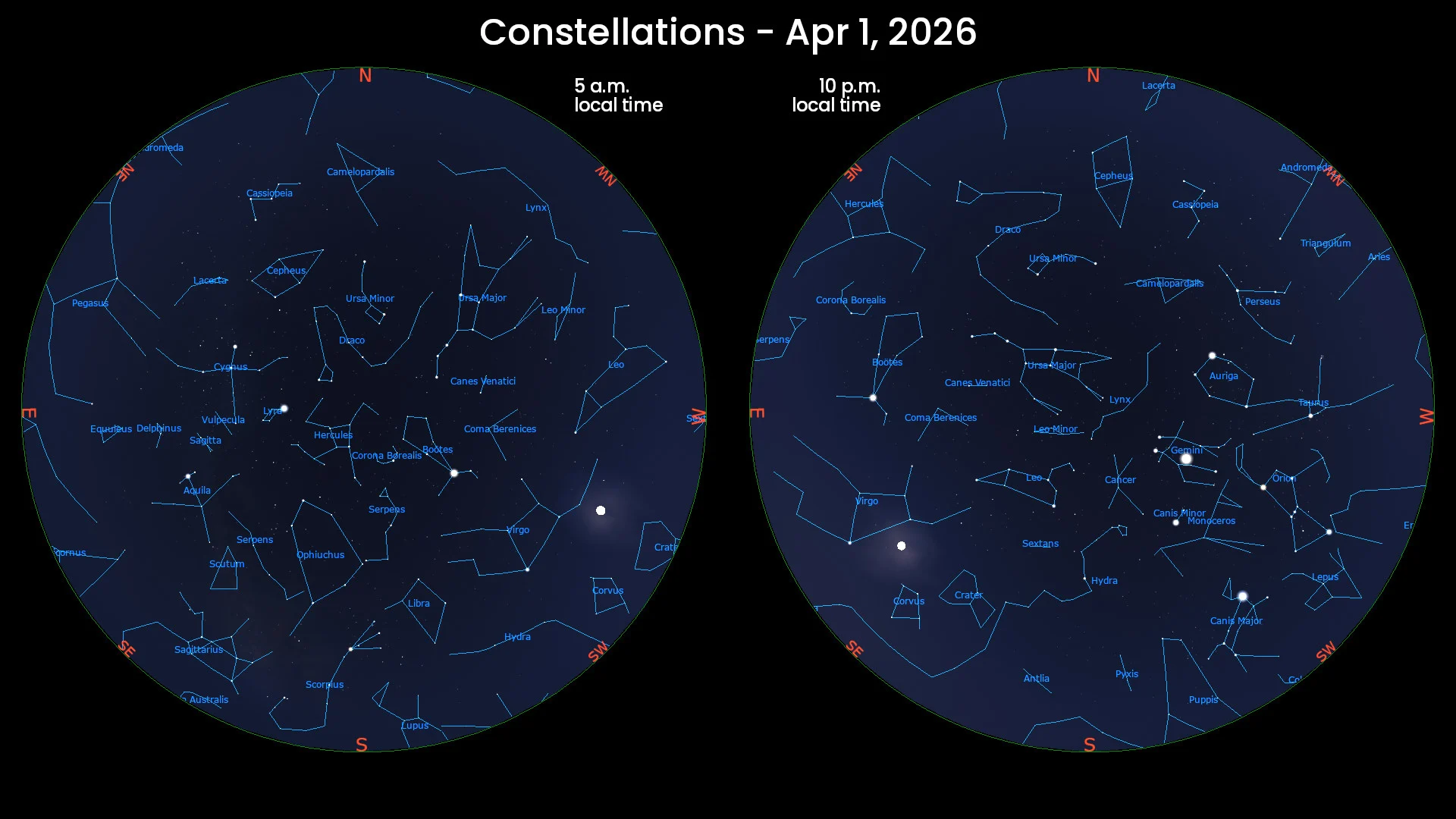
The morning and evening constellations on April 1, 2026. (Stellarium)
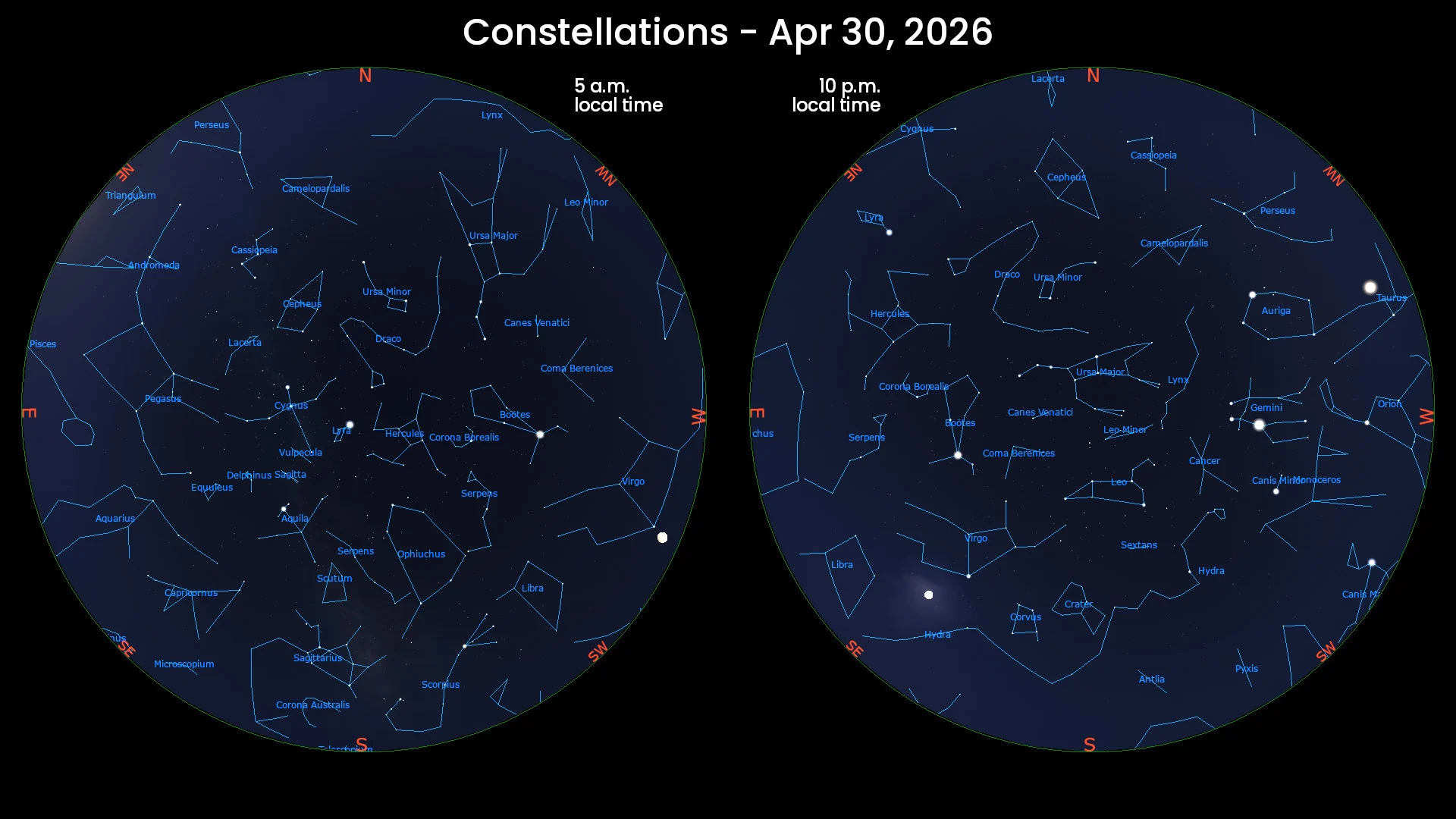
The morning and evening constellations on April 30, 2026. (Stellarium)
Editor's note: Although the video leading off this article still mentions the "great" potential for comet C/2026 A1 (MAPS), the text of the article has been updated, as of April 14, 2026, to reflect the comet's fate as it passed around the Sun.
(The thumbnail for this article combines three different images: a picture of Comet Lovejoy, photographed by NASA astronaut Dan Burbank from the ISS, on December 22, 2011 (courtesy NASA), comet C/2025 R3 (PANSTARRS), courtesy Dimitrios Katevainis (CC BY-SA 4.0), from March 28, 2026, and a Lyrid meteor streaking across the Milky Way, courtesy Kevin Kay (CC BY-NC-SA 2.0), from April 22, 2017.)