The Perseid meteor shower has begun and it could be the best in years!

We're now roughly two weeks out from the peak of the Perseids, and based on the timing of the Moon's phases, this is setting up to be one of the best in years
Keep your eyes to the sky in the nights ahead, as the Perseids intensify leading up to their August 12 peak, when they could put on the best show we've seen from this meteor shower in nearly two decades!
Each year, from mid-July through late-August, Earth passes through a stream of ice, dust, and pebbles left behind by a comet known as 109P/Swift-Tuttle. This debris was once part of the comet itself. However, during each pass through the inner solar system, the warmth of the Sun turned some of the comet's ice into gaseous form, which lofted the debris into space. There, it became part of the comet's coma and tails, and over the thousands of times that Swift-Tuttle has made this journey, the debris spread out into a trail that now traces out the comet's entire path around the Sun.

The debris stream of Comet Swift-Tuttle stretches from just inside Earth's orbit, out to the orbit of Pluto, following roughly the same path as the comet itself. (meteorshowers.org)
While the debris stream constantly orbits the Sun, all year long, it only intersects with our orbit along the stretch that we travel through from July 17 to August 24. So, it misses Earth for much of the year, and then, as we cross the stream during those 38 days, the planet sweeps up the bits of debris directly in our path. These 'meteoroids' plunge into the atmosphere at speeds of nearly 60 kilometres per second, and each grain of dust or pebble exerts enormous pressure on the air molecules in front of it, which causes the air to glow, white hot. The result is bright streaks of light across the night sky that we call meteors.
Due to the exact path these bits of debris are on when they make their plunge, all of the meteors they produce appear to originate from near the constellation Perseus, in the northern sky. Thus, this was named the Perseid meteor shower.
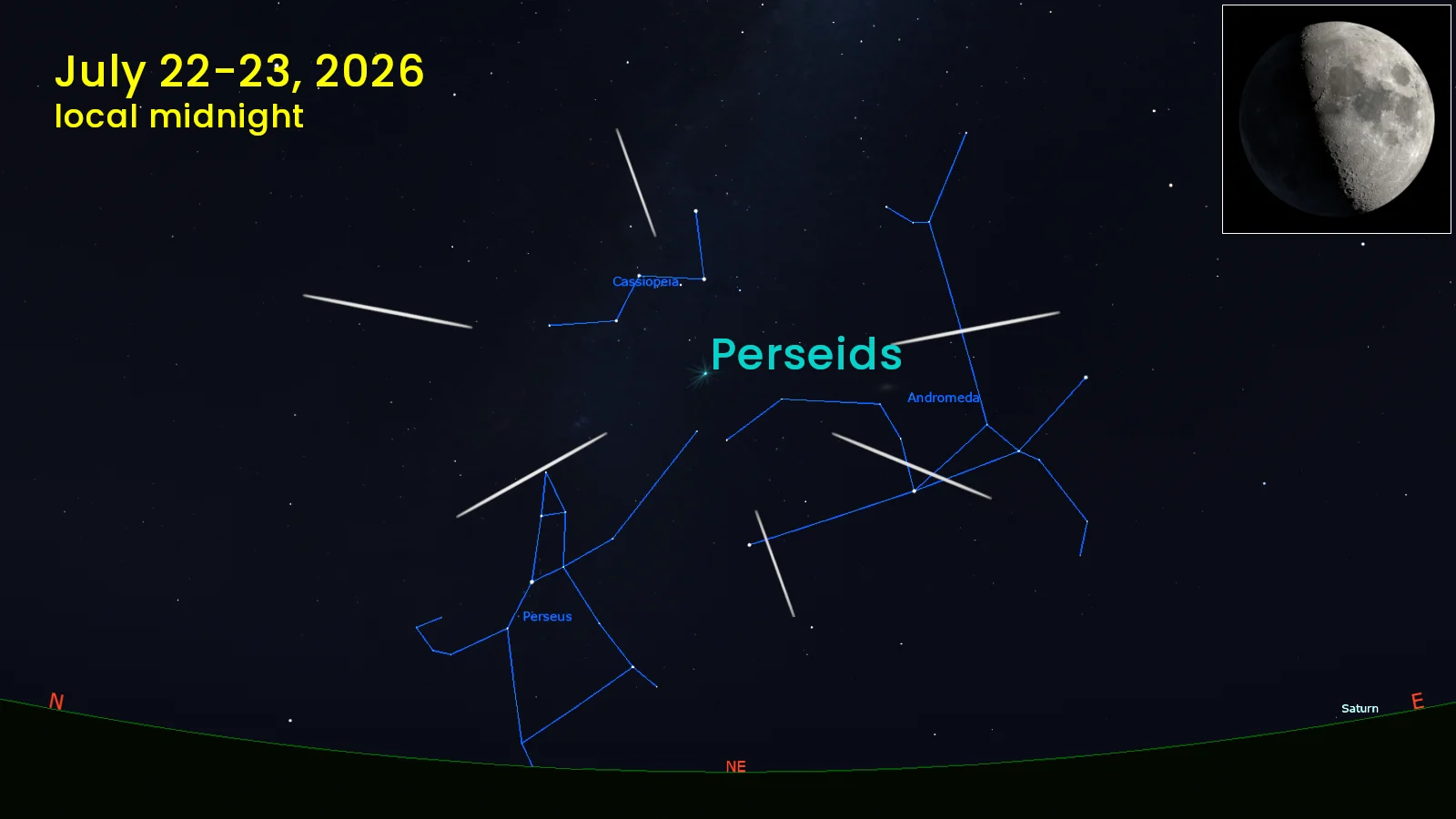
The Perseids radiant — the point in the sky the meteors can be traced back to — is between three of the major constellations. On the night of this simulation, the Waxing Gibbous Moon is in the southwestern sky, and will set in the early morning hours. (Stellarium/NASA SVS/Scott Sutherland)
Since Perseus does not fully set below the horizon at this time of year, observers only need to wait until the sky is dark enough to potentially see Perseid meteors flash by overhead. However, the best time of night to see them is in the hours after midnight, when the radiant is highest in the sky.
You may also spot other meteors crisscrossing with the Perseids, as both the Southern delta Aquariid and alpha Capricornid meteor showers are ramping up through the end of July, as well. These two are far less, compared to the Perseids, and add just a handful of meteors that appear out of the southern sky. Both peak at the end of July (on the 29th-30th and 30th-31st, respectively), which unfortunately coincides with the Full Moon.
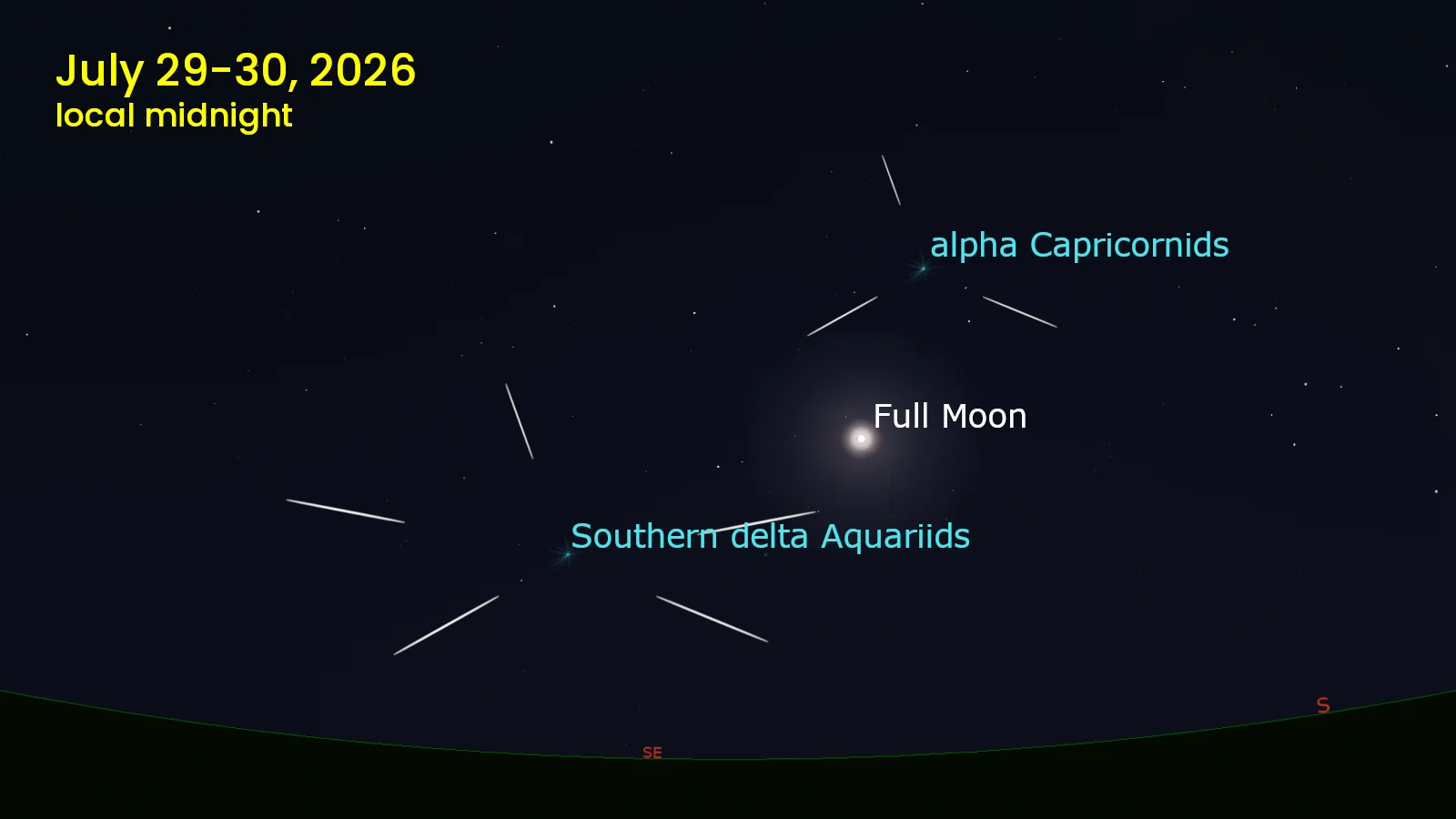
The radiants of the Southern delta Aquariid and alpha Capricornid meteor showers, at the end of July 2026. (Stellarium)
READ MORE: Planets shine and three meteor showers crisscross the night sky in July 2026
The Moon's phases
On Tuesday night, the First Quarter Moon shone in the sky. Over the next week, the Moon will be in its Waxing Gibbous phase, with more and more of the near-side of the lunar surface illuminated by the Sun each night. This leads up to the Full Moon on the night of the 28th to 29th.
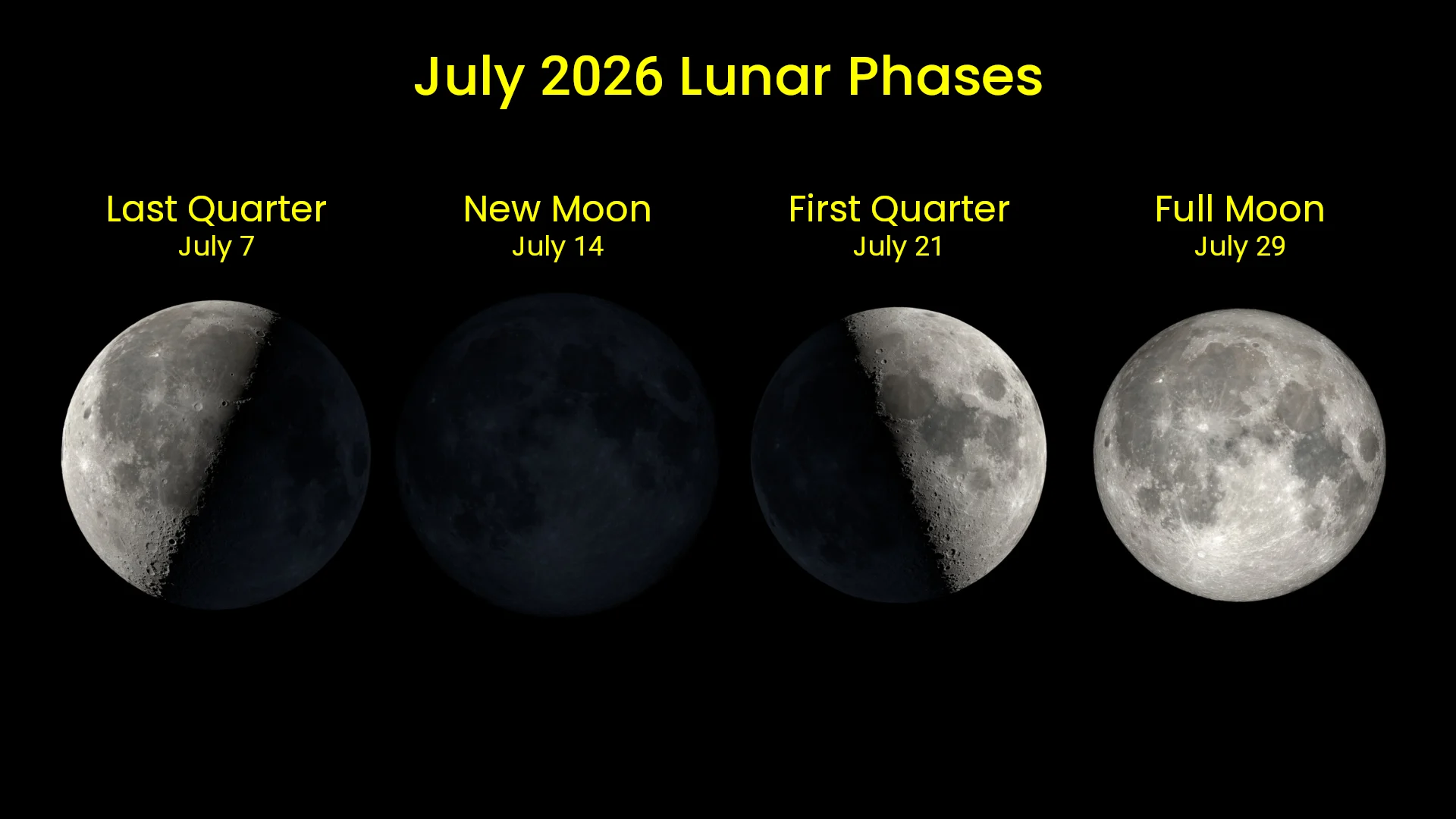
The Moon's phases for July 2026. (NASA SVS/Scott Sutherland)
As the Moon grows brighter, its light will make it more of a challenge to spot Perseid meteors flashing by.
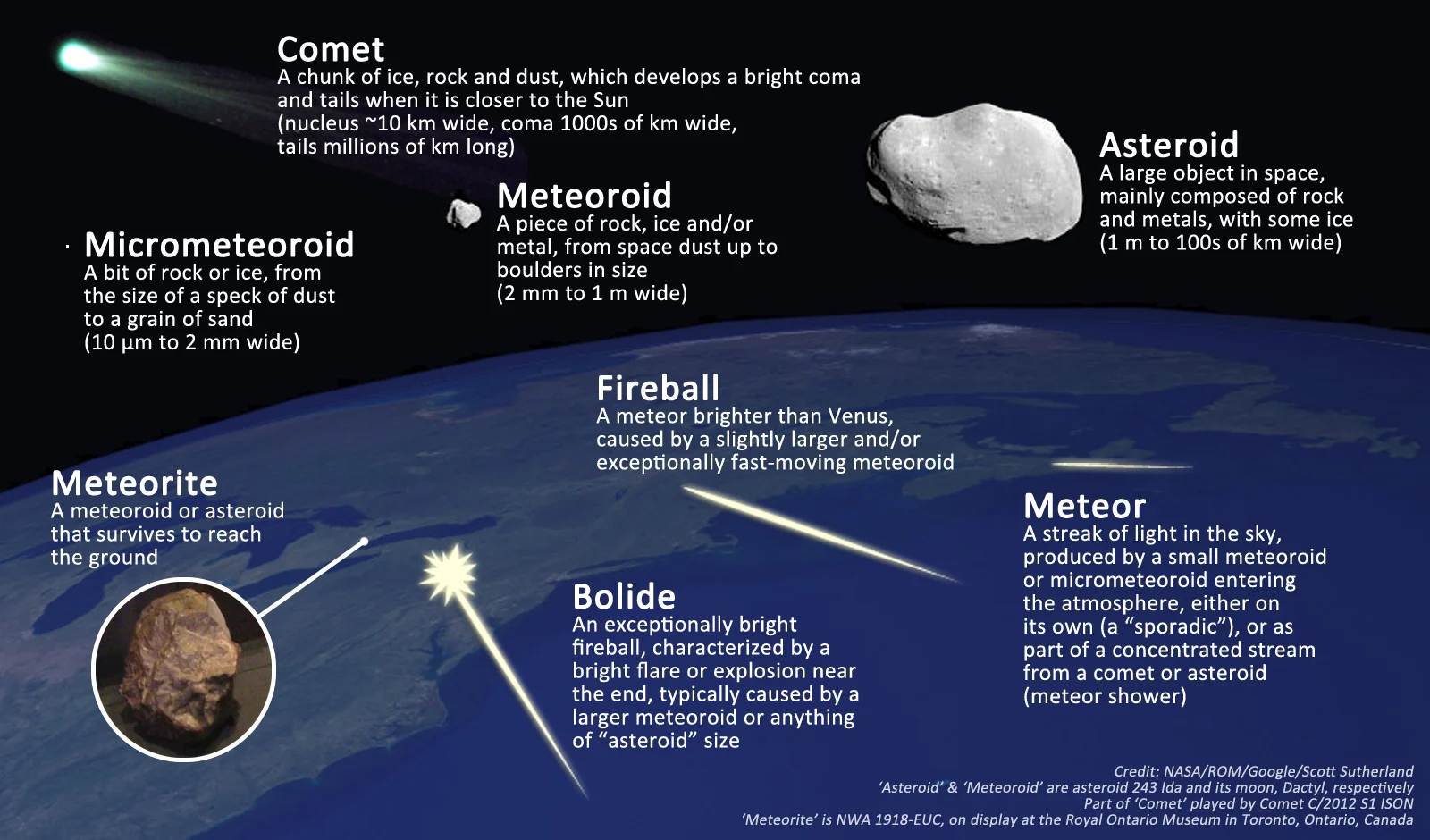
Fortunately, the Perseids are famous for being the annual meteor shower with the greatest number of fireballs. These are exceptionally bright meteors, caused by larger pieces of comet debris in the stream, that can be seen even through the worst urban light pollution.
DON'T MISS: Two eclipses and a meteor shower are the 'must see' sky events for Summer 2026
From the 29th through until the 11th of August, the Moon's brightness will diminish as it passes through its Waning Gibbous, Third Quarter, and then Waning Crescent phases. At the same time, the Perseids will continue to intensify. The number of meteors will reach about 10-20 per hour during the first week of August, and then increase dramatically starting on the night of the 9th to 10th, with the rate roughly doubling each night until the meteor shower's peak on the night of the 12th to 13th — the night of the New Moon.
The Perseids peak
Although it takes Earth more than a month to pass completely through Swift-Tuttle's debris stream, the concentration of the debris doesn't remain the same throughout. It starts off diffuse in mid-July, which translates into just a few meteors per night. Then, the concentration increases, causing the number of meteors appearing in our sky to ramp up, accordingly.
It's around August 12, each year, that we reach the densest part of the comet's debris, signalling the peak of the Perseid meteor shower.
On a typical year, the ideal number of Perseid meteors (the Zenith Hourly Rate) reaches between 75-100 per hour on the night of the peak.
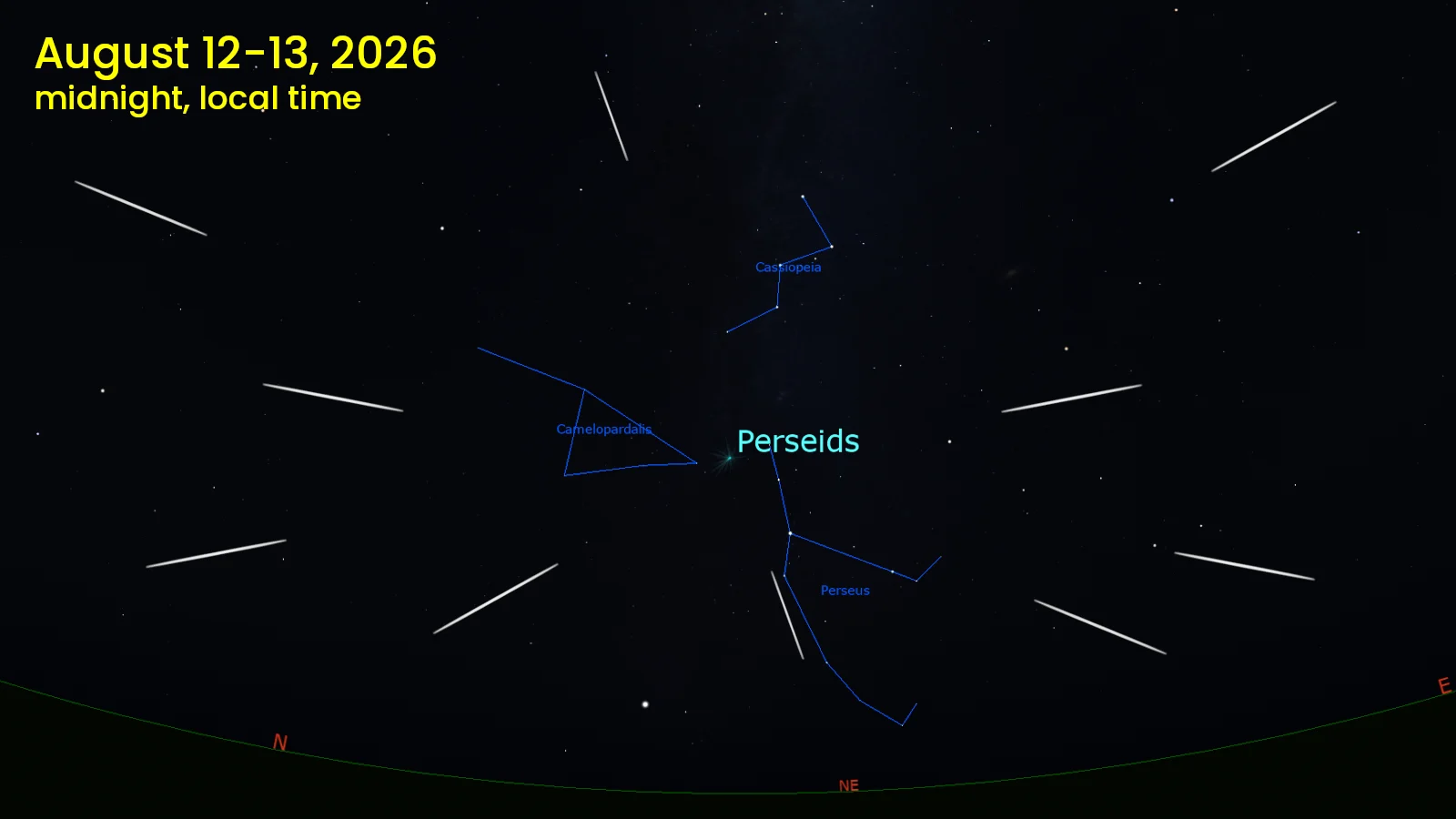
The Perseids radiant during the meteor shower's peak on the night of August 12-13, 2026. (Stellarium)
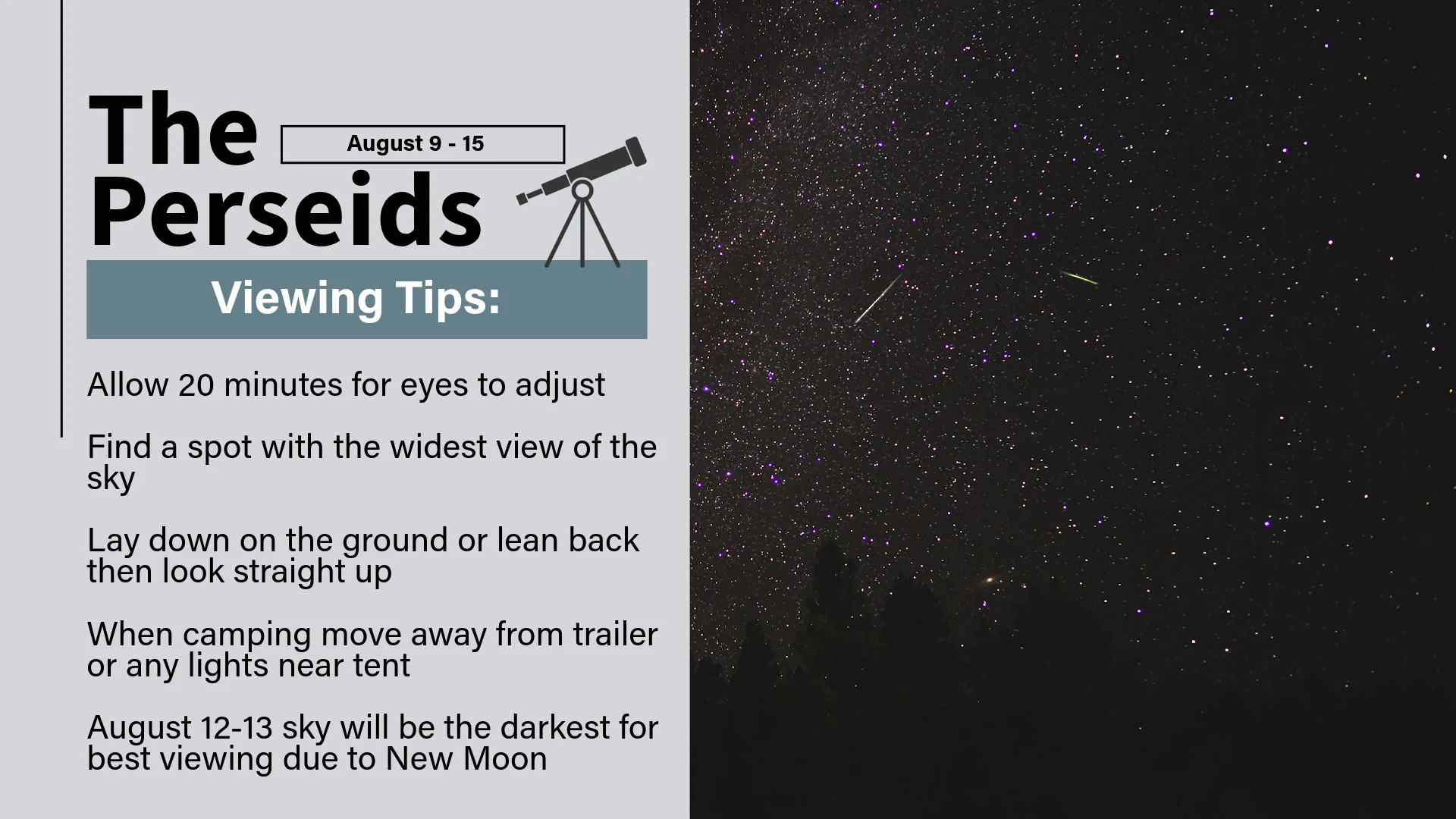
Other than cloudy skies, two factors with the greatest impact on how many meteors we see are urban light pollution and the phase of the Moon. Both of these factors limit how much our eyes can adjust to the dark. So, the less light there is in the sky, the more meteors we are likely to spot.
We can control the former by finding somewhere to watch from that is far from city lights, or at least where we can limit our exposure to them. Unfortunately, we are at the mercy of the latter, though. While a Crescent Moon isn't likely to have much of an effect, a Gibbous or Full Moon in the sky can reduce the number of visible meteors to half, or even less.
READ MORE: How to get the most out of meteor showers, auroras, and other night sky events
Fortunately, for 2026, we have a New Moon on August 12!
As it lines up with Earth and the Sun, this New Moon will produce a total solar eclipse across Greenland, Iceland, Portugal, and Spain, with a partial eclipse over Canada.
That night, though, with no Moon in the sky, we have the perfect conditions for the Perseids peak! The last time the timing worked out that well was 19 years ago, in 2007!