Spooky Halloween sights and sounds from the infinite void of space

Sometimes when you stare out into the universe, the universe stares right back!
Telescopes regularly reveal the wonders of our universe. Once in a while, though, they also turn up hauntingly spooky sights out in the cosmos.
Here is the science behind some of the creepiest objects we've spotted out in space.
The Eye of Sauron
One of the brightest stars in the sky is Alpha Piscis Austrini, more commonly known as Fomalhaut, which can be found to the south after sunset at this time of the year.
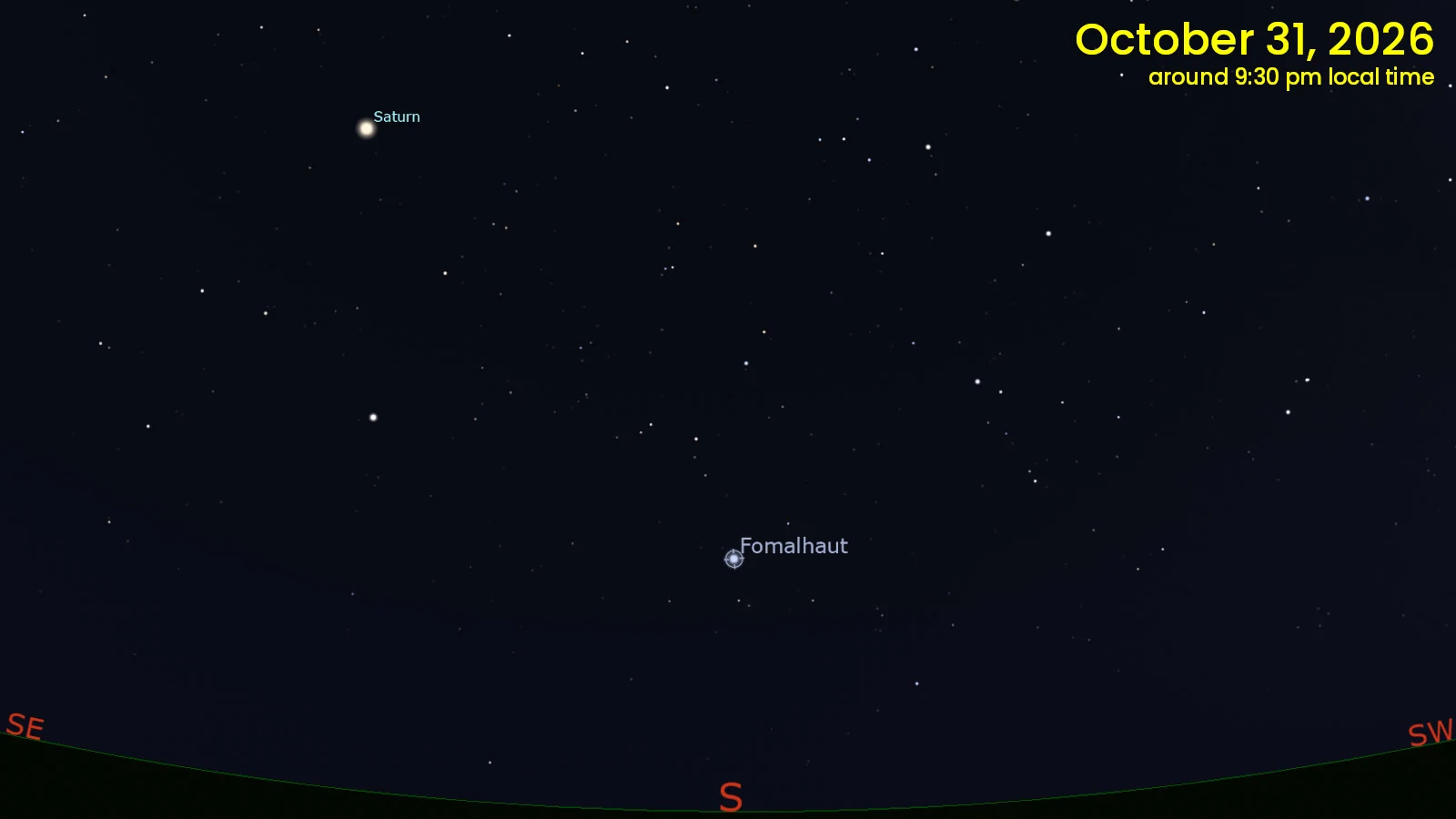
Fomalhaut in the southern sky on Oct 31, 2026. (Stellarium)
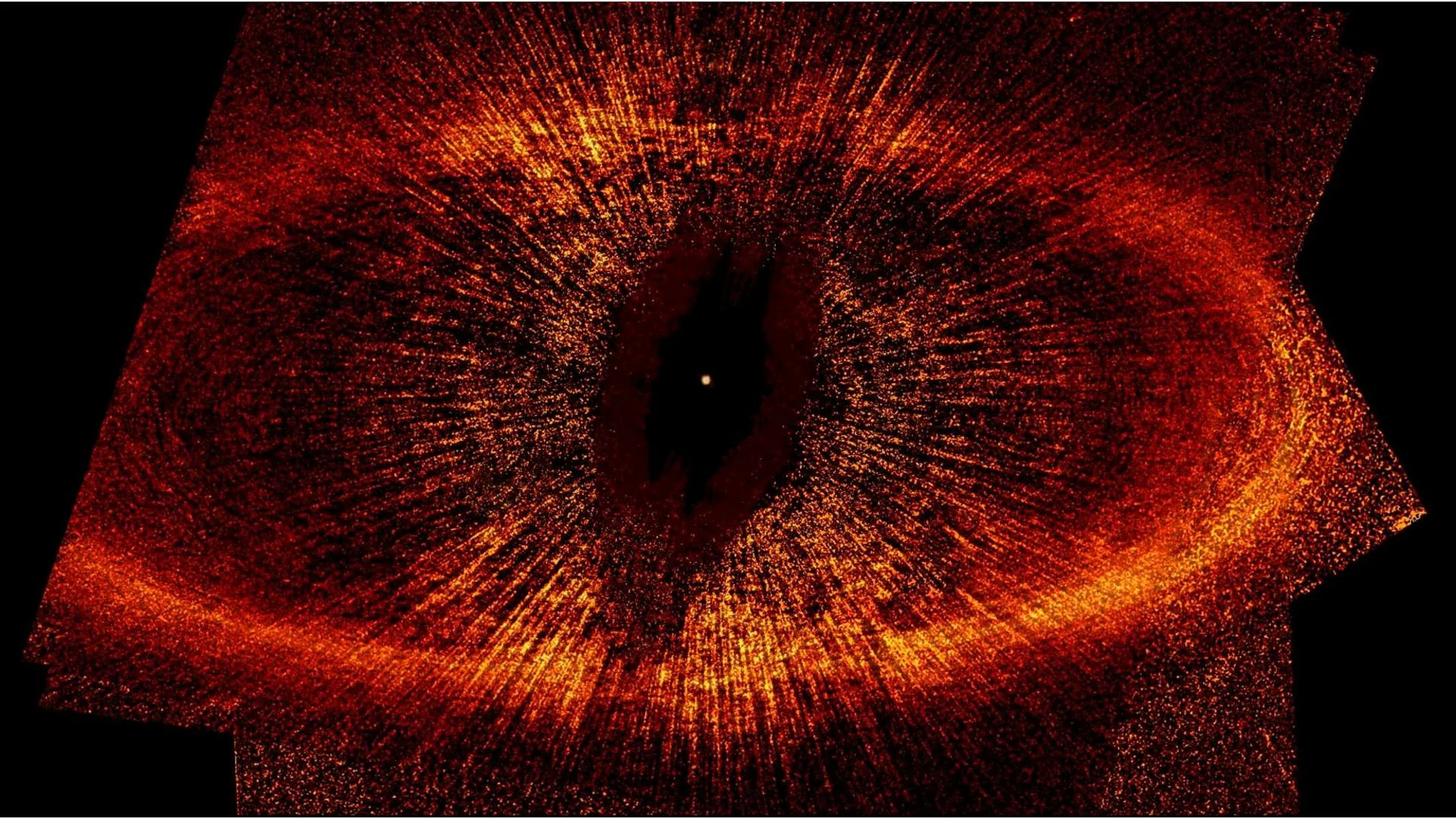
This has been a valuable target for astronomers over the years, especially using Hubble and the James Webb Space Telescope. The reason is the young star's wide disk of debris, which appears to be in the process of forming a brand new planetary system.
Hubble's very first image of Fomalhaut, from back in 2004, is what has made this star so memorable over the years.
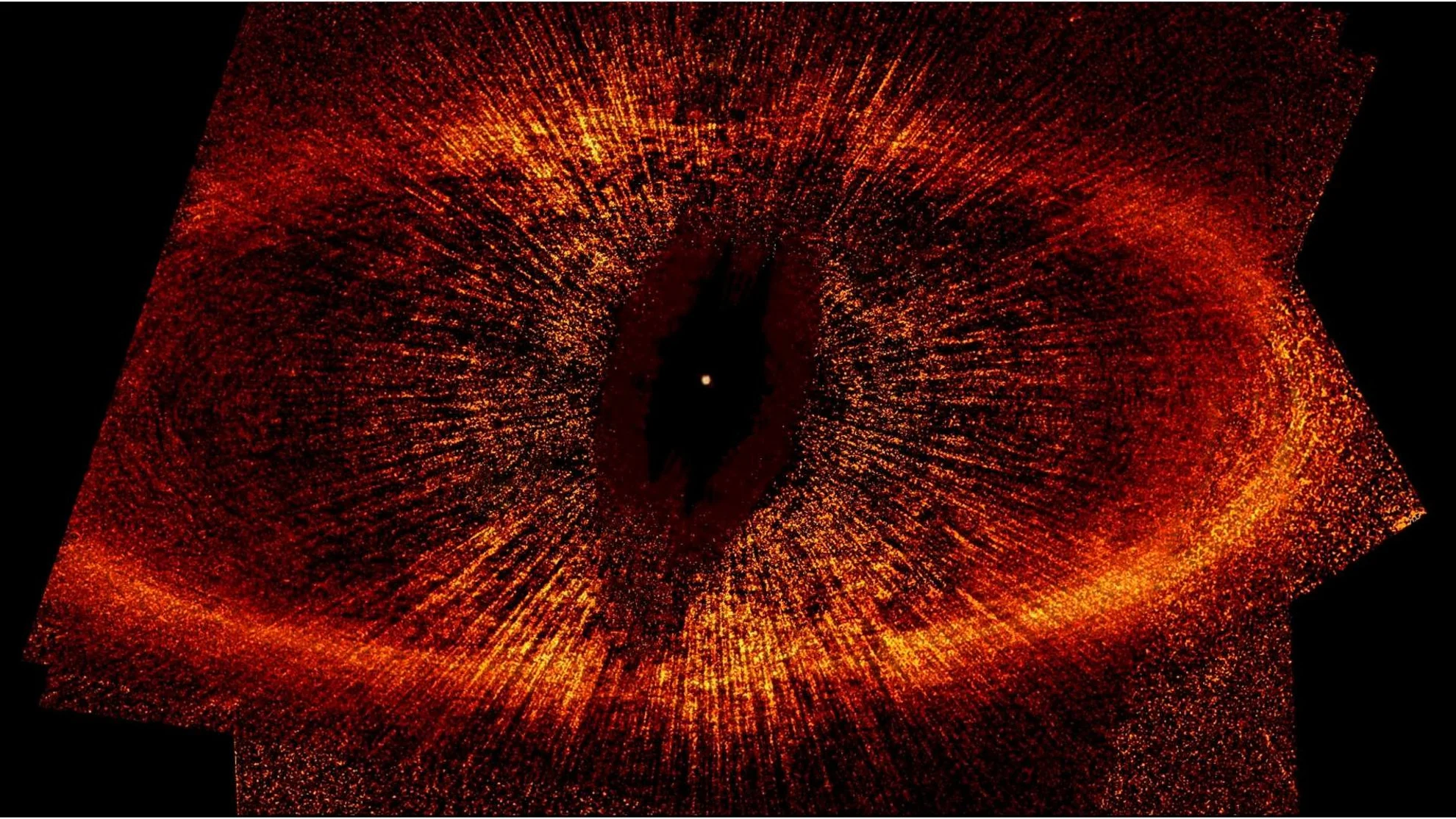
The Fomalhaut star system, roughly 25 light years away from Earth. The dark region in the core is due to the telescope blocking direct light from the star, allowing us to gather light from the dimmer debris disk surrounding it. Credit: NASA, ESA, P. Kalas And J. Graham (University of California, Berkeley) and M. Clampin (NASA/GSFC)
Due to the wide band of planet-forming dust, which is viewed tilted from our point of view, the system bares an uncanny resemblance to an icon of fantasy literature — the fiery Eye of Sauron, from J.R.R. Tolkien's epic Lord of the Rings.
"You know of what I speak, Gandalf. A great eye, lidless and wreathed in flame." — Saruman the White to Gandalf the Grey, in The Fellowship of the Ring.
One of the most remarkable things about Fomalhaut in recent years was the apparent 'ghost planet' that astronomers spotted, which then suddenly vanished in 2020.
This first showed up as a bright region in the debris disk, which was interpreted as a single large object gathering the dust to it, during planet formation. However, in subsequent images, it was seen to fade again into the background.
The most likely explanation is that we witnessed the collision of two large planetesimals, which resulted in a wide dust cloud that showed up very bright in the infrared data gathered by telescopes. As the cloud grew larger and cooled, it dimmed and was lost from view.
READ MORE: Fomalhaut's hidden debris rings revealed in amazing detail by JWST
Ghostly sounds from a dead star
MSH 15-52, better known as the Cosmic Hand or the Hand of God, is a cloud of energized particles blown away from a dead, collapsed star, some 17,000 light-years away.
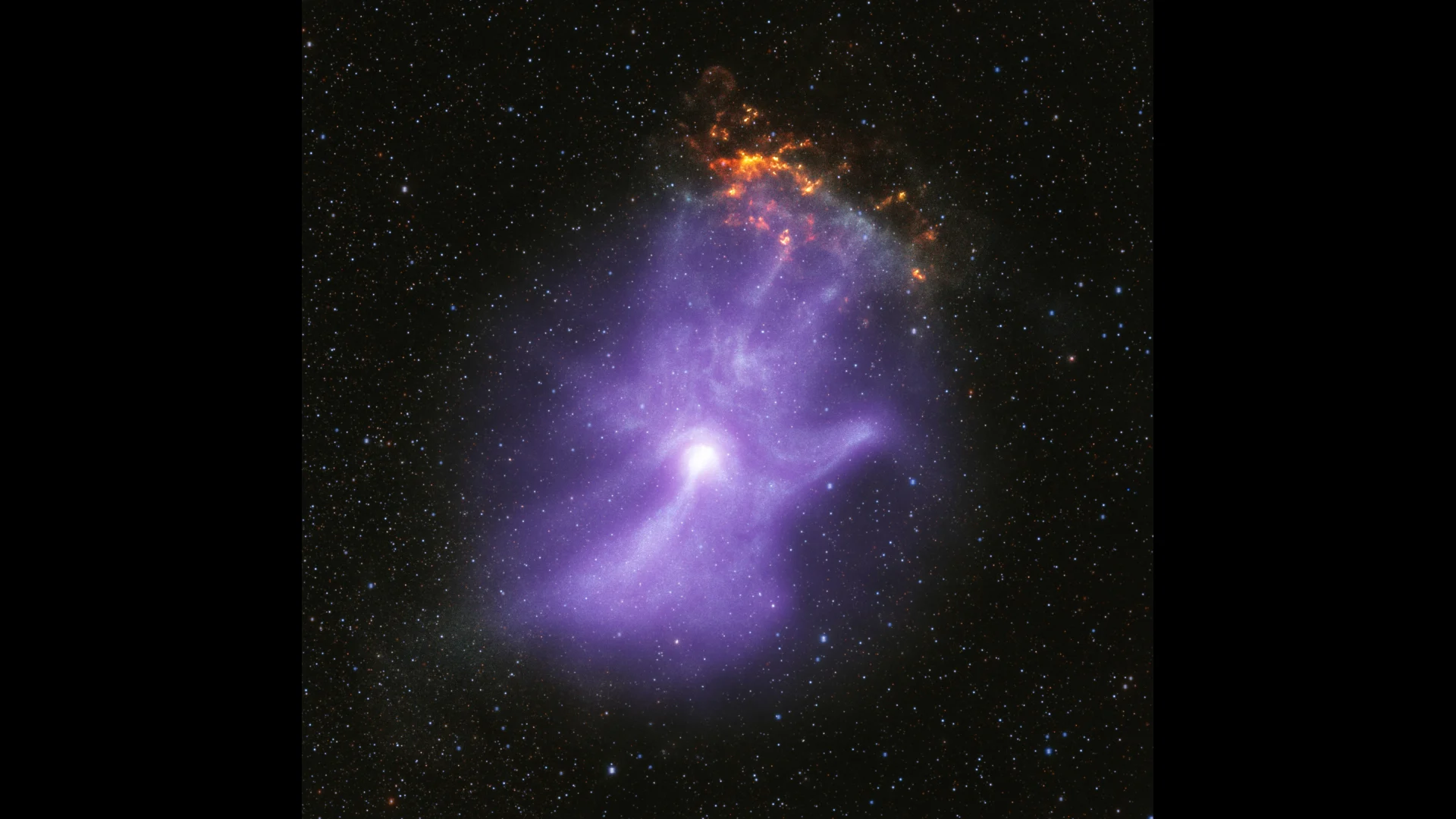
MSH 15-52. (X-ray: NASA/CXC/Stanford Univ./R. Romani et al. (Chandra); NASA/MSFC (IXPE); Infrared: NASA/JPL-Caltech/DECaPS; Image Processing: NASA/CXC/SAO/J. Schmidt)
According to NASA, the 'hand' is a combination of x-ray data gathered by the Imaging X-ray Polarimetry Explorer (IXPE) and the Chandra X-ray Observatory, with the orange-red 'sparkles' at the fingertips also from Chandra. The background stars are added using infrared data captured using the Dark Energy Camera on the Blanco telescope at the Cerro Tololo Inter-American Observatory in Chile.
The entire structure is the result of a supernova, which left behind a spinning neutron star known as a pulsar. While the initial blast of the star's explosion pushed its outer layers outward into space, the extreme stellar wind flowing away from this pulsar carved the cloud of gas and dust into this shape over time.
While its appearance is spooky enough, scientists converted this scene into sound, as well, resulting in a ghostly sonification.
NASA explains: "In sound, the scan goes from the bottom to the top. The brightness of the Chandra data of the cloud have been converted into rough string-like sounds, while the blast wave is represented by a range of pitches of firework-type noises. The IXPE data are heard as wind-like sounds. The infrared data are mapped to musical pitches of a synthesizer sound. The light curve, or brightness over time, from the dead star’s collapsed core is heard in pulses that occur almost 7 times every second as it does in the original data."
READ MORE: Our Sun is capable of producing devastating superflares; should we worry?
Halloween Asteroid
Closer to home, a giant asteroid flew past Earth on Halloween in 2015. That's not the scary part, as it passed by at a completely safe distance of 488,000 kilometres, or over 100,000 km farther away than the Moon.
The scary part was discovered when scientists used a trio of radio telescopes to gather radar views of its surface.
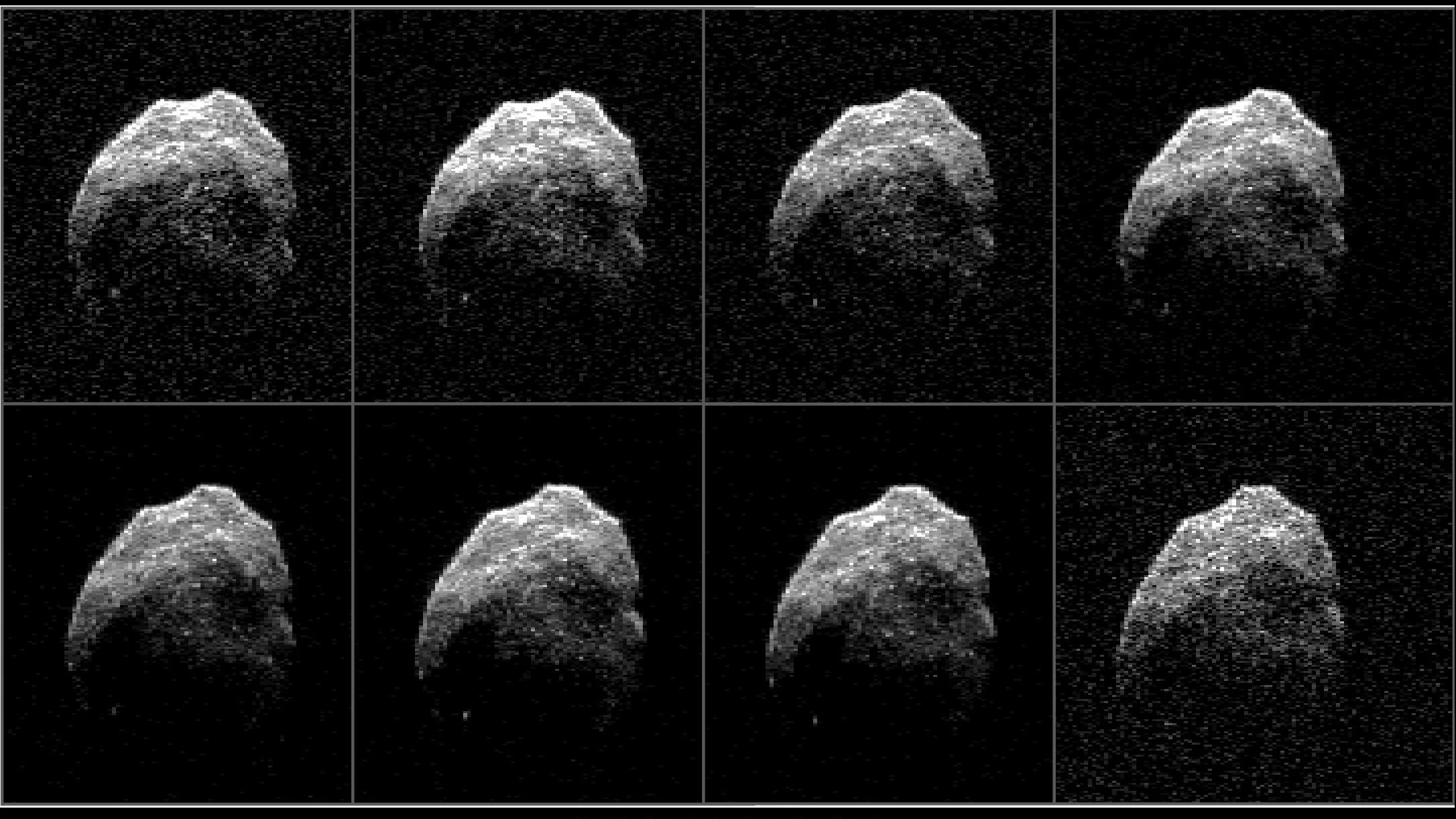
Eight views taken from the radar observations of asteroid 2015 TB145 are shown here, produced by the cooperation of the Goldstone Deep Space Communications Complex and the Green Bank Telescope on October 31, 2015. (NASA/JPL-Caltech/GSSR/NRAO/GB)
Part-way into the observations, astronomers were shocked to see the play of light and shadow across the face of this 650-metre-wide space rock produce a skull-like visage turning towards us.

(NAIC-Arecibo/NSF)
Dubbed the Halloween Asteroid, it was revealed to be fairly special. Why? Because it may be a dead comet.
Comets are immense chunks of ice, dust, gas, and rock, which are left over from the formation of the solar system. When a comet gets closer to the Sun, the outer layers of ice begin to sublimate — turn directly from solid to gas — which sends streamers of ionized gas and dust out into space. This forms a cloud around the comet's nucleus, known as the coma, as well as two long tails, one made of dust and the other of ionized gas. Each repeated trip around the Sun causes the comet to lose more ice and gas and dust, and if it does this enough times, it can run out of these resources. What's left behind is a rocky remnant that may be the original nucleus around which the comet formed, long ago.
Now, despite its appearance, asteroid 2015 TB145 is certainly not the leftover skull of some immense celestial being. Instead, its appearance is simply due to pareidolia, which is our tendency to see familiar sights (such as faces) in random products of nature.
DON'T MISS: NASA satellite spots a new once-in-a-century crater on the Moon
The Eyes of the Cosmos
Back in October of 2024, Hubble and JWST teamed up to give us a scary look at two interacting spiral galaxies — IC 2163 and NGC 2207 — which appeared as red-tinged eyes staring at us from the cosmic beyond.

Spiral galaxies IC 2163 (left) and NGC 2207 (right) are presented in combined data from two of our most powerful space telescopes. The pair's macabre colors represent a combination of mid-infrared light from NASA's James Webb Space Telescope with visible and ultraviolet light from NASA's Hubble Space Telescope. (NASA, ESA, CSA, STScI)
According to the Space Telescope Science Institute (STScI), these two galaxies have only 'grazed' by each other, with IC 2163 (smaller, to the left) passing behind NGC 2207 (larger, to the right) over the last million years or so. During this close pass, the gravitational pull of each galaxy has influenced the other, possibly distorting the shape of their spiral arms, but most definitely sparking intense star formation.
"To spot the star-forming 'action sequences', look for the bright blue areas captured by Hubble in ultraviolet light, and pink and white regions detailed mainly by Webb's mid-infrared data," STScI said.
For just how intense this star formation is, STScI explained that both of these galaxies, combined, are estimated to be producing two dozen new stars like our Sun every year. Comparatively, our own Milky Way galaxy only forms two or three new Sun-like stars each year.