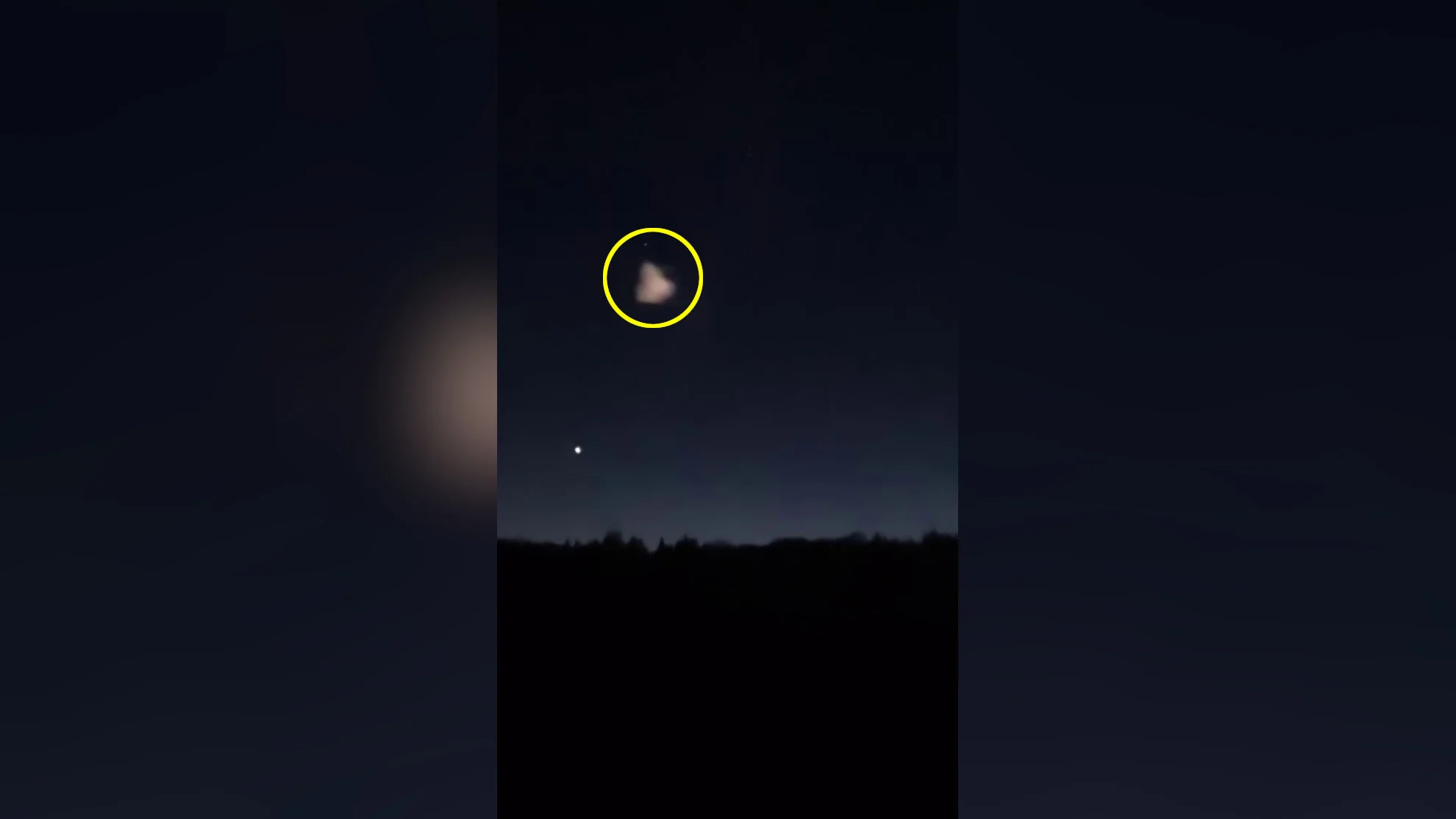
Odd glowing blob spotted floating over central B.C. Tuesday night

This strange phenomenon has been showing up much more often, lately.
Onlookers were mesmerized by a strange sight in the sky, Tuesday night, as a glowing blob floated by overhead.
Around 10:15 to 10:30 p.m. Pacific Time, on May 5, 2026, something odd suddenly appeared in the sky over central British Columbia.
Drifting leisurely by, glowing against the dark blue of the evening sky, was a strange fuzzy blob of light.
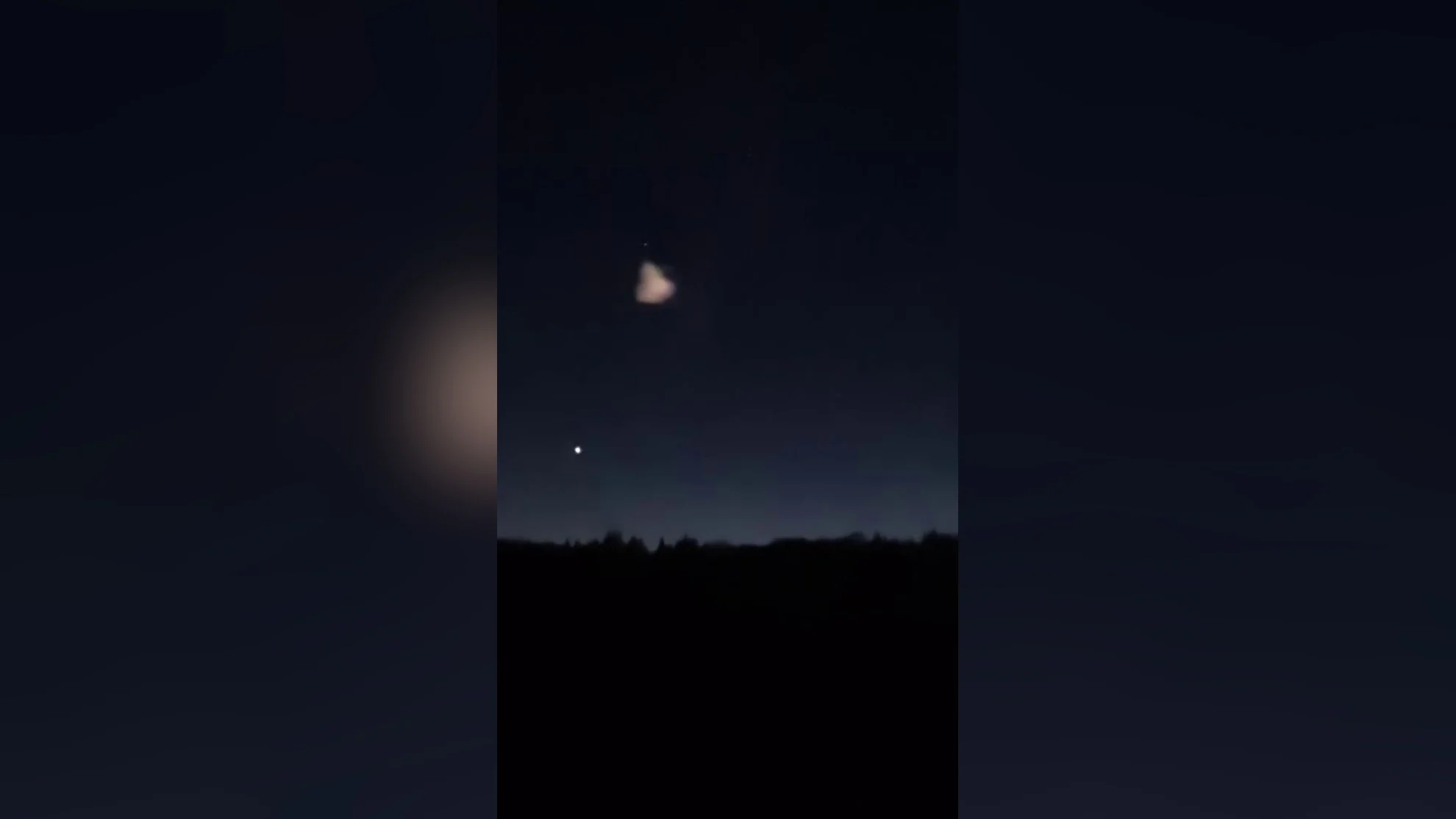
The glowing blob spotted above British Columbia. (Screen capture courtesy Patsy Seymour)
Captured on cellphone video by Patsy Seymour from Prince George, B.C., this bizarre object was reported to be moving from north to south.
In the video, it also appeared to be following along below a small point of light, and was accompanied by a wispy patch of haze or vapour, all of which were moving at the same speed.
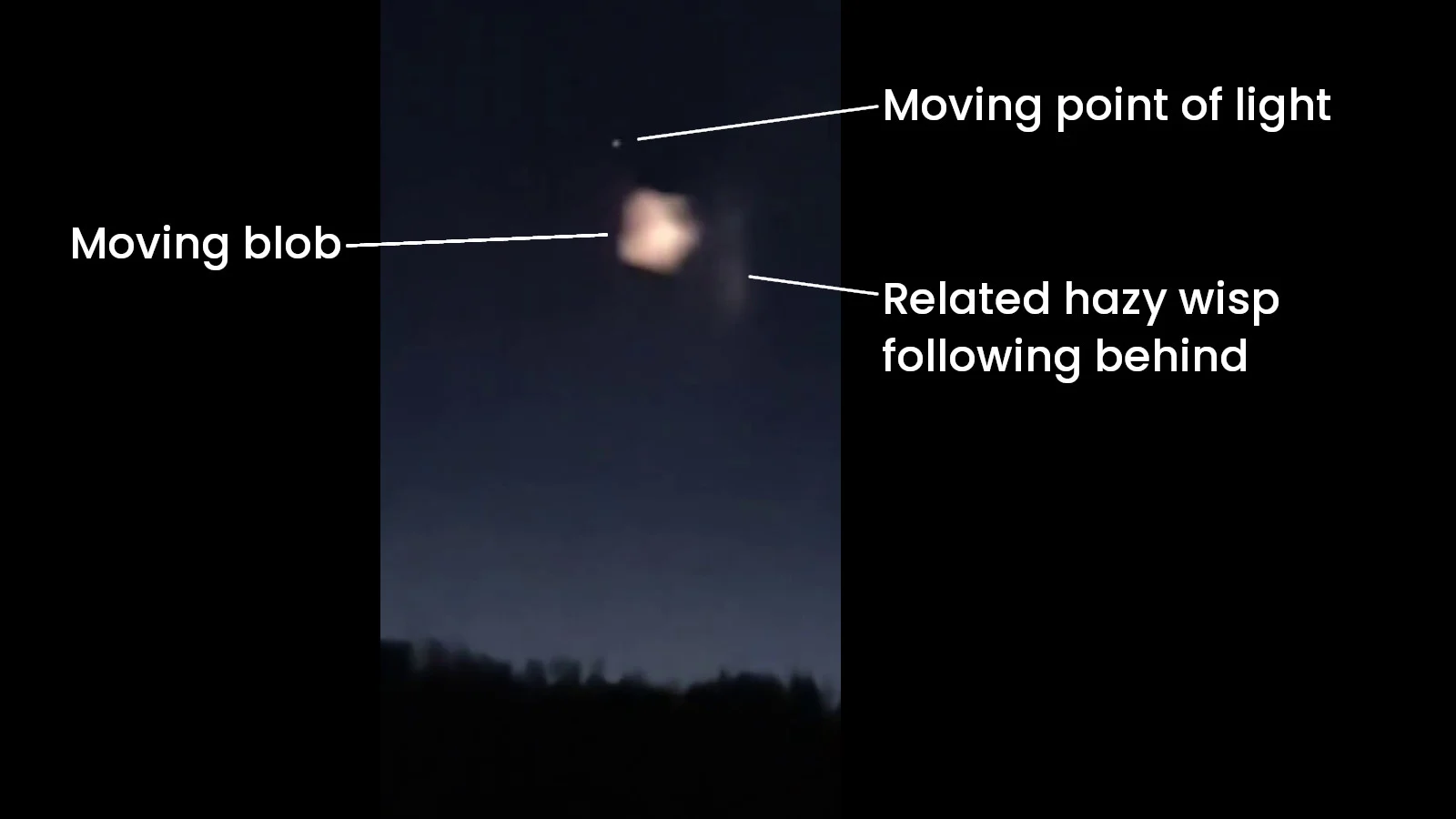
(Screen capture courtesy Patsy Seymour, labels by Scott Sutherland)
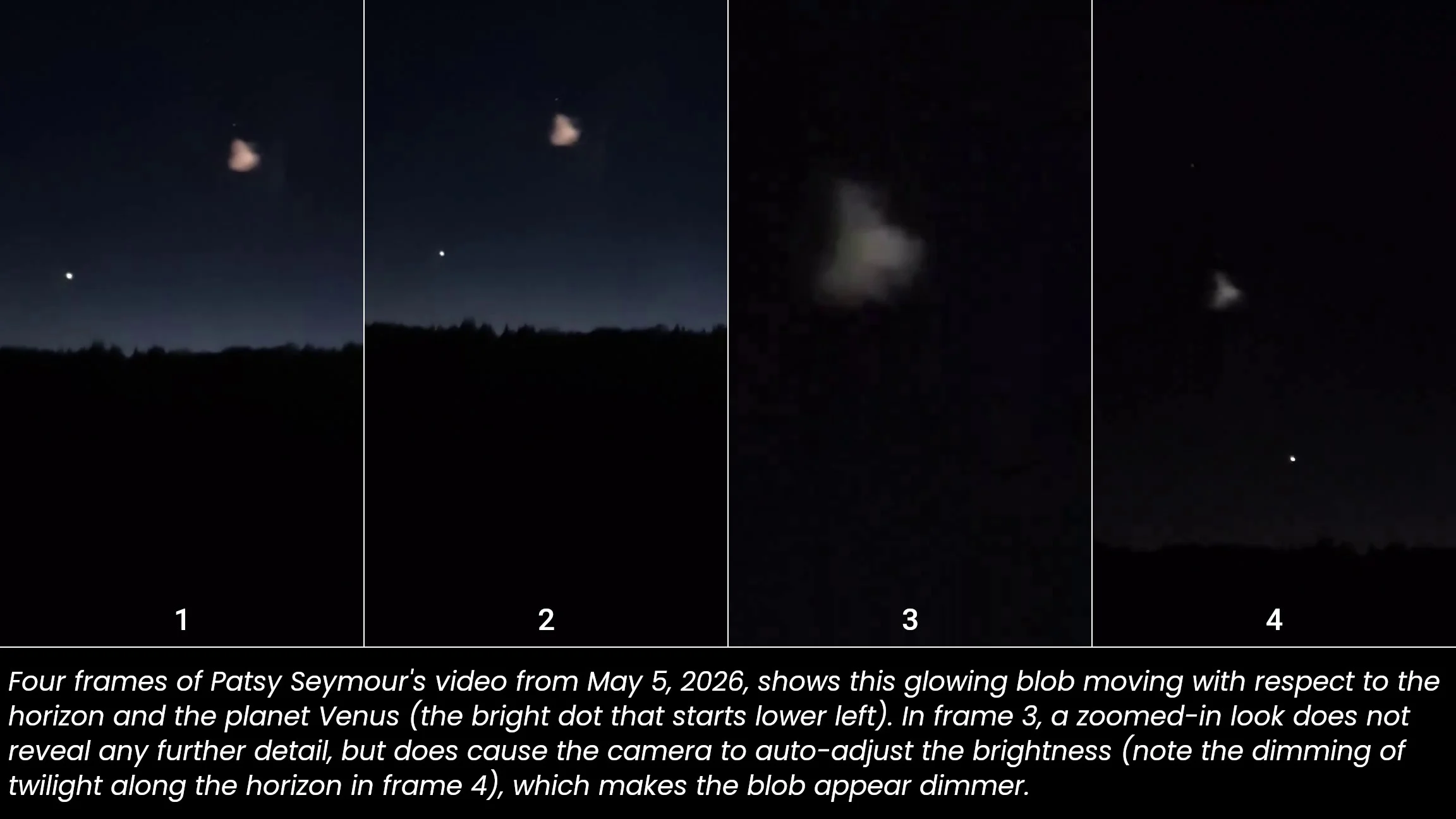
(Screen capture courtesy Patsy Seymour, sequence and notes by Scott Sutherland)
So what was this??
To investigate the source of this strange sighting, we need to look farther south, and about an hour and a half beforehand.
At 8:59 p.m. PDT, on Tuesday, May 5, 2026, a little over 2,100 kilometres due south of Prince George, B.C., a SpaceX Falcon 9 rocket blasted off from Space Launch Complex 4 East, at Vandenberg Air Force Base, near Santa Maria, California.
According to the company's website, this rocket was carrying 24 new Starlink satellites into low-Earth orbit.
Falcon 9 launches from Vandenberg AFB head in a southerly direction, as these rockets deliver their payloads into a polar orbit. The first stage of the rocket boosts the second stage and payload high into the atmosphere, then detaches and lands again, about 8 minutes later, either at a landing pad on ground or on a droneship out at sea.
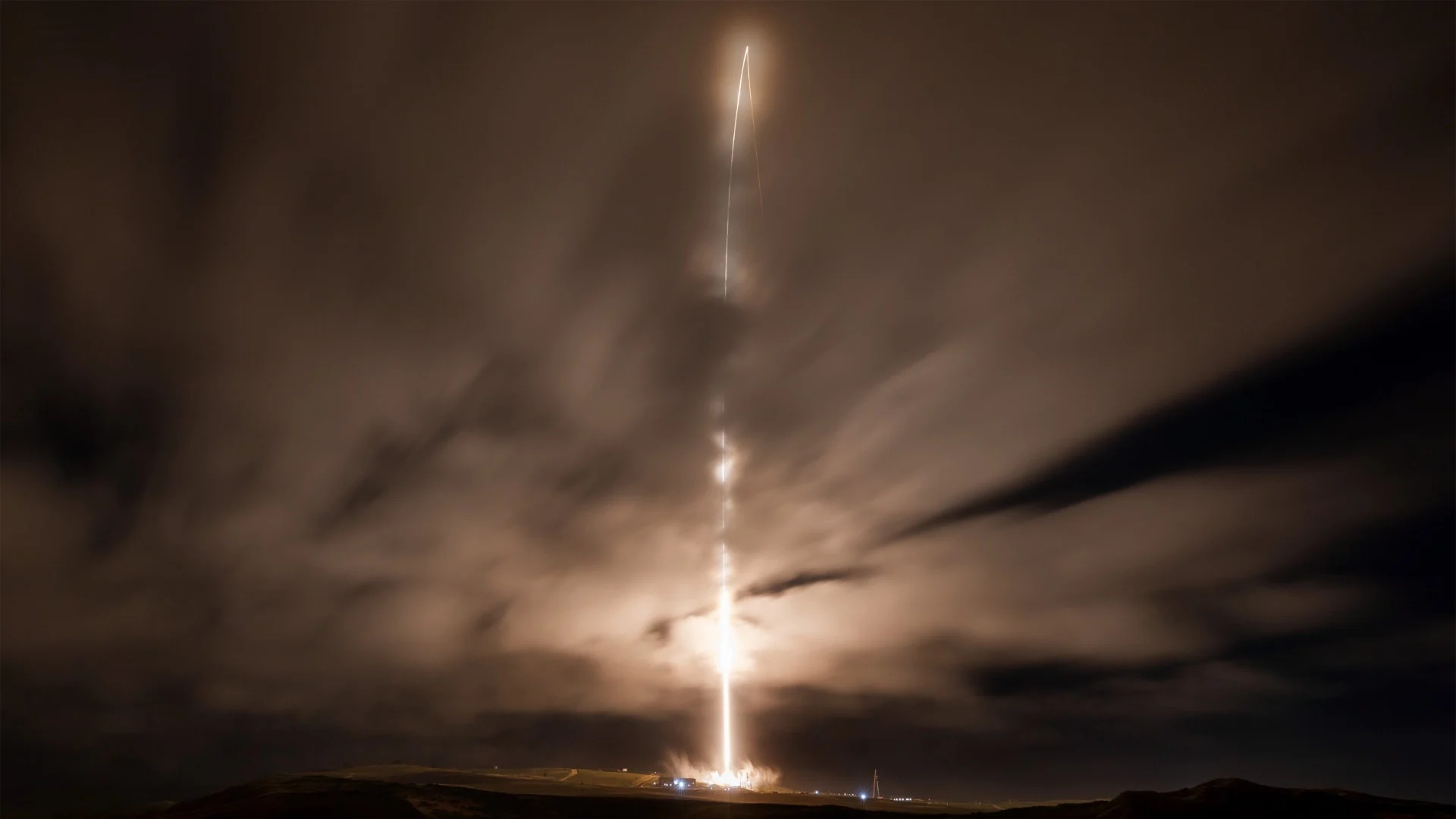
A long-exposure image of the Falcon 9 rocket captured during the launch of the SL-17-29 Starlink mission. (SpaceX)
Meanwhile, the rocket's second stage propels the satellite payload around the planet, first passing over the south pole, then around the other side of the planet, and returning over the north pole — a trip that takes roughly 90 minutes, based on the booster's speed and altitude.
On these missions, once the second stage has completed its delivery in orbit, it typically dumps any remaining fuel in preparation for reentering the atmosphere, where it will burn up, with any remaining debris expected to splash down in the ocean.
With this glowing blob showing up about 75-90 minutes after the launch, and it travelling from north to south above Prince George, the timing and direction match up very well for this phenomenon to have been a result of a SpaceX second stage fuel dump.
As for the point of light that was moving with the blob, that was likely the second stage, itself, with the 'related hazy wisp' simply part of the same cloud of frozen fuel droplets.
In the past, similar fuel dumps have produced spirals and other odd-shaped features in the night sky.
The cloud or spiral forms as the spray of tiny fuel droplets freezes into ice crystals, high up in the atmosphere. Any spiral pattern results from the fact that these rocket stages are often spinning as they deploy their satellite payloads and during their fuel dump.
Watch: Stargazers watching for the Perseids on August 12, 2025 spotted something else over Quebec.
Whether or not we see anything depends entirely on the timing of the launch compared to when the Sun sets.
If the launch takes place close to sunset, by the time the fuel dump occurs, it may appear to be night for us on the ground. However, the cloud of frozen crystals will be high enough that sunlight can still reach it, and the glow results from the light being reflected off and refracted by those crystals.