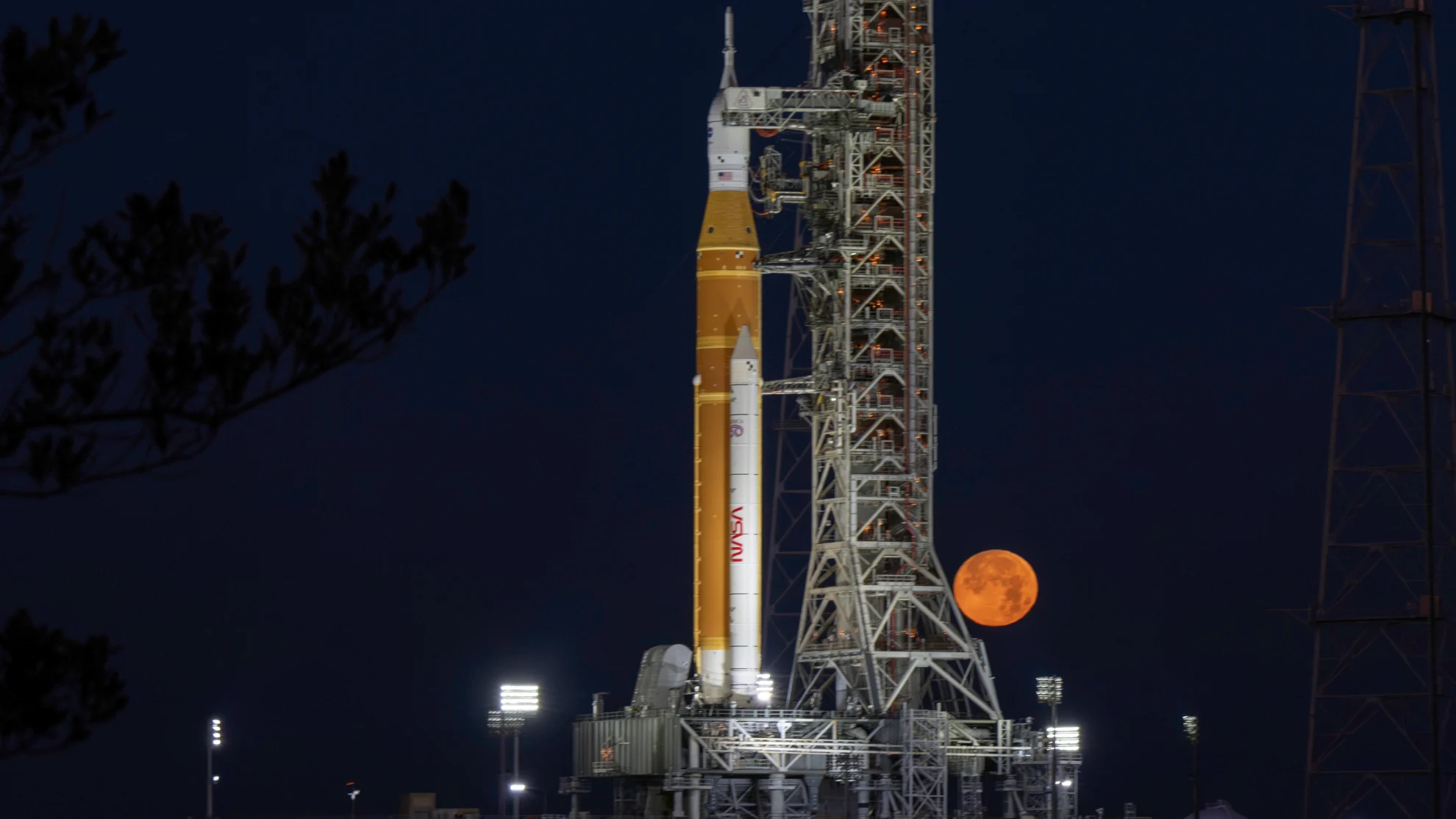
NASA now targetting April 1 for next attempt to launch Artemis 2 mission

No foolin'! The Artemis 2 mission is back on track for launch!
With repairs to the Orion spacecraft and Space Launch System rocket now completed, NASA has officially set April 1, 2026, as the next opportunity to launch the Artemis 2 mission to the Moon.
Two weeks ago, on February 25, ground crews at Kennedy Space Center in Florida rolled Orion and SLS away from Launch Complex 39B, returning them to the Vehicle Assembly Building to address issues with the rocket's fuel system that were discovered shortly after the Wet Dress Rehearsal on Feb. 19.
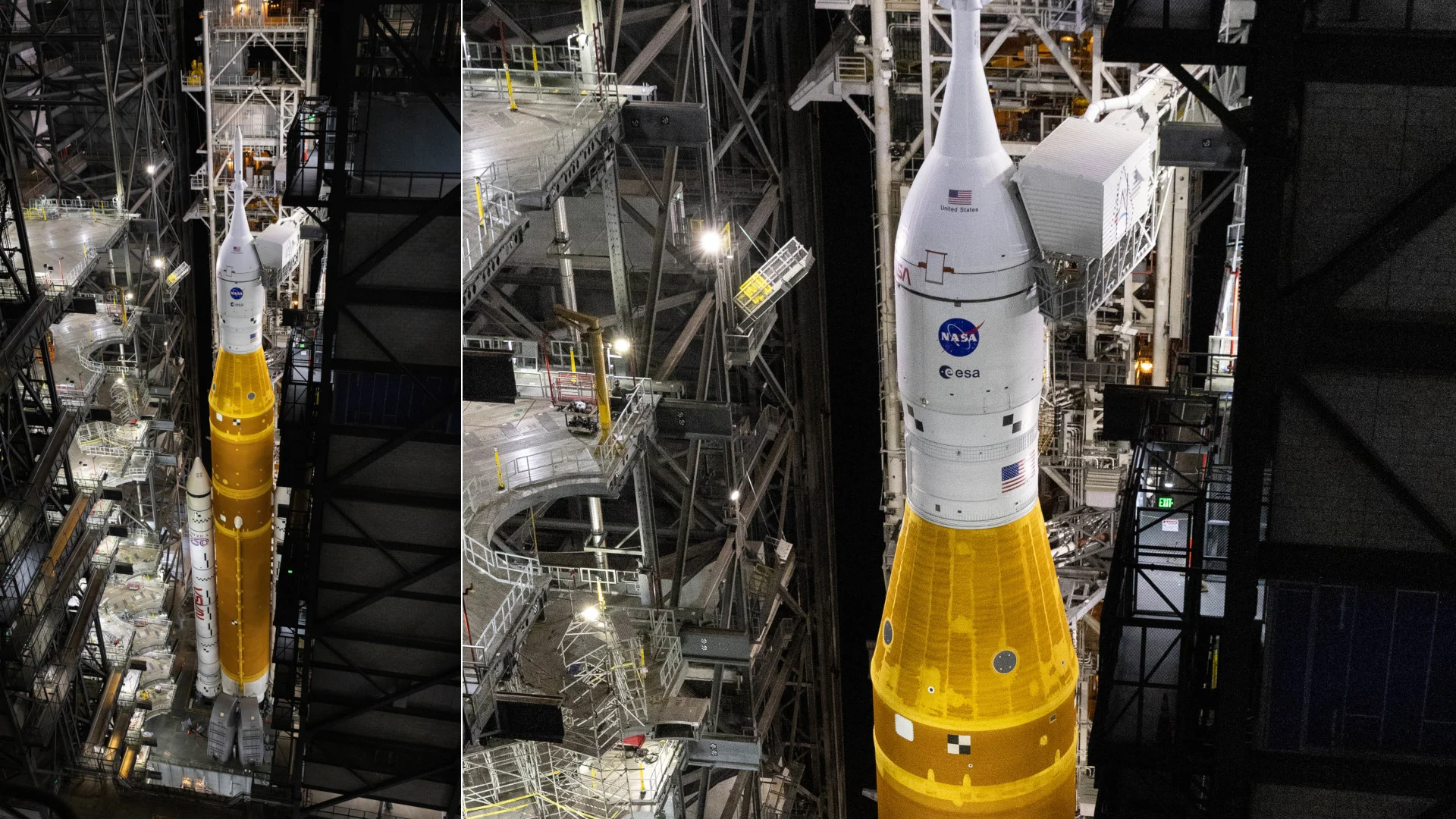
NASA’s Artemis 2 SLS and Orion spacecraft stand in the Vehicle Assembly Building (VAB) Kennedy Space Center, on Wednesday, February 25, 2026 (full view on the left, closeup of the rocket's upper stage and Orion spacecraft on the right). (NASA/Cory Huston)
Although the run-through of the prelaunch sequence was deamed a success, the next night, crews noted interruptions in the flow of liquid helium through the SLS upper stage fuel system. Since the helium is critical for keeping the rocket's oxygen and hydrogen fuels in liquid form, this issue was considered serious enough to call off any planned launch attempts in March. The rocket was then rolled back to the VAB to give the ground crew full access to all of its systems, to assess and address the problem.
"Engineers determined a seal in the quick disconnect, through which helium flows from the ground systems to the rocket, was obstructing the pathway," the agency reported in a March 3 mission update. The seal has now been repaired, and ground crews took the opportunity to perform maintanence on the rocket, including replacing a seal on the liquid oxygen line feed system.
NASA is now preparing to roll Orion and the SLS back to Launch Complex 39B. Subject to changes in the weather, the next opportunity for the rollout will be on March 19. If that goes as planned, it opens up the first launch window for Artemis 2 on April 1, 2026.
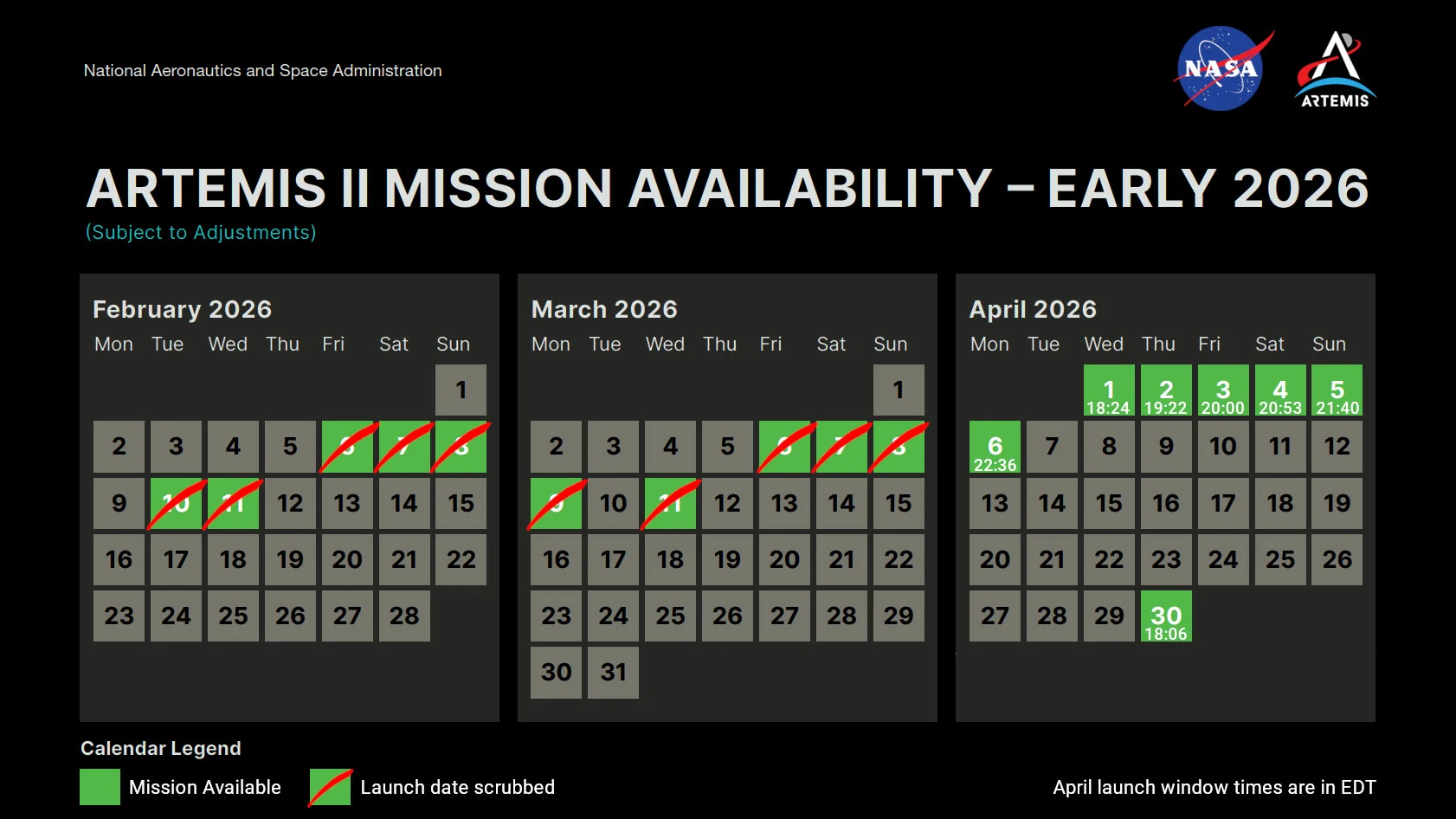
The calendar of potential launch windows, as of March 12, 2026, now includes only April dates, as all others have been scrubbed. (NASA/Scott Sutherland)
During a briefing on March 12, NASA officials also announced the addition of one more day to the potential launch windows. Previously, the available dates in April were the 1st, 3rd, 4th, 5th, 6th, and 30th. Now, they have added a window for April 2, which opens at 7:22 p.m. EDT.
DON'T MISS: NASA makes two major changes to Artemis Moon program
Can Artemis 2 still break a 55-year spaceflight record?
If the crew lifts off during any of their April launch windows, they will be on track to break a 55-year-old spaceflight record for human spaceflight.
The mission is already set to enter the history books. It is the first return to the Moon for humans since the Apollo 17 mission in 1972. Plus, it is the first time a person of colour, a woman, and a Canadian will fly into deep space.
Lastly, given the flight path of their mission, when they pass around the far side of the Moon, the 4 astronauts will set a new record for farthest distance travelled from Earth by a crewed spacecraft.

A comparison of the Artemis 2 mission to Apollo 13, with the Artemis 2 lunar flyby timed for the 6th or 7th of April, 2026, roughly five days after launch, noting the differences in distance between the Earth and the Moon, and the Moon and the spacecraft, as each passed around the far side of the Moon. (Scott Sutherland/NASA SVS)
The previous record, which has stood for over 55 years, was set by the Apollo 13 crew, on April 14, 1970.
(Thumbnail image shows NASA's Artemis 2 SLS rocket on the launch pad on February 1, 2026, with the Full Moon setting behind it, courtesy NASA photographer Jim Ross)