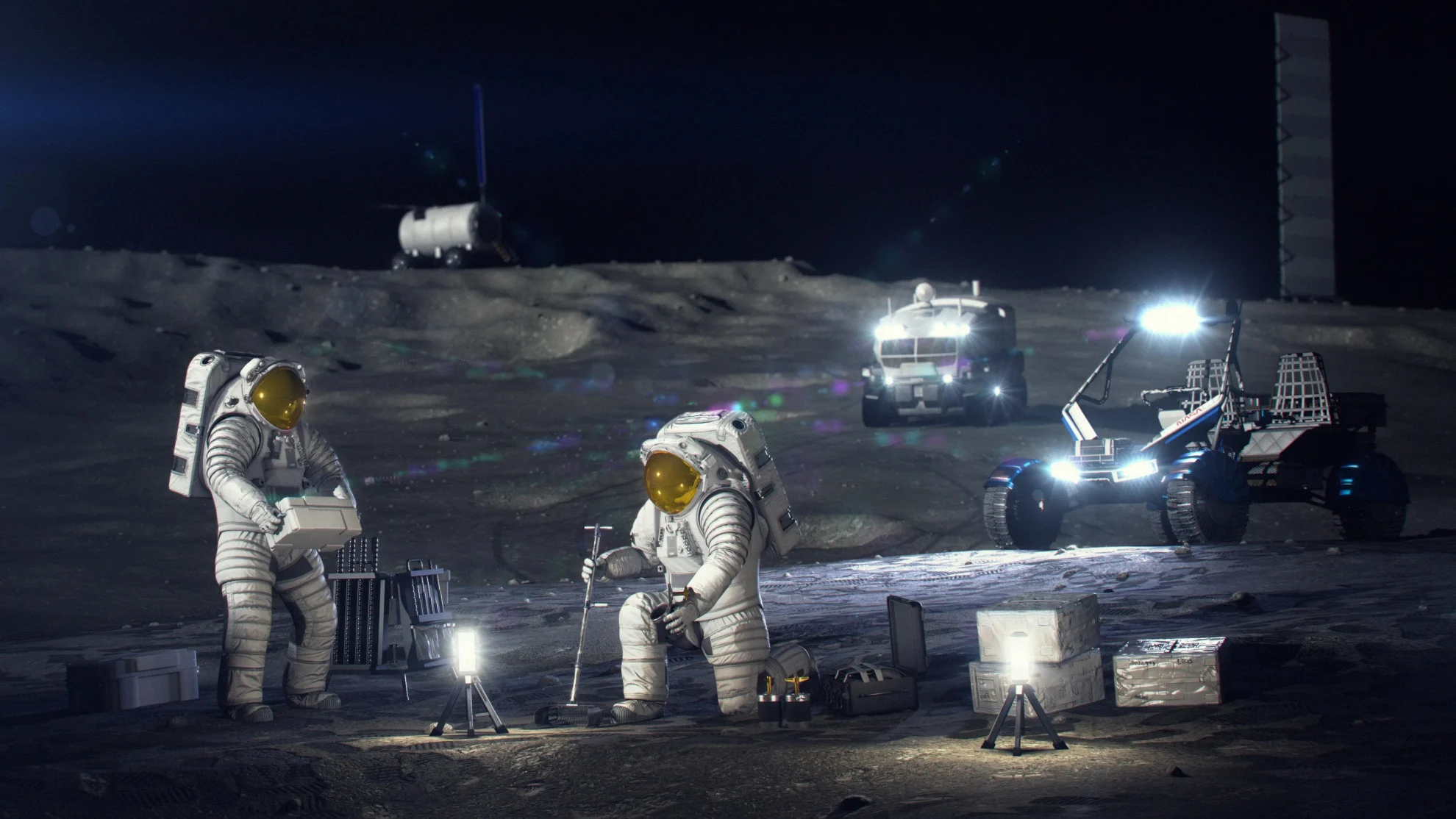
NASA is now planning a permanent Moon Base at the lunar south pole

The Artemis missions are not just returning humanity to the Moon, they are also leading up to a permanent human presence on the lunar surface.
Riding on the wave of 'Moon Joy' sparked by Artemis 2's amazing trip around the Moon and back, NASA has announced new details of their plan to establish a permanent human settlement at the lunar south pole.
For years, NASA has been planning to return humanity to the Moon, as part of their Artemis program.
The uncrewed Artemis 1 mission blasted off in November 2022, and was in space for nearly a month, travelling far out past the Moon and then circling back for a splashdown. This was all to test out the Orion spacecraft, to ensure it could safely carry astronauts on future missions.
On April 1, 2026, Artemis 2 launched with astronauts Reid Wiseman, Victor Glover, Christina Koch, and Canadian astronaut Jeremy Hansen. It was the first crewed mission to the Moon since December 1972, and it was an unparalleled success! However, it was simply a trip around the Moon, similar to the Apollo 8 flight back in 1968.

A camera on the solar panel of the Artemis 2 Orion spacecraft captured this photograph of the solar eclipse the astronauts experienced during their trip around the Moon, on April 6, 2026. (NASA)
DON'T MISS: Keep the Moon Joy alive with over 12,000 new photos from Artemis 2
Next year, NASA plans to launch Artemis 3 into low-Earth orbit, where the crew will perform tests of the Orion spacecraft and the lunar lander future missions will use to touch down on the Moon. The crew of this mission will be announced in the days ahead.
This will lead up to Artemis 4, which NASA hopes to launch in 2028, which is intended to deliver four astronauts to the Moon's surface, who will likely land near the lunar south pole.
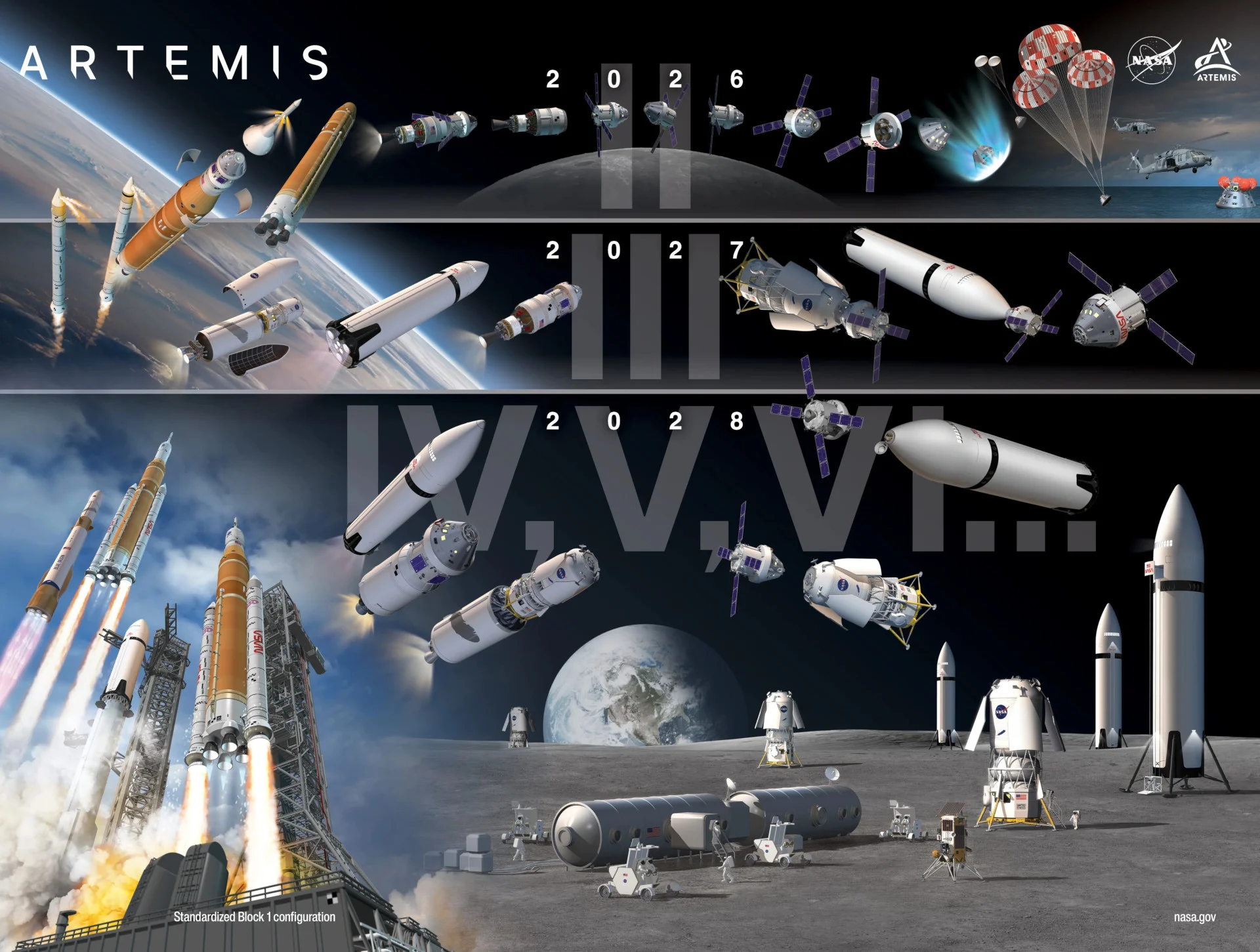
This infographic outlines the Artemis program from Artemis 1 through the proposed Artemis 6 mission. (NASA)
The exact details of this landing have yet to be announced. However, it is intended to be just a short visit.
As of this week, though, we're getting more details about how NASA wants to establish a permanent human presence on the Moon.
Moon Base
First mentioned during their Ignition event back in March, NASA is planning to use the Artemis program to establish a permanent Moon Base near Shackleton Crater, at the lunar south pole.
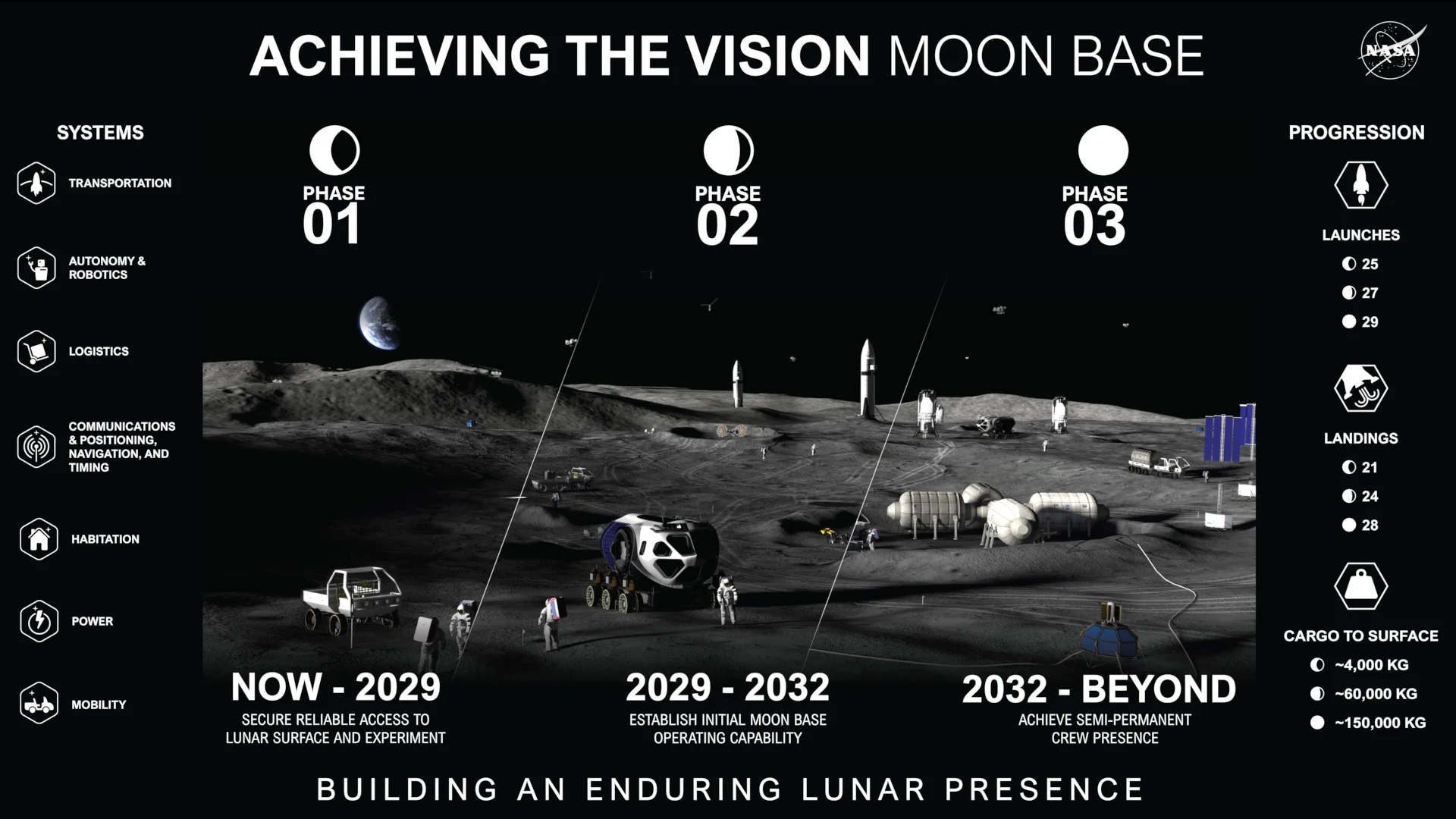
The three phases to establish Moon Base, as outlined during the agency's announcement. (NASA)
This week, agency officials provided details on the first missions that will help them achieve this ambitious goal, as well as some of the technologies being developed for both the crewed and uncrewed missions that will make it happen.
Three such missions are planned for later this year. Appropriately named Moon Base 1, Moon Base 2, and Moon Base 3, these uncrewed landers will carry payloads to the Moon that are crucial for the success of future missions.
According to NASA, Moon Base 1 will see Blue Origin's Blue Moon Mark 1 Endurance lander lift off no earlier than fall of this year, bound for Shackleton Crater. Included on the lander will be a special instrument, known as the Stereo Cameras for Lunar Plume-Surface Studies, that will help scientists study how the lander's thrusters interact with the dust and regolith on the lunar surface. Additionally, it will also have a new Laser Retroreflective Array, similar to those left behind during the Apollo missions. Both of these instruments are expected to reduce the risks of landing at the south pole, especially for Artemis 4 in 2028.
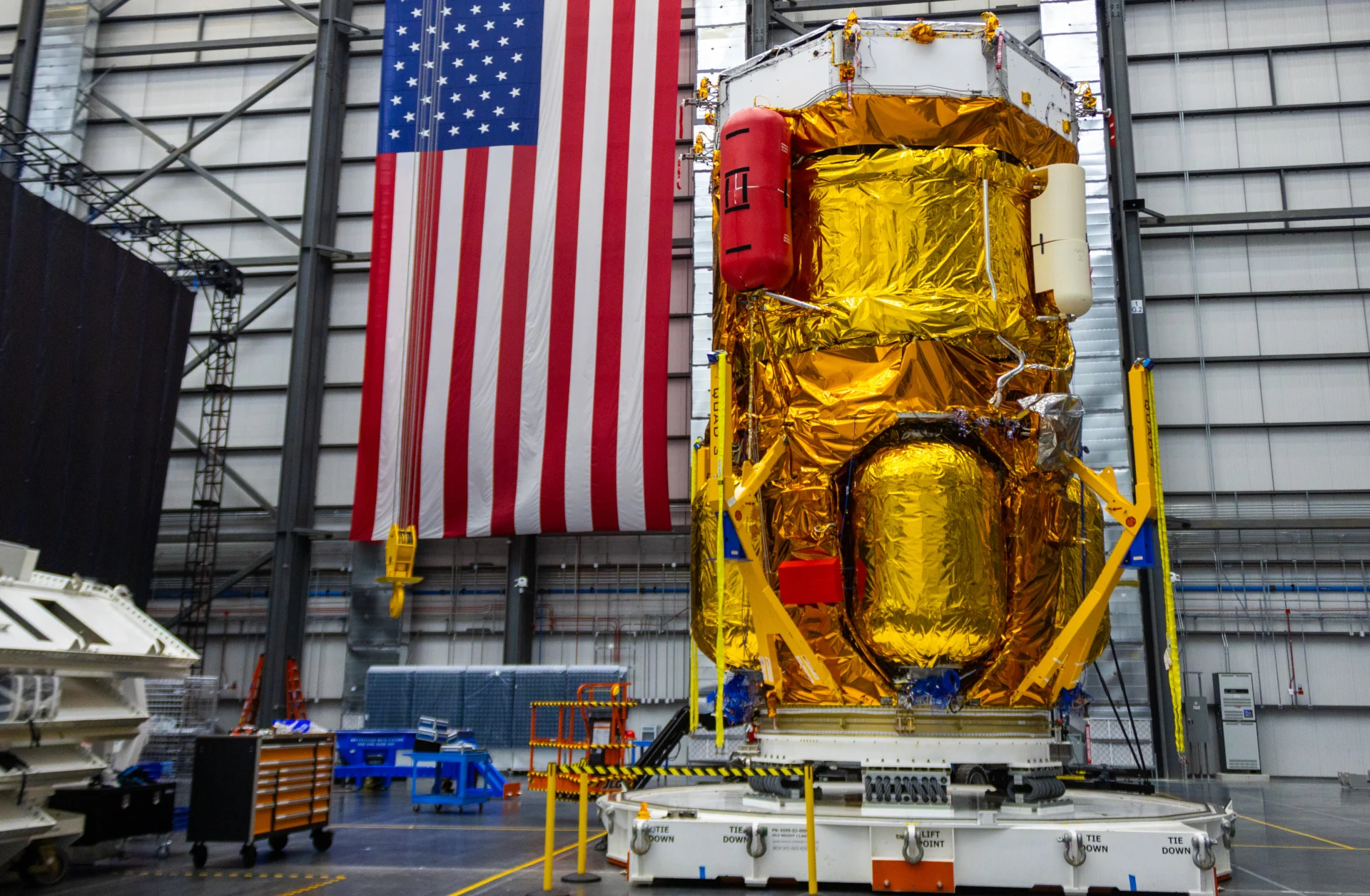
Blue Moon Mark 1, Endurance, sits in a NASA facility, awaiting its trip to the Moon. (NASA)
RELATED: Eyes to the sky! A rare Blue Apogee Micromoon shines this weekend
They will quickly follow this up with Moon Base 2, during which Astrobotic's Griffin lander will blast off, also bound for a touch-down near Shackleton. It will carry more instruments and cargo, and deliver Astrolab's new rover, named FLIP, to explore the region. Data sent back by the rover will help NASA design the lunar terrain vehicles that future Artemis astronauts will use to traverse the lunar surface.
Then, they intend for Intuitive Machines' Nova-C Trinity lunar lander to take off on the Moon Base 3 mission, sometime before the end of 2026. This lander will host science instruments from international and commercial sources. However, Trinity's primary purpose is the Lunar Vertex instrument, which will study a phenomenon known as lunar swirls, which appear to be associated with magnetic anomalies on the lunar surface.
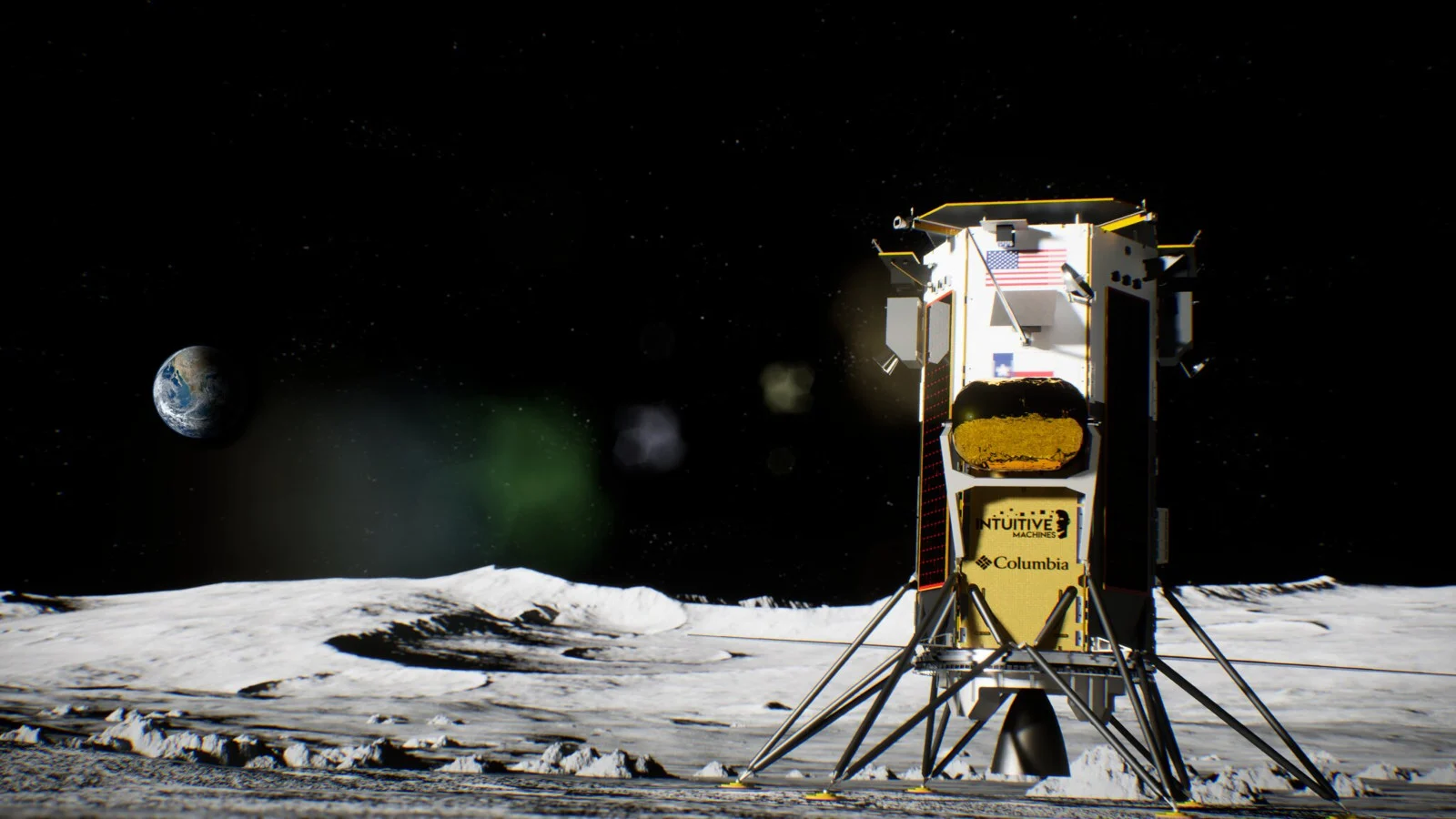
This artist's rendering shows Intuitive Machines' lunar lander on the surface of the Moon. (Intuitive Machines)
These three missions will be the beginning, laying the initial groundwork for a sustained presence on the Moon.
"The Moon Base will be America's and humanity's first outpost on another celestial world," NASA Administrator Jared Isaacman said during a press conference on Tuesday. "Every mission, crewed and uncrewed, will be a learning opportunity as we return to the lunar surface, build the infrastructure to stay, and master the skills required to live and operate in one of the most demanding and dangerous environments imaginable. We will go for the science, for all we stand to gain from an economic and technological perspective, for the innovations that will make life better here on Earth, and to prepare for where we will inevitably go next."