Canadian astronaut lifts off on first all-private launch to the Space Station

Four private astronauts, including Canadian Mark Pathy, are heading for an eight-day stay on board the International Space Station.
The latest rocket launch to the International Space Station has blasted off. This new mission — the first of its kind — could pave the way toward the future of private spaceflight and the establishment of the first private space station in orbit.
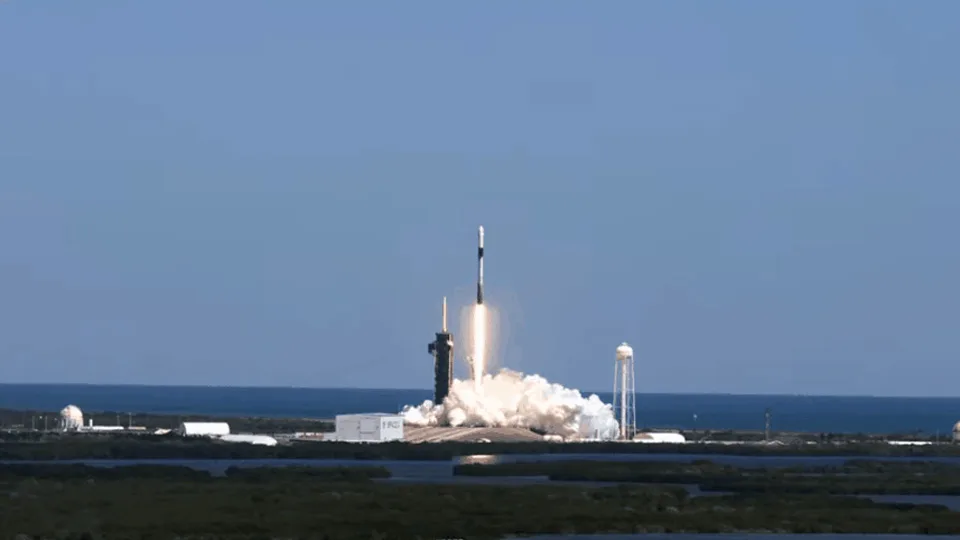
On Friday, April 8, at 11:17 a.m. EDT, four astronauts successfully launched from Kennedy Space Center on board a SpaceX Crew Dragon spacecraft. Their destination is the International Space Station. While over 250 astronauts have made the journey from Earth to the space station so far, according to NASA, and 14 have made the flight on board a Crew Dragon spacecraft, this mission is something new.
Axiom 1 is the first all-private astronaut mission to the ISS.
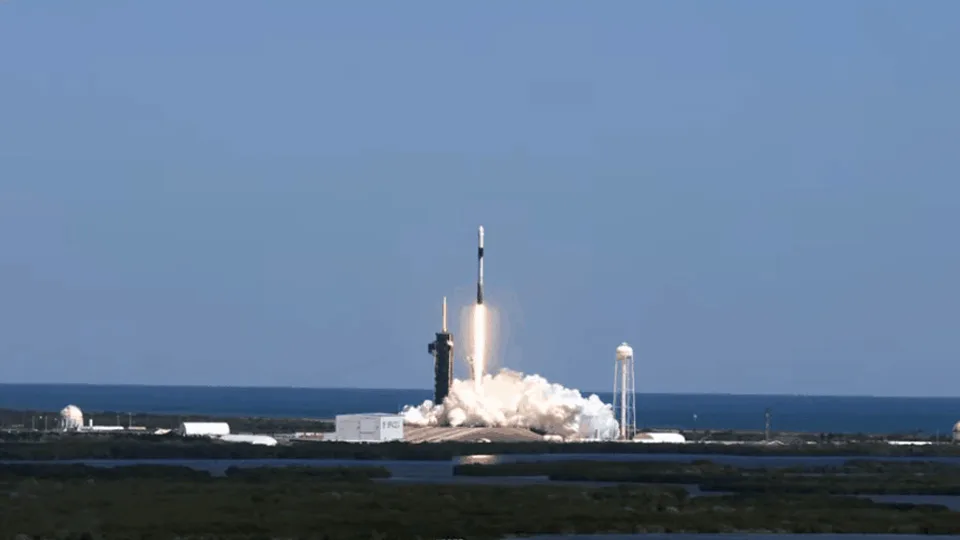
Axiom 1 lifts off from Kennedy Space Center's Launch Complex 39A, at 11:17 a.m. ET on Friday, April 8, 2022. Credit: SpaceX/NASA
Leading the mission as Spacecraft Commander is Michael López-Alegría, a retired NASA astronaut who has already flown to space four times, including three visits to the space station. Between 1995 and 2007, he logged nearly 258 days in space and retired from NASA in March of 2012. In 2017, he joined Axiom Space, a private spaceflight company that has aspirations to launch the first private space station.
Flying with López-Alegría on Axiom 1 (or Ax-1) are three first-time private astronauts:
Pilot Larry Connor, an American real estate and tech entrepreneur,
Mission Specialist Eytan Stibbe, an Israeli businessman and philanthropist, and
Mission Specialist Mark Pathy, a Canadian businessman and philanthropist.
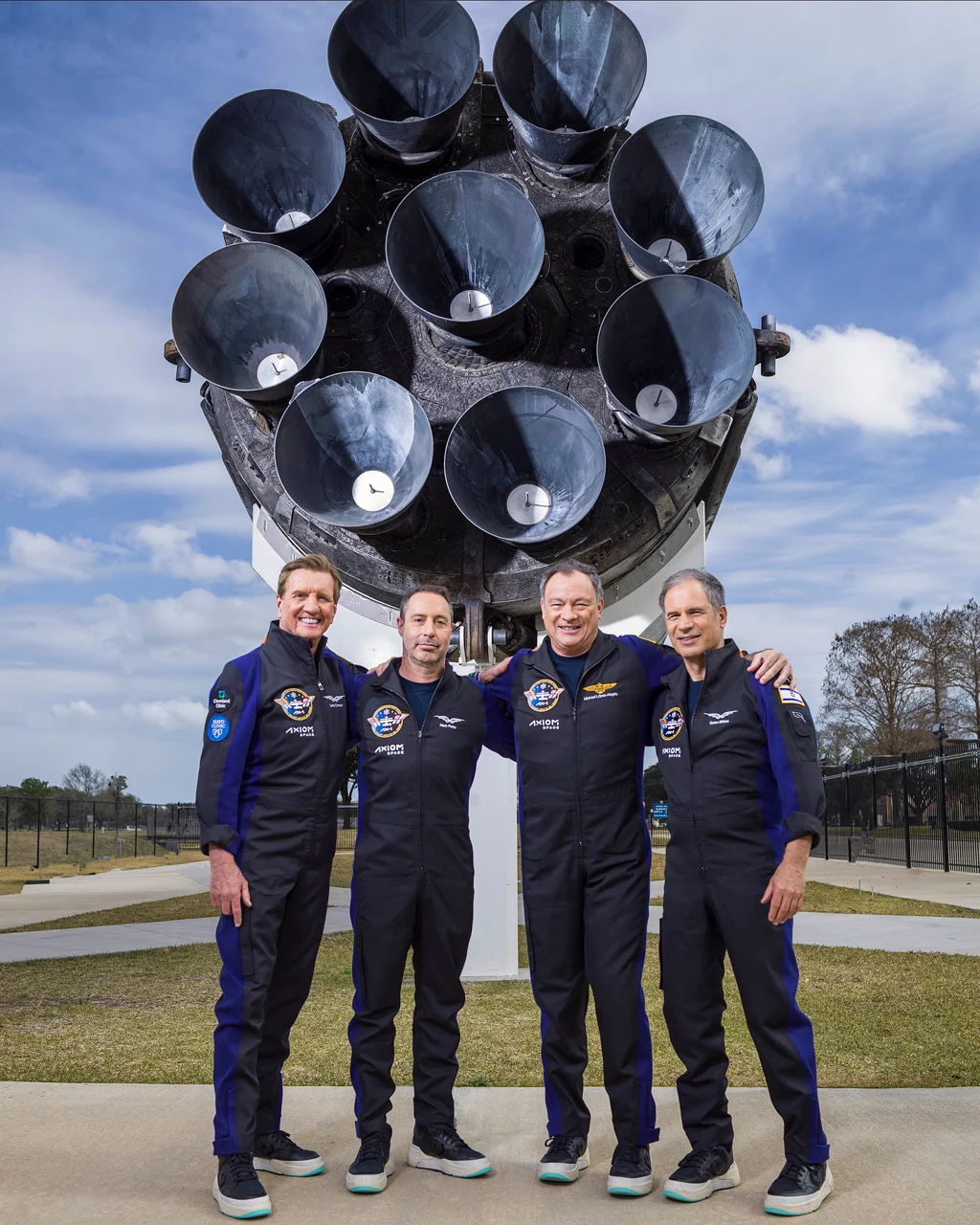
Ax-1 mission crew (L-R) Pilot Larry Connor, Mission Specialist Mark Pathy, Spacecraft Commander Michael López-Alegría, and Mission Specialist Eytan Stibbe, stand in front of the Falcon 9 booster rocket currently on display at Space Center Houston, the visitor center for NASA's Johnson Space Center. Credit: Chris Gunn/Axiom Space
"We sought to put together a crew for this historic mission that had demonstrated a lifelong commitment to improving the lives of the people on Earth, and I'm glad to say we've done that with this group," Axiom Space President & CEO Michael Suffredini said in a press release. "This is just the first of several Axiom Space crews whose private missions to the International Space Station will truly inaugurate an expansive future for humans in space — and make a meaningful difference in the world when they return home."
This is the first of four missions to the space station planned so far for Axiom. The next three flights are expected to take place throughout 2023. The company's ultimate goal is to build Axiom Station, the first private space station in low-Earth orbit. They hope to launch the first section of this new space station sometime in late 2024.
Read more: NASA plans to crash the ISS into the 'spacecraft cemetery' in 2031
THE NEXT CANADIAN IN SPACE
The Canadian on this mission, Mark Pathy, is the founder, CEO, and Chairman of Mavrik Corp, a Montreal-based investment firm. He is also on the Board of Directors of both the Montreal Children's Hospital Foundation and Dans la rue, a Montreal organization that helps homeless youth and youth at risk. In addition, he and other members of his family run the Pathy Family Foundation, which seeks to improve the quality of life for vulnerable people and communities.
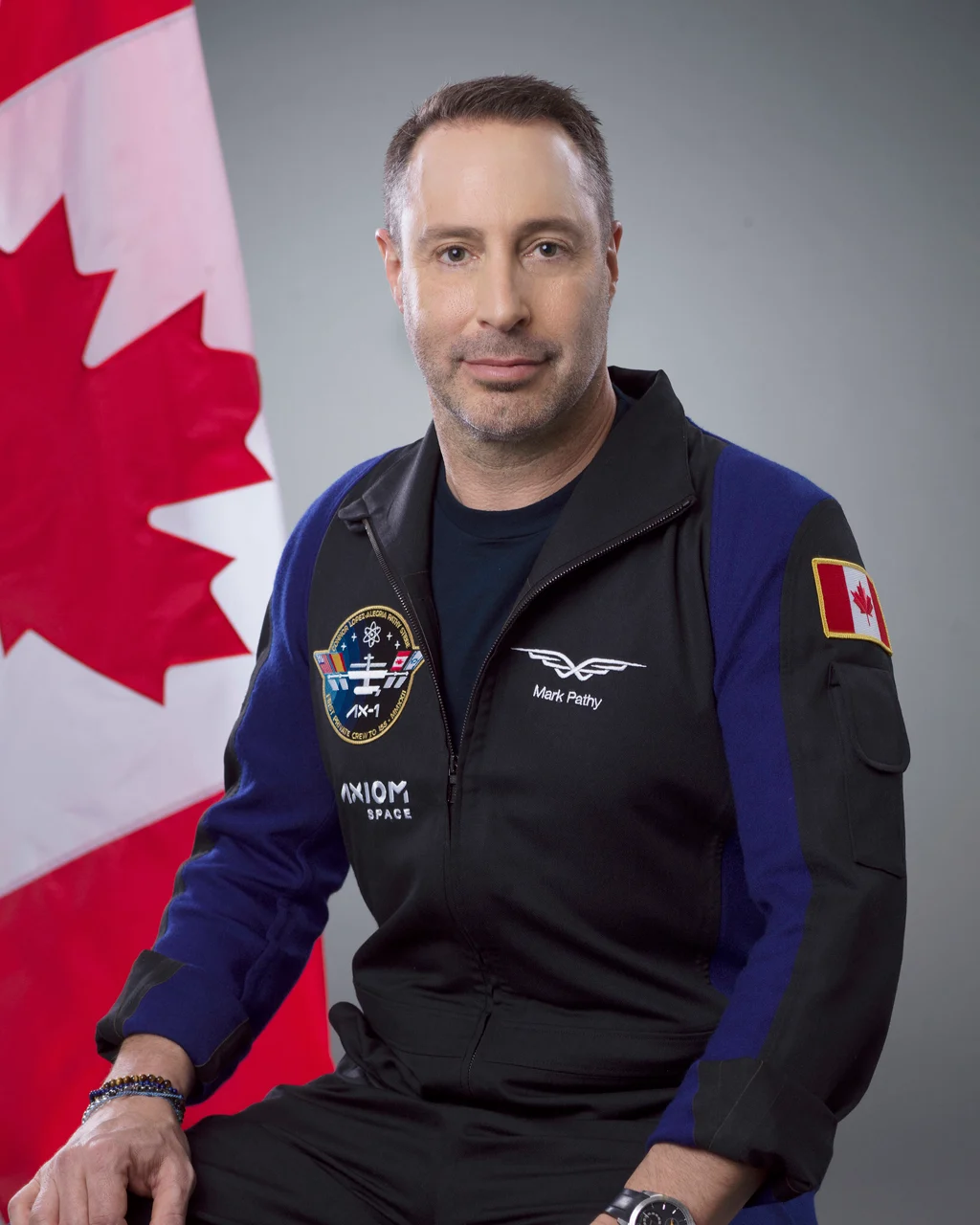
Axiom 1 Mission Specialist Mark Pathy. Credit: Chris Gunn/Axiom Space
As part of Axiom 1, Pathy is now the 12th Canadian to fly to space, following nine Canadian Space Agency astronauts, and space tourists Guy Laliberté and William Shatner. On Saturday, he will also become the second private Canadian astronaut to visit the International Space Station.
A FIRST FOR PRIVATE SPACEFLIGHT
Private citizens have flown to space, and to the Space Station, before this.
From 2001 to 2009, eight space tourists flew to the ISS after purchasing seats on Russian Soyuz launches. This included the first space tourist, American entrepreneur Dennis Tito, as well as video game developer Richard Garriott, and Guy Laliberté, Canadian entrepreneur and co-founder of Cirque du Soleil.
Starting in 2004, a dozen people — pilots and passengers (including Virgin Galactic founder Richard Branson) — have flown to the edge of space on board the SpaceShipOne and SpaceShipTwo space planes.
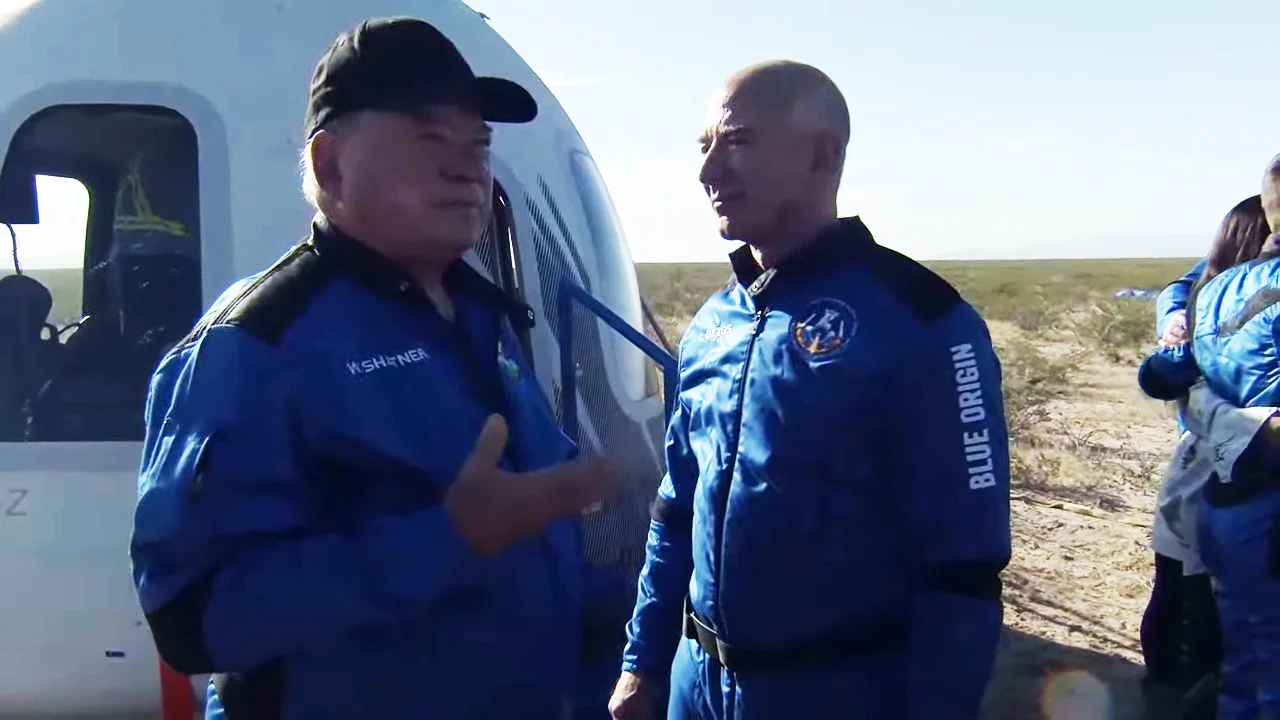
William Shatner gives an emotional account of his experience to Blue Origin founder Jeff Bezos after returning from a flight to the edge of space on board a New Shepard launch on Wednesday, October 13, 2021. Credit: Blue Origin
Since July 2021, Blue Origin has launched four missions with their New Shepard rocket, ferrying 14 people on brief trips to space and back. This includes Jeff Bezos, Wally Funk, and Star Trek's William Shatner.
In September 2021, Jared Isaacman, Dr. Sian Proctor, Hayley Arceneaux, and Chris Sembroski blasted off on Inspiration4, SpaceX's first all-civilian mission to orbit Earth.
Watch below: All-civilian Inspiration4 crew had some fun during their 3 days in space
In October, the first film crew in space — Russian actress Yulia Peresild and film producer/director Klim Shipenko — launched with cosmonaut Anton Shkaplerov for a 12-day stay on board the ISS. There, they recorded scenes and footage for a new movie named The Challenge.
Axiom 1 is similar to Inspiration4 in that all four crew members are private astronauts, launching on a private rocket and spacecraft into orbit. However, the Inspiration4 crew did not leave their Crew Dragon Resilience spacecraft until they had finished their 3 days of orbiting Earth. The Axiom 1 crew will dock with and board the International Space Station for their stay in space.
AX-1 CONTRIBUTES TO SCIENCE
However, it would be a mistake to call the Axiom 1 crew space tourists.
During their 8 days on the station, the crew will be doing what professional astronauts do on the orbiting laboratory — they will spend their time conducting science experiments. All told, they will perform 26 science experiments on behalf of researchers on the ground.
Some experiments are intended to further our understanding of the effects of space travel on human health and aging, with potential benefits both for future astronauts and those of us here on Earth. Other projects are technology demonstrations, such as holographic communication and space station construction.
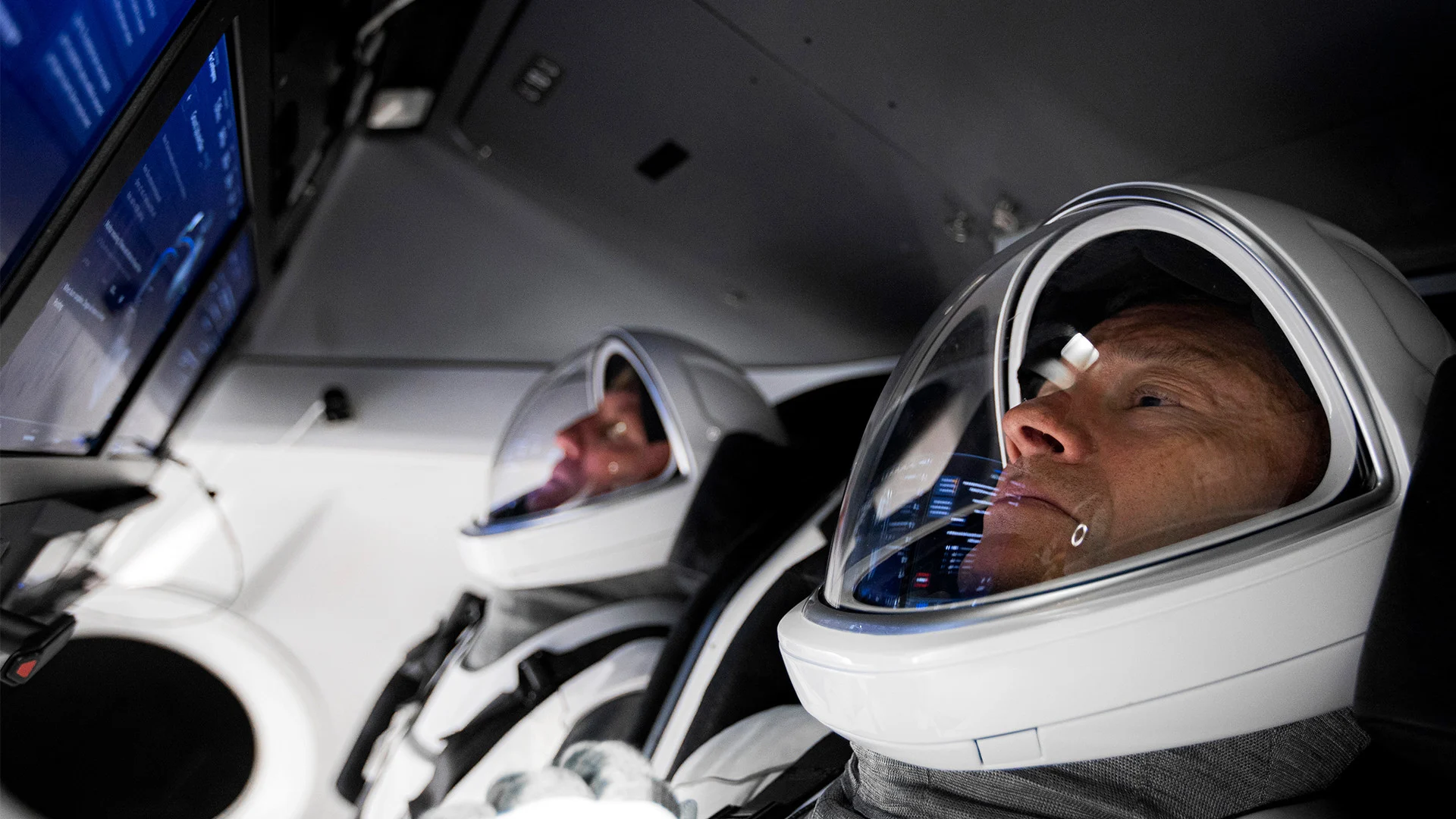
Michael López-Alegría and Larry Connor are pictured here suited up inside a SpaceX Crew Dragon capsule during their training for the Axiom 1 mission. Credit: Axiom Space/SpaceX
According to Axiom Space, Mark Pathy is conducting research on the space station in partnership with six Canadian universities and two technology startups. Pathy's chosen theme for his work in space is Caring for People and the Planet.
"None of the paying astronauts were required to do science, but they all have an interest in giving back," Dr. Adam Sirek said in a press release on Wednesday. Sirek is the chief information officer for Leap Biosystems, the private space company planning the science behind Pathy's trip and training him for the various experiments he will be conducting.
"Mark is really interested in doing more than just hanging out up there and looking out the window, which is probably what I would do if given the chance," Sirek, who is also a professor at Western University's Schulich School of Medicine & Dentistry and a former Canadian Space Agency astronaut candidate, added with a laugh.
Somewhat ironically, one of Pathy's assigned duties during his science mission will actually be to spend time looking out the window!
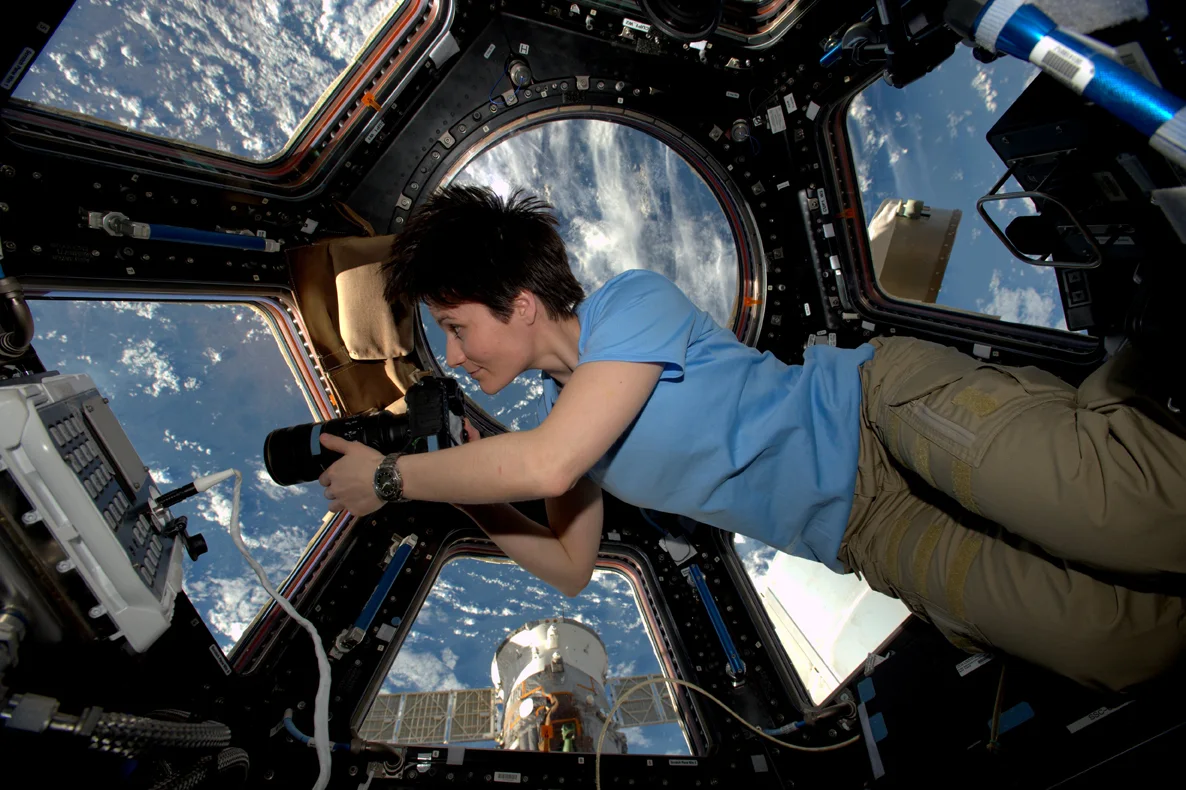
Italian astronaut Samantha Cristoforetti is seen here taking pictures from the cupola on the International Space Station during Expedition 42, on February 3, 2015. Credit: NASA/ESA
In coordination with scientists and students at Western University's Institute for Earth and Space Exploration (Western Space), Pathy will take up position in the space station's cupola. While taking in the fantastic sights of our home planet, he will snap high-resolution pictures of key locations on Earth that are of scientific interest.
Among those locations are Lake Erie, and specifically Long Point, to help scientists track changes to the shorelines, as well as industrial and agricultural impacts to the lake, and Mount Fidelity, in Glacier National Park, to track snow and ice accumulation. Another site of interest is Lac Wiyâshâkimî, a.k.a. the Clearwater Lakes, in northern Quebec, where two massive meteorites impacted roughly 290 million years ago.
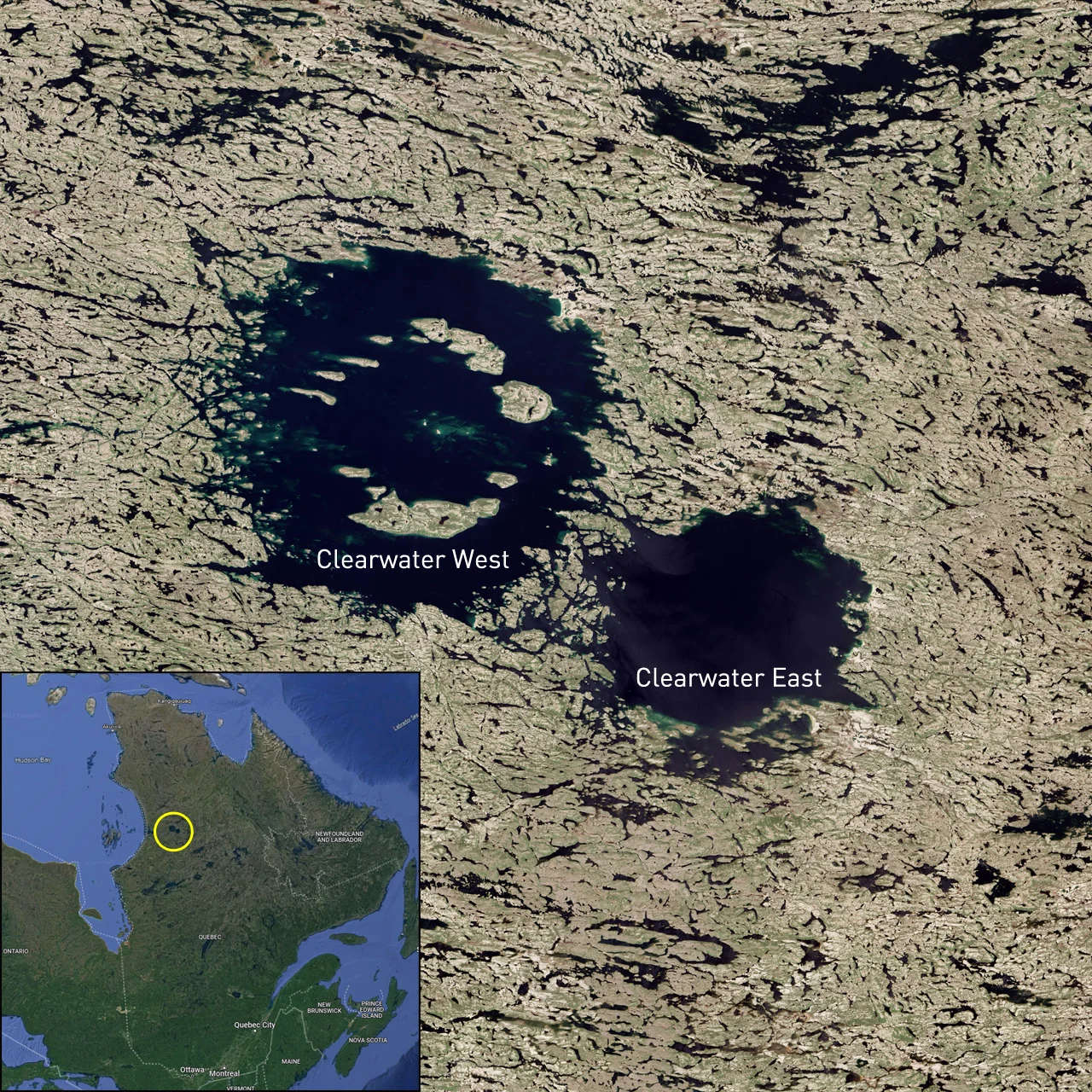
Clearwater Lakes in northern Quebec are shown here in a Landsat 8 image captured on June 29, 2013. Credit: NASA Earth Observatory
"Mark's mission is so important because he is using his time in space to learn more about the world and make it better," planetary scientist Gordon Osinski told Western News. "The fact that Western students will also benefit is an added bonus."
According to Western News, the students taking part in Pathy's Earth observations include Juan Jaimes Bermudez, Neeraja Chinchalkar, Paige Julianna Cincio, Jamie Graff, Jack Hostrawser, and Lauren Stone.
"Western Space is proud to participate in this new era of privately crewed spaceflights with a mission that integrates science into its core. It is hard to overstate the value of Earth observations from space — we can learn so much from above," Western Space director Sarah Gallagher said. "I can't wait to see the images!"
REWATCH THE LAUNCH
The Axiom 1 mission lifted off from historic Launch Complex 39A, which has seen several "firsts" for human spaceflight. It was where the first Saturn V rocket launched for the Apollo 4 mission, where Apollo 11 blasted off to the Moon, and where the Space Shuttle Columbia lifted off on STS-1, the very first space shuttle mission.
The Ax-1 launch was livestreamed by NASA TV and via SpaceX. If you missed the live coverage, or just want to see it again, you can watch this historic moment via the embedded video below.
The Ax-1 crew is flying on Crew Dragon Endeavour — the same spacecraft used for the Demo-2 test launch in May 2020 and for the Crew-2 launch in April 2021. The Falcon 9 booster rocket that will carry them into orbit has already made four successful launches and landings, including the launch of the Inspiration4 mission last September.
Now successfully in orbit, Ax-1 will circle the planet several times as the spacecraft catches up to the International Space Station. They are scheduled to begin their final approach at roughly 6:30 a.m. EDT on Saturday, for a 7:45 a.m. EDT docking. Coverage of the approach and docking will be broadcast live on NASA TV and by SpaceX.