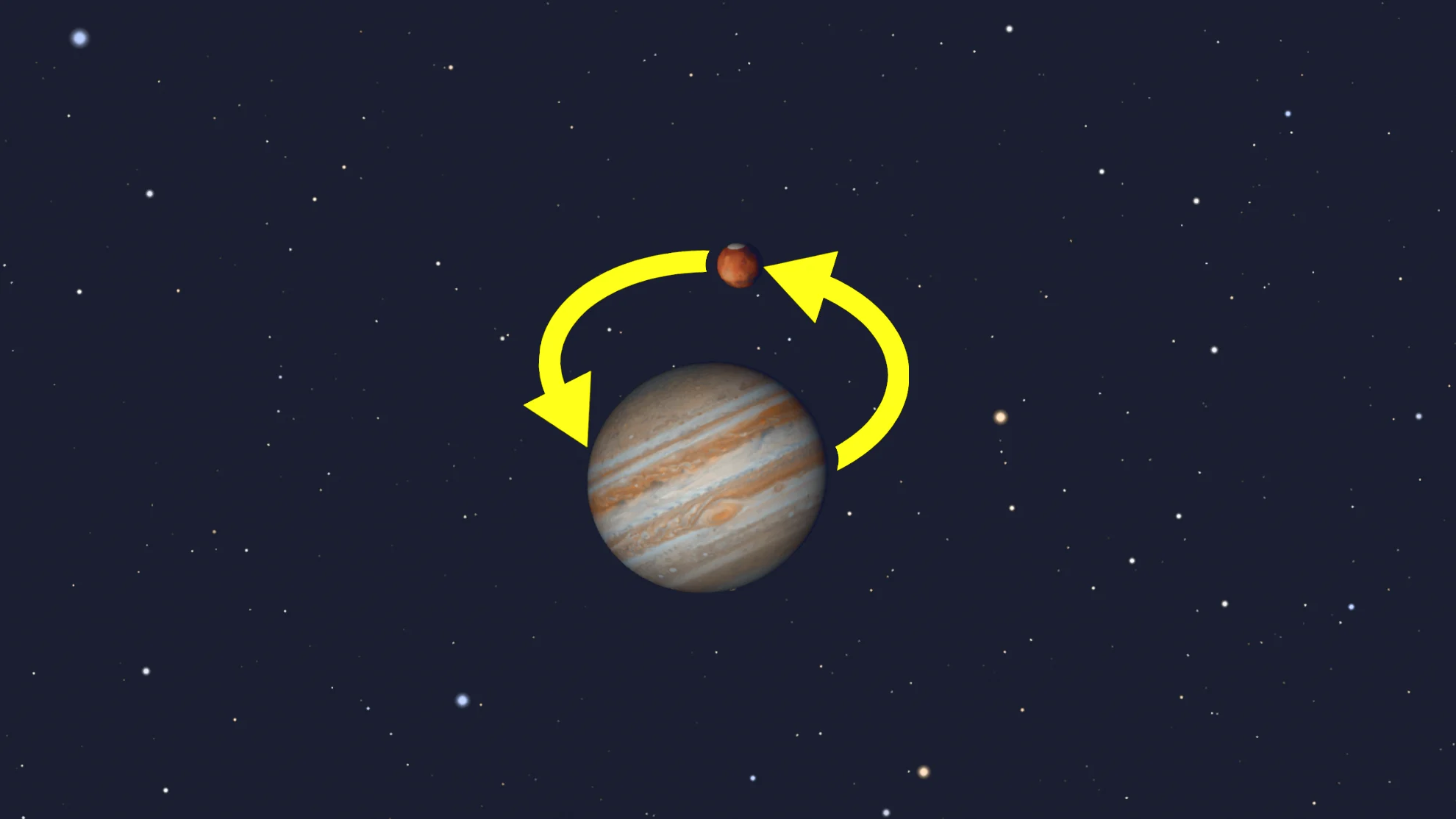
Watch Mars and Jupiter 'slow dance' in the sky throughout November

Eyes to the sky in November for a planetary conjunction, three meteor shower peaks, and a bright supermoon!
If you spot clear night skies in your local forecast, head outside and look up. Mars and Jupiter will put on a great show with their mid-month conjunction, three separate meteor showers reach their annual peaks, and our next supermoon will brighten our nights towards the end of November.
Here is the Astronomical Guide for November 2026:
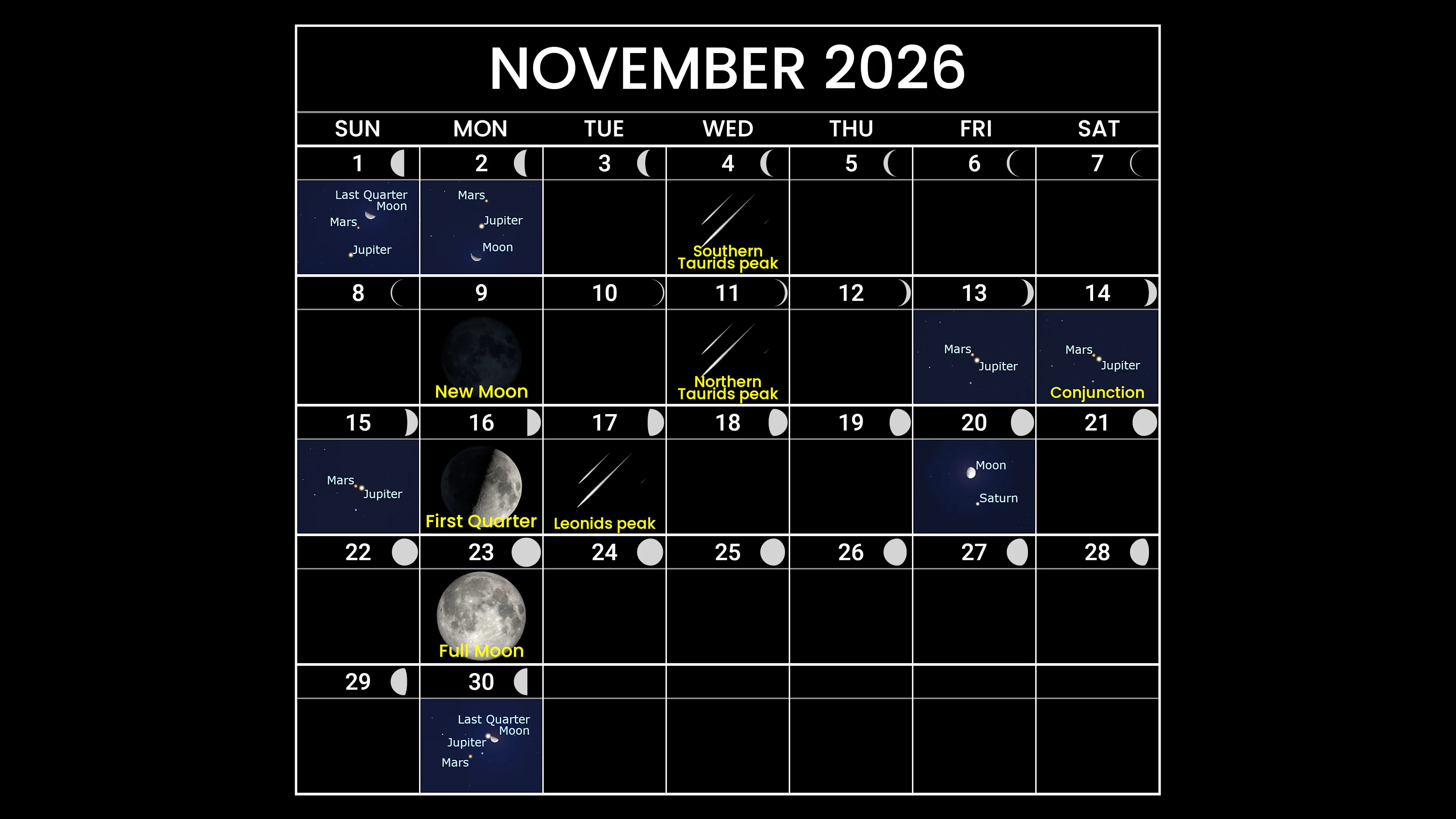
(Moon phases: NASA SVS. Planet and Lunar conjunctions: Stellarium)
Click here for a zoomable version of the above calendar.
Visit our Complete Guide to Fall 2026 for an in-depth look at Canada's Fall Forecast, tips for the season, and much more!
The Moon
November starts off with a Last Quarter Moon crossing the sky, along with a couple of planetary companions.
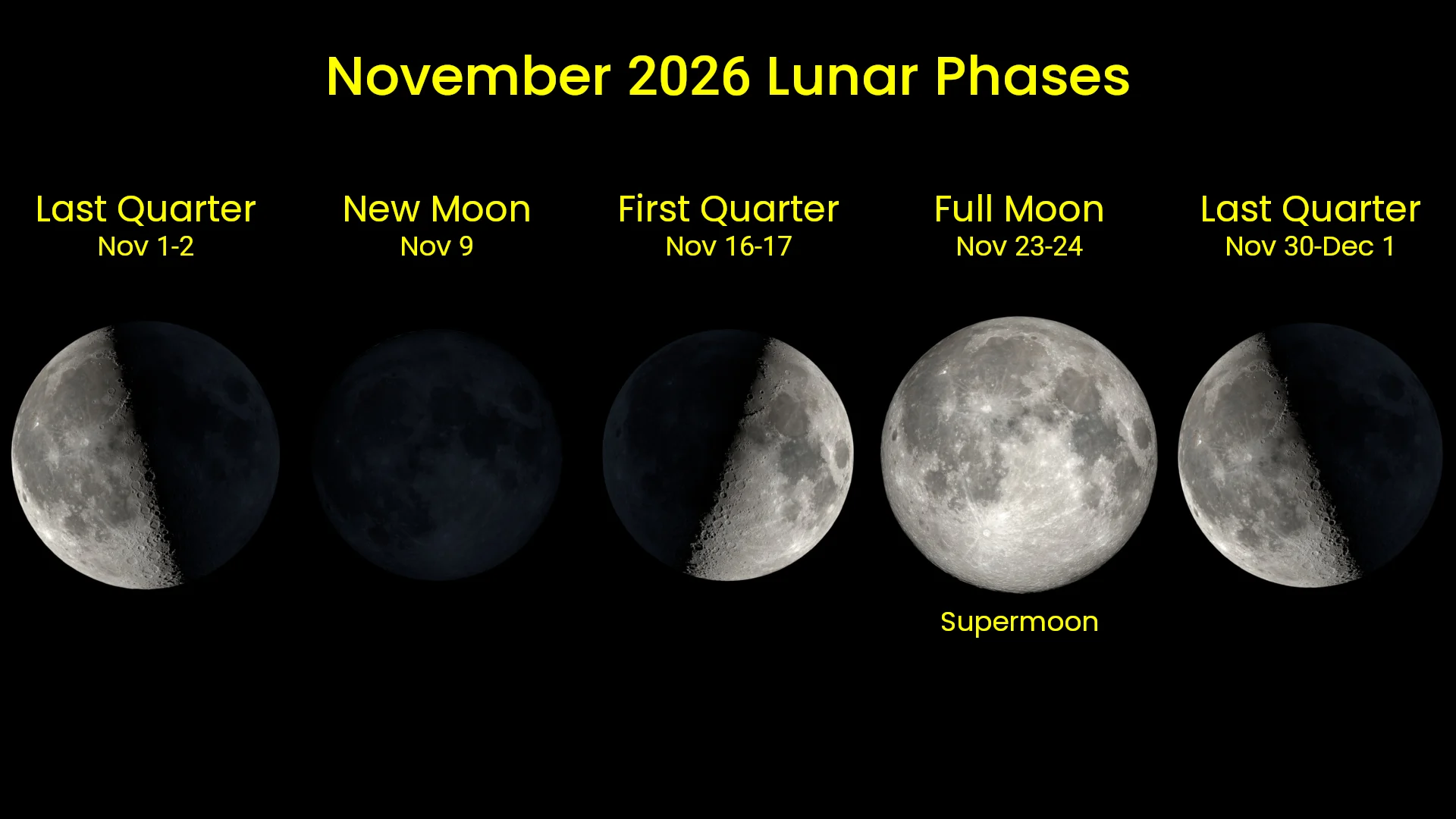
The phases of the Moon for Nov 2026. (NASA SVS/Scott Sutherland)
Following that, the Waning Crescent Moon will diminish each morning from the 2nd until the 8th.
Look for Earthshine faintly illuminating the dark side of the Moon leading up to the New Moon on the 9th, and then again in the few evenings after as the Waxing Crescent Moon reappears in the west around sunset from the 10th to the 15th.
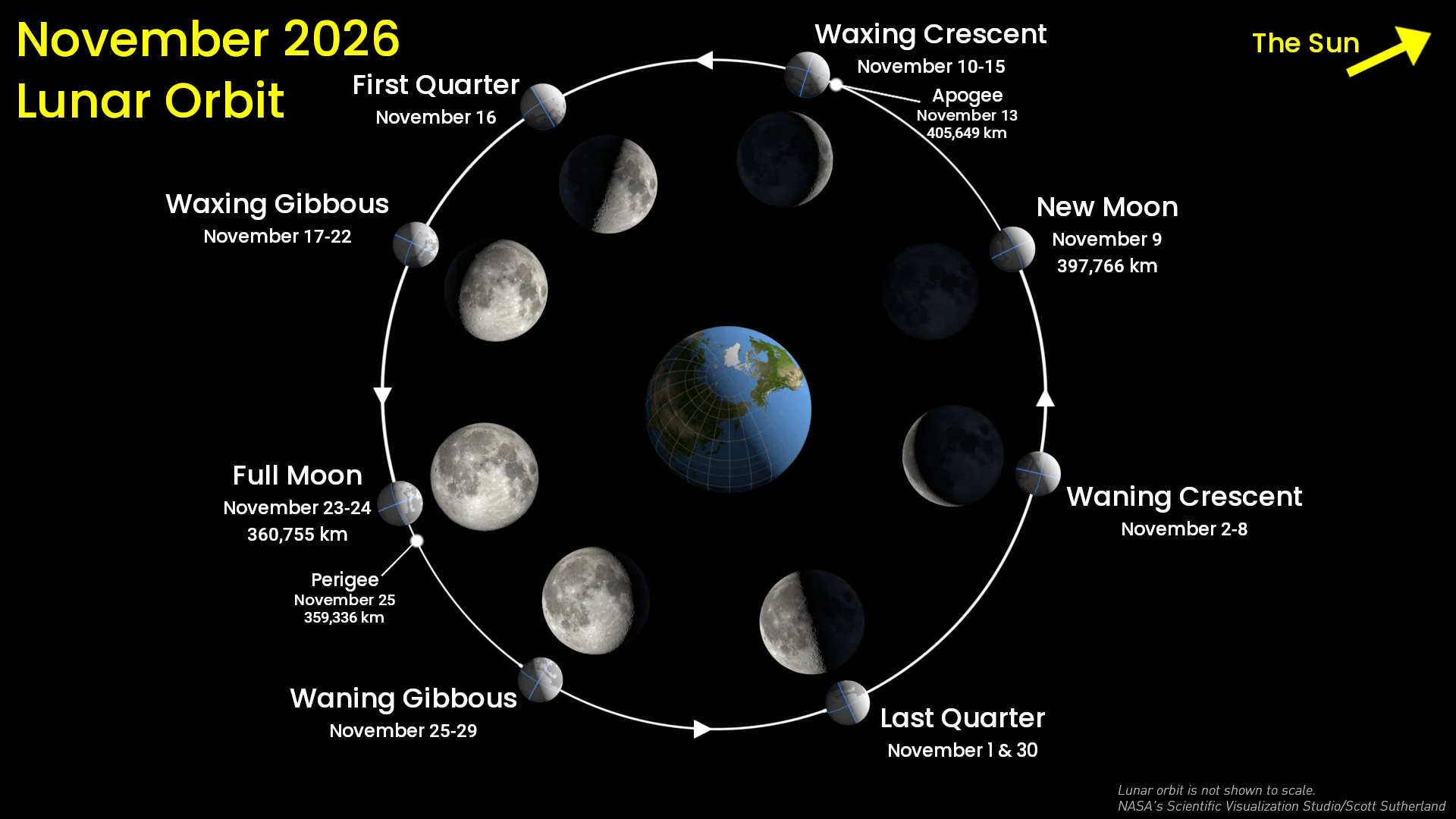
The Moon's orbit around Earth for November 2026, along with the different phases it presents to us at the various positions along that orbit. (NASA's Scientific Visualization Studio/Scott Sutherland)
The First Quarter Moon will shine on the night of the 16th, with the Waxing Gibbous Moon growing brighter and closer from the night of the 17th to the 22nd.
The Full Beaver Supermoon will rise on the night of the 23rd to 24th. This is the first supermoon since January, and the first of four supermoons in a row.
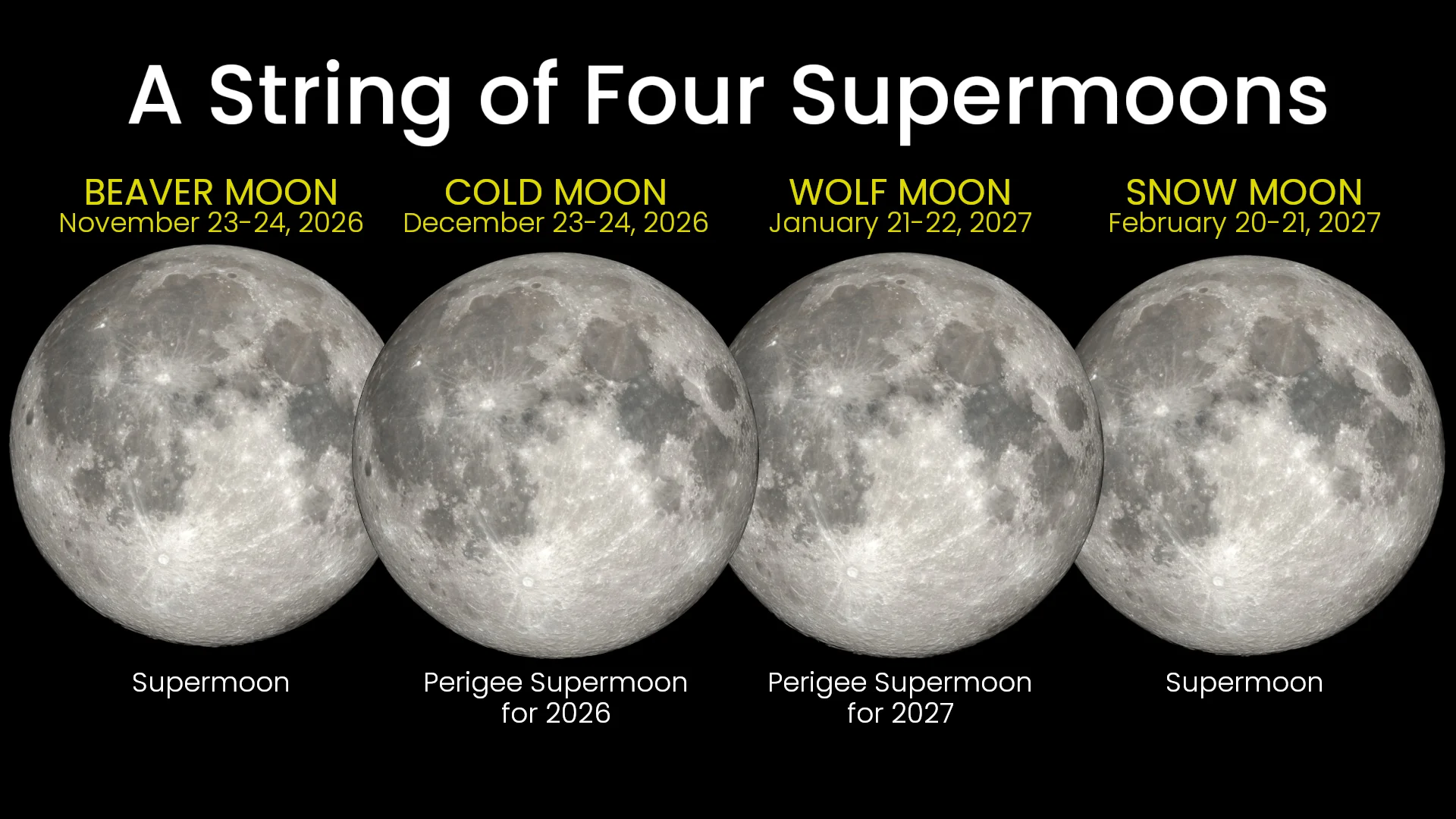
The four Full Moons from November 2026 through February 2027 are all supermoons, with the December Cold Moon being the largest of 2026, and the January Wolf Moon being the biggest of 2027. (NASA SVS/Scott Sutherland)
After that, the Waning Gibbous Moon will continue to light up our nights, until we see another Last Quarter Moon (along with those same companions) on the last night of the month.
READ MORE: Why is the supermoon so compelling to us?
The Planets
Four bright planets will be visible in the sky throughout the month — Saturn, Mars, Jupiter, and Venus.
Each night, Saturn will already be well above the horizon by the time the Sun sets. Look for it in the east-southeast sky just after it gets dark, and it will cross the sky to set a few hours before sunrise.
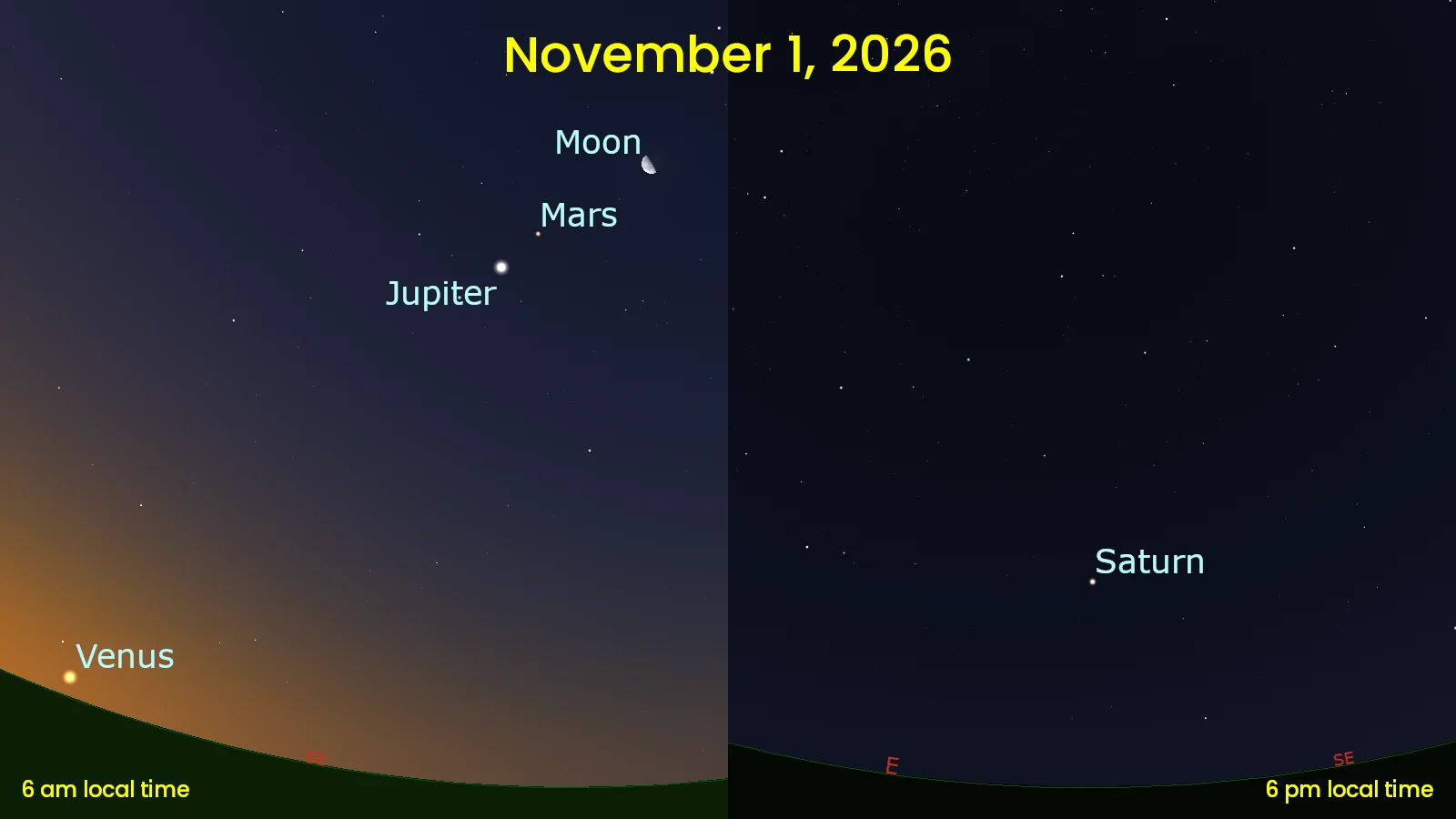
The planets visible in the sky on November 1, 2026. ((Stellarium/Scott Sutherland)
The 'big show' will be in the hours after midnight, though.
Mars will rise around 1 a.m., local time, on the 1st, with Jupiter following behind around 30 minutes later. The Last Quarter Moon will be near the pair, preceding it on the 1st, and then following behind on the 2nd.
As of the 2nd, this timing will shift back to midnight for some, due to the change-over from Daylight Saving Time. However, we will still see the pair rise a little bit earlier each night, with Jupiter seemingly growing more impatient, as it follows closer and closer behind Mars each night for the first two weeks.
This will culminate on the night of the 14th-15th, when the two reach their closest to each other in the sky, during the Mars-Jupiter Conjunction.
DON'T MISS: Why does the Moon look so big? What is the mysterious Moon Illusion?
Mars-Jupiter Conjunction
The planets in our solar system are millions to billions of kilometres away from each other. However, as we watch them cross our skies, they can appear much closer, sometimes drawing close enough together that they appear to touch.
Astronomers call these occurrences 'conjunctions'.
On the night of November 14, as Mars and Jupiter rise in the east, they will reach conjunction, with a distance between them of just over 1 degree. That's the equivalent of the width of a pinky finger, held out at arm's length.
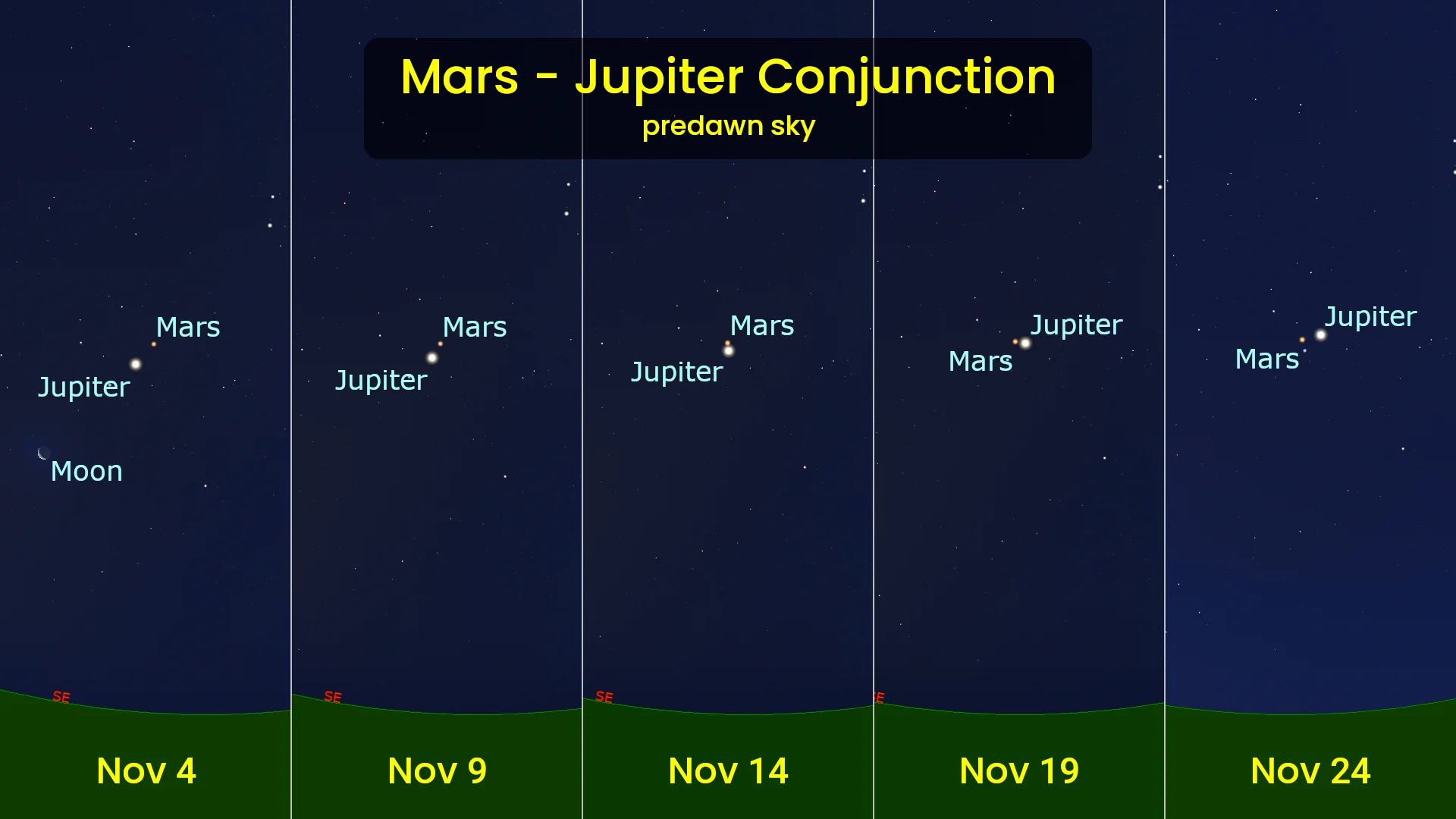
Mars and Jupiter come together and then split apart again throughout November 2026, coming to a close conjunction on the 14th. (Stellarium/Scott Sutherland)
After the conjunction, Jupiter and Mars will effectively switch positions in the sky, with Jupiter then rising first, followed by Mars, as the apparent distance between the two grows for the rest of the month.
Due to this, if we watch Mars and Jupiter each night throughout the month, it will appear as though they are performing a very slow dance before our eyes.
Meteor showers
Each year, during the month of November, we experience a total of four different meteor showers, with three of those reaching their annual peaks.
We can still see the last Orionids for the year, during the first week of the month. Their numbers will likely be counted on just one hand each night, but it is the last chance to catch meteors from Halley's Comet until next April.
The Southern Taurid meteor shower began back in late September, adding a few meteors to the night sky throughout October as well, and will last until November 20.
Before then, this meteor shower is expected to reach its peak on the night of the 4th to 5th, when it will produce between 5-10 meteors per hour.
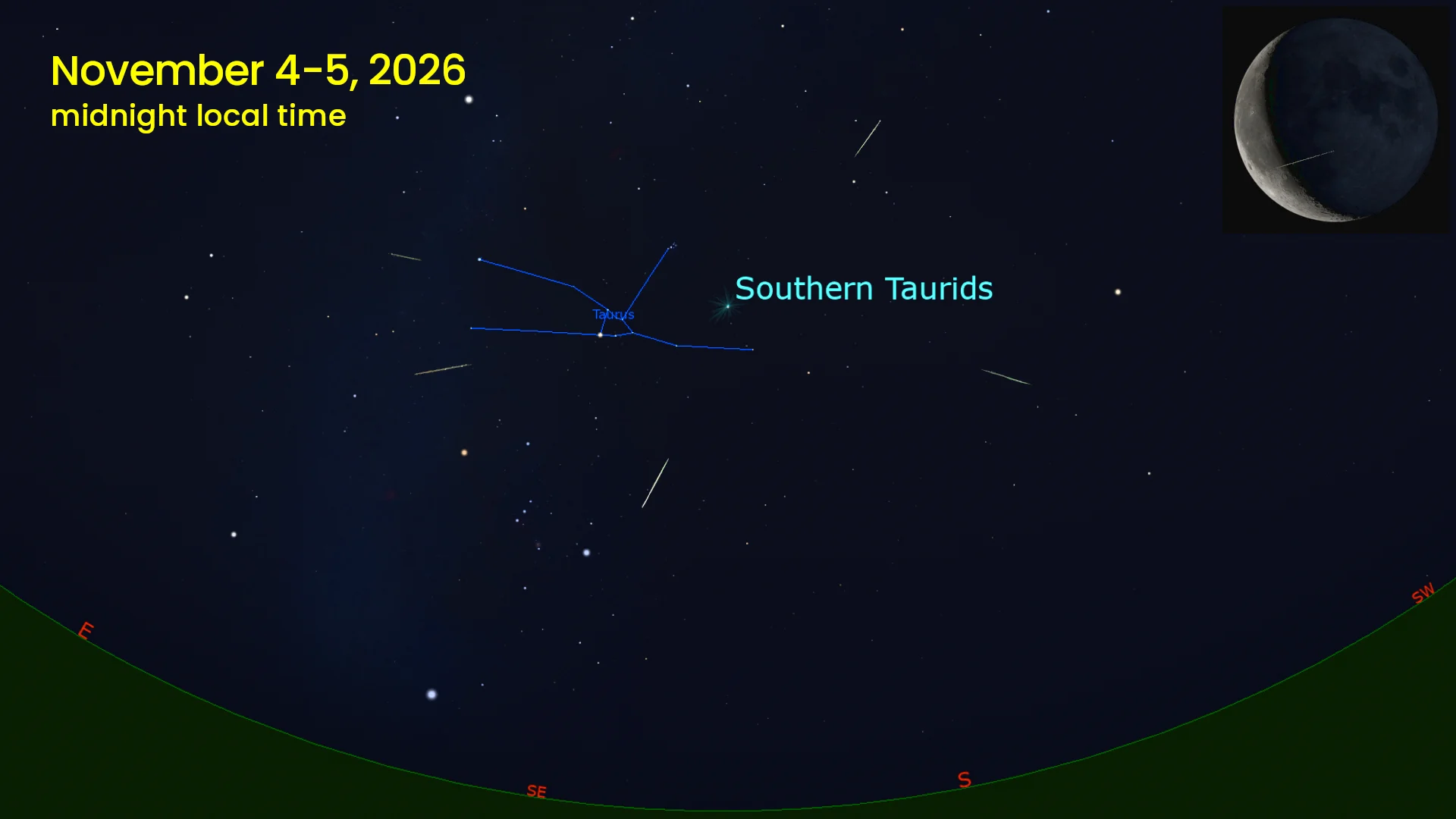
The radiant of the Southern Taurid meteor shower in the southern sky on November 4-5, 2026. (Stellarium/Scott Sutherland)
The Northern Taurids, which originate from the same complex debris stream, started on October 20, and will last into early December.
They are expected to reach their peak on November 11-12, and will also produce around 5-10 meteors per hour throughout that night.
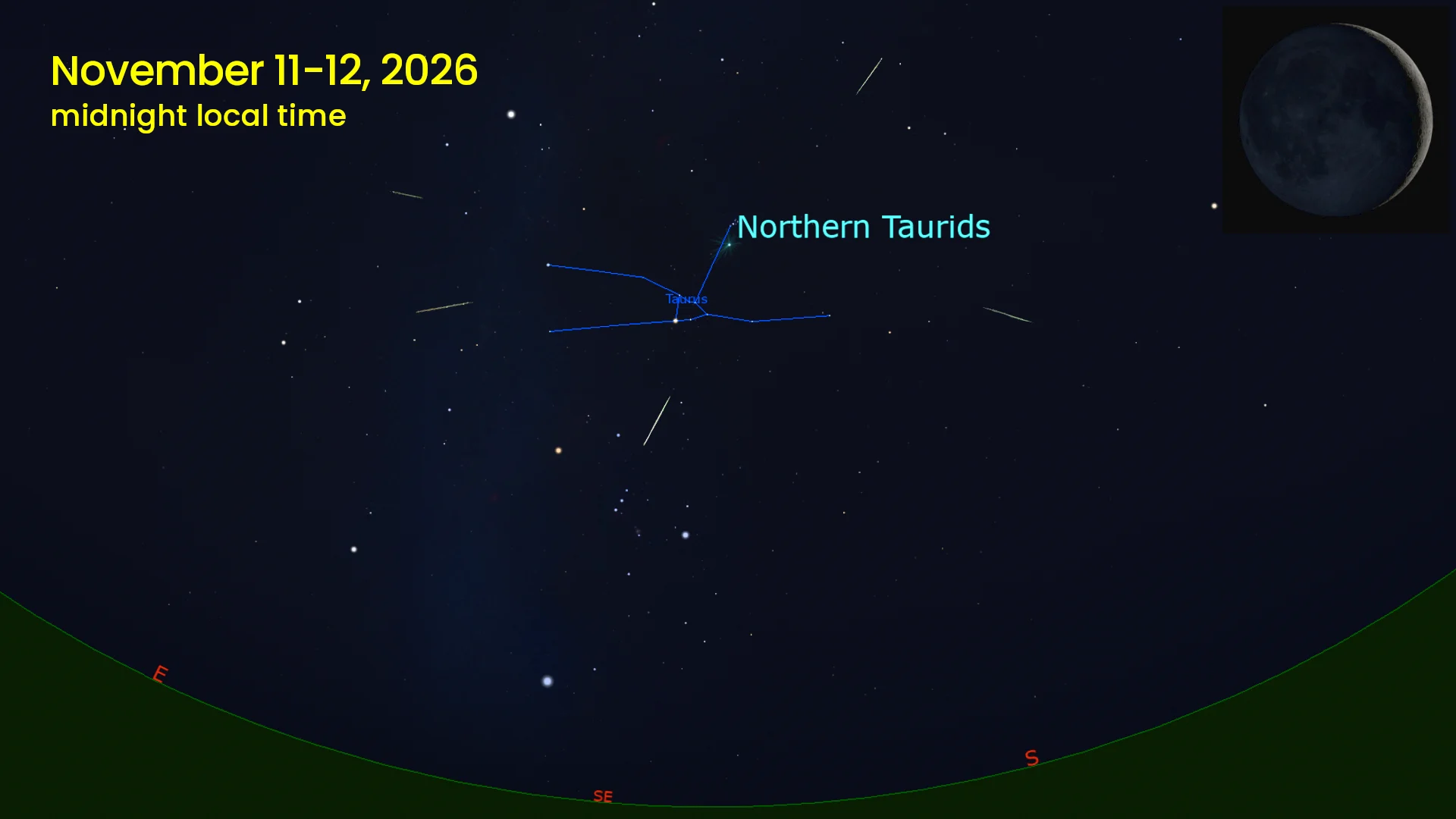
The radiant of the Northern Taurid meteor shower in the southern sky on November 11-12, 2026. (Stellarium/Scott Sutherland)
The Taurids are often grouped together, as they originate from the same region of the sky, at roughly the same time of the year. However, this is not a coincidence. Study of the two meteor streams has revealed that the objects they are associated with — comet 2P/Encke for the Southern Taurids and asteroid 2004 TG10 for the Northern Taurids — are very likely remnants of a large comet that broke apart, long ago.
Astronomers with the International Meteor Organization recommend trying to observe the two Taurid showers on the night of November 9, during the New Moon. Neither shower will be peaking at that time, but their combined meteors may be easier to see without the light of the Moon interfering with observations.
The Leonid meteor shower begins on November 6 and runs until the end of the month. They originate from a comet known as 55P/Tempel-Tuttle, which is due to make another pass through the inner solar system in 2031.
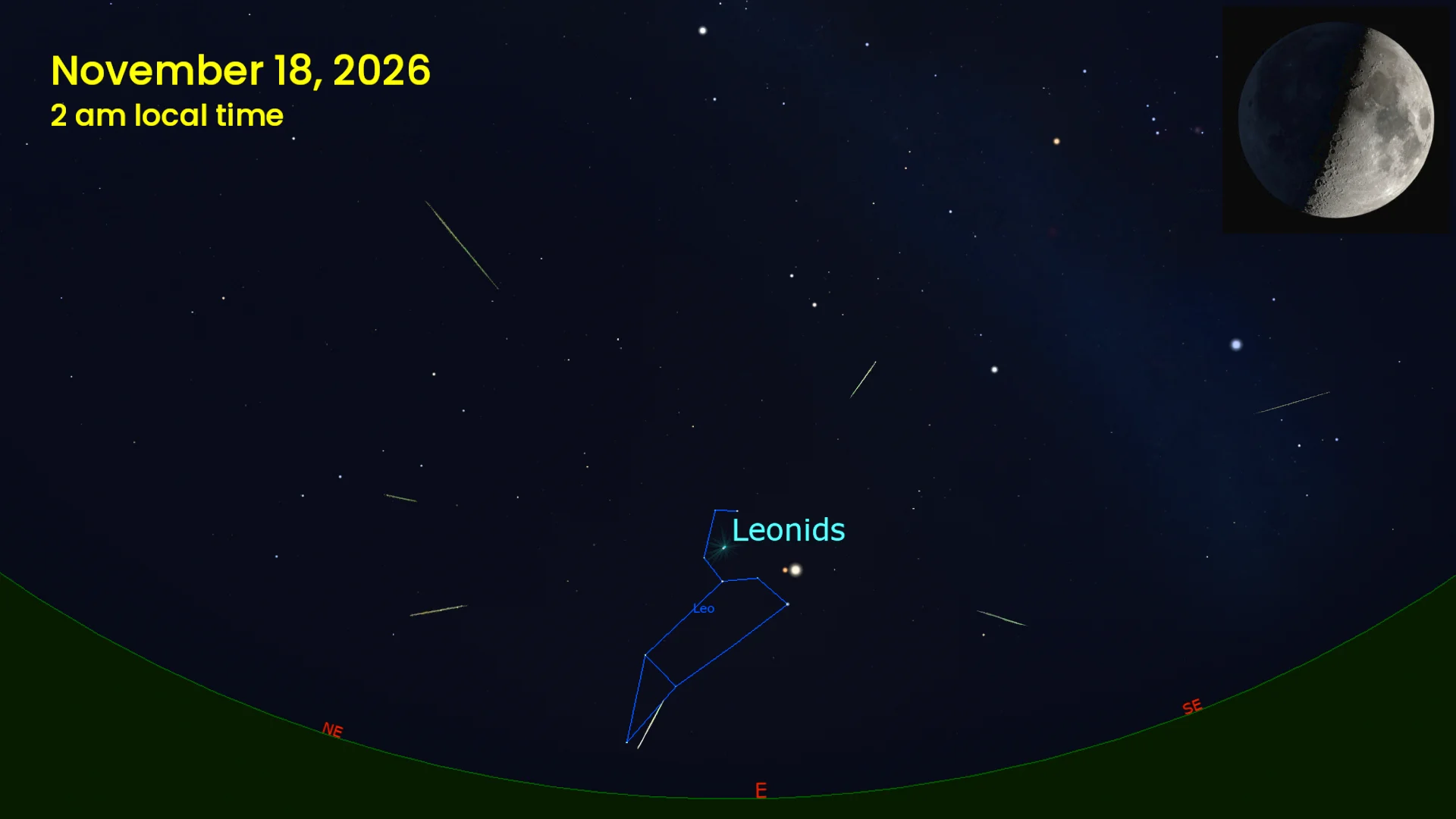
Leonid meteors appear to radiate outward from within the constellation Leo during the November 17-18 peak. (Stellarium/Scott Sutherland)
While still considered a weak shower compared to the Perseids or Geminids, the Leonids can still produce about 10 meteors per hour during its peak, maybe up to 15 per hour some years.
From time to time, though, the Leonids have been known to produce outbursts of double or triple its normal activity, and can even show up as meteor storms, with thousands or even tens of thousands of meteors streaking through the sky. Next year, in 2027, could be the next encounter with a minor outburst, with the next major ones predicted for 2033 and 2034.
READ MORE: How to get the most out of meteor showers and other night sky events
The Constellations
As Earth travels around in its orbit, our view of the space around our solar system changes from night to night. The difference is subtle on a night-by-night basis, but over the course of a month, entire constellations can disappear or reappear in our sky.
In November, the Fall constellations continue to feature prominently.
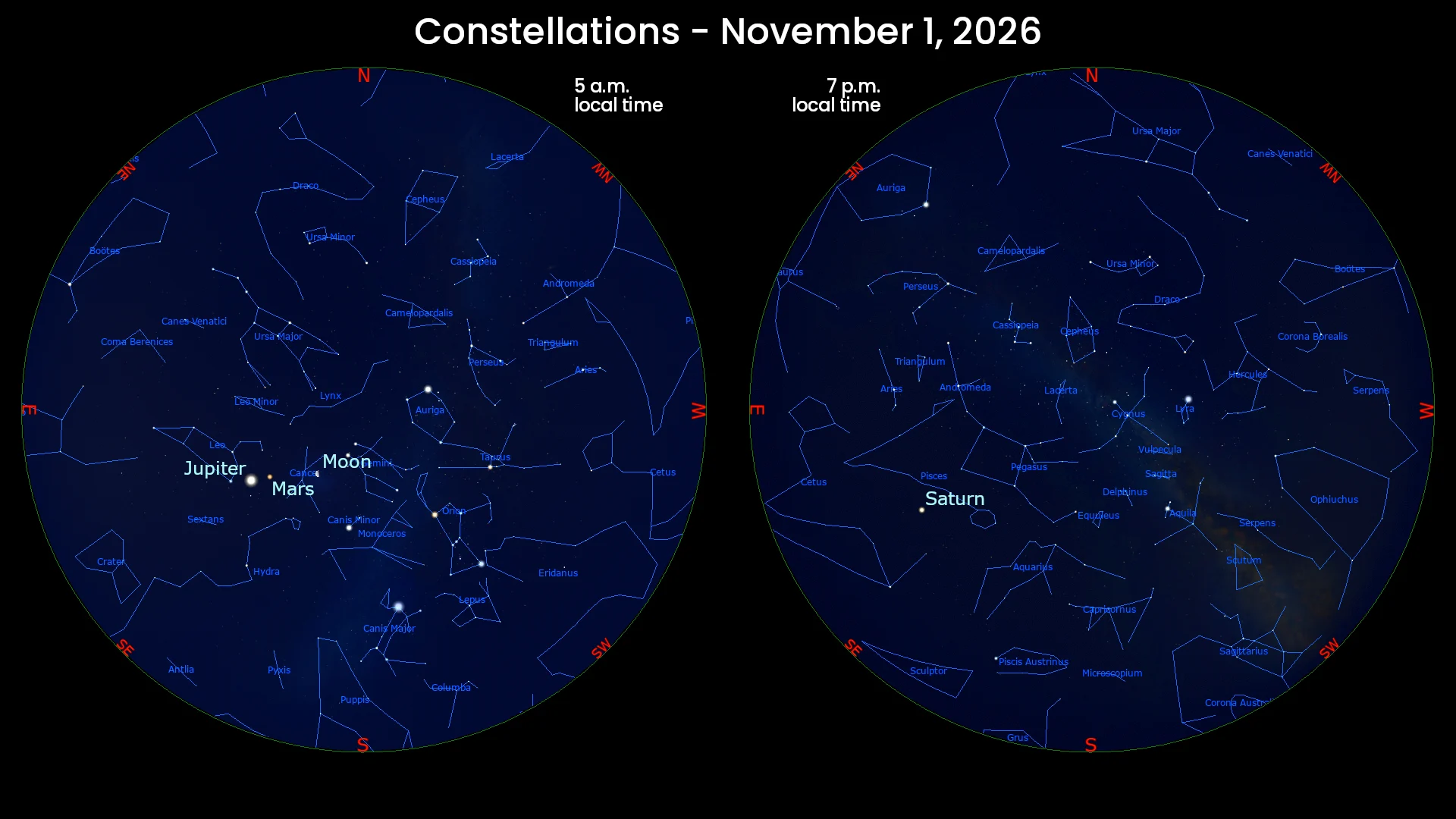
The constellations visible in the morning and evening skies on November 1, 2026. (Stellarium/Scott Sutherland)
Each morning, strung across the southern predawn sky from east to west, we can see Leo, Hydra, Cancer, Canis Minor, Gemini, Monoceros (the Unicorn), Canis Major, Orion, Eridanus (the River), Taurus, Cetus (the Whale), and Pisces.
Higher up, Ursa Major (the Big Dipper), Camelopardalis (the Camel), Auriga (the Charioteer), Perseus, and Andromeda will be visible. Meanwhile, to the north, Cassiopeia, Cepheus, Ursa Minor (the Little Dipper), and Draco will be easiest to spot.
In the evening, Taurus, Cetus, Pisces, Aquarius, Capricornus, Aquila (the Eagle), Sagittarius, Ophiuchus (the Serpent-bearer), and Hercules will be lined up from east to west in the south. Auriga, Perseus, Andromeda, Pegasus, Cygnus (the Swan), and Lyra can be seen higher up above that line. In the northern sky, we will still see Cassiopeia, Cepheus, Ursa Minor (the Little Dipper), and Draco, although their positions will be shifted around the north star, with the Big Dipper low in the sky, almost directly north.
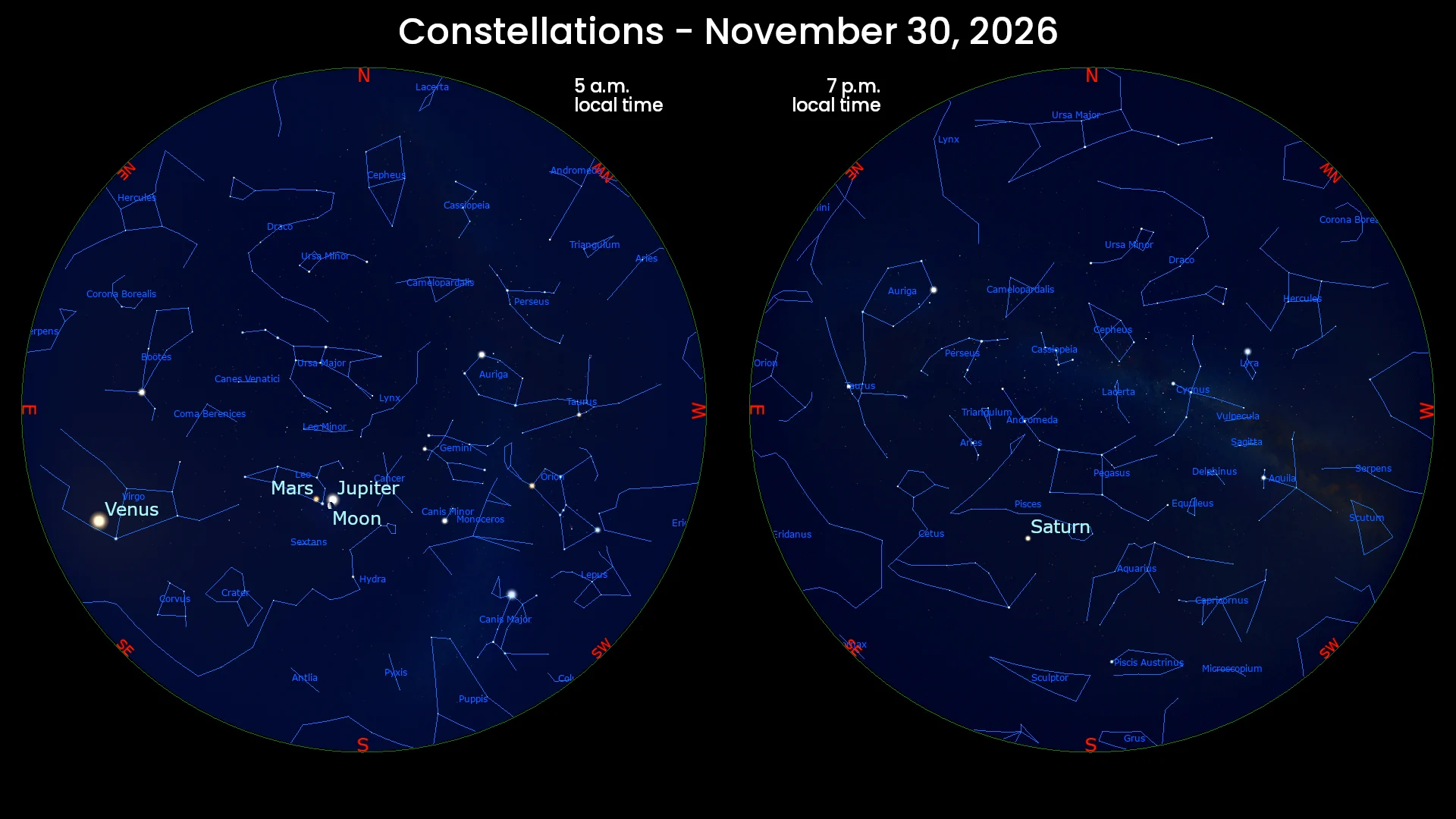
The constellations visible in the morning and evening skies on November 30, 2026. (Stellarium/Scott Sutherland)
By the end of the month, the positions of the constellations will have shifted significantly westward.
In the predawn sky, this will bring Virgo and Boötes into view in the east, while at the same time, Pisces, Cetus, Eridanus, and Andromeda will be gone from the west. Higher up, Ursa Major will swing around into the southern sky, while Camelopardalis, Auriga, and Perseus will shift more to the north. Cassiopeia, Cepheus, Ursa Minor, Draco, and Hercules can still be seen in the northern sky.
For the evening hours, a similar shift in star positions brings Orion and Gemini into view in the eastern sky after sunset, while Ophiuchus and Sagittarius depart from the west. Higher up, Auriga, Perseus, and Andromeda, will have shifted more to the south, while Pegasus, Lyra, and Cygnus will be more northerly. Draco, Ursa Minor, and Ursa Major are the most prominent constellations in the northern sky at this time.
With files from The Weather Network