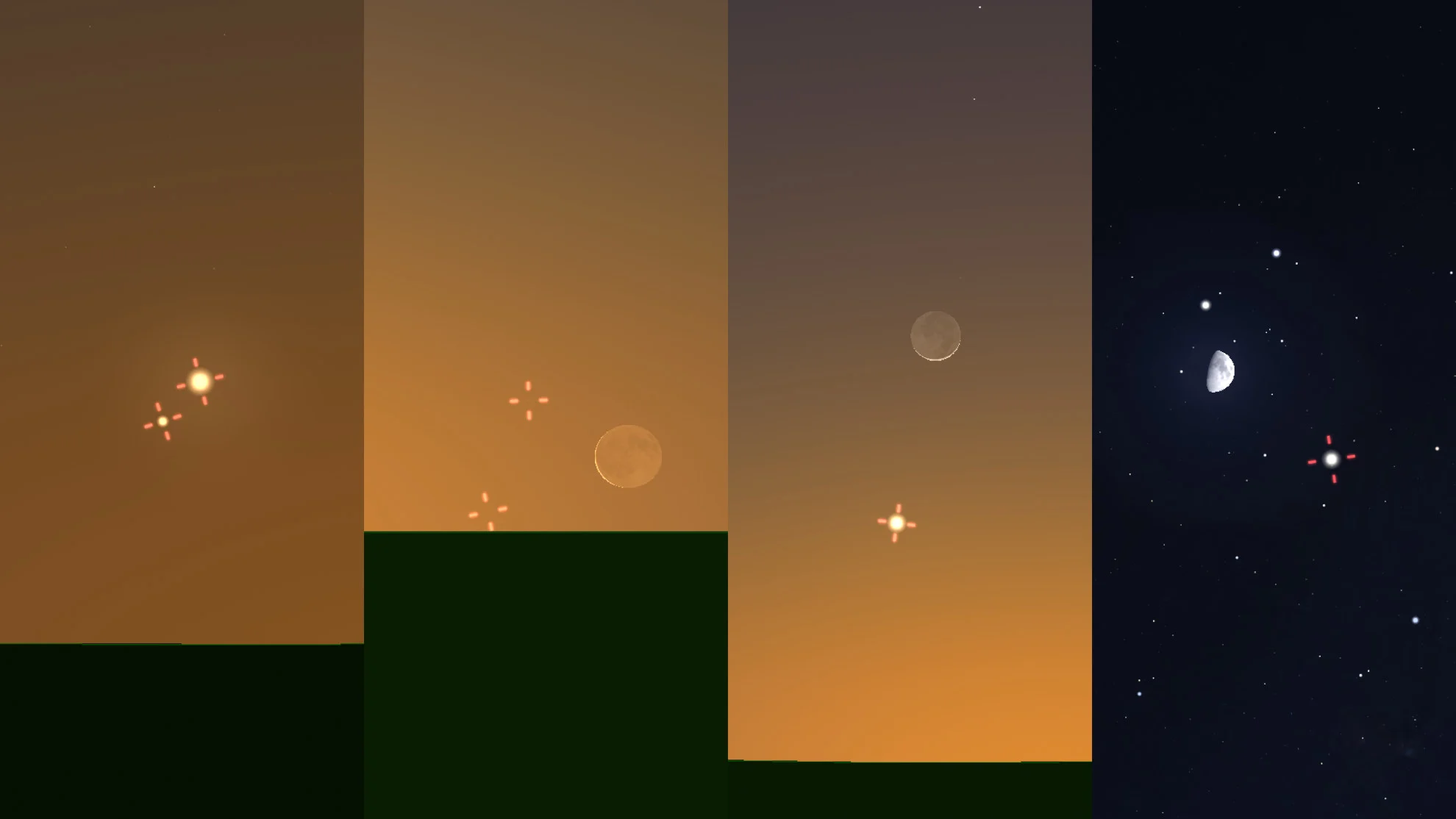
Can you spot the planets shining in our March night skies?

Are you up for the challenge?
The last total lunar eclipse until the end of 2028 started us off in March, and afterwards, we can spend the rest of the month planet-hunting, including a challenging cluster to spot in the predawn sky.
Check your weather forecast for clear nights, so that you don't miss out on the amazing sights visible throughout the month.
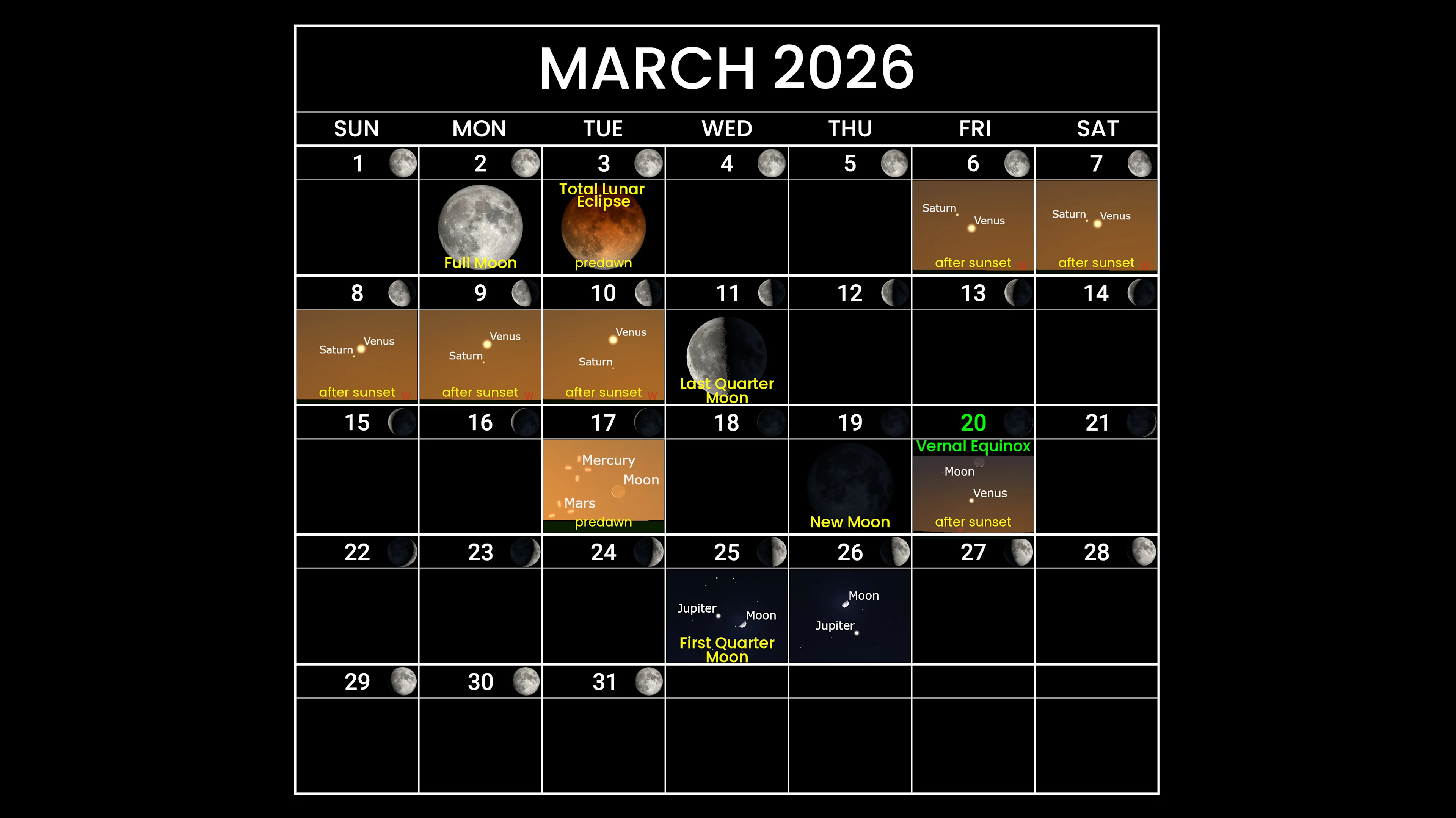
The astronomical events of March 2026, in calendar format. (Scott Sutherland/NASA SVS/Stellarium)
DON'T MISS: A Great Comet may shine along with meteor showers and bright planets this spring
The Moon
On the first night of March, the Waxing Gibbous Moon was up in the sky after sunset, crossing the sky to set just after sunrise.
Then, on the night of the 2nd to 3rd, the Full Moon rose on the Monday night, with many across Canada seeing an eclipsed Moon setting on Tuesday morning.
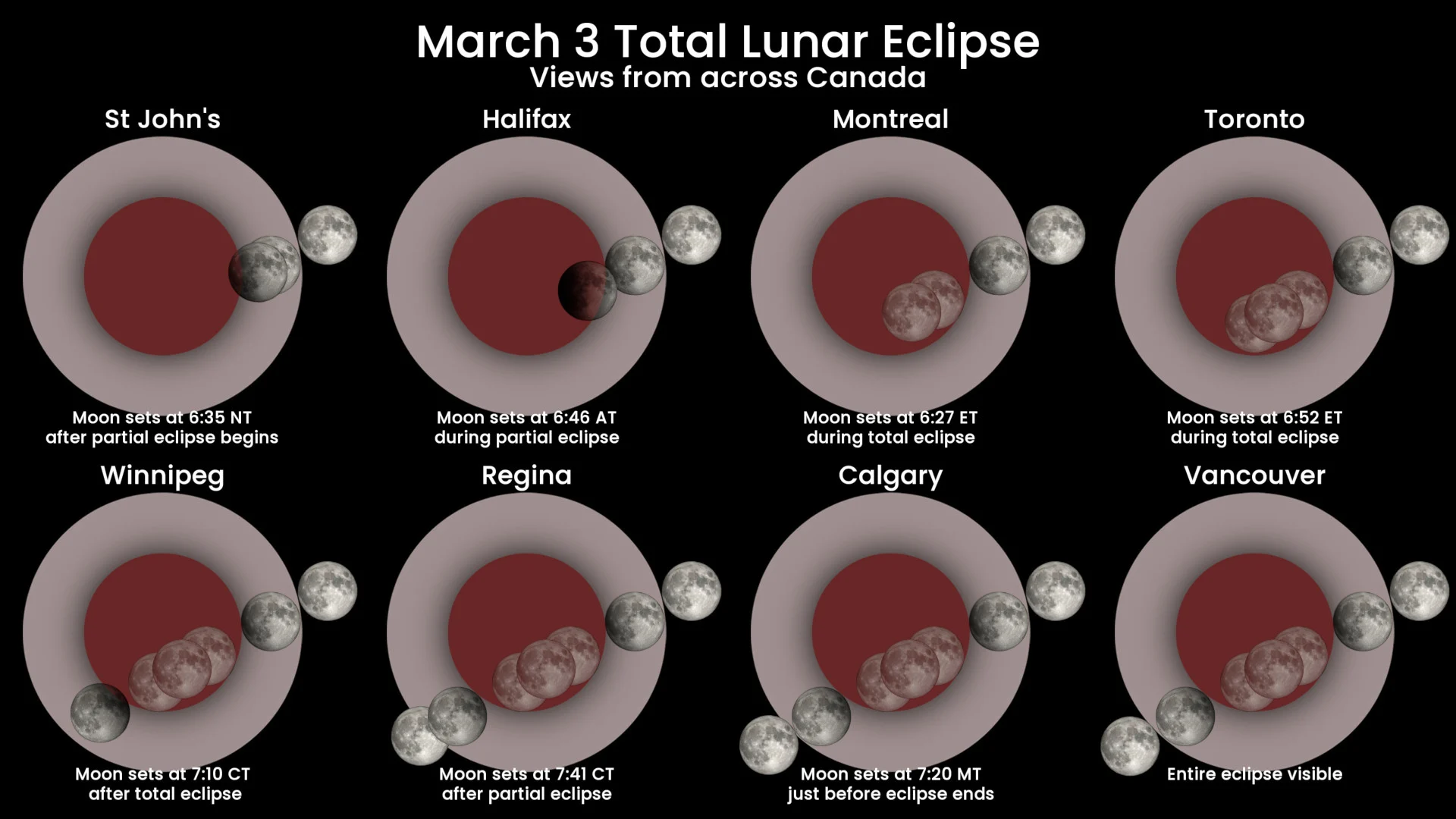
What different regions of Canada will see during the March 3 predawn lunar eclipse. (NASA SVS/Scott Sutherland)
In Atlantic Canada, it was a partially-eclipsed Moon, as it slipped beyond the horizon before the eclipse reached totality. From Quebec through Ontario, a 'Blood Moon' shone a dusky red colour in the sky, from minutes in eastern Quebec, up to nearly an hour in northwestern Ontario, with the Moon setting during that phase of the event. Then, from Manitoba through to the west coast, observers saw the full total eclipse, with the Moon setting either during the last partial phase, during the penumbral phase, or just after the eclipse finally ended.
READ MORE: A total lunar eclipse will shine over Canada! Here's how to watch from anywhere
After the Full Moon, we will see the Waning Gibbous Moon in the sky between the 4th and the 10th, followed by the Last Quarter Moon on the 11th, and the Waxing Crescent Moon from the 12th to the 18th.
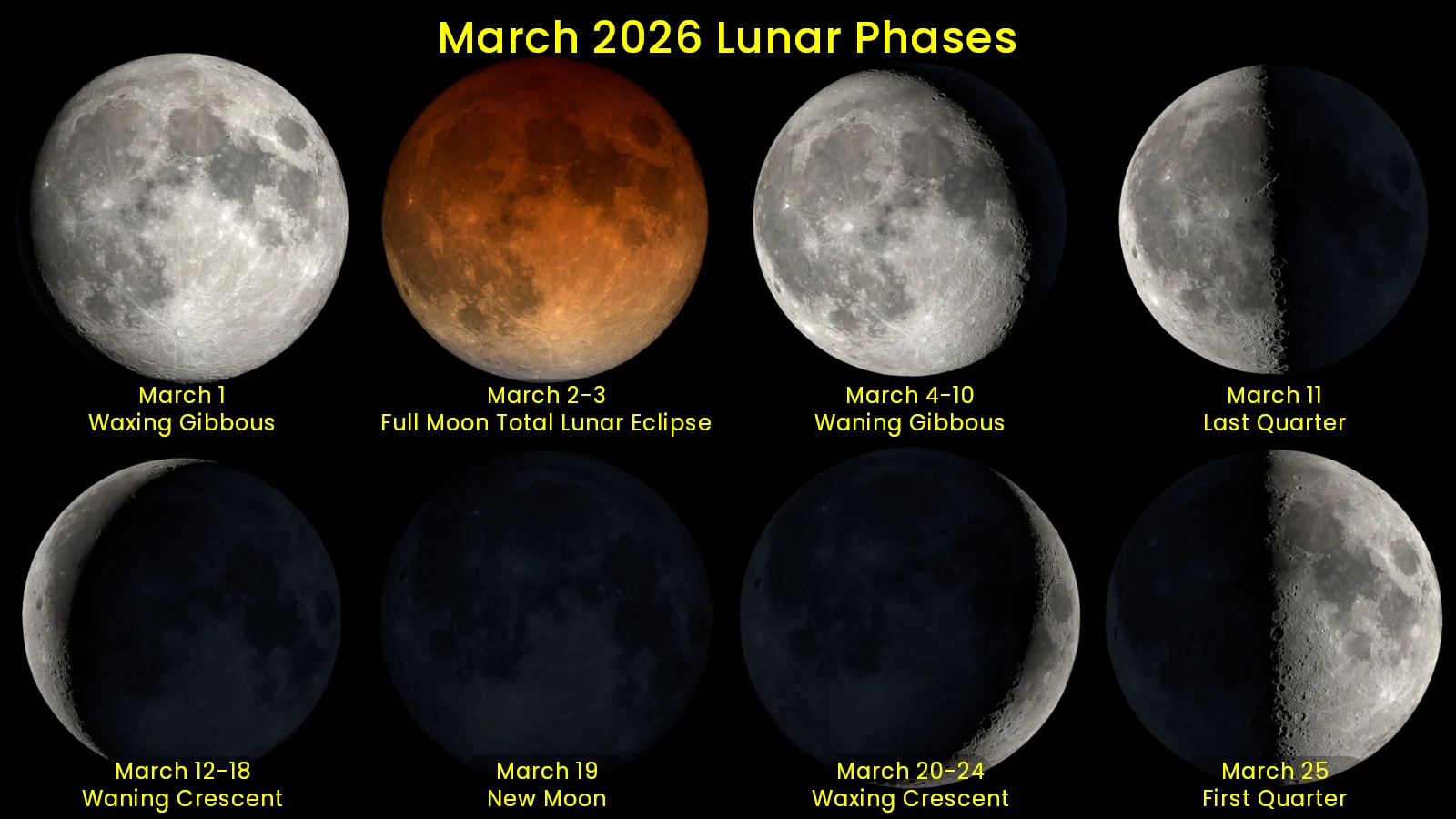
The phases of the Moon for March 2026, with each image produced with data from NASA's Lunar Reconnaissance Orbiter. (NASA's Scientific Visualization Studio/Scott Sutherland)
The Moon will be lost from sight on the 19th, as it passes through its New phase, and then from the 20th to the 24th, we will see the Waxing Crescent Moon in the east after sunset. The First Quarter Moon will shine on the 25th, and we will have a Waxing Gibbous Moon from the 26th through the 31st.
The Planets
Each night, just after sunset, the planet Jupiter will be shining brightly, high in the southern sky, near the stars Pollux and Castor from the constellation Aquarius. Watch throughout March, though, as Jupiter shifts slightly farther west each night.
Meanwhile, each evening, off to the west, we can spot both Saturn and Venus low to the horizon. On the night of March 8, these two planets get very close together in the sky, forming a 'conjunction'. Watch on the nights before, as the two approach, and then after as they draw away from each other again.

The conjunction of Saturn and Venus, in the western sky after sunset, from the 6th to the 10th, with them reaching their closest approach to each other in the sky on the 8th. (Stellarium/Scott Sutherland)
For the morning of the 17th, here's a special challenge for planet enthusiasts!
At around 7 a.m., local time, just before the Sun rises, the planets Mercury and Mars will be just above the eastern horizon, along with a very thin Waning Crescent Moon. The trick here is that the trio will be difficult to pick out through the surrounding twilit sky.
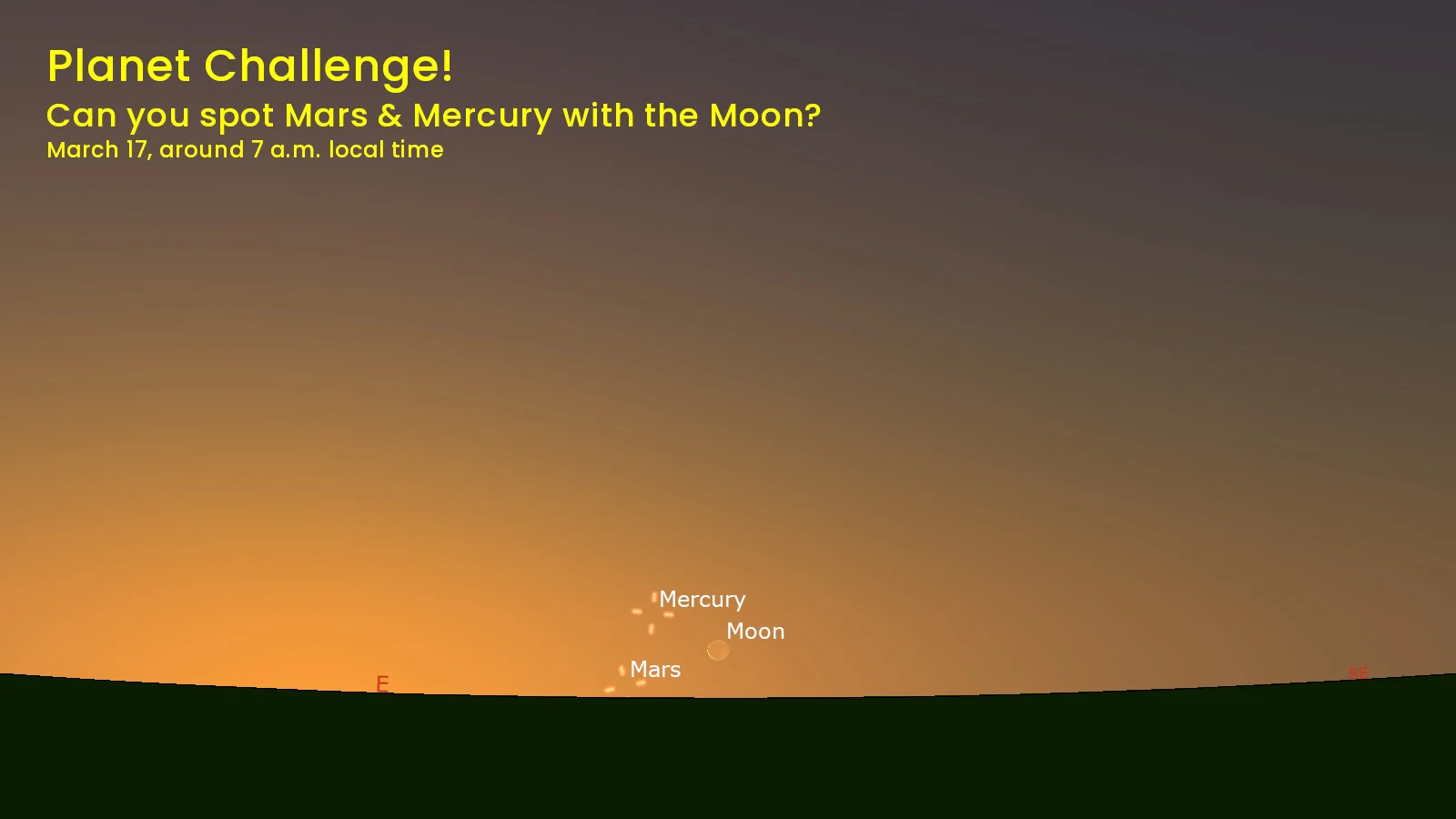
Mercury, Mars, and the Moon cluster in the eastern predawn sky on March 17. (Stellarium)
Having very clear skies will help, as will being higher up, either on a hilltop, or in a tall building, plus binoculars or a telescope will assist with peering through the twilight. If you manage to spot them, or even capture them in a picture, let us know on social media — X, Instagram, Facebook, or Threads.
Some other planets also 'team up' with the Moon throughout the month.
On the night of the Vernal Equinox, March 20, look for a very thin Waxing Crescent Moon near Venus in the western sky after sunset.
Also, we can see the First Quarter Moon and a Waxing Gibbous Moon close to Jupiter, on the nights of March 25 and 26, respectively.
RELATED: Why does the Moon look so big? What is the mysterious Moon Illusion?
March Constellations
The constellations of Spring take over during the month of March.
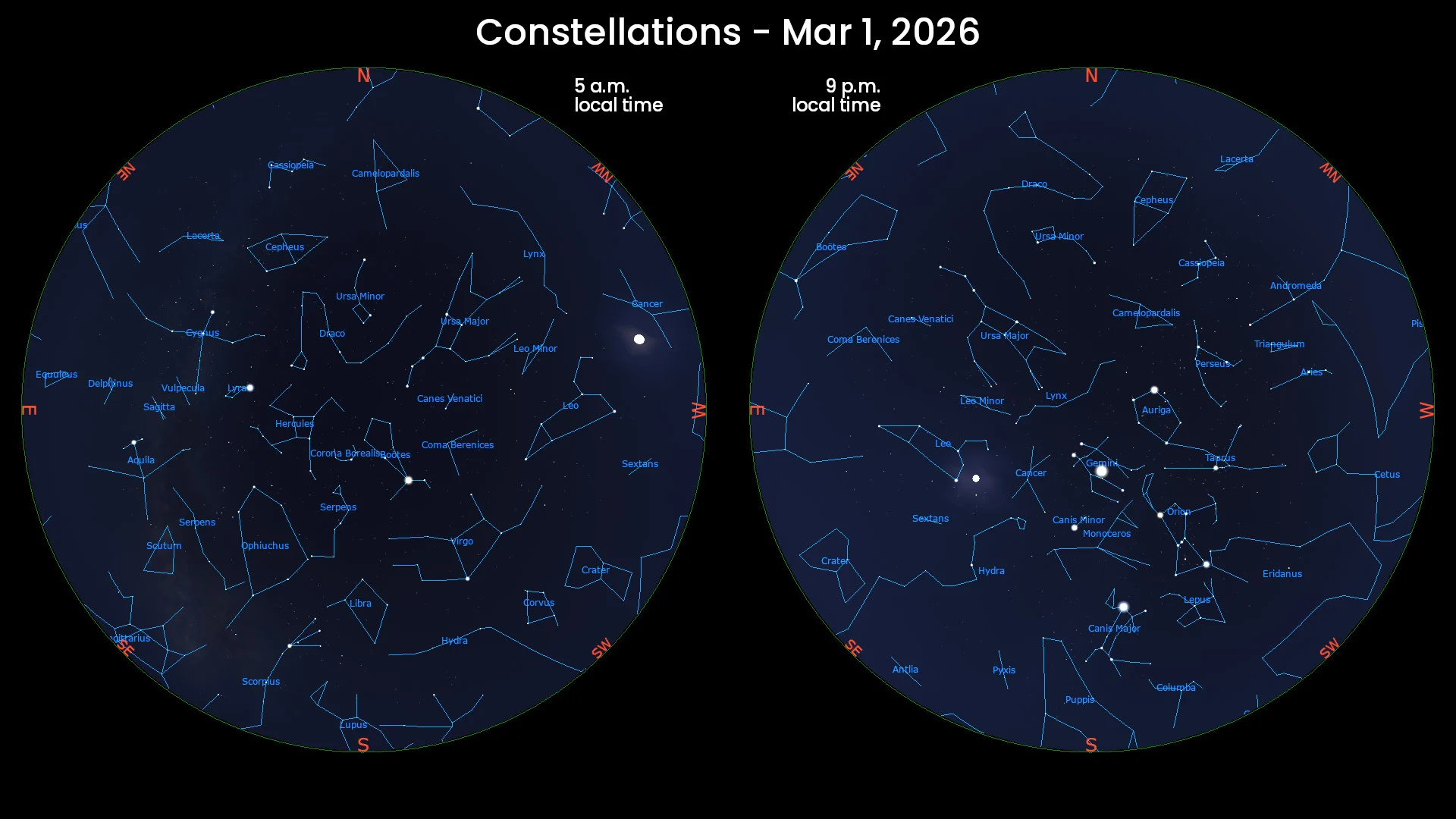
(Stellarium)
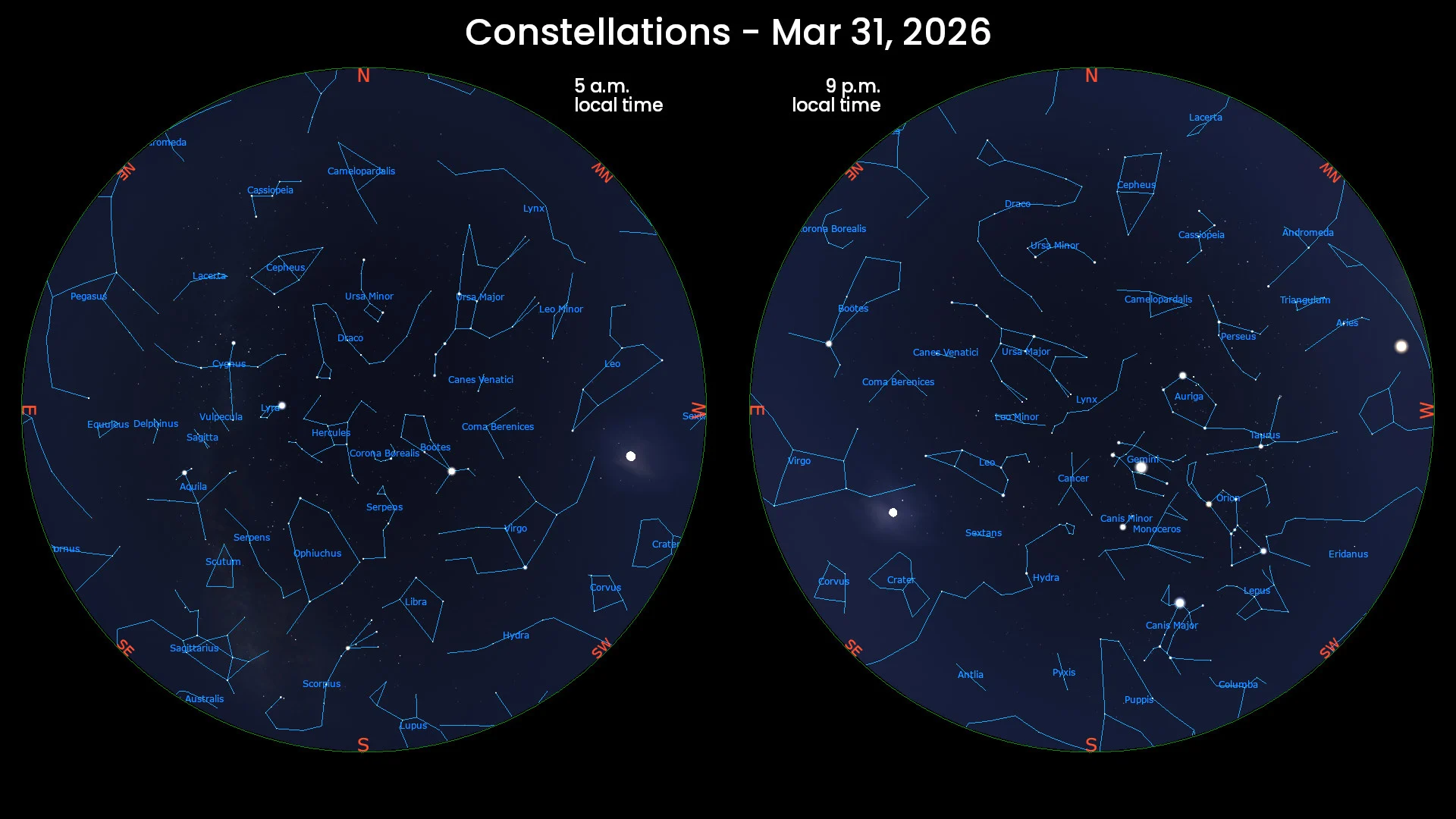
(Stellarium)
(Thumbnail image depicts four simulated views of the night sky, using the free planetarium software Stellarium, showing when planets are visible, either in conjunction with each other, or near the Moon.)