See bright Venus paired with the Pleiades star cluster this weekend

Venus will look extra bright tonight, thanks to a little help from the Seven Sisters.
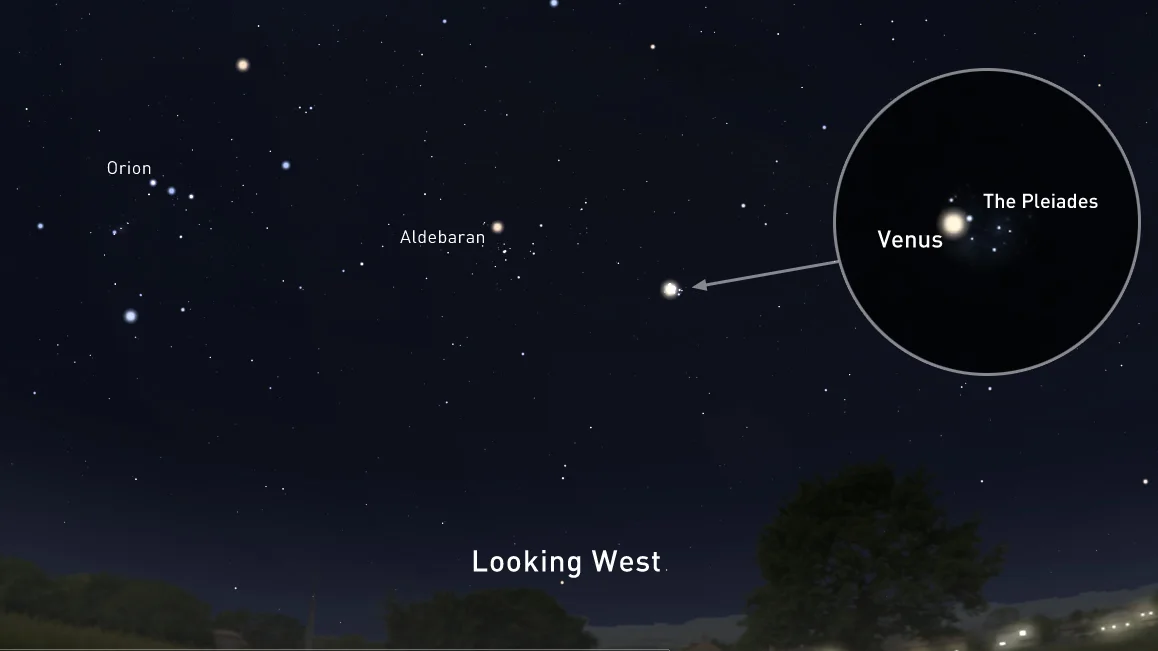
If you find yourself under clear skies this weekend, be sure to look off to the western horizon, in the hours between sunset and midnight, to see bright Venus next to the famous Pleiades star cluster.
Venus has been a bright feature in our night sky for a few months now. As the planet swings around the Sun in its orbit, it has been getting closer and closer to Earth. That means we've been seeing more of the light reflected from the planet's cloud-tops.
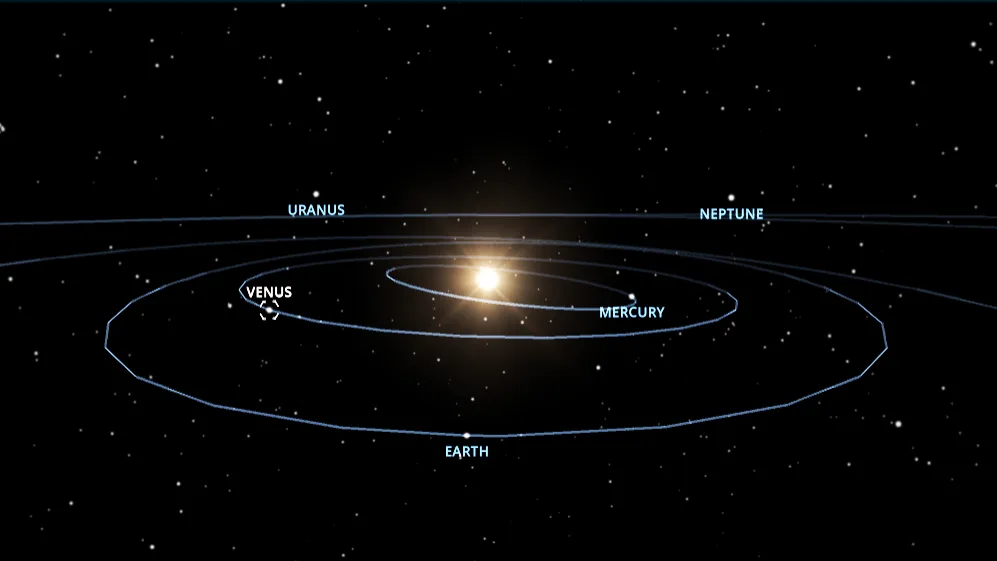
A simulated view of the inner solar system, showing the positions of the planets on April 3, 2020. Credit: Solar System Scope
Through the weekend, from sunset until around midnight, Venus will be visible in the western sky, and it will not be alone.
Even as the Sun slips beyond the horizon, it will likely be fairly easy to pick Venus out in the twilit sky, but as the evening grows darker, the planet's companions for the night will become more apparent.
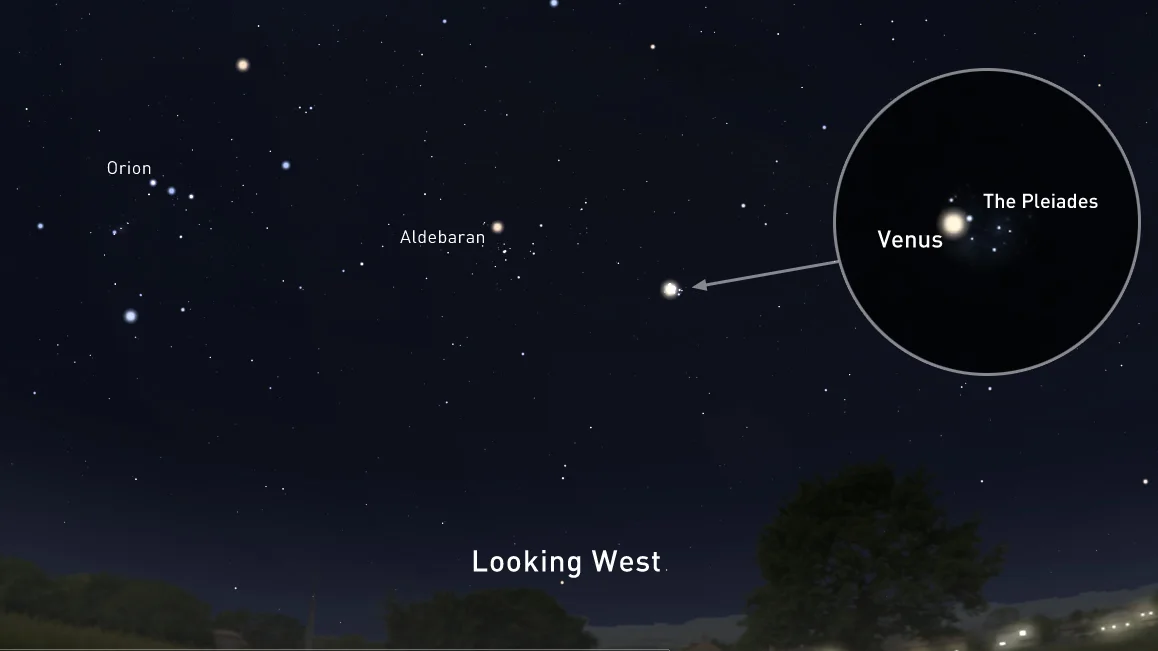
A view of the western horizon at roughly 10 p.m. local time, showing Venus, the Pleiades and the Orion constellation. Credit: Stellarium/Scott Sutherland
The Pleiades star cluster is a grouping of bright stars, known to astronomers as Messier 45, but it is also called The Seven Sisters.
Shown in the image below, taken by the Hubble Space Telescope, are the nine brightest stars in the cluster, named after characters in Greek mythology. The Seven Sisters - clockwise, from the top, Sterope, Maia, Taygeta, Celaeno, Electra, Merope, and Alcyone - and their parents Atlas and Pleione.
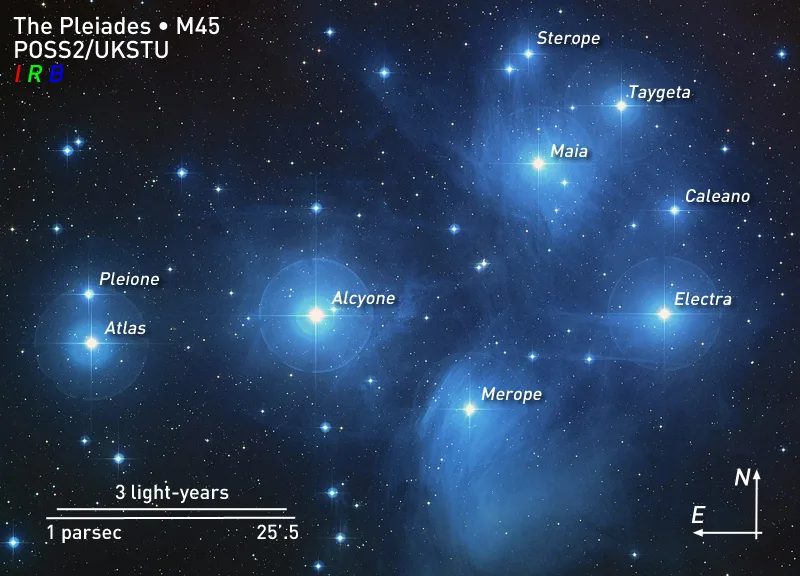
A map of the Pleiades taken by the Hubble Space Telescope. Labelled are the names of the seven sisters, plus their 'parents', Atlas and Pleione. Credit: NASA/ESA/AURA-Caltech
Venus, on the night of April 3, joined this bright cluster near Atlas, Alcyone and Merope.
WILL YOU SEE IT?
Your local cloud cover will dictate whether you actually get to see this pairing in the sky tonight.
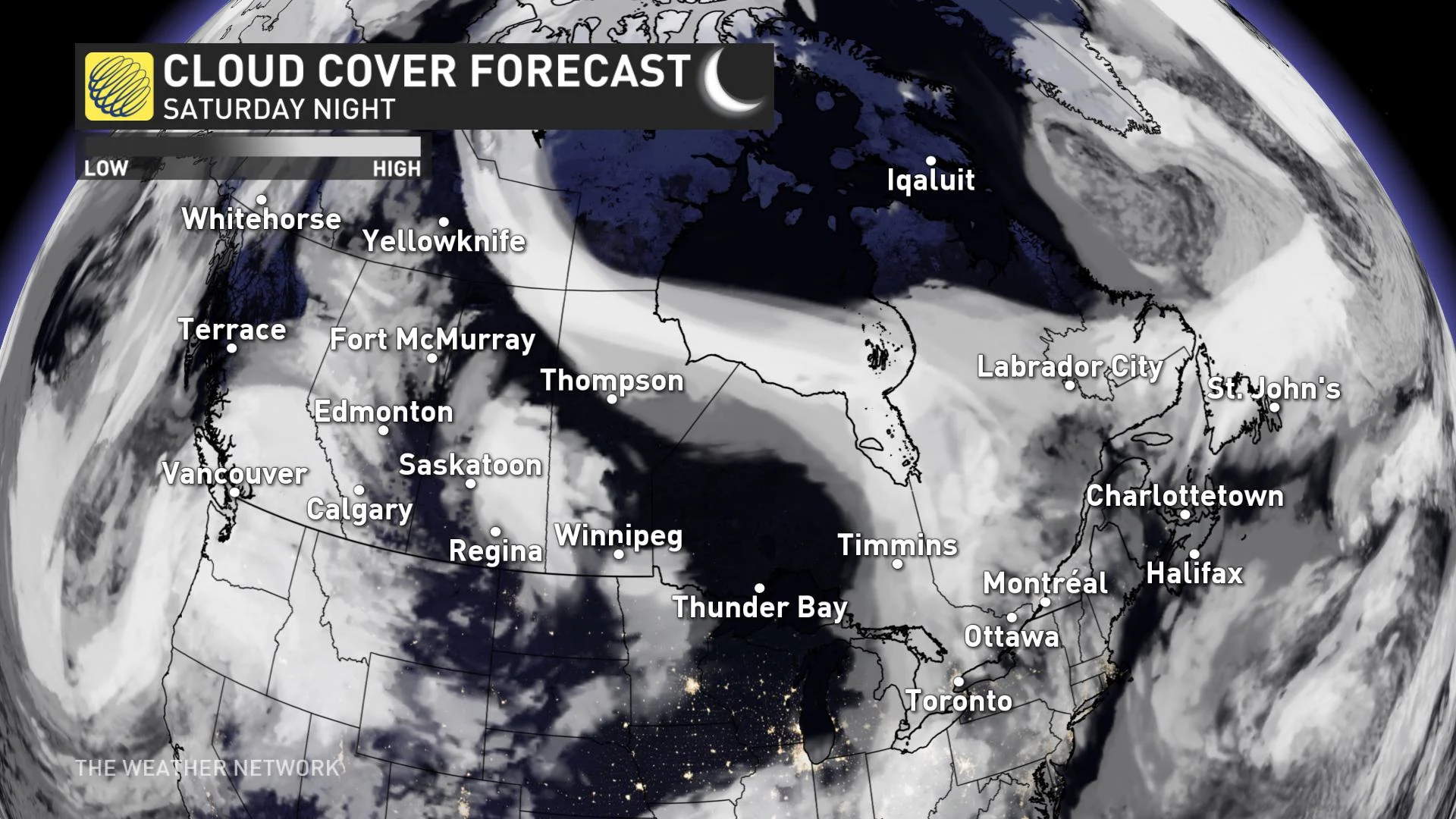
Don't despair if you missed it Friday. Even on Saturday and Sunday nights, Venus will still remain very close to the Seven Sisters. Check your local forecast to see if your skies will be clear enough to see them!
Sources: Royal Astronomical Society of Canada | Hubble Space Telescope