
Look up! The Full Cold Supermoon shines highest in the sky this week

This is the biggest and brightest December Supermoon we've seen in nearly 17 years!
Eyes to the sky this week to see the Full Cold Supermoon, which is last Full Moon of 2025 and the highest Full Moon of the entire year.
On Thursday, December 4, 2025, the Earth, Moon, and Sun reach syzygy, in an alignment that will cause the entire Earth-facing side of the Moon to be lit up for the last time this year. This will be the Full Cold Moon, as it is typically called, and our planet's celestial companion will be up in the sky all night long.
If your skies are clouded out on that particular night, look up anytime throughout Wednesday night, and again on Friday night. The Moon will appear full (around 98-99 per cent illuminated) for roughly a day before and after the actual time of the Full Moon, as it is extremely challenging to notice only 1 or 2 per cent of the Moon's edge in shadow from around 357,000 kilometres away.
What is the Cold Moon?
The name Cold Moon comes from a list of Full Moon names that first appeared in the Farmer's Almanac in the early 20th century. The names on the list, 12 in all, originate from European and settler folklore, along with the lunar calendar observed by the Indigenous peoples of the northeastern United States, eastern Canada, and the Great Lakes region.
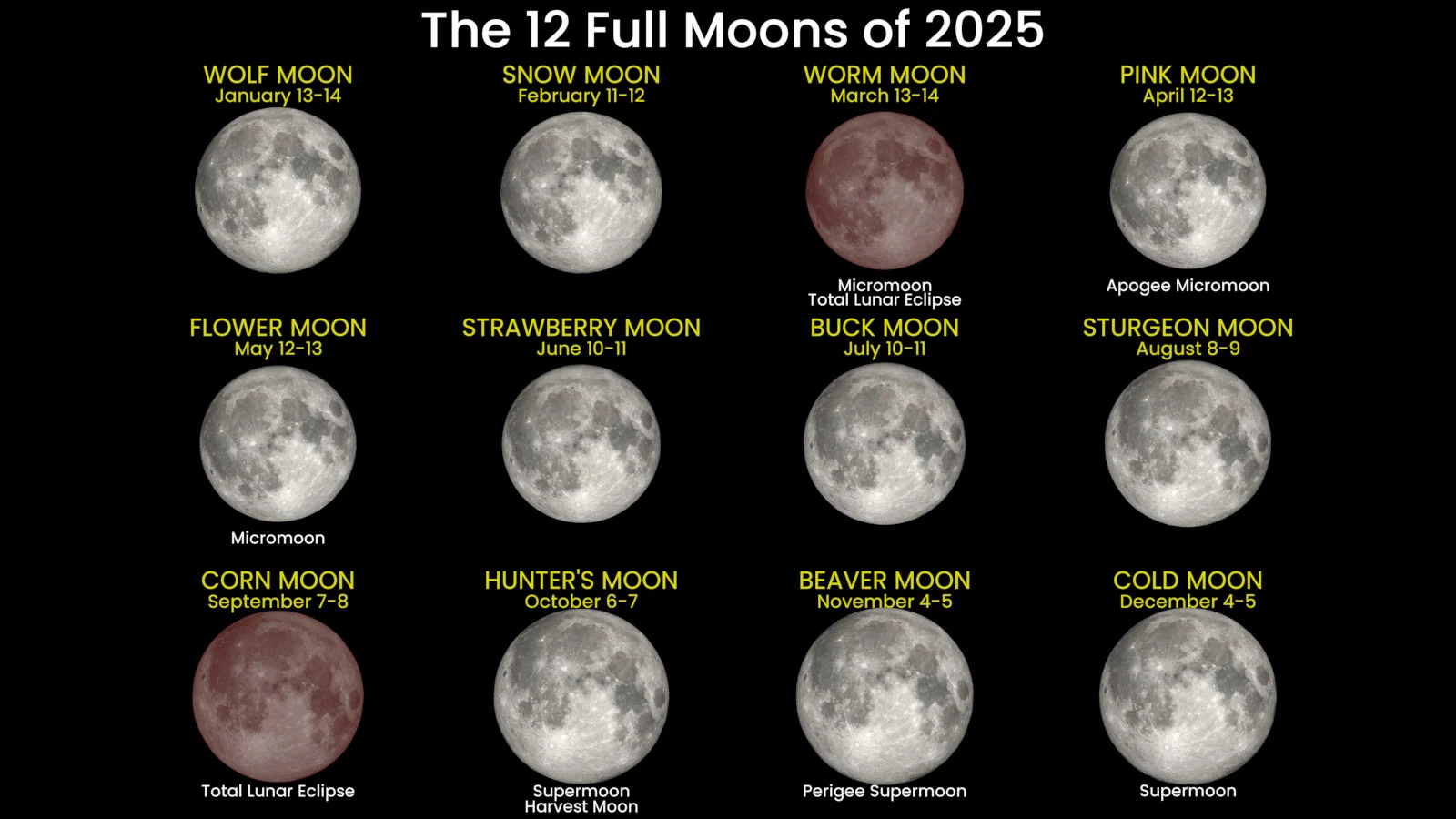
This graphic collects all the relevant data about each of the 12 Full Moons of 2025, including their popular names, whether they are a 'super' or 'micro' Moon, a 'perigee' or 'apogee' Moon, and whether they are remarkable in some other way (Harvest Moon, lunar eclipse, etc.). Credit: Scott Sutherland/NASA's Scientific Visualization Studio/Fred Espenak
According to The Old Farmer's Almanac, the Mohawk people named December’s Full Moon the Cold Moon to reflect the frigid season.
Meanwhile, the Mohican people called it the Long Night Moon, the Cree referred to it as the Drift Clearing Moon, Hoar Frost Moon, or Frost Exploding Trees Moon, the Anishinaabe named it the Little Spirit Moon, and the Haida and Cherokee both called it the Snow Moon, just to name a few.
Indigenous peoples did not just use these names to refer to the Full Moons, though. In the lunar calendars they used to track the passage of time throughout the year, each name referred to one full 29-day cycle of the Moon, from one New Moon to the next. In essence, they were like the names of the month used in the Western Gregorian calendar.
DON'T MISS: Why does the Moon look so big? What is the mysterious Moon Illusion?
Closest and Brightest December Full Moon
On Thursday night, when the Moon is 100 per cent Full, it will reach a closest distance to Earth of 357,219 km, or around 27,000 km closer than its average distance. At that time, it will be over 15 per cent brighter than your average Full Moon, and close to 30 per cent brighter than the farthest Full Moon of the year (April's Pink Moon).
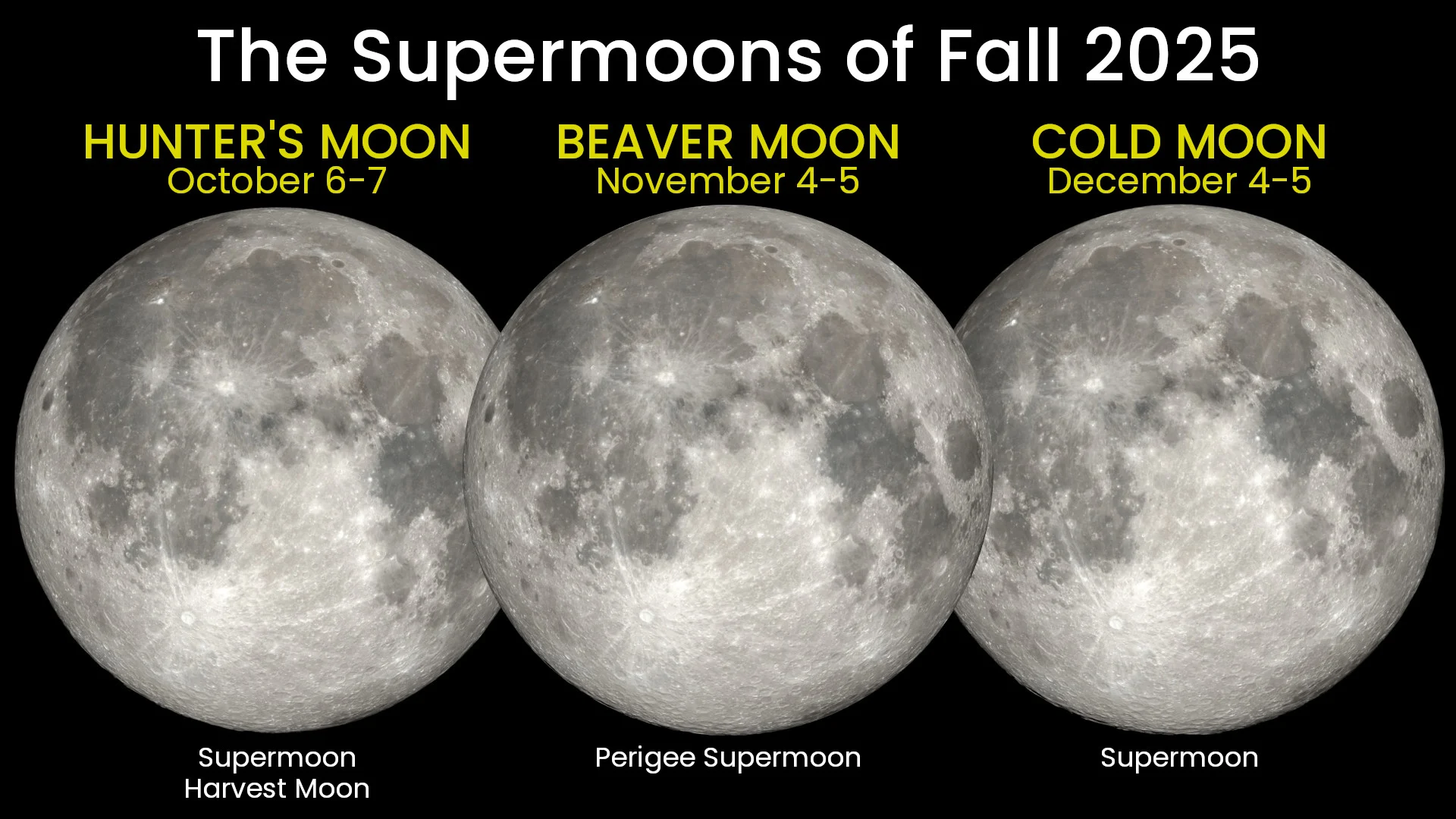
The three Supermoons of Fall 2025, with the Full Cold Moon being the second largest of the three. (NASA's Scientific Visualization Studio/Scott Sutherland)
While it isn't the closest and brightest Full Moon of this year (that was November's Beaver Moon), it is the closest and brightest Full Moon of December that we've seen in nearly two decades!
The last time there was a December Full Moon closer and brighter was back in 2008.
Highest Full Moon of the year
In addition to it being bigger and brighter in our sky, the Full Cold Supermoon will also climb higher than any other Full Moon of the year.
This is always the case for December Full Moons. It's simply due to the tilt of our planet.
As we approach the winter solstice, the northern hemisphere is tilting farther away from the Sun, thus putting the Sun near or at its lowest point in our sky during December's Full Moon. With the Moon more or less exactly opposite the Sun, that puts the Full Moon at its highest point in the sky.
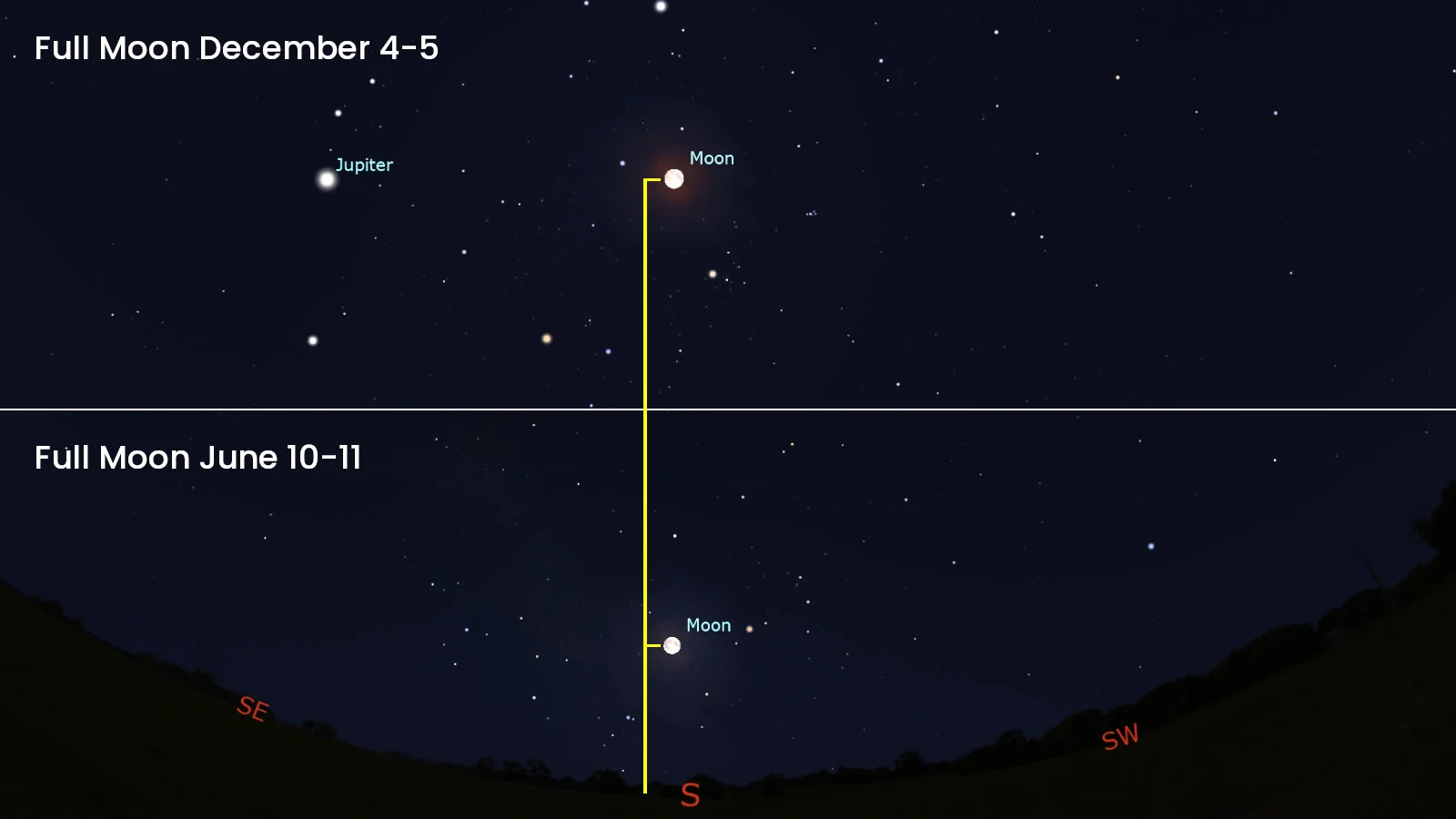
(Stellarium/Scott Sutherland)
In the illustration above, two simulations of the night sky have been overlaid, one from the night of June 10-11, 2025 (bottom), and the other from December 4-5, 2025 (top), when both Full Moons were highest in the night sky. The horizon is in exactly the same place for both. The yellow line shows just how much higher the December Full Moon is by comparison.
(Thumbnail image courtesy Silvia Porras, who snapped this picture of the 2022 Cold Moon from Toronto, Ontario)