
Look up! June's Full Strawberry Moon rises Monday night

This first Full Moon of Summer will be the last 'micromoon' for 2026.
Eyes to the sky, Monday night, to spy the Full Strawberry Moon.
Around 8 p.m. EDT, on Monday, June 29, 2026, the Moon will be on the exact opposite side of the Earth from the Sun. At that time, the Moon's Earth-facing side will be completely illuminated by sunlight, giving us our seventh Full Moon for the year. Normally, the Full Moon of June is the sixth of the year. However, the tally is off by one, now, due to the rare Blue Moon on the night of May 30.
If your sky is overcast on Monday night, don't worry, you don't have to miss out. The Moon will actually look full (at least 98 per cent illuminated) starting Sunday evening, then through all of Monday night, and all of Tuesday night, as well!
DON'T MISS: Two eclipses and a meteor shower are the 'don't miss' sky events for Summer 2026
What is a Strawberry Moon?
Each of the year's 12 typical Full Moons goes by a specific name. These names, first popularized by the Farmer's Almanac roughly a century ago, were gathered from European and Colonial folklore, and taken from the lunar calendar used by the Indigenous peopls of the northeastern United States and the Great Lakes area.
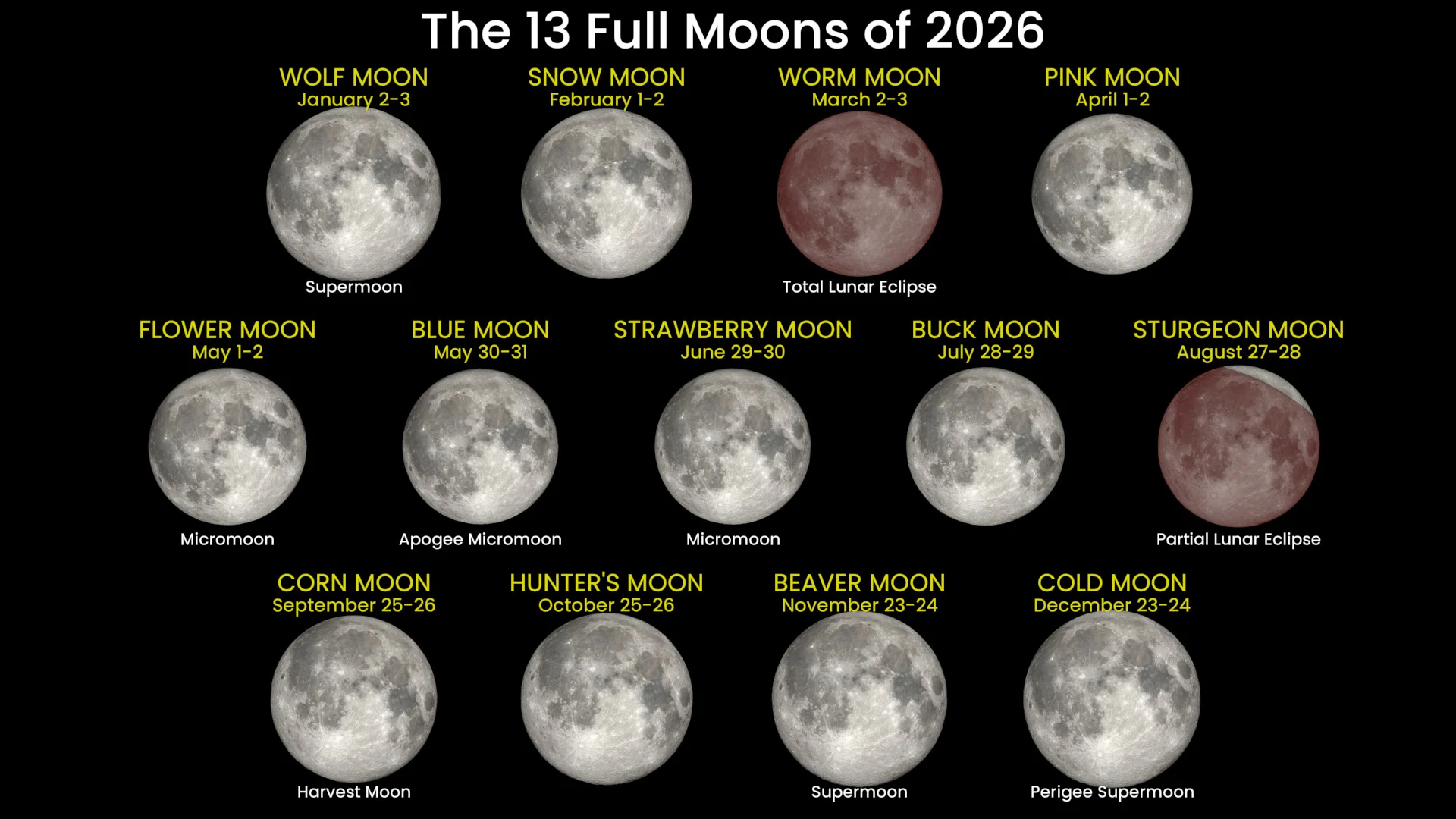
The 13 Full Moons of 2026, which include the typical 12, plus the 'extra' Blue Moon in May. (NASA's Scientific Visualization Studio/Scott Sutherland)
For June, the name Strawberry Moon was borrowed from the lunar calendar used by the Anishinaabe and other Indigenous peoples, who referred to this 'moon' being the best time of the year to pick these ripened berries.
Although the Colonial and European names used by the almanac referred specifically to the Full Moon, the Indigenous names on the list have a broader use.
Like other advanced cultures around the world, the Indigenous peoples of North America track their year using a sophisticated lunar calendar.
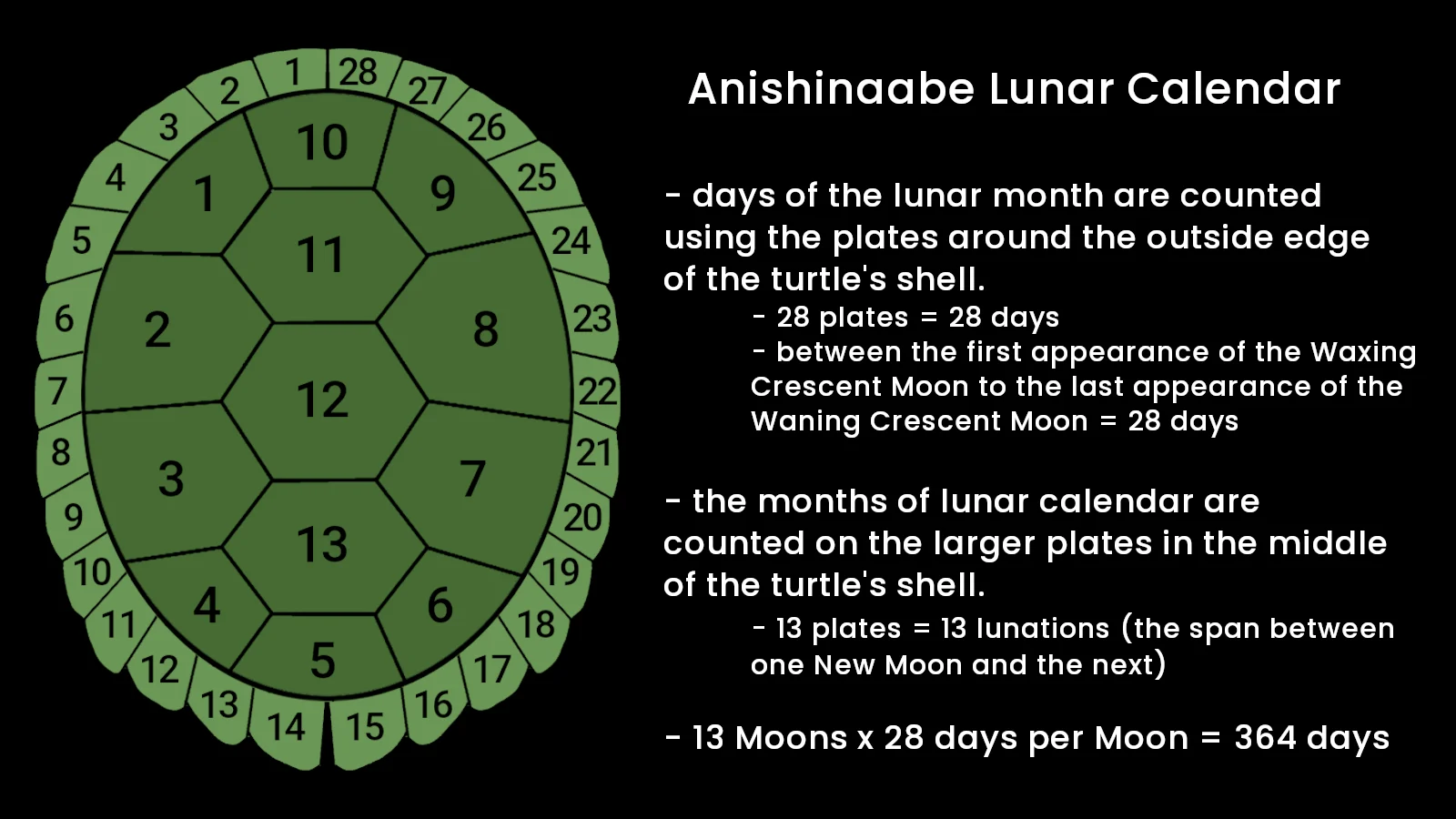
For example, the calendar used by the Anishinaabe people is based on the pattern of plates on the shell of a turtle. The 28 small plates around the shell's edge corresponded to the 28 days of each lunar cycle, and the 13 large plates on the turtle's back represent the 13 lunar months of the year.
READ MORE: Indigenous constellations - part-science, part-art, all-important
Each of the 13 moons was given a name, similar to the months of the Gregorian calendar. However, whereas the names of the months came from gods, rulers, and their numerical order in the calendar, the names of the moons were taken from the aspect of nature that affected the peoples' lives at that time of year.
What is a micromoon?
As the Moon travels around Earth, it doesn't trace out a perfect circle. Instead, it follows an elliptical path. That means that for roughly half of each orbit, it is closer to Earth, while it spends the rest of the orbit farther away. It also means that there is a closest point to Earth in its orbit, known as perigee, and a farthest point, known as apogee.
When the Moon is Full (or New) when it is close to or at perigee, it appears bigger and brighter to us, and is known as a supermoon. When it is Full (or New) around the time when the Moon is at apogee, and thus is at its farthest and appears smallest, we call it a micromoon.
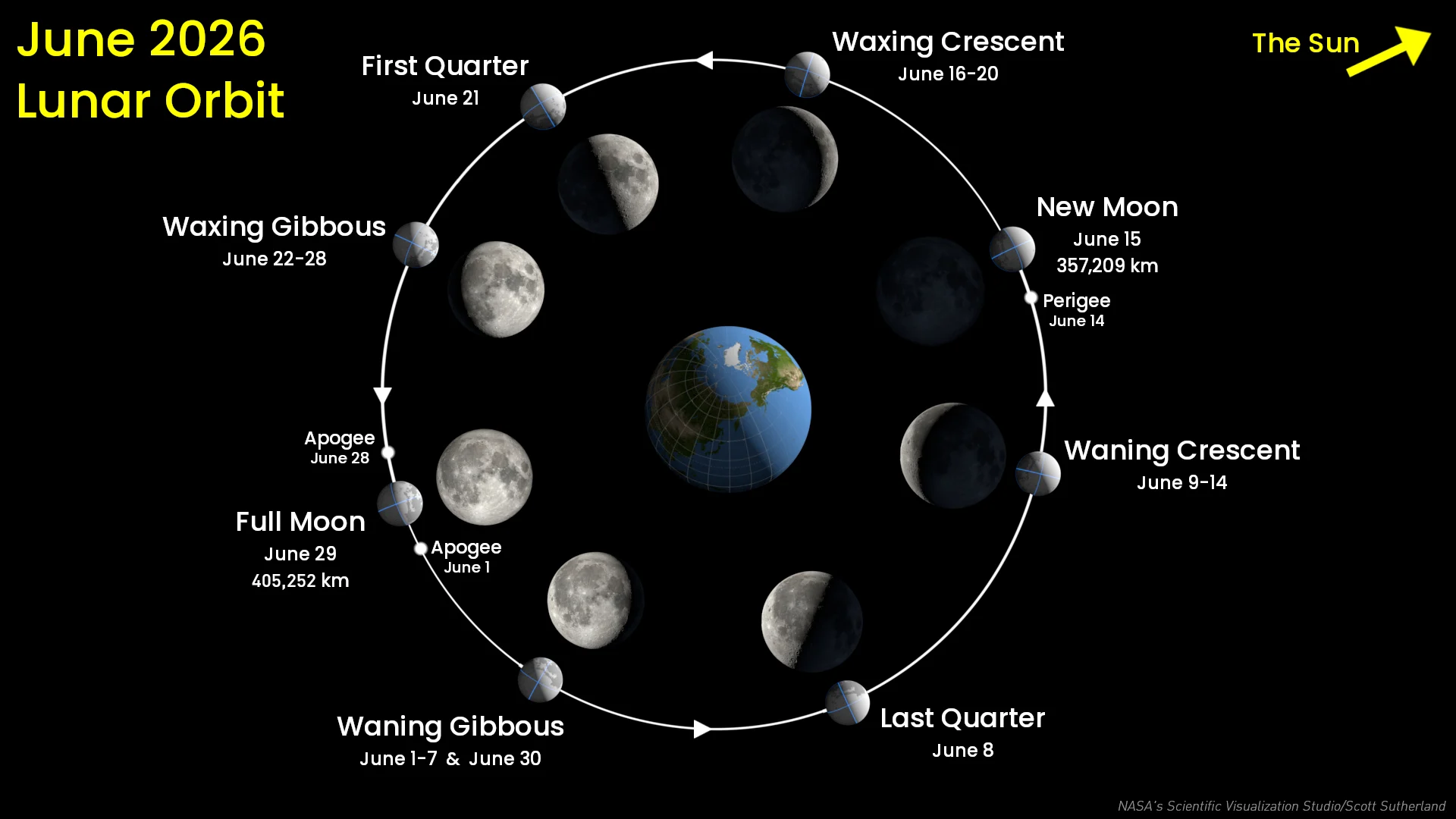
The orbit of the Moon for June 2026. (NASA's Scientific Visualization Studio/Scott Sutherland)
READ MORE: Why does the Moon look so big? What is the mysterious Moon Illusion?
As shown in the diagram above, while lunar perigee occurs on June 14, just before the New Moon, there are actually two apogee points during the month. One was on the 1st, just after the Blue Moon, which made that particular Full Moon the farthest and smallest of the year (the Apogee Micromoon). There is another on the 28th, just before the Full Strawberry Moon.
It's actually challenging to tell the apparent size difference of the Moon during a micromoon.
This is primarily due to the fact that there's no way to directly compare it to an average-sized Full Moon at the same time. Also, it's difficult to tell there's any difference at all when, in the evening, as the Full Moon is rising, our brains succumb to a powerful optical illusion that makes the Moon look bigger than it actually is! This is known as the Moon Illusion.
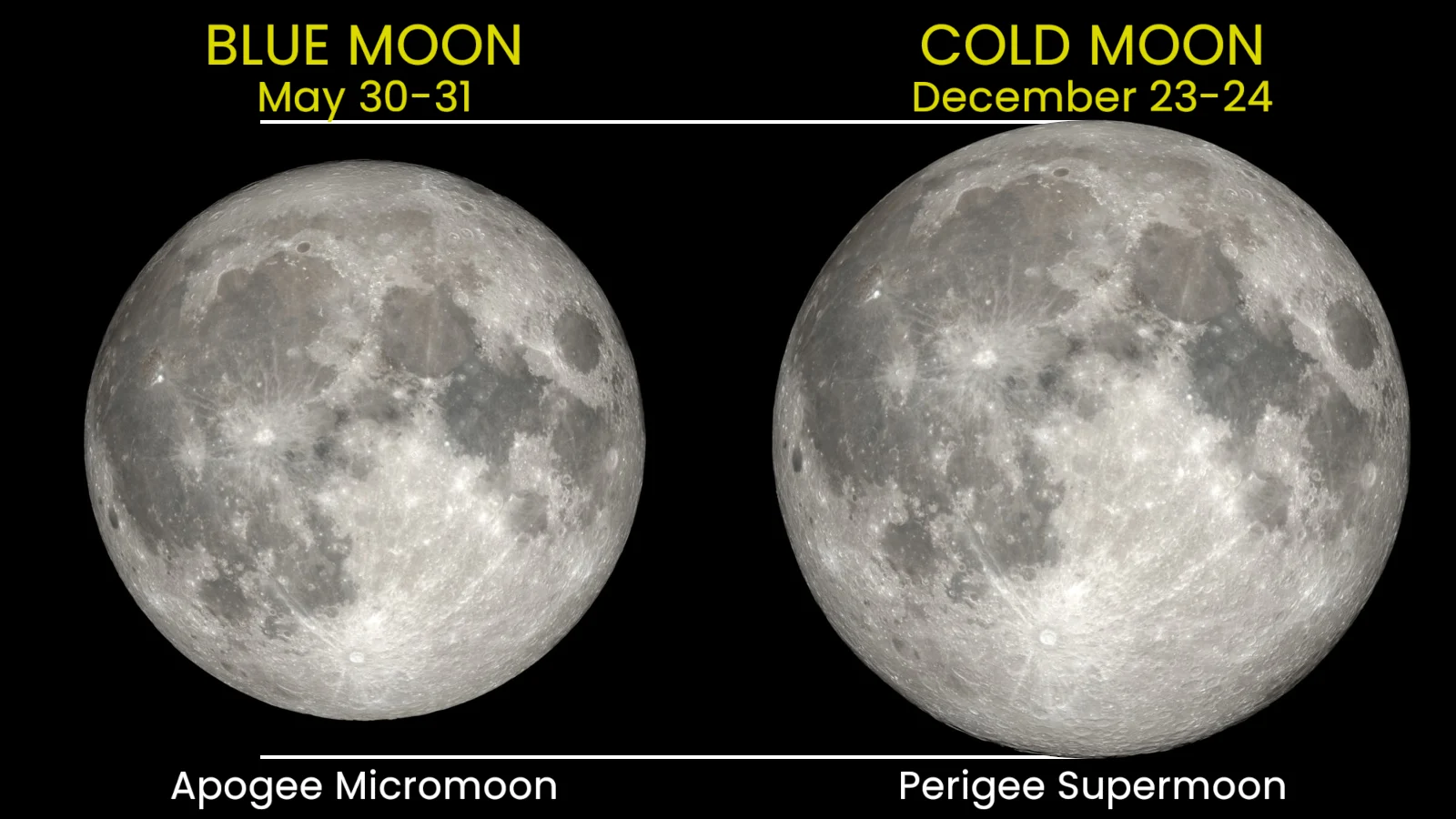
A size comparison between May's Blue Apogee Micromoon and the upcoming December Cold Perigee Supermoon. (NASA's SVS/Scott Sutherland)
Instead, the Moon's change in relative brightness is easier to notice. In this case, the June 29 micromoon is around nine-tenths as bright as a typical Full Moon, but only around three-quarters as bright as the December Perigee Supermoon is expected to be.
This is the last of three micromoons for 2026. From here, each Full Moon will be closer, and thus will appear bigger and brighter in the sky, until we reach the largest Full Moon of the year, the Full Cold Moon on the night of December 23.
(Thumbnail image courtesy Eva Hurlbut, who took this photo of the Moon from St. Thomas, Ontario, on June 2, 2023.)