Alien comet 3I/ATLAS may be the oldest thing ever seen in our solar system

Based on evidence collected by the James Webb Space Telescope, researchers have found that interstellar comet 3I/ATLAS could be up to 12 billion years old!
Alien comet 3I/ATLAS wowed us as it passed through the inner solar system in late 2025, and now JWST has revealed something truly amazing. Based on its unique composition, this interstellar visitor may be over twice as old as our Sun, making it the oldest object we have ever encountered.
Comet 3I/ATLAS is truly one of the most bizarre objects we've ever discovered. First spotted on July 1, 2025, its trajectory and speed immediately identified it as an interstellar object, having arrived here from somewhere deeper in the galaxy's disk of stars.
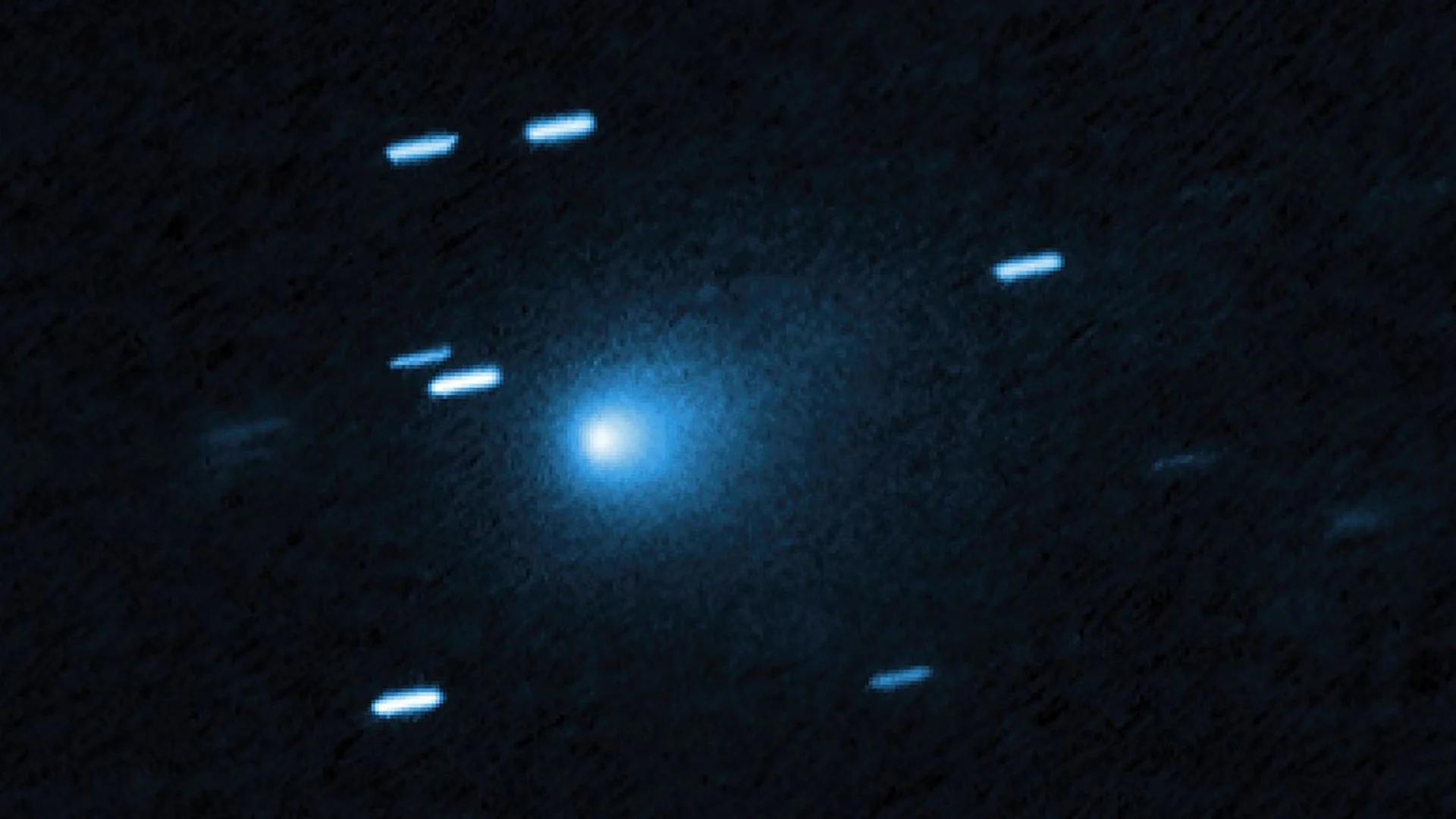
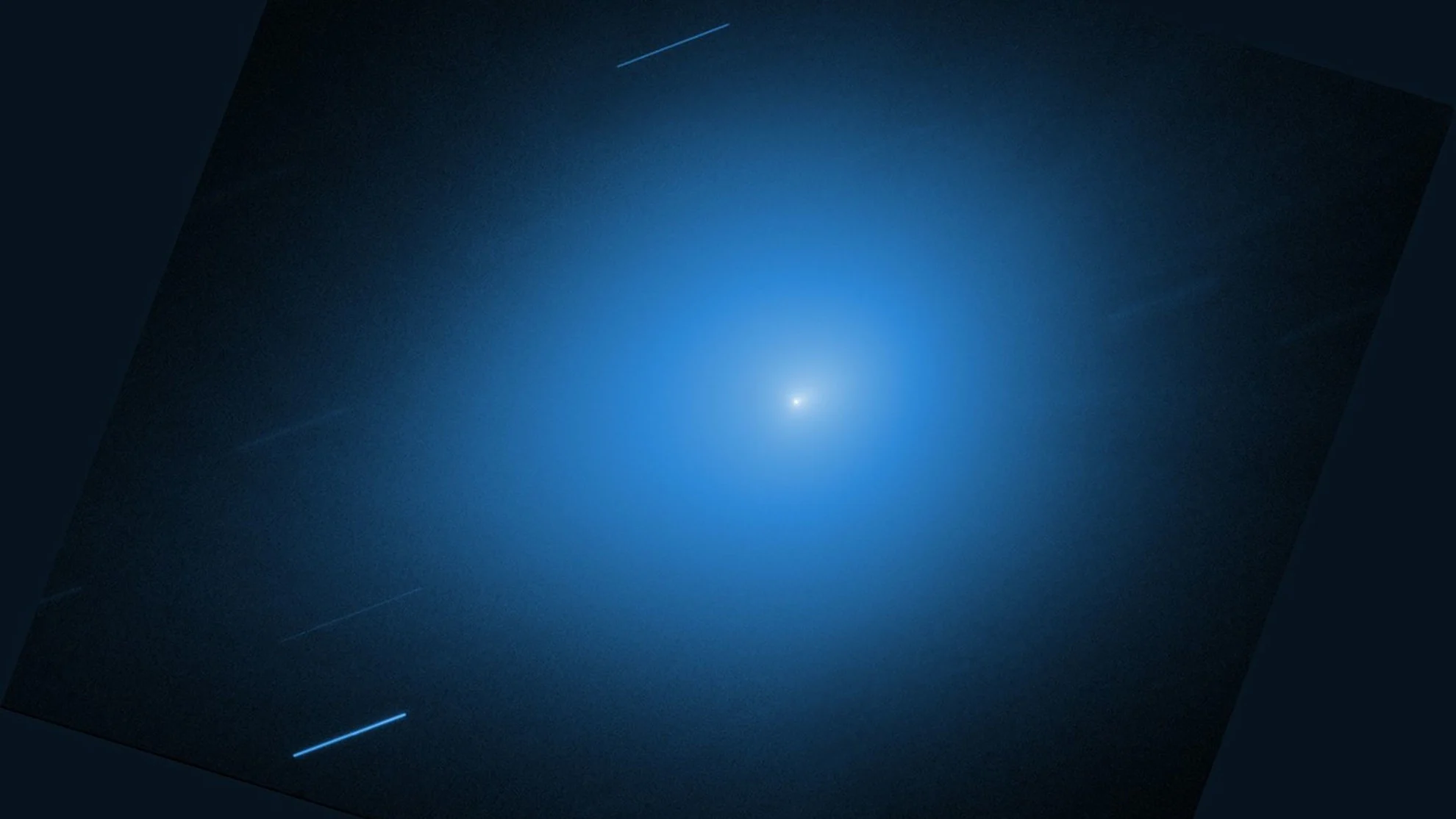
3I/ATLAS, as imaged by Hubble shortly after its discovery. (Image: NASA, ESA, David Jewitt (UCLA); Image Processing: Joseph DePasquale (STScI))
DON'T MISS: Two eclipses and a meteor shower are the 'don't miss' sky events for Summer 2026
Analysis of the sunlight being reflected off the ice, dust, and gases from the comet's coma showed that it contained far more carbon dioxide than water, compared to 'home grown' comets. While solar system comets generally are seen releasing up to 12 times as much water as carbon dioxide as they pass through the warmer inner solar system, 3I/ATLAS was found to be emitting around 8 times more CO2 than water.
If that wasn't odd enough, new observations by the James Webb Space Telescope revealed something bizarre — 3I/ATLAS contains far more deuterium, and far less heavy carbon, than any solar system comet or object we've seen.
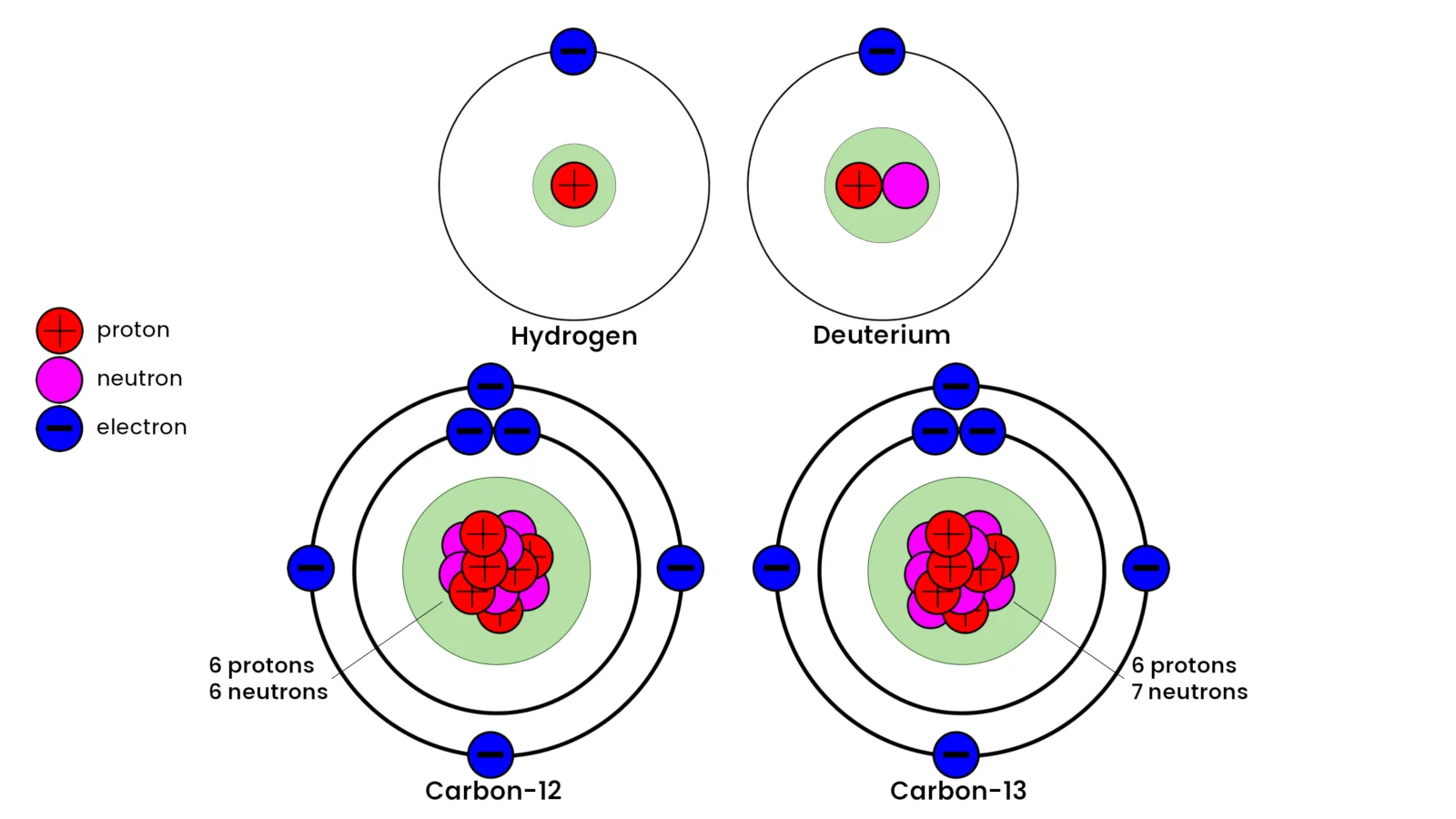
Deuterium is heavy hydrogen. While a hydrogen atom is one electron orbiting around a nucleus of one proton, the nucleus of a deuterium atom has both a proton and a neutron. Similarly, while an atom of carbon-12 has six protons and six neutrons in its nucleus, carbon-13 has a nucleus containing six protons and seven neutrons.
READ MORE: Images of alien comet 3I/ATLAS reveal stunning tail, views from space
According to NASA, the water ice in 3I/ATLAS contains roughly 30 times more deuterium than any comet that formed in our own solar system.
"This implies that 3I/ATLAS may have originated in a very cold system much earlier in the history of our galaxy," the space agency wrote in a press release on Monday. "During its formation, the material that became incorporated into 3I/ATLAS was likely exposed to plenty of radiation, but not any long-term warmth that would have reprocessed its 'heavy water' ice, with deuterium, into the type of H2O ice we are familiar with on Earth."
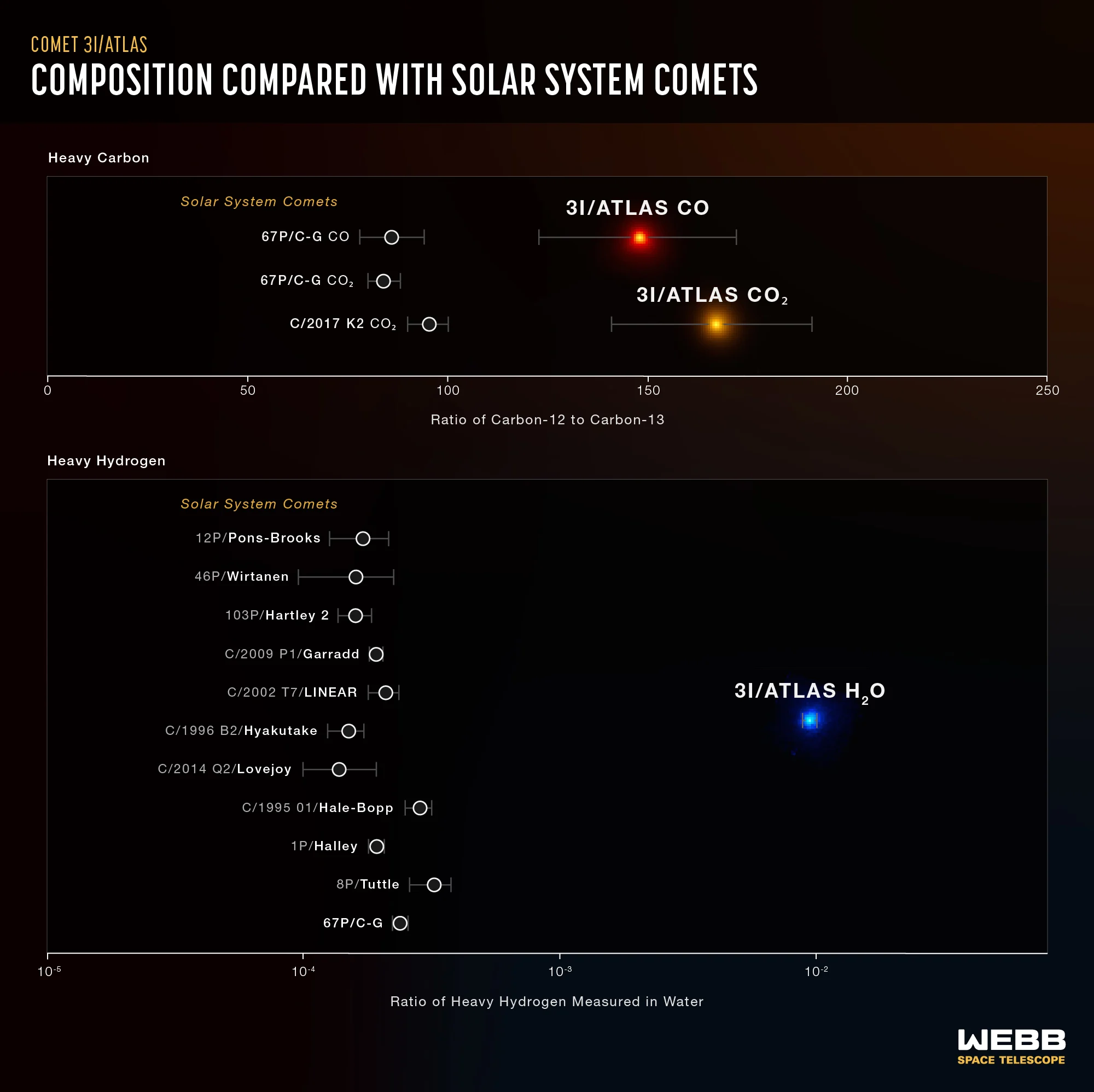
This graphic shows the significant difference in composition between 3I/ATLAS and comets originating in our solar system. (Illustration: NASA, ESA, CSA, Martin Cordiner (CUA, NASA-GSFC), Leah Hustak (STScI))
Click here for a zoomable version of the above graphic.
As for the carbon detected, there were only trace amounts of carbon-13 compared to carbon-12. This is unusual because the amount of carbon-13 in the galaxy has been increasing over time.
"Almost all the carbon in the Milky Way is produced by stars more massive than the Sun. When those stars die, the carbon they produce through nuclear fusion is returned to the cosmos, to be incorporated in the next generation of stars and planets," Jonti Horner, an astrophysicist from the University of Southern Queensland, who was not involved in the research, wrote in an article for The Conversation.
"But there's a twist," Horner explained. "As stars create carbon in their interiors, they also act to convert carbon-12 (the most common isotope) into carbon-13, through a process called 'hot bottom burning'. As time goes by, the fraction of all carbon in the galaxy that is carbon-13 is increasing."
Using this, we can determine how old the comet is simply by looking at how much carbon-13 there is, compared to carbon-12, in any carbon dioxide and carbon monoxide gases being released by it. The lower the ratio of carbon-13 to carbon-12 is, the older it is, as it formed at a time when there was less carbon-13 available in the galaxy.
"To contain such a low abundance of carbon-13, 3I/ATLAS must have formed at a time when there was less carbon-13 compared to carbon-12 — roughly 12 billion years ago, during the earliest stages of our galaxy's history," Horner said.
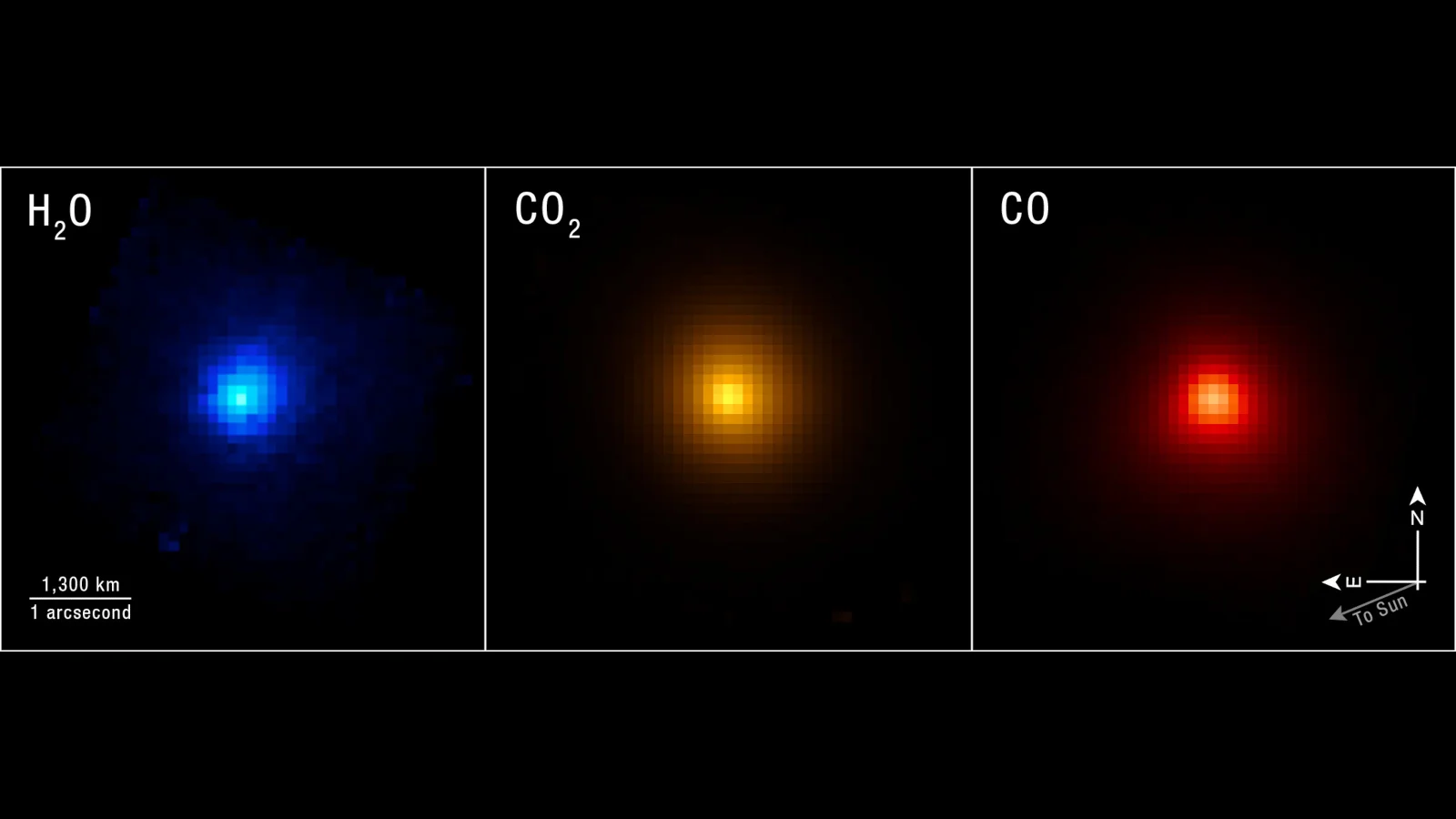
These three views of 3I/ATLAS using Webb's NIRSpec (Near-Infrared Spectrograph) instrument map specific chemical components of the comet as it moved away from the Sun. (Image: NASA, ESA, CSA, STScI, Martin Cordiner (CUA, NASA-GSFC); Image Processing: Alyssa Pagan (STScI))
MORE FROM SPACE: Mark your calendar — The Moon 'takes a bite' out of the Sun this summer
"For us as scientists, finding these rare isotopes is fascinating, but the bigger picture here is looking at the possibilities of prebiotic chemistry elsewhere in the galaxy," Stefanie Milam of NASA Goddard, a co-author of this study, told NASA. "So far, we know of only one place in the vast cosmos where chemical ingredients led to life — our solar system, our Earth. Analysis of these interstellar objects is a major step towards learning how common, or uncommon, the conditions for the evolution of life are in the universe."
"This was a unique opportunity to study an ancient object from the distant galaxy, probably pre-dating our Sun and solar system," lead author of the study, Martin Cordiner of NASA's Goddard Space Flight Center, said in the press release. "On the one hand, we get direct insight into that distant time and place, and on the other, we learn something about how unusual our own solar system may be."