
Look up! The Full Beaver Supermoon shines Monday night

Check your forecast for clear skies, to see one of the biggest and brightest Full Moons of the year!
If you have reasonably clear skies on Monday and Tuesday nights, take some time to look up and appreciate November's Full Beaver Supermoon.
This Full Moon — the 12th, so far, for 2026 — is timed to occur at exactly 9:54 a.m. EST on Tuesday, November 24.
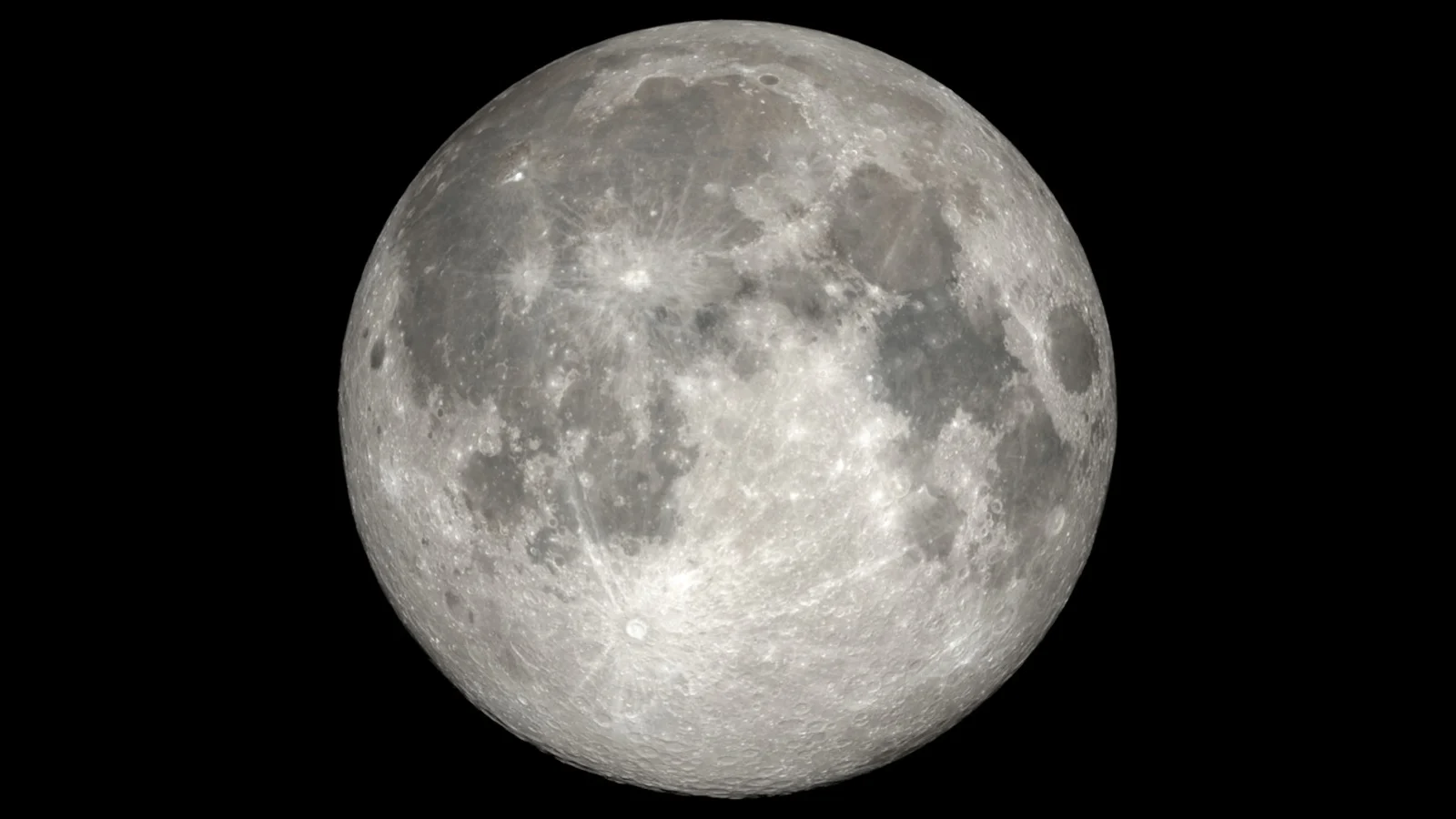
November 2026's Full Moon. (NASA's Scientific Visualization Studio)
However, the Moon will actually appear full (over 98 per cent illuminated) from just before dawn Monday morning, throughout the night on Monday into Tuesday, and then again Tuesday night to Wednesday morning.
What is the Beaver Moon?
For roughly a century, the various farmer's almanacs in publication have included a list of names for the Full Moons that we see during the year.
Some of these names came from Colonial American or European folklore. Most were taken from the lunar calendars used by the Indigenous peoples who live in eastern Canada, the northeastern United States, and the Great Lakes region.
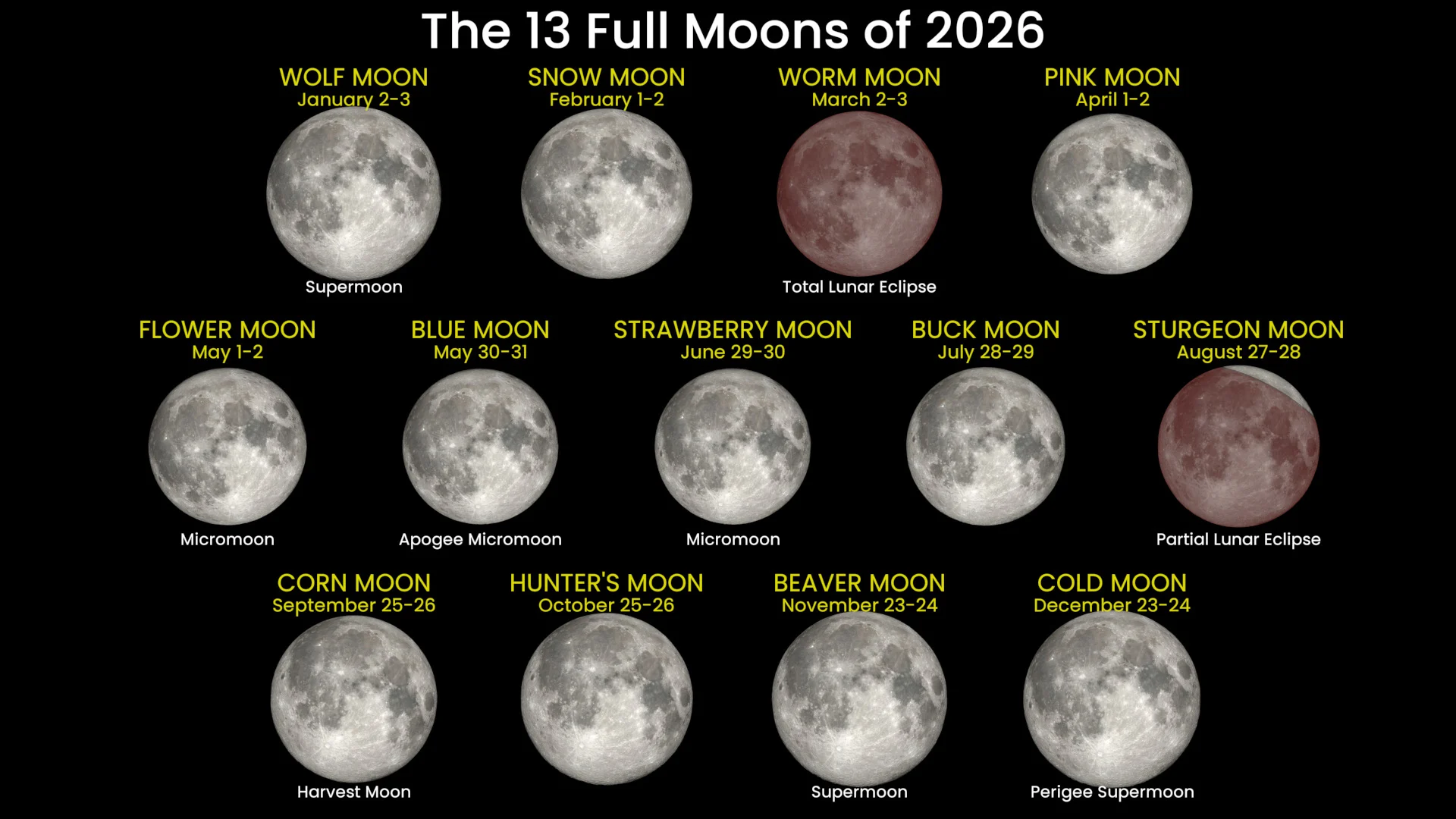
All 13 Full Moons of 2026 are presented in this infographic, along with their popular names, which are supermoons or micromoons (including the closest ('perigee') and farthest ('apogee')), and whether they are remarkable in some other way, such as the Harvest Moon, lunar eclipses, etc. (Scott Sutherland/NASA's Scientific Visualization Studio/Fred Espenak)
READ MORE: Watch Mars and Jupiter 'slow dance' in the sky throughout November
The names borrowed from American and European folklore, such as the Harvest Moon and Hunter's Moon, apply specifically to the Full Moon. However, those taken from Indigenous sources do not. Instead, each represents a full 29-day 'lunation' of their lunar calendar, during which the Moon passes through all of the phases of a lunar cycle. Thus, each name is equivalent to the names of the months of the Gregorian calendar (January, February, etc).
Indigenous Moon names reflect the cycle of nature that occurs throughout the year, and the impacts of that cycle on the community. They focus on things such as the change of the seasons, the behaviour of animals, and when various crops are planted or harvested.
The name most often used for November's Full Moon is the Beaver Moon.
"This is the time of year when beavers begin to take shelter in their lodges, having laid up sufficient food stores for the long winter ahead. During the fur trade in North America, it was also the season to trap beavers for their thick, winter-ready pelts," the Old Farmer's Almanac says.
Other Indigenous names for this Full Moon include the Frost Moon, Freezing Moon, Trading Moon, Whitefish Moon, and Digging/Scratching Moon.
Other Names
In other cultures, this Full Moon is a day of celebration or religious contemplation.
To Hindus, Jains, and Sikhs, it is the Kartik Purnima, celebrating the triumph of good over evil, the purging of sin, and the birth of the first guru of the Sikhs.
It also marks Il Full Moon Poya, a public holiday in Sri Lanka with cultural significance to those who practice Buddhism.

November 2021's Full Moon, captured from Hamilton Ontario. (Harvey Daneluk/UGC)
DON'T MISS: Why does the Moon look so big? What is the mysterious Moon Illusion?
To mark the traditional end of the monsoon or rainy season, this begins the three-day Cambodian Water Festival (Bon Om Touk), which features dragon boat races, nighttime parades, and firework displays.
Loy Krathong is celebrated in and around Thailand, which is a festival where decorated baskets (krathong) are floated on the river to thank Phra Mae Khongkha, the goddess of the waters, rivers, streams, and canals.
First of four Supermoons
This is the second supermoon of 2026, after the January Wolf Moon, with a total of three supermoons for the year. It is also the beginning of a set of four supermoons, which continues into early 2027.
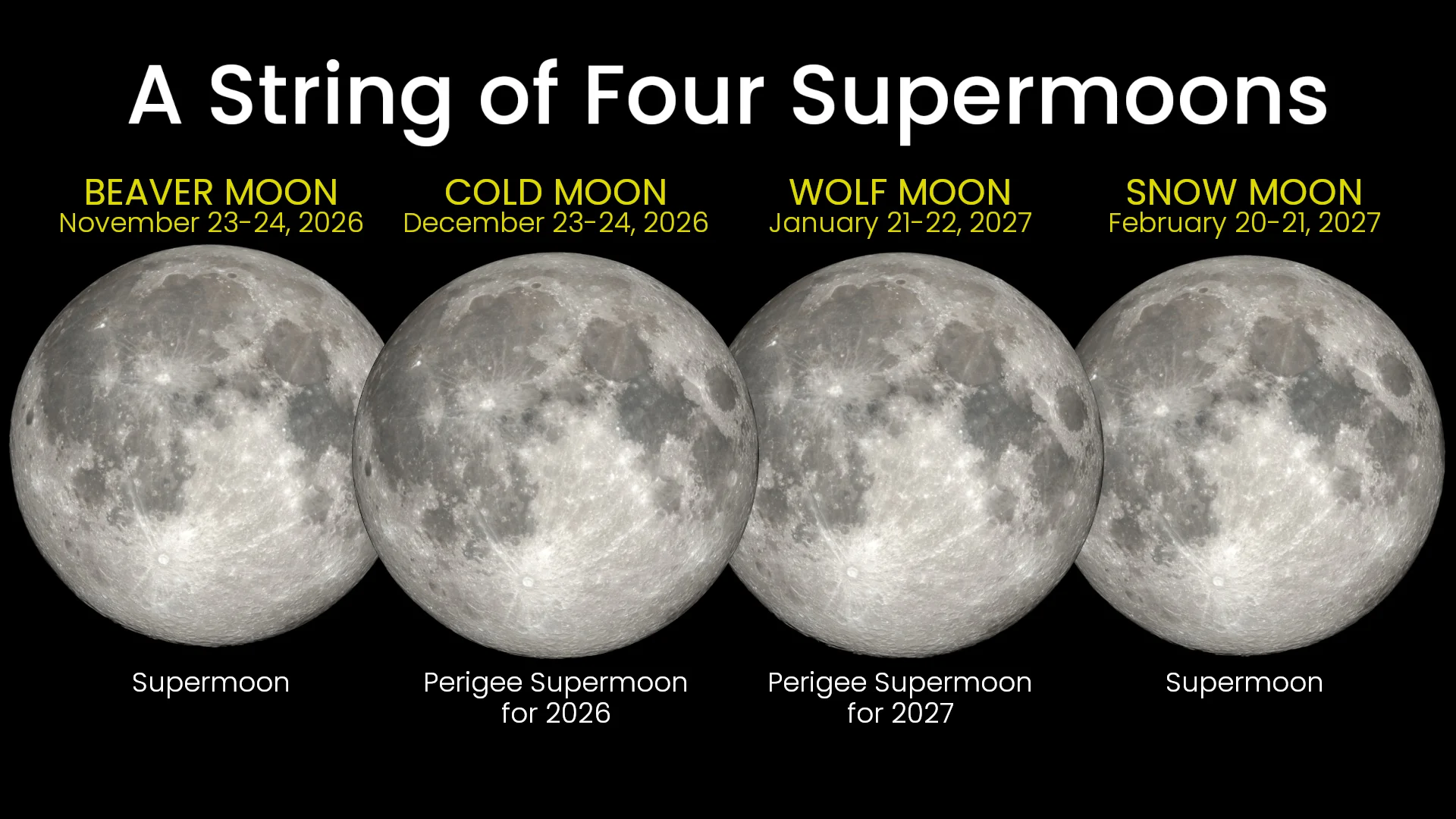
The four supermoons of 2026-2027. (NASA's Scientific Visualization Studio/Scott Sutherland)
The term 'supermoon' was invented by astrologer Richard Nolle in 1979, as an easy way to describe a Full Moon that looks bigger and brighter than normal. He specifically defined it as "a Full or New Moon which occurs with the Moon at or near (within 90 per cent of) its closest approach to Earth in a given orbit (perigee)."
To astronomers, this alignment is known as perigee syzygy, with 'perigee' meaning closest to Earth, and syzygy being any straight-line alignment of celestial objects (such as the Sun, Earth, and Moon during a Full Moon).
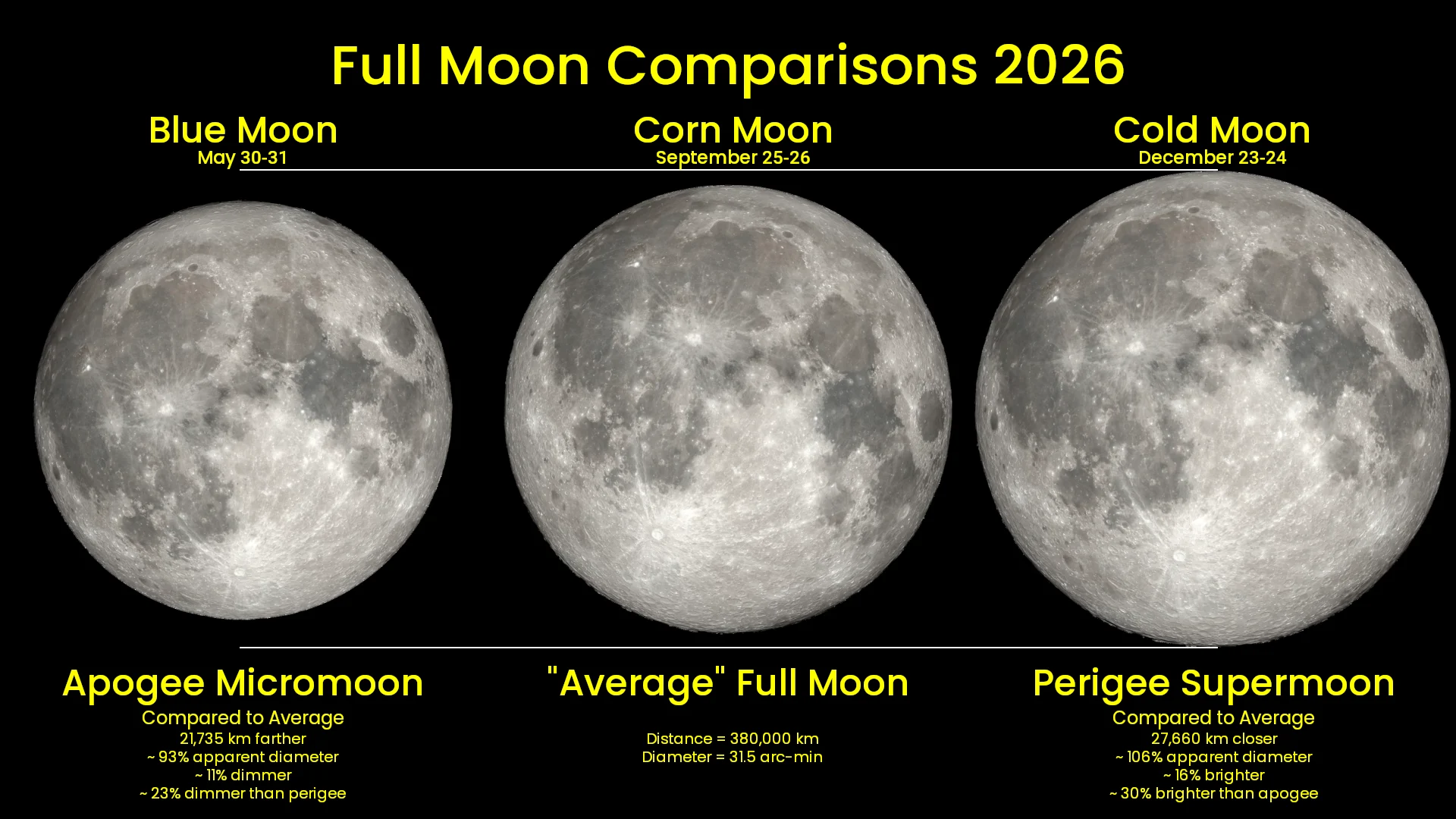
A comparison of the smallest and dimmest, most average, and largest and brightest Full Moons from 2026. (NASA's Scientific Visualization Studio/Scott Sutherland)
READ MORE: Why is the supermoon so compelling to us?
It's difficult to tell the size difference of Full Moons, simply because we can't have two of them in the sky at the same time for a direct comparison. However, it is much easier to notice the difference in brightness!
According to retired NASA scientist Fred Espenak, this Full Moon is more than 13 per cent brighter than the 'average' Full Moon we saw towards the end of September. It is also over 26 per cent brighter than the 'apogee micromoon' we saw at the end of May.
The next Full Moon — the December 23-24 Cold Moon — will be the largest and brightest Full Moon of this year.
It's not alone
The Full Moon will most definitely be the brightest object in the sky, Monday night. Glance around, though, and you may spot other things too — some of the brightest stars of the night sky, a star cluster, three planets, and possibly even a meteor or two.
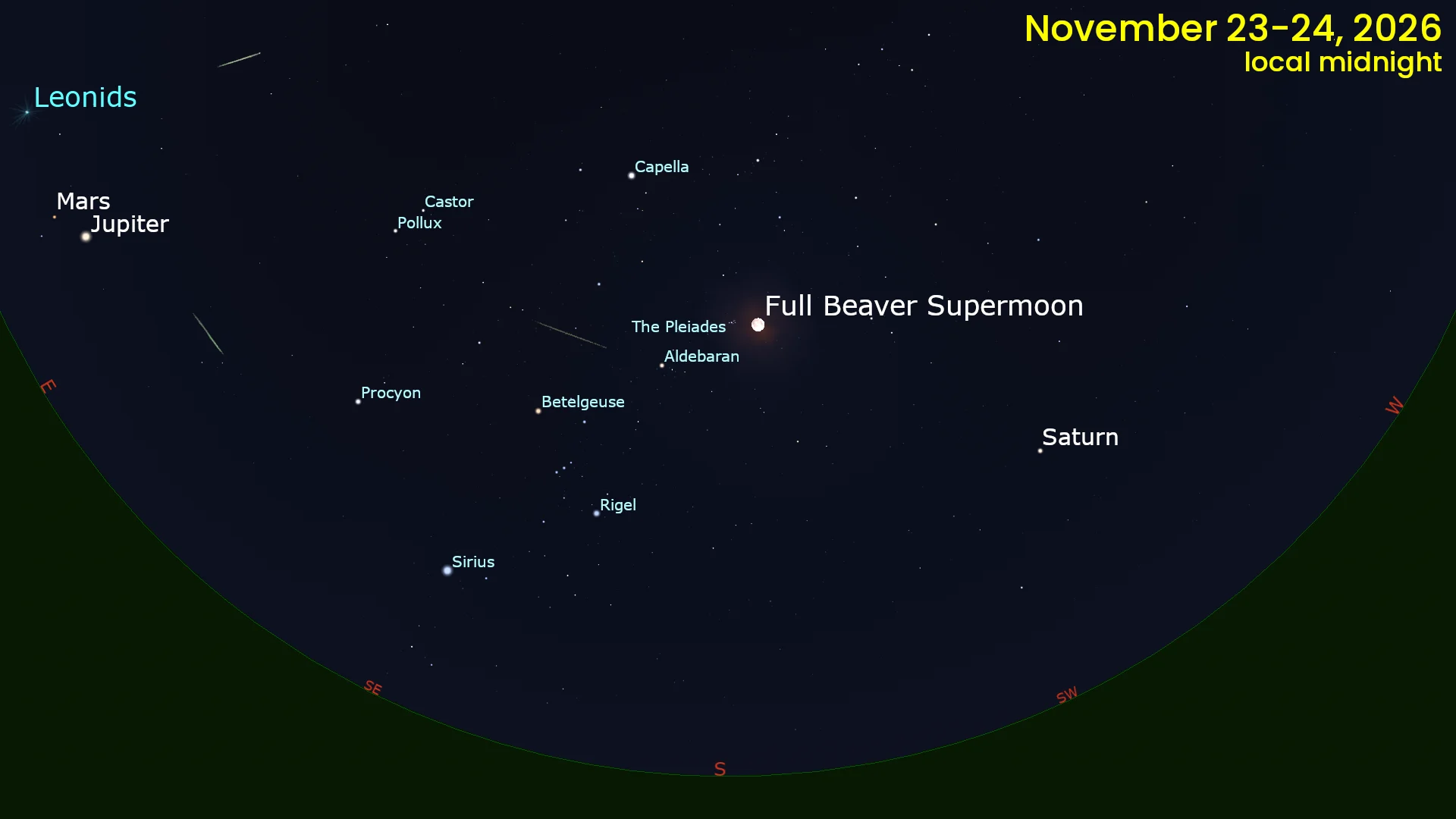
The Moon and everything else in the southern sky, around midnight on the night of Monday, November 23, 2026. (Stellarium/Scott Sutherland)
To the left/east of the Moon will be several bright stars — Betelgeuse and Rigel in the constellation Orion, Sirius, Procyon, Aldebaran, Capella, plus Castor and Pollux in the constellation Gemini. Additionally, the Pleiades star cluster (aka the Seven Sisters) will be following along just 'behind' the Moon from dusk until dawn.
At around midnight, off close to the eastern horizon, we can find the planets Mars and Jupiter, still close together only a week or so after their close conjunction.
Down and to the right/west of the Moon, the planet Saturn will be the brightest object in that section of the sky.
Also, although we're nearly a week past the peak of the Leonids, there's still a chance to spot a meteor or two flashing out of the eastern sky throughout the night.