Look up! The first of TWO May Full Moons will rise Friday night

Eyes to the sky to see the next Full Moon lighting up the night!
The Full Flower Moon rises on Friday, and with it shining in the sky on the very first night of May, this sets us up for a special, rare Blue Moon at the end of the month.
At 1:23 p.m. EDT, the Moon will be aligned on the exact opposite side of Earth from the Sun. This will fully illuminate the near-side of its surface, and mark the fifth Full Moon of 2026.
For those of us in Canada, the Moon won't be in our sky at that exact time. It will be daytime here, and the Moon will be on roughly the opposite side of the planet from us.
Fortunately, though, each time there's a Full Moon, it actually appears full to us (with the near-side over 98 per cent illuminated) for about a day before and after. So, technically, we can see this Full Moon overnight on April 30, then between moonrise and moonset on May 1, and again throughout most of the night on May 2-3.
Also, due to the Moon's elliptical orbit around Earth, this Full Moon occurs when the Moon is near apogee, and we call this a micromoon.
DON'T MISS: Meteor showers and a rare Apogee Blue Moon light up our night skies this spring
What is a Flower Moon?
The first Full Moon of the month of May goes by the popular name Flower Moon.
This comes from a list first published by the Farmer's Almanac in the early 20th century, which assigns one name to each of the 12 typical Full Moons of the year.
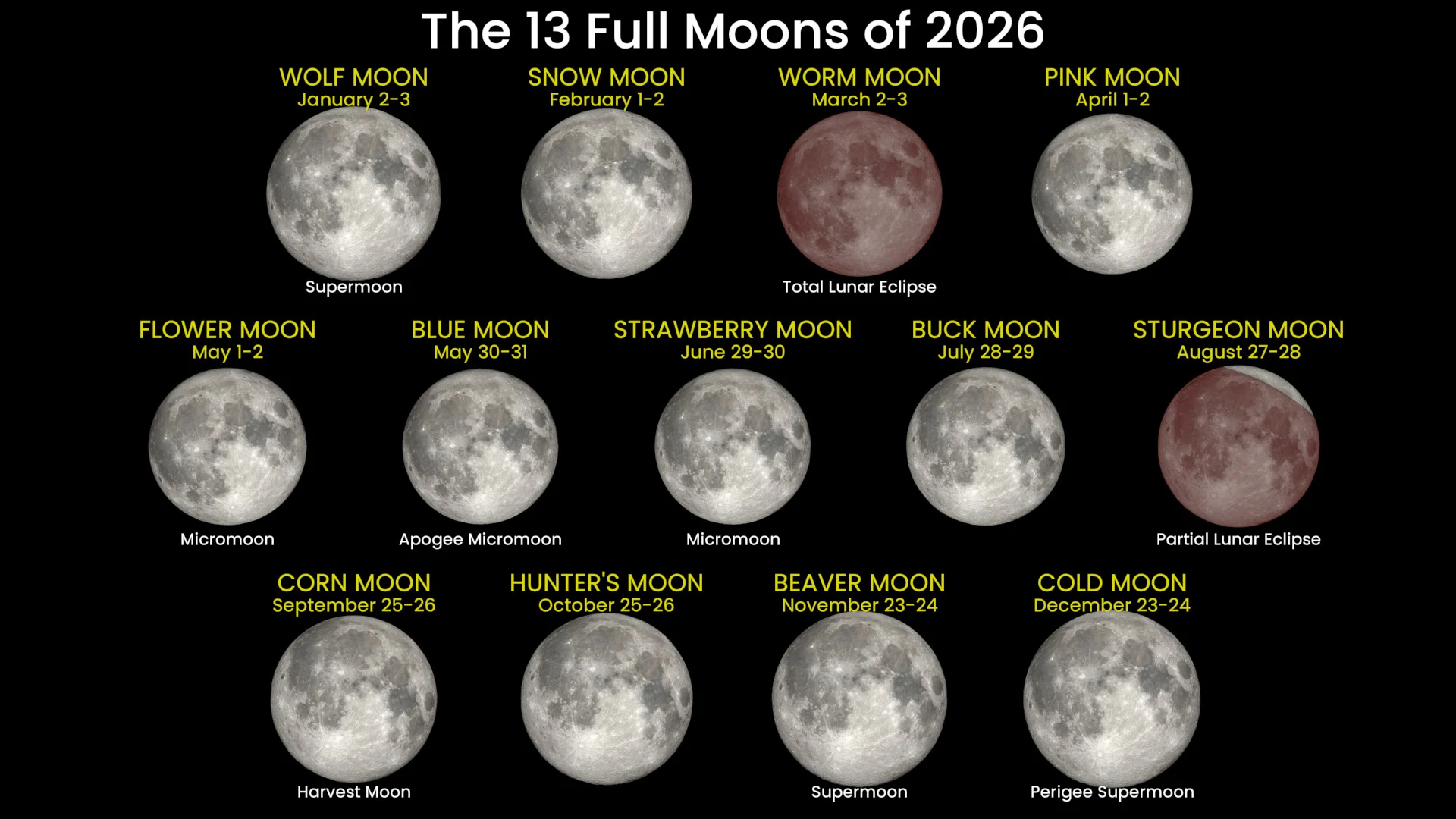
This graphic collects all the relevant data about each of the 13 Full Moon of 2026 — their popular names, supermoons and micromoons, perigee or apogee, and whether they are remarkable in some other way, such as a Blue Moon, Harvest Moon, or lunar eclipse. (NASA's Scientific Visualization Studio/Fred Espenak/Scott Sutherland)
Looking at the above graphic, it's not your imagination. 2026 actually has 13 Full Moons! More on that, below.
Full Moon names were mainly inspired by the lunar calendar used by the indigenous peoples living in eastern Canada and the northeastern United States. A few, such as Wolf Moon and Hunter's Moon, were also drawn from Colonial and European folklore, as well.
"Flower Moon" originates from the Anishinaabe, which includes the Algonquin, Odawa, Ojibwe, Mississaugas, Nipissing, and Potawatomi peoples. However, it is likely that whoever first wrote the list generalized the name, as different people use slightly different variations, such as Blooming Moon (Waabgonii-giizis), Budding Moon (Zaagibagaa-giizis), and Planting Moon (Gitige-giizis). Some referred to it as the Sucker Moon (Nimebine-giizis or Nmebine-giizis), as this was the time to fish for suckerfish and walleye.
It's important to note that the names taken from indigenous sources were not specifically used for Full Moons. Instead, like many advanced cultures around the world, the indigenous peoples of North America tracked their year using a lunar calendar. Each 'moon' of that calendar is treated the same way that the modern Gregorian calendar uses 'month'.
MORE FROM SPACE: The largest 3D map of the cosmos may alter the ultimate fate of the universe
And a micromoon?
As the Moon travels around Earth, it traces an elliptical orbit rather than a circle. This means that its distance from us is constantly changing, as it spends about half of each orbit closer than average, and half farther away than average. In fact, one Full Moon can occur thousands of kilometres closer to us than the next.
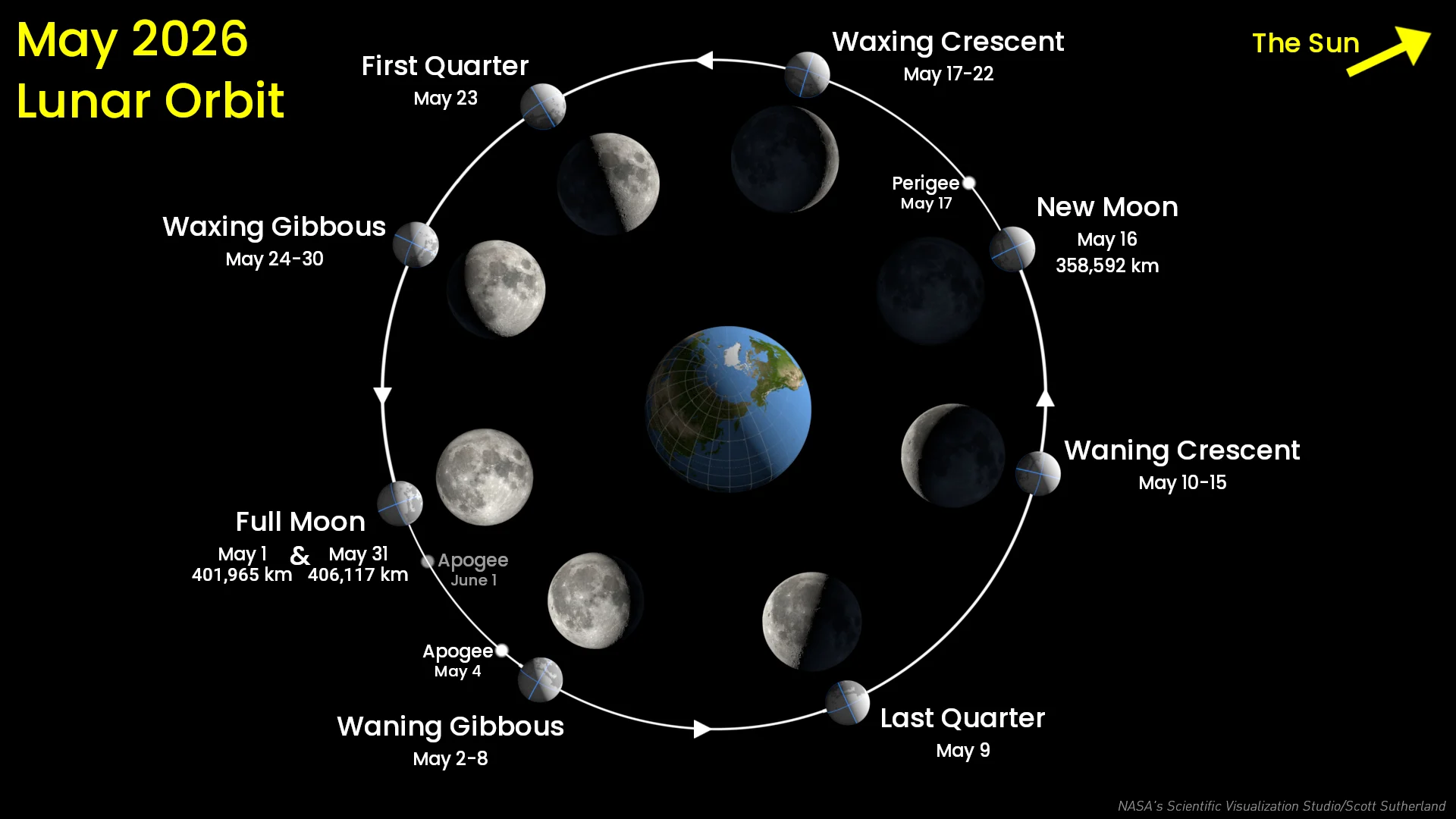
The orbit of the Moon for May 2026, with each corresponding lunar phase shown, along with perigee and apogee. Although the orbit may appear circular at this scale, it is, in fact, an ellipse, as the distances of the New and Full Moons demonstrates. (NASA's Scientific Visualization Studio/Scott Sutherland)
Throughout the year, the Moon follows a very specific pattern in how it orbits Earth. During one half of the year, roughly, Full Moons occur closer and closer to Earth while New Moons are farther and farther. At their closest, we call the Full Moons 'supermoons' and the closest is the Perigee Supermoon. Then, they switch, with Full Moons occurring farther and farther away, while New Moons are closer and closer. At their farthest, the Full Moons are 'micromoons', with the farthest being the Apogee Micromoon.
For example, since November of last year, each Full Moon has been farther and smaller. That reaches an extreme in late May, when we will see the Apogee Micromoon on the night of the 30th to 31st. After that, each Full Moon will be closer and larger up until December, when the Cold Moon on the 23rd to 24th will be this year's Perigee Supermoon.
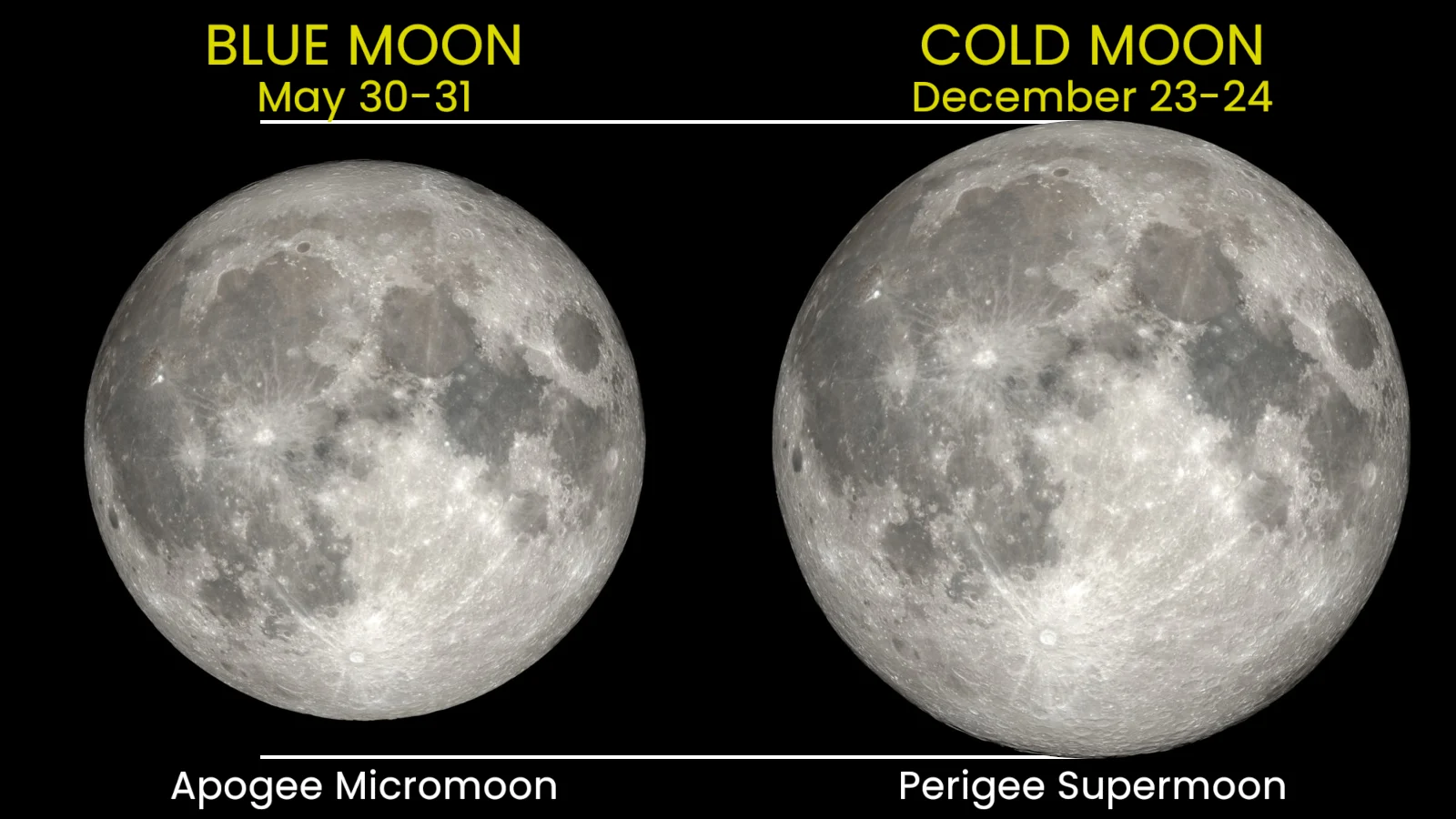
The size difference between the May 30-31 Blue Apogee Micromoon and the Dec. 23-24 Perigee Supermoon. (NASA's Scientific Visualization Studio/Scott Sutherland)
'Supermoon' and 'micromoon' aren't real scientific terms, by the way.
Supermoon was defined by astrologer Richard Nolle in 1979, as "a New or Full Moon which occurs with the Moon at or near (within 90 per cent of) its closest approach to Earth in a given orbit (perigee)".
A micromoon is simply the exact opposite of that — a New or Full Moon which occurs with the Moon at or near (within 90 per cent of) its farthest retreat from Earth in a given orbit (apogee).
READ MORE: Even the Micromoon looks huge? What is the mysterious Moon Illusion?
Up next: a rare Apogee Blue Moon
With the Full Flower Moon occurring on the night of the 1st, and the time between Full Moons being just over 29 days, this month we will see a second Full Moon!
This is known as a Blue Moon, or more specifically a 'calendar' Blue Moon — the second of two Full Moons occurring within the same calendar month.
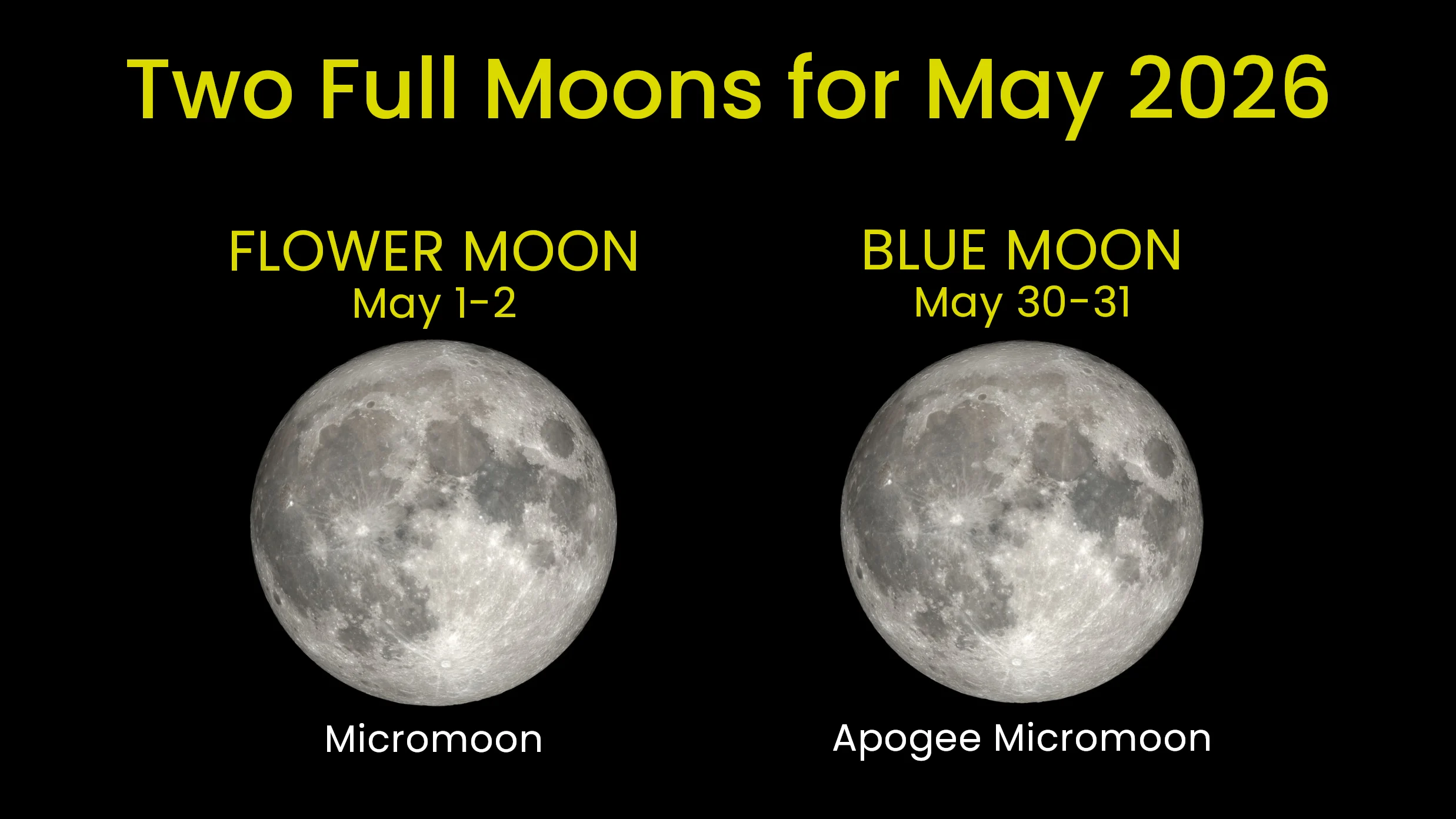
The Flower Moon and Blue Moon of May 2026. (NASA's Scientific Visualization Studio/Scott Sutherland)
We see calendar Blue Moons once every two to three years. The last one was on August 31, 2023, while the next one will be on December 31, 2028. These always occur at the end of a calendar month, and they can happen during any month of the year except February (which is too short, even during a leap year).
This particular calendar Blue Moon, on May 30-32, 2026, is a bit of a special one, though. It coicides with the smallest and farthest Full Moon of the year — the Apogee Micromoon.
The last Blue Apogee Micromoon we saw was nearly six years ago, on October 31, 2020. For Canada, we have at least a 27-year wait for the next one, which occurs on the night of June 30 to July 1, 2053! Due to the exact timing of that Full Moon, though, at 2:03 UTC on July 1 (10:03 p.m. EDT, June 30), for anyone living in Europe, Africa, Asia, or Australia, the Blue Moon will be delayed until the end of July that year, and their next Blue Apogee Micromoon will be on July 31, 2080!
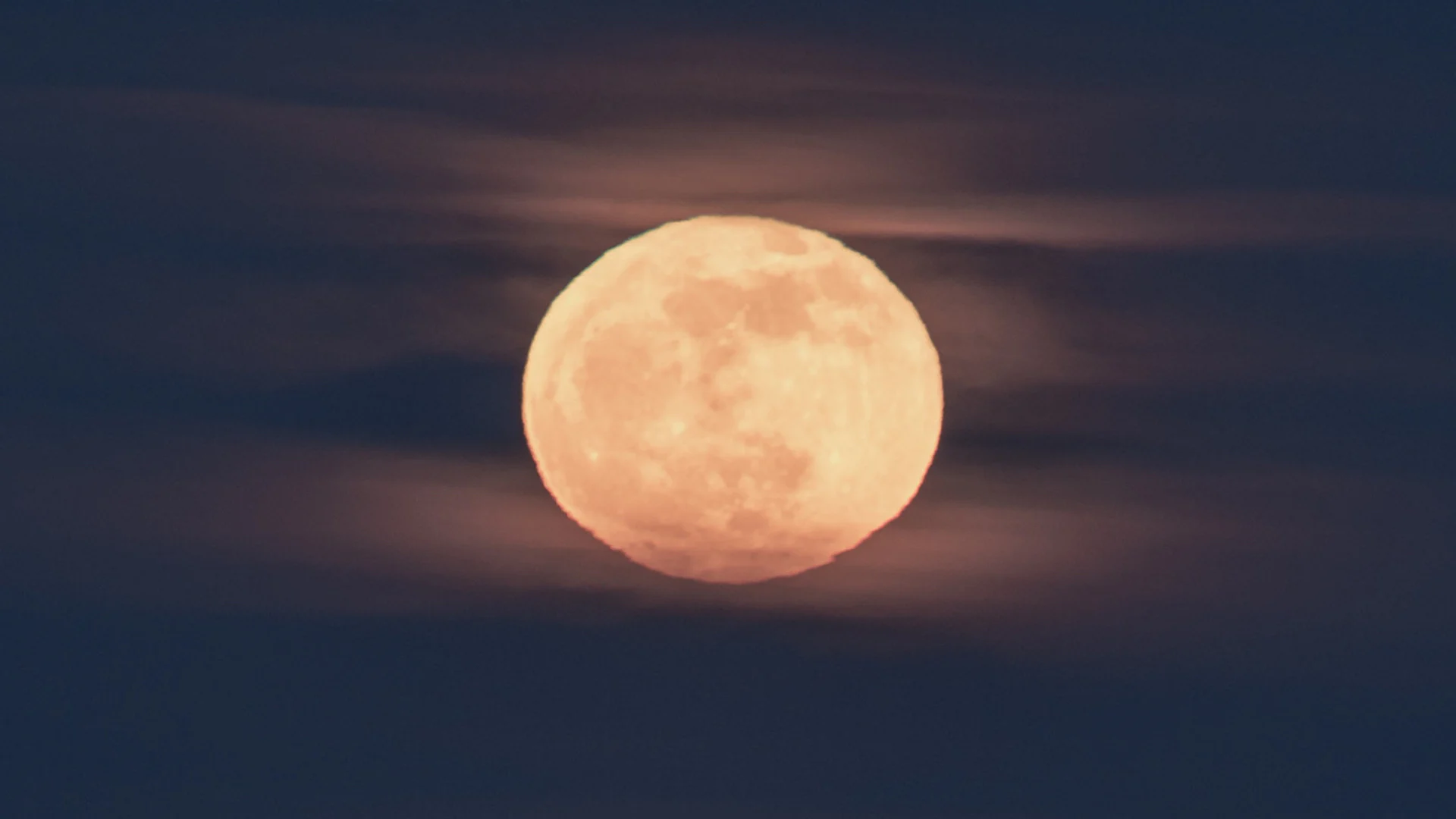
(Thumbnail image courtesy "Dave K", from Owen Sound, who took this picture of the Full Flower Moon on May 6, 2023.)