Astronomers detect 'raspberry sugar' near the Milky Way's galactic core

"Our work shows that sugars can form naturally in space," says the lead author of this research
A team of researchers has reported the first detection of the sugar known as erythrulose, floating in interstellar space, inside of an immense molecular cloud near the Milky Way's galactic core. This discovery may provide clues to how the basic building blocks of life formed in our solar system.
Around 27,000 light years away from Earth, just "to the left" of the galactic core of the Milky Way, is an immense cloud of dust and gas known as molecular cloud G+0.693-0.027. Astronomers have been aiming telescopes at this cloud for years now, due to the abundance of complex organic molecules that have already been found there.
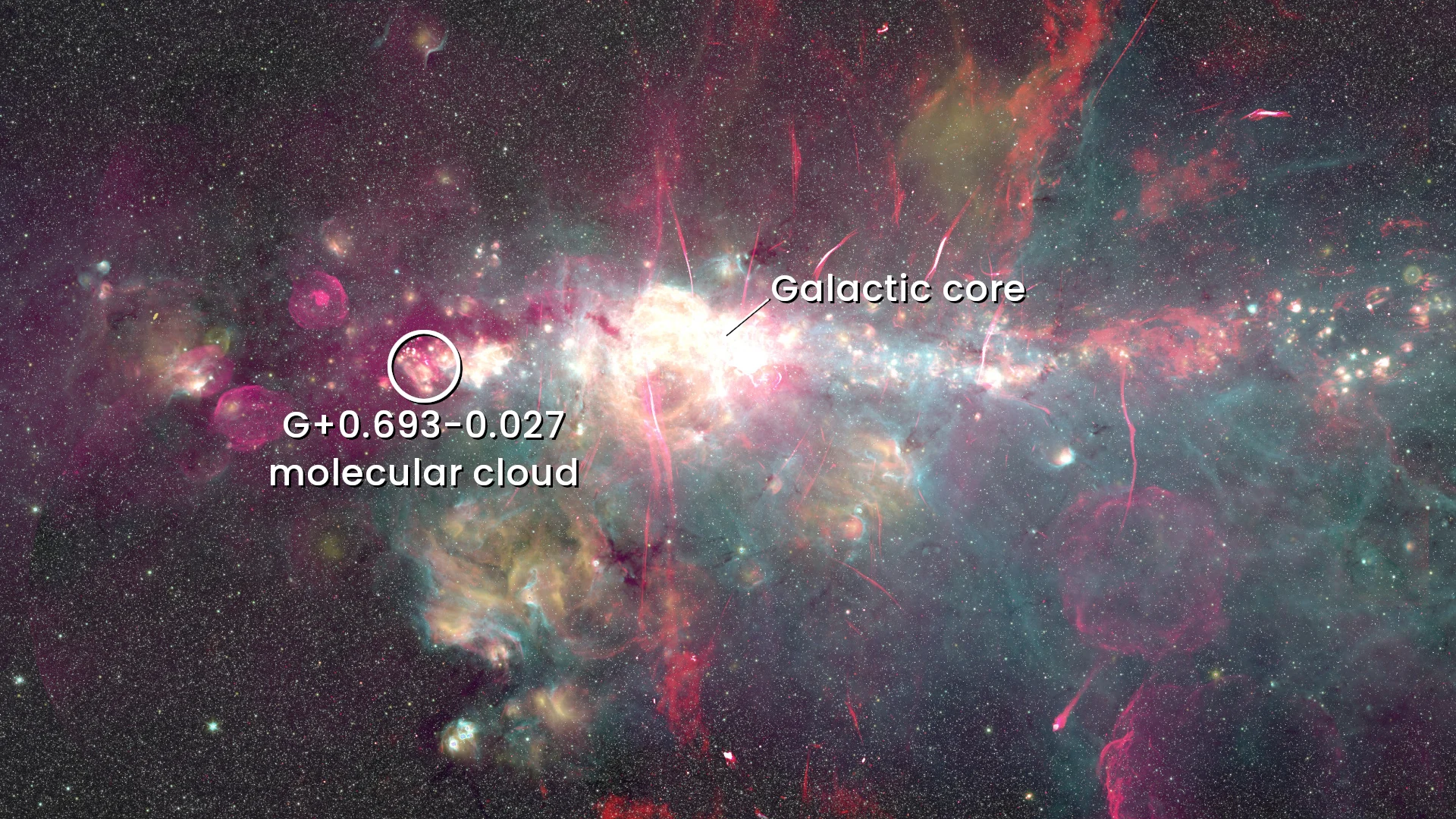
The location of molecular cloud G+0.693-0.027, in relation to the galactic core of the Milky Way. (Ashley Barnes/Izaskun Jiménez-Serra/Juan García de la Concepción, labels added by Scott Sutherland)
MORE FROM SPACE: Two eclipses and a meteor shower are the 'don't miss' sky events for Summer 2026
Using a combination of data from two different radio telescopes in Spain — the 40-meter telescope at the Yebes Observatory, northeast of Madrid, and the 30-meter telescope of the Institute for Millimeter Radio Astronomy at Pico Veleta, near Granada — an international team has detected a simple sugar, known as erythrulose, floating in the interstellar medium.
Scientists have found other simple sugars, such as glucose and ribose, inside of meteorites. They has also been seen in the pristine samples brought back from asteroids such as Bennu, Ryugu, and Itokawa. However, this is the first time such a sugar has been detected in interstellar space.
"Our work shows that sugars can form naturally in space," Izaskun Jiménez-Serra, the lead author of the study from the Center for Astrobiology (CSIC-INTA), said in a press release.
From the amount of erythrulose detected in molecular cloud G+0.693-0.027, Jiménez-Serra and her colleagues estimate that between 500,000 tons to 50 million tons of this simple sugar could have been delivered to Earth's surface by meteorite and comet impacts during the Late Heavy Bombardment, roughly 4 billion years ago.

This illustration depicts a trio of meteorites about to impact with the molten landscape of a young Earth during the Late Heavy Bombardment. (NASA's Goddard Space Flight Center Conceptual Image Lab)
DON'T MISS: Asteroid Apophis' 2029 flyby of Earth will be visible to billions of people
What are sugars?
In general, everyday use, we tend to think about sugar based on its nutritional aspects, or perhaps its source (cane sugar, beet sugar, etc).
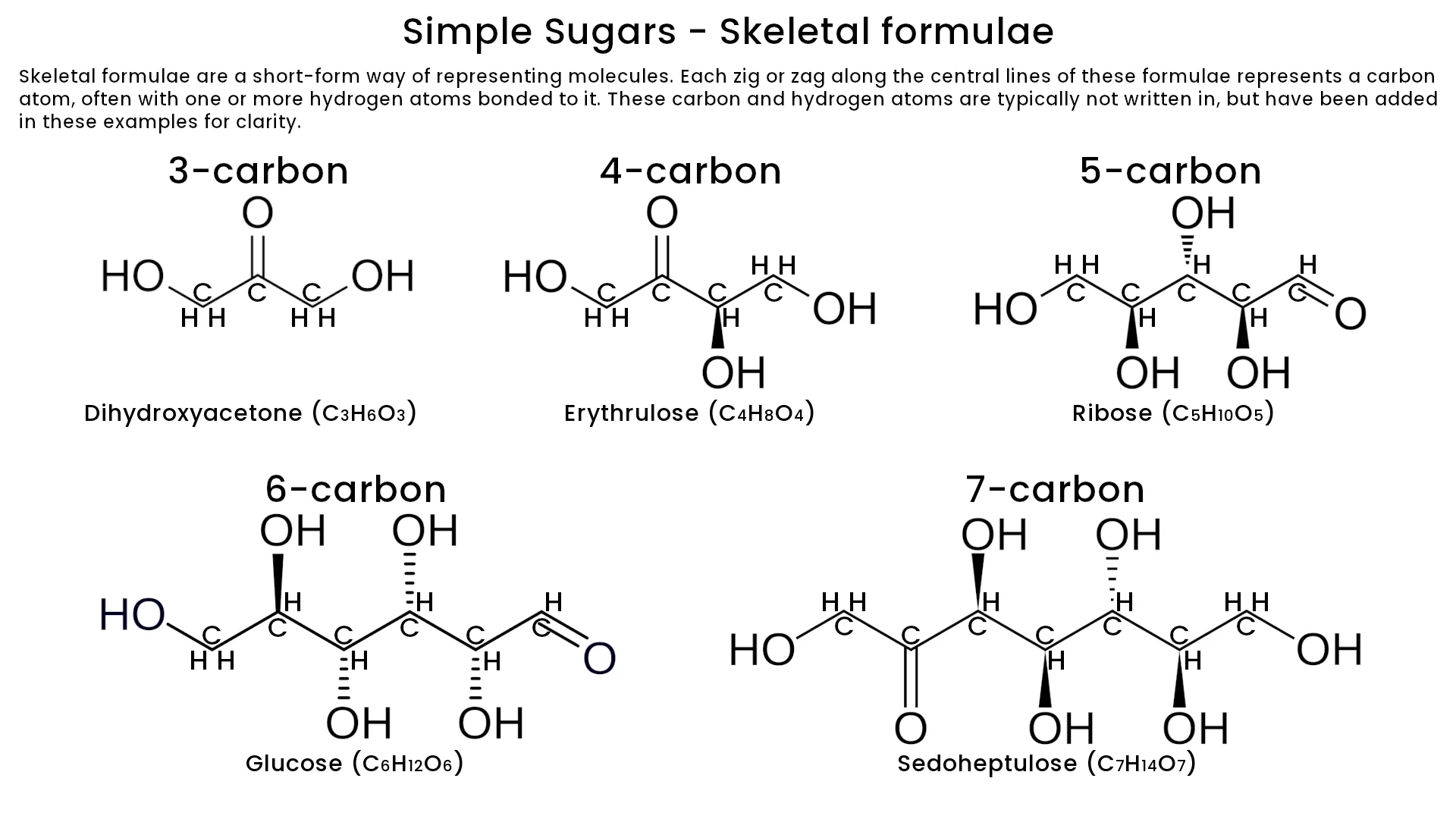
However, in science, sugars are organic molecules made up of carbon (C), hydrogen (H), and oxygen (O) atoms, specifically in the form CH2O, with three or more CH2O 'links' strung together into a chain. They are classified by the number of 'links', or more basically, by the number of carbon atoms they have. Thus, a 3-carbon sugar (C3H6O3) is a triose, 4-carbon (C4H8O4) is a tetrose, 5-carbon (C5H10O5) is a pentrose, and so on.
RELATED: Alien comet 3I/ATLAS may be the oldest thing ever seen in our solar system
Simple sugars are the least complex, with between three to seven CH2O links in their molecular chain. These are not only sources of energy for metabolism, but are also some of the basic building blocks of life.
For example, without ribose, a 5-carbon sugar, we wouldn't have either ribonucleic acid (RNA) or deoxyribonucleic acid (DNA), both of which are essential for all life on Earth.
Erythrulose and its significance
Erythrulose is a 4-carbon sugar (C4H8O4). It is most often found, here on Earth, in red raspberries, along with other red berries and fruits.
Why is its discovery in space significant? It shows that reasonably complex organic molecules can form in interstellar space, and provides an explanation for why sugars such as these have been found in meteorites and asteroid samples. Also, the methods the researchers used to find this simple sugar could be used to discover more.
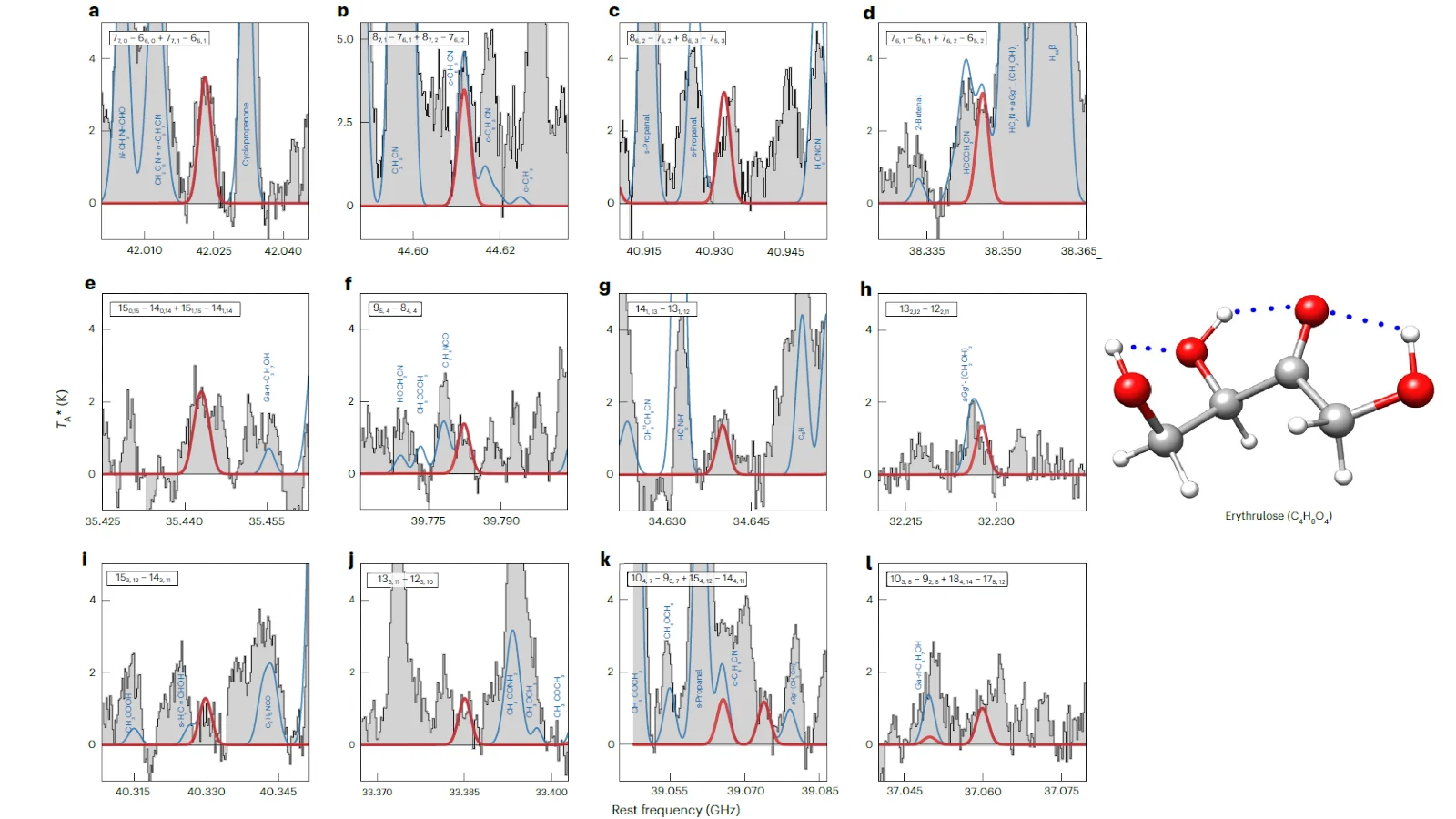
Twelve detections of the sugar erythrulose from radio telescope observations of molecular cloud G+0.693-0.027, as reported in the research study published in the journal Nature Astronomy. (Jiménez-Serra, et al.,/Nature (CC BY 4.0))
"The detection of erythrulose in a molecular cloud is an exciting discovery, because it opens up the possibility of identifying larger sugars in the interstellar medium, such as ribose, which is part of RNA, and other molecules relevant to the origin of life," study co-author Carlos Briones explained in the press release.
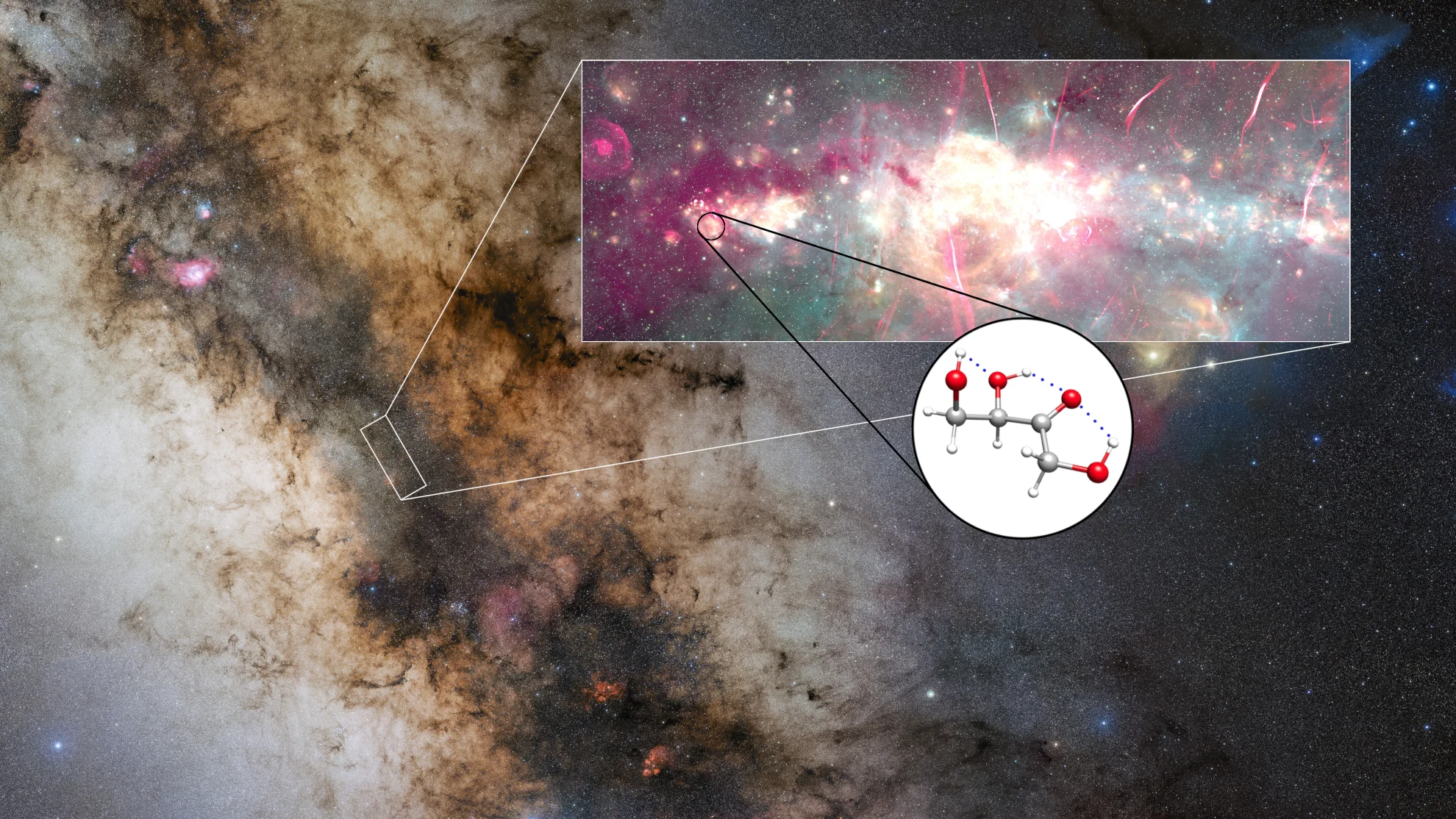
The thumbnail image shows the central bulge of the Milky Way in visible light, with an inset image that combines infrared data captured by the Spitzer Space Telescope (white, green, and yellow) with radio data (red) from the MeerKAT array in South Africa and the Green Bank Telescope in West Virginia, of the Central Molecular Zone that wraps around the galactic core. A small white rectangle joined to this view shows the location of the CMZ. The molecule erythrulose has been added, along with lines pointing towards the general location of molecular cloud G+0.693-0.027 within the CMZ.