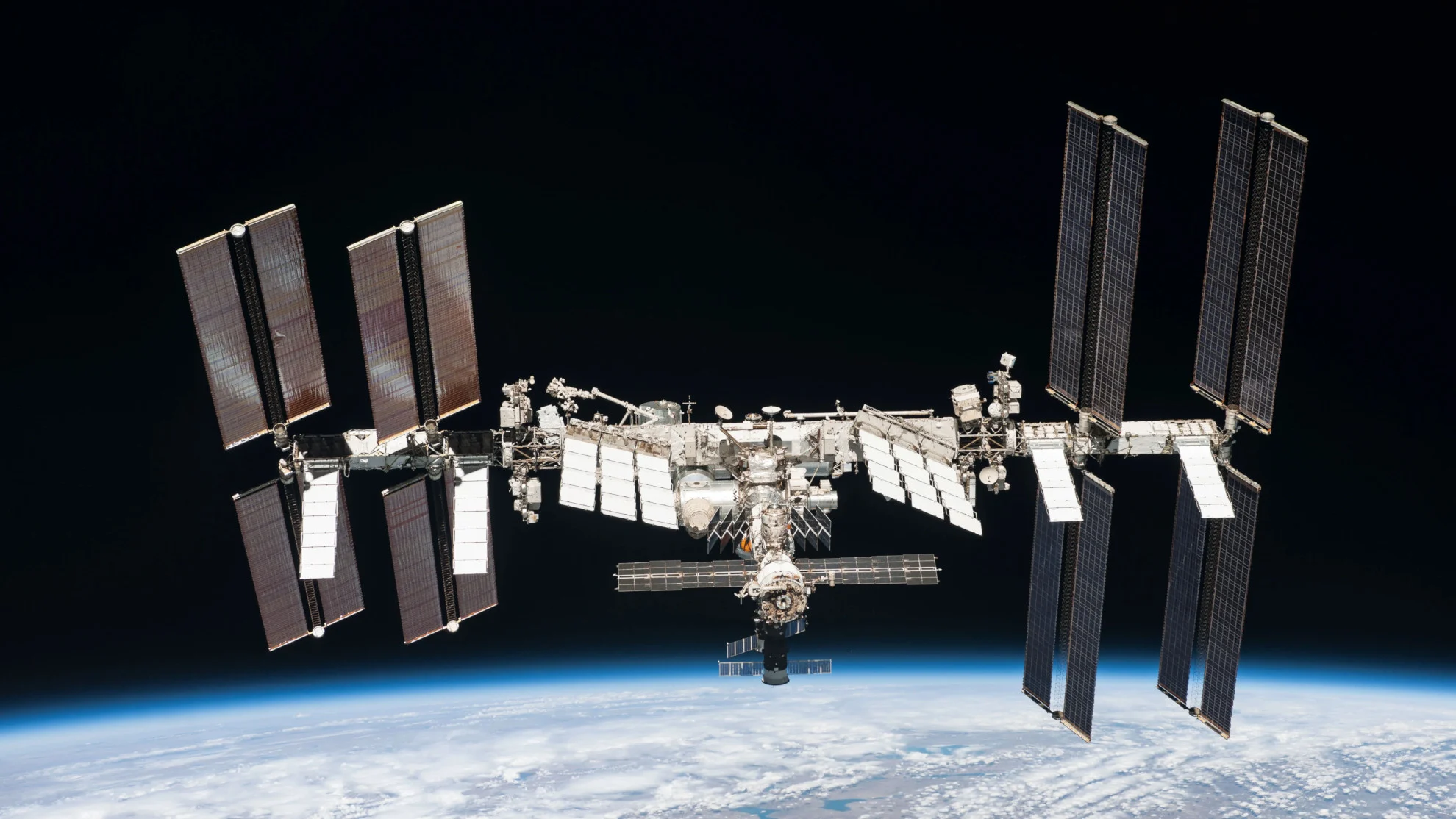
Space station astronauts sheltered in Crew Dragon, Friday, due to air leak

Never before in the 25 years of continuous human presence have the crew been required to evacuate the space station.
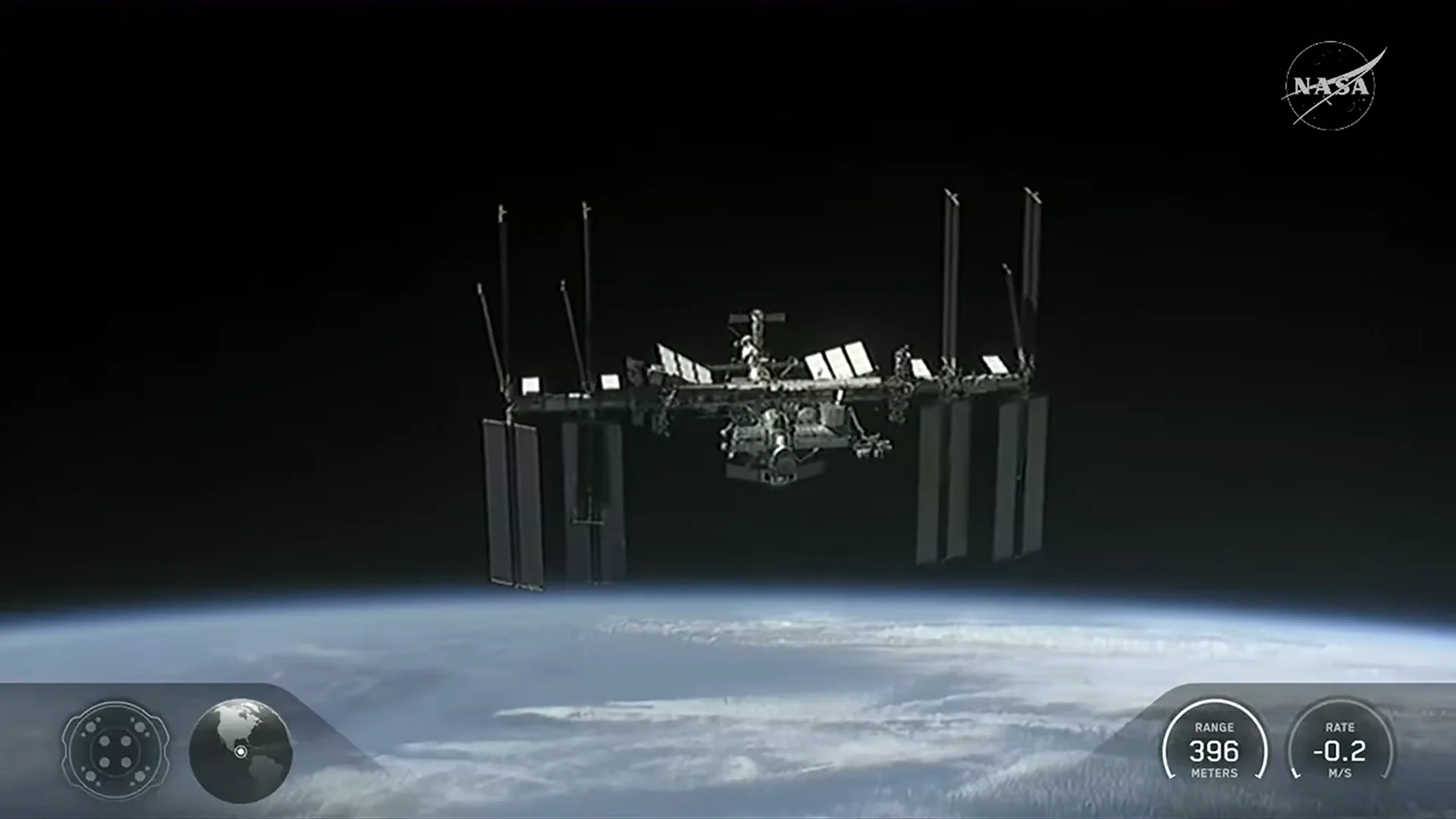
The Crew 12 astronauts captured this view of the ISS on their approach for docking on Feb. 13, 2026. (NASA)
A worsening air leak in the Russian section of the International Space Station prompted NASA to order their astronauts to shelter in their Crew Dragon spacecraft, pending a possible evacuation of the station.
At 9:04 a.m. EDT, on Friday, June 5, mission control at NASA's Johnson Space Center in Houston gave the order for the four astronauts from the Crew 12 mission to enter Crew Dragon Freedom, and don their space suits in case they need to evacuate. Crew-12 consists of NASA astronauts Jessica Meir and Jack Hathaway, Sophie Adenot from the ESA, and Andrey Fedyaev from Roscosmos.
This order to shelter in their spacecraft came as a result of an air leak in the Roscosmos section of the space station, specifically the Zvezda service module. Zvezda was the third module joined to the growing station, and provides nearly all of the life support for the orbital lab.
According to NASA spokesperson Bethany Stevens, who posted on X.com: "The Zvezda service module transfer tunnel, known as PrK, has suffered from cracks and leaks for some time, and has been mitigated by Roscosmos as much as possible to date. The cracks have always been a concern that NASA watches very closely. NASA and Roscosmos have been working to determine the root cause of the cracks, and Roscosmos manages the issue through operational mitigation measures and periodic partial-repair efforts."
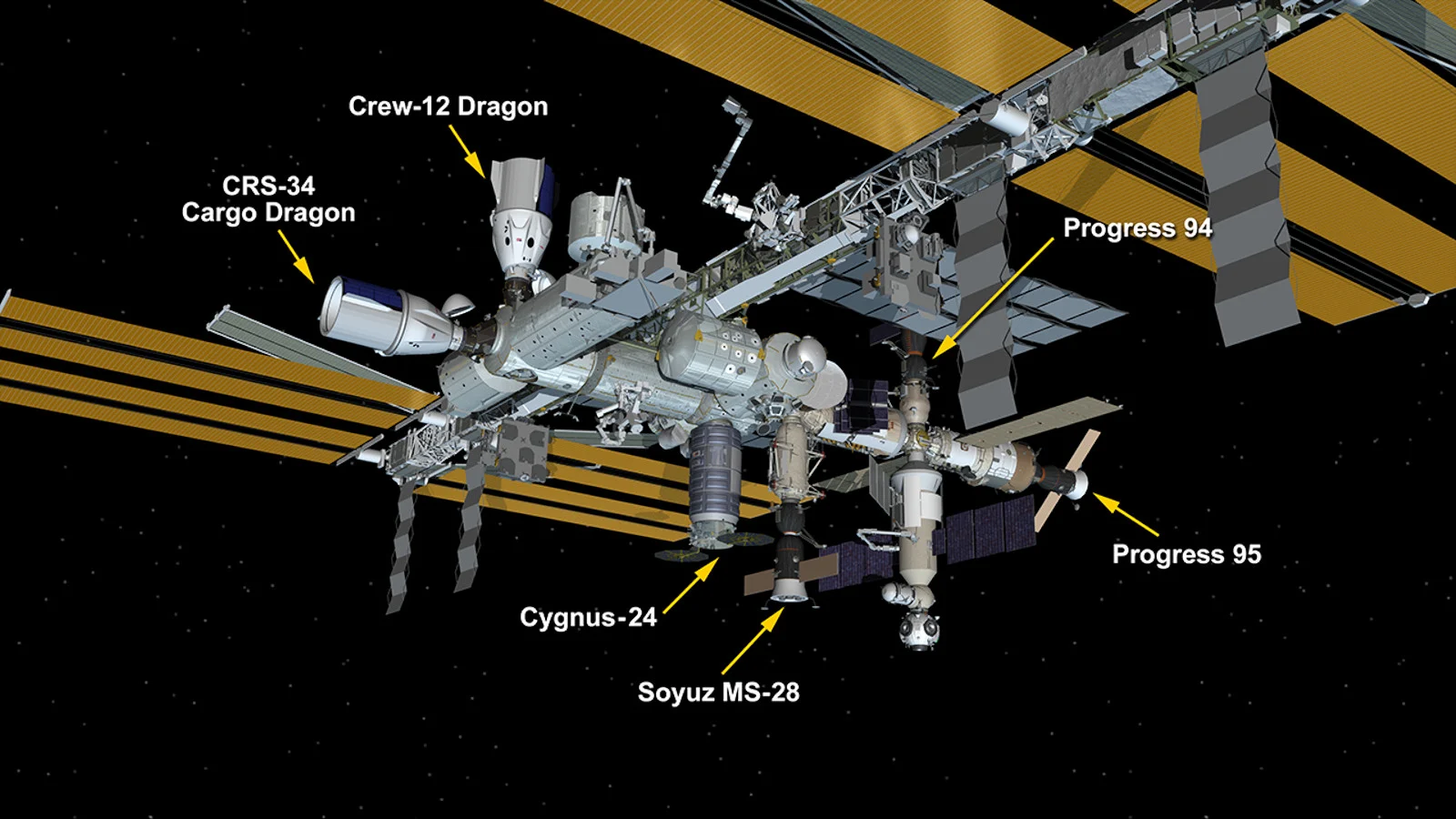
This diagram shows the current vehicles docked or berthed at the orbital lab, with Progress 95 attached at the far end, to the Zvezda service module, which is the station module where this air leak is occurring. (NASA)
"Following new leaks, Roscosmos has elected to proceed with a more extensive repair operation on Friday, June 5," Stevens added. "Out of an abundance of caution, NASA has directed all four of the agency's SpaceX Crew-12 members and NASA astronaut Chris Williams to assume an elevated safety posture in the Dragon spacecraft while the repair is underway."
"We continue to work with our Russian counterparts, along with the rest of the international community that supports the space station, to arrive at a more permanent resolution."
Update: 10:57 a.m. EDT
In an update posted to X, Stevens said that the Crew-12 astronauts have now ended their "safe haven" procedures.
After the Roscosmos crew gathered more data and measurements from the Zvezda module, they are now taking time to assess. As a result, NASA instructed the crew to return to their normal duties.
Safe haven procedures are followed by ISS crews whenever there is any chance of hazardous conditions on the station. This could be due to space weather impacts, such as a solar radiation storm, or a potential collision with space debris in orbit, or — as in this case — issues with the station itself, which can range from power system problems to a leak in one of the laboratory's modules.
Zvezda has been part of the ISS since July 2000, and began suffering air leaks in November 2019. The leak was small to begin with, with a loss of about half a kilogram of air from the station's supply per day. Since then, the rate of loss has increased to at least triple that, as of early 2024.
Mitigation of the problem, on a day-to-day basis, has apparently involved keeping the pressure hatch between Zvezda and the rest of the station closed. The only time it is opened is to allow crew access to any Progress cargo spacecraft docked to the segment. During those brief operations, the access hatch between the Russian section and the rest of the station has been shut and sealed. While it is only a precaution, this safety measure would mean that only the Russian Orbital Section would decompress in the event of a critical failure.
Space agency officials suspect that the root cause of the leak stems from microscopic cracks in the welds of the Zvezda module.