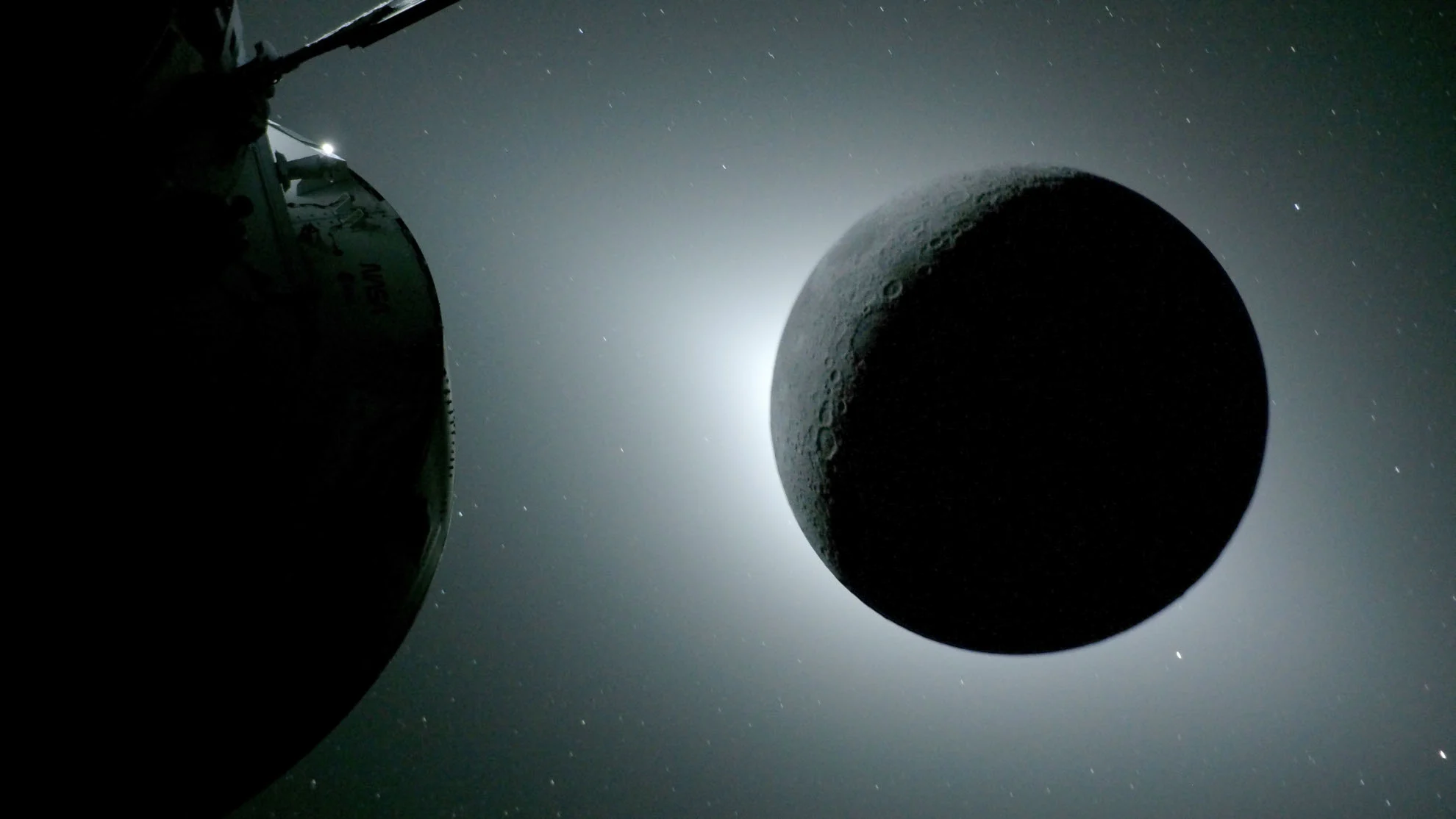
Four astronauts made history as they flew around the Moon on Monday!

The Artemis 2 mission reached its closest pass by the Moon and its farthest distance from Earth on Monday!
NASA astronauts Reid Wiseman, Victor Glover, and Christina Koch, and Canadian Space Agency astronaut Jeremy Hansen, are on a historic flight around the Moon and back.
On Monday, April 6, 2026, these four reached their destination, passing around the far side of the Moon. There, they glimpsed portions of the lunar surface never before seen, directly, by human eyes, as well as becoming the farthest travellers from Earth, ever.
NASA's livestream began at 1 p.m. EDT
Live updates from the mission were published below. Some of the original images posted on April 6 have been replaced with updated, high-resolution versions, as of April 7.
9:45 p.m. EDT
The Artemis 2 mission's flyby of the Moon has now ended. It has been a long, but incredible day of lunar observations and events.
All of the images and voice recordings the astronauts made during their observations, as well as their attempts to capture images of lunar impact flashes, and recording the solar corona, will begin downlinking to NASA soon.

(NASA)
These images will then start showing up in NASA's image galleries — on their website, as well as on Flickr — in the days ahead.
With the mission scheduled to return home, for splashdown, on Friday, April 10, 2026, the crew still has four days left on the mission. This will include images of both the Moon and Earth, as the Moon recedes and Earth grows larger in their viewports.
9:30 p.m. EDT
As the Orion crew approaches the end of their total solar eclipse, they are describing the appearance of the solar corona as the Sun gets closer to the limb of the Moon.
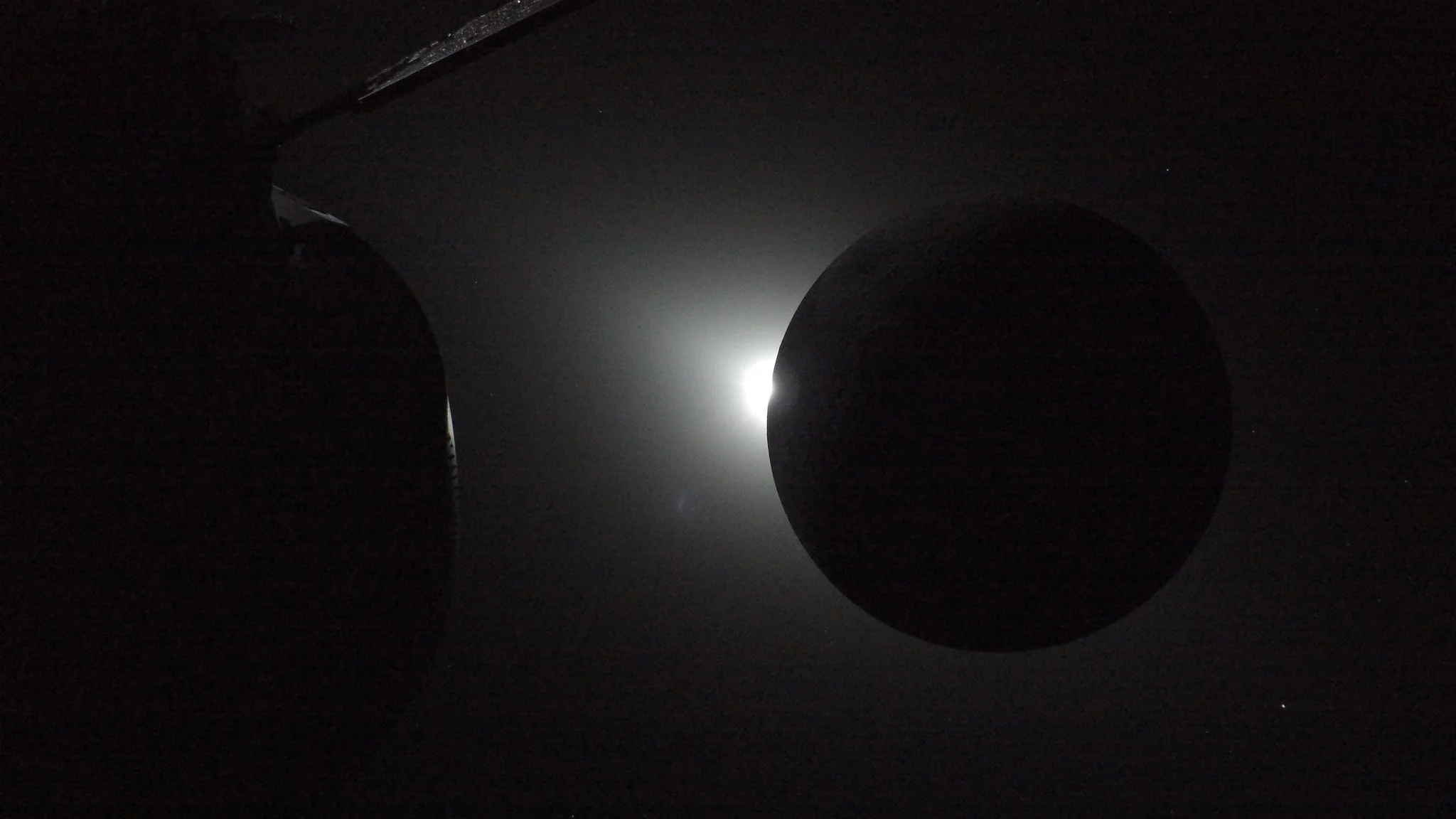
The solar corona peaks out from the lunar limb, as captured by a camera on the Orion spacecraft. (NASA TV)
Although the above image was captured by a GoPro camera on the solar panel of the spacecraft, which has lower resolution when streaming, the crew will have much better images of these observations, which they will share in the days ahead.
This view of a solar eclipse from the Moon was so amazing that the crew jokingly requested a set of new superlatives to be added to their vocabulary to properly describe what they have seen.
In addition to the observations of the eclipse, itself, the crew also reported seeing planets, likely Venus, Mars, and Saturn, from their descriptions.
9:05 p.m. EDT
The Orion crew has reported that they spotted 4 impact flashes on the lunar surface while within the Moon's shadow.
Those spotted by Jeremy Hansen reportedly include ones on the Earth-side of the Moon.

(NASA TV)
Mission Control mentioned that there are citizen scientists attempting to spot lunar flashes from here. Thus, they may have captured those same lunar impact flashes, and we may see images of them soon.
Hansen also reported spotting a lunar plume, where lunar dust is lofted up into the thin atmosphere of the Moon.
8:35 p.m. EDT
The Artemis 2 crew is now experiencing a total solar eclipse from the Moon!
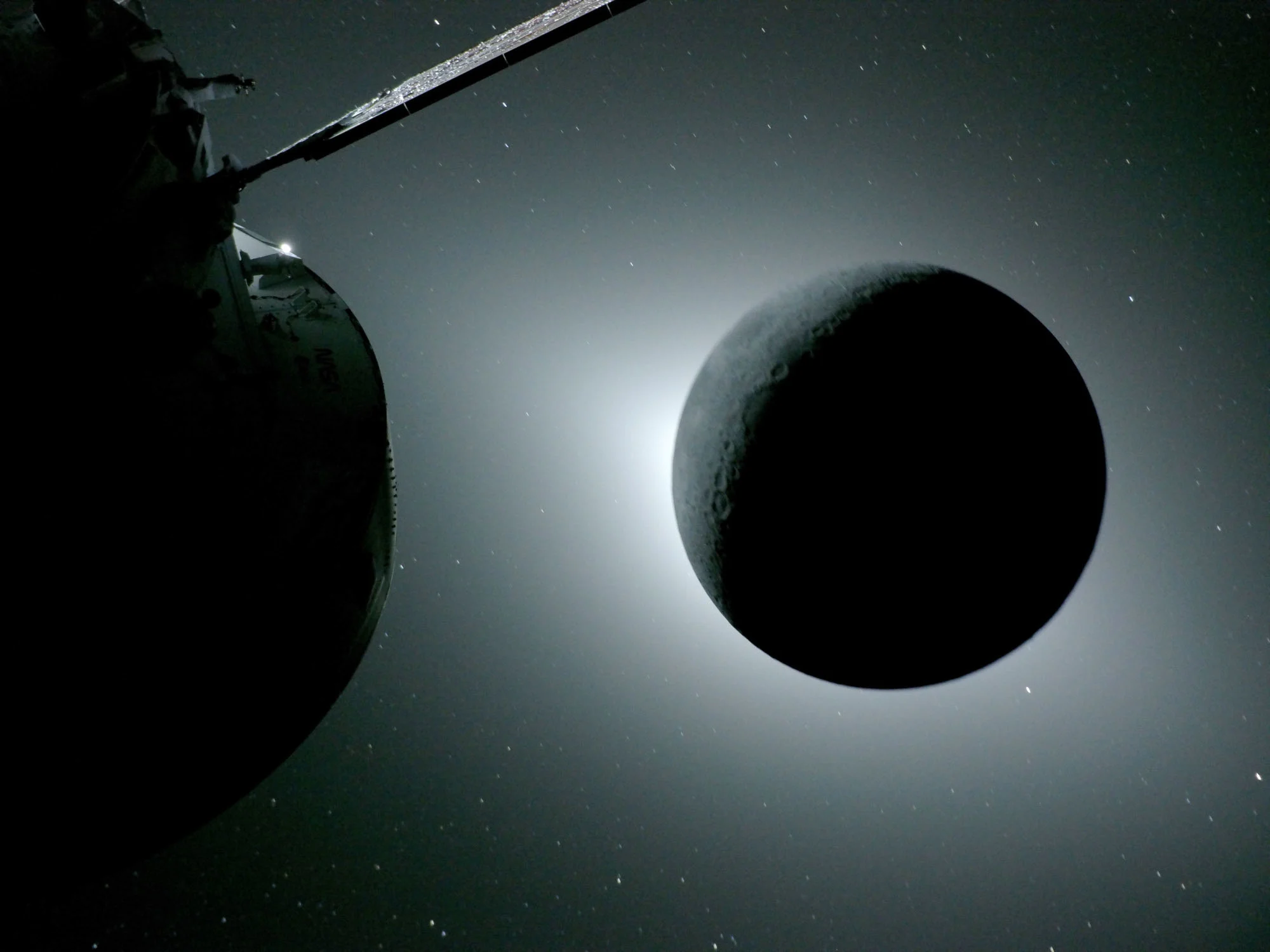
(NASA TV)
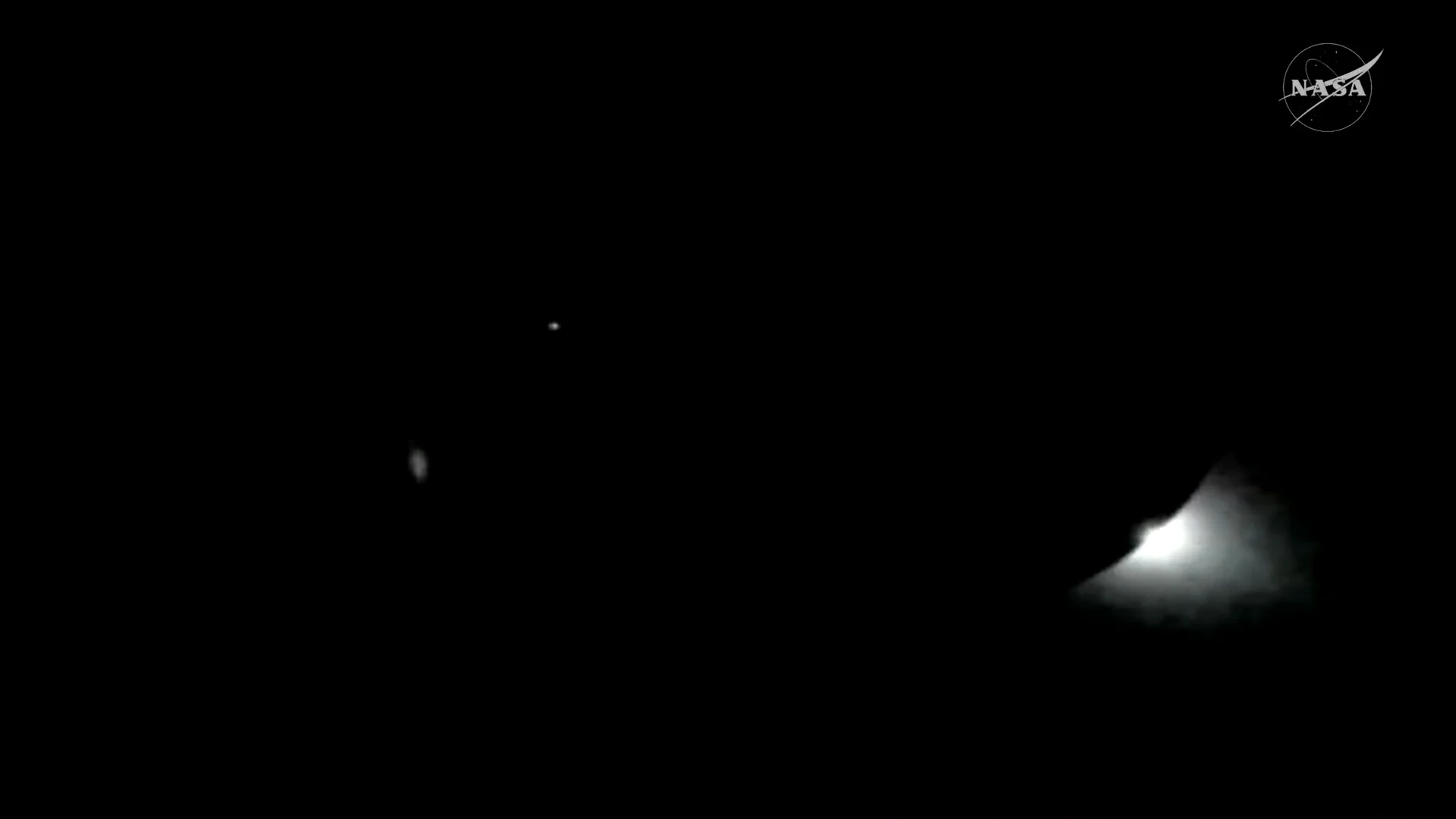
Below, moments after the total eclipse began, the Sun was just beyond the edge of the Moon, making the solar corona the only thing the crew could see of it.
(NASA TV)
We can see the solar corona from Earth during total solar eclipses.
8:27 p.m. EDT
Orion is now roughly 5 minutes from entering the solar eclipse portion of the mission. At that time, due to the position of the Moon around Earth, the spacecraft will still have a direct line of sight to Earth, but the Sun will be behind the Moon, completely blocked from view.
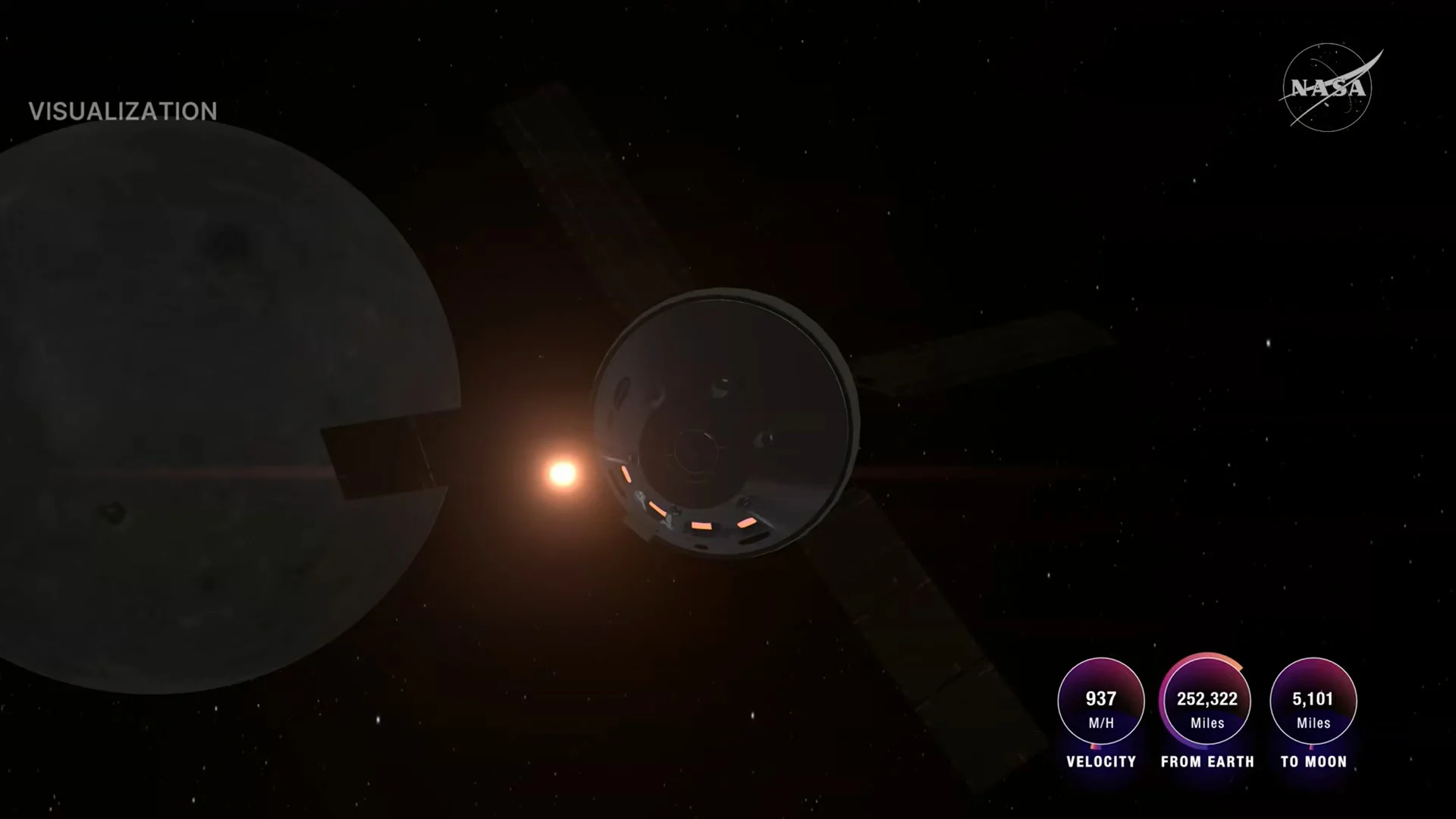
(NASA TV)
This portion of the mission will last for nearly an hour.
According to Mission Control, this will make the four crew members the only humans to ever experience a solar eclipse from the Moon.
7:30 p.m. EDT
Mission Control has reacquired contact with the Orion spacecraft.
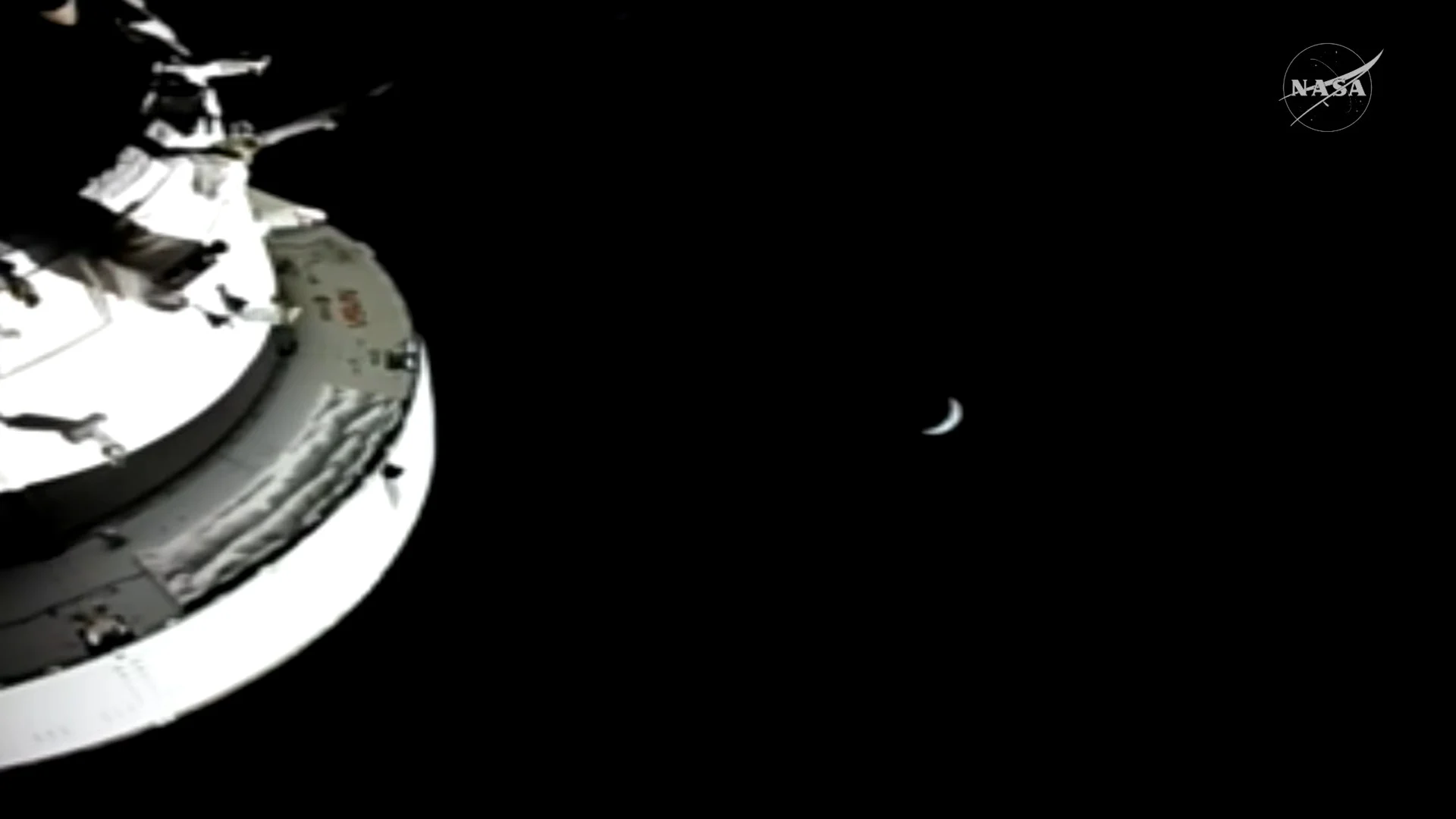
One of Orion's solar array cameras captures the spacecraft and the thin crescent of Earth in the far distance. (NASA TV)
Although the crew has been able to see a new Earthrise, having come around on the other side of the Moon, the view from Orion's solar panel cameras doesn't show this. This is because the solar panels must remain properly angled to capture as much sunlight as possible, and thus the cameras are not pointed towards the Moon.
Orion is now on its way home, with the distance to the Moon now growing, and the distance to Earth shrinking.
7:02 p.m. EDT
Mission Control has just confirmed that Orion reached its closest distance to the Moon at 7:00 p.m. EDT, on April 6, 2026, at 6,545 kilometres from the surface.
While Orion is behind the Moon, the crew will view a very long solar eclipse, where the Moon — looming large in their viewports — will completely block the Sun from view.
At that time, while the crew will be on the lookout for impacts below them, they will also be trying to spot planets.
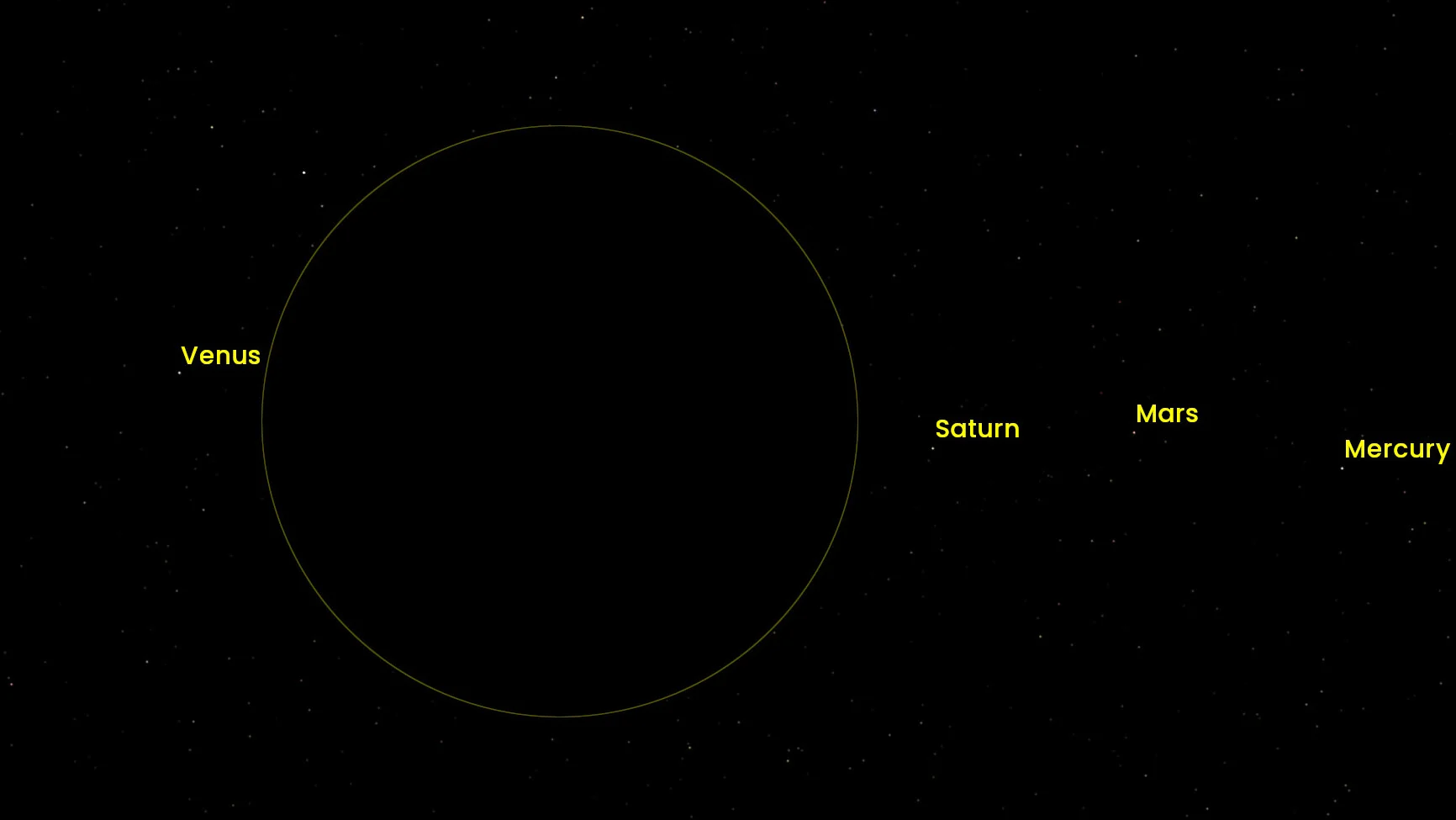
(Celestia/Scott Sutherland)
In this view, the Earth is off the left-hand edge of the field of view, Venus will be off to the left of the Moon, while Saturn, Mars, and Mercury might be spotted off to the right of the Moon.
6:44 p.m. EDT
Loss of Signal!
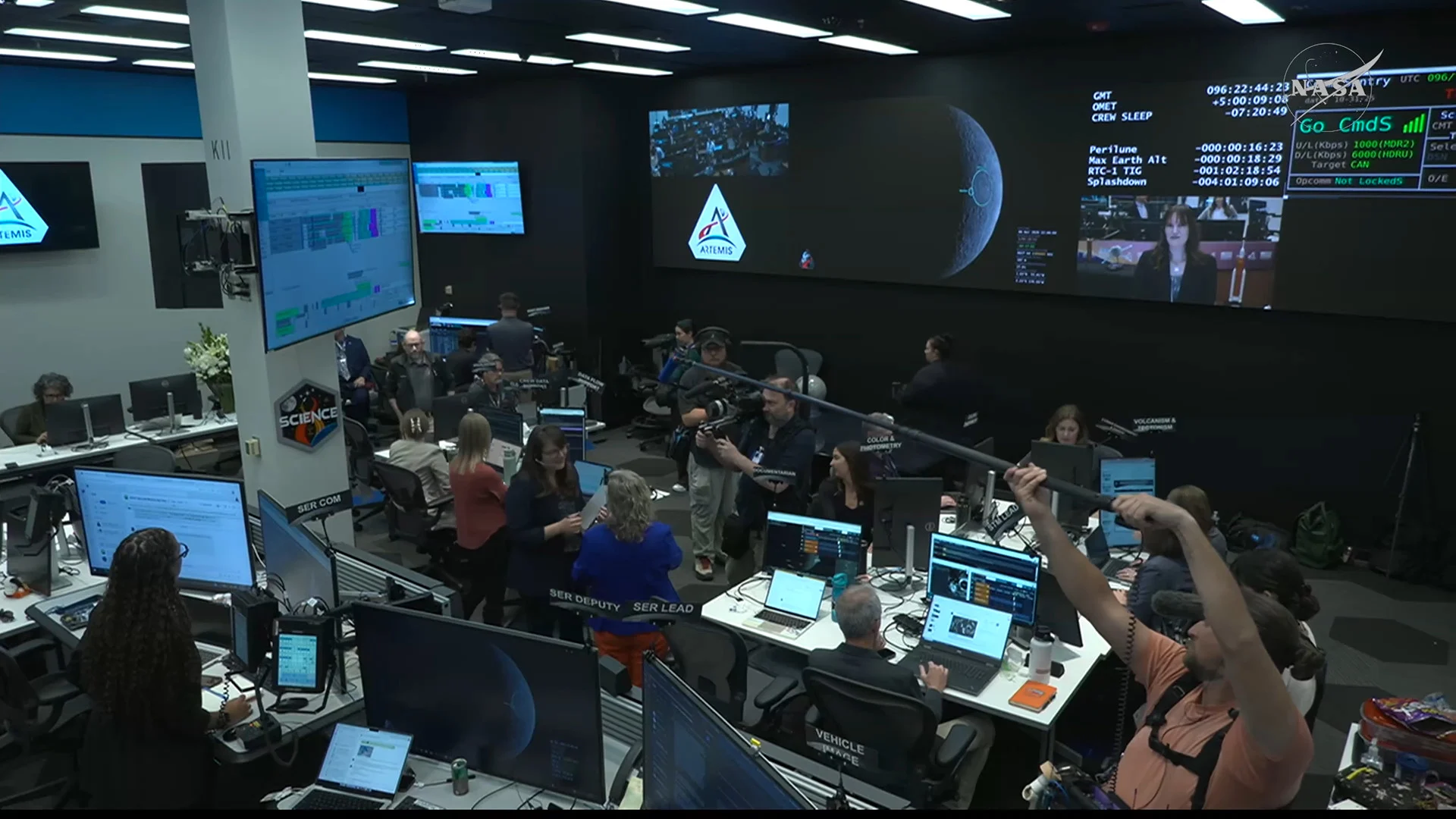
A view of the science team discussing the mission so far, from the Science Evaluation Room at Mission Control. (NASA TV)
Orion is now behind the Moon, with the mass of the Moon blocking communications for roughly the next 40 minutes.
6:40 p.m. EDT
Orion is very close to slipping around to the dark side of the Moon, and just minutes away from loss of communication with the spacecraft.
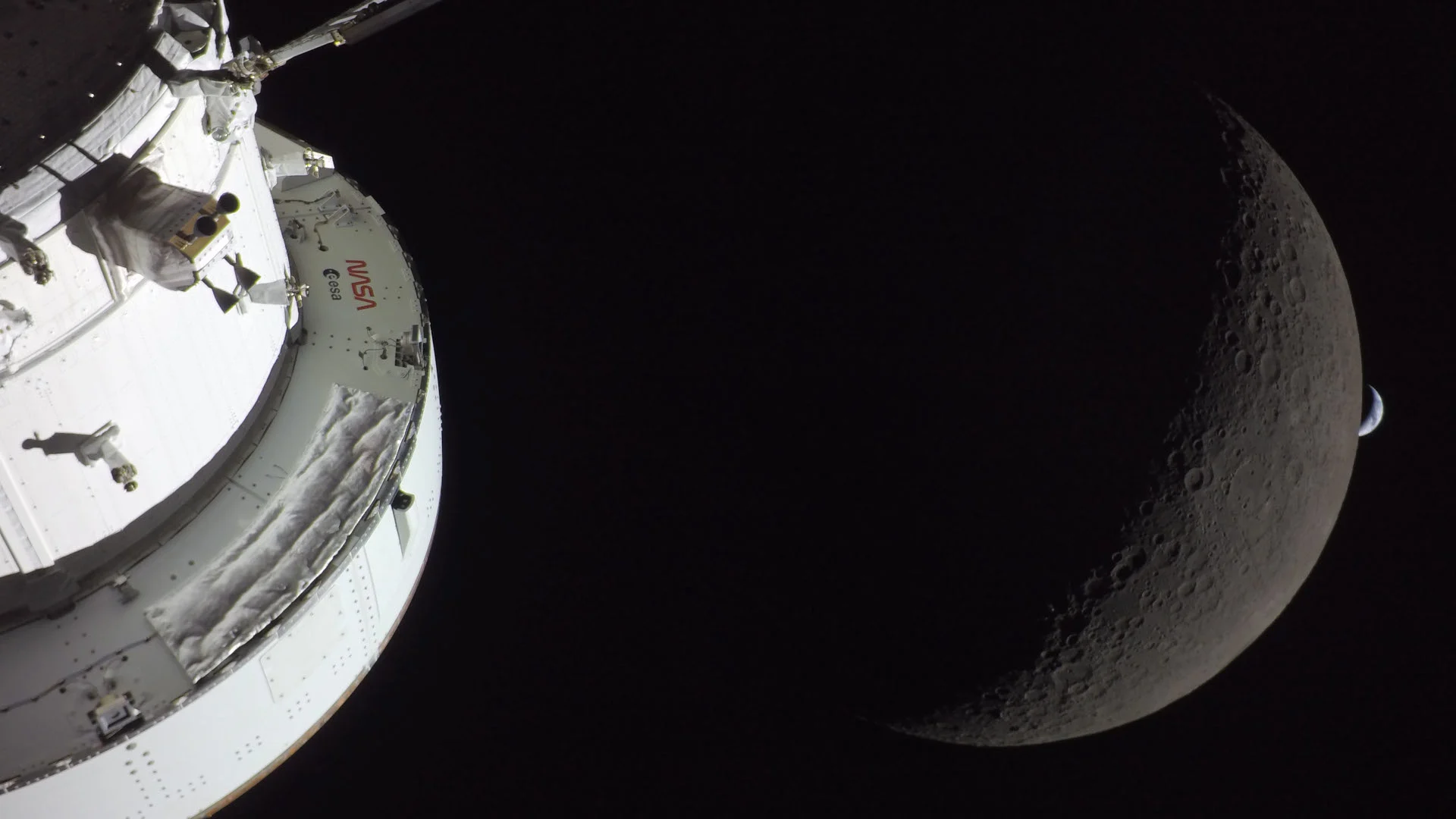
Orion, the dark crescent Moon, and the bright crescent Earth in the distance, all in one photograph, captured from a camera on the spacecraft's solar panel array. This image captures all of humanity in one photograph. (NASA TV)
Instructions from Capcom Jenni Gibbons, in Mission Control, is for the crew to be vigilant for spotting flashes from meteoroids striking the lunar surface.
6:30 p.m. EDT
Mission Control has provided updated times and distances for Orion's closest approach to the Moon, and their farthest distance from Earth.

Artemis 2 vs Apollo 13 distances at closest approach to the Moon and farthest from Earth. (Scott Sutherland)
Closest approach to the Moon will happen at 5 days, 25 minutes, and 34 seconds into the mission, or at 7 p.m. EDT on April 6, 2026, at a distance of 4,067 miles, or 6,545 kilometres.
Farthest distance from Earth will happen at 5 days, 27 minutes, and 39 seconds, or at 7:02 p.m. EDT on April 6, 2026, at a distance of 252,756 miles, or 406,771 kilometres.
As these times will be within the communication blackout that Orion experiences while it is on the far side of the Moon, NASA's live stream will continue to provide commentary and simulated views of the spacecraft's progress.
5:45 p.m. EDT
Another viewing block has begun, with Jeremy Hansen and Reid Wiseman again taking their place at the windows. Victor Glover is once again providing descriptions of the surface colour and terrain variations to the Mission Control science team.
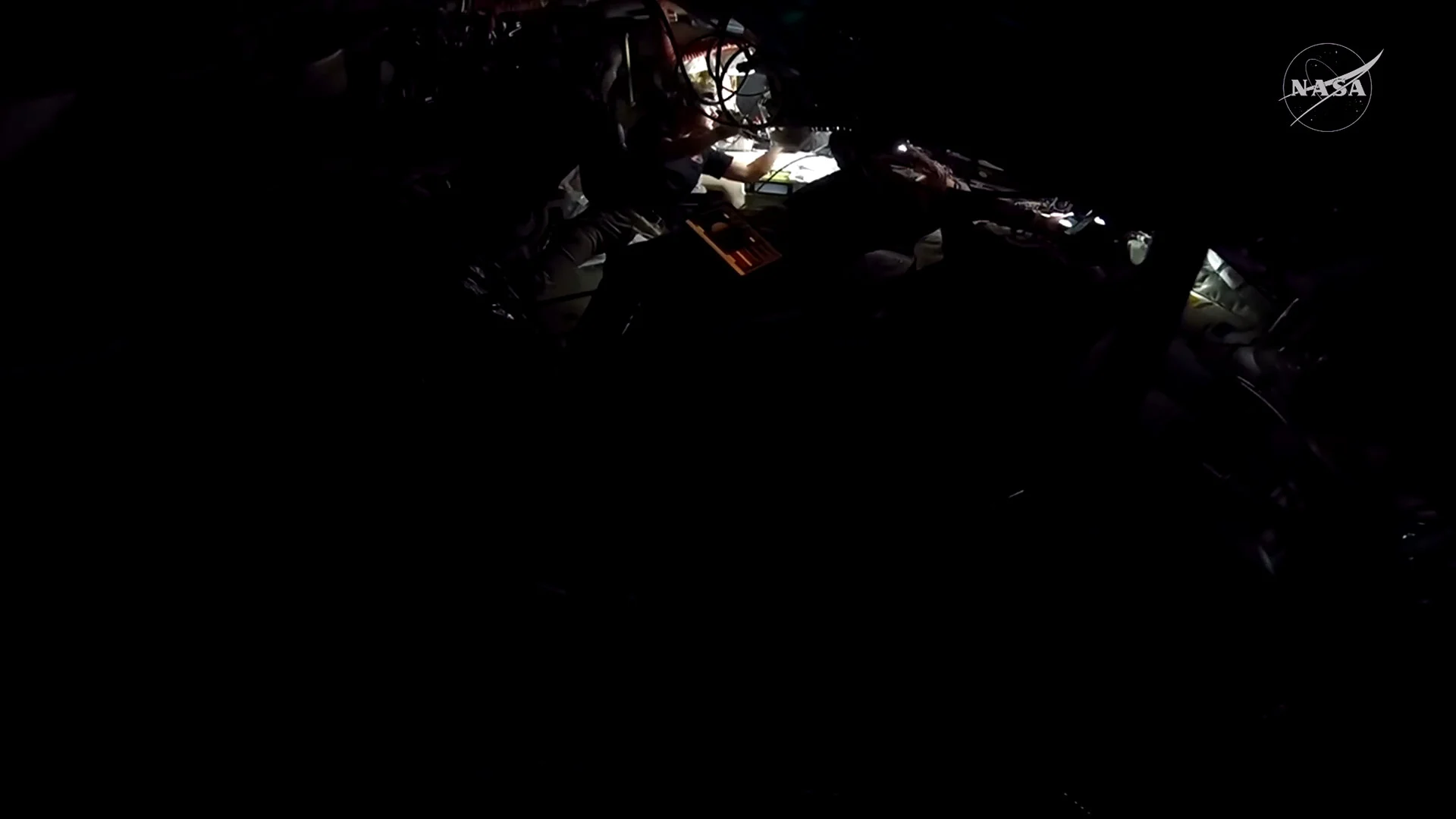
(NASA TV)
We are also roughly 1 hour from when Orion will slip behind the Moon from our perspective, causing a loss of communication between the spacecraft and Mission Control.
4:45 p.m. EDT
While Victor Glover and Christina Koch take their turn at the window, Jeremy Hansen relays to Mission Control some of the details of his observations.
Specifically, when viewing the lunar surface to the west of Orientale crater, he noted brownish hues and even greenish hues. These appeared to be in the regions between the 'rays' in the lunar highlands.

(NASA)
Click here for a zoomable version of the graphic above.
Rays are caused by ejecta from crater impacts. The rays themselves are quite bright, due to the abundance of the ejected material. However, these brownish hues appear to be where the ejected material is thinner, but fell on the slopes of the highlands.
4:16 p.m. EDT
The crew is currently swapping positions for the next block of lunar observations, with Victor Glover and Christina Koch taking over at the windows from Reid Wiseman and Jeremy Hansen.
Those of us watching from home can follow along with the progress of Artemis 2 on NASA's Track Artemis app.
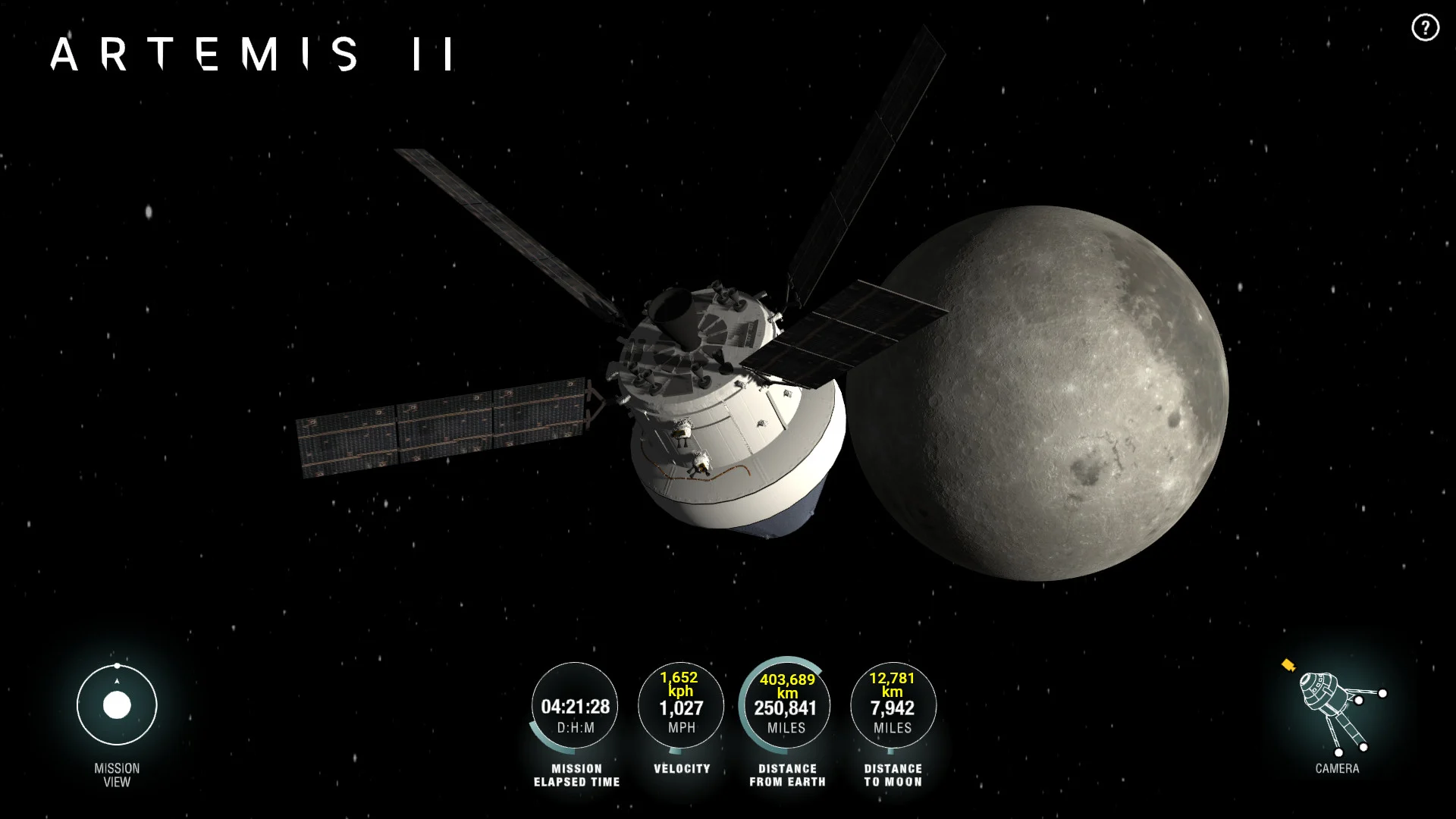
(NASA)
3:54 p.m. EDT
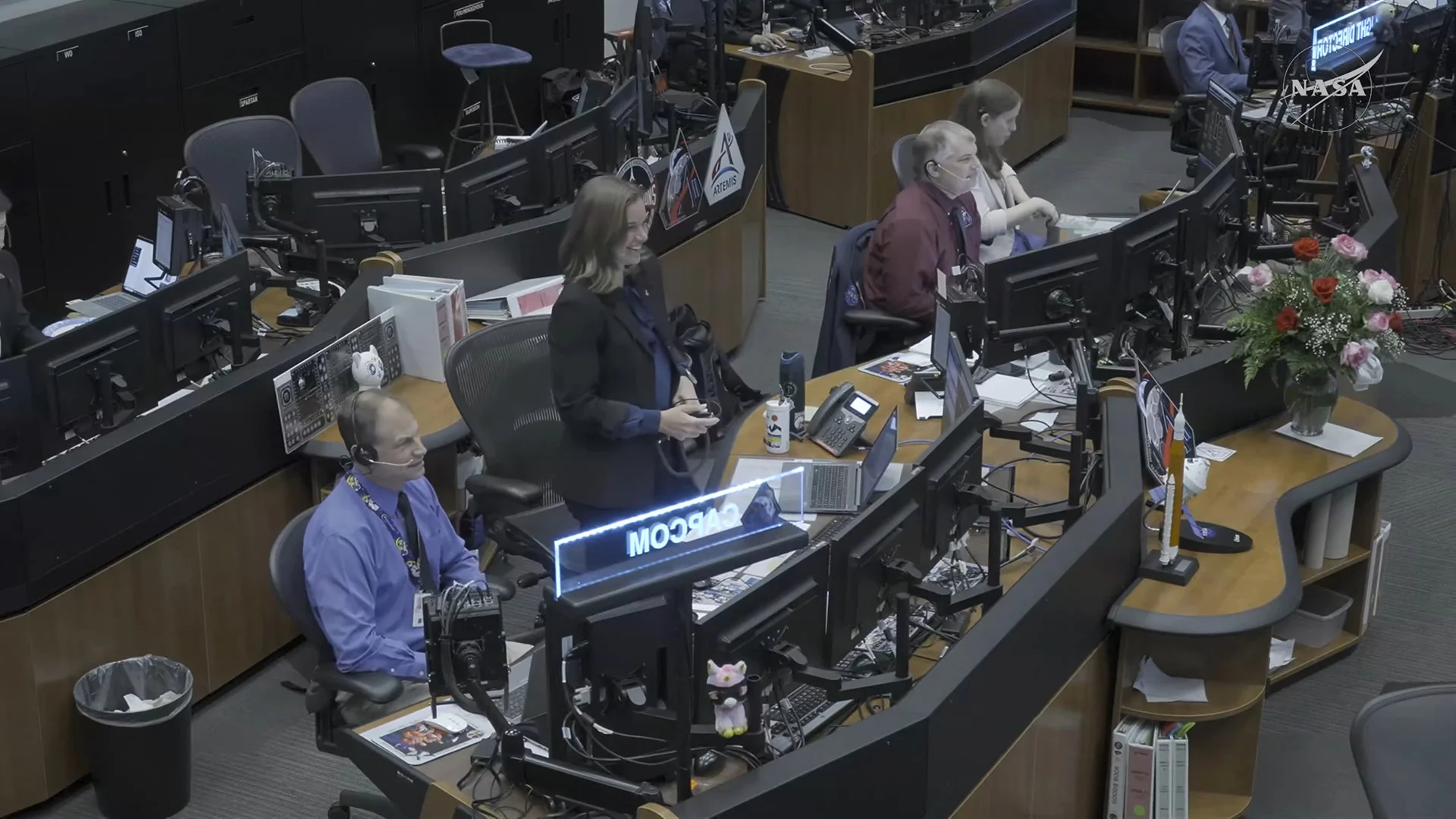
Talking to Capcom Jenni Gibbons, Reid Wiseman suggests that they need longer lenses on the cameras attached to the solar array, so that Mission Control and the public can get better views of the lunar surface on future missions.
(NASA TV)
3:45 p.m. EDT
NASA presented a view of Mission Control's timeline and objectives map for the science observations of the lunar surface.

Mission Control's timeline and objectives screen showing a map of the lunar surface, highlighting features and Orion's position above the surface. (NASA TV)
This map is helping the crew and the science team coordinate the observations.
Victor Glover reports that the terminator — the line between lunar day and night — is very jagged, rather than being a smooth line, due to the hills, mountains, valleys being highlighted by the shadows along that line of the lunar terrain.
Images produced from these observations should be amazing!
3:10 p.m. EDT
Mission Control gave livestream viewers a look at the visualization they are using as the Orion crew makes lunar observations.

A simulated view of the Moon with various highlights and features outlined of interest to the Artemis 2 science team. (NASA TV)
While Reid Wiseman and Jeremy Hansen continue their observations at the windows, taking images and recording audio commentary, Victor Glover and Christina Koch support them and make periodic reports to mission control on their progress.
According to Mission Control, we are roughly halfway through this particular observation block, with a total of five of these blocks planned. For the next block, the crew will switch places, with Glover and Koch taking over at the windows to continue the work.
2:45 p.m. EDT
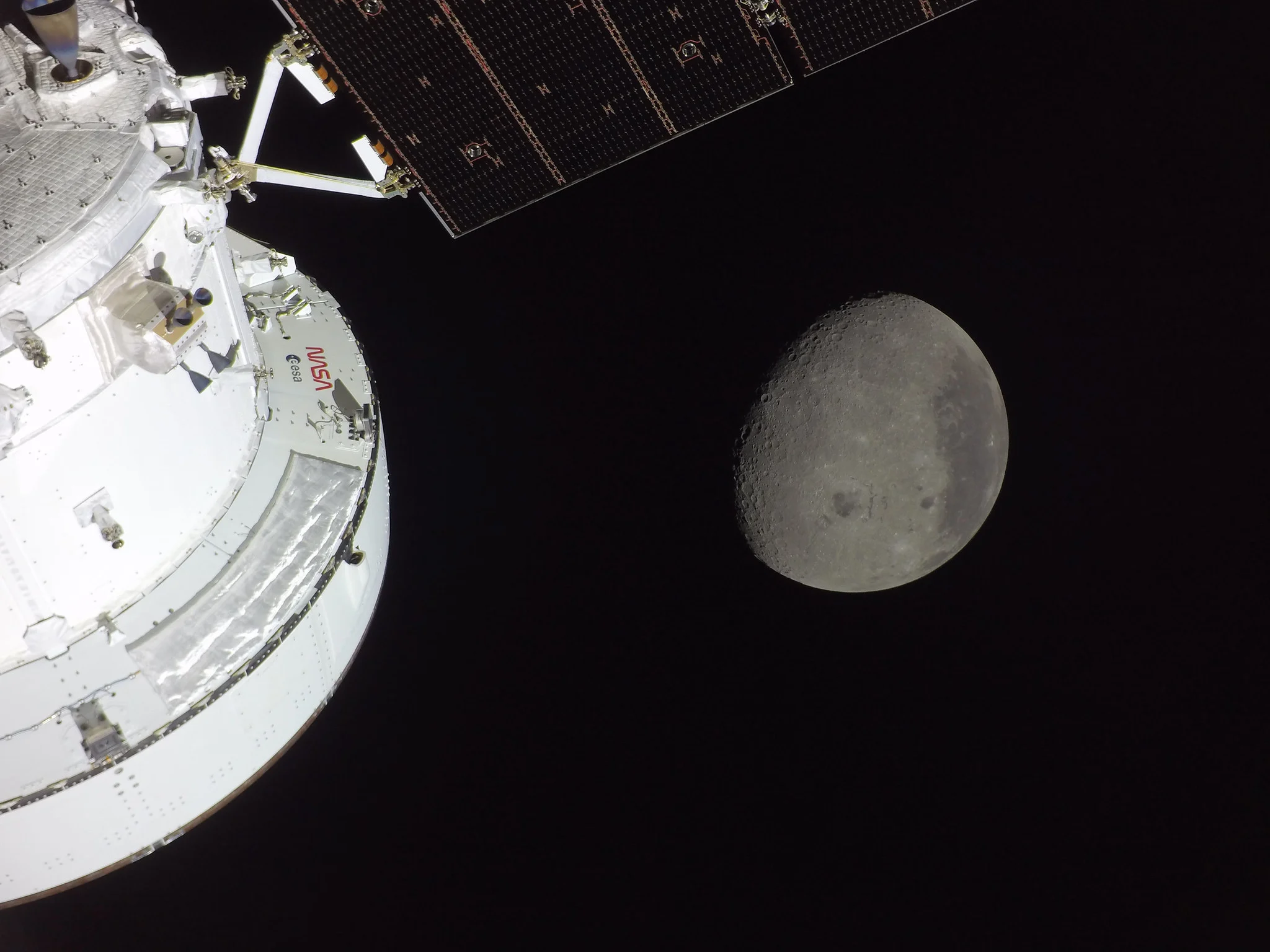
Lunar observations by the Artemis 2 crew have begun!
(NASA)
The crew is now gathered at the Orion viewports, with all of the interior lights off to prevent reflections on the windows, taking images of features on the surface, as well discussing the geology of these features.
2:00 p.m. EDT
The Artemis 2 crew has recommended names for two unnamed craters they have seen on the lunar surface.
The first is Integrity, to honour the name of the Orion spacecraft on this mission, located between Orientale crater and Ohm crater on the lunar farside.
The second is Carroll, in memory of Reid Wiseman's wife, Carroll Wiseman, whom he lost to cancer in May of 2020. This crater is located to the northwest of Glushko crater, and is a bright spot on the lunar surface.
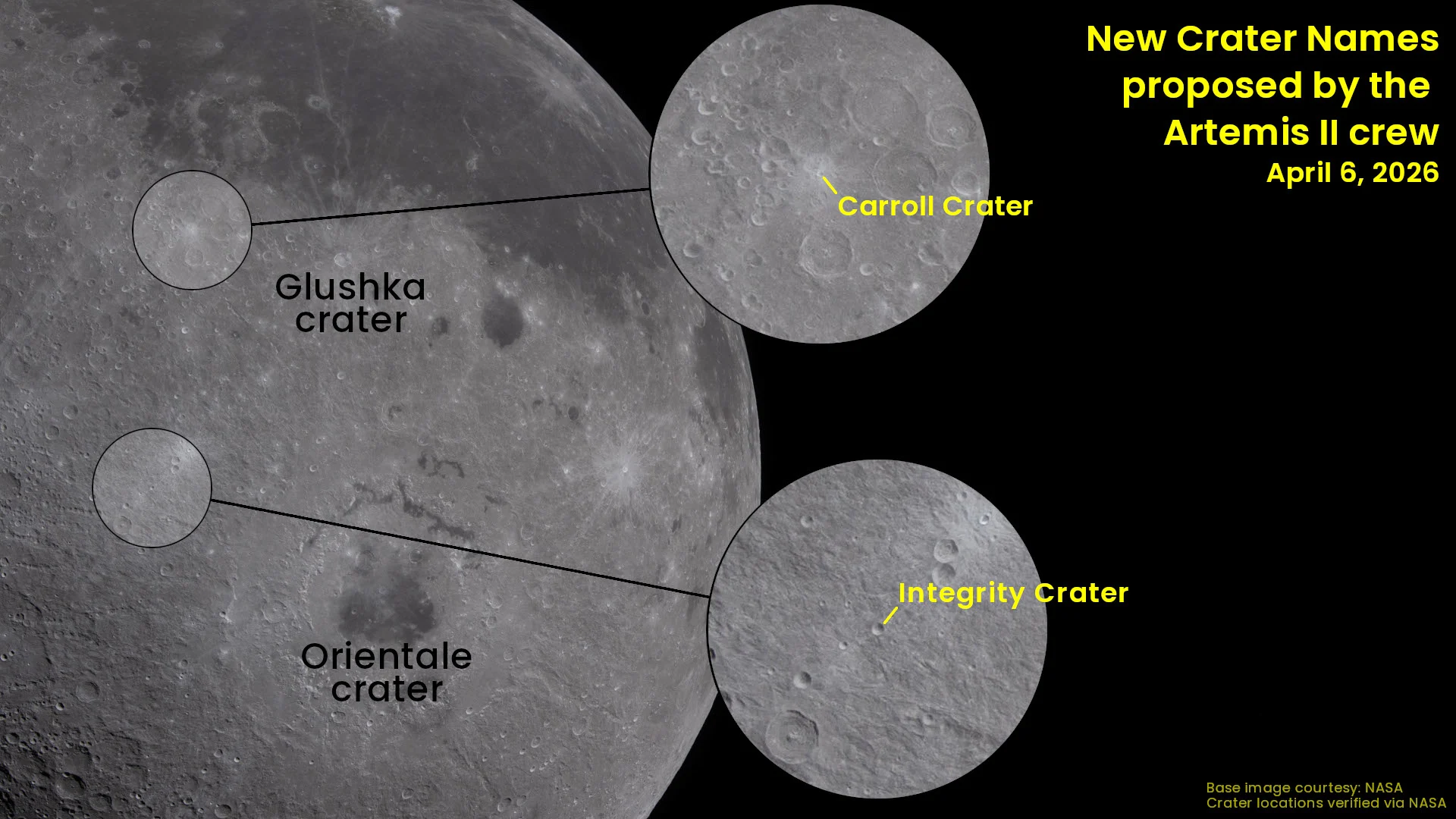
The approximate locations of the two craters the crew recommended names for, superimposed on an image of the Moon the crew captured earlier on April 6, 2026. (NASA/Scott Sutherland)
1:56 p.m. EDT
The Artemis 2 crew — Reid Wiseman, Victor Glover, Christina Koch, and Jeremy Hansen — have just become the four humans to travel the farthest from Earth, ever.

CAPCOM Jenni Gibbons, from the Canadian Space Agency, is shown here in Mission Control, as she reads out a prepared statement about the Artemis 2 crew breaking the Apollo 13 mission's record farthest distance from Earth. (NASA TV)
Passing a distance of 400,171 kilometres from Earth, they broke the record set on April 14, 1970, by the Apollo 13 crew.

The estimated distance of Artemis 2 at their farthest distance from Earth is 404,800 km, which is over 4,000 km farther than Apollo 13 in 1970. (Scott Sutherland/NASA SVS)
1:43 p.m. EDT
With NASA's coverage of this event now live, here is the schedule of events for this historic stage of the Artemis 2 mission:
At 1:56 p.m. EDT, the crew will officially break the record for farthest distance from Earth.
At 2:45 p.m. EDT, official lunar observations will begin, and continue for 7 hours.
At 6:44 p.m. EDT, NASA will lose contact with the Orion spacecraft, as they pass behind the Moon. The mass of the Moon will prevent any radio communications with the crew.
At 7:02 p.m. EDT, Artemis 2 will reach their closest distance to the Moon, at 6,550 km from the lunar surface.
At 7:07 p.m. EDT, Artemis 2 will reach their farthest distance, total, from Earth.
At 7:25 p.m. EDT, Mission Control should re-aquire contact with Orion.
At 8:35 p.m. EDT, Orion will view a solar eclipse from space, as the Moon passes directly in front of the Sun from their perspective. This will last until 9:32 p.m. EDT.
At 9:20 p.m. EDT, flyby operations will wrap up.

In a camera view from the tip of one of Orion's solar panels, the side and forward section of the spacecraft can be seen to the left, while the Moon is visible on the right. This isn't a full-disk view of the Moon, as the lower right section is in shadow. The Moon is 'upside down' compared to our normal, northern hemisphere view of the Moon, and they can see a portion of the eastern limb of the Moon that we rarely glimpse from Earth. (NASA TV)
1:15 p.m. EDT
The Artemis 2 crew is roughly 45 minutes away from breaking Apollo 13's distance record from Earth.

(NASA TV)
Above, the astronauts can be seen in the top left corner of the image, as they cluster around the Orion viewports to begin their lunar observations.
12:00 p.m. EDT
The Orion spacecraft draws closer to the Moon, and will soon begin their closet pass.

This computer visualization shows a context shot of the Orion spacecraft and the Moon in the same view, to demonstrate the mission's progress at around noon EDT on April 6, when the camera feed from the outside of the spacecraft is not available. In metric, Orion's speed is 1,815 kph, its distance from Earth is 396,523 km, and it is 26,837 km from the Moon, at this time. (NASA TV)
In the process, the spacecraft will cross a distance of 400,171 kilometres from Earth. This is the record-setting distance that the Apollo 13 crew reached, as they passed around the far side of the Moon back on April 14, 1970.
LIVE UPDATES FROM LAUNCH DAY: Artemis 2 Live: First crewed Moon flight since 1972 successfully launches
Monday morning, April 6, 2026
The Artemis 2 crew crossed an important milestone on their journey. At four day, six hours, 2 minutes, and 54 seconds into the mission, they crossed the threshold into the lunar sphere of influence!
This is where, due to proximity, the Moon's gravitational pull became stronger on the Orion spacecraft than the pull from Earth's gravity!
From here, the crew begins their close pass around the Moon.