Eyes up! The Northern Lights may shine bright across Canada in the nights ahead

Displays of the Northern Lights this close to the March Equinox sometimes explode with light and colour!
Eyes to the sky! A passing solar storm may spark bright auroras across Canada on Thursday and Friday nights!
On the morning of Monday, March 16, a moderate-strength solar flare exploded on the Earth-facing side of the Sun. In the aftermath, satellite images captured the eruption caused by the flare, as it expanded away from the Sun.
That eruption, known as a coronal mass ejection, is now travelling towards Earth, and should arrive sometime overnight Wednesday into Thursday.
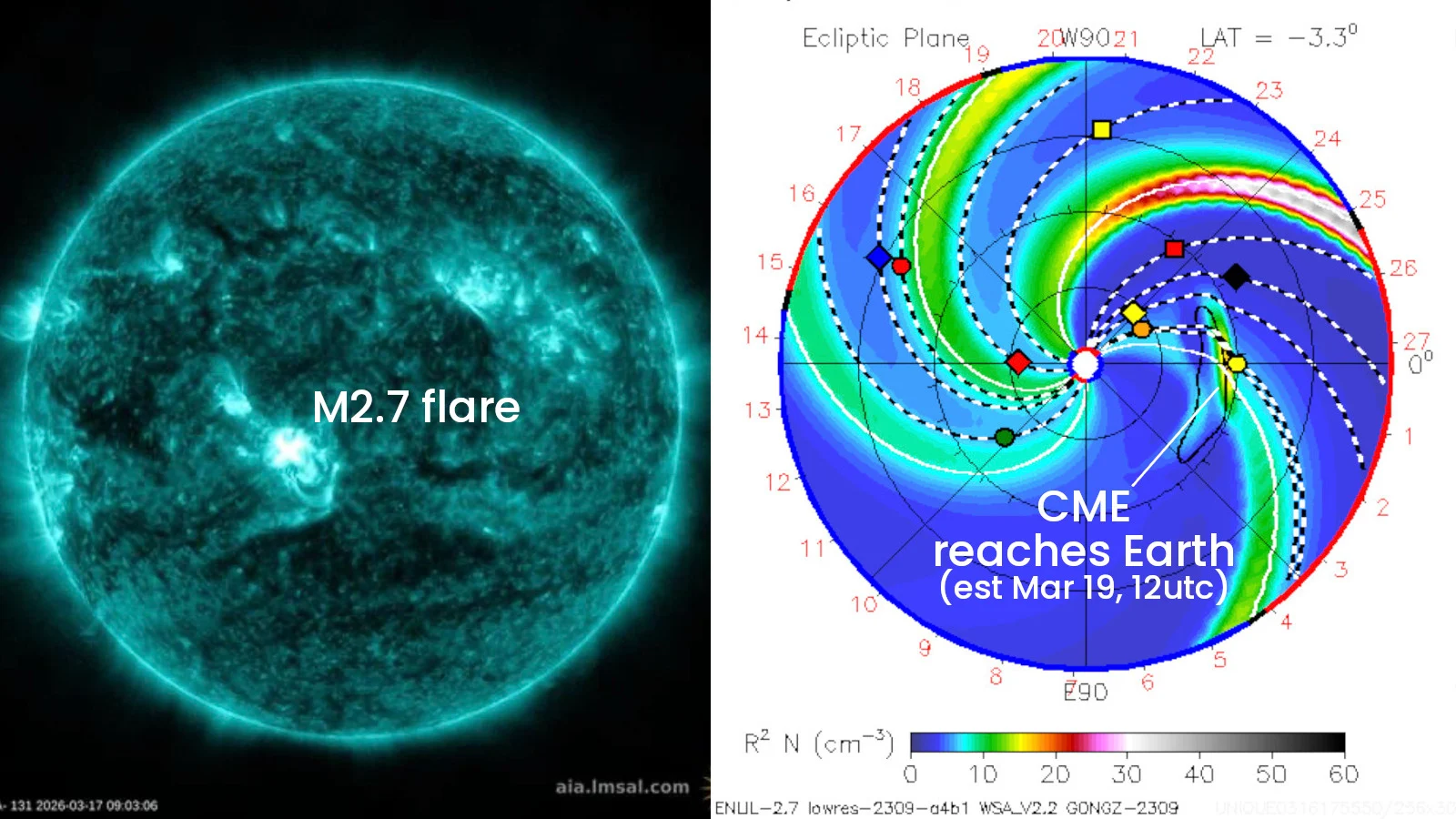
The M2.7 flare from March 16, 2026 (left), as imaged by the Solar Dynamics Observatory, and NASA's ENLIL computer model run showing the arrival of the solar storm at around 12 UTC on March 19. (NASA)
When this 'solar storm' reaches us, it will likely result in a disturbance to Earth's magnetic field, known as a geomagnetic storm.
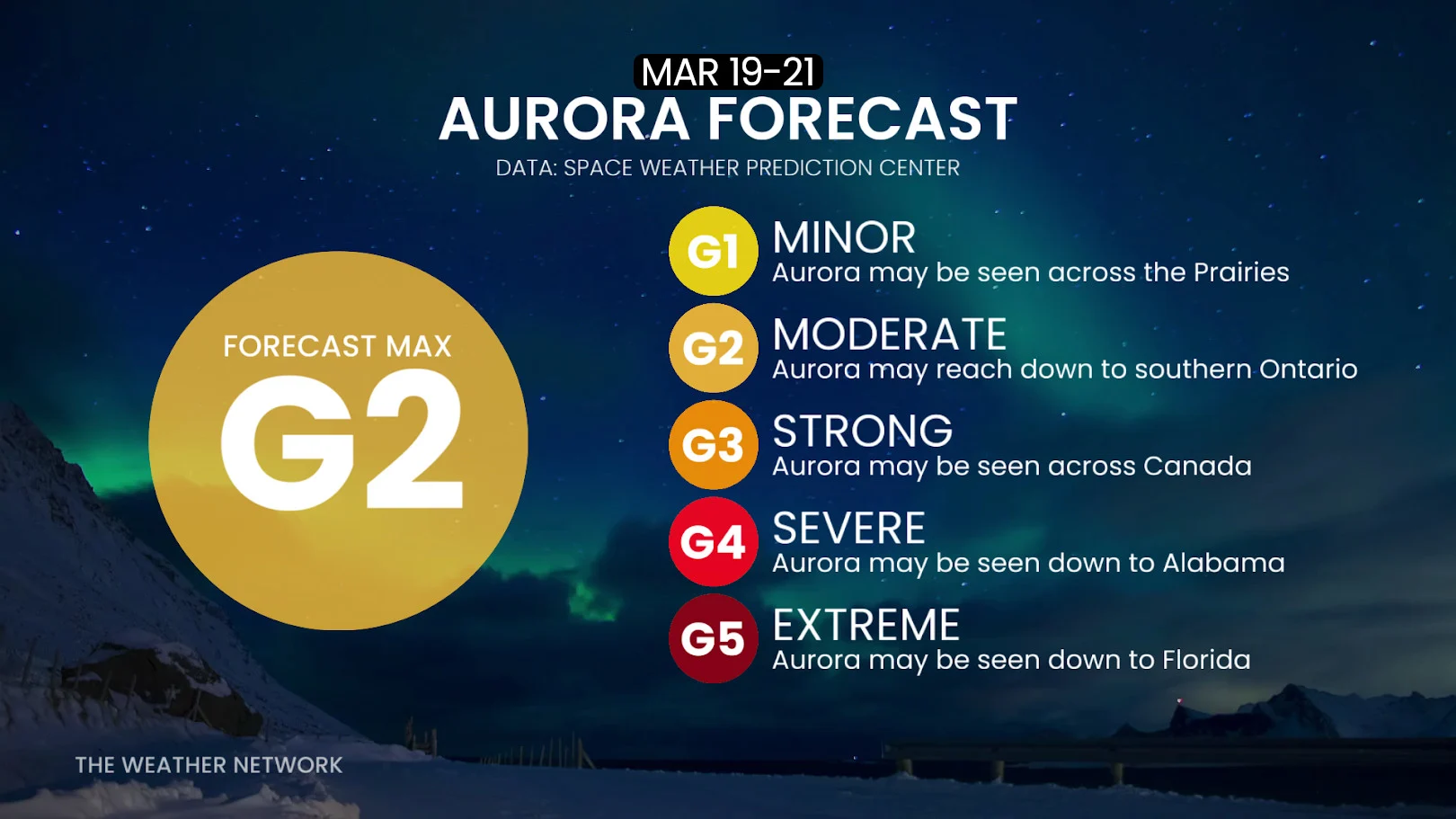
Forecasters with NOAA's Space Weather Prediction Center have issued a G2 (moderate) geomagnetic storm watch for Thursday night through Friday morning, March 19-20, in anticipation of the solar storm's arrival.
READ MORE: Geomagnetic storms - what are they, what do the levels mean, and when should we worry?
The SWPC forecast specifically calls for G1 (minor) and G2 (moderate) storm levels throughout the afternoon on Thursday (EDT), with G2 conditions continuing into Thursday evening and overnight, tapering off to G1 levels after midnight on Friday morning.
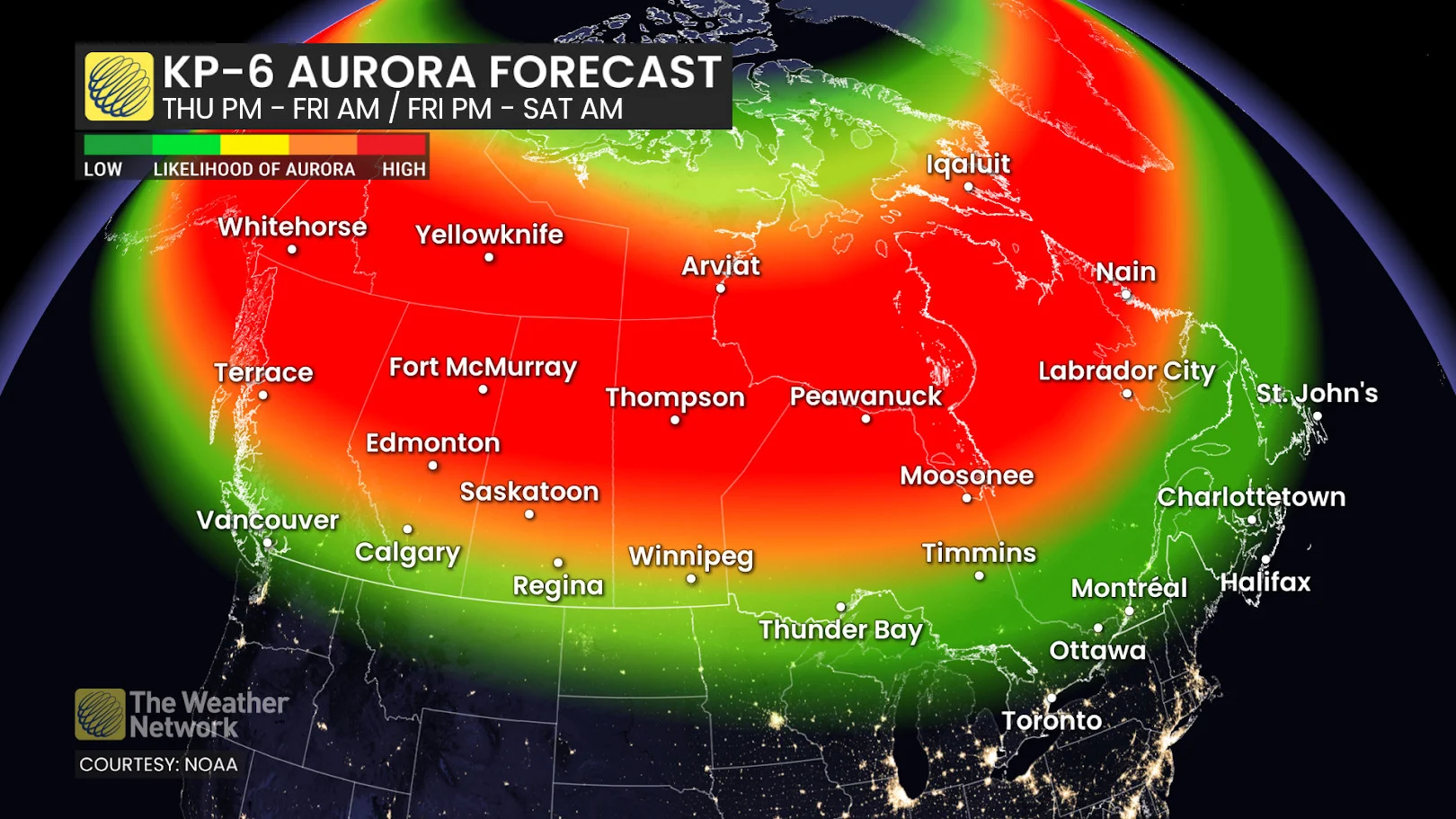
Then, due to the possible arrival of more solar storm, combined with a fast stream of the solar wind sweeping past us, G1 followed by G2 storm levels could resurface Friday evening into Saturday morning.
As predicted by SWPC forecasters, the timing of this CME arrival was initially fairly uncertain. Their original estimate put the earliest encounter for the predawn hours on Thursday. However, space weather conditions remained calm throughout the entire night.
This new assessment favours a later arrival, of course, but also includes the potential effects of several new CMEs that erupted towards us since Monday, which appear to arrive just as a Coronal Hole High Speed Stream (CH HSS) is set to sweep past Earth.
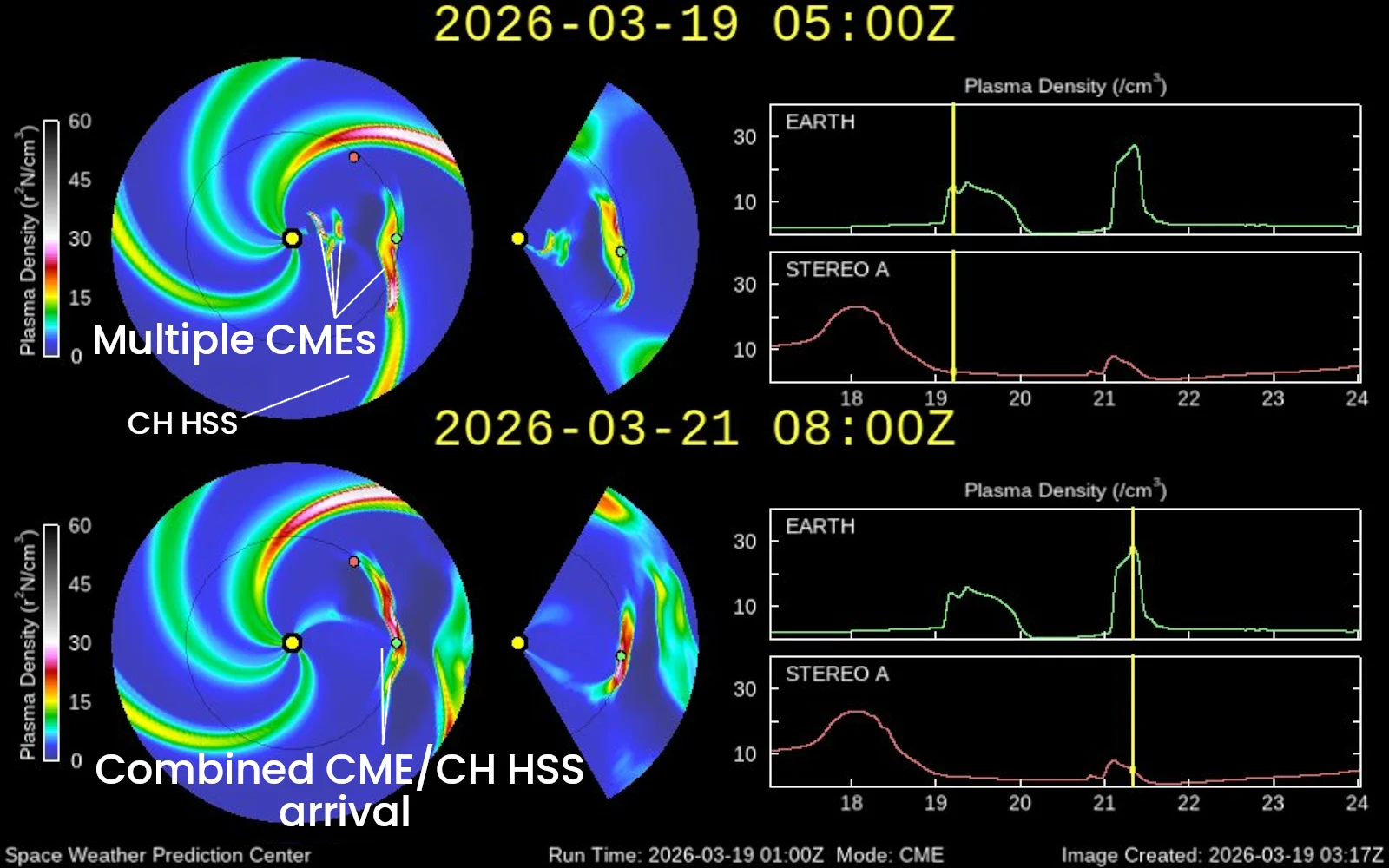
Two frames of SWPC's ENLIL solar wind model are overlaid here, indicating multiple CMEs approaching Earth (bright arcs, top frame), with the first arriving on March 19. The subsequent clouds combine before reaching Earth early on the 21st. (NOAA SWPC/Scott Sutherland)
In the model plots, above, the 'pinwheel' pattern around the Sun represents the different flows of the solar wind. The coloured streams are the denser, slower, lower-energy flows. The wide open areas represent more diffuse, but higher-energy flows, known as Coronal Hole High Speed Streams.
When a normal solar wind stream passes us, and we are suddenly plunged into the CH HSS, we often encounter a buildup of higher-energy particles along the line of transition between them. In Earth-weather terms, this is similar to the passage of a cold front, as it can spark active space weather, and thus we can see brighter and more southerly auroras as a result.
And with the general timing of this space weather activity, occurring right around the March equinox, there is the potential we could see even better Northern Lights displays over the next two nights.
DON'T MISS: Possible meteor creates house-shaking boom S. of Lake Erie
Equinox Cracks?
The Sun and Earth are each surrounded by their own magnetic field. The Sun's magnetic field contributes to solar activity, such as solar flares and coronal mass ejections (aka solar storms). Meanwhile, the Earth's magnetic field reacts to these solar storms, and to the flow of the solar wind, which results in coloured displays across Canadian skies known as the Aurora Borealis, or the Northern Lights.
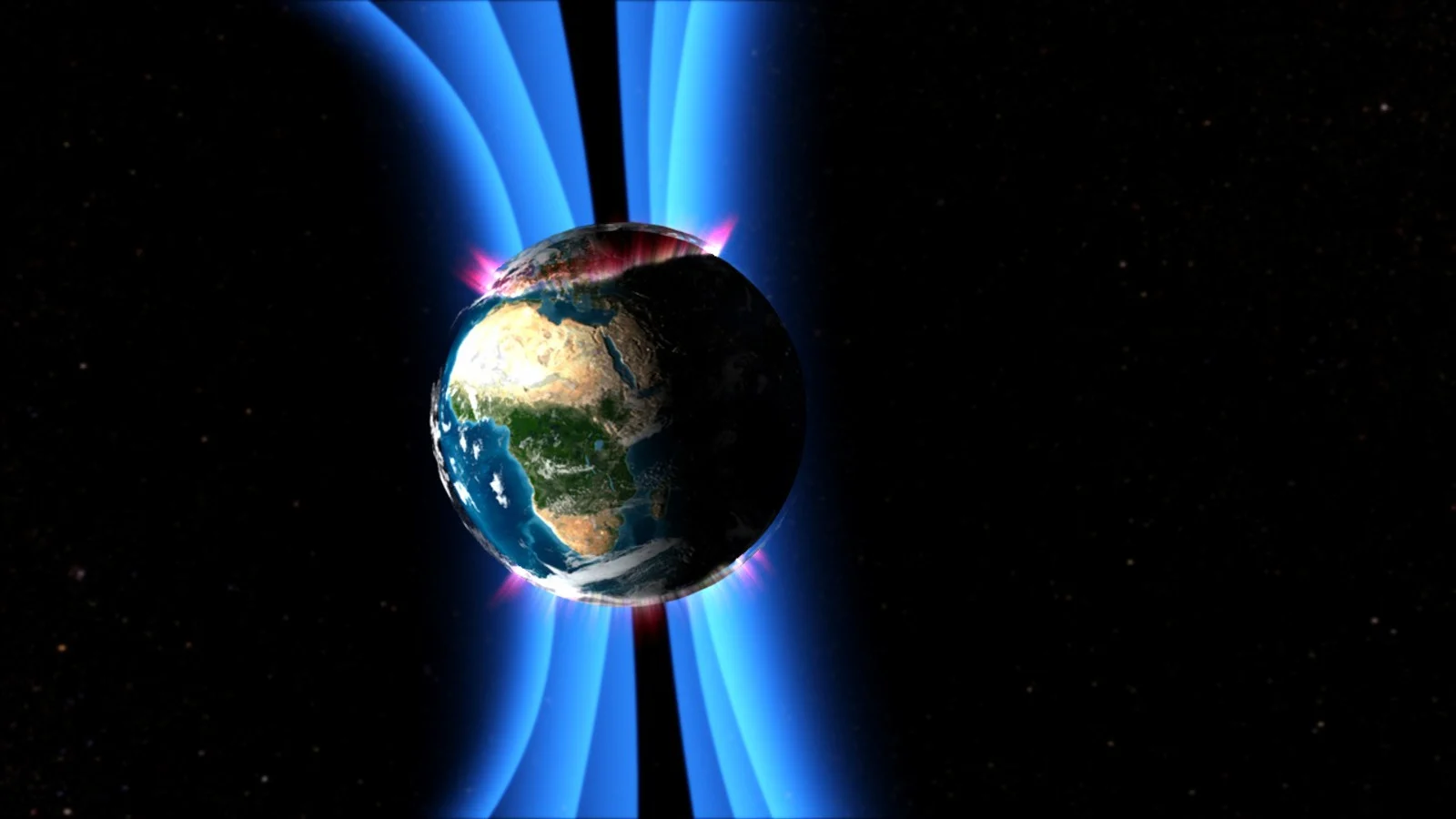
Auroras appear around the north and south poles of Earth as Earth's geomagnetic field traps particles from the solar wind and funnels them down into the atmosphere. (NASA)
DON'T MISS: A Great Comet may shine along with meteor showers and bright planets this spring
Due to Earth's tilt, our planet's magnetic field is nearly always out of alignment with the Sun's magnetic field. So, even under the absolute ideal conditions for a solar storm or the solar wind to result in auroras, that misalignment effectively reduces the overall intensity of any that do appear.
However, around the spring and fall equinoxes, the magnetic fields of the Sun and Earth line up better than they do during the rest of the year. This can cause strong connections to form between the two, effectively opening up 'cracks' in Earth's magnetic field.
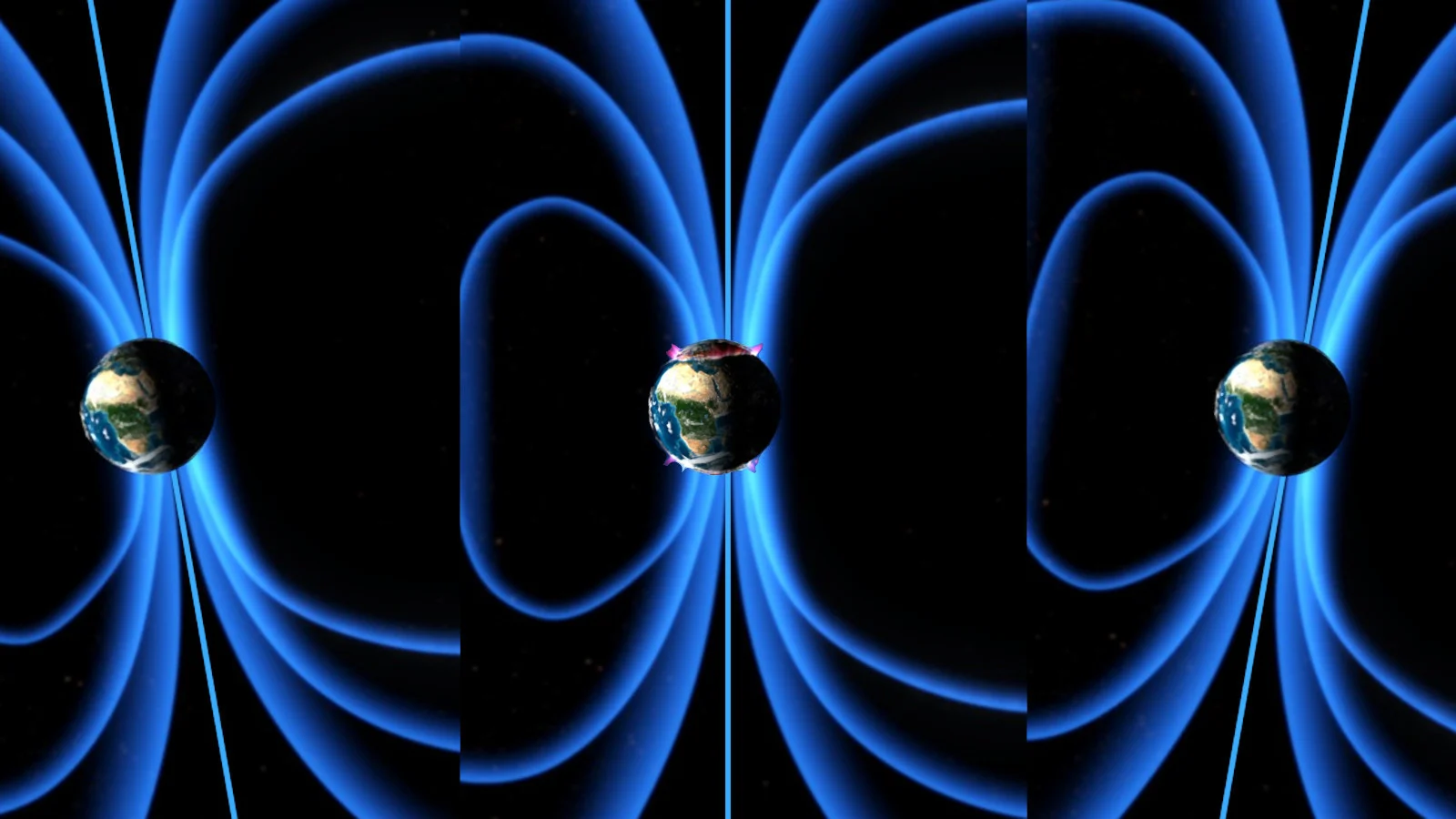
The orientation of Earth's magnetic field at northern summer solstice (left), equinox (centre), and northern winter solstice (right). The Sun is located far off the left side of the field of view, and its magnetic field is oriented most in alignment with the centre panel. (NASA/Scott Sutherland)
READ MORE: Why are the Northern Lights so supercharged lately and how long will this last?
This is known as the "Russell-McPherron effect" and it produces fast-tracks for particles from the solar wind or from solar storms to stream down through that protective barrier and into the upper atmosphere.
As a result of all this, auroras that occur around the equinoxes can be some of the brightest and most colourful of the entire year!
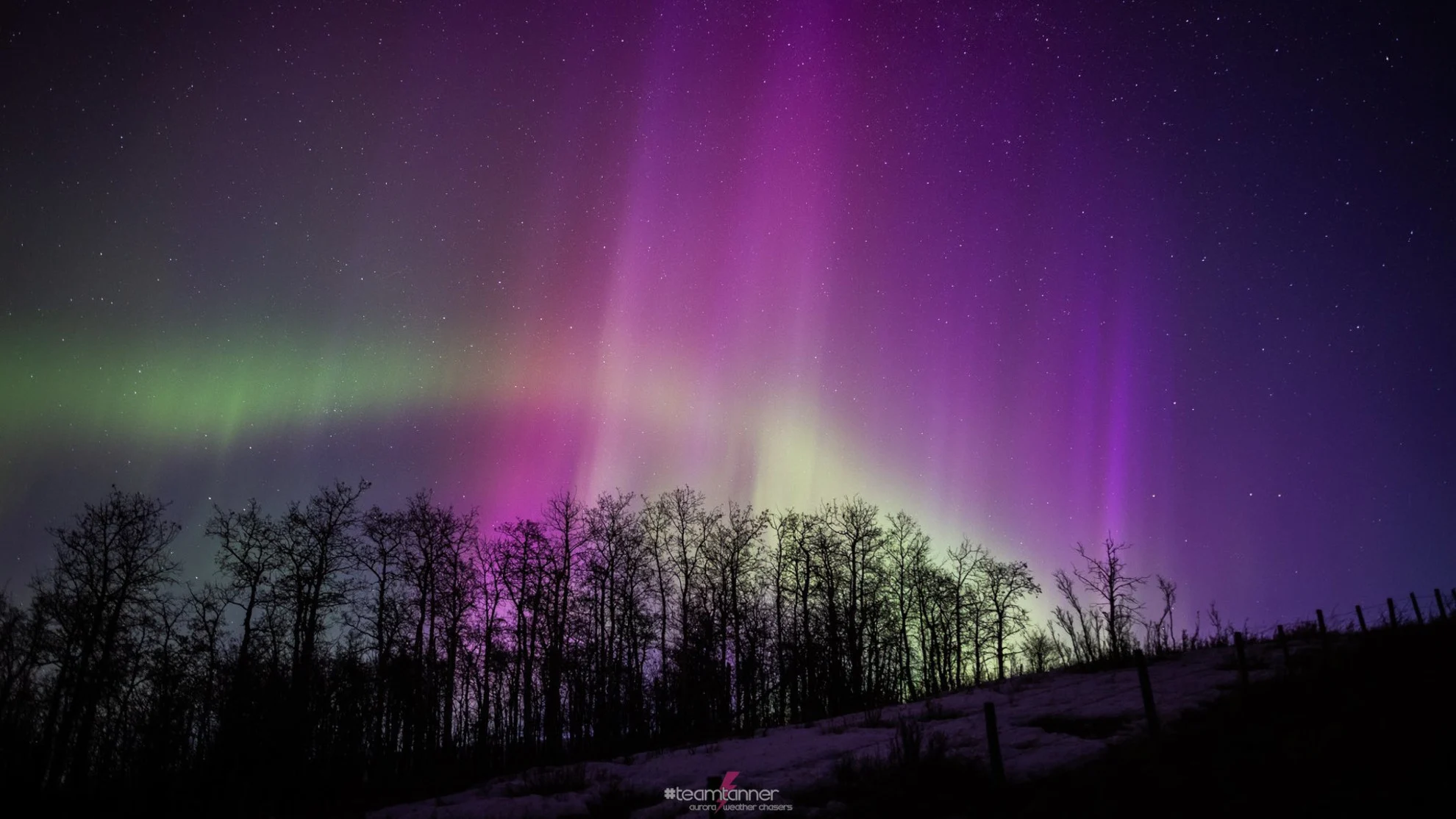
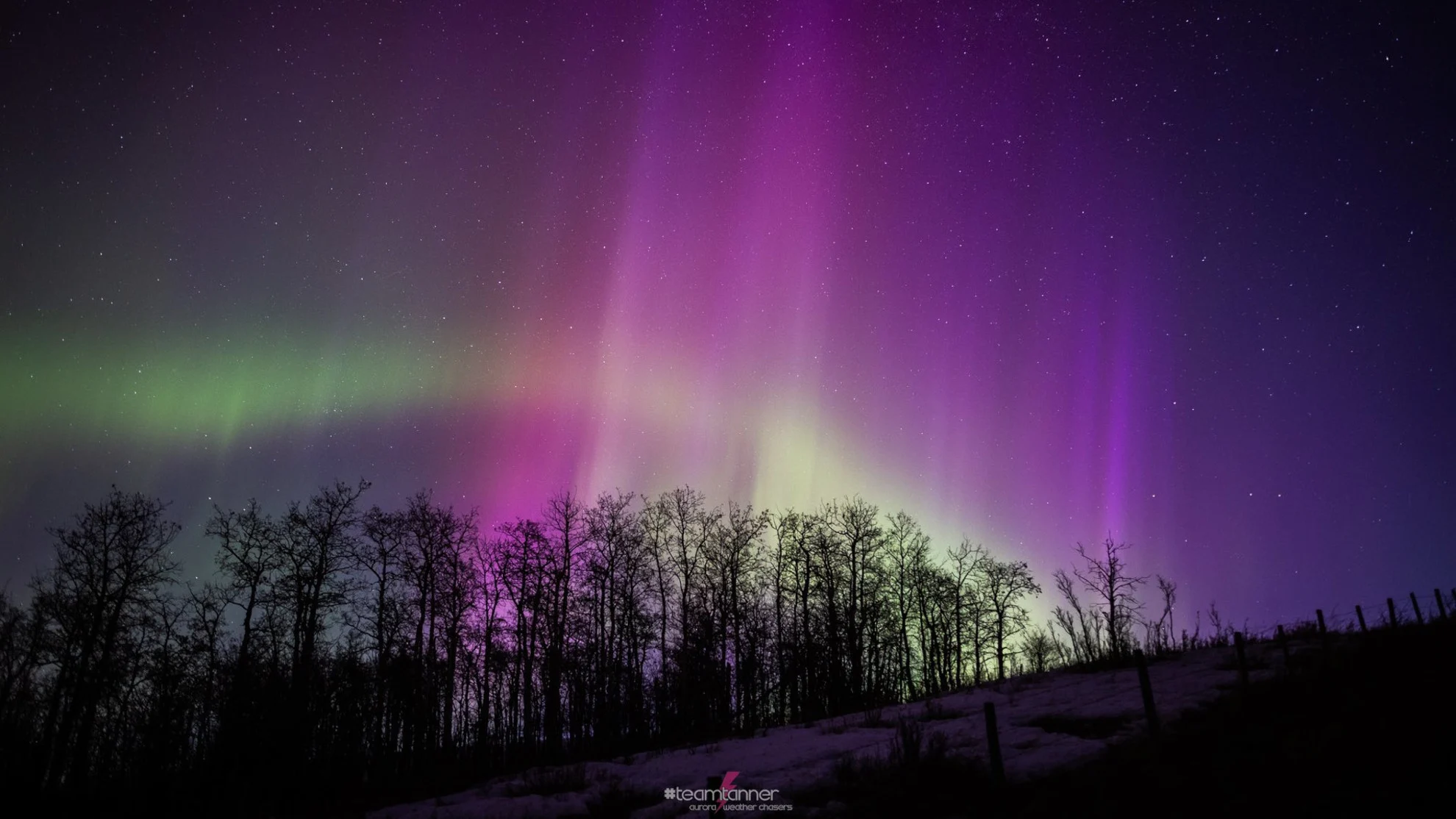
This colourful aurora display was captured by Tree and Dar Tanner from central Alberta, on March 23, 2023. (TeamTanner)
Given that the geomagnetic field is effectively invisible, it is difficult to factor these 'equinox cracks' into any space weather forecast. Thus, they are not taken into account with what NOAA's forecasters expect from this CME arrival.
We will need to wait until it reaches us to see what happens.