When is the Winter Solstice, the shortest day and longest night of the year?

This year's Winter Solstice night is the darkest in over a decade.
Astronomical winter soon arrives, but exactly when is our shortest day and longest night of the year?
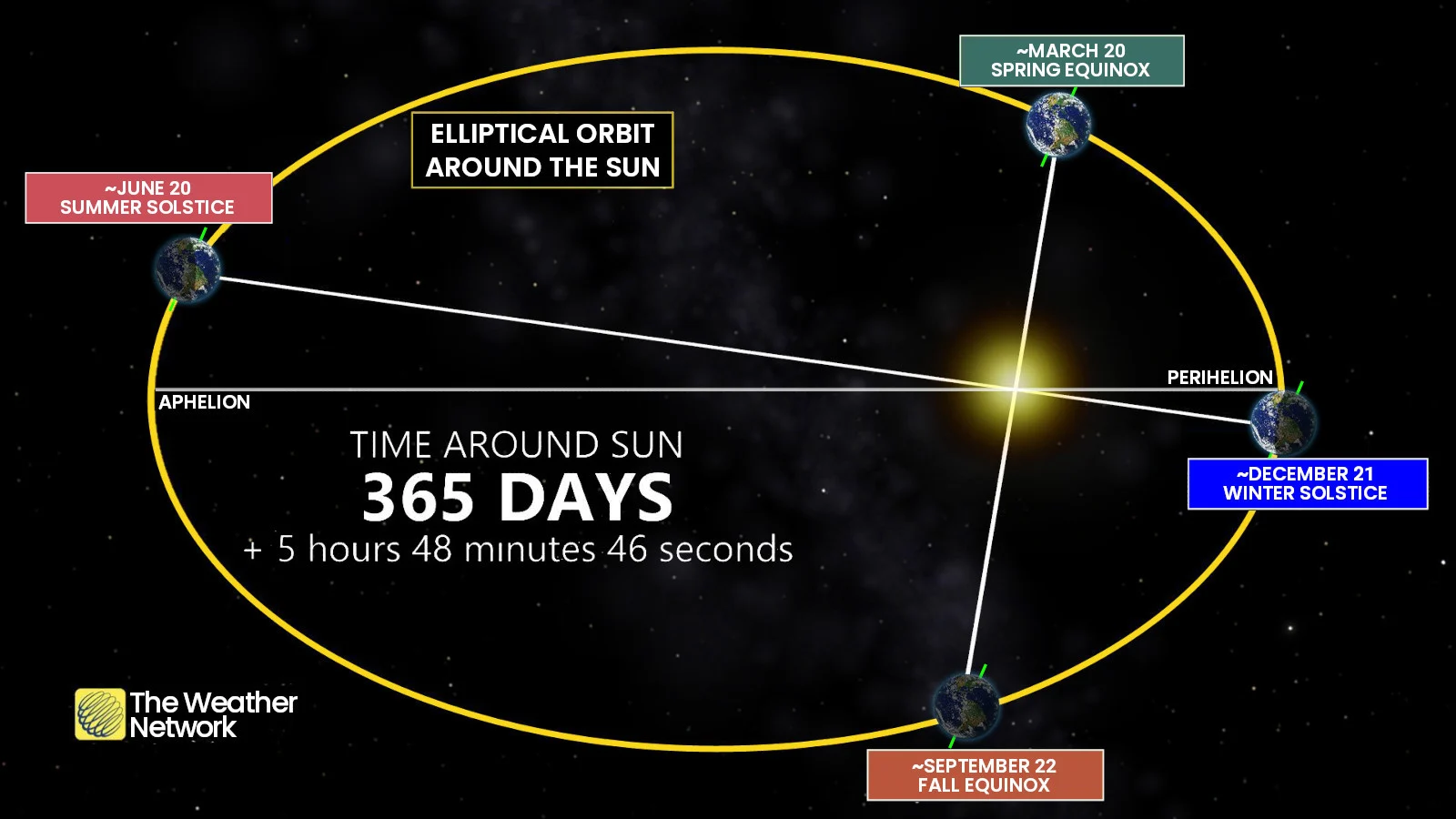
During Earth's yearly trek around the inner solar system, the tilt of the planet's axis causes our view of the Sun to change. From late December through late June, its path across our sky climbs higher and higher, reaching a peak on the Summer Solstice. Then, for the rest of the year, that path gets lower in the sky, day by day, until it reaches its lowest point.
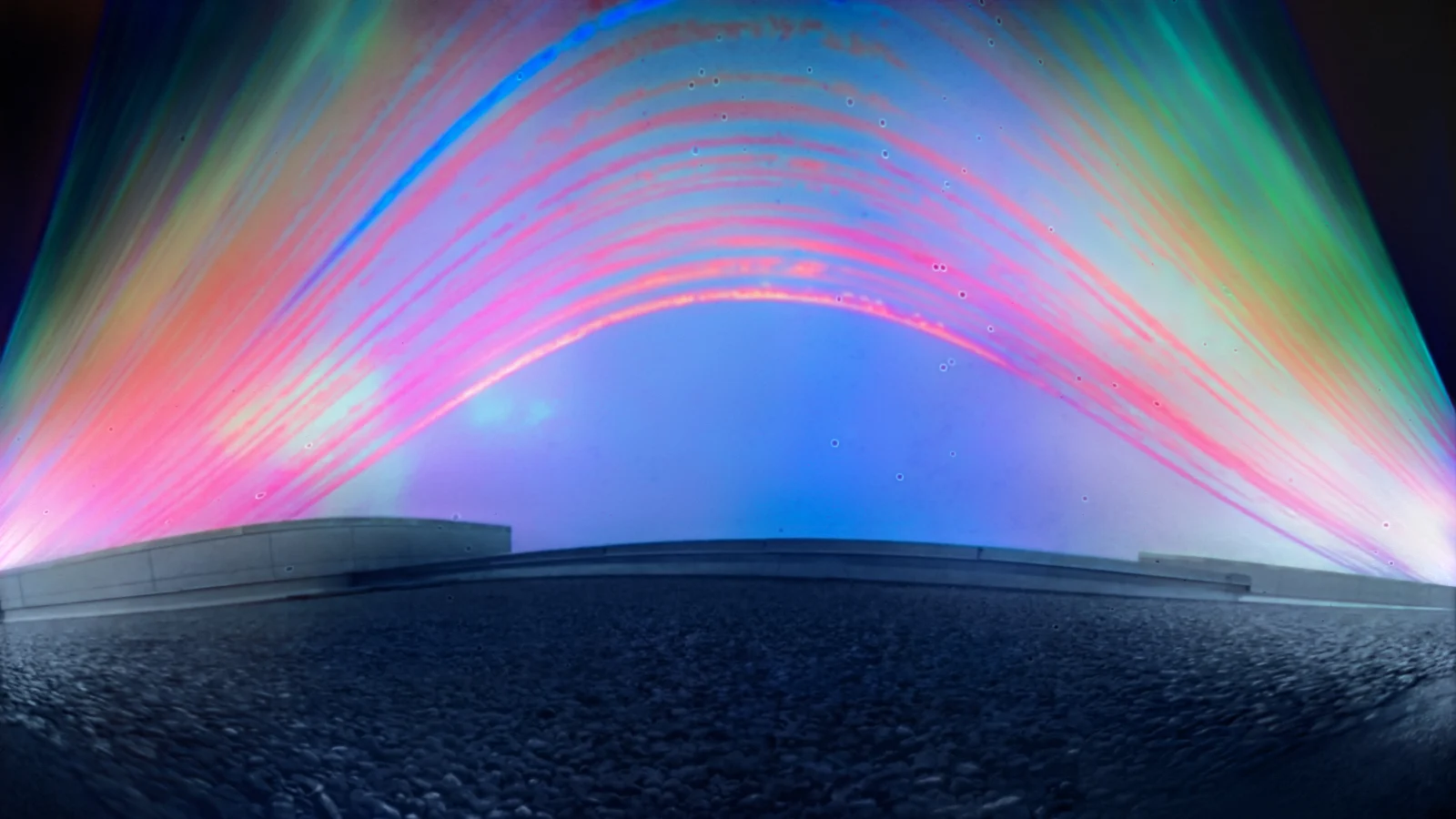
This 'solargraph' captures, all in one image, the day by day passage of the Sun across our sky, from atop Weather Network headquarters in Oakville, Ont., starting with the highest track on June 20, and ending with the lowest track on December 20, 2023. (Bret Culp, used with permission)
DON'T MISS: How the Earth's tilt creates short, cold January days
To be clear, Earth's tilt does not noticeably change during each orbit. The axis remains pointed roughly in the direction of Polaris, the North Star, throughout the year entire year. It's our viewing angle that causes the difference in the position of the Sun in our sky.
For Canada, the part of Earth's orbit we pass through in June has us angled towards the Sun during the day. So, the Sun appears higher in the sky. At the opposite side of the orbit, which we swing through in December, we are instead angled away from the Sun during the day. Thus, the Sun appears lower.
READ MORE: How to get the most out of meteor showers and other night sky events
When the Sun reaches its lowest point in the sky, which always occurs around December 21 for those of us in the northern hemisphere (give or take a day or so), we mark the Winter Solstice.
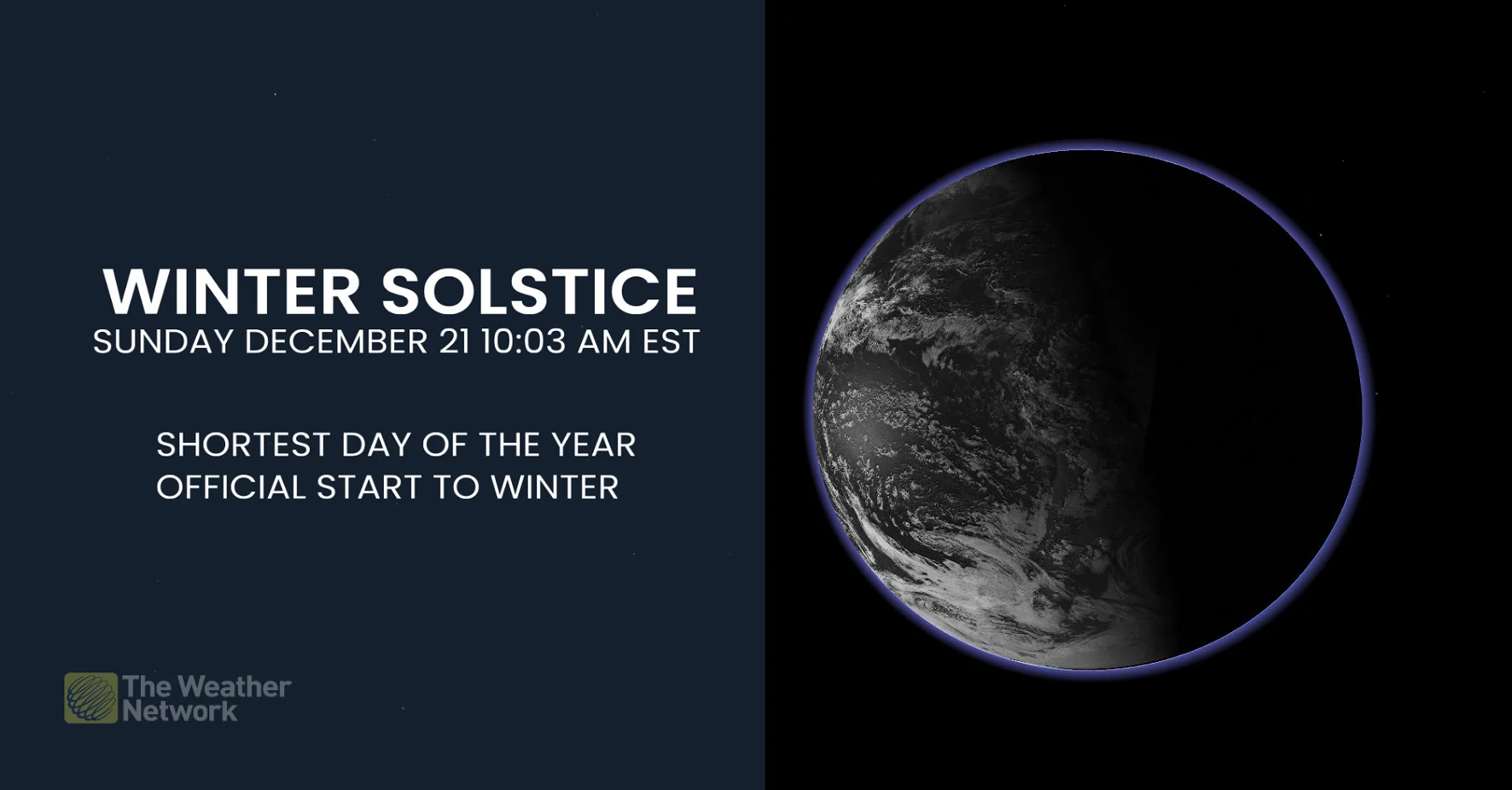
According to the Royal Astronomical Society of Canada, in 2025, the Sun reaches its lowest point in our sky on December 21, at exactly:
11:33 a.m. NST,
11:03 a.m. AST,
10:03 a.m. EST,
9:03 a.m. CST,
8:03 a.m. MST, and
7:03 a.m. PST.
This is both the shortest day and longest night of the year.
DON'T MISS: Eyes to the winter sky for meteor showers, a supermoon and a total lunar eclipse
Shortest Day
On December 21, the exact amount of daylight you see will depend on how far from the Arctic Circle you are.
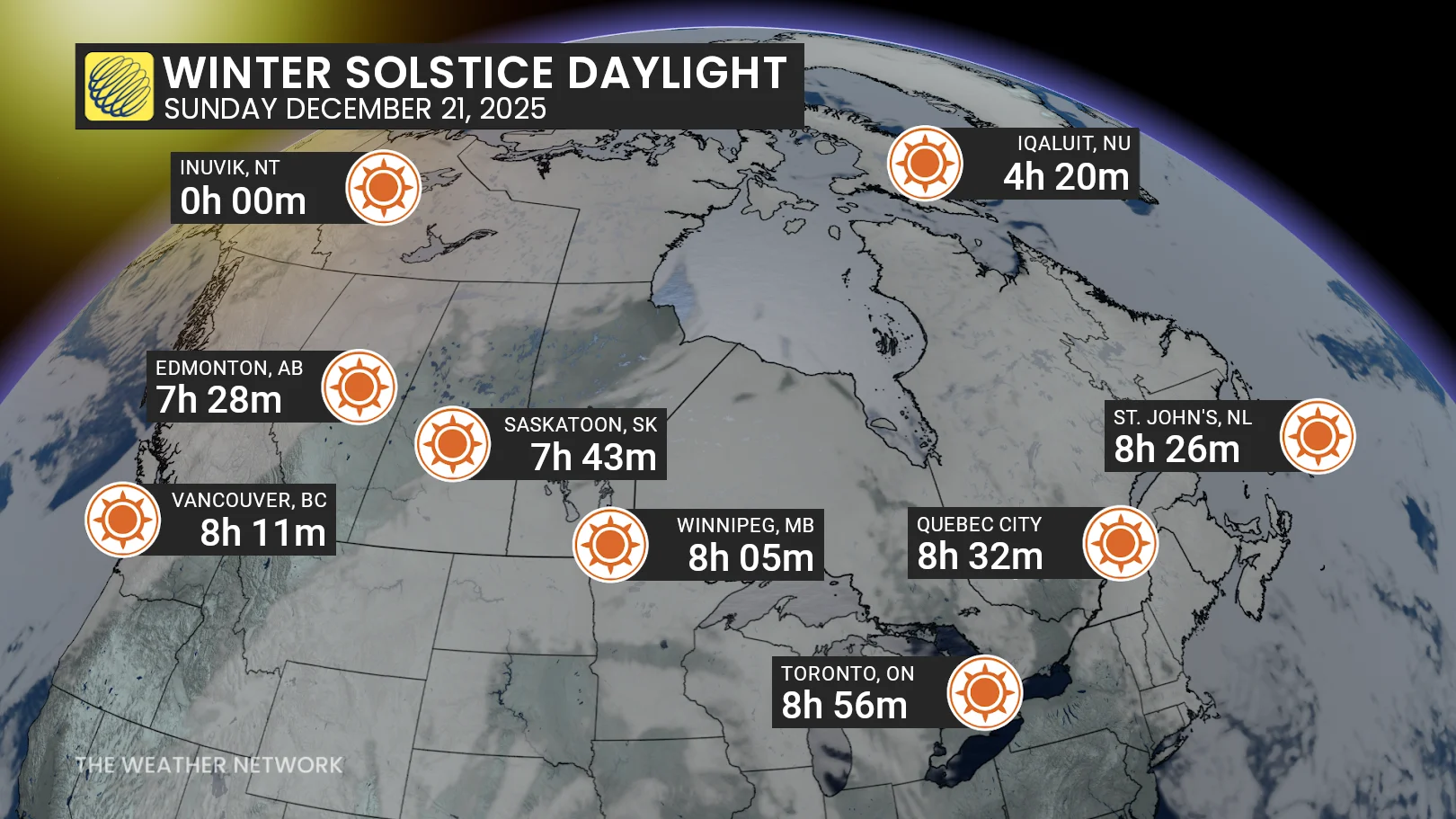
The farther south you are, the longer you will see the Sun on that day. That can be for as short as 4 hours and 20 minutes in Iqaluit, NU, to as long as 8 hours and 56 minutes in Toronto. The longest daytime for Canada will be in Kingsville, on the shores of Lake Erie, where they will see the Sun for around 9 hours and 7 minutes.
Longest night
Conversely, just after the shortest day, we'll see the longest night of the year.
The farther north you are, the longer your night will be.
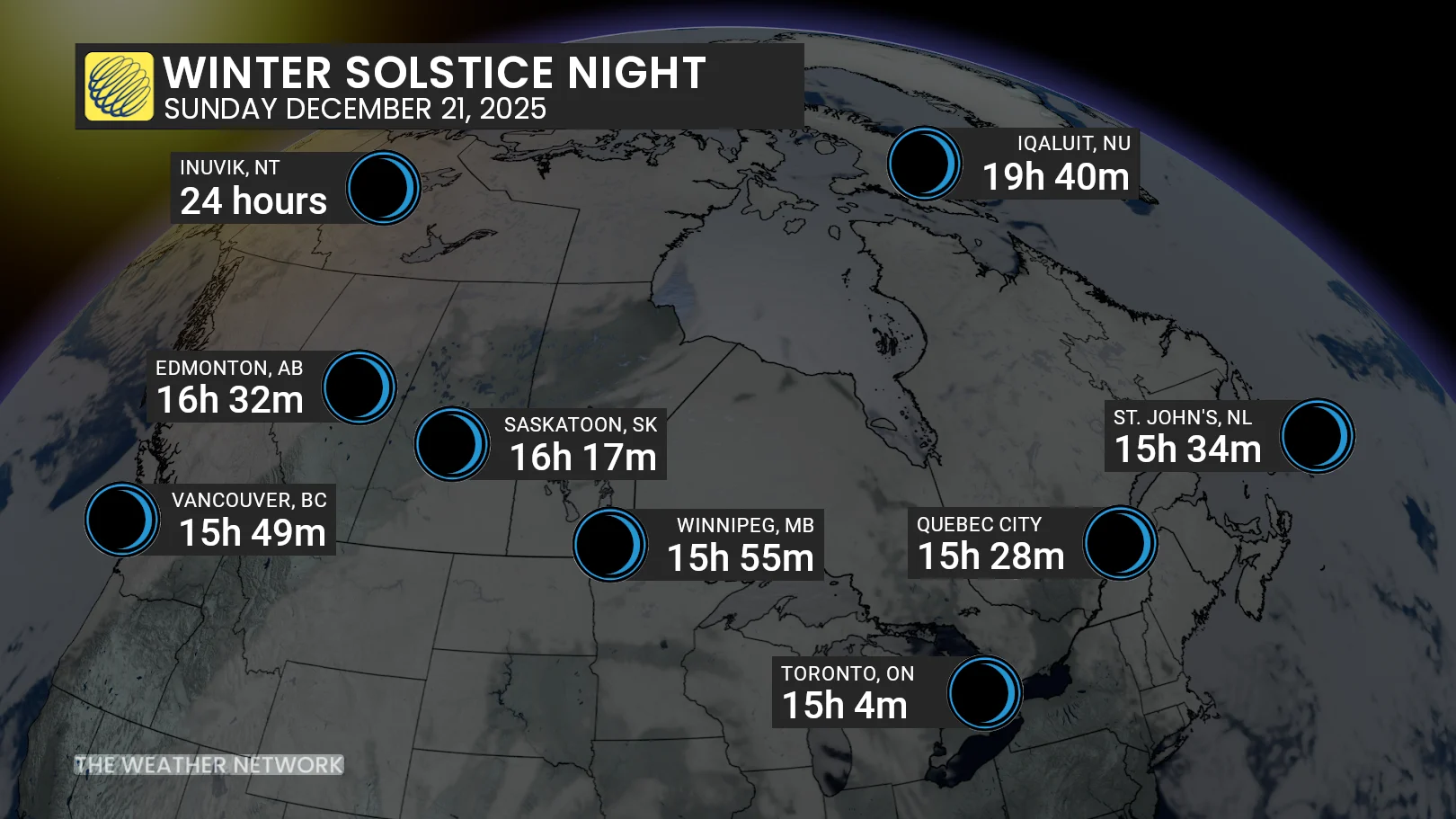
Those north of the Arctic Circle, such as in Inuvik, NT, won't see the Sun rise again until the Spring Equinox, on March 20, 2026.
WINTER 2025-2026: La Niña and the polar vortex set to deliver a truly Canadian winter
See the Ursids!
With only an extremely thin Waxing Crescent Moon in the sky on the Winter Solstice, this year's longest night will also be the darkest since 2014, when there was a New Moon on that day.
As such, this is a great year to check out the annual Ursid meteor shower, which peaks on the night of the 21st!
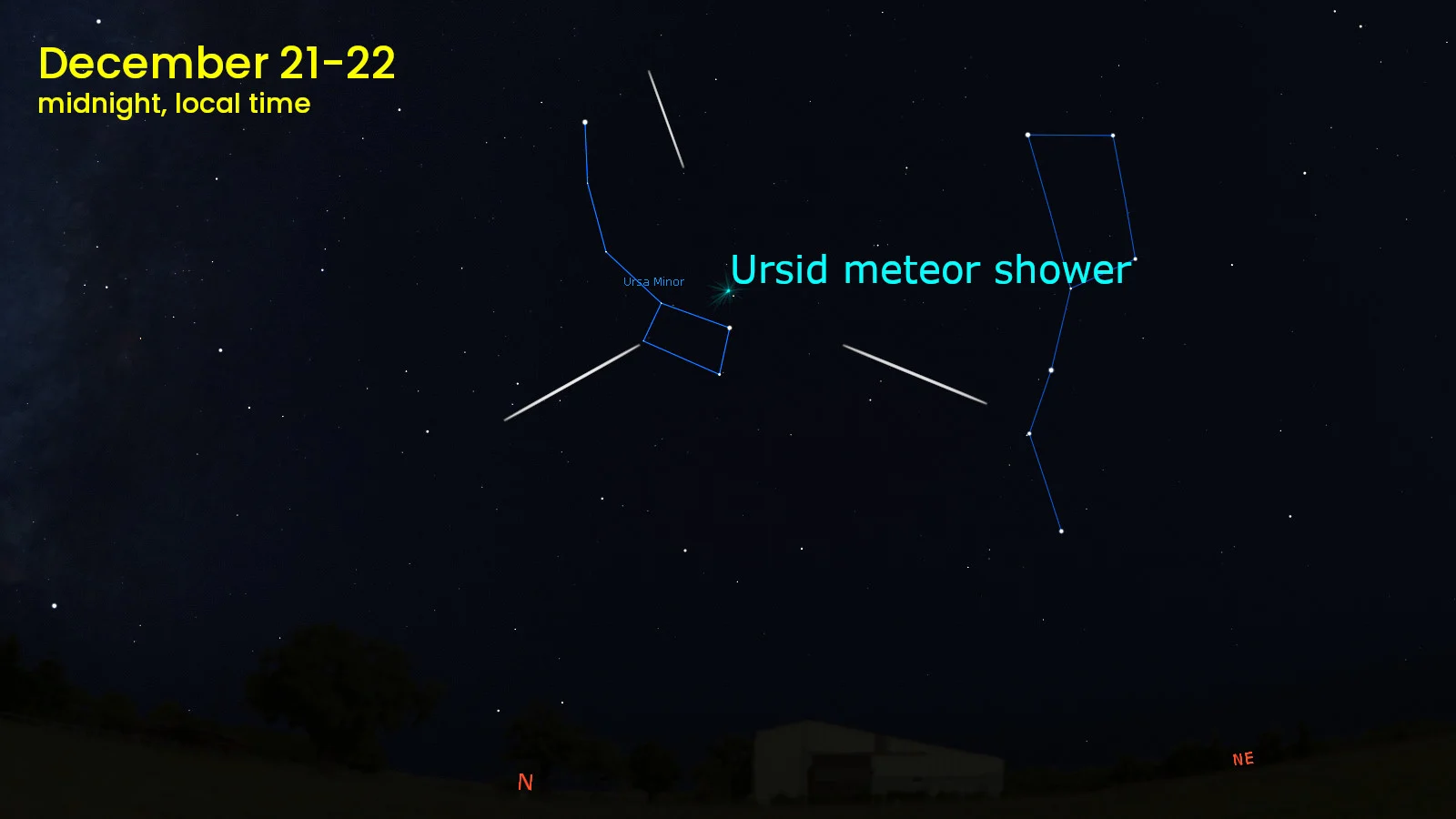
The 'radiant' of the Ursid meteor shower, near the Little Dipper (aka Ursa Minor), overnight on December 21-22, 2025. (Stellarium/Scott Sutherland)
Although the Ursids typically deliver only around 10 meteors per hour during the peak, that number can occasionally jump to 25-50 per hour.
According to the International Meteor Organization, there is a chance we may see a minor outburst of activity from the Ursids this year. This outburst, if it occurs as predicted, will bump the number of meteors up to around 25 per hour, timed for just after midnight (EST) on the 22nd.