Staying safe from flash floods, a serious and deadly hazard

Flash flooding can happen in mere minutes; here's how to stay safe
Flash floods rank among the deadliest types of severe weather you’re most likely to encounter across Canada and around the world.
Flooding typically unfolds over a matter of hours or days. But a flash flood can occur in just minutes as rushing water submerges streets and bursts the banks of local waterways.
Staying alert to the risk of flash flooding, and knowing how to react when this danger strikes, is a vital safety skill no matter where you are or what season you’re enjoying.
DON’T MISS: Get ahead of disaster: Six tips to manage flooding
Flash floods are a major hazard
A flash flood is a sudden rise or surge of water that builds quickly. Flash flooding is a major hazard throughout Canada, from the streets of Toronto to the valleys of British Columbia.
Excessive rainfall is the most frequent cause of flash flooding. This hazard is most prevalent during thunderstorm season.
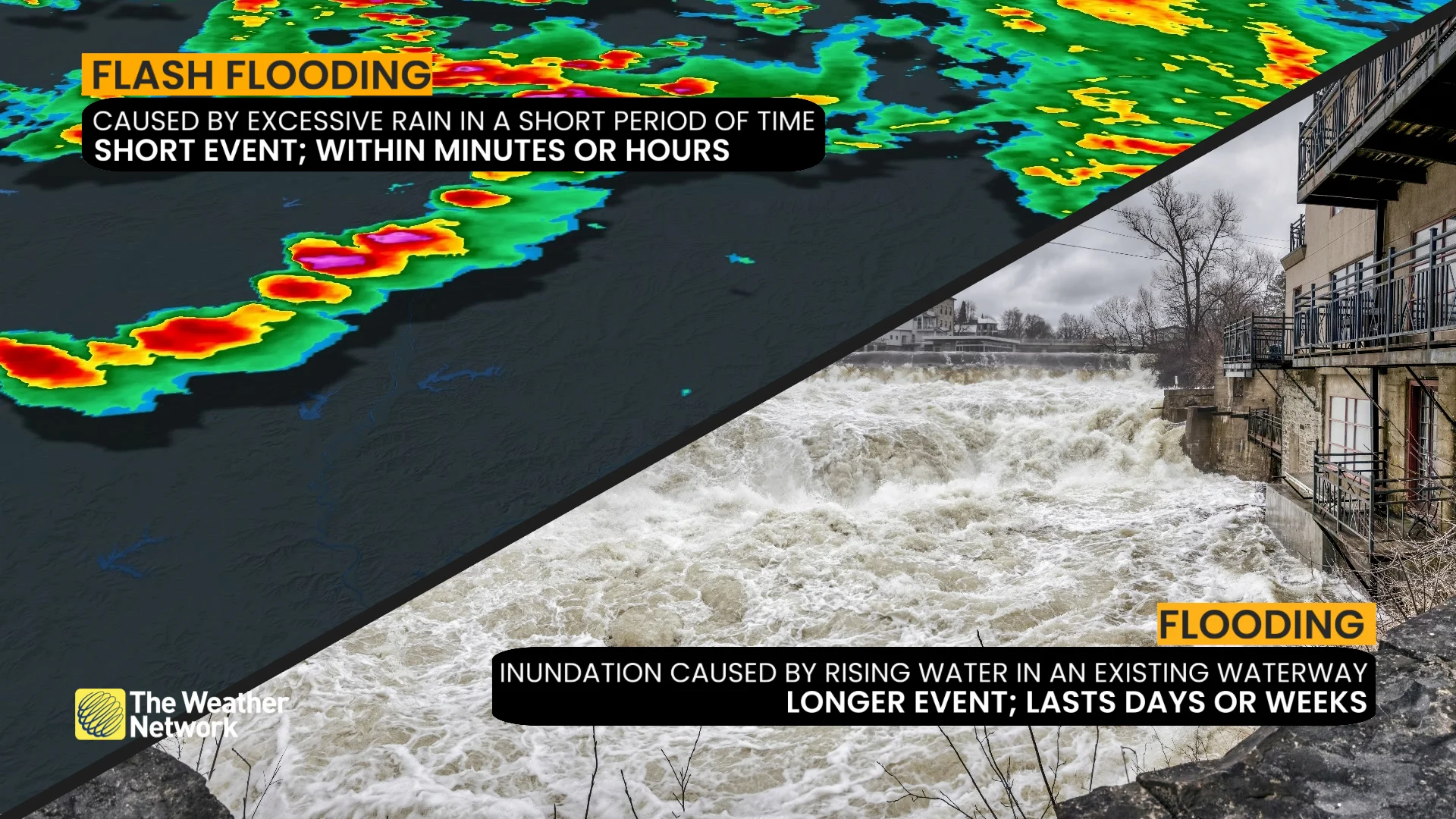
Stationary thunderstorms can produce 50-100+ mm of rain in a short period of time. Training thunderstorms, or those storms that repeatedly track over the same communities, are capable of dropping significant rainfall in just a few hours.
The West Coast is particularly vulnerable to very heavy rains during atmospheric river events in the autumn and winter months. Towns along the East Coast are susceptible to flash flooding in landfalling tropical cyclones, which are efficient at producing lots of rain very quickly.
Flash floods can occasionally occur during otherwise calm conditions. Dam bursts, glacial outburst flooding, and ice jams can cause sudden and extensive flooding in nearby areas even during clear weather.
Flash flood safety tips
Pay attention to severe weather watches and warnings if flash flooding is possible. Try to avoid routes and areas where rising waters are common. Get to higher ground immediately if flooding is imminent or occurring.
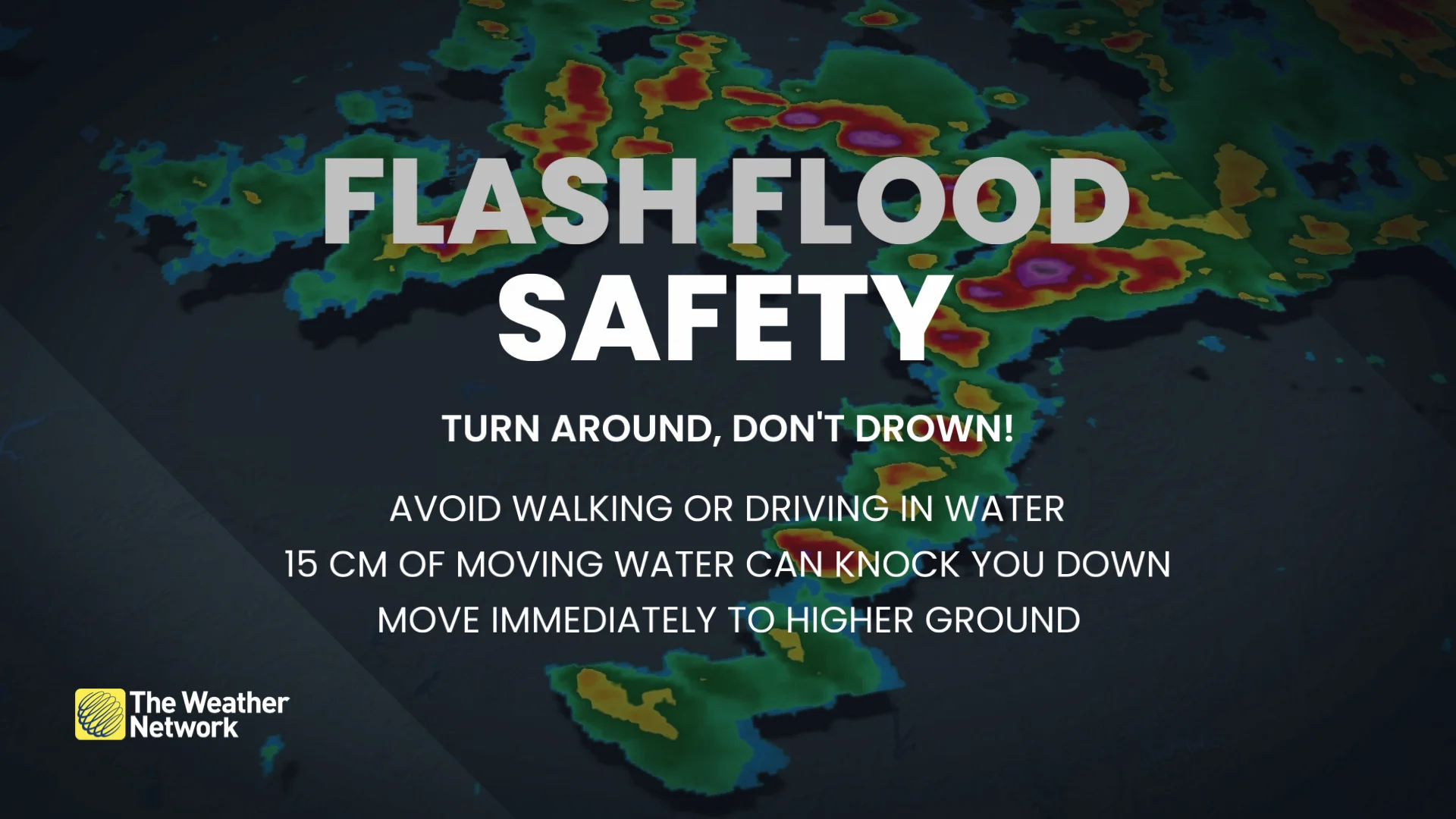
Never try to drive across a flooded roadway. It’s impossible to tell how deep the water is until it’s too late, and the road may be washed out beneath the water. Just 15 cm of moving water can sweep a person off their feet, while a small vehicle may lose traction and float away in as little as 30 cm of moving water.
Keep out of standing water. Floodwaters are known to carry sewage and other hazardous materials. Severe weather is common in popular southern vacation destinations where floodwaters may also contain dangerous creatures such as snakes and fire ants.
Flash floods are a significant part of weather history
Some of history’s most intense weather disasters involved flash floods.
The remnants of Hurricane Hazel in October 1954 brought Canada one of its deadliest and most destructive flash flood events in modern history.
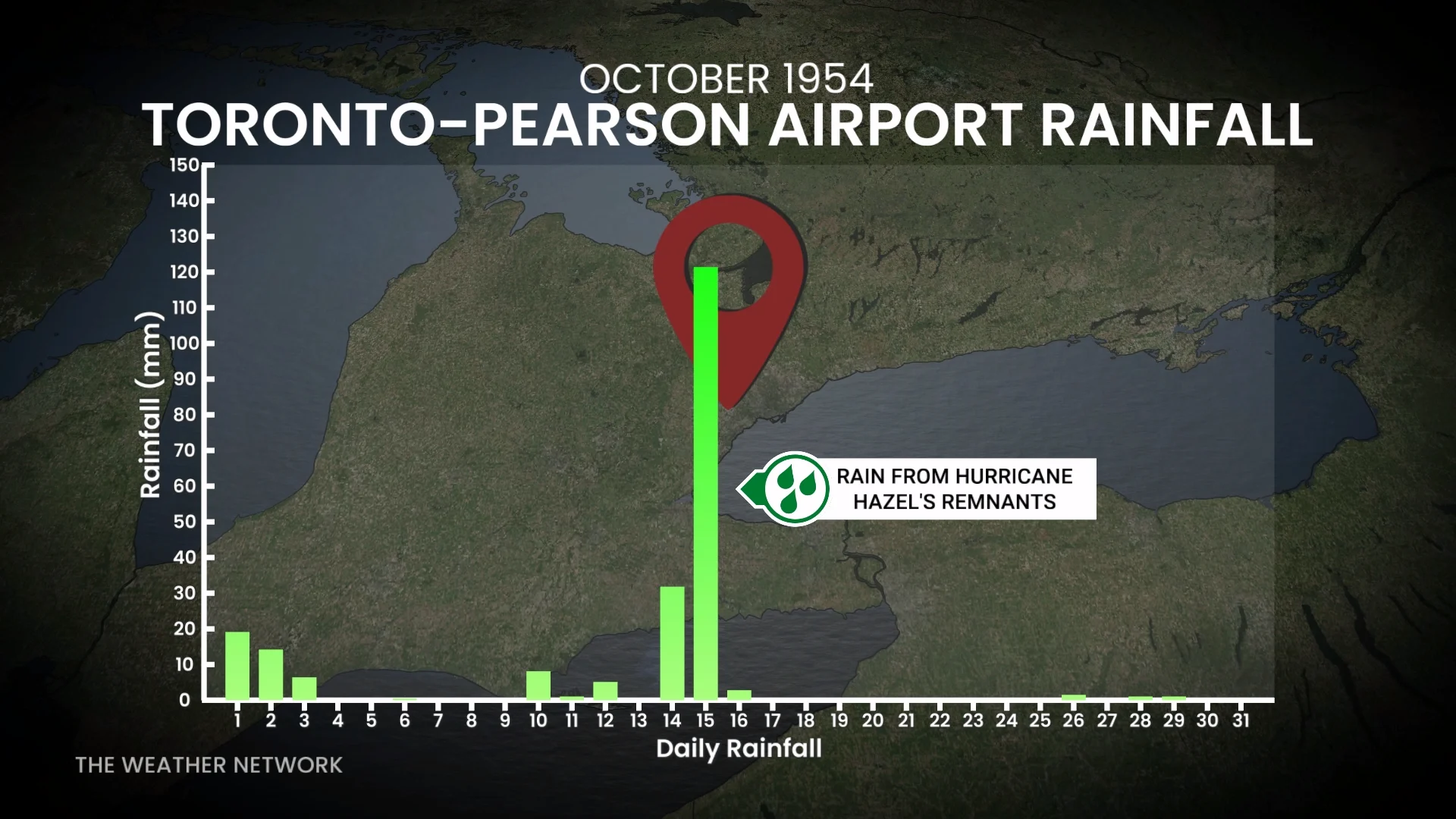
As much as 200 mm of rain washed over the Greater Toronto Area, flooding homes and turning streets into rivers. Dozens of people reportedly died in the disaster, which caused today's equivalent of more than one billion dollars in damages.
One particularly devastating example of flash flooding hit central Texas on July 4, 2025. Persistent downpours over dry ground sent a tremendous amount of water surging into the Guadalupe River.
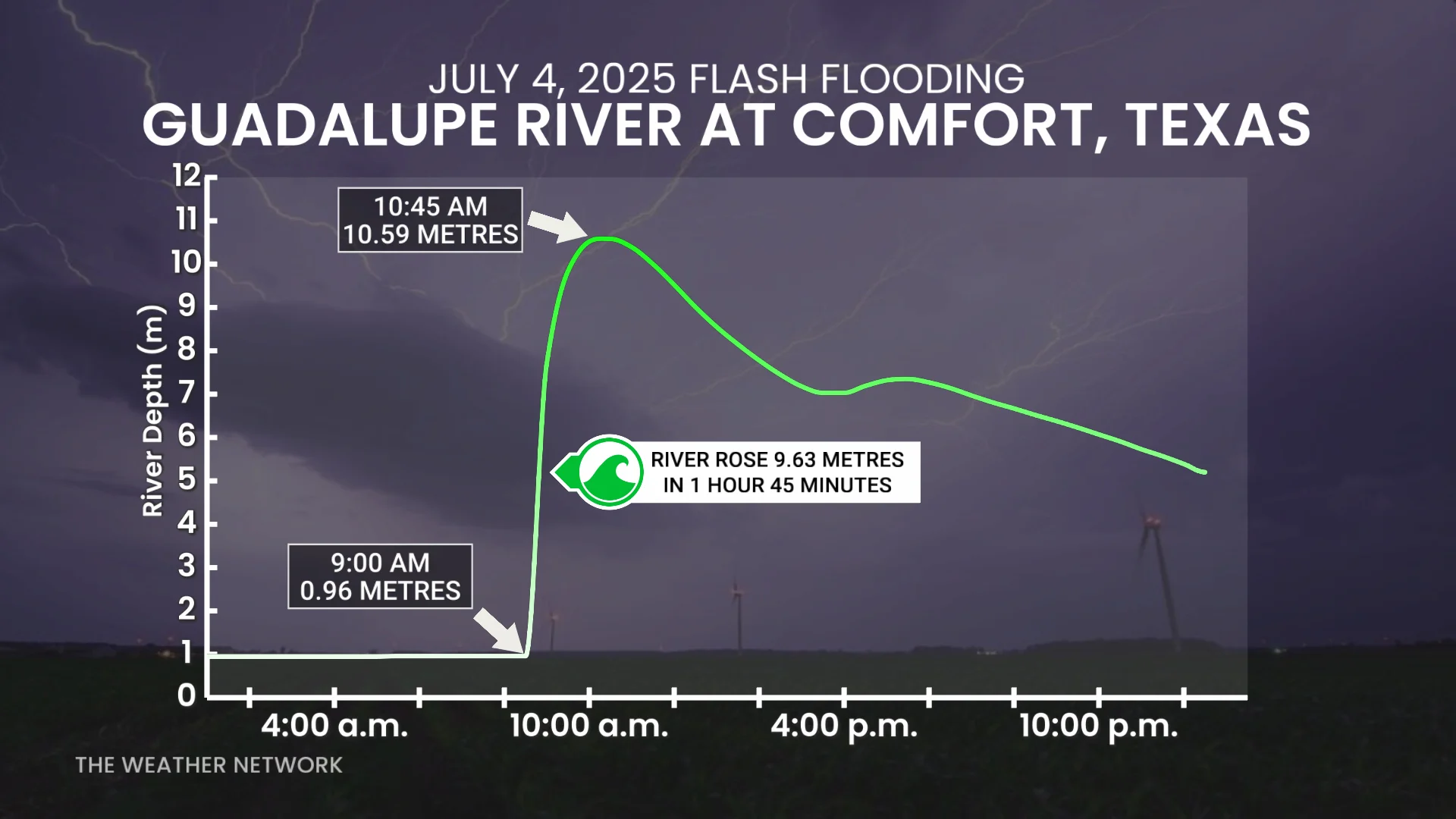
A river gauge in Comfort, Texas, recorded a depth of 0.96 metres at 9:00 a.m. The river’s level had surged to a whopping 10.59 metres just one hour and 45 minutes later in a tremendous flash flood that claimed more than 130 lives in the surrounding communities.