Follow these tips to safely observe any solar eclipse

If you are lucky enough to view a solar eclipse, be sure to do so safely!
A solar eclipse is one of the greatest natural wonders to behold. However, viewing one without the proper protection can be dangerous, potentially damaging your eyes permanently.
Follow these recommendations to stay safe and protect your eyesight.
You can go about your business
The first thing that should be mentioned is that if you're not taking time off from your normal activities to watch an eclipse, that day should be like any other day.
Unless some significant weather event is taking place, there should be no reason to avoid going outside, or driving your car, or walking your dog. Presumably, you (and your dog) do not spend a lot time staring at the Sun on any other day, so just continue that trend on the day of the eclipse.
In fact, if you're far enough away from the path of totality of the eclipse, you may not even notice that anything different is occurring. It takes the Moon covering between 75 to 80 per cent of the Sun's disk for street lights to come on, and only when the Moon is covering over 90 per cent of the Sun's disk does the sky begin to noticeably dim.
While there are some odd myths about solar eclipses that have surfaced over the years, they are only myths. The only time you really need to take special care is if you do stop to observe the Moon passing in front of the Sun.
READ MORE: Halley's Comet meteors, clustered planets, and a rare Blue Moon all shine in May
Protect your eyes!
A brief glance directly at the Sun can leave temporary spots before our eyes. However, staring at the Sun for any length of time has the potential to cause permanent eye damage. This results from the tissues at the back of our eyes (the retina) becoming scarred by the intense sunlight.
This damage is called solar retinopathy.
Watch below: The dangers of solar retinopathy and how to watch the eclipse safely
It can happen after only a few seconds of exposure, and because there are no pain receptors located in the retina, the person affected may not actually feel anything at all. The only way they'll notice the damage is from the symptoms they experience afterwards, which can include blurred vision, blind spots, changes to their perception of colour, sensitivity to light, and headaches.
If the person is fortunate, the damage may only be temporary, but it could take up to a year for their vision to improve. If they're not so lucky, the damage will be permanent.
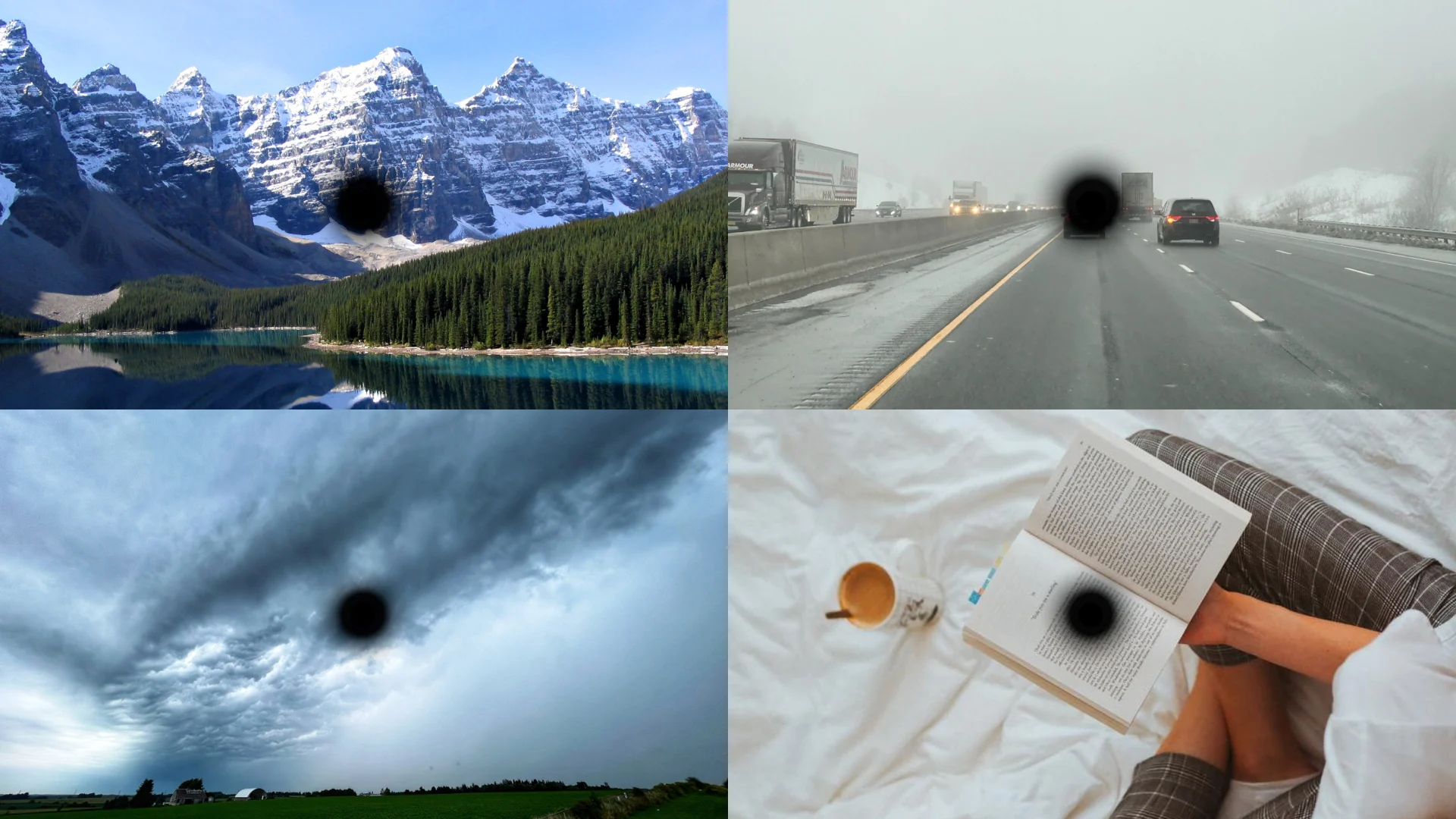
Four examples of how a blind spot (central paracentral scotoma) from solar retinopathy could affect your daily life. Credits: Top left, Gorgo/Wikimedia/Public Domain; Top right and bottom left, Mark Robinson/TWN; Bottom right, Laura Chouette/Unsplash
COPY, MOON JOY! NASA releases over 12,000 new photos from the Artemis 2 mission around the Moon
We tend to have a natural aversion to looking directly at the Sun. We typically squint or shut our eyes if we're exposed to too much light.
However, as the Sun dims during the eclipse, it will become easier to look at.
Easier, but not safer!
The sky may dim when the eclipse is near or at maximum, but that doesn't mean that the sunlight is any less intense than it usually is at that time of day.
So, even when less than 1 per cent of the Sun is still visible, that is still too much sunlight exposure to safely observe without eye protection! This is especially true due to the inclination to stare directly at that portion of the eclipse for a period of minutes.
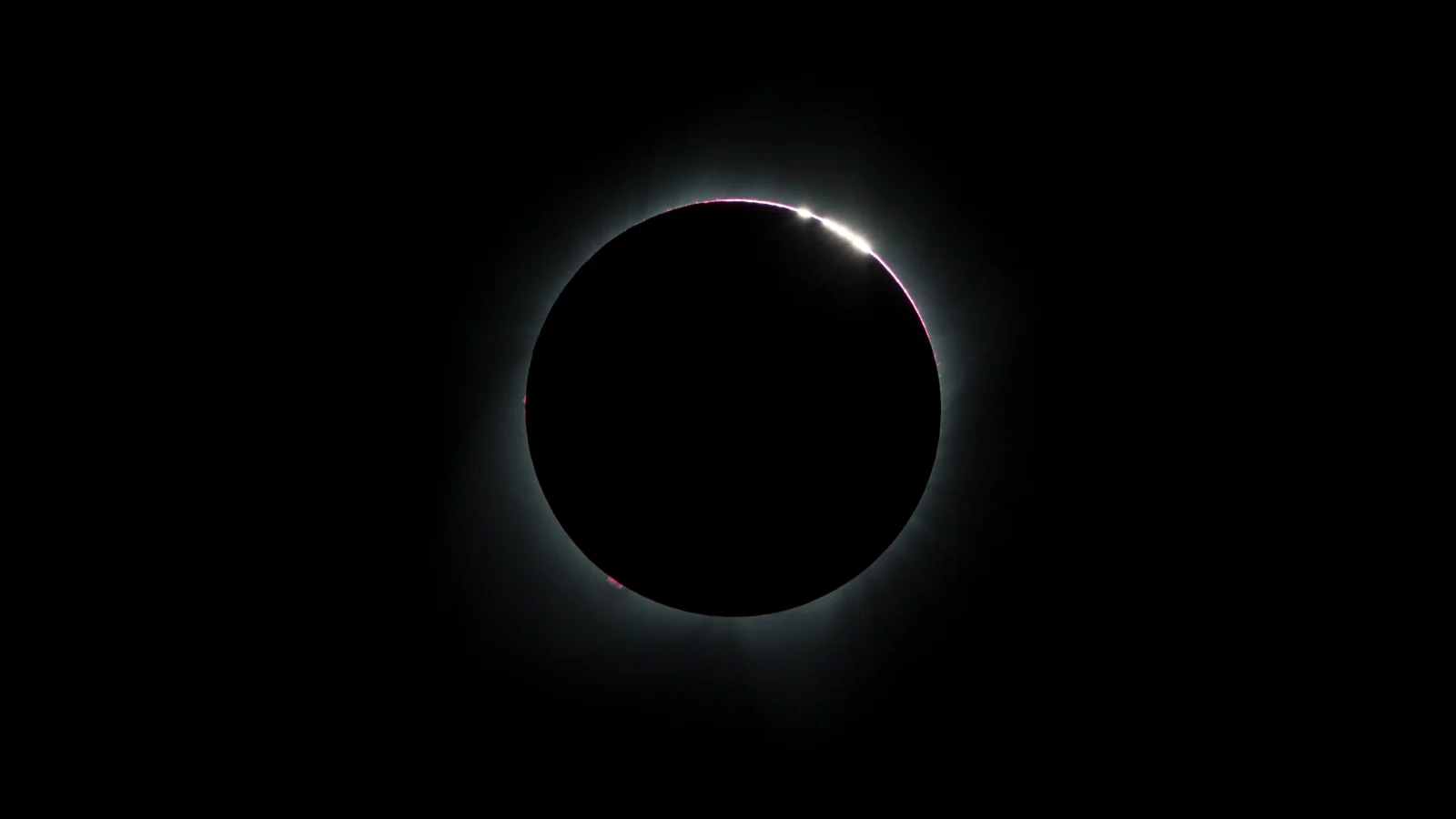
This image from the 2017 total solar eclipse shows a phenomenon known as Baily's Beads, where sunlight shining through valleys along the limb of the Moon form bright points of light. Credit: NASA/Aubrey Gemignani
That is why eye safety is such an important topic when there is an upcoming solar eclipse.
How to protect your eyes
There are a few different ways to safely observe a solar eclipse.
The first is to watch it online, as there are often livestreams of the event.
Second, you can set up an indirect way to watch. This can be as simple as letting sunlight shine through a colander or slotted spoon, or between the leaves of a tree, and seeing the resulting crescents of sunlight appear on the ground. Setting up a mirror to reflect the Sun onto a wall would also work. However, please do not look directly at the reflection of the Sun in the mirror. That would be just as bad as looking directly at the Sun itself. It's the reflection on the wall that you want to observe.
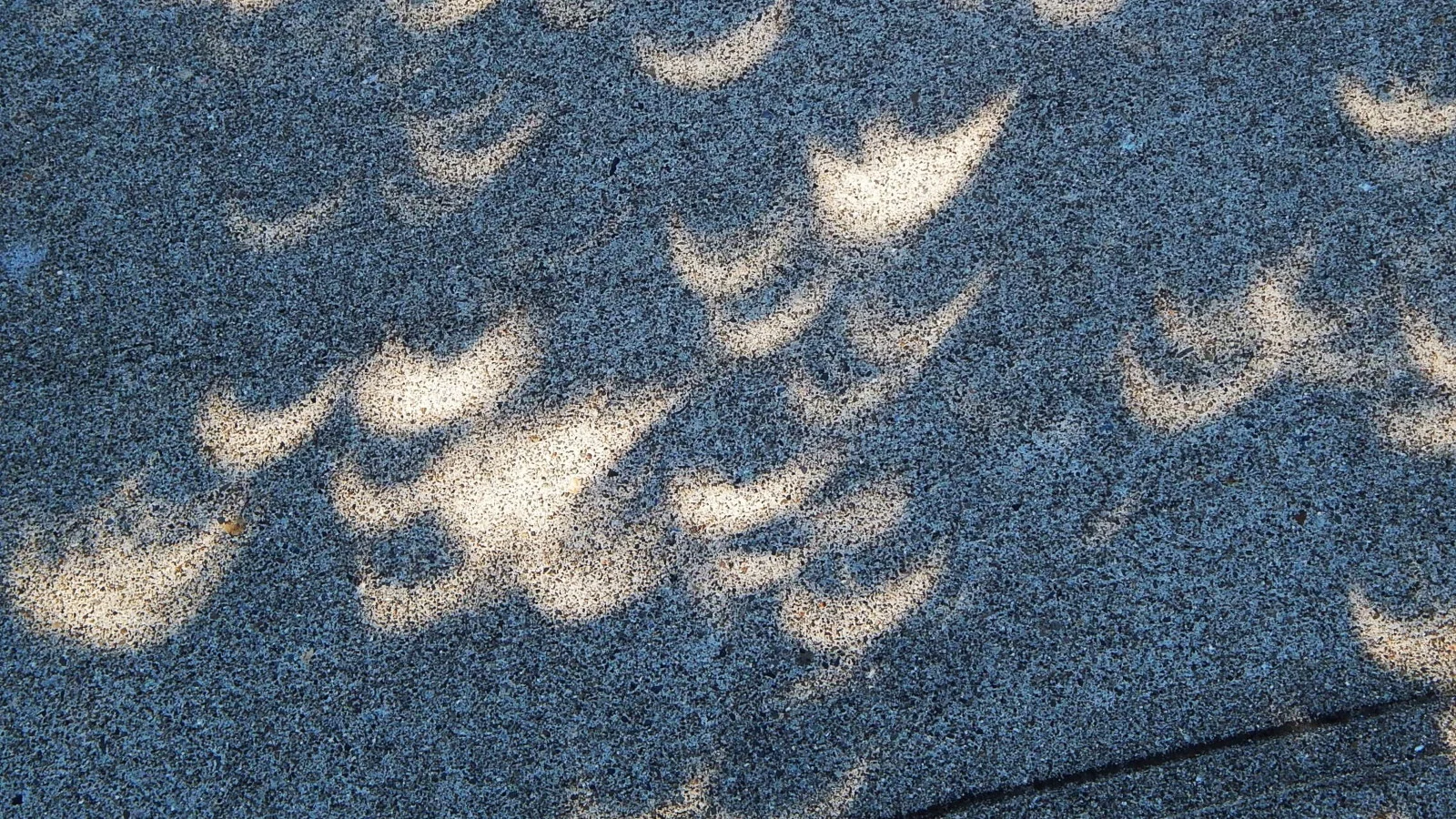
Multiple overlapping solar crescents are visible under this tree during the August 21, 2017 solar eclipse. The image has been cropped from its original dimensions to a 16x9 aspect ratio. Credit: Ron Clausen (CC BY-SA 4.0 DEED)
You can also make a pinhole projector. A common method is to use a cereal box, paper, aluminum foil, scissors, a pin, and tape. Nate Coleman and Tiffany Fields teach us how to make one in the video at the top of this article.
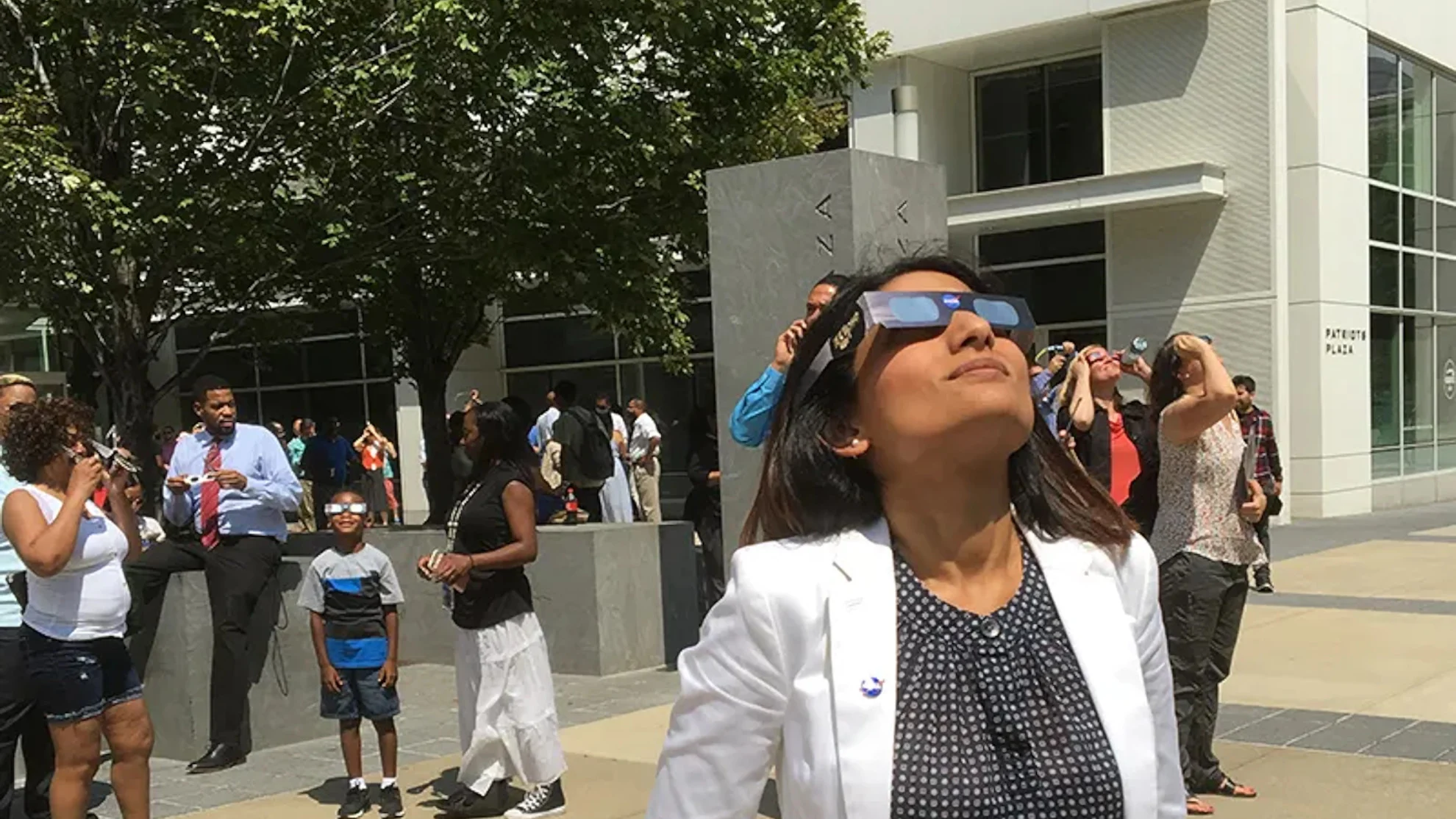
Thirdly, most observers — both within the path of totality and outside of it — will likely be using solar viewing glasses (aka eclipse glasses).
Some high-end versions are plastic and look similar to ordinary sunglasses. However, most are made from printed cardstock and have thin mylar 'lenses'. Even though the lenses on these glasses are so thin, they still block more than 99.99 per cent of all light, even from the from the Sun.
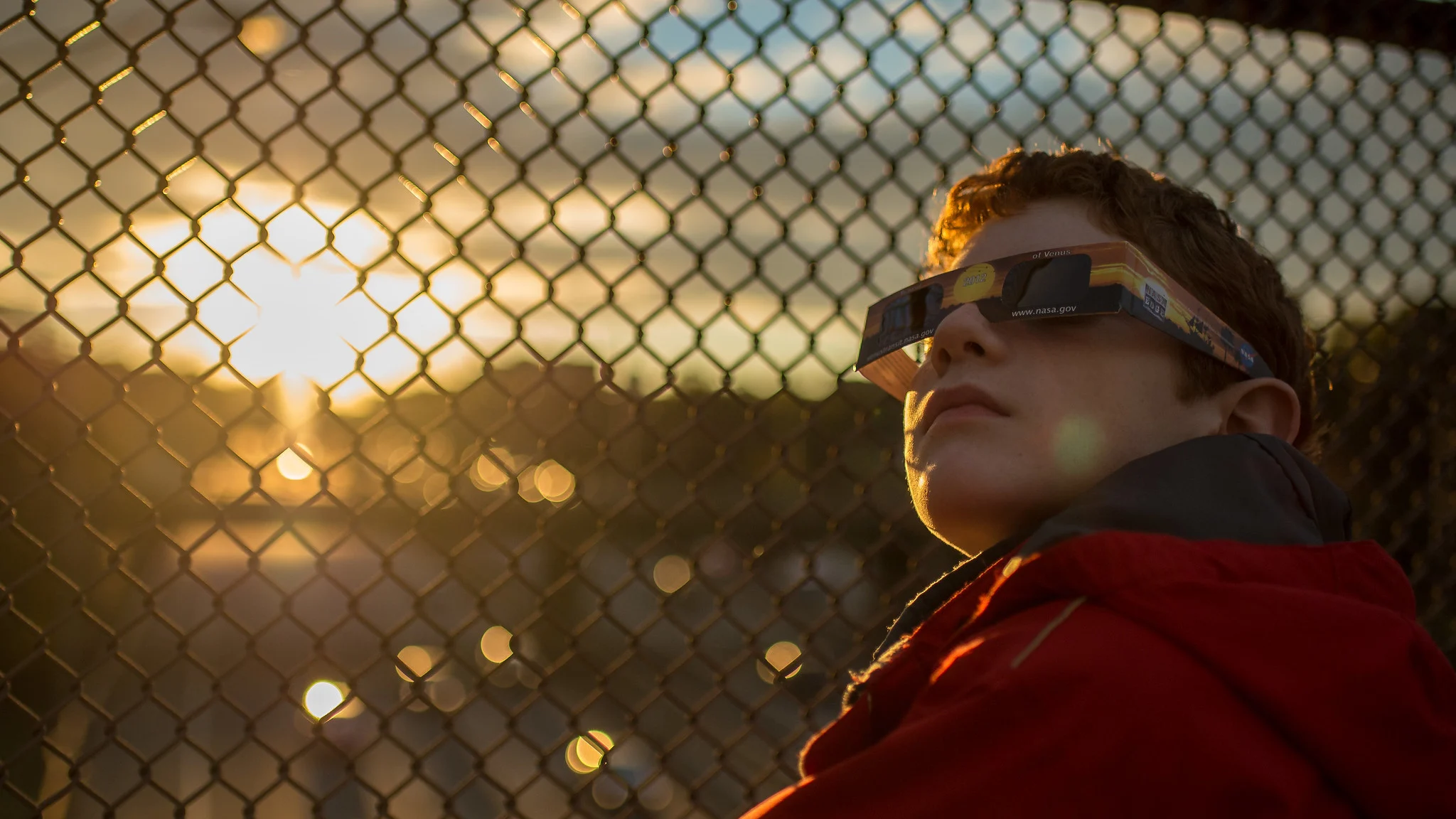
Credit: NASA/Bill Ingalls
One important tip about wearing eclipse glasses: always put them on securely before you look up at the Sun. Similarly, turn away from the Sun before you take them off. This ensures that you're being as safe as possible.
If you have a pair of these glasses left over from the 2024 total solar eclipse, great! Just inspect them for damage, first, to ensure there are no cuts, holes, or dents in the lenses that will let in too much light.
If you're buying a new pair of solar viewing glasses, to be sure that they are genuine and meet the standards required for safe solar viewing (the ISO 12312-2:2015 international standard), get them from a reputable vendor.
The Royal Astronomical Society of Canada (RASC) is an excellent source! The American Astronomical Society also has an extensive list of online vendors that sell products that meet those standards.
Alternatively, find your local branch of RASC, to see if they are hosting a viewing party for the event, as they often have a good supply of eclipse glasses for those attending.
For anyone who wishes to use a camera, telescope, or binoculars during the eclipse, remember to buy a proper solar filter that fits your equipment. Some astronomical companies also make specially-designed solar-viewing binoculars.
What NOT to do
Eclipses generate a lot of attention and excitement, but they also attract a fair amount of misinformation.
First and foremost, to reiterate: Do not look directly at the Sun for any length of time without eye protection — even just for a second is too risky.
For those using a camera, telescope, or binoculars, do not use these devices unfiltered at any time except precisely at the point of totality. The smallest amount of unfiltered sunlight could potentially damage the optics of these devices. Even worse, focused sunlight passing unfiltered through a telescope or binoculars into your eyes will likely result in permanent injury.
Do not use regular sunglasses to view the eclipse. Even overlapping several pairs will not give you the protection you need.
Do not use any welders glass rated less than "shade 14" to view the eclipse. Most welding masks and goggles have glass rated about shade 10 or 11. So, if you have a welding mask or goggles, be absolutely sure you know their rating, and that it's 14 or higher. Even then, be sure that any shade 14 glass also meets the same ISO 12312-2:2015 international standard for direct solar viewing. If you can't verify that, please don't use it.
Do not use any 'homemade' methods people have thought up over the years. This includes:
neutral density or polarizing filters for camera lenses,
smoked glass,
photographic or X-ray film (regardless of whether it is unexposed, exposed, or developed),
space blankets,
potato-chip bags,
DVDs or CDs.
According to the American Astronomical Society: "In some cases these homemade filters may seem like they dim the Sun to a comfortable level, but that doesn't mean they do so across the whole electromagnetic spectrum to which our eyes are sensitive. While you're enjoying a 'comfortable' view of the 'dim' Sun, solar infrared radiation could be cooking your retinas."
Is there any safe time to look?
There is only one time when looking directly at a total solar eclipse without eye protection is safe. This is when you are located directly in the path of totality, and the Moon is completely blocking the Sun at totality.
At that time, you are actually encouraged to take off your eye protection. That way, you can see one of the most spectacular parts of the eclipse — the solar corona.
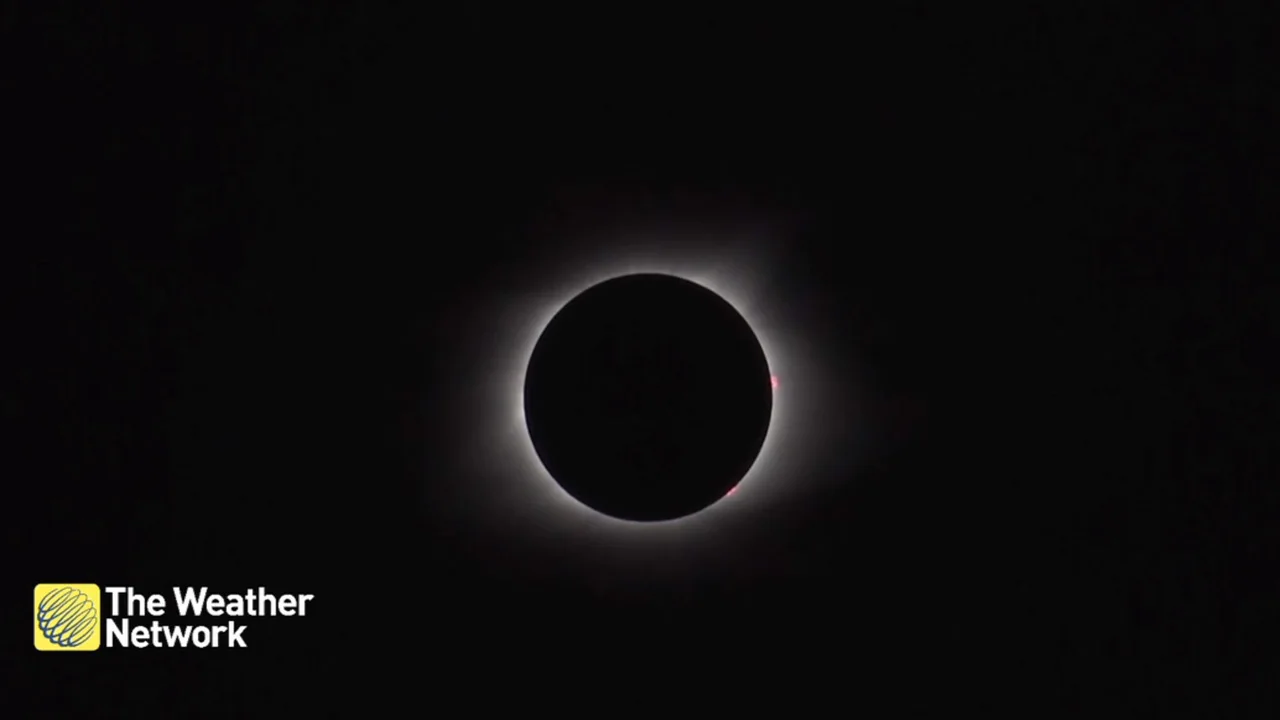
The exact duration of totality varies from eclipse to eclipse, and from location to location. Thus, if you are fortunate enough to be in the path of totality during one of these events, and wish to look directly at the eclipse while experiencing totality, be careful to time it just right!
After observing an eclipse through sun viewers for some time, and then standing in the dim twilight of totality, the pupils of our eyes will be wide open, to take in as much light as possible. It will be as if we were standing in dark room for all that time, which makes our eyes extremely sensitive to bright light.
Thus, if your eyes are unprotected when the bright limb of the Sun suddenly peaks out around the limb of the Moon, the chances of suffering eye damage are far more significant than at any other moment of the eclipse.
So, be sure to know the exact timing of totality for your location, and put your eclipse glasses back on, or return to your indirect method of viewing, before totality ends!
With files from The Weather Network