How lake breezes shape your weather

Did you know that lakes and oceans can change your city’s weather? It’s called a lake or sea breeze, and here’s how it works…
We’re most familiar with bands of lake-effect snow burying communities across the region. But the lakes can also provide the spark that unleashes towering thunderstorms on a hot summer day.
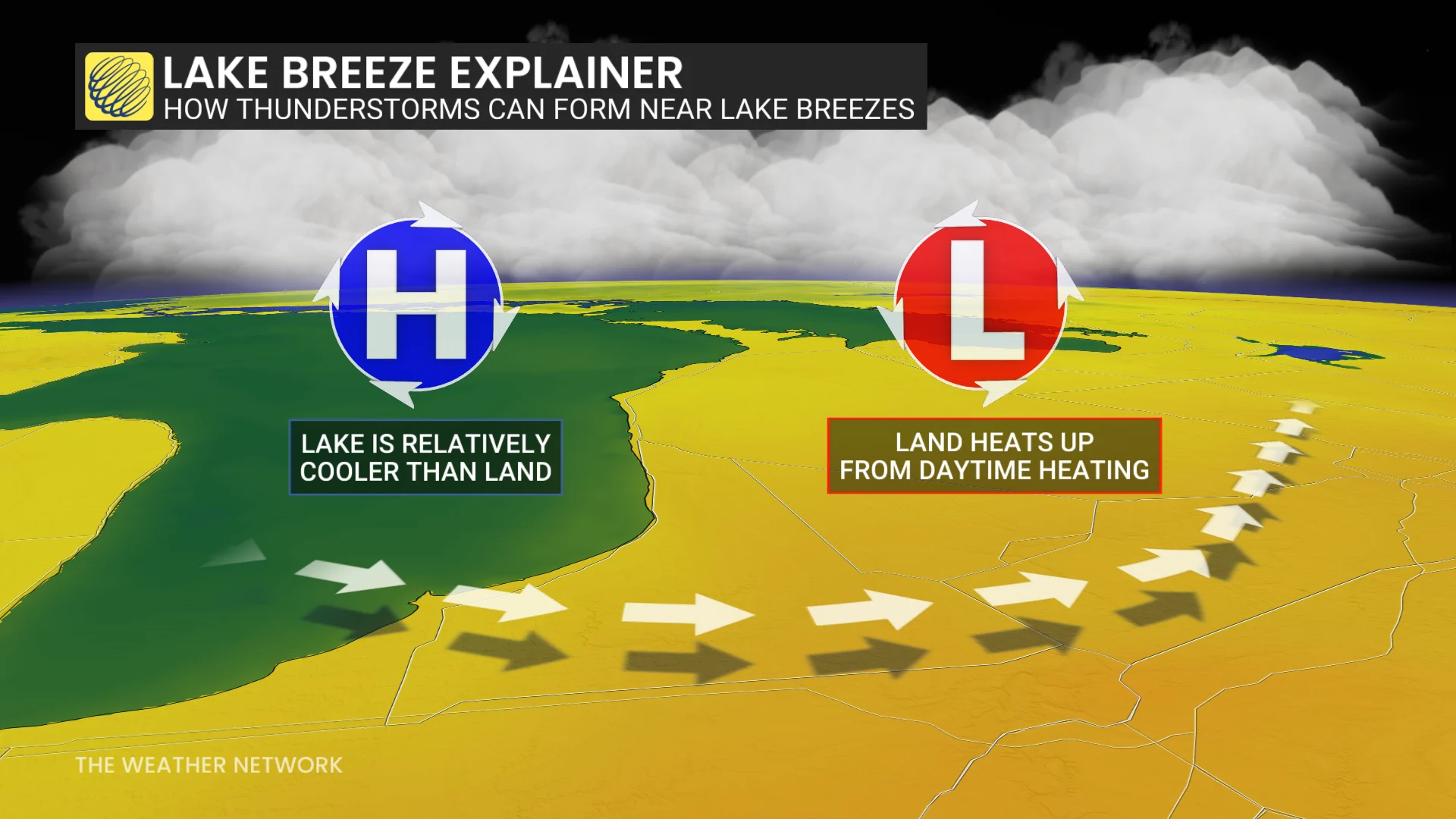
During the day, land heats up much faster than the water, creating a sharp temperature contrast. The air over land warms, rises, and lowers surface pressure. That pressure difference pulls in cooler, denser air from over the lake or ocean.
DON'T MISS: CAPE is the potent fuel that powers a thriving thunderstorm
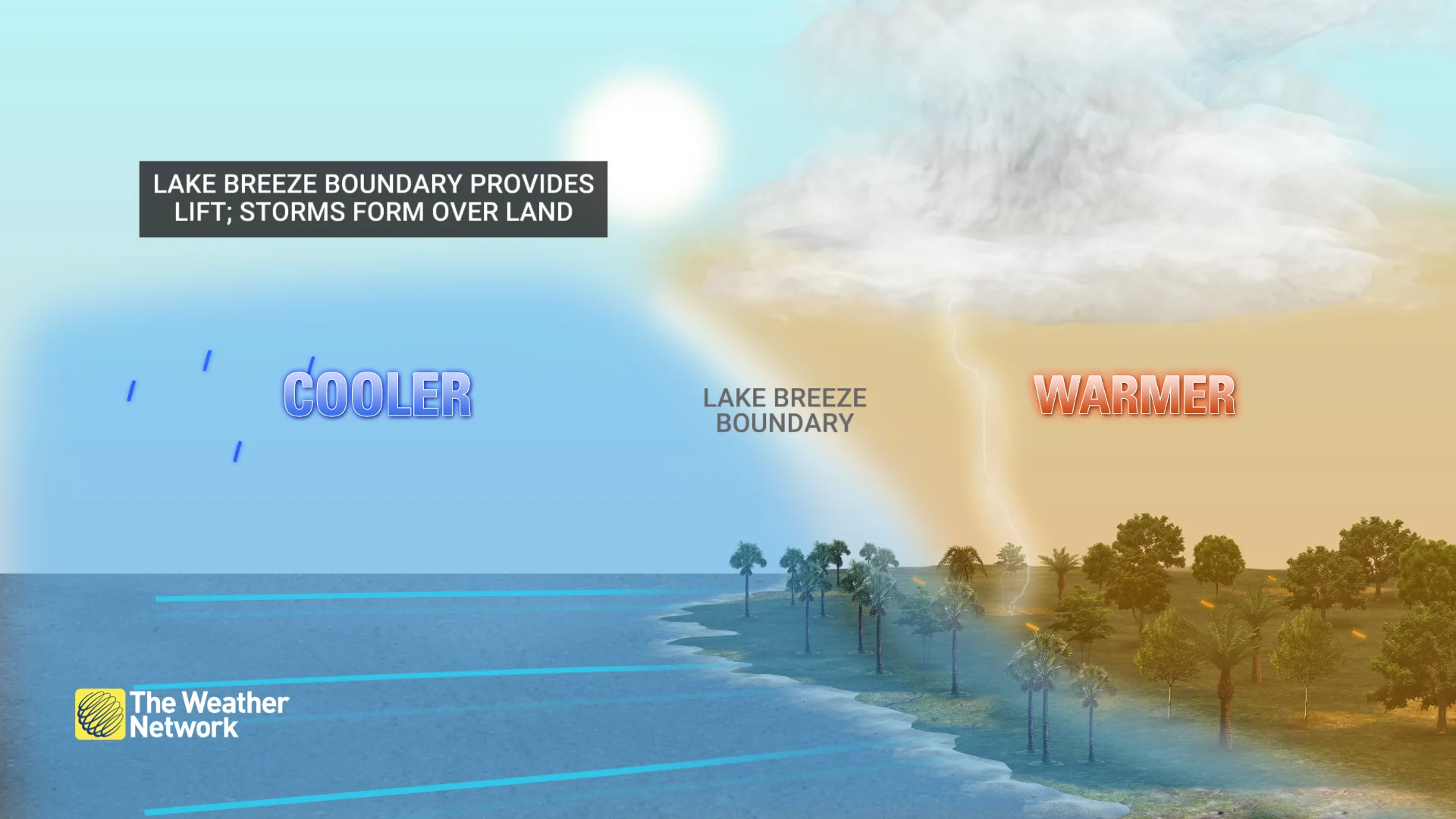
Think of it as nature’s air conditioner: warm air rises over land, and cool lake air rushes in, keeping shoreline cities cooler than areas just a few kilometers inland.
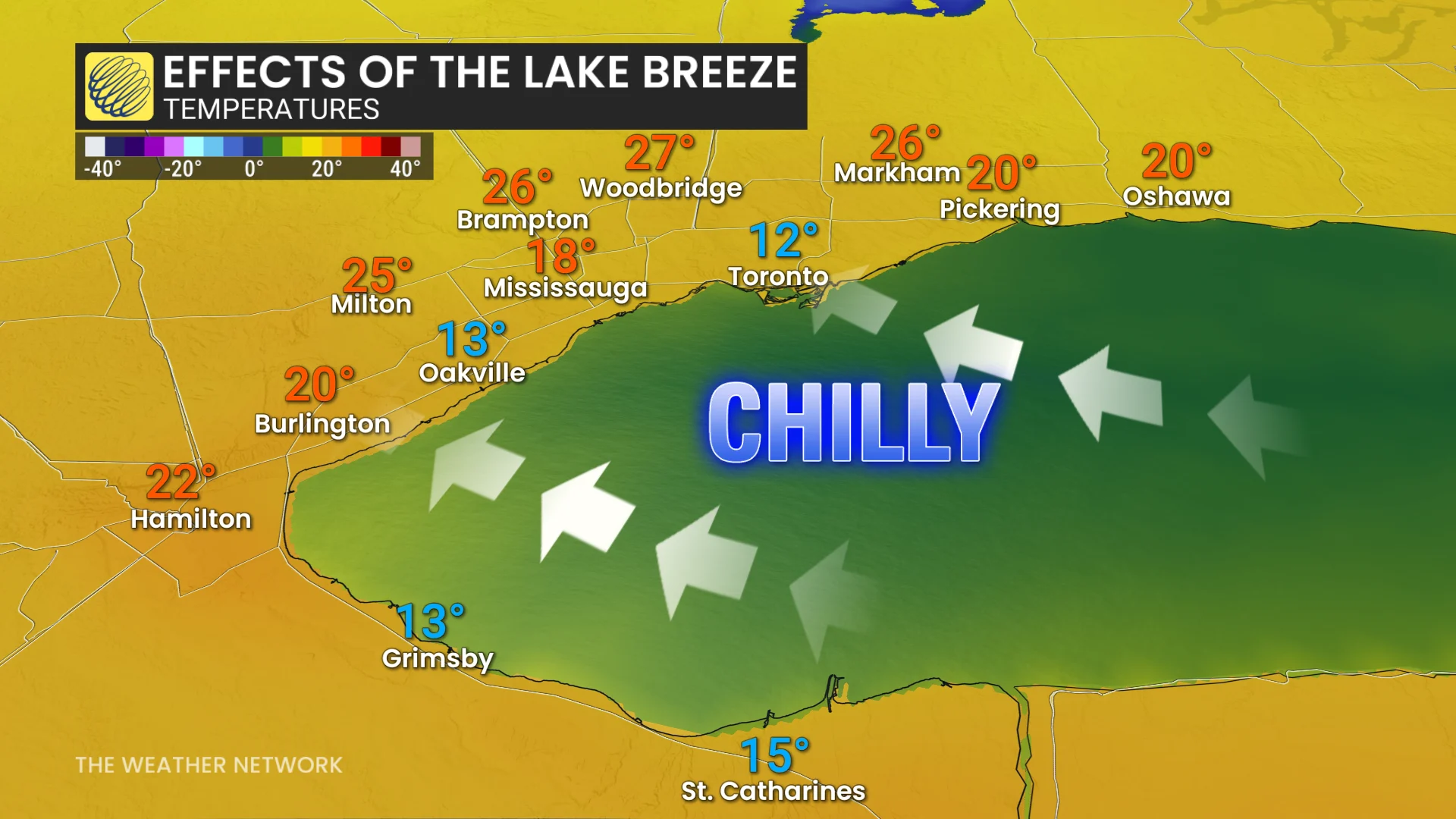
Temperatures can register as much as ten degrees colder by the water as a result of these lake breezes. Folks flock to the lakes on hot summer days to get away from the searing heat just a few kilometres away.
Lake breezes can also help keep shorelines a bit clearer, since the cooler air is more stable and less likely to rise and form clouds.
As these winds move farther inland, they act like mini cold fronts, which lift pockets of warm, moist air as they go, triggering storms. This lifting mechanism can cause lake effect showers in the warmer months and lake effect snow in the winter months!
High instability, rich moisture, and shifting winds can turn these storms severe, capable of producing strong winds, hail, torrential rains, and occasionally tornadoes.
So, next time you feel that cool breeze off the water, you may have a front row seat for a storm!
Contains files from Dennis Mersereau, a digital journalist at The Weather Network.