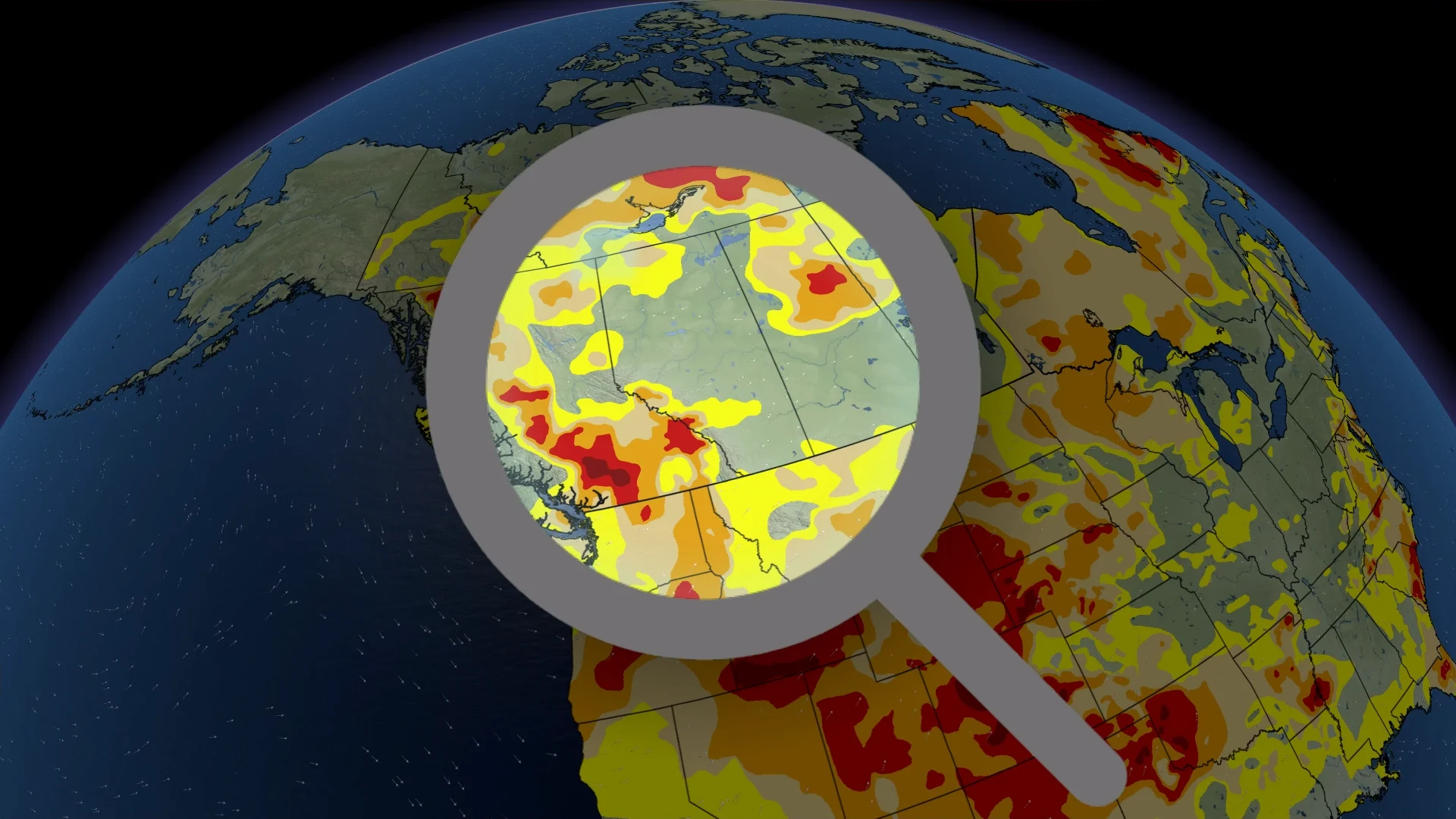
How experts track extreme drought across Canada and beyond

Drought is a major concern from croplands to your kitchen sink
Drought is a sneaky hazard that affects everyone in some surprising ways.
A sustained lack of precipitation can lead to food scarcity, rising prices, water shortages, and wildfires with impacts that extend far beyond the areas immediately impacted by a major drought.
Tracking these arid conditions is serious business, and it’s a task taken up by experts across Canada and throughout North America on a regular basis.
DON'T MISS: The world is officially in its water bankruptcy era
The drought monitor reveals hard-hit areas
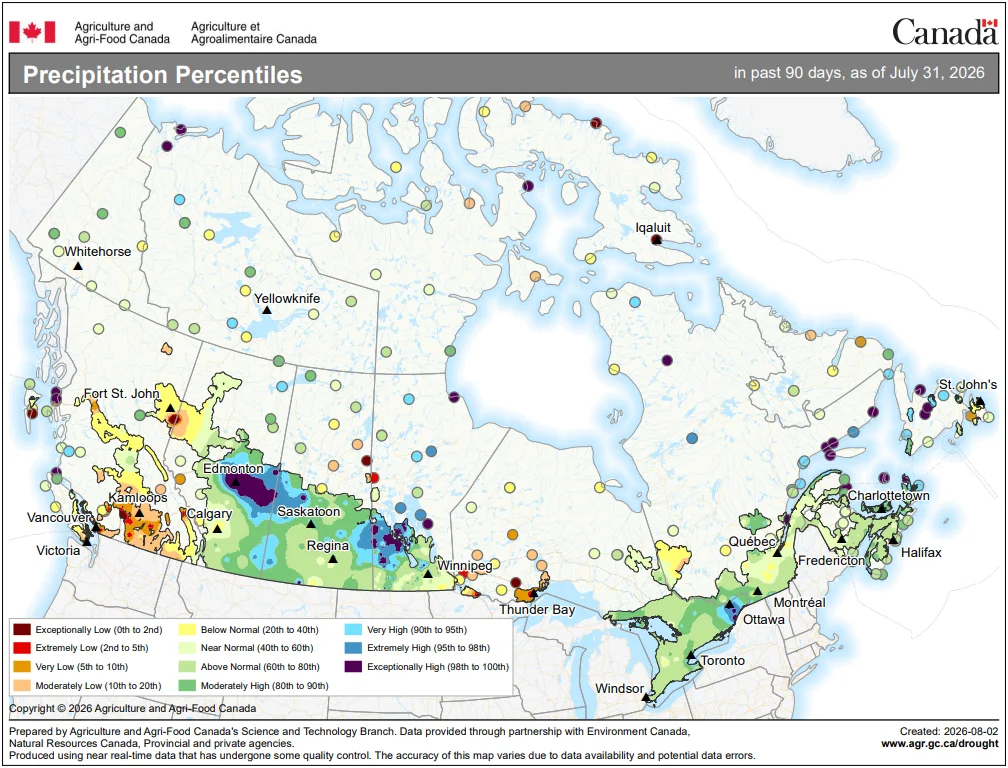
Agriculture and Agri-Food Canada releases the Canadian Drought Monitor once per month to help officials and industries identify the extent and severity of unusually dry conditions from coast to coast.
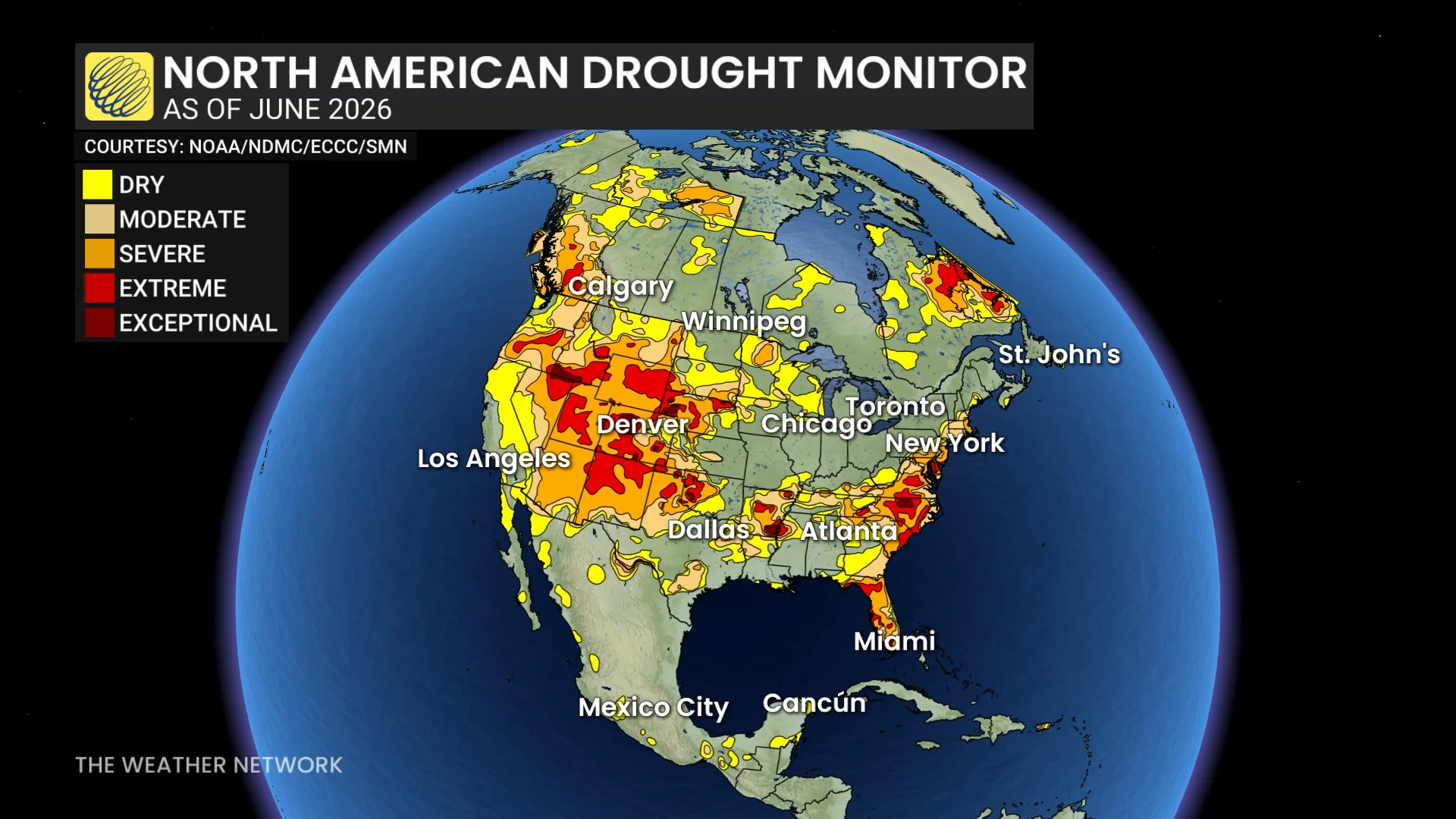
Officials in the U.S. and Mexico also release drought monitor updates on a regular basis, providing a comprehensive picture of the drought situation across North America each month.
All three drought monitors consist of five categories: abnormally dry (D0), moderate (D1), severe (D2), extreme (D3), and exceptional (D4).
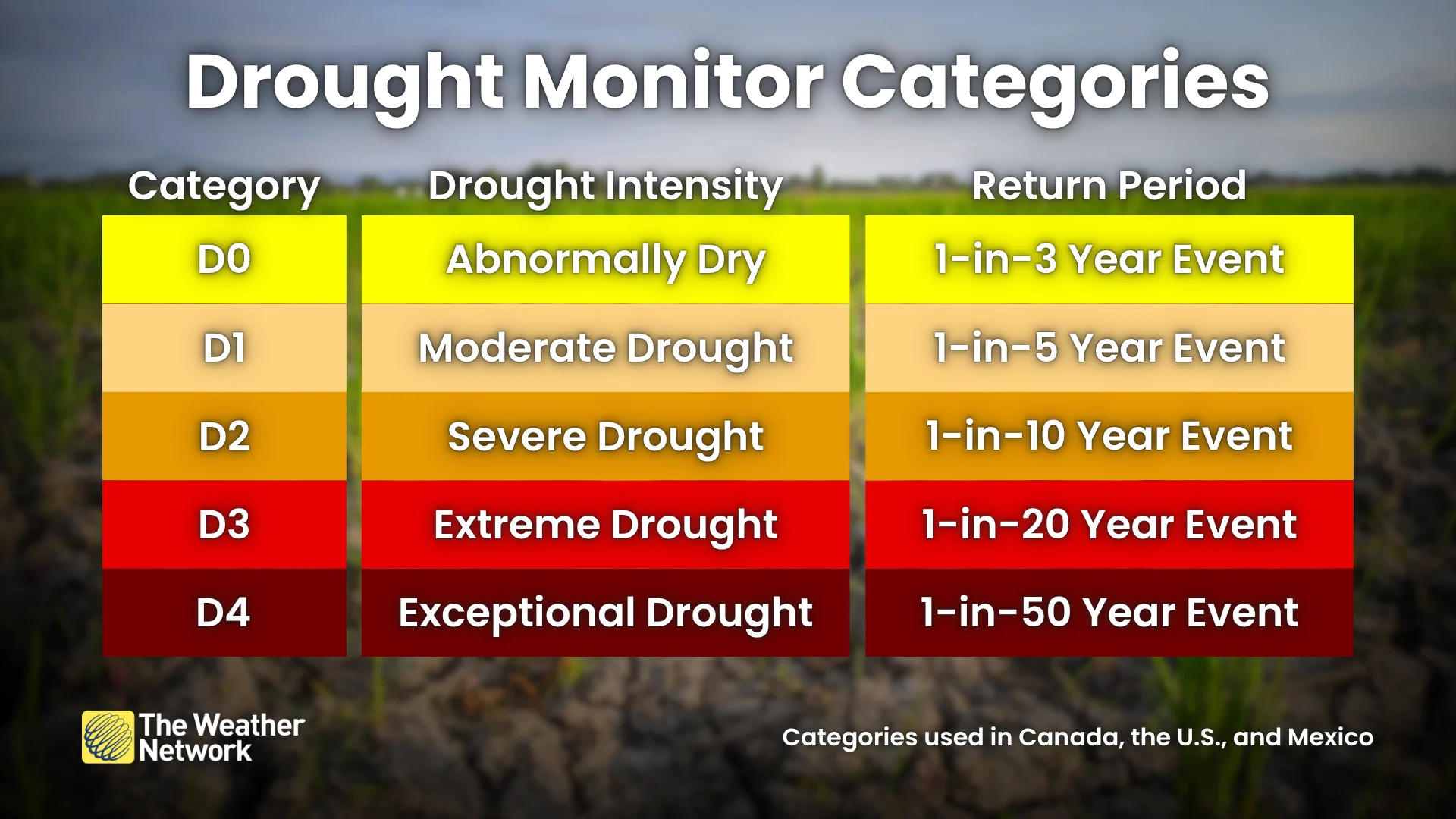
Each category is successively more rare; most locations are abnormally dry once every couple of years, while extreme to exceptional droughts are usually generational events.
One solid thunderstorm is capable of curing abnormally dry or moderate drought conditions, while an exceptional drought can take months of steady rains to resolve.
Lower categories typically bring short-term effects to crops and grasslands. Worse droughts tend to produce longer-term impacts, such as dwindling reservoirs and harm to habitats.
RELATED: Multi-year droughts getting hotter, linger longer and causing more damage: Study
A simple lack of rainfall isn’t the only metric that determines drought. Experts assess plenty of different variables to build their monthly analyses and assign categories to each location.
Temperature, precipitation, and streamflow data all play a significant role in determining whether or not a region is experiencing a drought. Several other metrics also factor into the equation, including satellite imagery to judge the greenness and health of a region’s vegetation.
A blend of these factors is required to capture a complete picture of the situation.
“Drought is a ‘creeping phenomenon’” as Agriculture and Agri-Food Canada puts it, adding that drought is “difficult to define and measure, slow to develop, continuous, cumulative, and long lasting.”
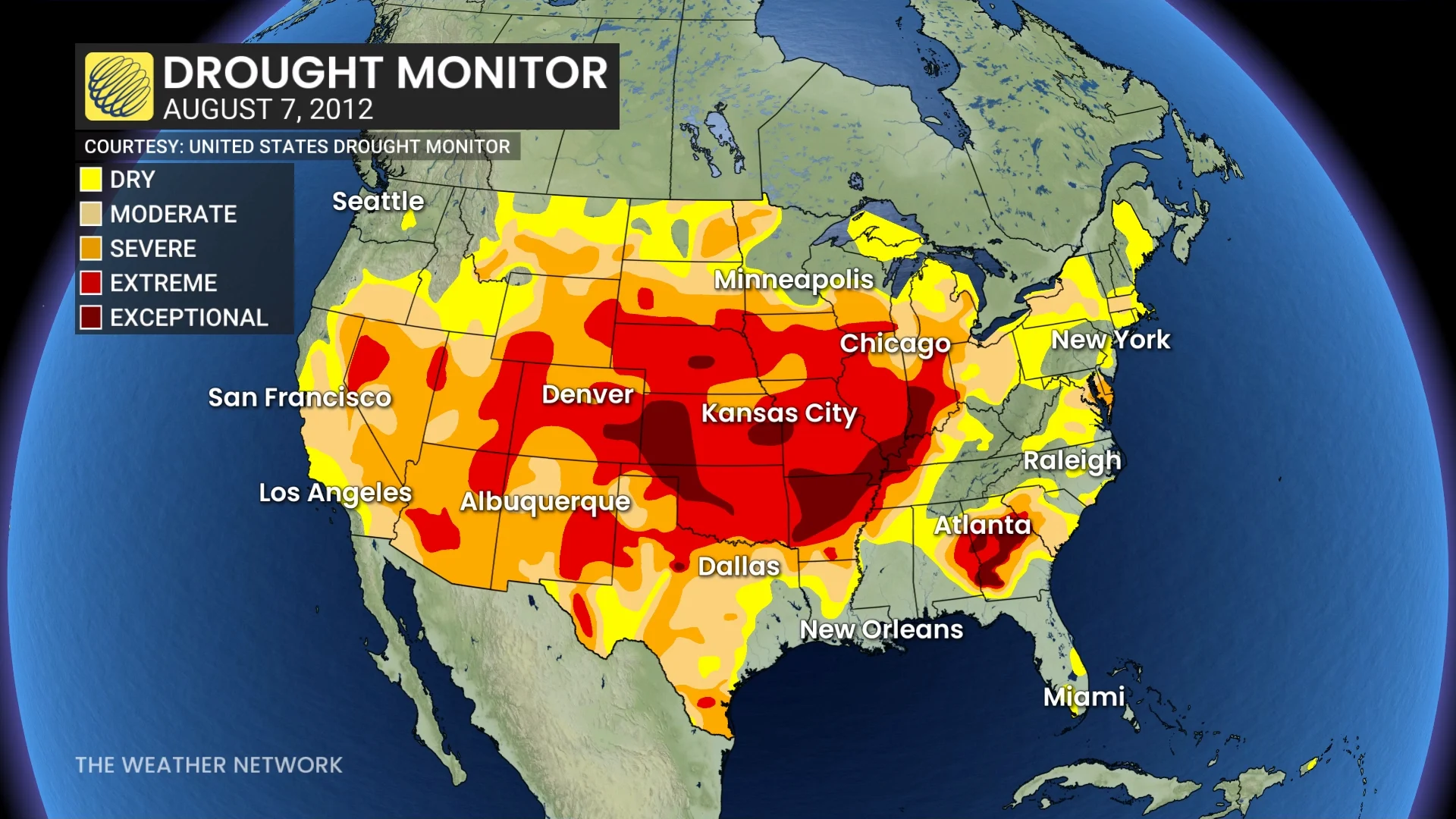
Some years are particularly brutal.
One of Canada’s worst and most widespread events occurred in 2023, during which nearly three-quarters of the country saw abnormally dry or full-blown drought conditions by October.
Severe drought or worse covered more than 46 per cent of the U.S. during a relentless spell of high heat and minimal precipitation in the summer of 2012.