
What is humidity, and why can it make or break our summer days?

Whether a summer day is great or awful often comes down to the humidity.
With summer here, one component of our daily weather can make or break our enjoyment of the season, and that's the humidity. So, exactly what is humidity, what do the different values of it really mean, and why is it one of the biggest health risks during the summer months?
Simply put, humidity is the amount of water vapour in the air.
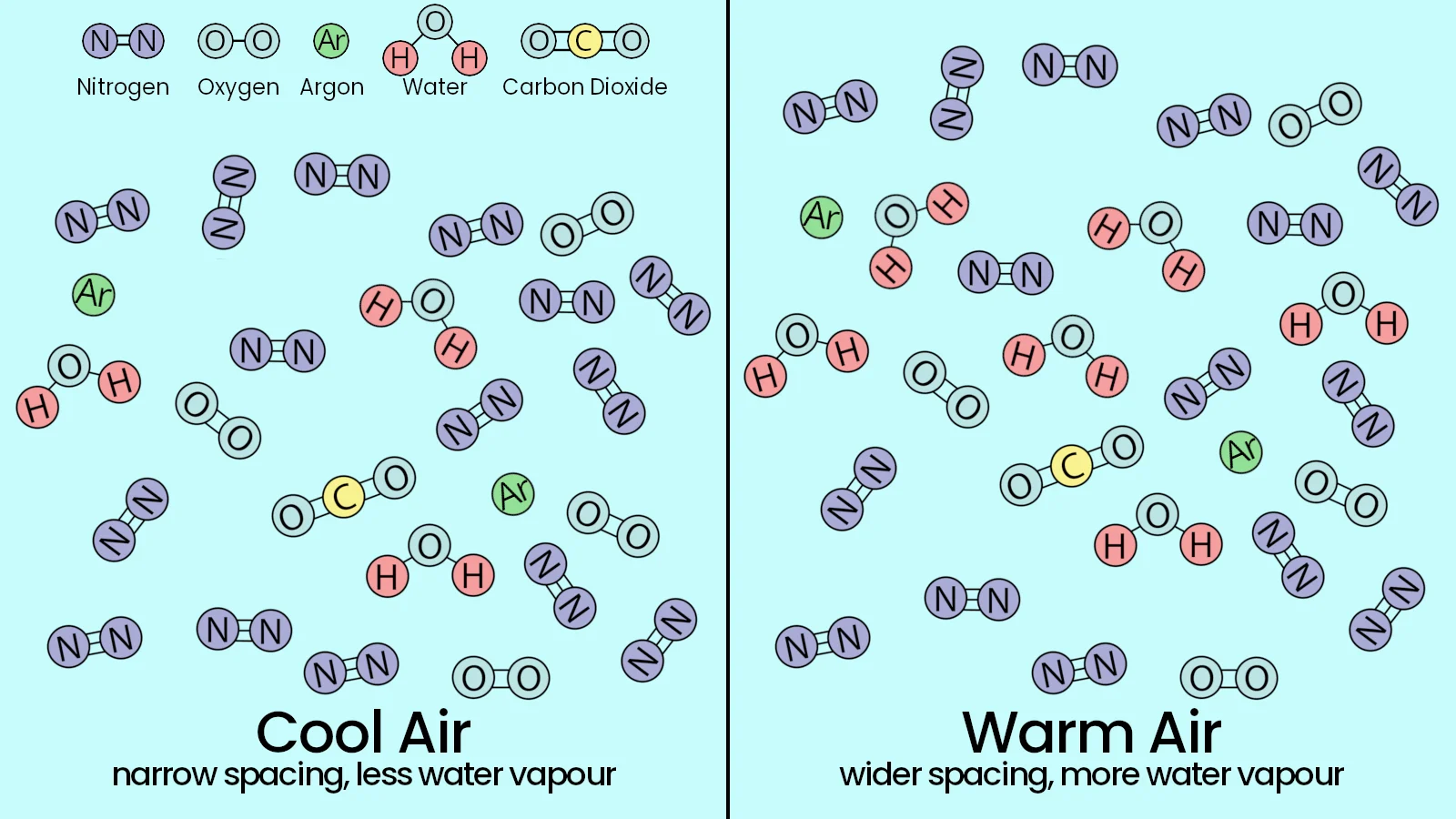
Exactly how much water vapour the air can hold, at any time, mainly depends on the air's temperature. This is because the air is composed of molecules and atoms, all of which are moving around and jostling for position in the environment. The temperature of the air determines how much those atoms and molecules move around, and thus how much space is available in between them.
(Scott Sutherland)
If the air is cold, the molecules and atoms in the air have less energy, so they don't move around very much in their environment. This causes them to crowd fairly close together, which limits the amount of space between them for water vapour to occupy.
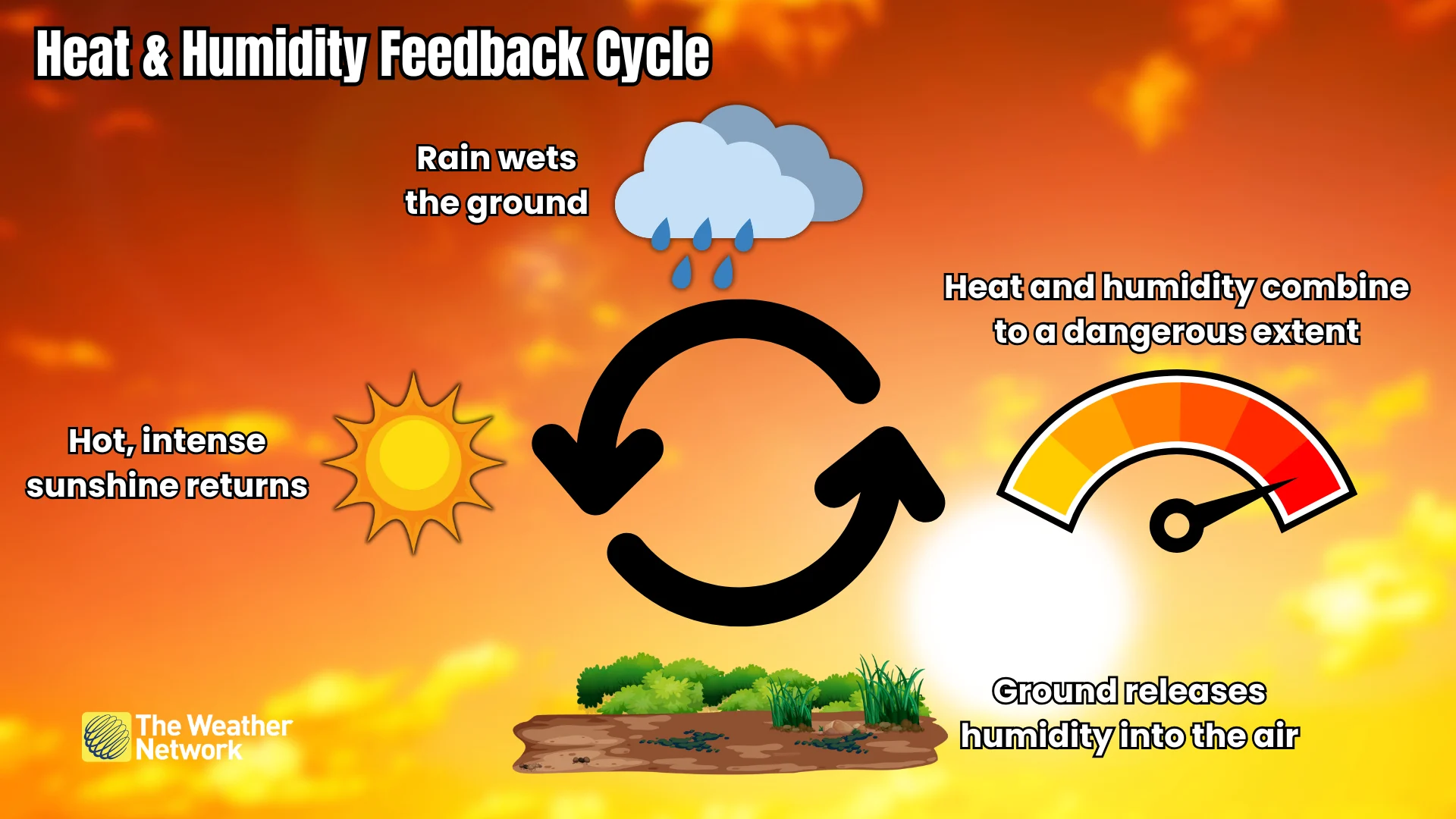
As the air temperature increases, the molecules and atoms gain more energy, causing them to move around more. As a result, the spaces between them grow wider, allowing more water vapour to be taken up from the surrounding environment. Evaporation from plants, the ground, and local bodies of water will provide that water vapour, and the air will take up as much as is readily available. However, as more of the space between the atoms and molecules gets filled up, it becomes more difficult for the air to take on more water vapour.
(The Weather Network)
READ MORE: Summer 2026 - El Niño may make Canada’s summer simmer instead of sizzle
This becomes very important when it comes to our comfort levels, and our health risks, due to hot, humid weather. More on that, below.
Changes in Humidity
On any given day, both the amount of water vapour in the air and the humidity levels that we feel can change fairly drastically.
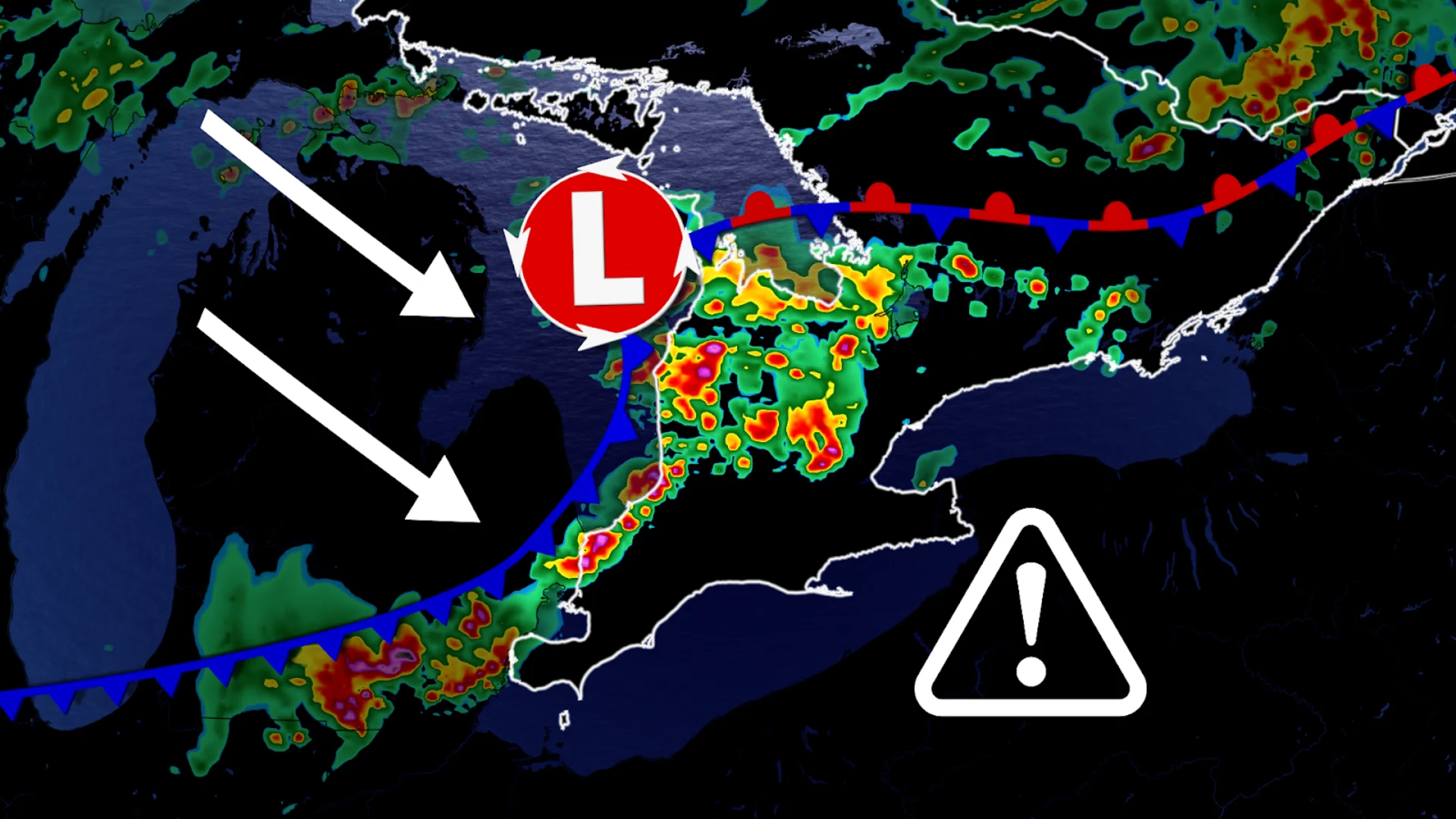
A warm front can usher in a moisture-laden air mass from farther south, or a cold front can bring fresh, dry air in from the north. Both events are typically preceded by a period of precipitation as wet and dry air masses interact at these boundaries.
(The Weather Network)
However, in general, humidity tends to be highest just before dawn, which is when the air temperature usually reaches its coolest of the day.
Also, we usually see the lowest humidity in the first part of the afternoon, when the air typically reaches its highest temperature.
Expressing Humidity
When you look at weather reports, you will find that meteorologists use two different ways of expressing humidity — 'dew point' and 'relative humidity'.
Dew Point
The dew point is the temperature where the air is holding the maximum amount of water vapour that it can, under those specific environmental conditions.
If you were to capture a sample of air in a container and cool it, while maintaining the same pressure, eventually you would see water vapour begin condensing on the inside of the container. At that moment, the air has reached its dew point temperature.

Dew collects on the leaves of a plant. (Unsplash/Milada Vigerova)
Essentially, what's happening on the molecular level is that, as the temperature falls, there comes a point where there's no more extra space for water vapour to be added. This is the dew point.
Any further drop in temperature causes the atoms and molecules of the air to literally squeeze the water vapour out, forcing it to condense into liquid water on any available surfaces. Since the dew point temperature depends on the amount of water in the air, that condensation causes the dew point temperature to decrease, accordingly. For this reason, the air temperature is typically either at or above the dew point.
Whether it's dew forming on leaves or blades of grass, a fogged-up car window or bathroom mirror, beads of condensation on the glass of your favourite summertime beverage, or clouds forming high above our heads, these all occur based on this same principle.
(Scott Sutherland)
DON'T SKIP: Tips to combat your sauna-like car during hot summer months
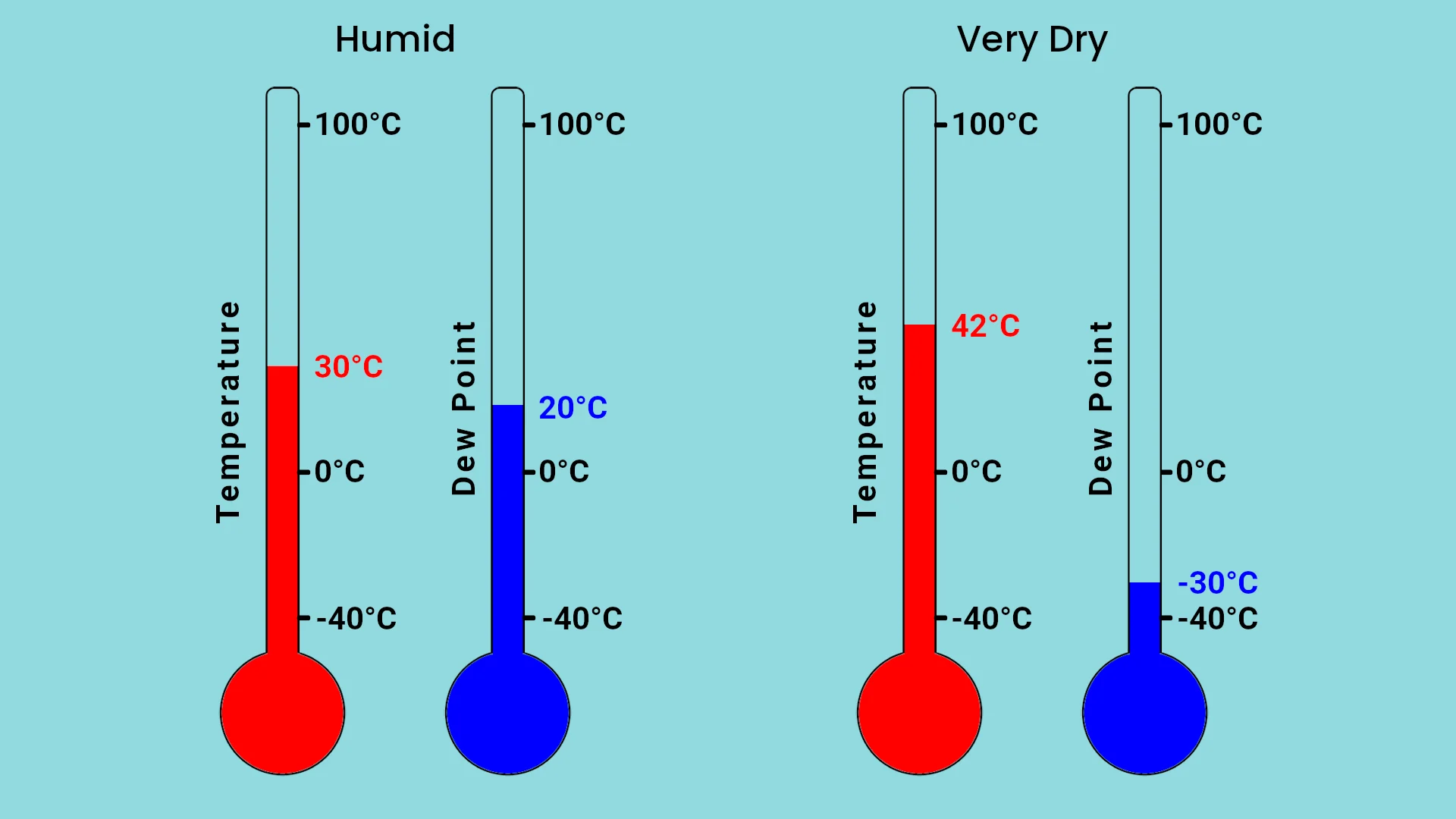
On your average day, dew point temperature will remain fairly constant. Major changes in its value tend to occur due to weather fronts, but how humid it feels throughout the day will depend on the difference between the air temperature and the dew point (a.k.a. the 'dew point depression').
The larger the dew point depression, the drier it will be, while the smaller the dew point depression is, the more humid it will feel.
Relative Humidity
The more common way humidity is represented is relative humidity.
Relative humidity, or RH, is expressed as a percentage, representing the amount of water vapour currently in the air, compared to exactly how much it could hold, if it was completely saturated, at its specific temperature.
While dew point tends to remain roughly the same throughout the day, RH can vary quite a bit. On a typical day, RH will be highest in the early morning, and lowest in the early afternoon.
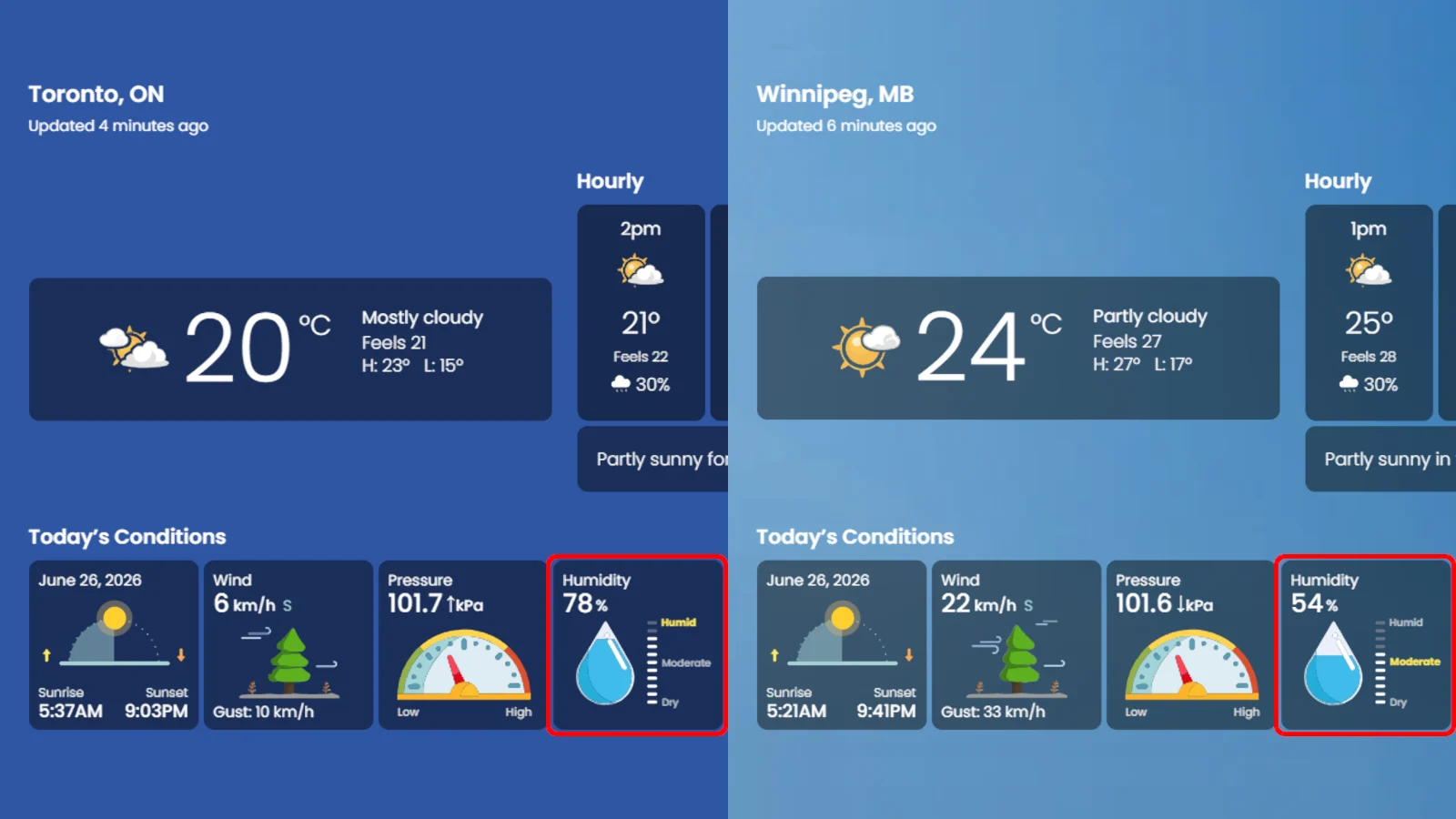
(The Weather Network)
READ MORE: Heat waves can leave homes dangerously hot – even for young, healthy adults
In this way, we get a value that provides us with the 'drying ability" of the air.
Even if it is hot out, if the relative humidity is low, the air is capable of taking up a lot of water vapour. Thus, anyone working or playing outside should be fairly comfortable, although very low humidity on a hot day can come with a risk of dehydration.
High relative humidity, when combined with high air temperatures, is a genuine hazard to the health of both humans and animals.
As warm-blooded creatures, we cool down by exchanging heat with our surroundings, most commonly through sweating. Beads of sweat form on our skin, and when the sweat evaporates into the air, it absorbs heat from the skin surface in the process. The water vapour then carries that heat away into the environment, cooling the skin and more importantly cooling the blood passing through the tiny blood vessels under the skin surface.
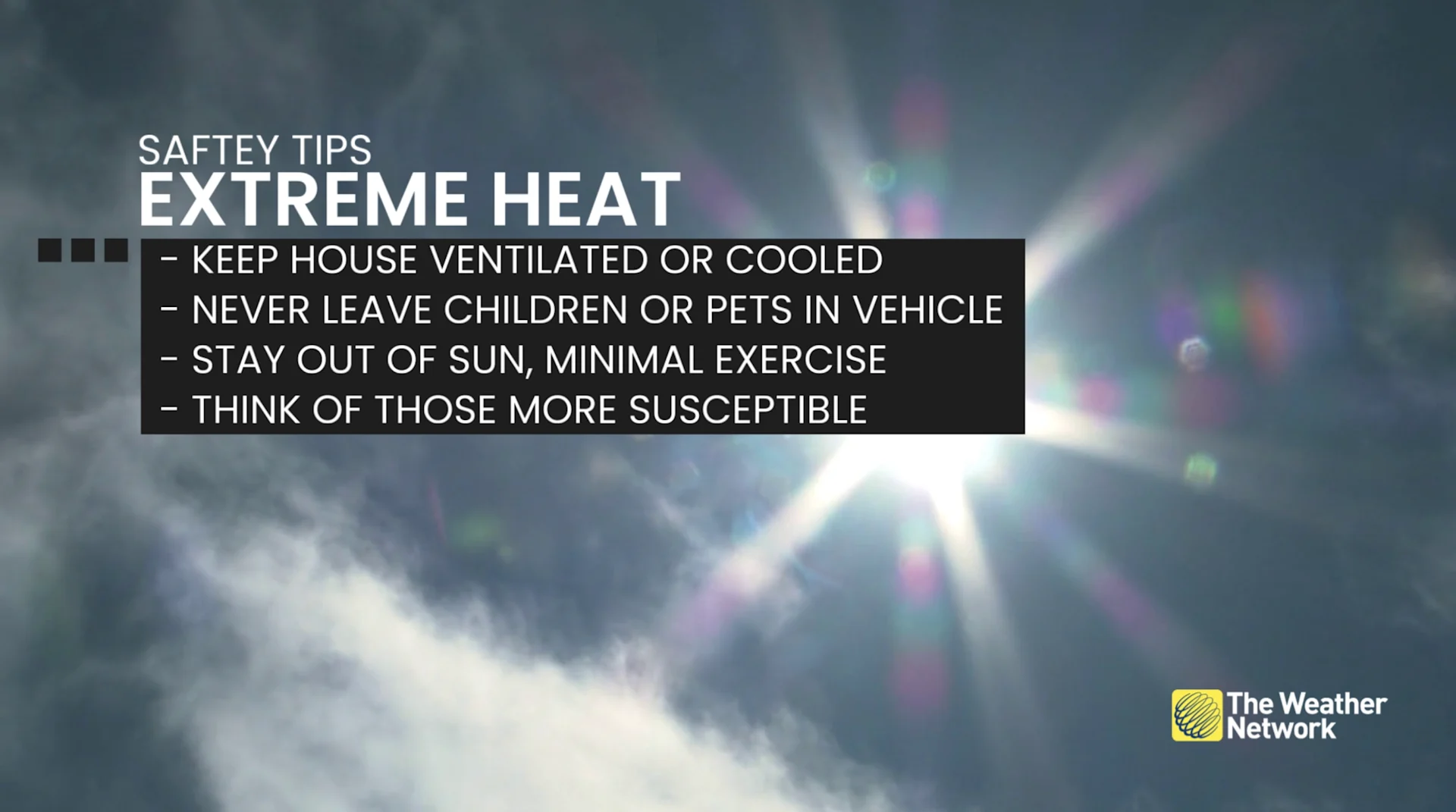
As the relative humidity rises, though, the air's ability to take up water vapour slows down. Someone who is out in hot, humid weather for an extended period of time, especially when performing strenuous work or playing sports, will then find that the sweat simply collects on their skin and soaks into their clothes.
Wiping away that sweat may reduce the immediate discomfort, but without the evaporation, it won't have the same cooling effect. Under these conditions, someone can easily begin to suffer from heat stress, heat exhaustion, and even heat stroke.
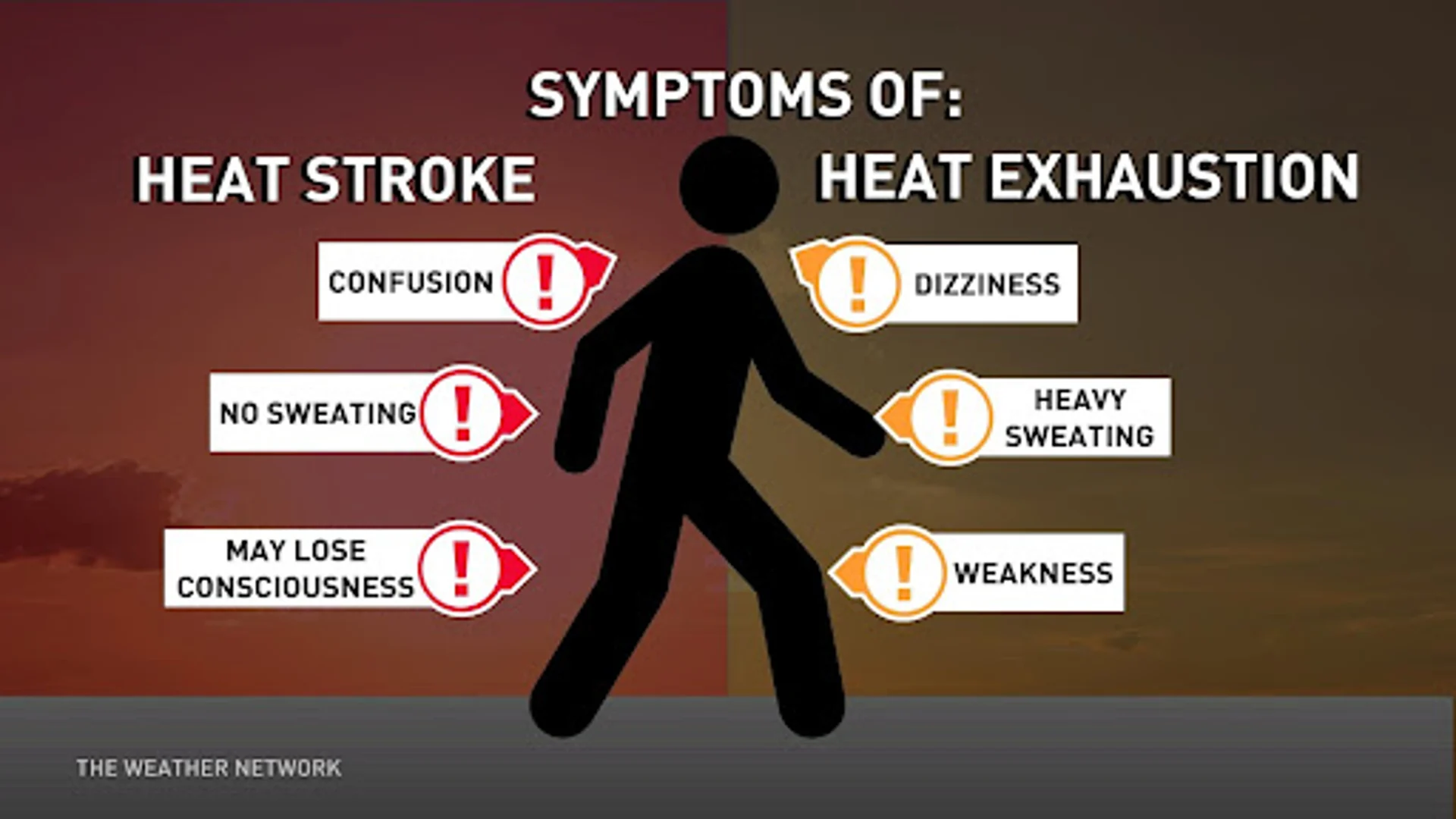
(The Weather Network)
READ MORE: Heat stroke is a growing concern in Canada
Many animals are even more vulnerable to extreme heat and humidity. They may have their own ways of dealing (mainly panting for dogs, and grooming for cats), but these can be exhausting, and may not be able to keep up with their rising body temperature.
Humidex, Feels Like, and Wet Bulb Temperature
To help the public remain safe in hot, humid weather, new ways of expressing these conditions have been created.
One of these ways is Humidex. By combining the air temperature with either the dew point temperature or the relative humidity value, humidex is calculated to provide one number to express how the combination can impact us.
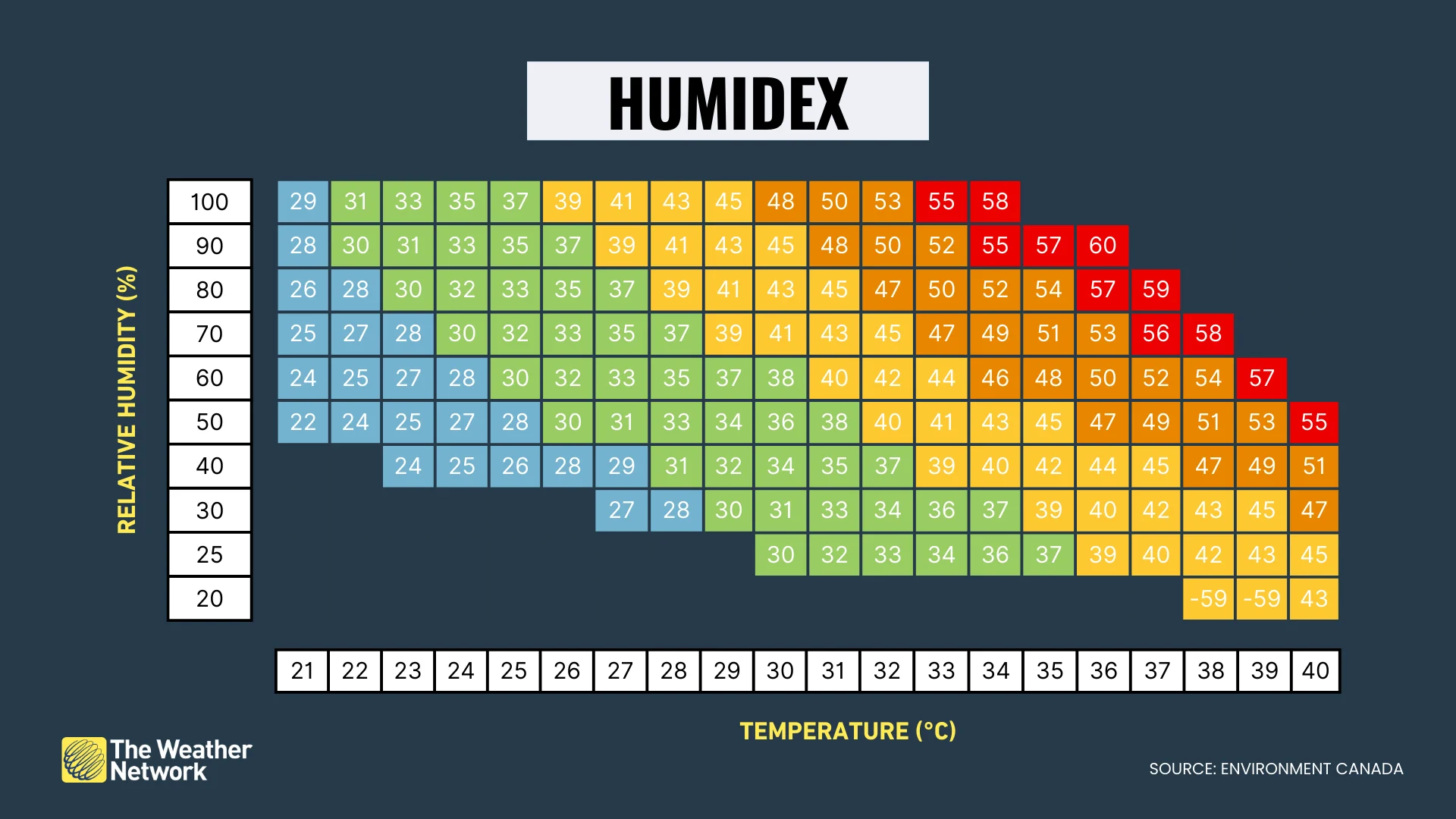
(The Weather Network)
So, if the air temperature is 30°C, and the relative humidity is 70 per cent (or dew point of 24°C), the humidex value will be 41.
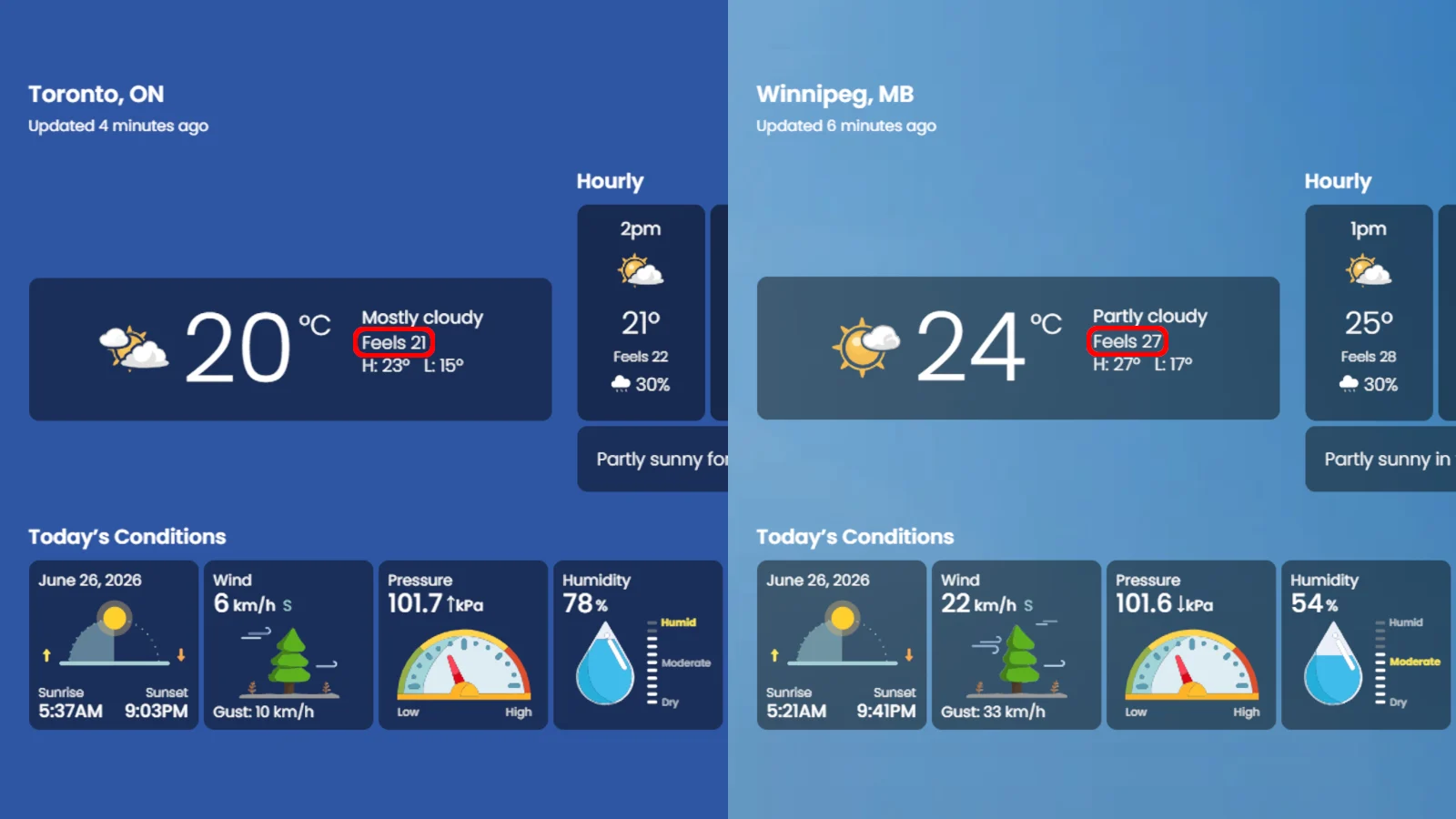
This humidex value is often presented next to the air temperature, as a 'Feels Like' or 'Feels' value. Although the values for humidex and 'feels like' are not expressed as temperatures, they are equivalent to the same temperature in degrees Celsius.
(The Weather Network)
READ MORE: 'Feel' miserable out? Humidex and wind chill are calibrated to your body
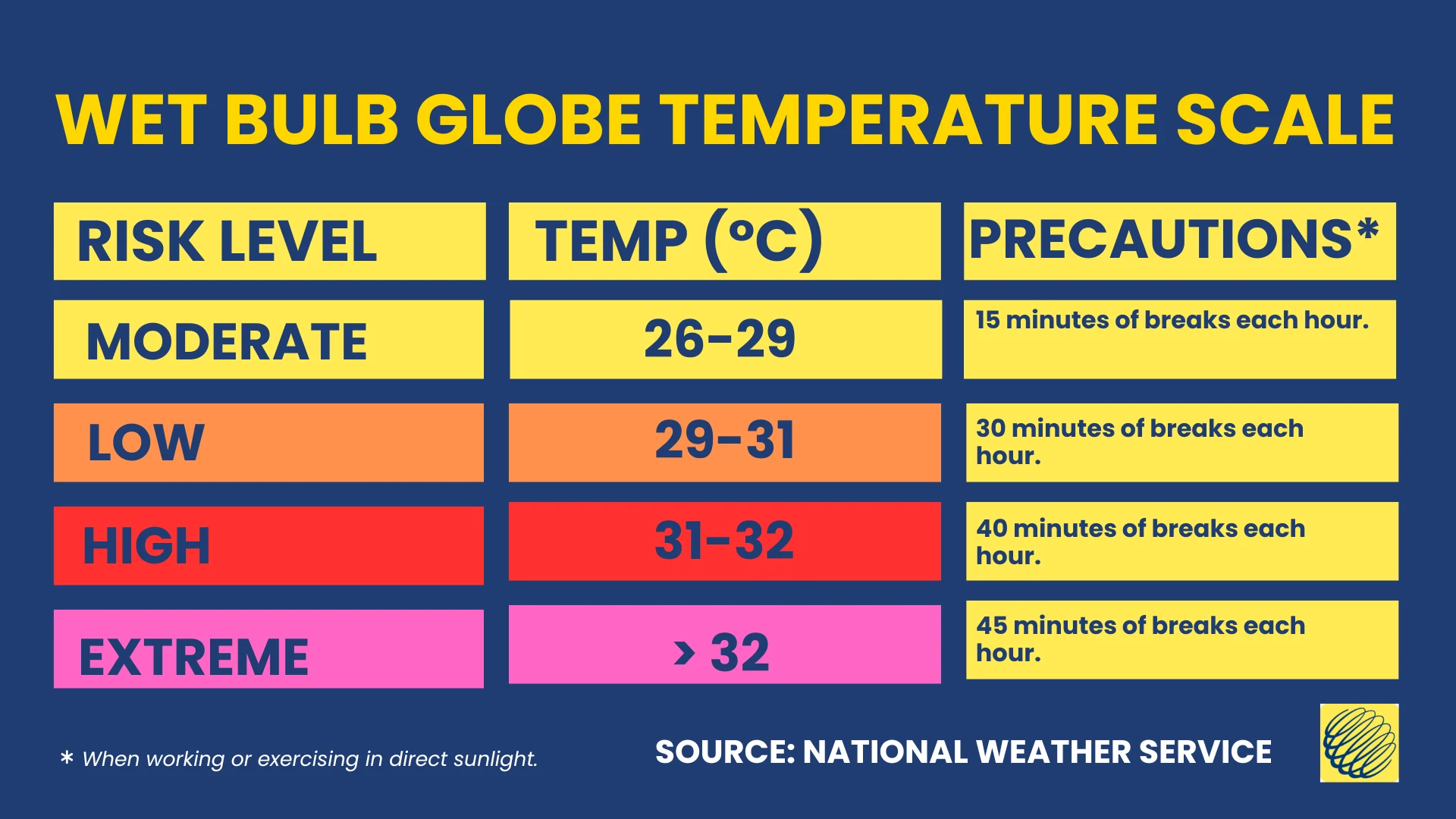
Another metric devised to express the risk of heat stress is the Wet Bulb Globe Temperature.
(The Weather Network)
Wet bulb globe temperature is similar to dew point temperature, as both are measured by seeing how the evaporation of water cools a thermometer. The difference is that, while dew point is measured shaded from sunlight and isolated from the wind, wet bulb globe temperature is recorded in the open, exposed to the same sunlight and wind conditions that would be experienced by someone out in the environment.
This gives a more direct look at how effective evaporative cooling is, under the current weather conditions, and thus how risky it is for anyone outside in those conditions.
(Thumbnail image courtesy Bradley Hook/PEXELS)