Destructive Atlantic hurricanes can still happen during El Niño

A long list of impactful hurricanes struck land during El Niño years
Few spots on Earth can escape the influence of El Niño. This localized pattern has global implications, not the least of which is its effect on the Atlantic hurricane season.
El Niño tends to subdue Atlantic hurricane activity. But that’s hardly the whole story.
Some of North America’s most impactful hurricanes roared ashore during years with full-blown El Niño conditions in place.
DON’T MISS: What does a hurricane’s ‘cone of uncertainty’ mean?
El Niño affects hurricanes from afar
El Niño is a pattern of unusually warm ocean waters in the eastern Pacific Ocean. Much like a fever in the human body, this abnormal warmup can influence seasonal conditions from Mumbai to Montreal to Marrakesh.

Warmer waters increase the frequency of thunderstorms and unsettled weather over the eastern Pacific Ocean, creating easterly wind shear that blows over the Atlantic basin.
This wind shear can disrupt tropical disturbances as they attempt to organize, which often reduces the overall number of successful storms we see form over the Atlantic.
Hurricanes can still thrive during an El Niño
El Niño doesn’t completely dictate the trajectory of an Atlantic hurricane season. Interference is a general trend, not a guarantee.
Favourable conditions over the Atlantic can exist during lulls in wind shear, and a well-built storm can survive a bit of rough handling.
For example, unusually warm water in the Atlantic helped fuel an above-normal 2023 hurricane season despite a healthy El Niño that summer.
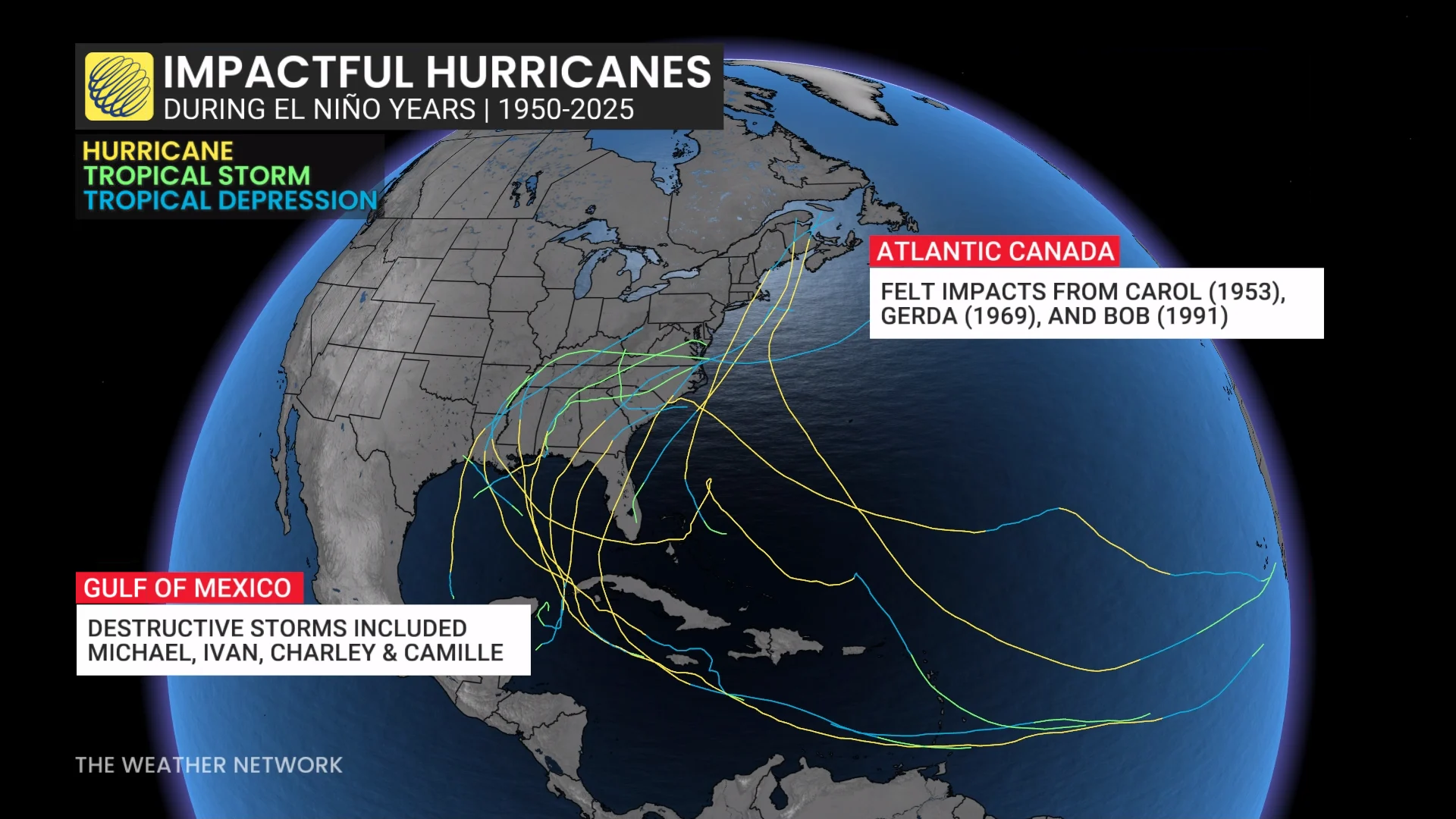
Between 1950 and 2025, there were at least 28 highly impactful hurricanes during El Niño years. The list features some heavy hitters, including scale-topping Category 5 landfalls in both Michael and Camille.
Several of those storms had direct impacts on Atlantic Canada.
Hurricane Carol caused widespread damage when it struck the Maritimes in September 1953. Many homes lost power when Hurricane Gerda struck the same area in 1969. Foul conditions and heavy rainfall spread over the Atlantic provinces when Hurricane Bob tracked into New England in August 1991.
Intense El Niño events don’t always deter storms, either
Even each of the seven “Super El Niño” events recorded since 1950 witnessed noteworthy hurricane landfalls in North America.
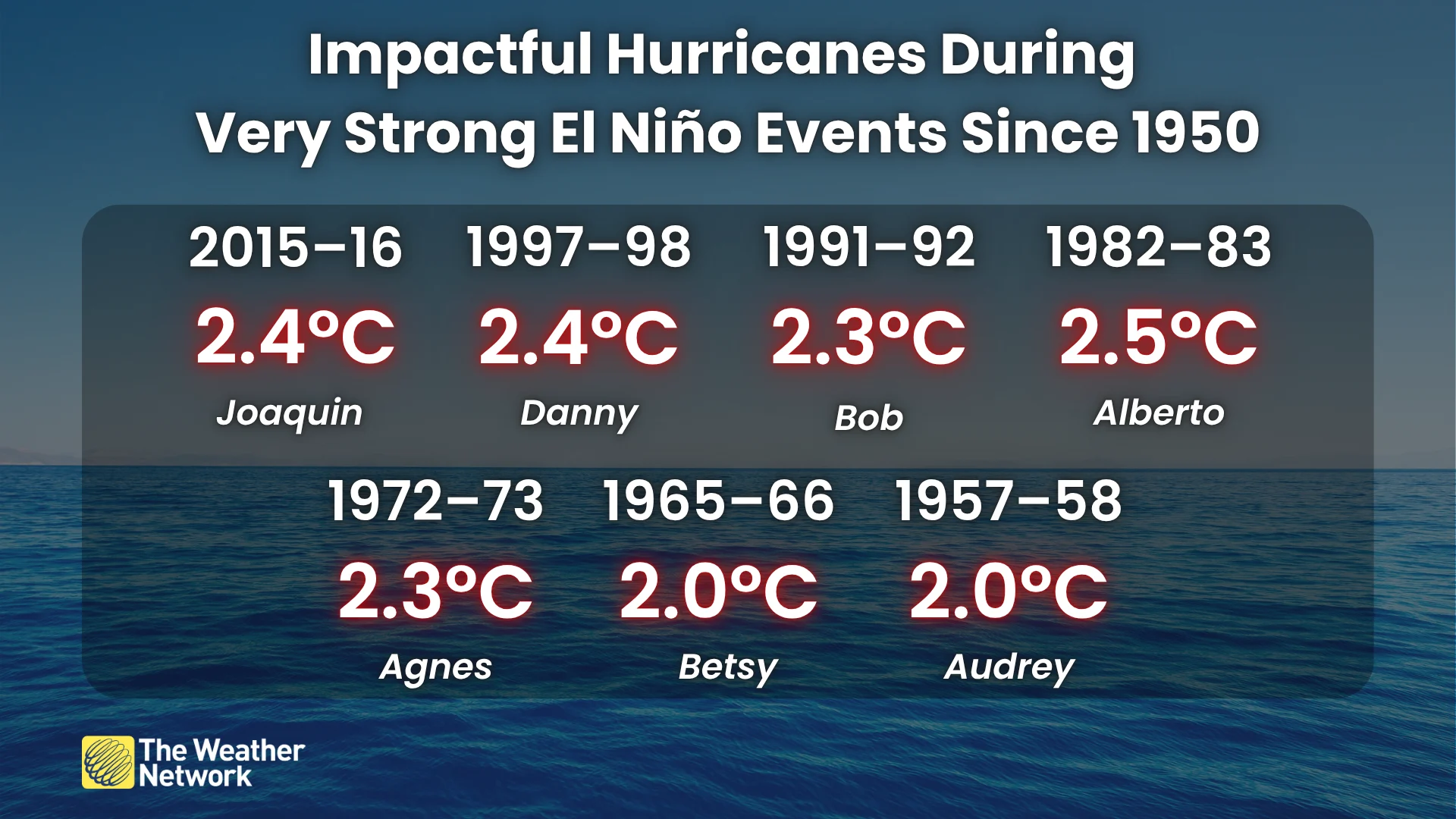
Hurricane Joaquin was a high-end Category 4 when it lashed The Bahamas and sank a cargo ship in October 2015.
Southern Alabama suffered heavy damage from Hurricane Danny in 1997 when the storm dropped nearly 1,000 mm of rain on parts of the region.
Intense flooding during 1972’s Hurricane Agnes caused billions of dollars in damage and claimed more than 120 lives.
Preparation is key despite seasonal outlooks
Coastal residents should prepare for storms well in advance regardless of seasonal outlooks or overall patterns. As we’ve seen dozens of times before, it only takes one storm making landfall to make it a bad season for the affected communities.
Anyone living or visiting near the coast should have emergency plans and supplies in place all throughout hurricane season, which runs from June 1 through November 30.
Folks in Ontario and Quebec should also stay prepared, as the remnants of systems hitting the U.S. can track into Canada with flooding rains, high winds, and a risk for tornadoes.
Header image of Hurricane Ivan courtesy of NOAA/NASA.