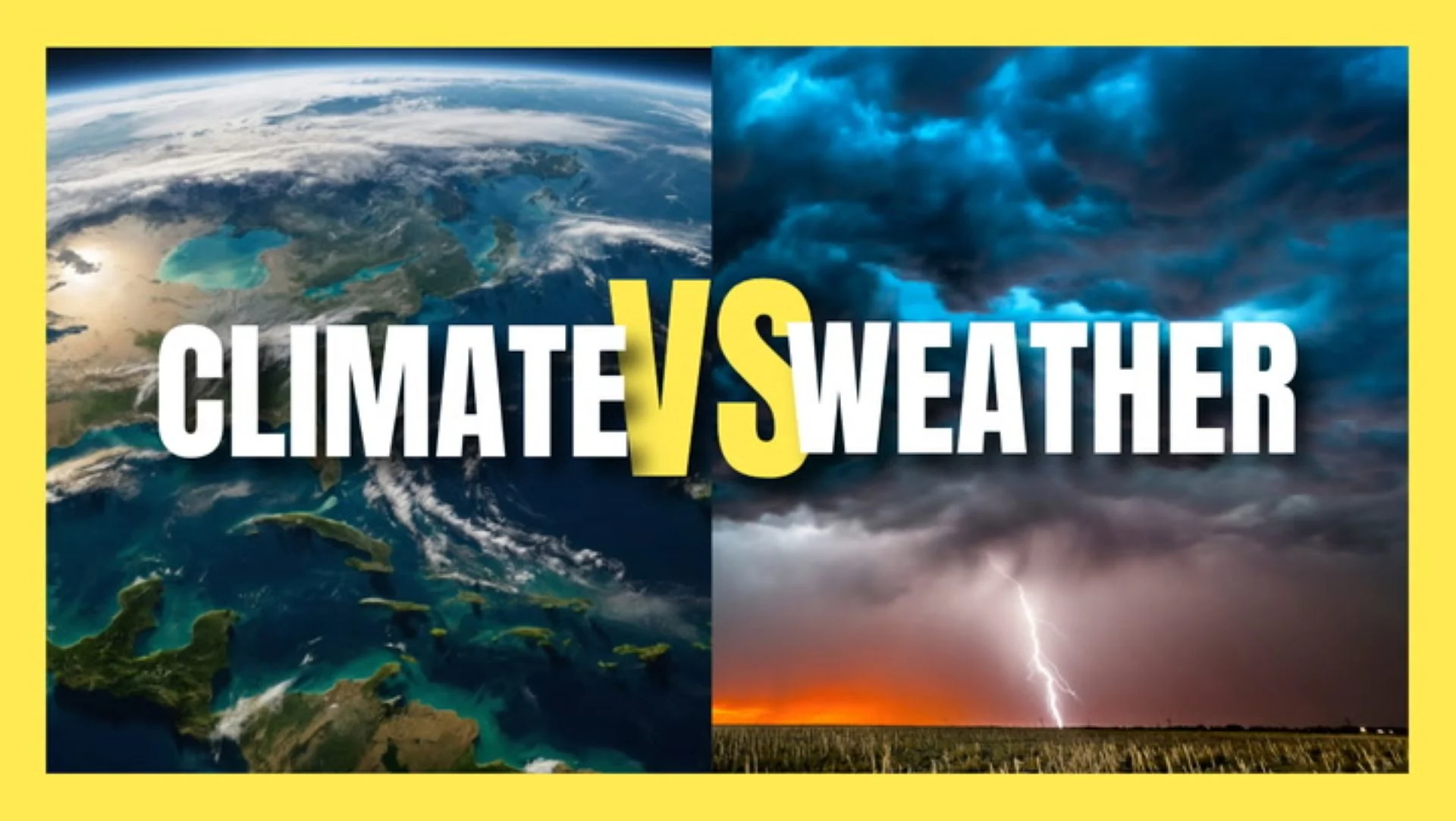
Climate versus weather: What's the difference?

Climate and weather are words we encounter on a regular basis. Learn about the distinction in what our planet experiences.
Have you ever wondered what separates weather from climate?
With constant reminders that the climate is changing, our daily weather forecasts and news of extreme weather events on a regular basis, it's a good idea to know the difference between the two terms.
The words weather and climate are often used interchangeably, but the two have very different meanings.
In the easiest comparison, the distinction is comparable to the clothes you have in your closet and drawers. Weather can be compared to your daily outfit while climate is your entire wardrobe. But there is more to it than that.
Weather changes daily, like your outfit
Just like your wardrobe, weather can and does change daily. It is a mix of events that occur each day in our atmosphere, as the National Oceanic and Atmospheric Administration (NOAA) outlines. We have one atmosphere, but the weather isn't distributed equally across the globe. It will adjust over minutes, hours, days and weeks.
With several layers to Earth's atmosphere, the level that is closest to the ground is the troposphere. NOAA says there are numerous factors that can change the atmosphere in a specific area, including air pressure, temperature, humidity, wind speed and direction, among others.
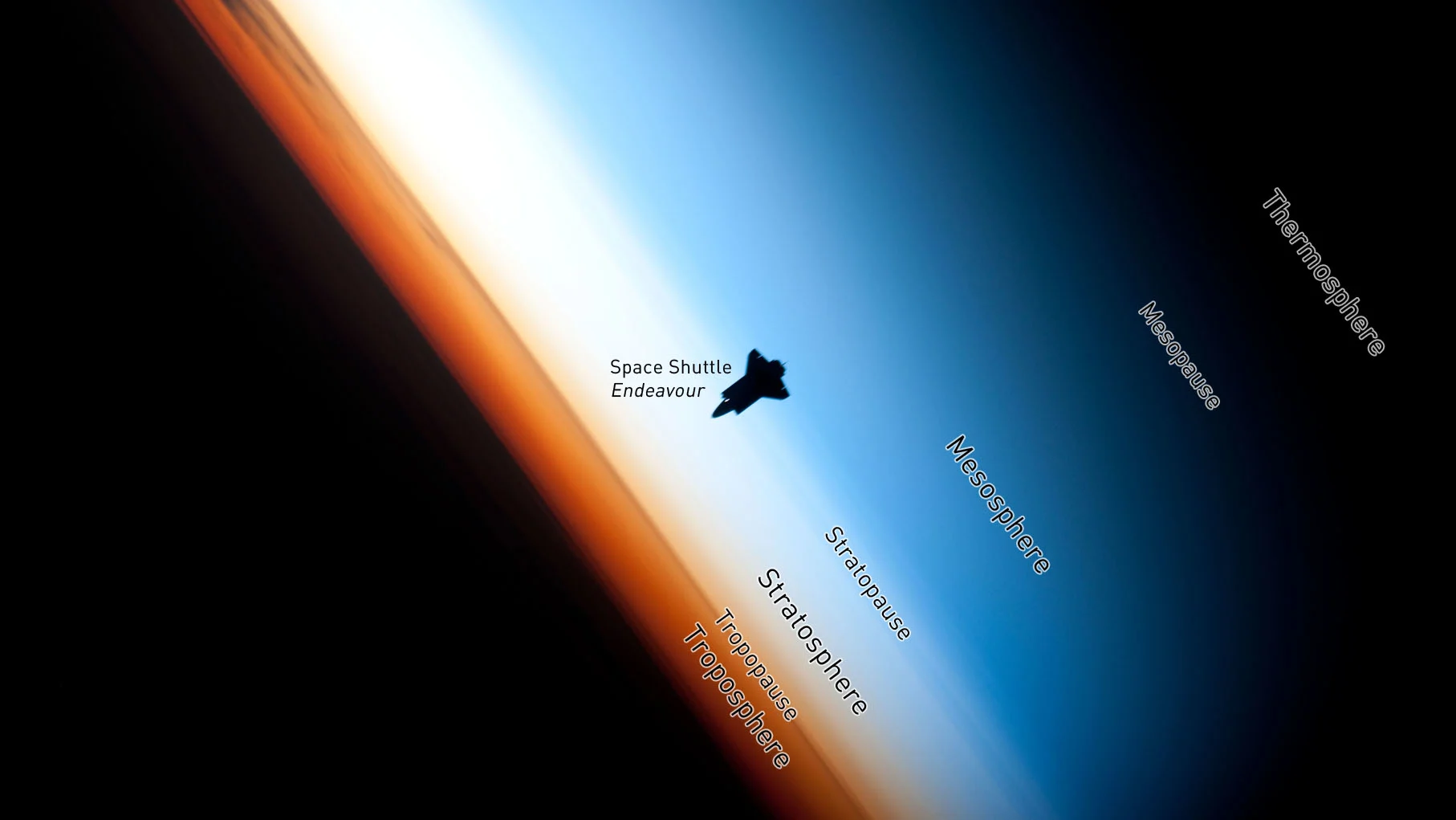
Atmospheric layers. (NASA)
When looked at collectively, those factors determine what the weather is like at a given time and location.
Climate is your entire ensemble
Now, when we talk about climate, it describes the long-term patterns of weather in a region, including seasonal variations and extremes.
So that means different locales can have different climates.
When scientists explain what the temperatures are like during different seasons, how windy it usually is, or how much rain or snow typically falls, they are describing the climate of that specific location.
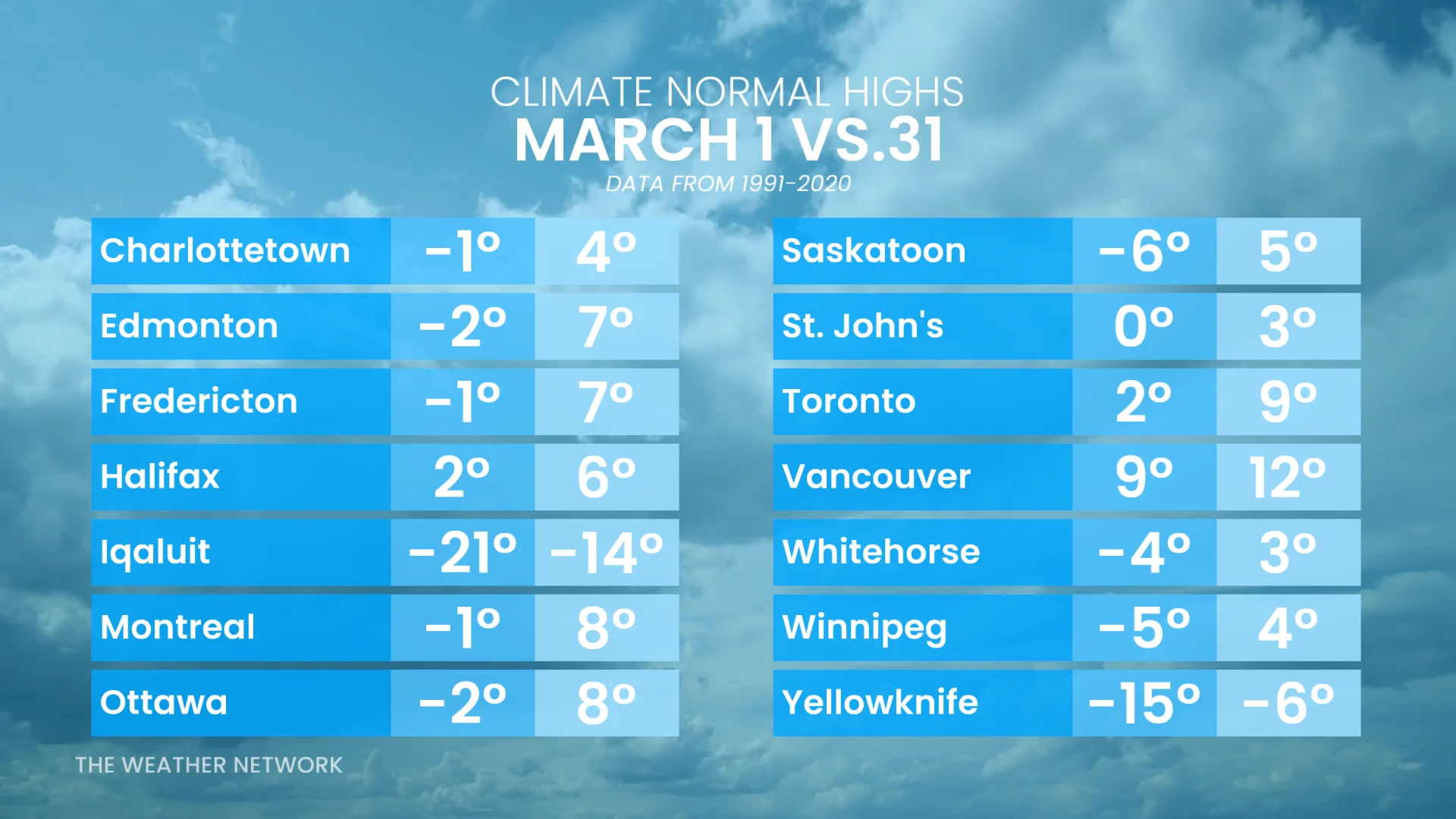
"When scientists talk about climate, they're often looking at averages of precipitation, temperature, humidity, sunshine, wind, and other measures of weather that occur over a long period in a particular place. In some instances, they might look at these averages over 30 years. And, we refer to these three-decade averages of weather observations as climate normals," NOAA says on its website.
According to NOAA, examining climate normals can help meteorologists describe whether the summers are hot and humid, and whether the winters are cold and snowy at a particular place. The norms can also inform forecasters on when they might anticipate the warmest or coldest day of the year at that location.
However, while descriptions of an area’s climate provide an idea of what to expect, they don't offer any specific details on the weather that will occur on any given day.
Weather observations eventually become climate data
To help with daily weather forecasts, there are observers and automated stations that document current conditions across thousands of locations. Some of the documentation is recorded hourly, others are just once a day.
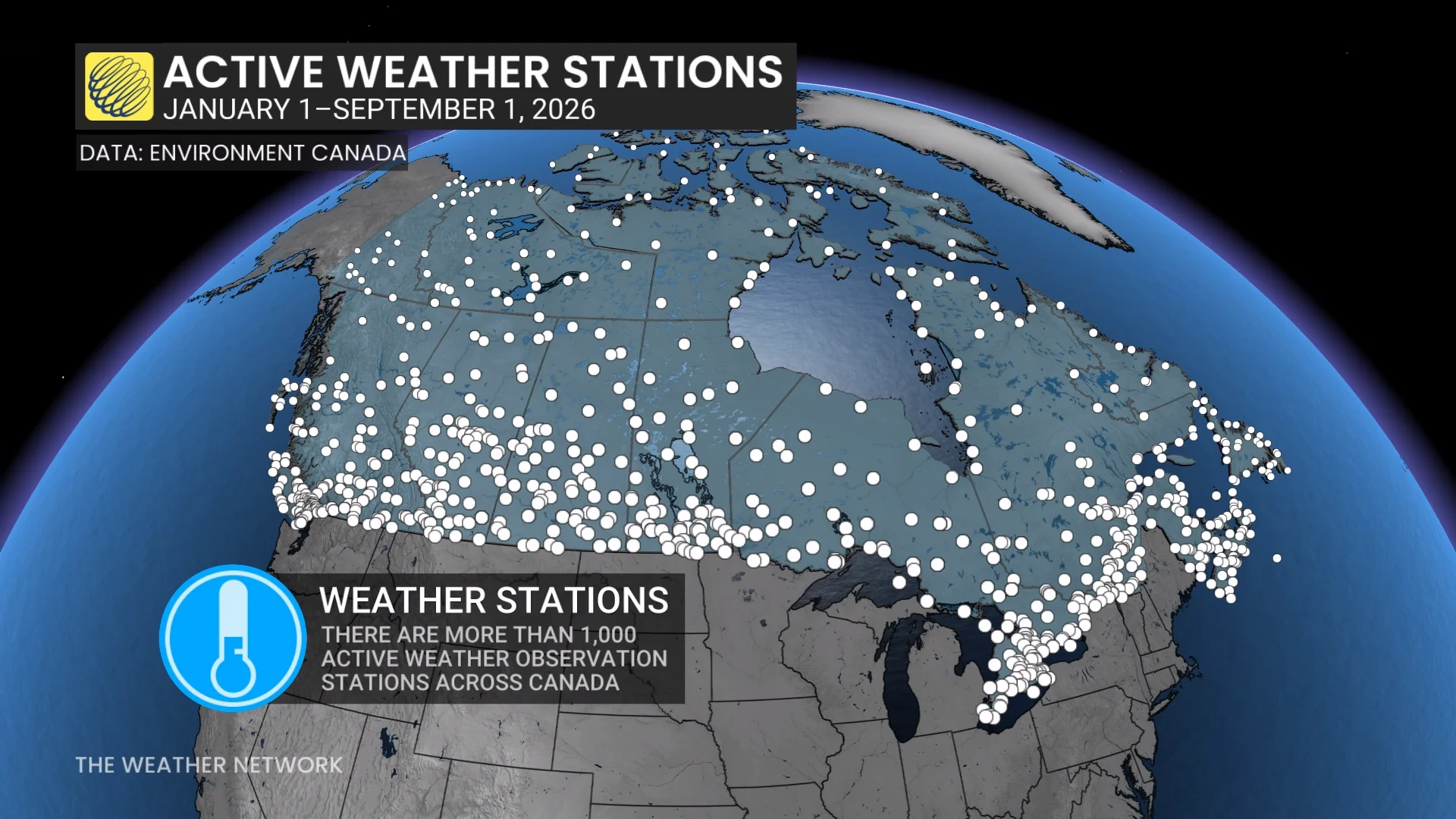
Over time, the data collected allows scientists and organizations such as NOAA and Environment and Climate Change Canada (ECCC) to quantify the long-term average conditions, offering vital details of an area’s climate.
Systematic weather records in several U.S. locations have been kept for more than 140 years, according to NOAA. With those long-term records, patterns and trends can be found and analyzed.
Meanwhile, the beginning of systematic weather observations in Canada can be traced back to the 1870s, but scattered, instrumental records and historical weather journals go back nearly three centuries.
How the climate changes
We know the weather can change in the span of a few minutes or hours, but the climate has much longer time frames for alterations.
Climate events and phenomena, such as El Niño, happen over several months, with bigger fluctuations that occur over decades. And larger climate changes happen over hundreds and thousands of years, NOAA stated.
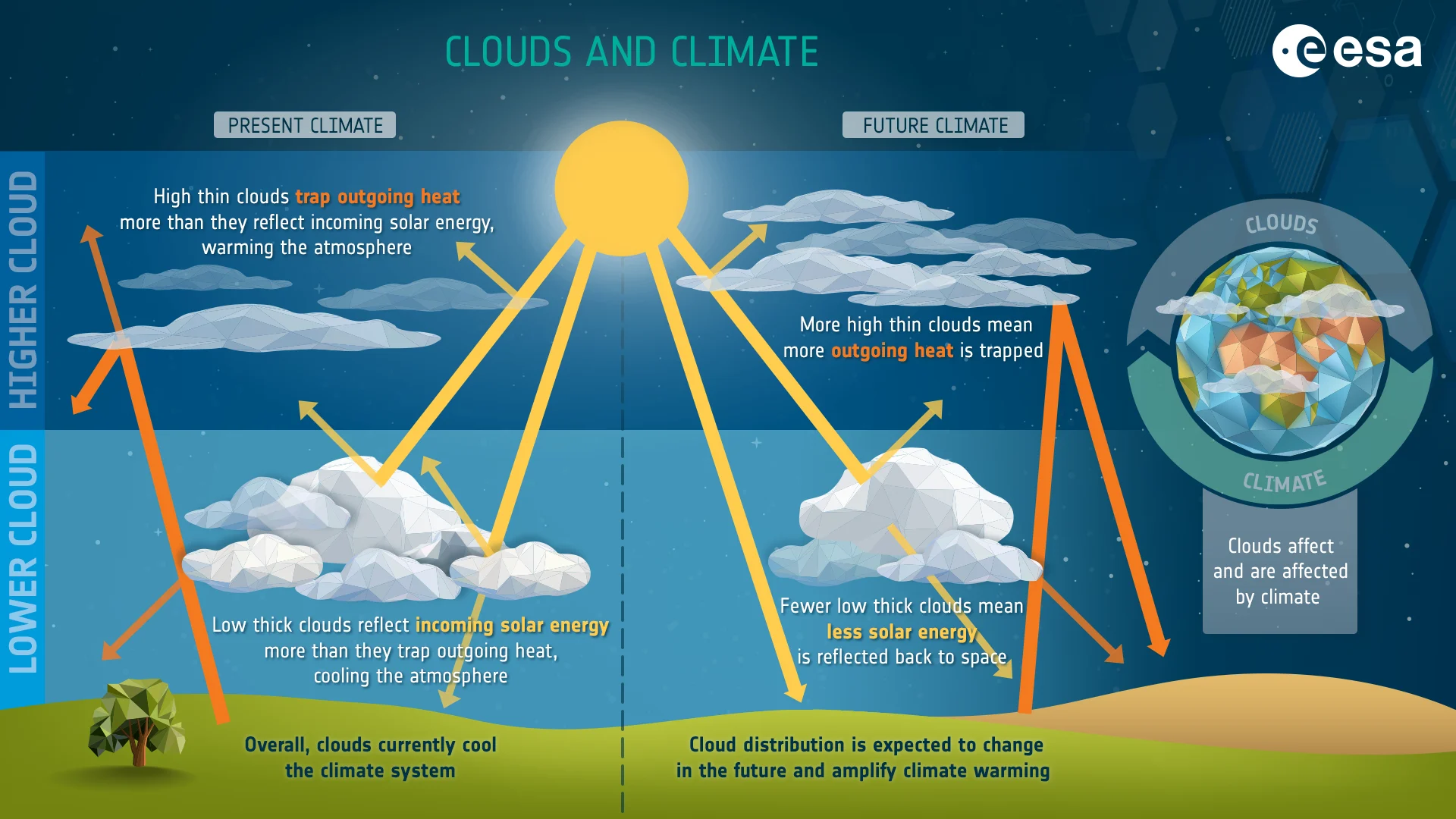
(European Space Agency/JAXA)
"Today, climates are changing. Our Earth is warming more quickly than it has in the past, according to the research of scientists. Hot summer days may be quite typical of climates in many regions of the world, but warming is causing Earth's average, global temperature to increase. The amount of solar radiation, the chemistry of the atmosphere, clouds, and the biosphere all affect Earth's climate," NOAA wrote on its website.
With the changes that are occurring in our climate, so, too, are the weather patterns.
Scientists are now learning how climate change can influence the severity of certain extreme weather, including heat waves and heavy rainfall.
It is possible to project how the weather patterns may change. For example, scientists predict more extreme weather events as Earth’s climate continues to warm.