Will the global helium shortage affect weather forecasts?

Growing supply chain disruptions could put a pause on weather balloon launches from some locations
Helium shortages as a result of the ongoing military conflict in the Middle East could eventually affect weather balloon launches both here in Canada and around the world.
Any disruption in these routine launches could have consequences for weather forecasts, especially heading into the severe weather and hurricane seasons.
DON’T MISS: How a simple weather balloon helps improve your daily forecast
Weather balloons measure conditions high in the atmosphere
Weather balloons carry radiosondes that constantly measure temperature, moisture, air pressure, and winds as they ascend through the atmosphere.
This data feeds into computer models to help these programs picture what the atmosphere looks like right now so they can simulate what may happen in the future.
Meteorologists also analyze the information to forecast everything from severe thunderstorms to freezing rain.
Hundreds of sites around the world launch weather balloons twice per day using either hydrogen or helium. Many launches have moved toward the use of hydrogen instead.

Environment and Climate Change Canada (ECCC) operates 29 upper-air sounding locations across the country. A spokesperson says 11 sites still use helium today, mainly in British Columbia and Quebec.
NOAA maintains around 100 launch sites across the United States and its territories. The agency told The Weather Network that 12 sites today continue to use helium as their lifting gas.
While six of those NOAA sites will soon be converted to hydrogen, safety concerns at some locations (such as university campuses) still require the use of helium instead.
Helium shortages are likely to grow around the world
Significant supply disruptions in the Middle East will have effects on the global helium supply for months to come. This will affect a wide range of products from the maintenance of magnetic resonance imaging (MRI) machines to computer chip production.
Despite its abundance in the atmosphere, the vast majority of the global helium supply is harvested during the extraction of natural gas.

RELATED: Straits: How these geographic gateways keep the economy moving
Qatar’s extensive natural gas reserves made the small nation the second-largest producer of helium in 2025, according to the USGS, extracting around one-third of the world’s supply at about 63 million cubic metres.
Some natural gas production facilities in Qatar have sustained damage in recent weeks. A shutdown of the Strait or Hormuz further complicates the supply chain.
Helium shortages may affect weather balloons
“The department is closely monitoring evolving global helium supply pressures,” ECCC told The Weather Network this week. “At present, the ECCC upper air network continues to operate with minimal impact, and the regular schedule of twice-daily balloon launches remains in place.”
ECCC also said that the department is looking into other technologies to sample the atmosphere that could complement the existing balloon network.
“Maintaining the integrity of the observation network remains a priority, and ECCC continues to proactively manage this risk as global conditions evolve.”
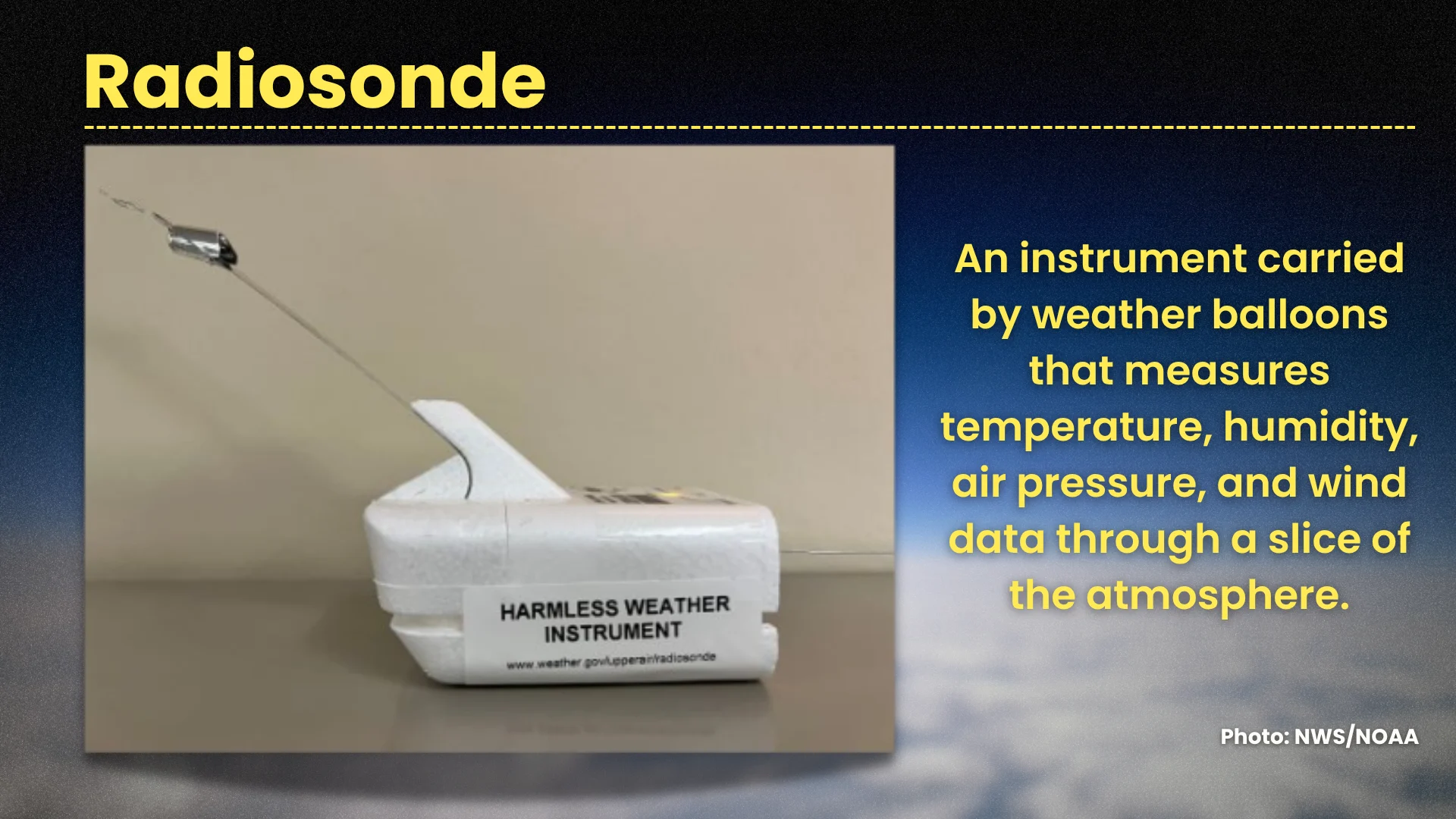
South of the border, NOAA said that supply chain disruptions may result in occasional pauses at the 12 launch sites that still use helium as their lifting gas.
U.S. weather balloon launches were already affected by deep cuts to the federal government in 2025, which resulted in reduced or terminated releases at numerous locations across the country.
Any missed or terminated balloon launches around the world can have a noticeable impact on weather modelling. While there are limited ways to fill the gaps, including aircraft and satellite observations, direct measurements facilitated by weather balloons remain the gold standard.
Header image created using graphics and imagery from Canva.