Where was Canada 320 million years ago? New map lets you explore

The study of paleolatitude has broad implications for scientists hoping to understand our planet’s distant past
Where was your town 320 million years ago?
A team of clever scientists have spent more than a decade seeking to answer that very question, and they’ve released an online tool to help you see the latitude at which your town resided in the past.
Land is constantly on the move, and understanding exactly where one location used to reside has broad implications for the study of our planet’s distant history.
DON’T MISS: The Iberian Peninsula is slowly rotating clockwise, experts say
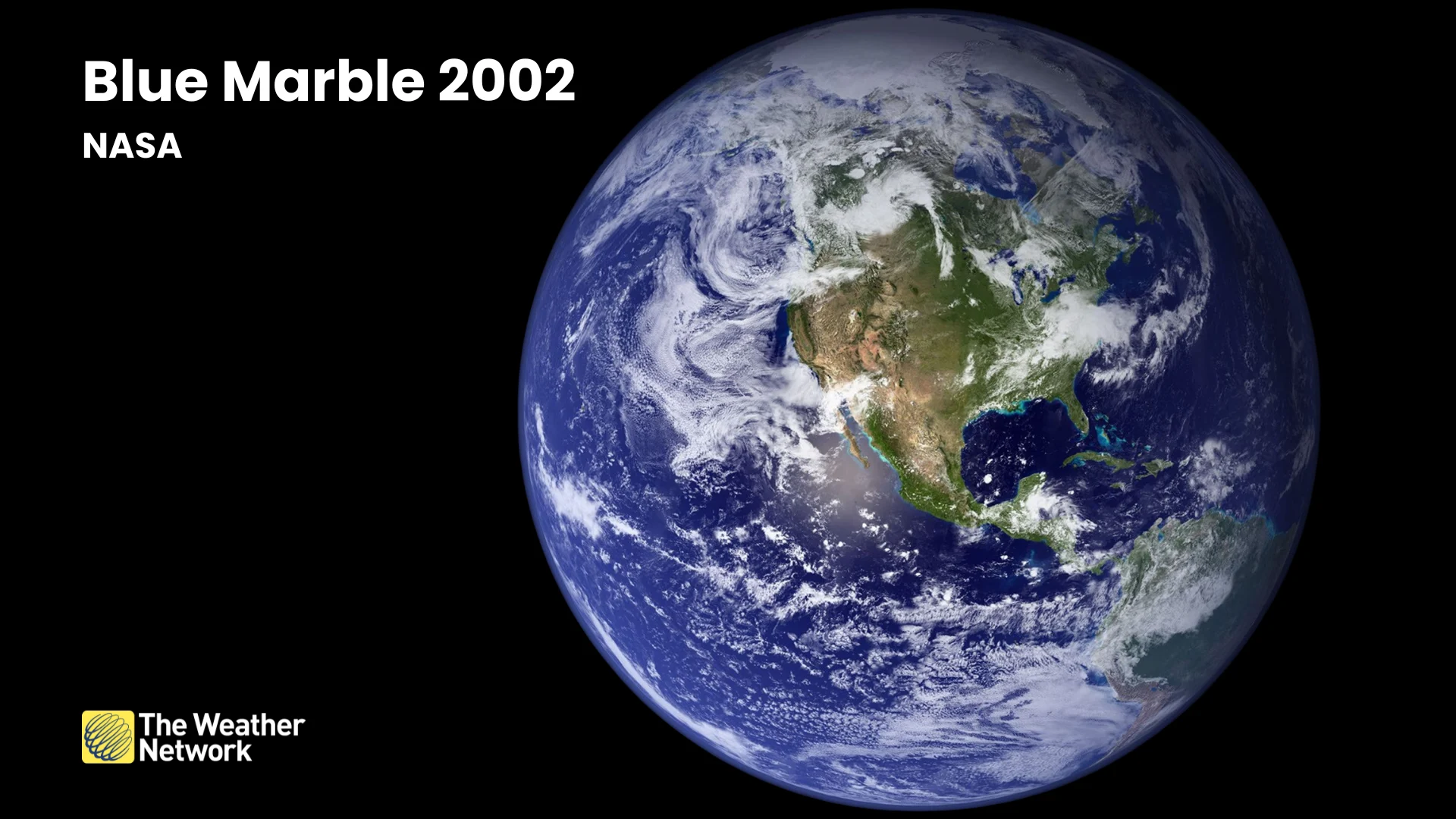
A view of our planet from space millions of years ago would look much different than the blue marble we’re used to seeing today. Continents and oceans would appear misshapen and misplaced compared to how they look today.
Scientists recently released the third version of Paleolatitude.org, a tool designed to visualize how land has moved over the past 320 million years, or since the days of the supercontinent Pangea.
The “distribution of oceans and continents relative to each other and relative to Earth’s spin axis continuously changed throughout geological time,” the researchers wrote in their study recently released in PLOS One.
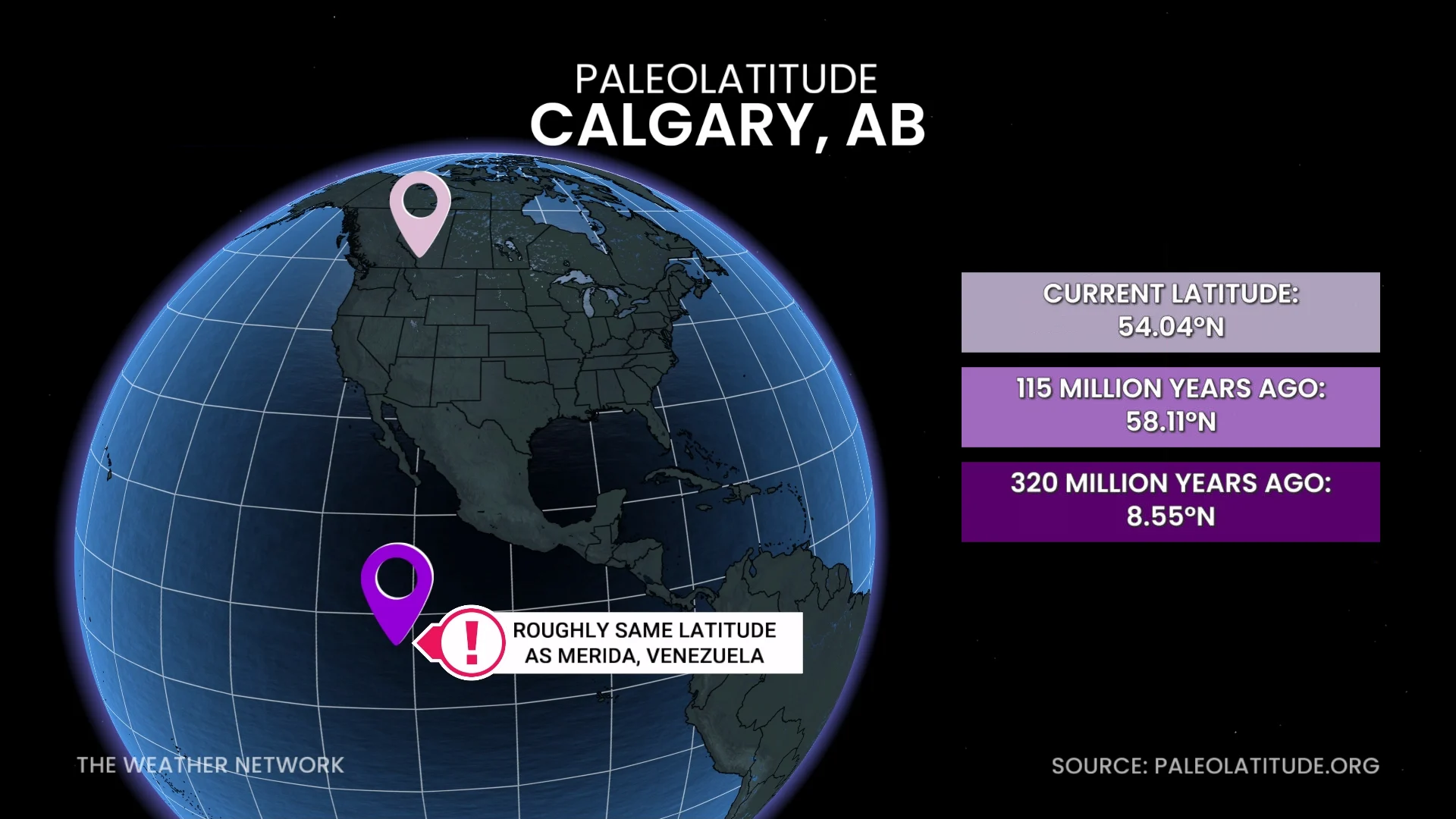
Calgary currently sits at about 51.04°N latitude. Just 115 million years ago, though, the city was farther north around 58.11°N, which is about the same latitude as La Crete in northern Alberta.
DON’T MISS: NASA releases stunning photo of Earth from Artemis 2 Crew
If today’s Calgary had existed 320 million years ago on Pangea, it would have been near 8.55°N: firmly within the tropics, and at roughly the same latitude as the city of Merida, Venezuela.
The land beneath the cities of Toronto, Montreal, and St. John’s all followed roughly the same trajectory through time, sitting on Pangea near 11 degrees south of the equator some 300+ million years ago.
This research is significant for paleontologists as they seek to understand our planet’s past.
“Rocks and fossils are generally displaced relative to the location at which they were deposited,” the team said in the study. Diving into a place’s paleolatitude is important to know how evidence of tropical species wound up in northern regions, for instance.