Summer Solstice: When is the longest day of the year for 2026?

All about the science and celebration of the Summer Solstice, plus, some oddities about the longest day of the year for 2026.
Sunday, June 21 is the Summer Solstice for 2026. While this is typically the longest day of the year, the exact timing is doing some strange things across Canada. So, when is your longest day of 2026?
Each day of the year, as the Sun crosses our sky, it follows a regular, repeating pattern. Seen from the northern hemisphere, it starts off at its lowest point in the sky in late December, climbs a bit higher each day, until late June, when it reaches its highest point, and then it reverses direction, getting lower in the sky until we are in late December again.
At either end of this process, the Sun reaches a solstice. This comes from the latin word solstitium, which literally means 'Sun stoppage', referring to how the Sun appears to stop or pause on these two days. On the December solstice, it reaches its most southerly sunrise and sunset, and its lowest path through the sky. During the July solstice, it reaches its most northerly sunrise and sunset, and its highest path through the sky.
The exact timing of the northern hemisphere summer solstice, in 2026, is at 8:25 UTC on June 21. That translates to the following times across Canada:
5:55 a.m. NDT,
5:25 a.m. ADT,
4:25 a.m. EDT,
3:25 a.m. CDT,
2:25 a.m. CST/MDT, and
1:25 a.m. PDT.
This marks the start of astronomical summer for the northern hemisphere for this year.
Tracking the Sun
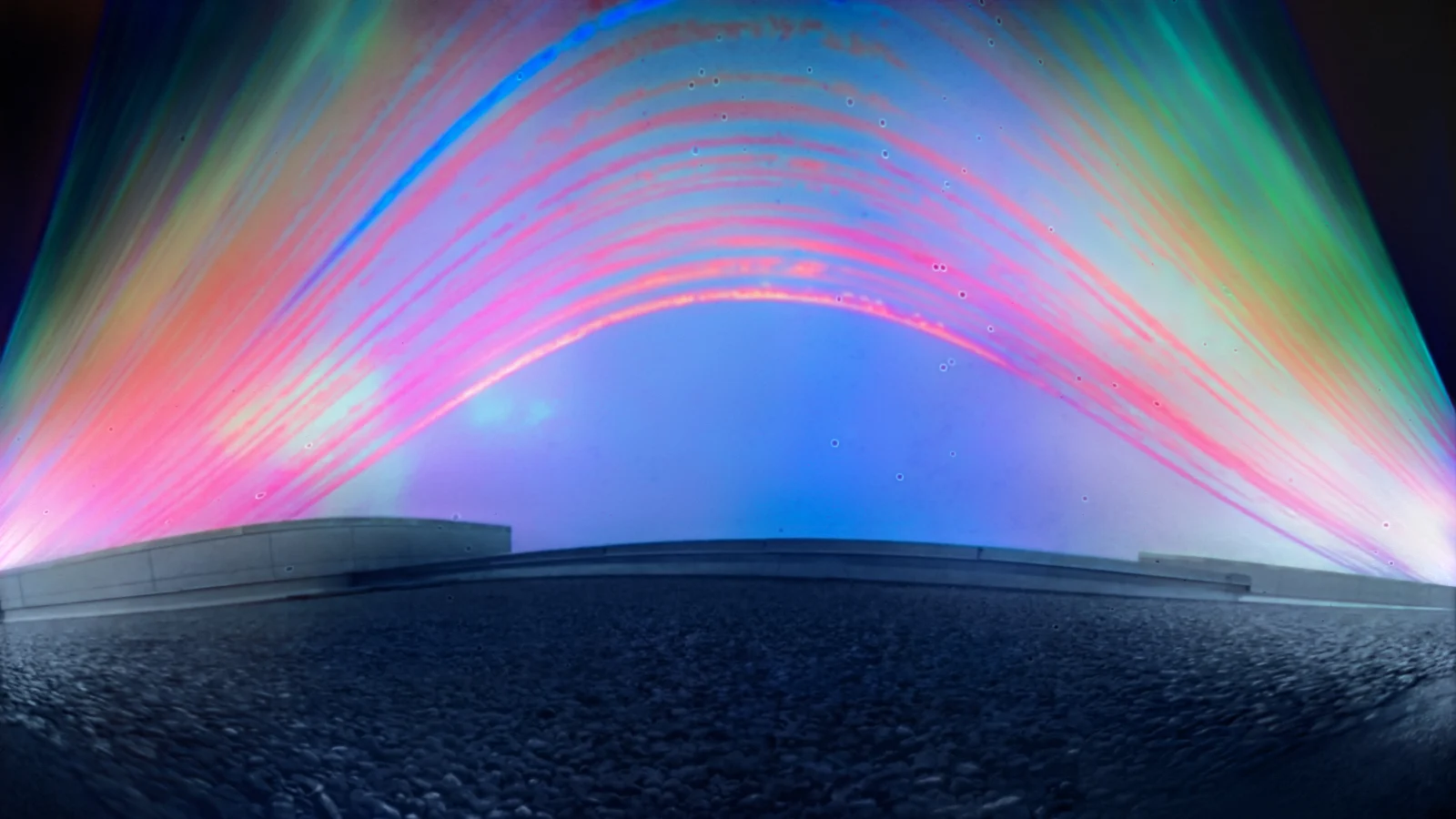
This one image, called a 'solargraph', captures the path of the Sun across the southern sky from June 20 through December 20, 2023. (Bret Culp, used with permission)
The image above is an example of solargraphy.
On June 20, 2023, award-winning photographer Bret Culp accompanied me up onto the roof of Weather Network headquarters, where we placed three small pinhole cameras, each lined on the inside with a piece of undeveloped photographic paper. Leaving the cameras there for six months, we collected them on December 20, and Bret developed the resulting solargraphs. Above is one of the three images.
What we are seeing here is the path of the Sun, as it tracked from east to west, each day during those six months. The track closest to the top of the image is the first that was recorded, and the one nearest the bottom was the last. Thus, with one image, we captured the motion of the Sun in the sky from the summer solstice through until the winter solstice.
Culp says that the breaks in any specific curve are caused by cloudy periods during that particular day.
"The colours are not direct depictions of the scene but a consequence of the paper's chemical reactions to extreme overexposure, the influence of uncontrollable factors such as moisture, dirt or fungus that may invade the camera, and excessive temperature fluctuations," Culp explained on his website. "Additionally, each brand of photography paper has a unique chemical makeup, resulting in different colour schemes."
What's behind this pattern?
Throughout human history, those that watched the sky noticed that year-by-year, the objects there — the Sun, Moon, and stars — would trace very specific, repeating paths.
Ancient monuments like Stonehenge, the temple of Karnak in Egypt, and Chichén Itzá in Mexico are just a few that were built to form specific alignments with these patterns in the sky. These locations still draw significant crowds as we transition between seasons — at the vernal and autumnal equinoxes, and the winter and summer solstices.
The best way to see the reason for this pattern is to look at how our planet orients with respect to the solar system and the Sun. You don't need to fly far out into space for this, fortunately. Just look at a globe.
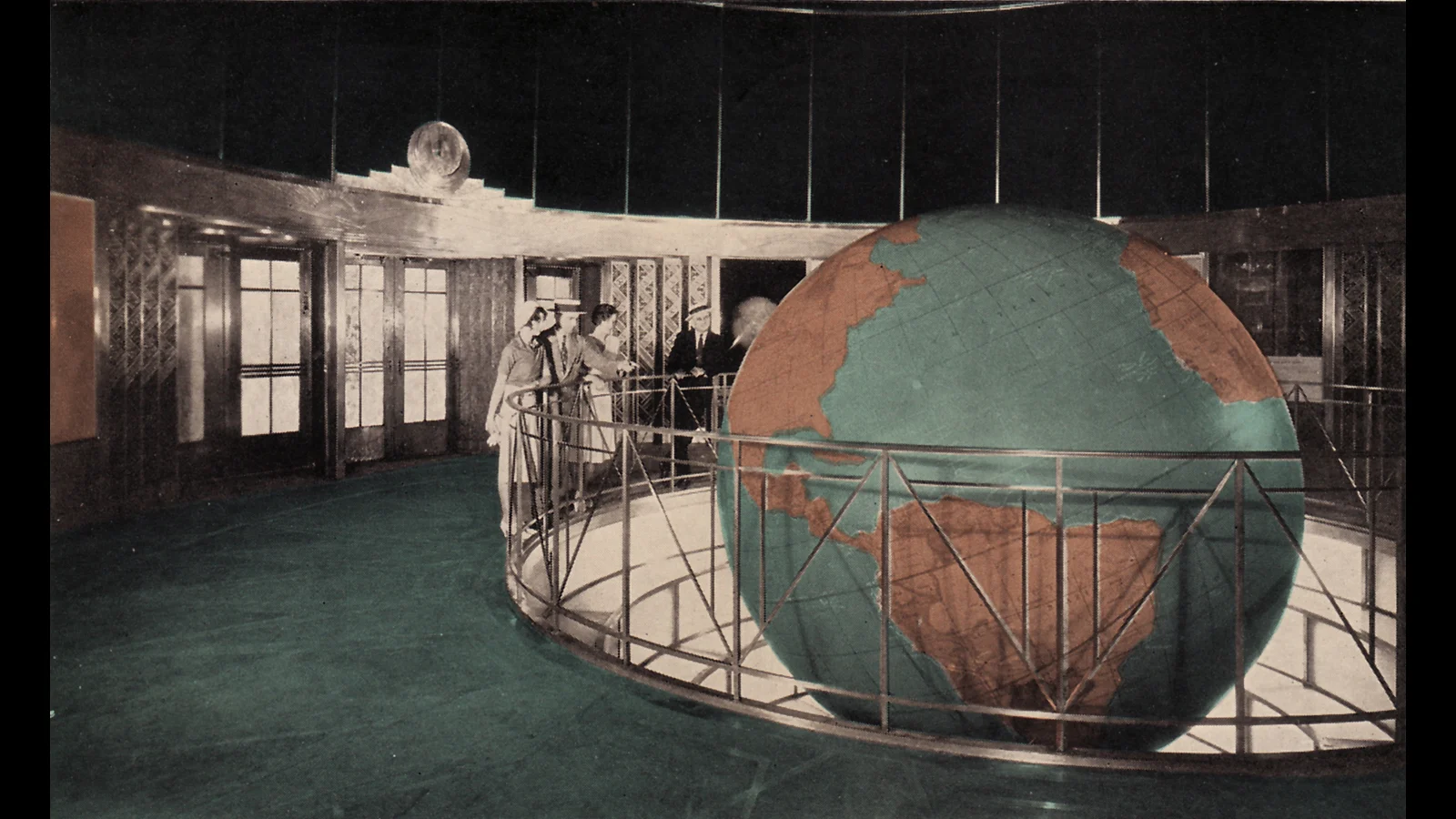
The lobby of the Daily News Building in Manhattan, pictured in 1941, is shown in this colourized postcard. (Wikimedia Commons)
Globes are nearly always tilted to one side, and it is for more than aesthetic reasons. It reflects the 23.4° tilt of the Earth's axis compared to the path the planet traces around the Sun.
This tilt is the reason for our seasons.
Earth doesn't wobble back and forth throughout a year, though. The planet's tilt is effectively constant as we orbit the Sun, with the North Pole pointed towards the star Polaris. The day-to-day changes in the Sun's position in the sky are solely the result of how the tilt affects the angle we view the Sun at.
As Earth goes through one full orbit of the Sun (as seen in the video above), the tilt causes the northern hemisphere to be pointed more towards the Sun during one half of the year. The southern hemisphere is pointed more towards the Sun for the other half of the year.
Take a location in Earth's northern hemisphere — Winnipeg, for example. During the summer, sunlight shines down on the ground there at a steep angle. So, each beam of sunlight delivers its energy to a relatively small area. In the winter months, though, the Sun's rays strike the surface at a more shallow angle. With the same amount of energy spread out over a larger area, it means less overall heating of the ground. It's this difference that makes the summer months hotter and the winter months colder.
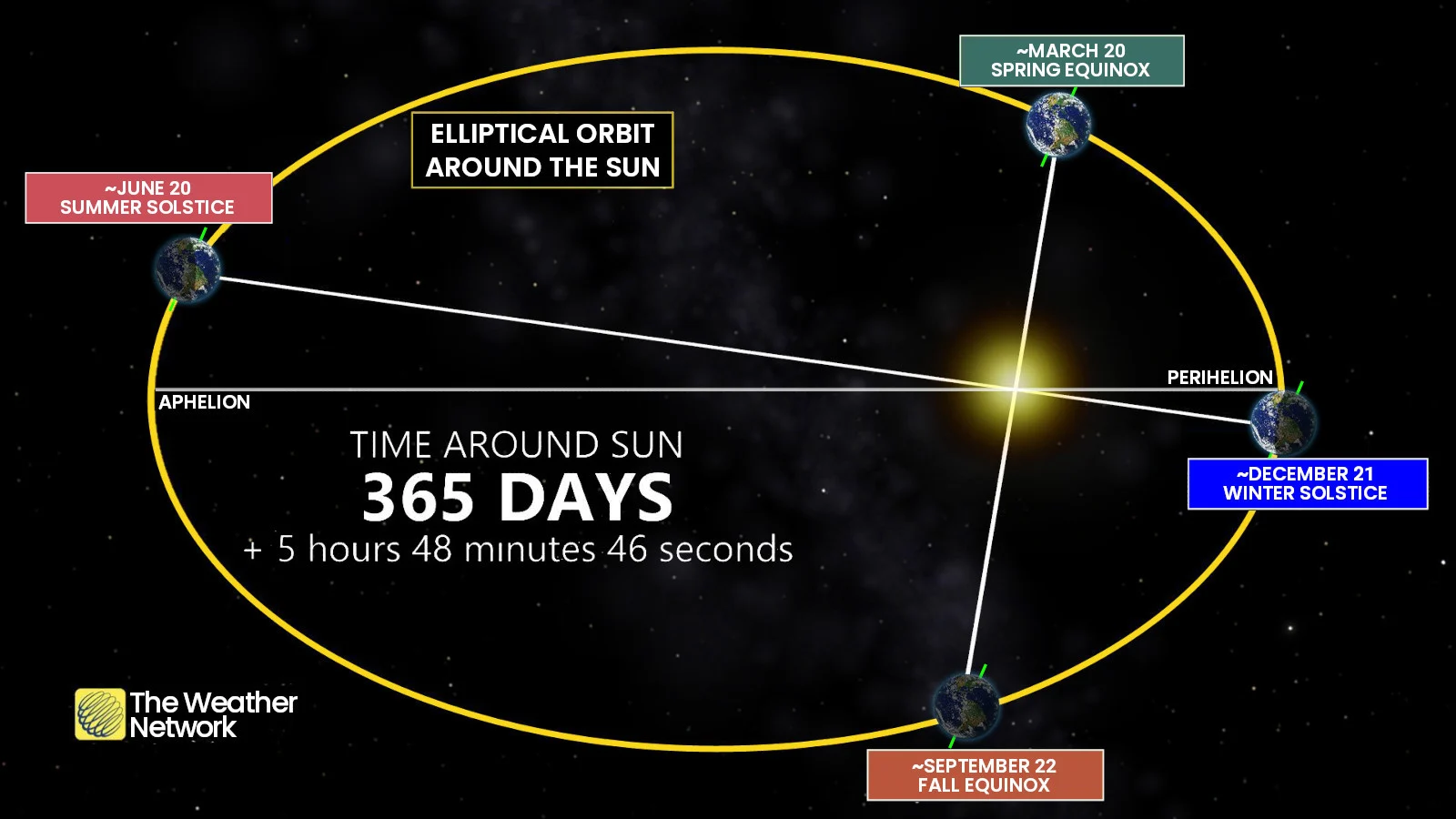
The equinoxes — in March and September — mark the transitions between those two halves of the year, when the Sun is directly above the Earth's tilted equator. The solstices mark the points when the hemispheres reach their maximum angle — one towards the Sun and one away from the Sun — and the Earth's axis lines up perfectly with the axis of the Sun.
The longest day(s) of the year
The Sun is at its highest in the sky on the summer solstice. That means that it takes the longest path possible across the sky for whatever latitude you live at. Thus, that gives us the longest day of the year.
However, the individual daily changes in the Sun's path are so small near the solstices that you need a very precise clock to tell the difference between the length of one day compared to another.
For much of Canada, the difference between the length of day on June 20 and June 21, in 2026, is greater than one second, thus putting June 21 as the definitive longest day of the year.
Oddly enough, though, there are some communities scattered across the country where the difference in the length of daylight between those two days is just a fraction of a second. Thus, in those locations, June 20 and 21 are effectively the same length, and they have TWO longest days of the year.
In Atlantic Canada, Sydney, N.S., and Moncton, N.B., for example, both have their longest days on June 20 AND June 21. Same goes for Granby and Montreal, in Quebec, as well as Ottawa, Peterborough, Hamilton, Kitchener, Guelph, London, North Bay, Sault Ste Marie, and Thunder Bay in Ontario.
In the western half of the country, Gimli and Flin Flon, Man., have their longest days on both the 20th and 21st, despite communities to the north and south having it only on the 21st. Also, while Regina, Saskatoon, and Edmonton have their longest day on the 21st, Calgary has it on the 20th and 21st, along with most of British Columbia.
Strangely, some communities throughout northern B.C., as well as Whitehorse and Dawson City, Yukon, actually have June 20 as their longest day!
Day of celebrations
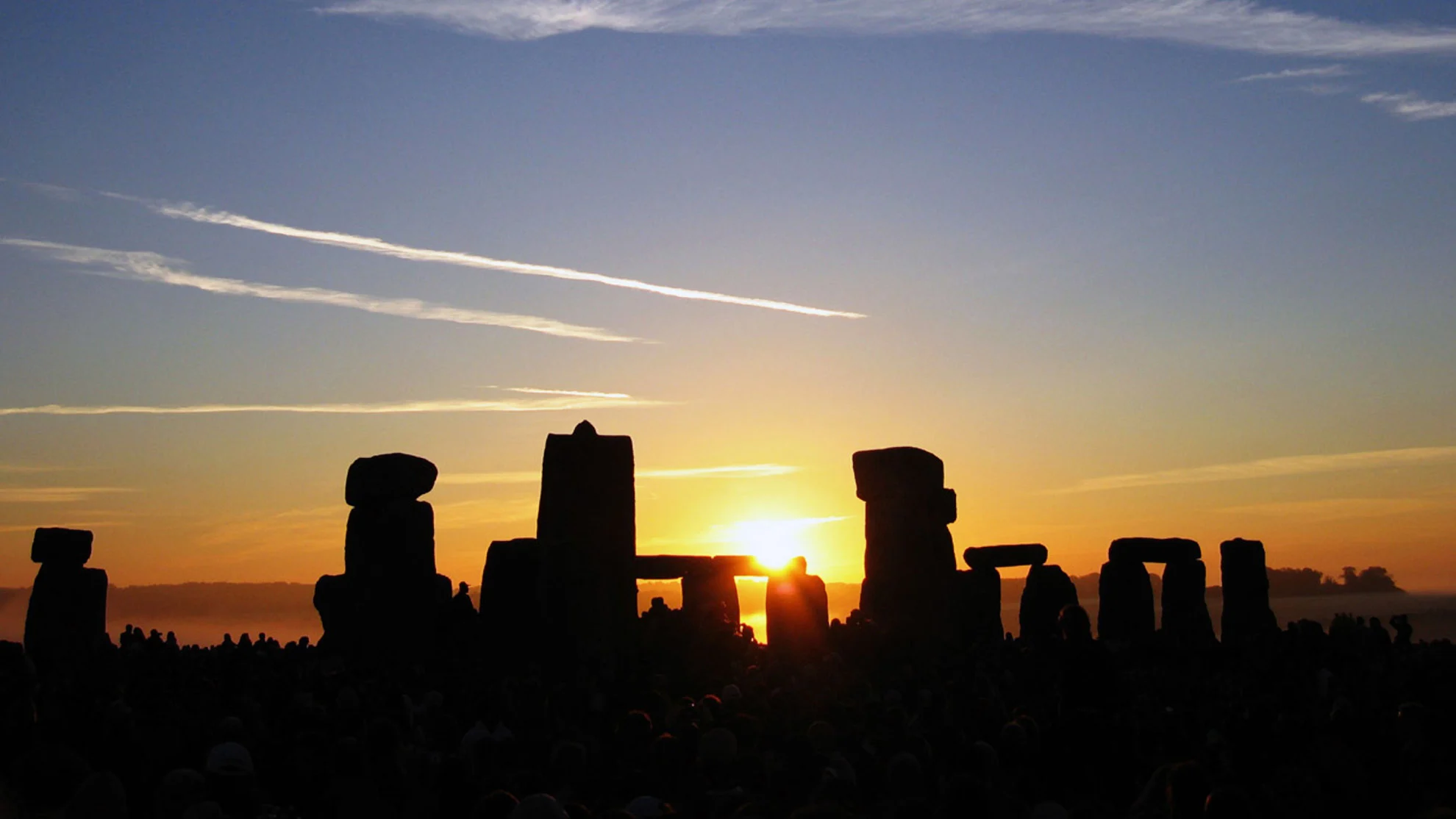
Every year on the summer solstice, Stonehenge, the ancient monument in Wiltshire, England, becomes crowded with people, all there to watch the Sun rise.
Whether they're actual practitioners of Druidry or just there for the spectacle, attendees are treated to a sunrise that will line up exactly over the 'Heel Stone', as viewed from the centre of the monument.
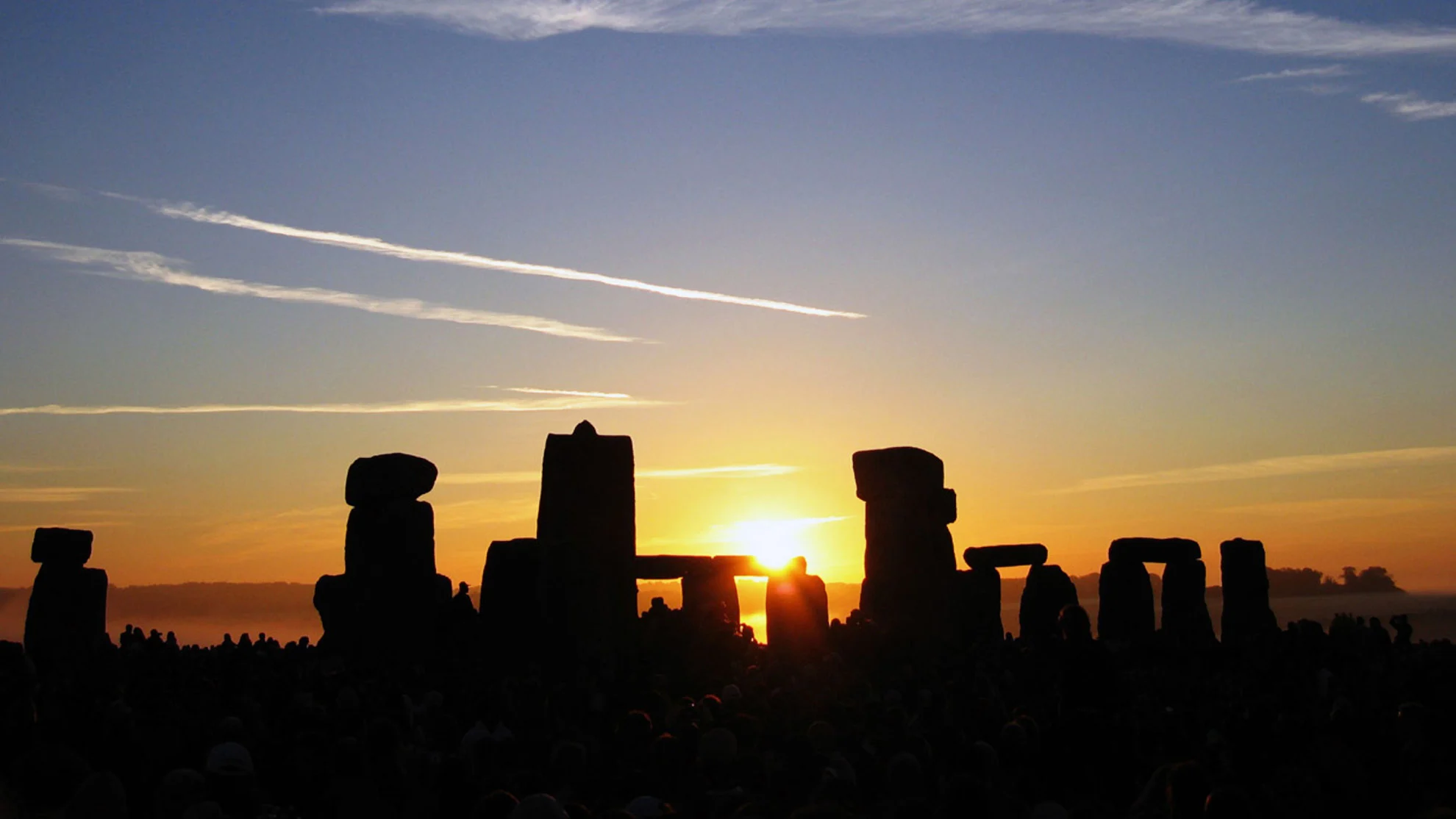
The Sun rising over Stonehenge in southern England on the June solstice in 2005. (Andrew Dunn/Wikimedia Commons (CC BY-SA 2.0))
According to Frank Somers, from the Amesbury and Stonehenge Druids, celebrating the summer solstice at Stonehenge is about observing the cycles of nature.
"If you turn up at the changes between the seasons and observe that change," he told the International Business Times UK back in 2014, "you can become better attuned to those cycles in yourself, and you're a part of them."
In Sweden, the celebration of Midsummer is one of the most important holidays of the year, on par with Christmas. In 2026, Midsummer Eve is on the night of June 19, with Midsummer Day on the 20th.
In Fairbanks, Alaska, residents usually mark the longest day of the year with the Midnight Sun Game.
While some baseball games are played as night games, the Midnight Sun Game has a whole different take on this concept.
The first pitch of this game is thrown at 10 p.m. on the last day of Spring, and the game typically lasts until 1:30 a.m. the next day. The big difference being, due to the amount of sunlight the area sees around the solstice, the Midnight Sun Game doesn't need a stadium with lights for the teams to play!
According to Explore Fairbanks: "The Midnight Sun Game is a Fairbanks tradition that dates back to 1906 as a bar bet between the Eagle's Club and the California Bar, led by Eddie Stroecker, 'Father of the Midnight Sun Game.'"
"Though the game is played through the hour of midnight, artificial lights are never used — and have never been used in the history of the event. Gates open at 8PM and first pitch is set for 10PM. Bring your sunglasses, grab a seat and join fans from all over the world to witness this "ever so rare" event. Hope to see you at the ballpark, and we'll leave the sunlight on for you!"
For 2026, the Alaska Goldpanners will play the Utah Yaks in the 121st Midnight Sun Game.
With files from The Weather Network.
(Thumbnail credit Clive Ruggles/International Astronomical Union (CC BY 4.0). The image brightness and contrast have been adjusted from the original, darker picture, to make the standing stones of Stonehenge easier to see.)