Canada’s long journey to 1,000+ weather stations

Dedicated weather observers began recording conditions across the country in earnest back in the mid-1800s
We’re spoiled with a wealth of knowledge about the world around us. Temperature, wind, radar, satellite, warnings, forecasts--just about everything you’d ever want to know about the weather is at your fingertips.
It wasn’t long ago that people had to rely on radio broadcasts, newspapers, telegraphs, or their own inaccurate instruments to clue into the weather around them. Canada’s long journey toward observing the weather began on a September day in 1840.
DON'T MISS: How Doppler radar revolutionized weather and saves lives
People have understood since ancient times that societies live and die by the weather. One drought or flood could devastate an entire civilization.
The long path toward understanding what the weather might do in the future began by understanding what the weather is doing right now.
Once precise weather instruments were invented in the 1600s and 1700s, scientists and leaders quickly realized the potential benefits of having networks of weather observers keeping tabs on daily conditions.
Officials with the British Army established Canada’s first dedicated weather observation station at Toronto’s King's College, now known as the University of Toronto, on Sept. 6, 1840. That first day of official observations saw a high temperature of 22.8°C. The campus went on to serve as the nerve centre for Canada’s meteorological efforts until the early 1900s.
After a destructive coastal storm in the 1870s, the government established the Meteorological Service of Canada and built out a dedicated network of weather observation stations across the country. Historical data shows weather records at nearly 100 sites by 1877.
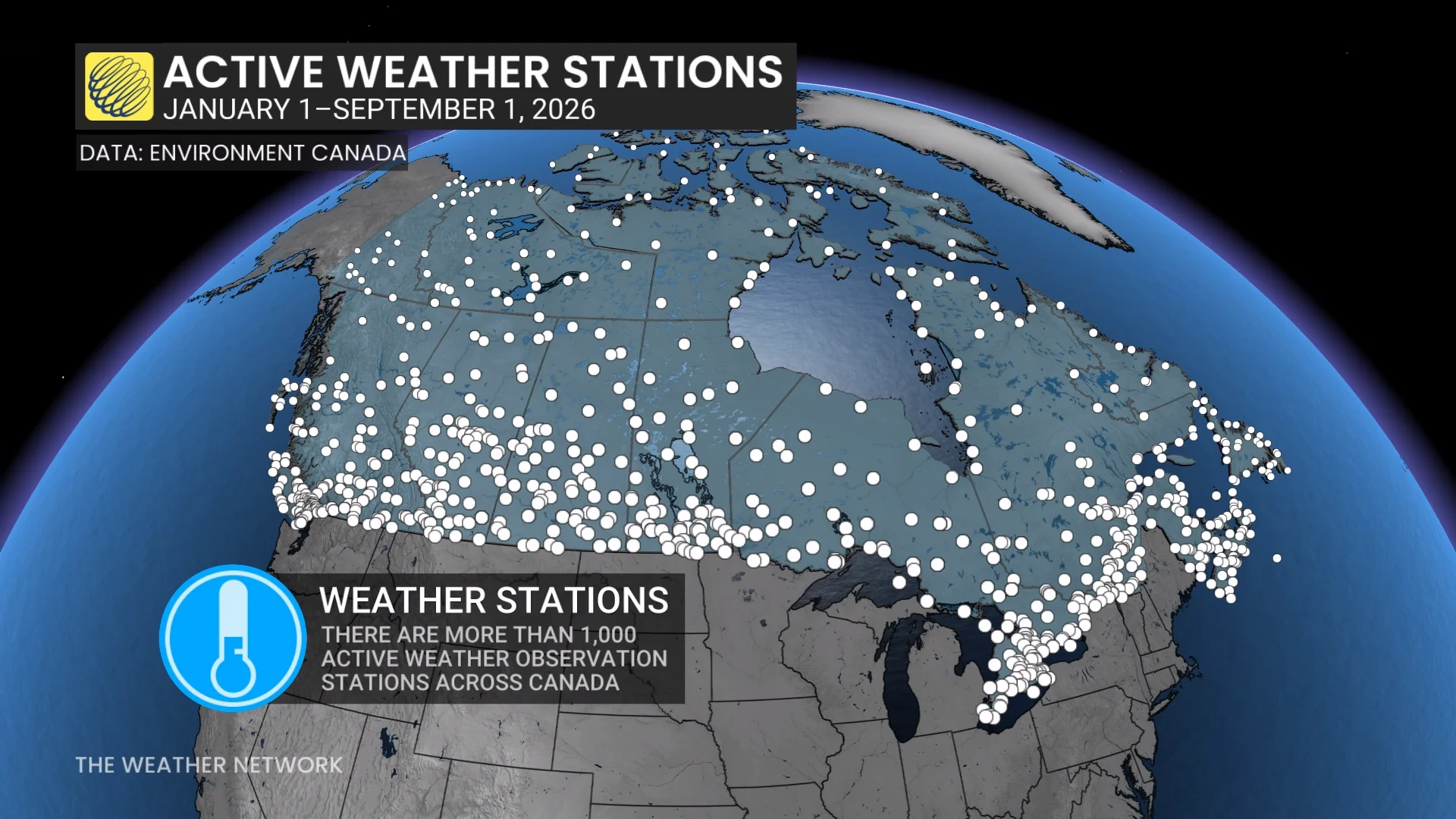
Today, Canadians benefit from more than 1,000 official weather stations spread across every province and territory, many of which are maintained by MSC and NAV Canada. Thousands more are operated by ordinary citizens, companies, organizations, and universities.
RELATED: How a simple weather balloon helps improve your daily forecast
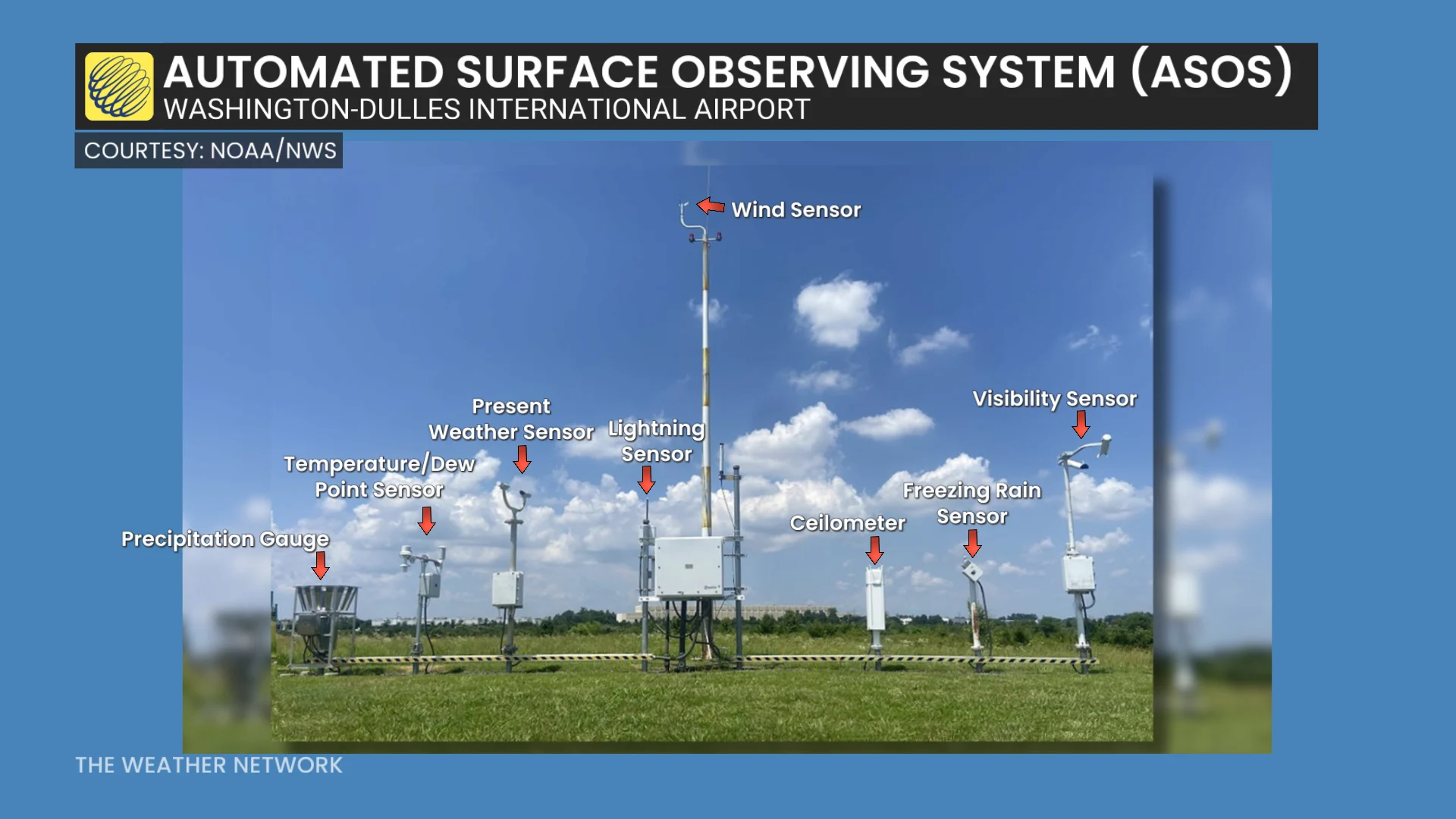
Modern weather stations are much more than just a thermometer on top of a rain bucket. Standard observing equipment at important locations like airports can provide:
Air temperature and the dew point
Wind direction, speed, and gusts
Air pressure readings
Precipitation type and amount
Cloud heights and coverage
Visibility at the surface and obstructions present (such as fog)
Specialized weather stations can provide even more information that’s relevant to various industries and purposes, including soil moisture, soil temperature, solar radiation, and sometimes even lightning data.