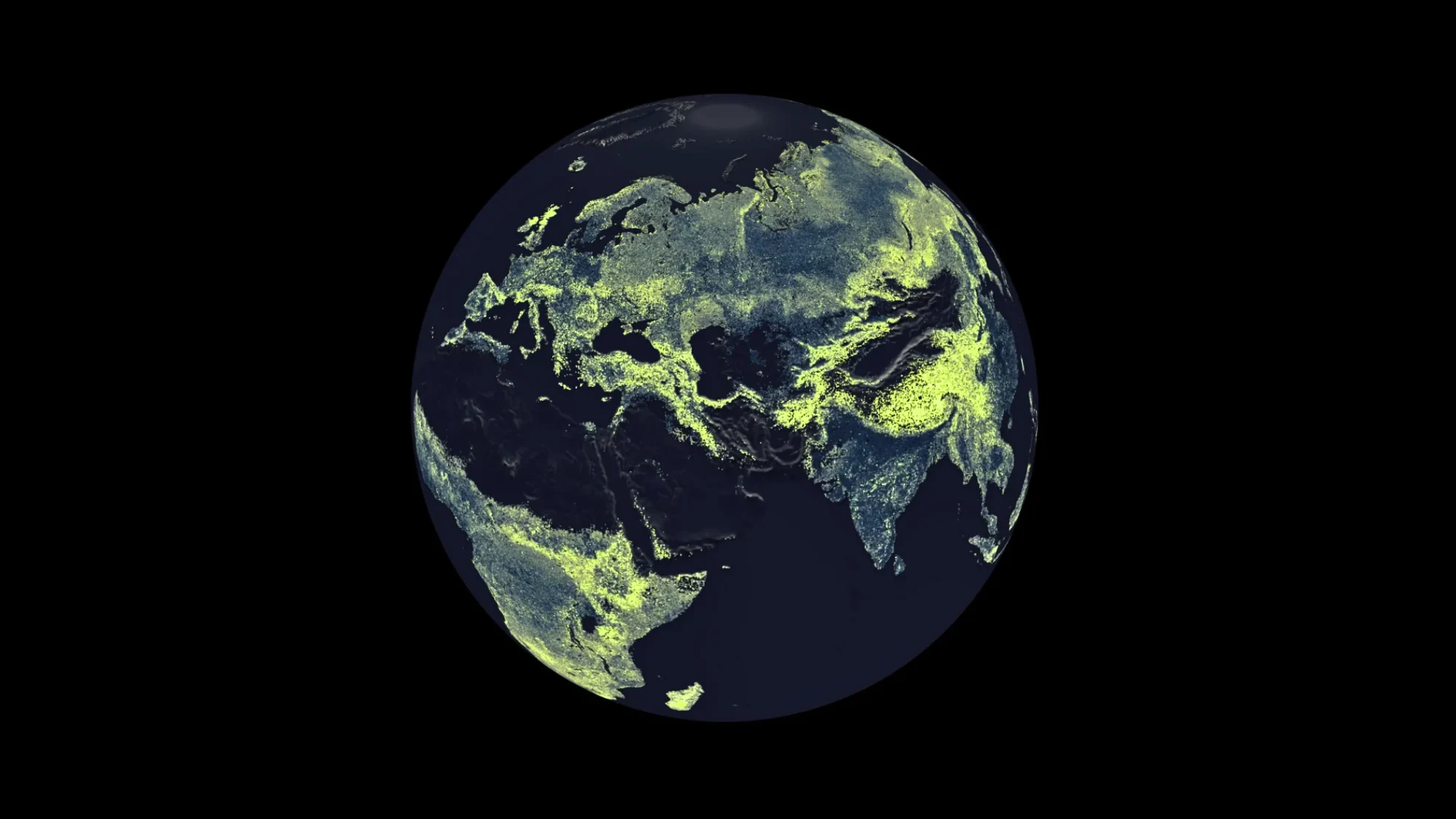
Scientists mapped a 110 quadrillion-km fungal network beneath our feet

The networks form Earth's "circulatory system."
Scientists have recently mapped an enormous fungal network beneath our feet that supports plant life and helps regulate Earth's climate.
The findings were published in the journal Science.
110 quadrillion kilometres?
Researchers say Earth's topsoils contain an estimated 110 quadrillion kilometres of thread-like structures called arbuscular mycorrhizal fungal hyphae, also known as AM fungi.
AM fungi are part of the broader group of mycorrhizal fungi often associated with the so-called "wood wide web", i.e., underground networks that connect plants and move nutrients through ecosystems.
To put that scale into perspective, 110 quadrillion kilometres is roughly equal to:
Roughly 11,600 light-years
Just under 10 per cent of the entire width of the Milky Way galaxy
Almost a billion times the distance from Earth to the Sun
And there is a lot of it packed into a very tiny space.
"There could be up to 10 metres of mycorrhizal network in just a teaspoon of soil," lead author Dr. Justin Stewart from the Society for the Protection of Underground Networks (SPUN) said in a statement.
"It is hard to overstate the importance and enormity of these fungi."
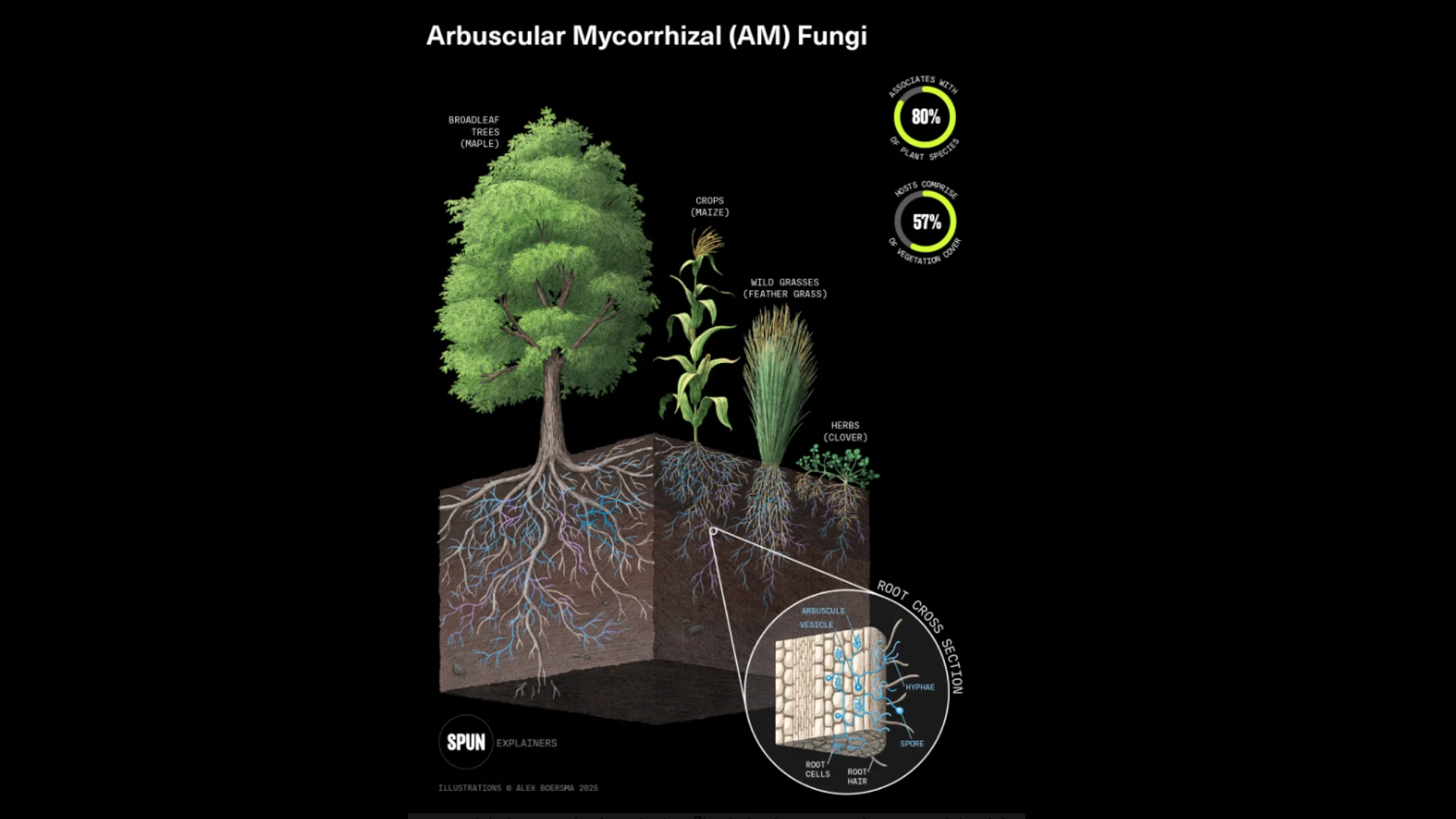
AM fungal networks explained. (SPUN)
Earth's underground circulatory system
AM fungi form mutually beneficial relationships with roughly 70 per cent of the world's plant species.
Plants provide the fungi with carbon produced through photosynthesis, while the fungi help plants absorb water and nutrients from the soil.
The network's ability to transport carbon, nutrients, and water has earned it the nickname "Earth's underground circulatory system."
According to the researchers, these fungal networks can expand the effective foraging area of plant roots by up to 100 times and provide more than 80 per cent of a plant's phosphorus needs.
The world's grasslands contain about 40 per cent of Earth's AM fungal infrastructure, which researchers estimate moves roughly 4 billion tonnes of carbon dioxide into soils every year.
That’s equivalent to about 11 per cent of all human-related carbon dioxide emissions.
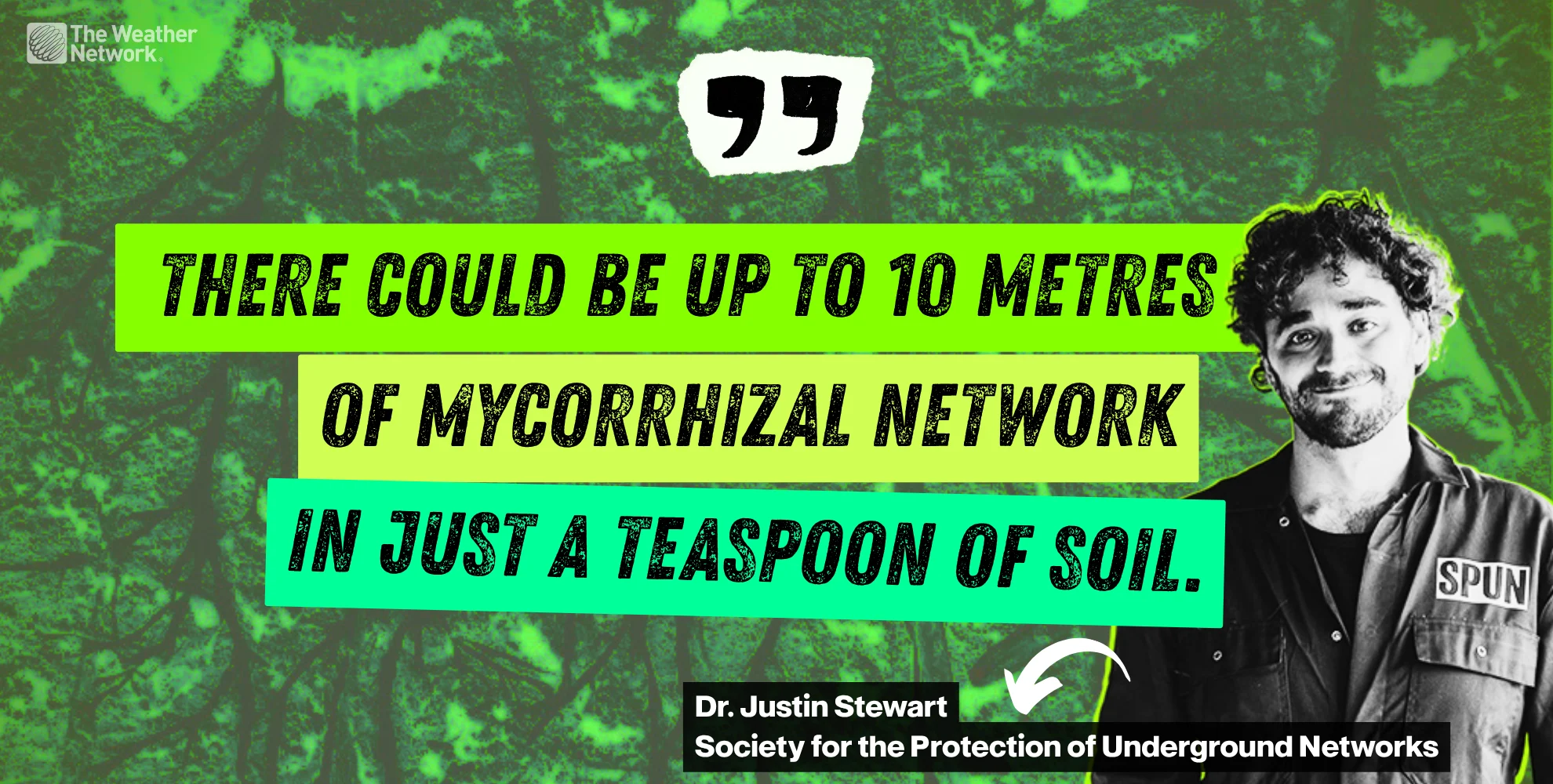
Graphic by Cheryl Santa Maria for the Weather Network. Photo courtesy: SPUN.
Scientists built a global map
To complement their research, the team released an interactive visualization enabling users to explore the fungal infrastructure.
The maps do more than highlight the enormity of the network. Researchers say they could help identify regions where underground fungal networks are thriving, as well as areas that may need greater protection.
They were built using measurements from more than 16,000 soil cores collected around the world.
In regions where direct measurements were unavailable, machine-learning models used environmental data to predict fungal density. Researchers also used robotic imaging to analyze more than 300,000 living fungal structures grown in laboratory conditions.
"Their analysis suggests that AM fungal networks extend for approximately 110 quadrillion kilometres and contain roughly 300 megatons of carbon — four to six times the mass of all living humans," the authors said in a statement.
Areas of concern
The maps also identified regions where fungal networks may be under pressure.
Croplands were found to contain roughly half the AM fungal density of wild ecosystems.
Researchers say this is particularly concerning because grasslands — which contain a significant portion of Earth's fungal infrastructure — are being converted to agricultural land at four times the rate of forests.
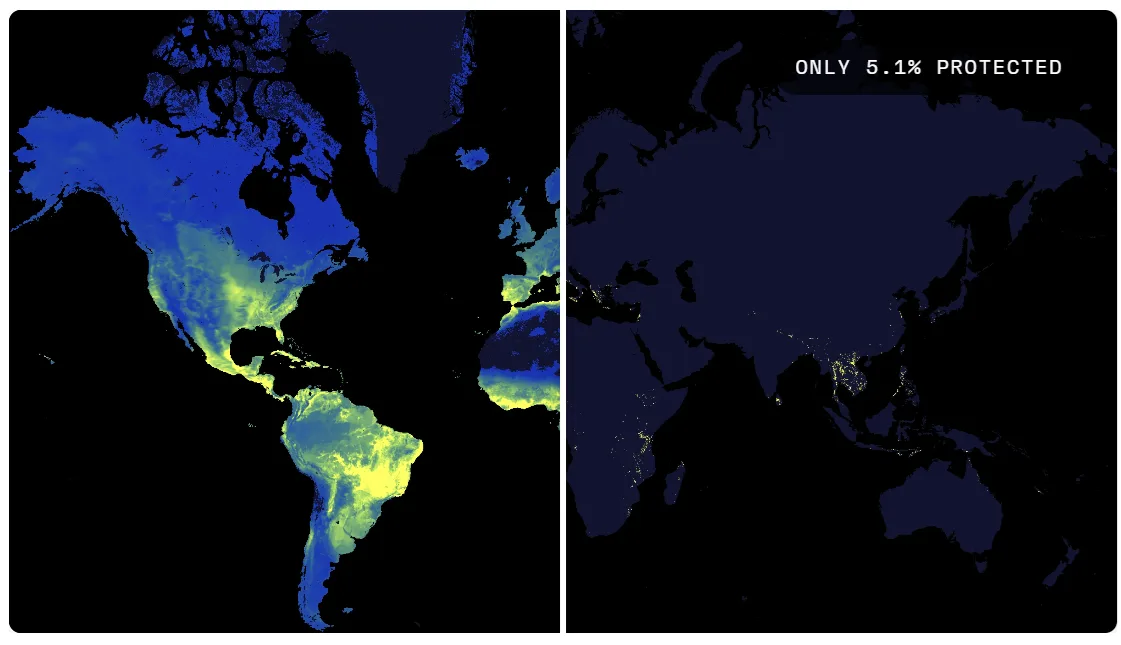
Predicted richness of AM fungal network hotspots. Yellow represents the highest concentrations, blue, the lowest. (SPUN).
Previous SPUN research suggested that 95 per cent of AM fungal biodiversity hotspots lie outside protected areas.
"Mycorrhizal fungi have shaped life on Earth for hundreds of millions of years, but we still understand too little about how the infrastructure of these living transport systems is distributed across the planet," co-author and biologist Dr. Merlin Sheldrake said.
"This study is an exciting step towards understanding how this planetary circulatory system operates and suggests ways that we can better work with fungi to help address many of the unfolding challenges of our times, from food security to climate change."
Header image: a global map of hyphal density of AM fungi. (Truth & Beauty / Moritz Stefaner Justin Stewart - SPUN)