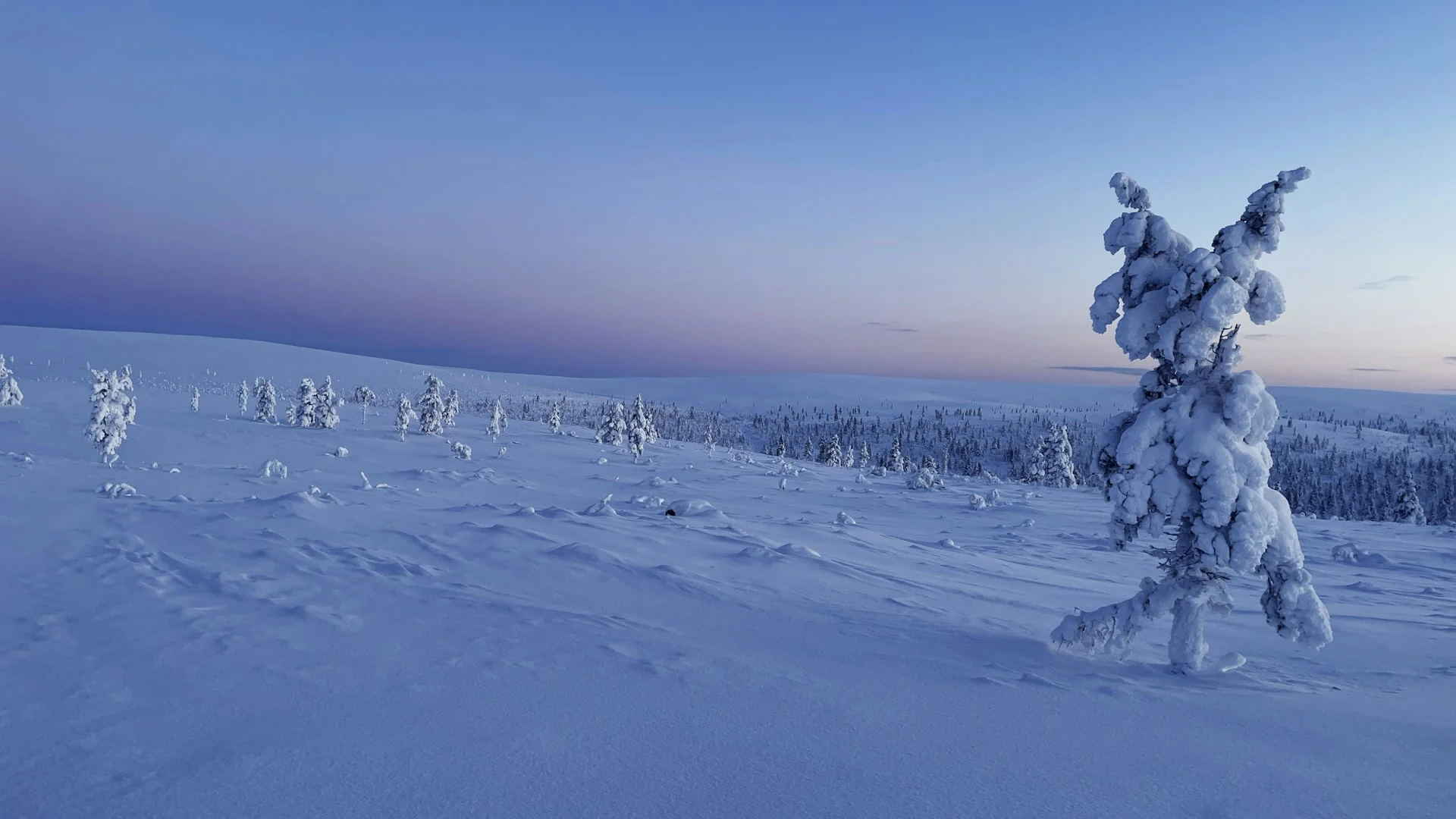
Polar night approaching as Canada quickly loses daylight

The year’s biggest change in daylight occurs around the equinoxes
It’s that time of year when the thermometer and the daylight hours really start to slide quickly--but the slope depends on where you live.
RELATED: The equinox myth: Day and night aren’t actually equal
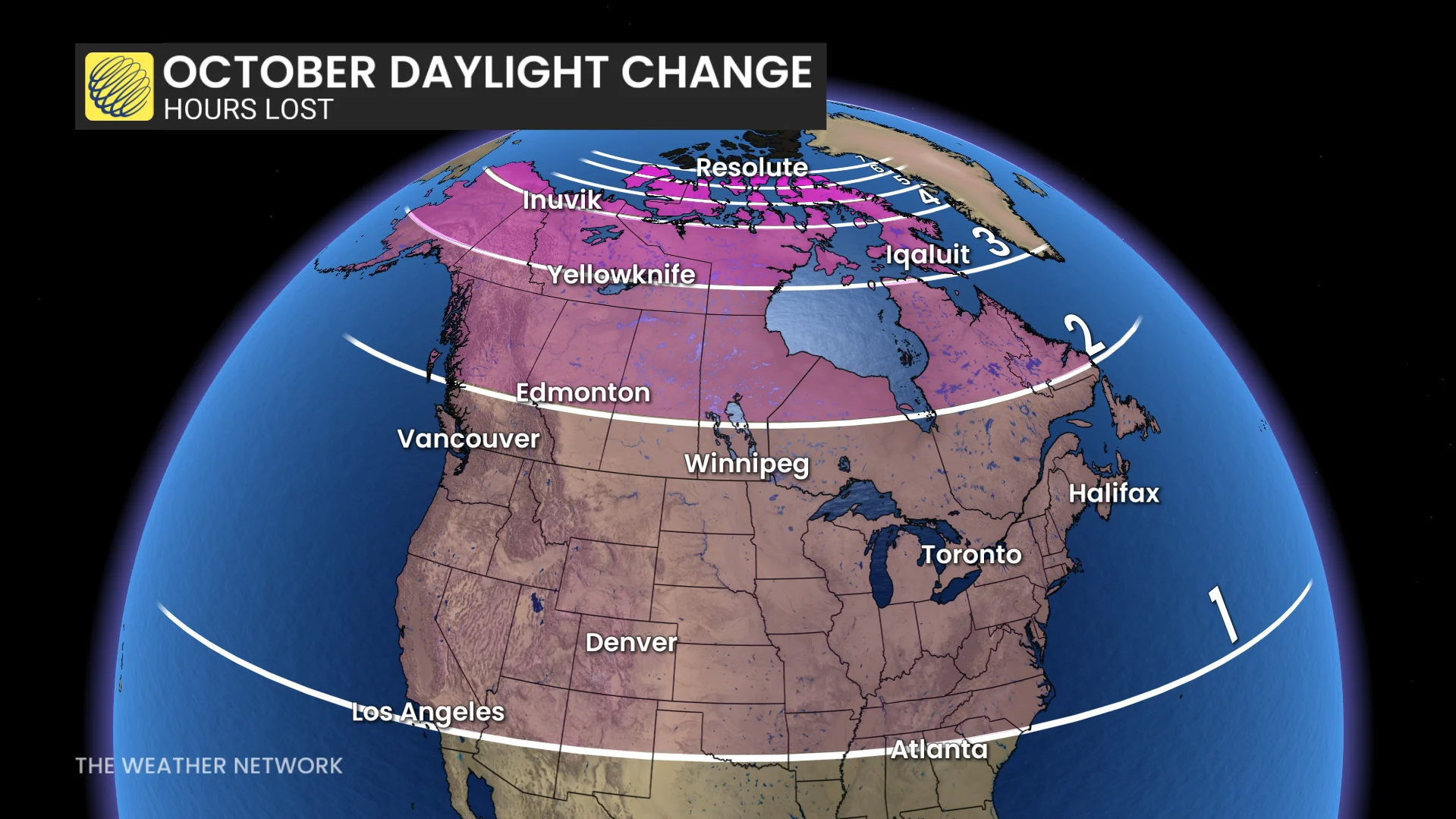
Southern Ontario loses nearly one-and-a-half hours of daylight over the course of October, while the southern Prairies lost nearly two hours of daylight over the same time.
The days and weeks around the fall and spring equinoxes are when everyone experiences the biggest change in daylight. Days around the summer and winter solstices have minimal change.
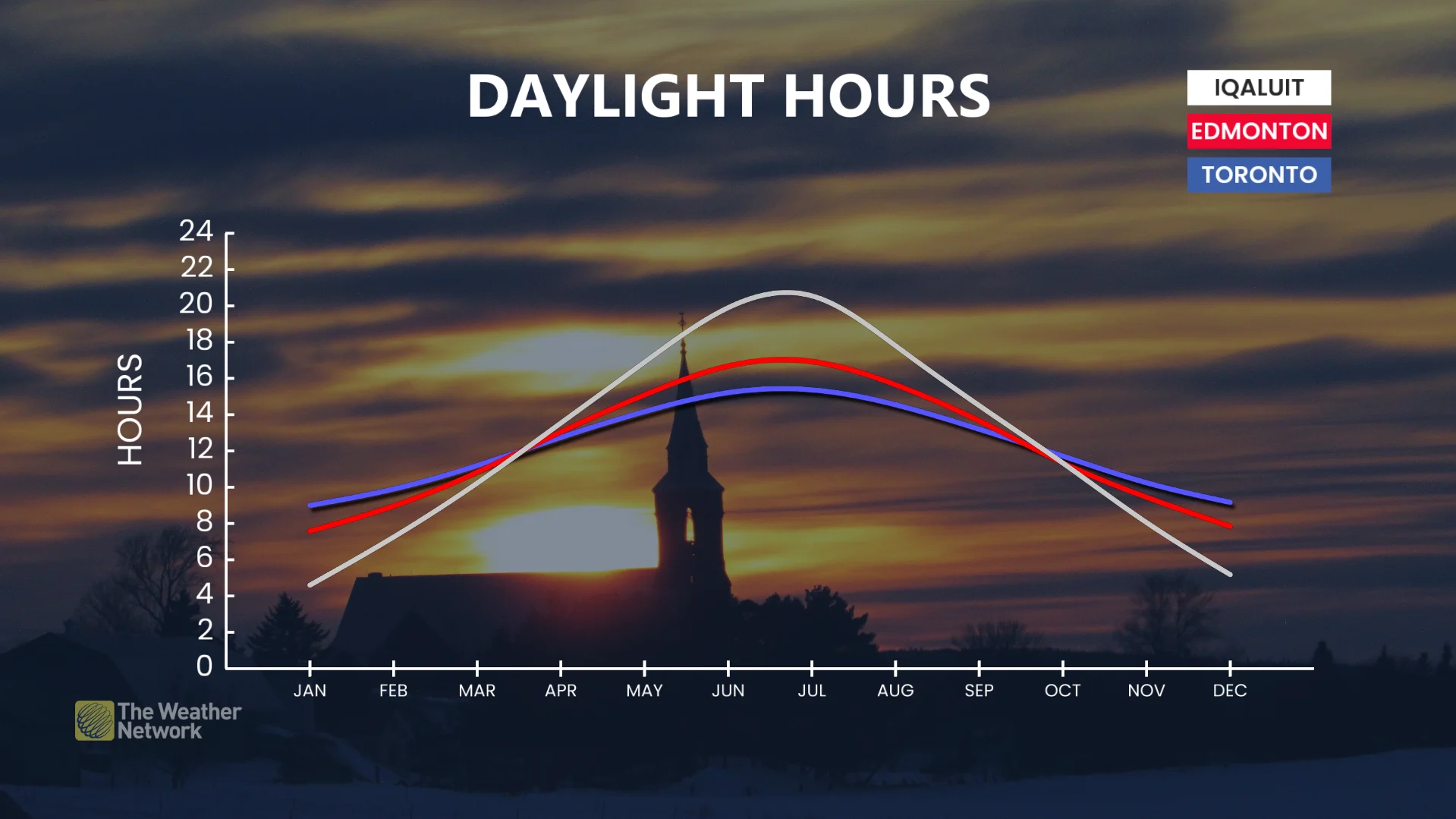
A sinusoidal graph is the best way to visualize this change, with steeper lines indicating greater changes to daylight.
The graph amplifies exponentially when the location is at high latitudes. The latitude difference between Toronto and Edmonton is the same as Edmonton and Iqaluit, for instance, though there is a significantly larger difference between Edmonton’s and Iqaluit’s daylight chart than there is between Toronto’s and Edmonton’s.
The edge of the Arctic Circle (63.5°N) is the southernmost point where the solstice experiences 24 hours of daylight and darkness. Notice that the difference between 63.5° and 90° is 23.5°, which is the tilt of Earth’s axis.
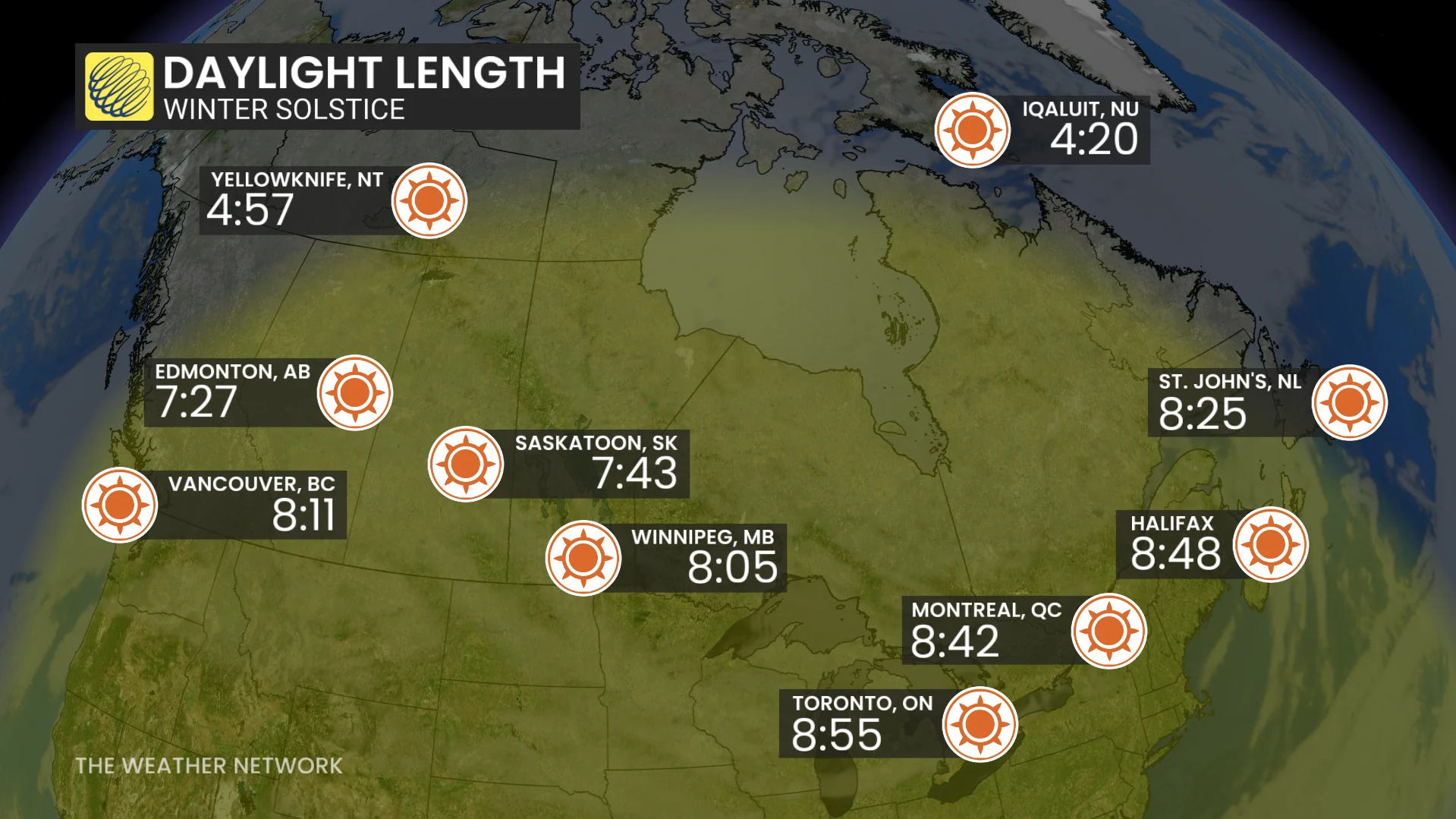
Through the latter half of fall, the days won’t change quite as much, as the winter solstice approaches. Then the rebound begins!
Header image courtesy of Unsplash.