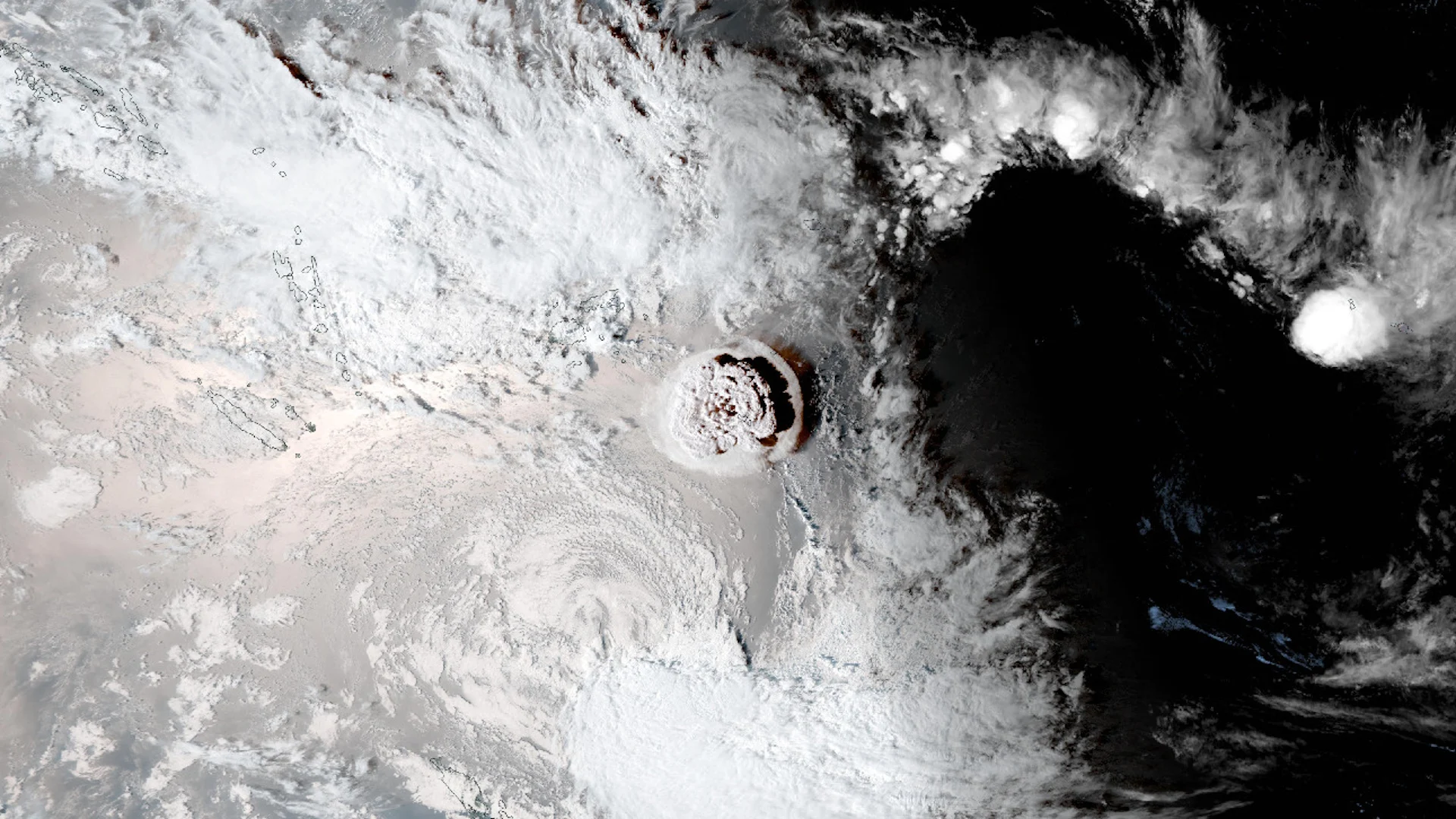
Huge Hunga-Tonga volcanic eruption altered atmosphere, report finds

The atmosphere is still feeling the effects of the January 2022 eruption of the Hunga-Tonga volcano in the southern Pacific Ocean
The atmosphere is still feeling the effects of an immense underwater volcanic eruption that occurred in January 2022, according to an extensive report issued earlier this month.
Most of the volcano’s lingering effects are confined to the upper reaches of the atmosphere, the teams found, with results disrupting a long-running theory about record surface temperatures in the years following the event.
DON’T MISS: Tonga volcano eruption was so violent it blew ash halfway to space
Volcanic eruption was heard in Canada
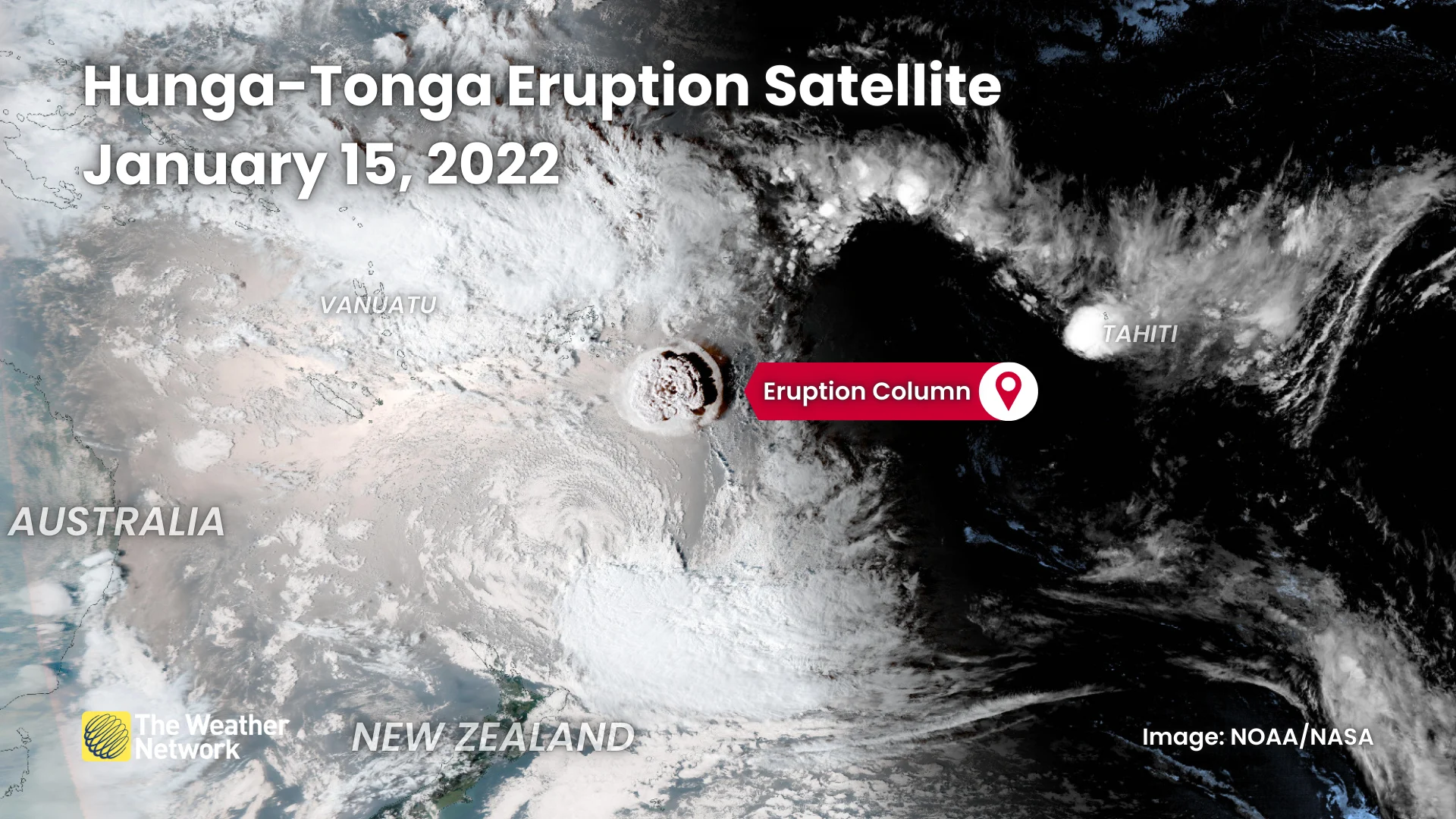
Hunga Tonga-Hunga Ha’apai is a submarine volcano in the southern Pacific Ocean, located a short distance north of Tonga’s main island of Tongatapu.
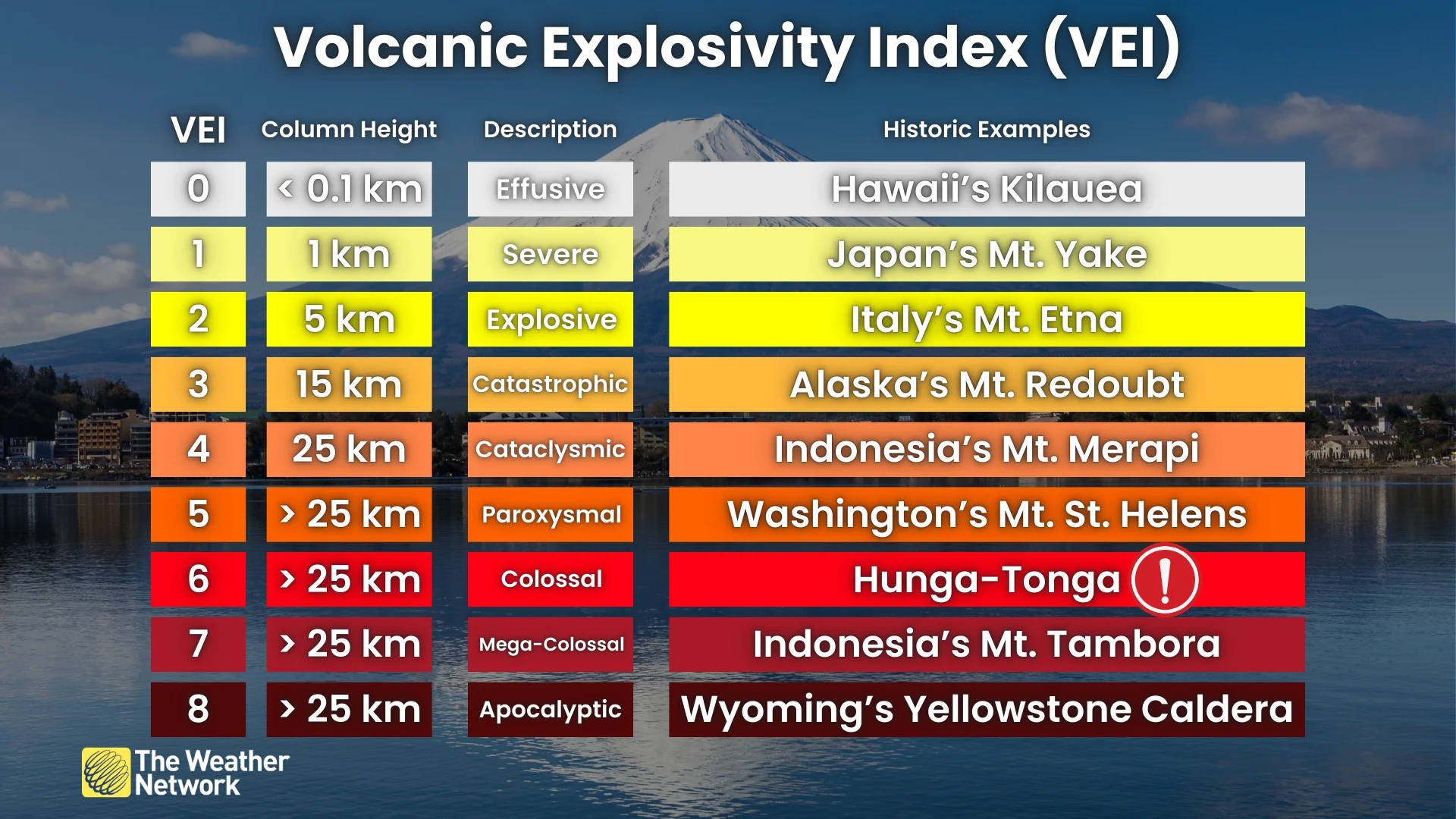
The volcano erupted in spectacular fashion on Jan. 15, 2022, reaching a VEI-6 on the Volcanic Explosivity Index. This put Hunga-Tonga on par with eruptions like Indonesia’s Krakatoa in 1883 and Mt. Pinatubo in the Philippines in 1991.
Magma interacting with seawater enhanced the explosive nature of the eruption, sending a cloud of ash, debris, and water vapour dozens of kilometres into the atmosphere.
The eruption was so forceful that residents heard an audible boom more than 9,700 km away in the Yukon Territory.
WATCH: Watch as the Hunga Tonga eruption blasts ash halfway to space
Significant water vapour remains in the atmosphere
Large and powerful volcanoes leave a lasting impact on the atmosphere long after the initial activity simmers down.
Mount Tambora, for instance, led to the infamous “Year Without a Summer” in 1816, during which a major snowstorm hit Montreal and Quebec City in the month of June.
Hunga-Tonga’s effects weren’t nearly as severe as Mount Tambora’s. But an extensive study recently released by the World Climate Research Programme (WCRP) outlined numerous ways the eruption affected the atmosphere.
“Hunga generated the most intense lightning ever observed in Earth’s atmosphere,” the report stated, with more than 2,600 flashes of lighting per minute observed during the eruption. Lightning is common as static electricity builds up in the ash cloud.
The event also ejected a tremendous amount of seawater into the upper atmosphere, reportedly increasing the amount of water vapour in the stratosphere by 10 per cent. Experts added that “most of this water has remained in the atmosphere into 2025.”
Such a large injection of water vapour into the upper atmosphere actually led to a noticeable cooling of the stratosphere, which is unusual as volcanic eruptions tend to cause warming instead.
One of the most surprising findings is something the volcano apparently didn’t influence.
Meteorologists observed record land and sea surface temperatures throughout 2023 and 2024, leading some to hypothesize that the volcano may have played a role.
After analyzing all the effects, the report concluded that “the climatic influence of the Hunga eruption cannot explain the record global average surface temperature increase in 2023-2024.”
Header image courtesy of NOAA and NASA.