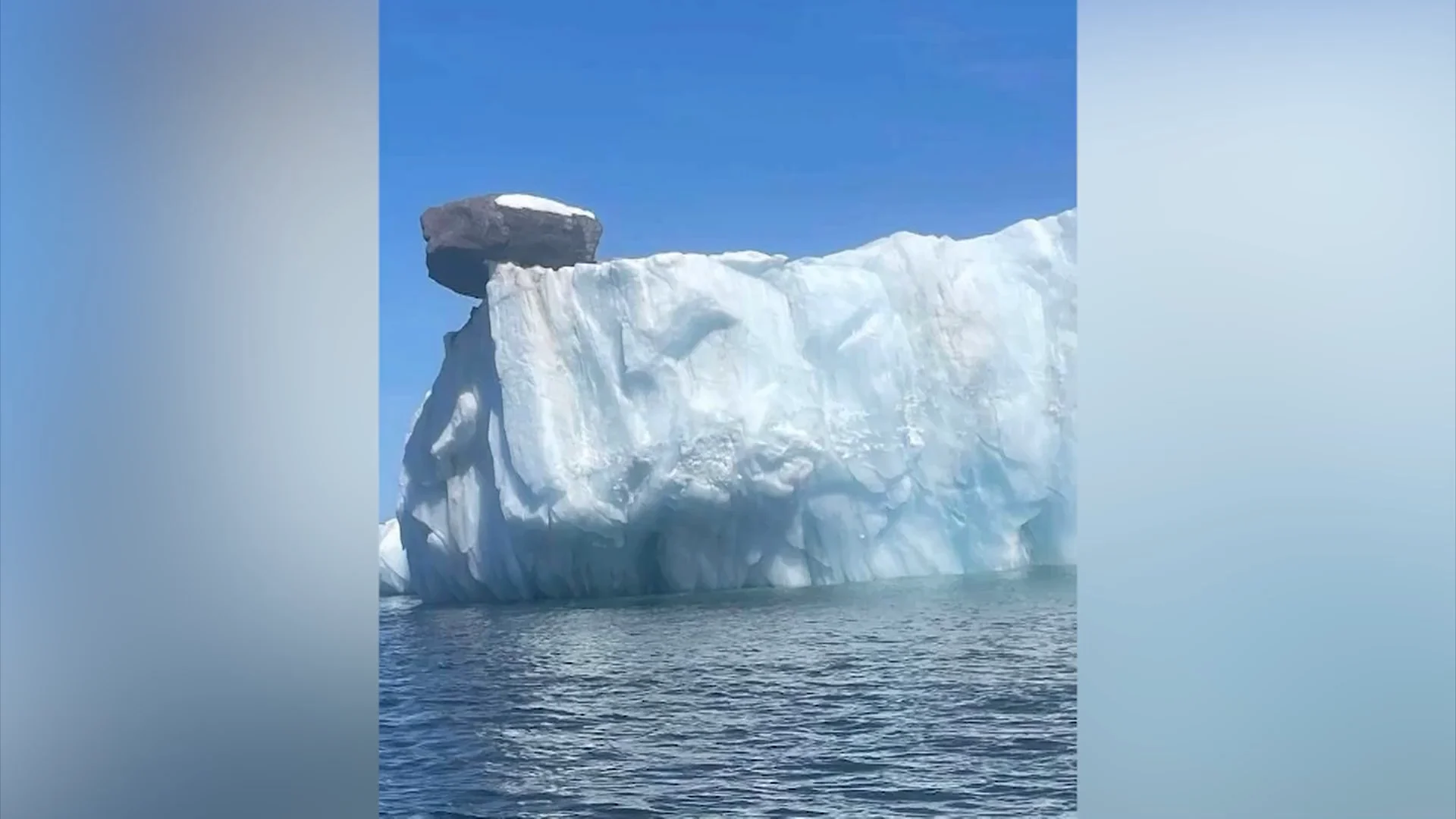
How did boulders wind up on top of this iceberg?

An iceberg from Greenland raised a curious question of how it acquired its unusual passengers
It’s an incredible sight captured by Jim Hart off Newfoundland’s Fogo Island on April 29: an iceberg from Greenland floating by with a massive boulder sitting on top.
So, how did it get there?
Dalhousie University geologist Dr. John Gosse published a study in 2019 on coastal landslides onto glaciers in Baffin Island because of the risk of tsunamis to local communities.
RELATED: Promising iceberg season possible in Newfoundland and Labrador
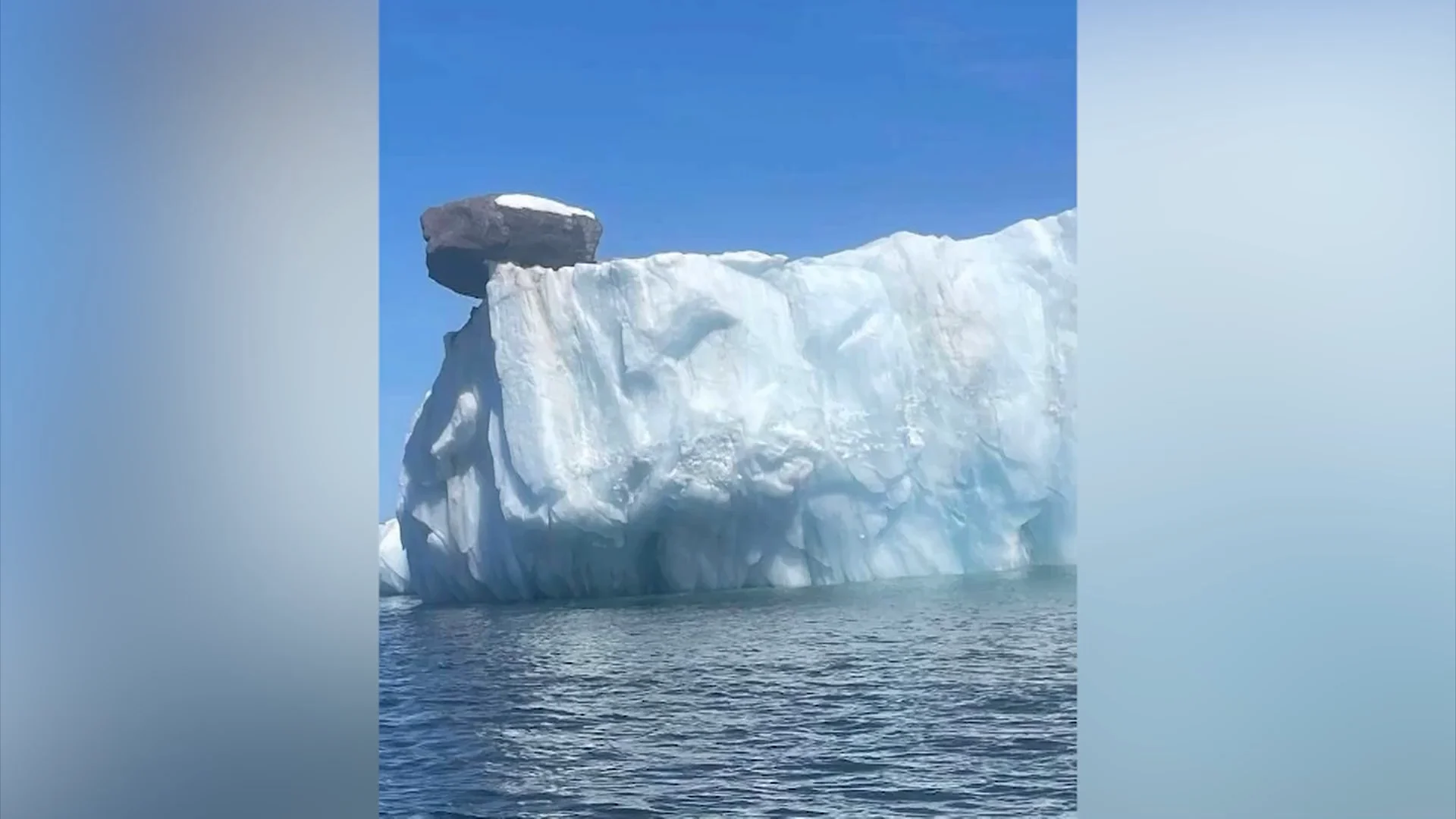
After looking at the photos, he says the big question from a geological perspective is whether the boulder was gouged out under the glacier and entrained underneath, or if it just fell on top of it.
“If it just landed from a landslide on top of the surface of the glacier,” Gosse said,” then the boulders wouldn’t have any rounding. They would be very angular and all of the boulders would be the same rock type.”
He says that’s the likely scenario, but that’s only based on photo analysis.
Since glaciers break up substrate into little pieces, Gosse would also expect a wide range of particle sizes all the way down to silt if it had been travelling a long distance beneath the glacier.
The expert says the likely landslide that deposited the boulders may have happened hundreds of years ago, with decades for it to get to the coast and then over a year of transport down to Newfoundland before these photos could be taken.