Canada saw an impressive 70-degree temperature range in January

Temperature extremes covered the country throughout the first month of the year
January was a month of records and extremes on both ends of the thermometer across Canada.
This was the second month in a row the country saw a temperature drop below -50°C, and we witnessed some truly impressive temperature swings over just a matter of days.
DON’T MISS: February can bring Canada huge snowstorms and glimmers of hope
Significant temperature swings
The community of Mayo in the southern Yukon measured January’s coldest temperature in Canada, dropping to a bone-chilling -50.6°C one morning.

On the other end of the spectrum, folks in Claresholm, Alberta, saw readings soar all the way up to 19.4°C one day. This makes for a 70-degree temperature contrast between the country’s coldest and warmest temperatures this past January.
Some individual communities also saw their own impressive temperature swings during the month.
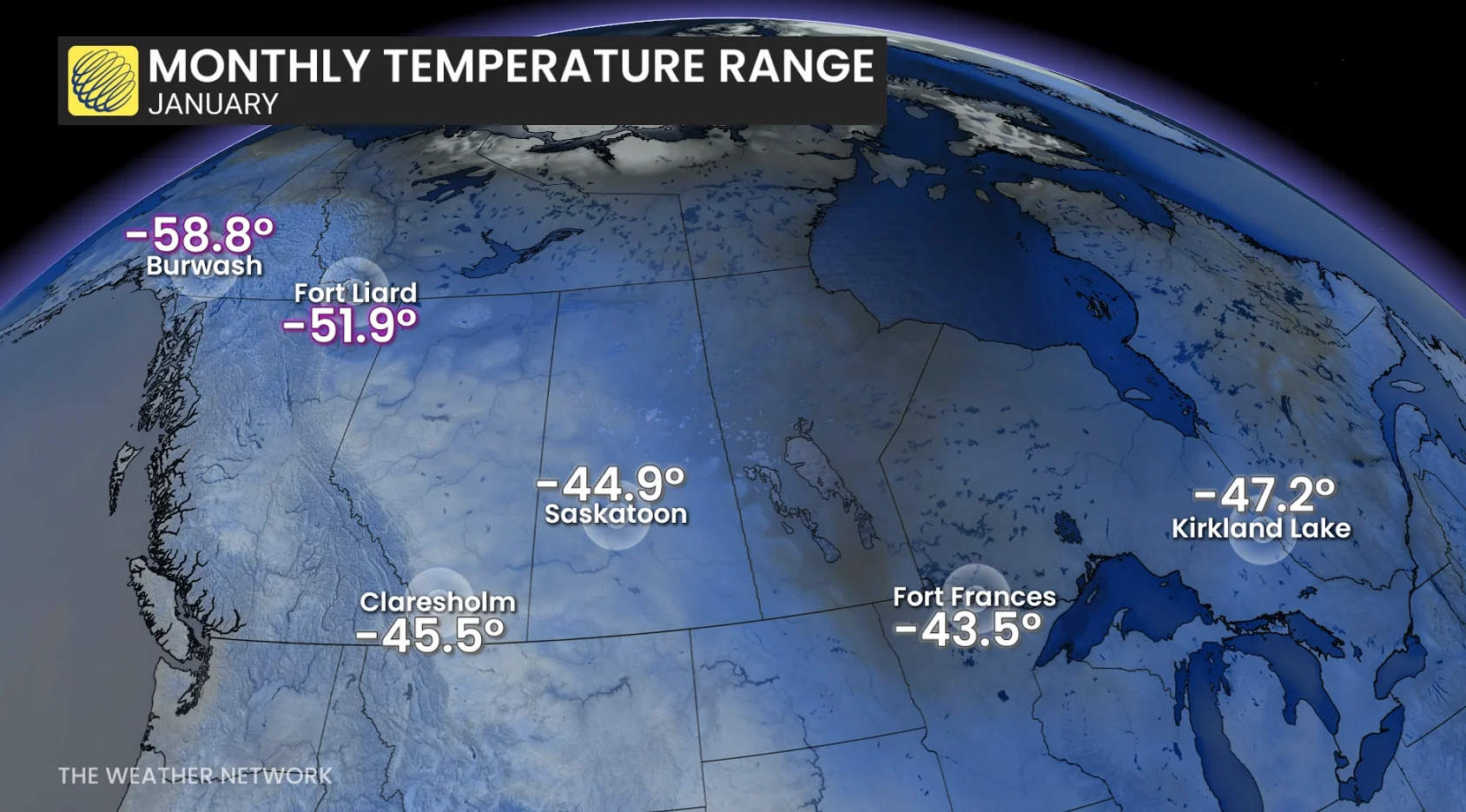
Burwash, Yukon, saw a 58.8°C temperature swing at one point. Major cities like Halifax, Vancouver, and Toronto would struggle to see a 58.8°C temperature swing over the course of all four seasons.
Kirkland Lake, Ontario, which saw its coldest reading in 42 years on Jan. 24, experienced a swing of 47.2°C at one point.
Extreme contrasts across Northern Canada
Folks in Northern Canada experienced their own extreme temperature contrasts in January.
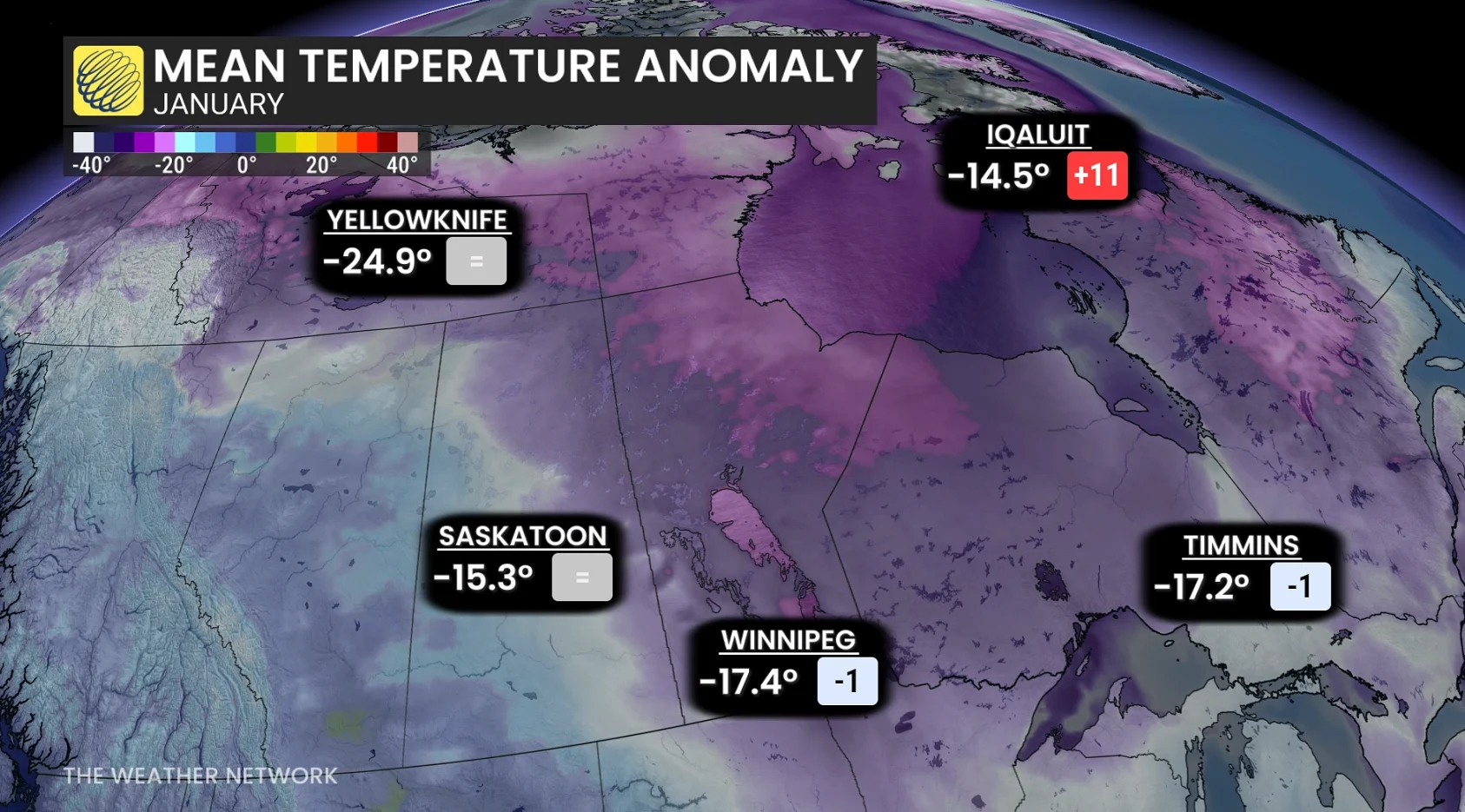
A persistent ridge over Greenland helped push Nunavut’s Iqaluit to record its warmest January on record, with an average temperature there of -14.5°C.
This is significantly warmer than the community’s average January reading of -25.9°C. In fact, it was so abnormally warm in Iqaluit that the city finished the month milder than Saskatoon, Winnipeg, and Timmins.
A few spots finished cooler than normal
The second half of January saw lobes of the polar vortex swooping south toward the Great Lakes, bringing bitterly cold temperatures deep into Ontario.
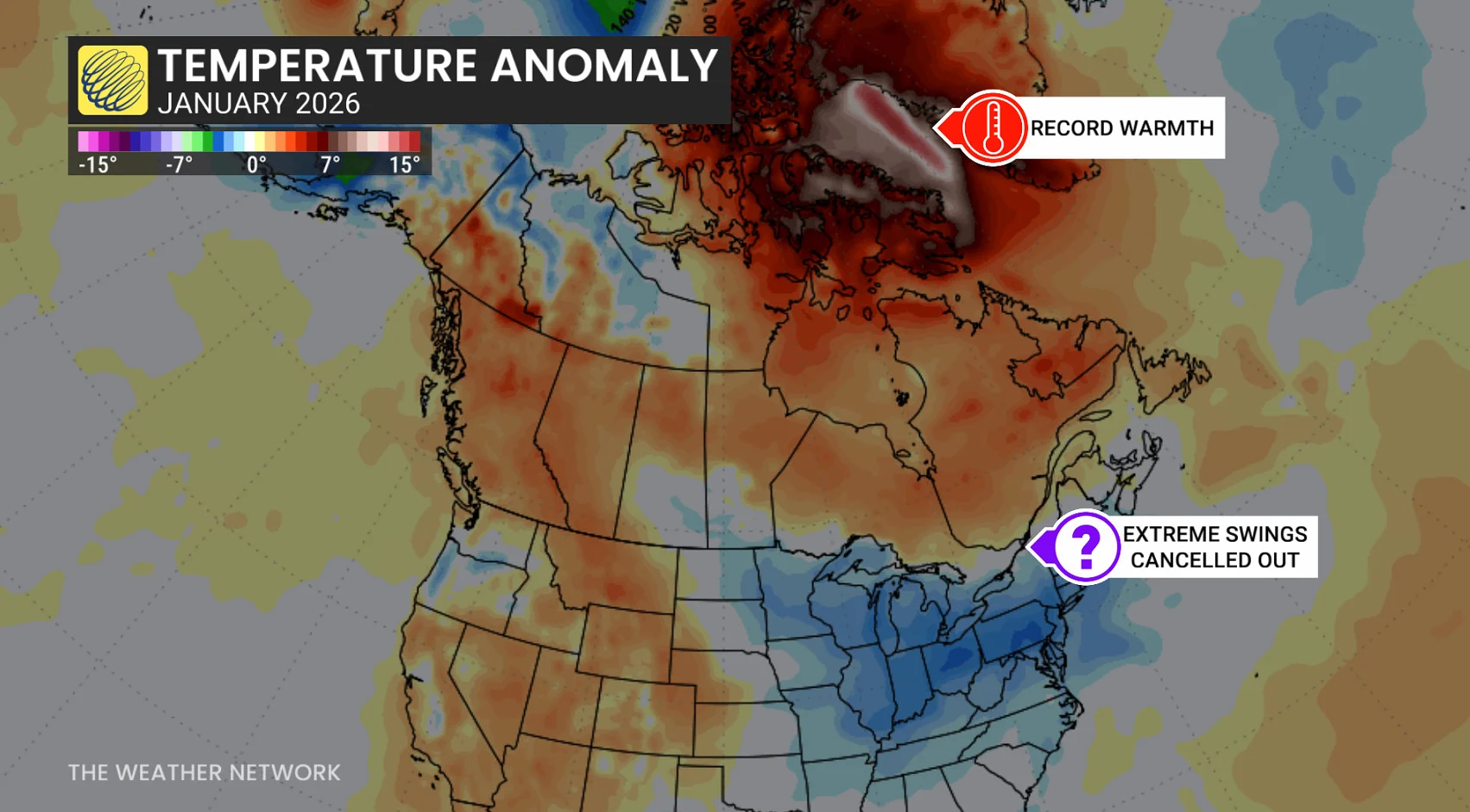
Windsor finished the month 2.7°C below seasonal, while average temperatures in Toronto came in 1.5°C lower than you’d expect in a typical January.
Cold air over the Great Lakes helped fuel Toronto’s biggest one-day snowfall on record, as well rapid ice growth on Lake Erie.
Header image created using graphics and imagery from Canva.