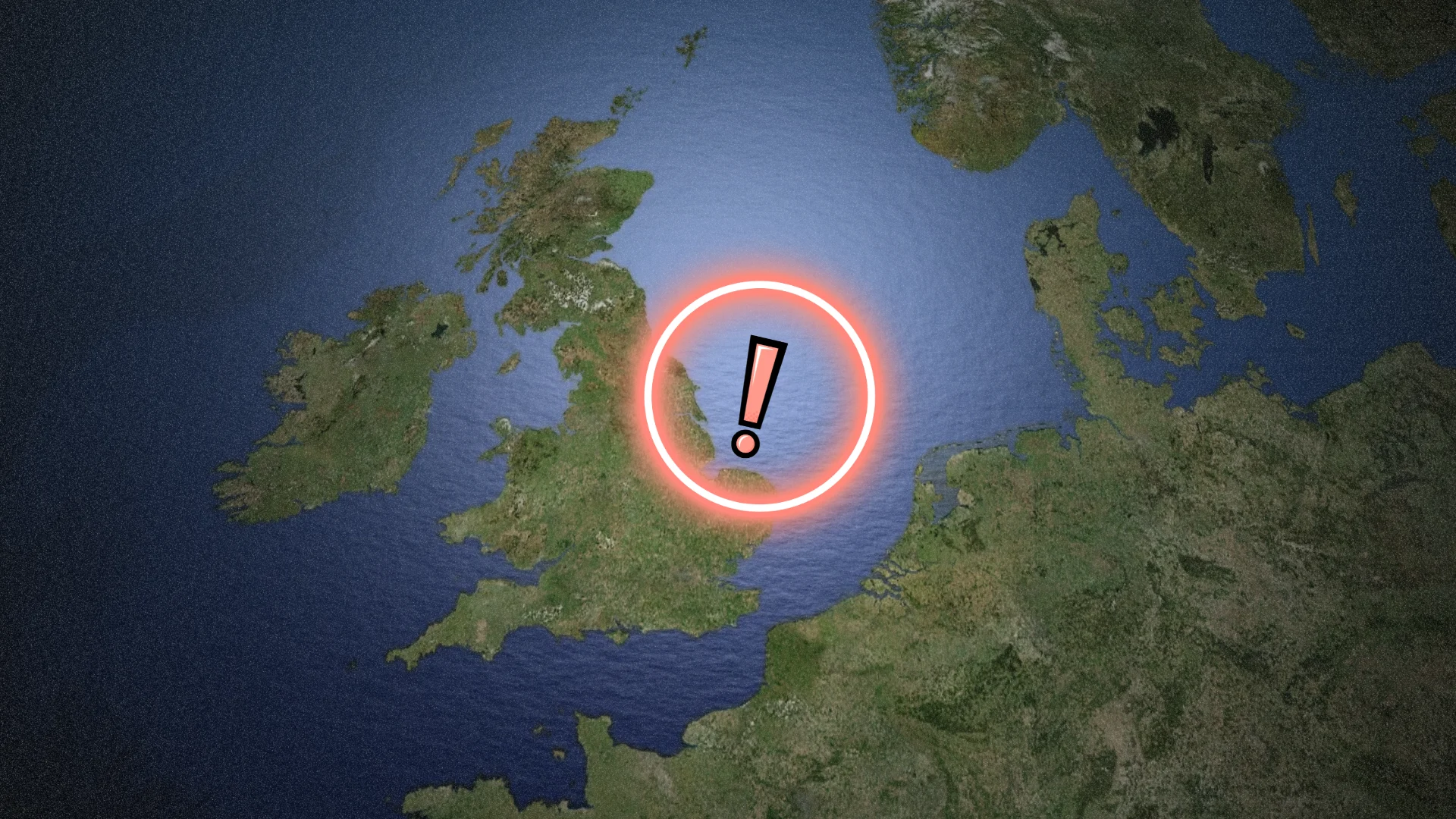
Asteroid impact likely caused a 100-metre tsunami, report finds

The asteroid struck off the coast of England more than 43 million years ago
An asteroid that struck Earth more than 43 million years ago likely generated a 100-metre tsunami, a group of scientists recently announced.
The study may put an end to the debate surrounding the origin of a large underwater crater discovered off the eastern coast of England around the turn of the century.
DON’T MISS: When and where could a tsunami happen in the Atlantic Ocean?
Scientists with Heriot-Watt University published their out-of-this-world findings in Nature Communications.
First discovered by industry scientists in the early 2000s as they were siting a drilling rig in the area, the Silverpit Crater rests at the bottom of the North Sea off the eastern coast of England. The depression measures a bit over 3 km in diameter.

The team analyzed imagery, seabed scans, and drilling samples from the region to arrive at the conclusion that the hole was indeed caused by an asteroid impact between 43 and 46 million years ago.
Computer simulations suggest that the asteroid likely measured around 160 m in diameter and struck the North Sea at a speed of 15 km per second.
RELATED: How do scientists calculate the probability that an asteroid could hit Earth?
“Within minutes, it created a 1.5-kilometre high curtain of rock and water that then collapsed into the sea, creating a tsunami over 100 metres high,” lead scientist Dr. Uisdean Nicholson said in a university press release.
The crater’s origin story is unusual because few asteroids and meteors large enough to leave an impact crater survive the fiery descent through Earth’s thick atmosphere.
Experts have only found around 200 known impact craters around the world, the study reports, and only about one-sixth of those craters were discovered underwater. One of those craters is right here in Canada.